


Buying eBay accounts in 2026 might sound like a shortcut to faster sales, but it’s risky, often against platform rules, and rarely sustainable long-term. While some sellers look for ways to skip the “new account” phase, eBay’s systems are more advanced than ever, meaning account ownership, activity patterns, and identity mismatches are easier to detect.
In most cases, what people are actually searching for is faster growth, higher selling limits, and immediate trust with buyers. And yes, those are valid goals. But buying an account isn’t the safest way to get there.
A better approach is to build and scale your account properly while using automation to move faster. Tools like AutoDS let you automate your eBay store, handle product imports, monitor prices and stock, and fulfill orders without taking risks that could get your account suspended.
So before you even consider buying an aged eBay account, let’s break down what it actually means, why people do it, and what you’re really risking.
Buying an eBay account is against platform rules, even if it’s not strictly illegal: you risk suspension, fund holds, and losing your entire store.
Most “benefits” (faster start, higher limits, instant trust) come with hidden risks, like verification issues, inconsistent activity signals, and lack of control over the account.
eBay can detect bought accounts through behavior, location, and identity mismatches, making these setups fragile and short-lived.
Growing your own account is slower at first but far more stable and scalable, especially when you focus on performance, consistency, and compliance.
The real way to scale in 2026 is through automation. When you automate your eBay store, you can move faster, stay compliant, and scale safely with AutoDS.
What Does “Buying an eBay Account” Mean?
Buying an eBay account typically refers to purchasing access to an already existing seller account, instead of creating a new one from scratch.
These accounts are often marketed as:
- Aged eBay accounts (created years ago)
- Accounts with a positive feedback history
- Accounts with higher selling limits
- Sometimes even “verified” or “ready-to-sell” accounts
In theory, this gives you instant credibility with buyers, the ability to list more products right away, and a shortcut past early account restrictions… But here’s the catch: When you buy an account, you’re also inheriting its entire history, risk profile, and identity.
That includes:
- Past policy violations (even hidden ones)
- Linked IP addresses and login patterns
- Original owner’s personal verification data
And in 2026, eBay also analyzes behavior, location, device, and activity consistency. So even if the account looks “clean,” a sudden change in usage can trigger reviews or restrictions.
Why People Buy eBay Accounts
People don’t buy accounts randomly. There are clear motivations behind it, especially for beginners or fast-scaling sellers.
- 🥏 To Skip Early Selling Limits. New eBay accounts often start with low listing and sales limits. On a platform that processed $79.6 billion in GMV in 2025 across 135 million active buyers, for someone eager to scale quickly, that starting restriction feels like a bottleneck.
- 🤝 To Gain Instant Trust. Accounts with existing positive feedback look more credible. Buyers are more likely to purchase from a seller with a history than from a brand-new account.
- 🏃 To Avoid Account Warm-Up. Building an account “the right way” takes time:
- Listing gradually
- Completing orders
- Building feedback
- 🔁 To Replace Suspended Accounts. This is a big one. Sellers who’ve faced eBay account suspension sometimes try to re-enter the platform by buying another account instead of fixing the root issue.
Here’s the problem: Every one of these reasons is valid, but the solution (buying accounts) creates bigger risks than it solves. What experienced sellers do instead is:
- Start clean
- Use automation to move faster
- Optimize listings and fulfillment from day one
Is Buying eBay Accounts Legal in 2026?
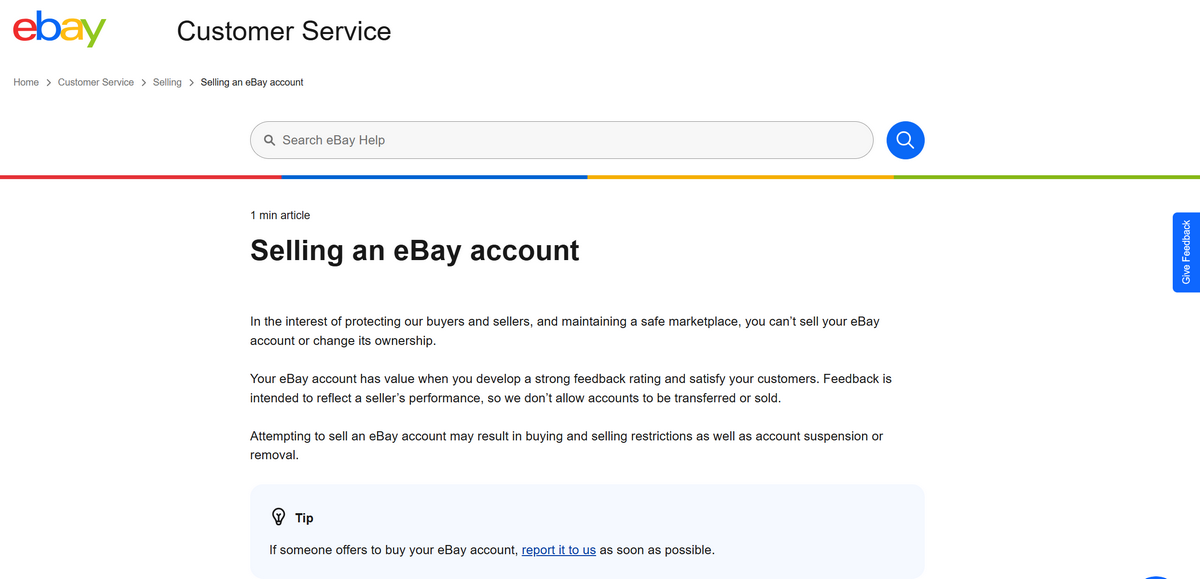
Short answer: Buying eBay accounts is usually not illegal, but it is against eBay’s rules, and that’s what actually puts your business at risk.
This is where a lot of sellers get confused. They assume that if something isn’t strictly illegal, it’s safe to do. But compliance with eBay policies and Terms of Service matters more than legal gray areas, because eBay controls your access to the marketplace and your money.
Let’s break this down properly.
📋 eBay Terms of Service Breakdown
eBay’s policy is very clear: accounts are non-transferable. When an account is created, it’s tied to a specific individual, along with their identity, payment details, tax information, and behavioral data.
So even if you “buy” an account that looks clean on the surface, from eBay’s perspective, you’re stepping into something that was never meant to be transferred in the first place.
In 2026, this matters more than ever. eBay doesn’t just rely on login credentials anymore. The platform tracks:
- who is using the account
- from where
- on what device
- and how the behavior compares to past activity
A sudden shift in any of these signals can trigger a review. And when that happens, you’re expected to verify details that belong to the original owner—not you.
That’s where most buyers hit a wall.
⚖️ Legal vs Platform Rules
Buying an eBay account is not typically treated as a criminal act in most countries. But that doesn’t make it acceptable within the platform.
Think of it this way: You’re basically breaking the rules of the system you depend on to make money.
Unlike legal systems, eBay doesn’t need a long process to act. If something looks off, they can:
- restrict your account
- limit your selling activity
- or shut you down entirely
With no warning required.
So while the legal side might feel like a gray area, the platform risk is very black and white.
☝️ What Happens If You Get Caught
When eBay detects that an account is being used by someone other than its original owner, the response is usually fast and not in your favor.
In most cases, the account gets restricted first. That might look like limited listings, blocked payouts, or requests for identity verification. If those checks fail (which they often do, since the account isn’t yours), the situation escalates quickly.
From there, it can lead to a full suspension.
And here’s the part that hits hardest: your funds can get locked while everything is under review.
That means:
- orders are still your responsibility
- customers still expect delivery
- but your cash flow is frozen
In more serious cases, eBay may also connect your activity to other accounts, devices, or payment methods. That can make it much harder to start over, even if you try to create a new eBay seller account later.
Risks of Buying eBay Accounts
Buying an eBay account might look like a shortcut, but in practice, it introduces multiple layers of risk that can affect your operations, your cash flow, and your ability to stay on the platform. These risks are tied to how eBay actually monitors accounts in 2026.
⚠️ Instant Suspension Risk
The biggest and most immediate risk is the suspension of your eBay account.
eBay continuously analyzes account behavior, and when a new person logs into an existing account, things rarely match up. The location changes, the device changes, and the browsing patterns change. And that inconsistency is often enough to trigger a review.
Even if the account has a clean history, a sudden shift in activity can make it look compromised. From eBay’s perspective, it’s safer to restrict the account than to assume everything is fine.
That means your account can be limited or suspended almost immediately after you start using it, sometimes before you even make your first sale.
⚠️ Seller Verification Issues
At some point, eBay will ask you to verify the account. This is not optional: it’s part of how the platform ensures trust between buyers and sellers.
The problem is that verification is tied to the original owner. That includes personal details, documents, tax information, and sometimes even bank or identity checks.
If you don’t have access to that information (or if the seller who sold you the account disappears), you won’t be able to pass verification. And once you fail that step, the account is effectively unusable.
⚠️ Payment & Payout Problems
Even if you manage to start selling, getting paid is another challenge. eBay’s payment system requires that account details match the person receiving the money. If there’s a mismatch between the account owner and your payout information, it can trigger delays, holds, or additional verification checks.
In many cases, funds are temporarily frozen while eBay reviews the account. During that time, you still need to fulfill orders and handle customers, but you don’t have access to the revenue from those sales.
This creates a cash flow gap that can quickly become a serious problem, especially if you’re trying to scale.
⚠️ Scams & Fake Sellers
The market for “aged eBay accounts” is largely unregulated, which makes it a breeding ground for scams.
Some sellers offer accounts created with fake or stolen identities. Others sell the same account to multiple buyers, or provide access that gets revoked shortly after the transaction.
There are also cases where the account looks legitimate at first, but has hidden issues (like past violations or pending restrictions) that only appear after you start using it.
By the time you realize something is wrong, the seller is usually gone, and there’s no way to recover your money.
⚠️ Limited Control Over Account
Even if everything seems to work at first, when you buy an eBay account, you’re never fully in control of it.
The original owner may still have recovery access, linked emails, or verification privileges. That means they could potentially regain control of the account at any time.
On top of that, you’re operating within someone else’s history. If there were past issues, policy violations, or unusual activity patterns, those don’t disappear; they follow the account.
So instead of building your own reputation, you’re constantly managing uncertainty.
How eBay Detects Bought Accounts
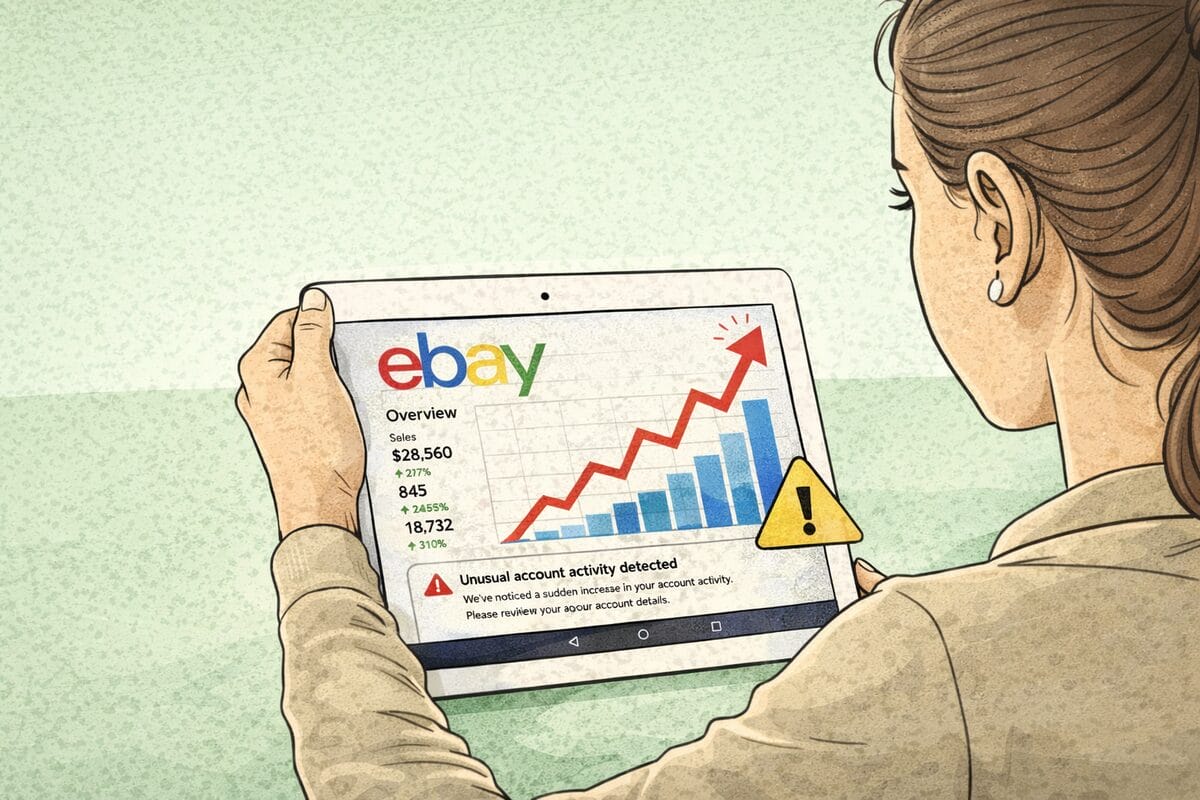
eBay doesn’t rely on a single signal to detect account transfers. In 2026, the platform uses a combination of behavioral analysis, technical tracking, and identity verification to spot inconsistencies. That means even if login details are correct, the system can still flag the account based on how it’s being used.
💡 Pro Tip: Treat your eBay account like a financial asset. Your account is not just a login; it’s your reputation, cash flow, and growth engine. Anything that puts it at risk (like buying accounts) should be treated as a high-stakes decision.
Here are the main ways eBay detects bought accounts:
1. Login Location & IP Changes
When an account suddenly starts being accessed from a completely different location (especially another country or region), it raises an immediate red flag. eBay compares current login data with historical patterns, and sharp deviations often trigger security checks.
2. Device & Browser Fingerprinting
It’s not just where you log in from; it’s how. eBay tracks device types, operating systems, and browser fingerprints. If an account that was always used on one device suddenly switches to a totally different setup, the system notices.
3. Behavior Pattern Mismatches
Every account develops a “behavior profile” over time. This includes:
- How often it logs in
- What actions it takes
- How listings are created
- How quickly it scales
When a new user takes over, these patterns usually change. For example, an account that was inactive or slow-growing might suddenly start listing dozens of products. That inconsistency is often enough to trigger a review.
4. Payment & Banking Inconsistencies
eBay closely monitors payout details. If the bank account, payment methods, or tax information don’t align with the original account owner, it can lead to verification requests or payment holds.
This is one of the most common detection points, because money flow needs to match identity.
5. Identity Verification Requests
At any point, eBay may request documents to confirm the account owner’s identity. This can include ID verification, tax details, or business information.
If you’re using a purchased account, you can’t provide documents that match the original owner, which is a huge problem.
6. Linked Account & Network Tracking
eBay connects accounts through shared data like IP addresses, devices, and payment methods. If your activity is linked to previously restricted or unrelated accounts, it can raise suspicion.
This is especially relevant for sellers trying to replace a suspended account by buying a new one.
Put simply, eBay checks consistency. And that’s why bought accounts are so fragile. The moment something doesn’t align with the account’s history, the system starts asking questions.
Pros and Cons of Buying eBay Accounts
Buying an eBay account sounds appealing for a reason. It promises speed, trust, and fewer early limitations. But once you look at both sides, it becomes clear that the short-term advantages rarely outweigh the long-term risks.
Here’s a clean breakdown so you can actually evaluate it.
✅ Pros of Buying eBay Accounts
- Faster start. You skip the initial setup phase and can start listing products almost immediately instead of warming up a new account.
- Higher selling limits from day one. Many aged accounts come with pre-approved limits, which means you can list more products and potentially scale faster early on.
- Existing feedback and credibility. eBay accounts with positive reviews can make buyers feel more confident, which may help with early conversions.
❌ Cons of Buying eBay Accounts
- High risk of suspension. The moment your activity doesn’t match the account’s history, eBay can flag and restrict it, sometimes instantly.
- Verification barriers. You may be asked to confirm identity details that belong to the original owner, making the account impossible to maintain long-term.
- Payment instability. Payouts can be delayed or frozen if account and banking details don’t align, which directly impacts your cash flow.
- Scam exposure. Many “eBay account for sale” offers are unreliable, and you risk buying compromised or reused accounts.
- No real ownership or control. You’re operating on someone else’s account, which means you’re always dependent on factors outside your control.
Where People Buy eBay Accounts
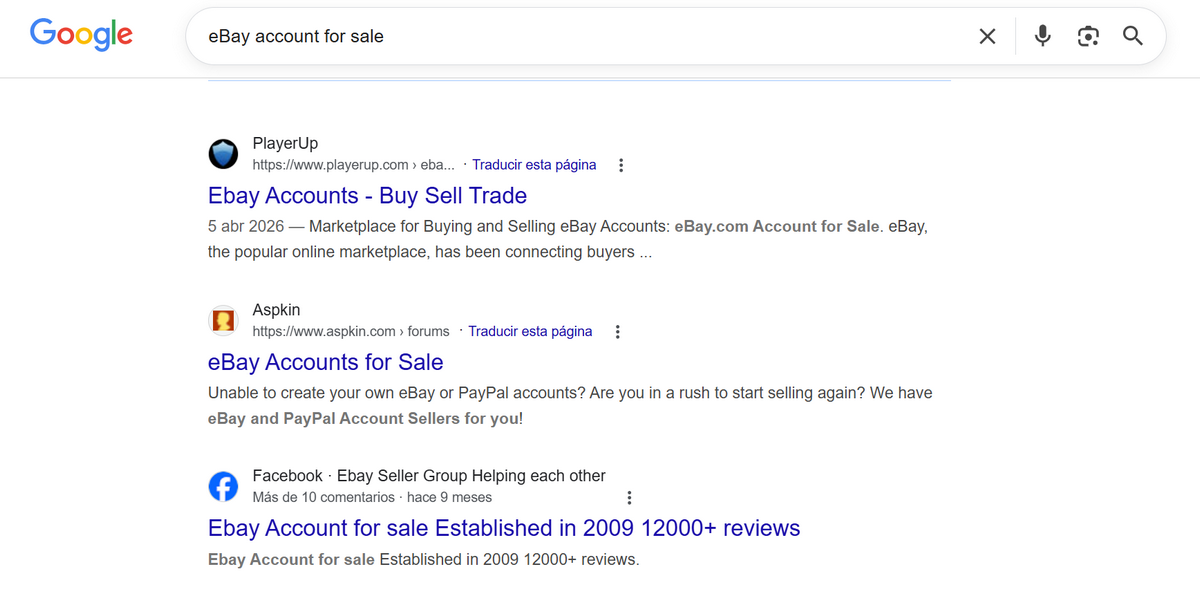
If you search for an “eBay account for sale” or a “buy aged eBay account”, you’ll find plenty of options. That doesn’t mean they’re safe (or even real).
Most of these accounts are sold through unofficial channels, and each one comes with its own level of risk. The important thing to understand is this: the more anonymous the source, the higher the uncertainty.
Here’s where people usually buy them and what that actually means in practice.
Marketplace Websites & Forums
Some websites specialize in buying and selling digital assets, including eBay accounts. These platforms often present themselves as structured marketplaces, with listings, pricing tiers, and seller ratings.
At first glance, this can feel more trustworthy. But in reality, you’re still relying entirely on the seller’s honesty. Even if the account looks “aged” and has feedback, you have no guarantee about:
- how it was created
- whether the identity is legitimate
- or if it has already been flagged internally
Private Sellers (Telegram, Discord, Social Media)
This is one of the most common and riskiest routes.
Accounts are often sold through direct messages on platforms like Telegram or Discord, where there’s little to no accountability. Sellers may promise “verified accounts,” “high limits,” or “safe usage,” but there’s no real way to validate those claims.
In many cases, buyers report:
- losing access after purchase
- accounts being sold to multiple people
- or accounts getting restricted shortly after login
Once the transaction is done, the seller can disappear instantly. There’s no support, no dispute system, and no recovery path.
Account Brokers & “Agencies”
Some sellers position themselves as professional brokers or agencies. They may offer packages, support, or even replacement guarantees.
This setup can feel more legitimate, but the core issue remains the same: the account is still not yours in the eyes of eBay.
Even if the broker delivers what they promised, you’re still exposed to:
- identity verification issues
- behavioral mismatches
- and long-term compliance risks
In other words, the presentation may be more polished, but the underlying problem doesn’t change.
⚠️ Risks by Source Type
Different sources come with different types of risk, but none of them eliminate the core problem: you’re using an account that wasn’t built or verified by you. Here’s how the risks break down depending on where the account comes from:
- Marketplace Platforms (websites & forums). The main risk here is unknown account history. Even if the listing shows positive feedback and “clean” status, you have no visibility into past warnings, policy violations, or internal flags. These issues don’t always show publicly—but eBay still sees them. So the account might look safe on the surface, yet already be one step away from restriction.
- Private Sellers (Telegram, Discord, social media). This is where scams and access loss are most common. You’re dealing directly with individuals who can disappear at any time. In many cases, buyers either lose access after payment or receive accounts that were sold to multiple people. There’s no protection, no verification, and no way to recover your money if something goes wrong.
- Account Brokers or Agencies. These sellers usually reduce the chance of an immediate scam, but the risk shifts to long-term compliance issues. Even if the transaction is smooth, the account still doesn’t match your identity. That means sooner or later, verification requests, behavior mismatches, or payment inconsistencies can trigger restrictions. The setup may feel more “professional,” but it doesn’t solve the fundamental problem.
No matter the source, the pattern stays the same. You’re trading short-term convenience for long-term instability.
That’s why experienced sellers focus on building accounts they fully control and using automation to grow faster without taking unnecessary risks.
Buying eBay Accounts vs Growing Your Own
If you strip away the hype, this comparison comes down to one thing: speed vs stability.
| Factor | Buying an eBay Account | Growing Your Own Account |
|---|---|---|
| Setup Speed | Immediate access | Slower start, but controlled |
| Selling Limits | Often higher from day one | Gradually increased by eBay |
| Trust & Feedback | Pre-built (but not yours) | Built organically and owned by you |
| Compliance | Violates eBay policies | Fully compliant |
| Risk Level | High (suspension, holds, verification issues) | Low when done correctly |
| Payout Stability | Unpredictable | Stable over time |
| Scalability | Fragile | Sustainable and expandable |
| Control | Limited (depends on original owner data) | Full control |
Buying an account gives you a head start, but it’s built on someone else’s foundation. The moment something doesn’t align (location, behavior, verification), that advantage can disappear overnight.
Growing your own account, on the other hand, takes a bit more patience upfront. You start with lower limits, fewer reviews, and a slower pace. But everything you build is yours, and that makes a huge difference over time.
Safer Alternatives to Buying eBay Accounts
If the goal behind buying an account is speed, trust, and higher limits, you can achieve all of that without taking the risks. The difference is that instead of relying on someone else’s history, you’re building your own system.
Here’s how experienced sellers approach it in 2026:
Build and Warm Up Your Own Account
Starting fresh might feel slower, but it’s the most stable foundation you can have.
When you create your own account, everything is aligned from day one: your identity, your payment details, your location, your activity. That consistency is exactly what eBay looks for when deciding whether to trust a seller.
The key is to warm up the account gradually. Instead of listing dozens of products immediately, you start with a smaller number, make a few sales, deliver good service, and build positive feedback. This creates a natural growth pattern that eBay rewards over time.
A new account that grows steadily is far less likely to be flagged than an “aged” account with sudden, inconsistent activity.
🆕 Beginner Tip: Start with low-risk, easy-to-fulfill products. Avoid complicated items early on (fragile, oversized, long shipping times). Simpler products help you build a clean performance record faster.
Use Automation to Scale Faster



This is where most people try to shortcut the process, and where you can actually gain an advantage without breaking any rules.
The reason new accounts feel slow is because of manual work. Listing products one by one, tracking inventory, updating prices, fulfilling orders… it all adds friction.
When you automate your eBay store, that friction disappears.
With tools like AutoDS, you can:
- import products quickly
- keep stock and prices updated automatically
- fulfill orders in a streamlined way
- manage everything from one dashboard
So instead of trying to “buy speed” through a risky account, you’re creating speed through efficiency. The best part is that now you can try AutoDS for just $1 and see for yourself the tools that will help you stay fully compliant.
Increase Selling Limits the Right Way
eBay selling limits are one of the main reasons people look for aged accounts. But in reality, eBay increases those limits based on performance, and it happens faster than most beginners expect.
When your account shows:
- consistent sales
- on-time fulfillment
- low defect rates
- positive feedback
eBay starts trusting you more. And that trust translates into higher limits.
You can also request limit increases manually once you’ve established some activity, and in many cases, eBay approves them quickly if your account is in good standing.
The important part is that these limits are earned and stable, not borrowed and fragile.
How to Scale eBay Dropshipping Safely in 2026
If you want to grow on eBay dropshipping in 2026, the safest strategy is not to look for shortcuts. It’s to build a store that grows fast enough to stay competitive, but steadily enough to stay trusted.
That means scaling in a way that keeps your account activity consistent, your operations organized, and your seller performance healthy. eBay still reviews seller accounts, verifies identity and payout details, and adjusts selling limits based on performance over time, so sustainable growth matters more than “instant scale” tactics.
Here’s the clearest way to do it.
🆕 Beginner Tip: Your first 10 orders matter more than your first 100 listings. eBay evaluates trust based on successful transactions, not how many products you upload. Focus on clean fulfillment, accurate descriptions, and good communication from day one.
Step 1️⃣: Start With A Clean, Verified Account
Before you think about scaling, make sure your account is fully yours and fully aligned with your real details. eBay confirms seller identity, bank or debit card details for payouts, and business information when applicable. That’s one of the reasons bought accounts are so unstable: the platform expects the seller’s identity and payout setup to match the account from the start.
This first step is boring, yes. It’s also the part that keeps everything else from becoming a future headache.
Step 2️⃣: Keep Your Early Activity Controlled
One of the easiest ways to trigger problems on a new or growing account is to go from zero to chaos overnight. A safer path is to scale in controlled layers. Start with a manageable number of listings, keep your handling workflow realistic, and make sure every order can be fulfilled smoothly.
The logic here is simple: eBay’s selling limits are designed to help sellers grow in a manageable way, and the platform reviews limits regularly based on your sales volume and buyer feedback. In other words, stable performance is what unlocks more room to grow.
Step 3️⃣: Build Around Seller Performance, Not Just Product Volume
A lot of sellers think scaling means listing more products as quickly as possible. On eBay, that’s only half the story. The real engine of safe growth is seller performance.
If your orders go out on time, buyers get what they expected, and your account avoids a high rate of “item not received” or “item not as described” issues, you’re in a much stronger position to keep expanding. eBay makes it clear that weak performance can lead to selling limitations, including restricted activity and even higher final value fees in some cases.
So the goal is to make more listings without creating more operational mess.
Step 4️⃣: Use Automation To Remove Manual Bottlenecks
Most sellers hit a wall because manual work starts eating the business alive. Product imports, stock checks, price edits, order routing, tracking updates; it all stacks up fast.
That’s why automation matters so much in this article. When you automate your eBay store, you reduce the kind of human error that tends to wreck growth at the exact moment things start working. You can process more efficiently, stay more organized, and avoid turning a growing store into a full-time cleanup job.
This is also the most practical way to scale safely with AutoDS. Instead of trying to buy trust, you build it while your backend gets faster, and you can leverage AutoDS’s $1 trial to get started.
Step 5️⃣: Watch Payout Health As Closely As Sales
Scaling safely means ensuring that sales actually translate into usable cash flow.
eBay states that seller funds can be placed on hold in certain situations, and payouts may also be held when an account is restricted or suspended. That means if your account health slips while your order volume rises, you can end up in the worst possible combo: more customer responsibility, less access to cash.
So as you grow, keep an eye on the operational side that supports payouts: valid account details, smooth fulfillment, low issue rates, and clean account standing.
Step 6️⃣: Increase Selling Limits The Right Way
A lot of people look into aged accounts because they want higher selling limits immediately. But eBay already explains how this works: it reviews accounts regularly and adjusts limits automatically based on sales volume and buyer feedback, and sellers can also view their current limits in Seller Hub.
That means the safer long-term move is to earn higher limits through consistent activity, not borrow them through a risky account transfer.
It may feel slower in week one, but it is far more stable by month three.
Step 7️⃣: Scale In Systems, Not In Surges
The safest eBay sellers in 2026 usually do one thing very well: they scale in repeatable systems.
They do not rely on random bursts of listings, messy supplier tracking, or reactive customer service. They create a workflow they can actually maintain. That includes product selection, listing standards, inventory monitoring, fulfillment, tracking, and account health checks.
That kind of structure is what turns growth into something durable instead of chaotic. And honestly, that’s the difference between a store that “has sales” and a store that can actually keep growing without drama.
💡 Pro Tip: Sudden scaling is a bigger red flag than slow growth. A sharp jump in listings or sales volume (especially on a new or inconsistent account) can trigger reviews. Controlled scaling always outperforms aggressive bursts in the long run.
Step 8️⃣: Treat Compliance As Part Of Growth
A lot of sellers treat compliance like an annoying side quest. On eBay, compliance is part of the growth strategy. Identity checks, payout verification, seller standards, and account reviews are not separate from scaling; they are baked into it.
So if your method for growing depends on hiding ownership, faking consistency, or patching together risky shortcuts, it is not really a scaling strategy. It is a countdown.
Frequently Asked Questions
Is buying an eBay account legal in 2026?
Buying an eBay account is not usually illegal in most countries, but it violates eBay’s Terms of Service. That means the platform can suspend or permanently ban the account at any time. The real risk is not legal trouble—it’s losing your store, your listings, and potentially your funds.
Can you get banned for using a bought eBay account?
Yes. eBay actively monitors account behavior, identity consistency, and login patterns. If the platform detects that an account has changed ownership, it can trigger restrictions, verification checks, or a full suspension. Many bought accounts fail at the verification stage because the new user cannot provide the original owner’s details.
Why do people buy aged eBay accounts?
Most sellers buy aged accounts to skip early selling limits, gain instant feedback, and start selling faster. While these goals make sense, buying an account introduces higher risks than simply growing your own with the right systems and automation.
Is there a safe way to buy an eBay account?
No method is truly safe. Even if the seller seems reliable, the account still does not match your identity in eBay’s system. That mismatch can lead to verification issues, payment holds, or suspension at any point. The risk comes from the platform rules—not just the source of the account.
What’s the best alternative to buying an eBay account?
The safest and most effective alternative is to build your own account and scale it with automation. By keeping your activity consistent and using tools to automate listings, pricing, and fulfillment, you can grow faster without triggering red flags. This approach allows you to automate your eBay store and scale safely with AutoDS while staying fully compliant.
Final Verdict: Should You Buy an eBay Account?
Short answer: No, if you want something that actually lasts.
Buying an eBay account might give you a quick start, but it’s unstable by design. You’re relying on someone else’s identity and history, which puts you at constant risk of suspension, verification issues, or frozen payouts.
Building your own account is slower at first, but it’s fully yours, compliant, and scalable.
Growth doesn’t come from shortcuts; it comes from systems. And to create an efficient system, you can rely on tools like AutoDS, which connects your store to suppliers, automates inventory and price monitoring, and streamlines order fulfillment, so you can grow faster without taking on risk.
If you want to keep learning how to grow smarter (not riskier), you can explore more guides on the AutoDS blog:
- What Does “Buying An eBay Account” Mean?
- Why People Buy eBay Accounts
- Is Buying eBay Accounts Legal In 2026?
- Risks Of Buying eBay Accounts
- How eBay Detects Bought Accounts
- Pros & Cons Of Buying eBay Accounts
- Where People Buy eBay Accounts
- Buying Accounts VS Growing Your Own
- Safer Alternatives To Buying Accounts
- How To Scale eBay Dropshipping In 2026
- FAQ
- Conclusion