


In dropshipping, a niche sets the direction of everything: who you’re speaking to, what problem you’re solving, and why your store even makes sense in the market.
That’s exactly why figuring out how to find profitable niches sits at the core of the whole dropshipping game. It shapes every decision that follows, from product selection to marketing angle. And this is where having the right lens (and the right tools) changes everything. Platforms like AutoDS step in here with product research features that surface demand signals, competition levels, and real opportunities you can actually act on instead of guessing your way through.
In the next steps, you’ll go through a clear framework for identifying and validating winning product categories. The goal is simple: by the end, you’ll have a repeatable way to evaluate any niche and understand whether it deserves your time or not.
Finding the right niche is crucial for dropshipping success, as it shapes your catalog, your audience, and your margins.
A profitable dropshipping niche checks four boxes: strong demand, healthy margins, manageable competition, and long-term relevance.
Finding the right niche is a structured process: validating demand, identifying the customer problem, analyzing competitors, and confirming the numbers before committing.
The best niche research combines multiple tools and signals: Google Trends for trajectory, Amazon for purchase behavior, and social platforms for real-time demand.
Platforms like AutoDS offer dedicated research tools and sections to spot winning opportunities before they peak.
Pet products, home fitness, beauty tools, baby items, and hobby categories are among the most profitable dropshipping niches.
From research and trend tracking to verified supplier sourcing, AutoDS streamlines the entire process in one connected platform. 👇
What Makes a Dropshipping Niche Profitable?
Four things decide whether a dropshipping niche is profitable: demand, margins, competition, and longevity.
But to understand how these connect, it helps to zoom out for a quick reality check: the global dropshipping market is projected to reach USD 1,253.79 billion by 2030. You might be wondering what that has to do with niches. Simple: this confirms there’s still serious potential in this industry. The real question isn’t whether money exists in dropshipping. It’s where that money actually sits.
And if you’re still connecting the dots, this is exactly where niches step in.
A niche is just a focused slice of a market: a specific product solving a specific problem for a specific kind of person. Straightforward concept, right? But here’s the thing: not all niches are built the same. Some grow fast and keep scaling. Others look promising for about 90 days and then crater. The difference usually comes down to how these four factors show up in practice.
Demand
Demand is the number of people already looking for, interested in, or actively buying products in a specific niche.
The keyword there is already. You’re not trying to manufacture interest; you’re tapping into something that exists. Strong demand shows up across multiple channels at once: steady Google search volume, active TikTok communities, consistent Amazon bestseller placement. Pet accessories, home fitness gear, and skincare tools are classic examples, categories where people are already scrolling, searching, and spending without needing much convincing.
What you’re really looking for is consistency over time, not a single spike. A product that goes viral in March and disappears by May gives you a sprint, not a business. Sustained daily search volume is what gives a niche real staying power.
Margins
Margins are the gap between what a product costs you and what it sells for, after ads, shipping, and platform fees are factored in.
This is where a lot of promising ideas fall apart. A niche can look exciting at first glance, but thin margins leave almost no room to run paid traffic and still come out ahead. The products that tend to work best can be sourced at a low cost while still carrying a high perceived value, meaning the customer feels like they’re getting something worth much more than what it actually costs to acquire.
A practical rule of thumb: you want enough margin per sale to absorb your ad spend and still have money left over. That buffer is what separates “a few sales” from something that actually compounds.
Competition
Competition reflects how many sellers are already targeting the same audience and products.
Here’s the counterintuitive part: some competition is a good sign. If nobody’s selling in a space, that’s often because nobody’s buying. The problem is saturation, the point where sellers are essentially clones of each other, and price becomes the only differentiator.
The sweet spot is a niche with proven demand but enough room to stand out. That differentiation doesn’t have to be dramatic. Better product curation, a cleaner brand, or a more specific audience angle can be enough to carve out a real position.
Longevity
Longevity is about how long a niche can hold attention before it fades due to trend cycles or seasonality.
Some niches spike fast (fueled by viral content or a cultural moment) and cool off just as quickly. Others build more slowly but stay relevant for years, usually because they address recurring needs rather than fleeting ones. A posture corrector solves a problem people have every day. A specific Halloween costume does not.
The strongest niches are evergreen, or at least stable enough across seasons that your systems keep working without constant reinvention. That’s what makes it possible to build something instead of endlessly chasing whatever’s trending this week.
How to Find a Profitable Niche for Dropshipping
When you put everything together, these signals become your filter:
✅ High demand for the products among consumers.
✅ Limited competition from other sellers.
✅ Strong profit margins on each sale.
✅ Consistent market growth with long-term potential.
But knowing what to look for is only half the picture. The real challenge is turning those cues into a decision-making process you can actually use when assessing ideas in real time. That’s why finding a profitable niche is less about inspiration and more about structured evaluation. The goal now is to move from theory to practice and apply a clear step-by-step approach:
Analyze Market Demand
Start with demand. If genuine interest doesn’t already exist, everything else is just guesswork.
What you’re looking for isn’t a single data point, but a pattern across platforms:
- Consistent search volume on Google.
- Active communities on TikTok.
- Strong review counts on Amazon.
When the same niche shows up across multiple channels independently, that’s a signal worth paying attention to. A trend that exists only on one platform usually fades with it.
The mental shift that helps here: you’re not trying to create attention. You’re learning to recognize where it already lives.
Identify Customer Problems
Demand doesn’t appear from nowhere. Once you see it, the next question is: what’s driving it?
Every durable niche is anchored in a problem people want solved. Not occasionally, but regularly. That could be physical discomfort, a daily inconvenience, or a gap between who someone is and who they want to be.
Back pain after long hours of sitting, everyday workers lacking time to get to the gym, skincare routines that don’t deliver consistent results: the more specific and recurring the problem, the more naturally a product can slot in as the answer. Take pet calming products, for example. The niche isn’t “pet accessories,” it’s owners dealing with stressed or anxious pets during travel or separation.
At this stage, resist the urge to jump straight to items. Think in situations first: who’s frustrated, about what, and when does it happen? That framing shapes everything that comes after: your positioning, your copy, your ad creative. Users who skip this step tend to pick products that sell once but don’t build an actual customer base.
Research Competitors
Competition is information. How you read it determines whether you enter a niche with confidence or walk into a wall.
No competition usually means no validated demand, not an untapped opportunity. Heavy saturation with nearly identical stores competing on price is the other extreme, and it’s just as problematic. The perfect balance is a niche where multiple sellers are active and profitable, but no single dominant player has locked down the positioning.
The most useful thing you can do here is research like a real customer. If you’re considering eco-friendly water bottles, go to Google and search “buy eco-friendly water bottles.” Click through the top results. Visit those stores and pay attention to how they present their products, what language they use, and what customers are saying in reviews. That last part is especially valuable: reviews tell you what the market actually wants, not what sellers think it wants.
Then take it further: find the strongest competitors on Instagram, TikTok, or Facebook. Look at what content they’re making, how they engage with their audience, and where their positioning feels weak or generic. Every crack you spot is a potential angle for your own store, whether that’s cleaner branding, a more specific customer focus, or simply better product curation within the same category.
The goal is to understand the landscape well enough to find where you can fit in differently.
🆕 Research Tip: A quick shortcut here is using AutoDS Ads Spy Tools. You can peek at real competitor ads on social media and instantly spot how they’re positioning products in your niche.
Check Profit Potential
This is where most people underestimate the math.
Map out the full unit economics: product cost, shipping, platform fees, and a realistic ad spend estimate. What’s left is your actual margin, and it needs to be wide enough to absorb the price of acquiring a customer before you even think about profit. Products with low sourcing costs and high perceived value give you that buffer. Without it, you can generate sales and still not build a real business.
A practical gut check: if your margin can’t survive a 2–3x cost-per-click increase in your ad account, the niche probably can’t scale.
Validate Suppliers
A niche that works on paper can still fail in execution, and supply chain is usually where it happens.
Before committing, verify that the products you want to sell can actually be sourced reliably: consistent stock, predictable shipping times, and suppliers who can handle volume without constant disruption. One viral week with fulfillment problems can undo months of work building an audience.
This is where platforms like AutoDS reduce friction, connecting product sourcing directly to more than 30 verified suppliers and automating the operational layer, so the space between validating a niche and actually running it stays as small as possible.
Best Tools for Niche Research
Most people start niche hunting by googling “easiest dropshipping niches 2026” and working from there. It’s not a bad instinct, but it gets you to other people’s conclusions, not your own.
The tools below are where real research happens, covering demand signals, competitive positioning, and trend trajectory, which is most of what you need to make a confident call on a niche.
AutoDS Product Research Tools
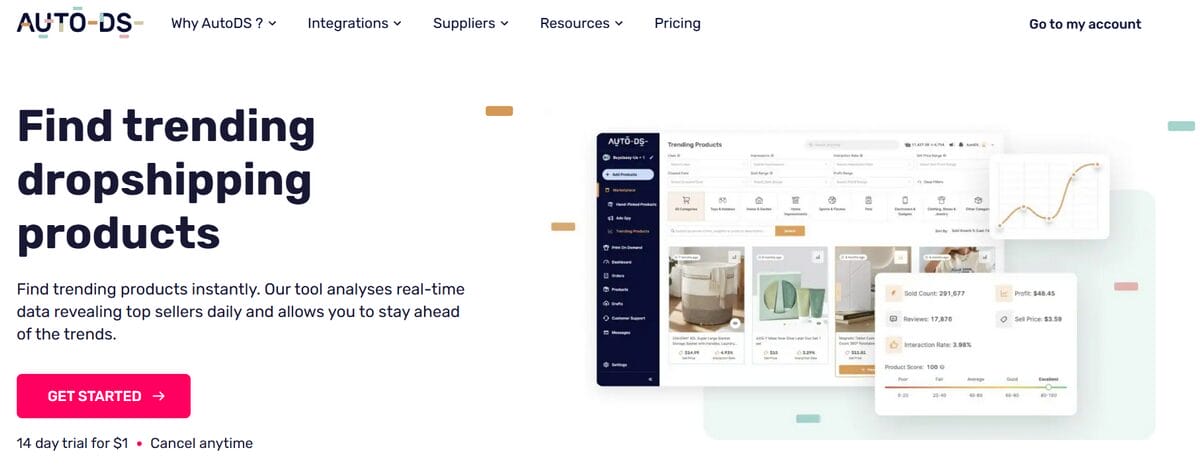
AutoDS has a dedicated research environment built specifically for niche and product validation. Instead of crawling marketplaces manually and guessing at demand, you get access to product data that already factors in trend momentum, supplier availability, and competition levels, all in one place.
Three features inside the platform are worth knowing:
- AutoDS Marketplace gives you access to millions of items from verified suppliers, searchable by category, price range, and shipping location. When something looks promising, you’re one step away from importing it.
- Hand-Picked Products Hub surfaces curated selections, regularly updated by the AutoDS team. These are items that have already been vetted for demand and margin potential. A good starting point when you want to validate a niche direction without building the list from scratch.
- Trending Products tracks what’s gaining traction across markets in real time. Use it less as a “sell this now” signal and more as a category radar. If the same type of product keeps surfacing across different niches, that’s a pattern worth investigating.
The practical advantage here is that research and sourcing stay connected throughout the process. You’re not jumping between five tabs trying to piece together a picture. By the time you’ve validated a niche, you already know where the products are coming from.



Google Trends

Google Trends is one of the most underused tools in niche research. The reason is almost always the same: people glance at it, see a number, and move on without really knowing what they’re looking at.
That number isn’t raw search volume. It’s relative interest over time, indexed from 0 to 100, which makes it far more useful for reading trajectory than for measuring size. A niche sitting at 60 and climbing steadily tells you something very different than one that peaked at 100 eighteen months ago and has been sliding ever since.
Here’s how to actually use it. Say you’re exploring the home fitness space. Search “resistance bands” or “home gym equipment,” set the time range to five years, and look at the shape of the line. A gradual upward slope with seasonal consistency is what you want (it means real, recurring demand). If you see steady growth over that window, that’s a legitimate signal worth building on.
💡 Pro Tip: Torn between two similar categories? Drop both into the same search and use the comparison feature to let the data settle the debate. The one with more durable interest is usually the right call.
TikTok & Social Media
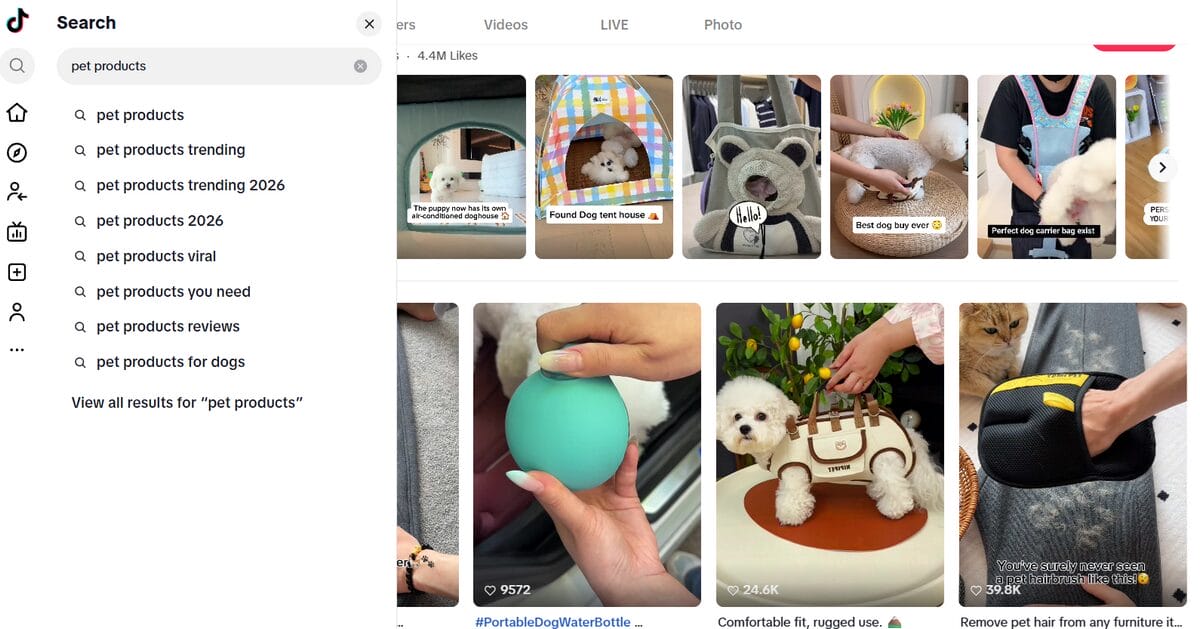
Social platforms are among the best ways to spot real-time demand. By the time a product shows up in Google search trends, TikTok already knew about it weeks ago.
Start with TikTok’s search function. It sounds basic, but it works. Look up a product category, filter by recent uploads, and see what’s pulling engagement. One viral video proves nothing. But several creators posting about the same product independently, with real comment sections? That’s the market telling you something.
Instagram and Facebook are a different kind of signal. Here, you’re not looking at organic content. You’re watching the ads. If the same product keeps appearing across your feed after a couple of searches, that’s not a coincidence. Someone is putting real budget behind it, and in paid media, you only keep running what works. For niche validation, that’s about as close to hard evidence as you’ll get without running your own campaigns.
Put the two together, and you’ve got something Google Trends simply can’t offer: a live read on what people are reacting to right now, before it turns into a crowded search term.
🆕 Beginner’s Tip: Skip the manual scrolling and use AutoDS TikTok Analytics to get real sales data directly from TikTok Shop — units sold, revenue figures, commission rates — so you can see what’s actually converting.
Amazon Best Sellers
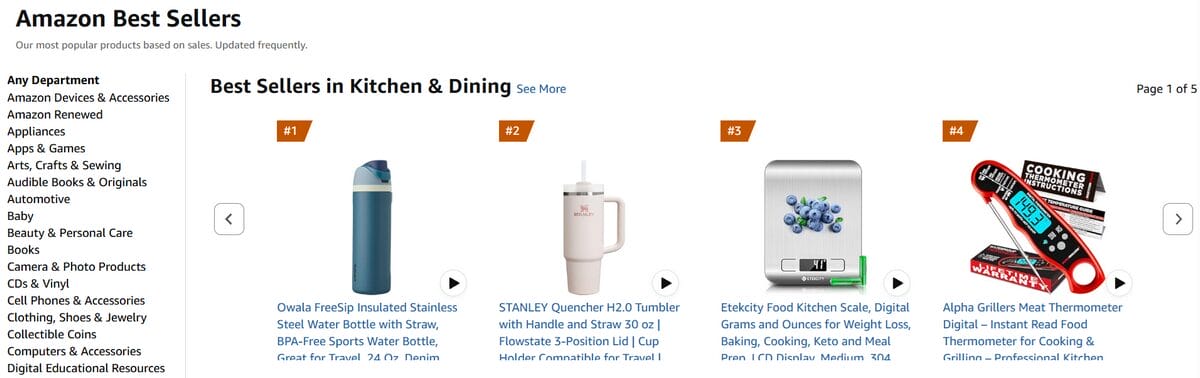
If TikTok shows you what people are excited about, Amazon shows you what they’re actually buying.
Amazon’s Best Sellers list is updated hourly based on real transaction volume. A product ranking in the top 20 of a subcategory has serious purchase activity behind it, not just clicks or saves. That’s exactly what makes it one of the strongest demand validators available.
Here’s where most people go wrong: they browse the top-level categories and stop there. “Sports & Outdoors” tells you almost nothing useful. Drill down. “Sports & Outdoors → Outdoor Recreation → Camping & Hiking → Camp Kitchen” tells you there’s a specific audience with specific buying habits. That’s the kind of insight that actually shapes a niche decision.
Amazon isn’t the only place worth checking, either. eBay’s trending section, Etsy’s bestsellers, and AliExpress’s trending products tab each reflect demand from slightly different buyer profiles. Together, they help you answer a question that matters early on: Is interest in this niche broad, or is it concentrated on a single platform? By now, you already know which one holds up better over time.
🔍 Research Tip: Other cool section worth exploring? Amazon’s Most Wished For tracks what shoppers are saving and planning to buy. It’s a useful early signal when you’re still mapping a category.
Examples of Profitable Dropshipping Niches
Frameworks matter. But sometimes what you need is to see what the output actually looks like: a real niche, with real products, real reasons it works. The five following picks hold up across demand, margins, competition, and longevity. That’s exactly why they keep showing up in conversations about profitable dropshipping niches.
Pet Products
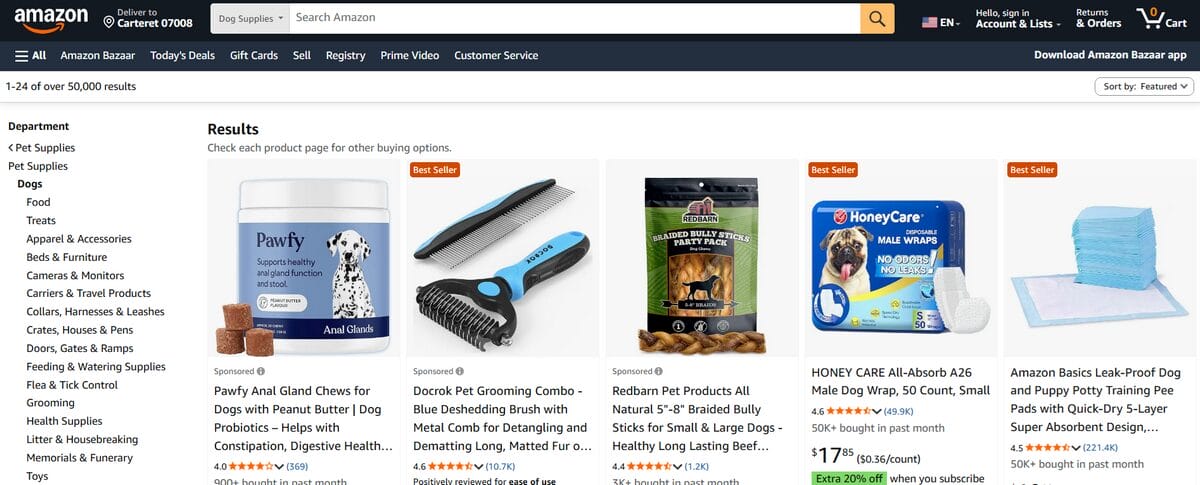
Few niches combine emotional spending with consistent, year-round demand the way dropshipping pet products do. Pet owners don’t cut back on their animals when budgets get tight, and the category keeps expanding as more households adopt pets and treat them less like animals and more like family members. Competition exists, but the niche is wide enough that positioning around a specific type of pet or problem (anxiety, mobility, grooming) still leaves considerable room to differentiate.
⭐ Products worth exploring:
- Pet calming aids
- Orthopedic pet beds
- Automatic feeders
- GPS pet trackers
- Interactive puzzle toys
Most of these are lightweight, easy to ship, and solve very specific problems, which makes them straightforward to market and easy to establish around a clear customer pain point.
For sourcing, AliExpress and Amazon carry a broad range of pet accessories at competitive prices. Walmart is also a solid option if you’re targeting faster domestic shipping for US customers.
Baby Niche
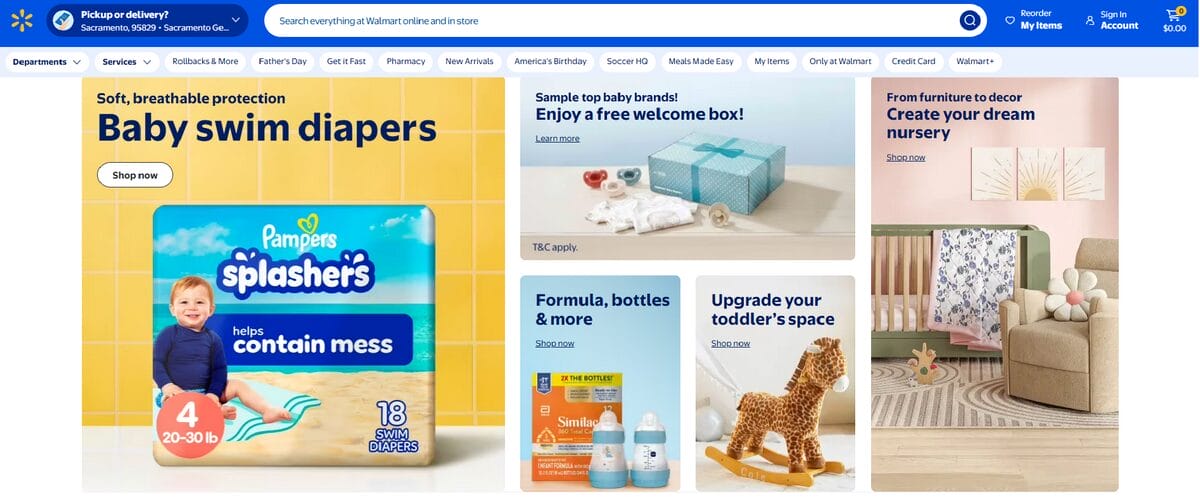
Parents are among the most motivated buyers in any market. And when the items solve a genuine safety or comfort concern, price sensitivity drops considerably. Dropshipping baby products benefits from a built-in emotional urgency and a customer base that refreshes constantly as new parents enter the market. Seasonality is mild, demand is evergreen, and margins on premium-positioned products can be strong.
⭐ Products worth exploring:
- Baby monitors
- Portable changing pads
- Silicone feeding sets
- Baby carrier wraps
- White noise machines
What do they share in common? They carry a high perceived value relative to their sourcing cost. And because they solve real, everyday parenting problems, they tend to convert well without heavy convincing.
Walmart, Target, and AutoDS private suppliers are reliable sources for this niche, especially for US-focused stores that need fast shipping and brand trust. AliExpress works well for more affordable private-label-style products.
Beauty
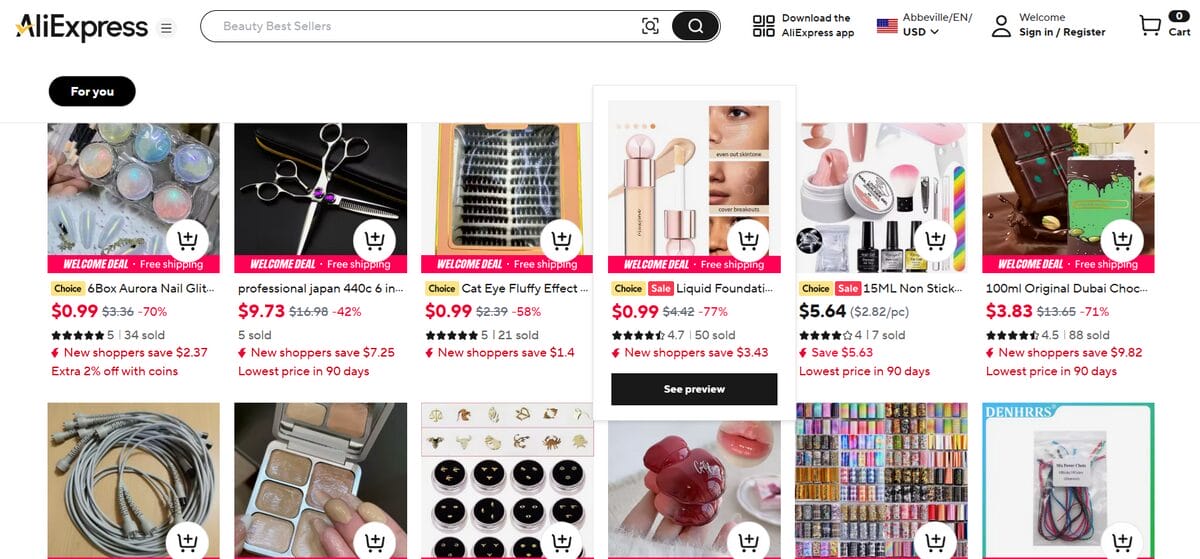
Beauty and self-care are among the highest-volume niches in eCommerce and among the most repeat-purchase-friendly. Customers who find a product they like come back regularly, which makes lifetime value a real asset here. The challenge is standing out in a crowded space, but microniches within the niche (men’s skincare, clean beauty, tools over formulas) tend to be far less saturated than the category as a whole.
⭐ Products worth exploring:
- LED face masks
- Gua sha sets
- Pore vacuums
- Eyebrow lamination kits
- Scalp massagers
Beauty tools are compact, lightweight, and visually demonstrable, a combination that makes them particularly effective for short-form video content and impulse-driven purchasing.
AliExpress is a strong starting point for beauty goods. For more premium positioning, Macy’s and Kohl’s — both integrated with AutoDS — offer access to established brands with built-in consumer trust.
Fitness
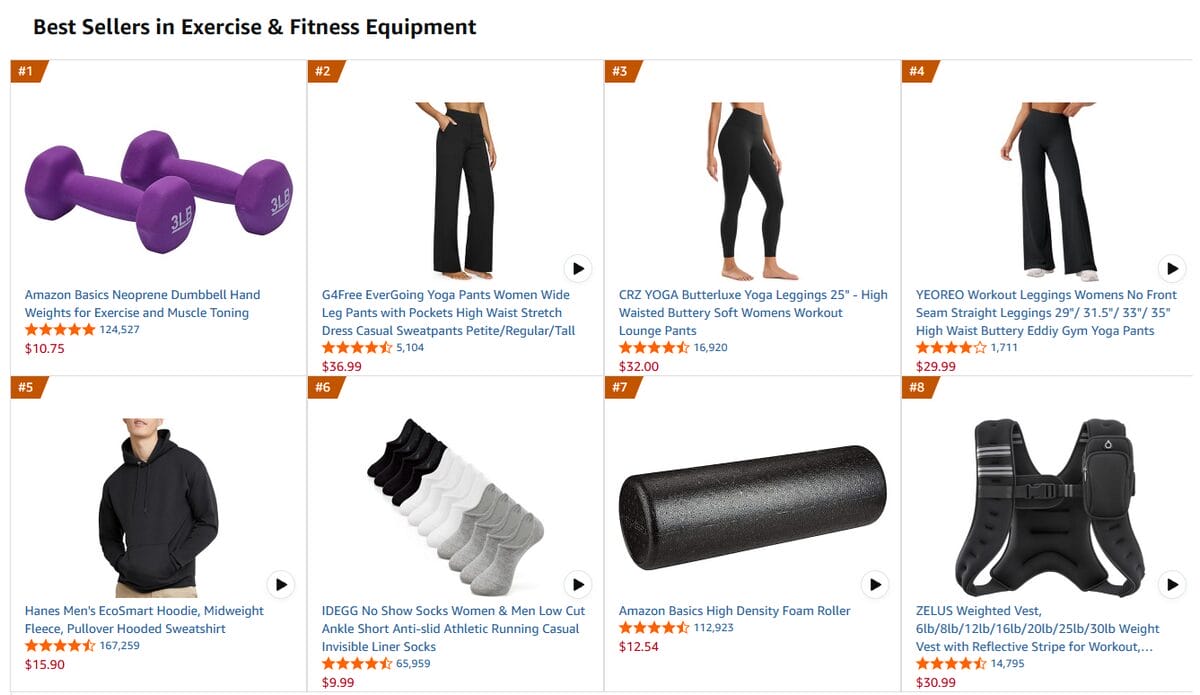
The home fitness category had a major acceleration a few years back and never fully retreated. Demand stabilized at a higher baseline, which is exactly the trajectory you want to see in a niche. People invest in home fitness consistently, tend to buy multiple products over time, and respond well to content-driven marketing — which makes it a natural fit for TikTok and Instagram advertising.
⭐ Products worth exploring:
- Resistance bands
- Ab rollers
- Adjustable dumbbells
- Yoga blocks
- Pull-up bars
Low sourcing costs, high perceived value, and strong bundle potential (resistance bands paired with a mat, or a pull-up bar with grip gloves) make this category particularly efficient for building average order value.
AliExpress and Banggood cover most of the core fitness accessories at solid price points. For heavier or bulkier equipment aimed at US buyers, Walmart and Costco are worth checking through the AutoDS marketplace.
Hobby Niches
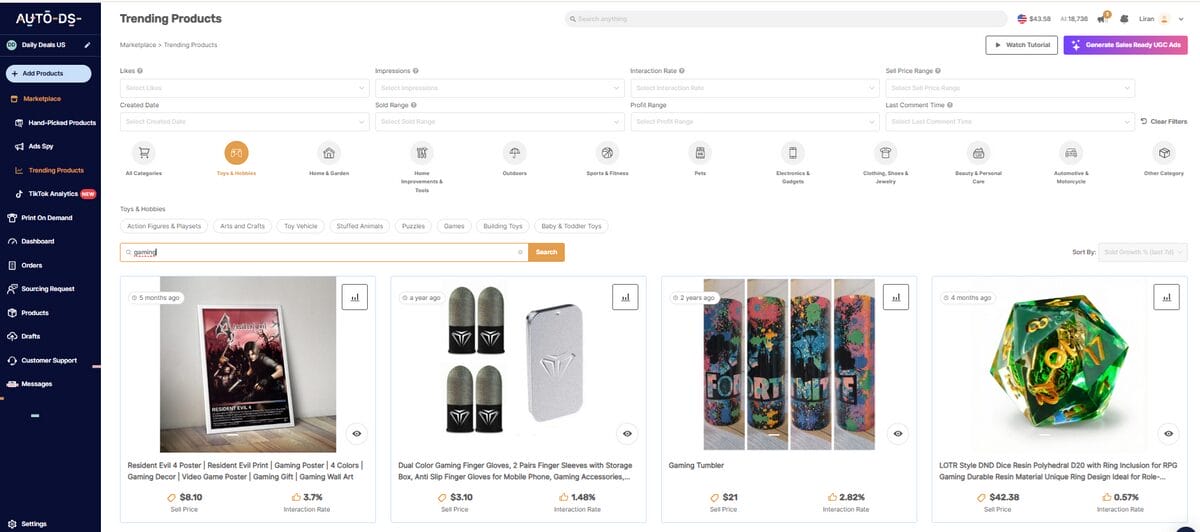
Hobby-based niches are underrated for one specific reason: you’re not convincing anyone they need the product. Instead, people are actively looking to spend on something they love. The key is picking a hobby with a large enough audience and wide product variety to build a real catalog around. Fishing, painting, gaming accessories, and model building all fit that profile.
⭐ Products worth exploring:
- Fishing lures and tackle sets
- Watercolor brush kits
- Custom keycaps
- Miniature painting sets
- LED strip lighting for gaming setups
Niche appeal, high uniqueness, and strong community identity make these products easy to market to a specific audience. Plus, buyers in hobby spaces tend to return for more once they trust a store.
AliExpress and DHgate offer a strong selection across most hobby categories. For gaming accessories specifically, it’s worth browsing the AutoDS Marketplace directly. The Trending Products section tends to surface strong performers in that space before they peak.
Common Niche Selection Mistakes
Picking a niche is where most dropshipping journeys either gain traction or quietly fall apart. The following mistakes show up consistently, usually because they feel reasonable at the time. Recognizing them early is what separates a strategy that scales from one that keeps restarting from zero.
⛔ Choosing Passion Over Data
Starting with what you love is a fine place to begin. The problem is when that becomes the primary filter, and data gets treated as optional. Someone who’s into vintage watches might create an entire store around that niche, source products, set up ads, and then discover (not entirely surprisingly) that the audience is small, competition from established dealers is fierce, and margins barely cover ad spend.
Before committing to any niche, run it through the actual signals: search volume, competitor activity, and margin potential. If the data confirms what you’re excited about, great. If it doesn’t, well… that’s the answer.
⛔ Following Short-Term Trends
A product goes viral on TikTok. Sales spike for six weeks. Then it disappears. This cycle catches a lot of new dropshippers off guard: they saw the trend, rode it, and built around it as if it would last. Chasing trends can work, but the key is learning to distinguish between a spike and a shift.
Google Trends is useful here: a niche with a clean upward slope over five years is a different opportunity than one with a single dramatic peak. Trends can generate cash flow. They rarely grow businesses.
⛔ Ignoring Margins
It’s easy to get excited about a product that sells well and lose track of whether selling it actually makes money. A fitness tracker priced at $35 with an $18 sourcing cost looks fine on paper, until you factor in $8 shipping, platform fees, and a $12 cost-per-click on your ads. Suddenly, you’re selling at a loss.
Running the full unit economics before committing is what determines whether a niche can scale. So, map them out before your first hundred orders, not after.
💡 Pro Tip: If you are an eBay seller, use the AutoDS eBay Fee Calculator to estimate your real margins before listing. Plug in your product cost, shipping, and target price. It breaks down platform fees and gives you a clear picture of what you actually keep per sale.
⛔ Entering Oversaturated Markets
Some niches attract so many sellers that standing out requires either big pockets or a genuinely different angle. Most beginners have neither ready on day one. Regular phone cases, basic laptop stands, generic coffee mugs: categories where dozens of stores run nearly identical offers and compete purely on price. The tell is when you search for a product, and every result looks the same: same images, same copy, same price range. That’s a race to the bottom, and it’s a hard one to win.
The smarter move is going one level deeper. Not “yoga mats,” but mats designed specifically for hot yoga, or for travel, or for starters with joint issues. That specificity is what creates room to differentiate, charge a fair price, and reunite an audience that actually sticks around.
Frequently Asked Questions
How do I find a profitable niche for dropshipping?
Finding a profitable niche starts with identifying where real demand already exists: consistent search volume, active communities, strong sales on marketplaces like Amazon. From there, the process is about validation: checking margins, reading competition, and confirming that reliable suppliers exist before committing. Platforms like AutoDS make that process faster with built-in product research tools that surface market data constantly.
What makes a dropshipping niche profitable?
A profitable dropshipping niche checks four boxes: strong and consistent demand, healthy margins after ads and fees, a competitive landscape with room to differentiate, and long-term relevance beyond a single trend cycle. A product category that clears all four is definitely worth building around.
How do I know if a niche is too competitive?
A niche is too competitive when differentiation becomes nearly impossible. Every listing looks the same, prices converge, and standing out requires resources most beginners don’t have. The question worth asking before entering any space is whether there’s a specific audience, problem, or positioning angle that existing sellers are overlooking. If there is, there’s room. If everything already feels covered, it probably is.
Should I choose a niche based on my interests?
It depends! Interests can point you in a direction, but they shouldn’t be the deciding factor. Passion doesn’t create demand. The right approach is to use your interests as a starting point, then validate with data: search volume, competition levels, and margin potential. If the numbers support what you’re drawn to, great. If they don’t, the data wins.
What are the most profitable dropshipping niches right now?
The most profitable dropshipping niches tend to share a few traits: evergreen demand, strong margins, and enough product variety to build a real catalog. Pet products, baby items, beauty tools, home fitness gear, and hobby-based categories consistently check those boxes. That said, profitability depends as much on execution and positioning as it does on the niche itself.
How can I validate a niche before launching a store?
Validating a niche before launching means confirming demand, margins, and supply before spending a dollar on ads. Check search trends across Google and Amazon, map out your unit economics, including shipping and ad spend, and verify that reliable suppliers can fulfill at scale. AutoDS streamlines part of this process by connecting product research directly to verified suppliers, so you can move from idea to execution without switching platforms.
What tools can help me find profitable niches?
The best tools for finding profitable niches cover different layers of research. Google Trends reads the trajectory over time. Amazon Best Sellers surfaces what people are actively buying. TikTok and Instagram reveal real-time demand and what competitors are investing in. For a more integrated approach, AutoDS combines product research, supplier data, and trend tracking in one place, including a TikTok Analytics tool that pulls real sales data directly from TikTok Shop.
How many products should I test in a new niche?
Testing products in a new niche works best when you start focused. Five to ten products give you enough data to spot patterns without overextending. The goal at this stage is to learn which item types resonate with your audience. Once a few show consistent traction, you can confidently double down on your investment.
Can a beginner successfully compete in a popular niche?
Yes, with the right entry point. Popular niches have proven demand, which is an advantage. The key is avoiding the mistake of entering at the most crowded part of the category. Drilling down further, targeting a more specific audience or solving a more defined problem, is what creates room to compete without needing an established brand or a large ad budget.
What’s the difference between a trending niche and an evergreen niche?
The difference between a trending and an evergreen niche comes down to what’s driving demand. A trending niche is fueled by a cultural moment or viral content. An evergreen niche addresses recurring needs that exist regardless of what’s happening on social media: pet care, fitness, baby products. The most durable businesses are built on evergreen foundations, occasionally supplemented by trending products rather than dependent on them.
Find A Profitable Niche And Start Dropshipping With AutoDS
Looking for a profitable niche is a process: reading the right signals, running the numbers, and making a decision grounded in data. Demand, margins, competition, and longevity, those filters don’t change. What changes is how well you apply them. The dropshippers who build something sustainable are the ones who treat niche selection as a coordinated system, not a guess.
AutoDS is built for exactly that. From product research and trend tracking to supplier validation and order automation, AutoDS keeps every stage connected, so the gap between finding a niche and actually scaling a store stays as small as possible.
If you’ve made it this far, you already have the framework. The next step is putting it into action.
🔍 AutoDS makes that move easier! You can try it for $1 and see what happens when niche research and execution finally live in the same place.
Need more actionable tactics? Keep finding tools, examples, and walkthroughs in the following articles: