


Let me guess: you’ve just started dropshipping, got your catalog ready, probably made a couple of sales even, and suddenly it hit you: “Wait… do I need an LLC for dropshipping?” And that’s when panic begins.
But let’s take a step back: Do you actually need one to start? Are you risking legal trouble without it? And what happens if your tiny side hustle starts making real money? The short answer: don’t worry, not every dropshipper needs an LLC on day one. But there are definitely a few situations where having one can protect your business.
So no need to panic, because in this guide I’ll break down what an LLC is, if you actually need one, the pros and cons, tax and legal considerations, and everything you need to know to stay compliant (and sane!).
Plus, I’ll show you how to keep everything running smoothly and legally with automation. For instance, AutoDS automates your dropshipping operations to keep everything centralized in one single place, making it easier to stay organized, track your income, and run your store more professionally.
You don’t need an LLC to start dropshipping. Most beginners can legally operate as sole proprietors and form an LLC later, once the business gains traction.
An LLC becomes more valuable as your business grows. Consistent revenue, higher ad spend, hiring team members, and long-term brand building are common signs that it’s time to consider one.
An LLC provides protection, not perfection. It can help separate personal and business liabilities, but it won’t eliminate taxes, compliance requirements, or operational responsibilities.
Automation helps you run a more professional business. AutoDS centralizes sourcing, inventory management, fulfillment, and multi-platform operations, making it easier to scale and stay organized as your store grows.
What Is an LLC?
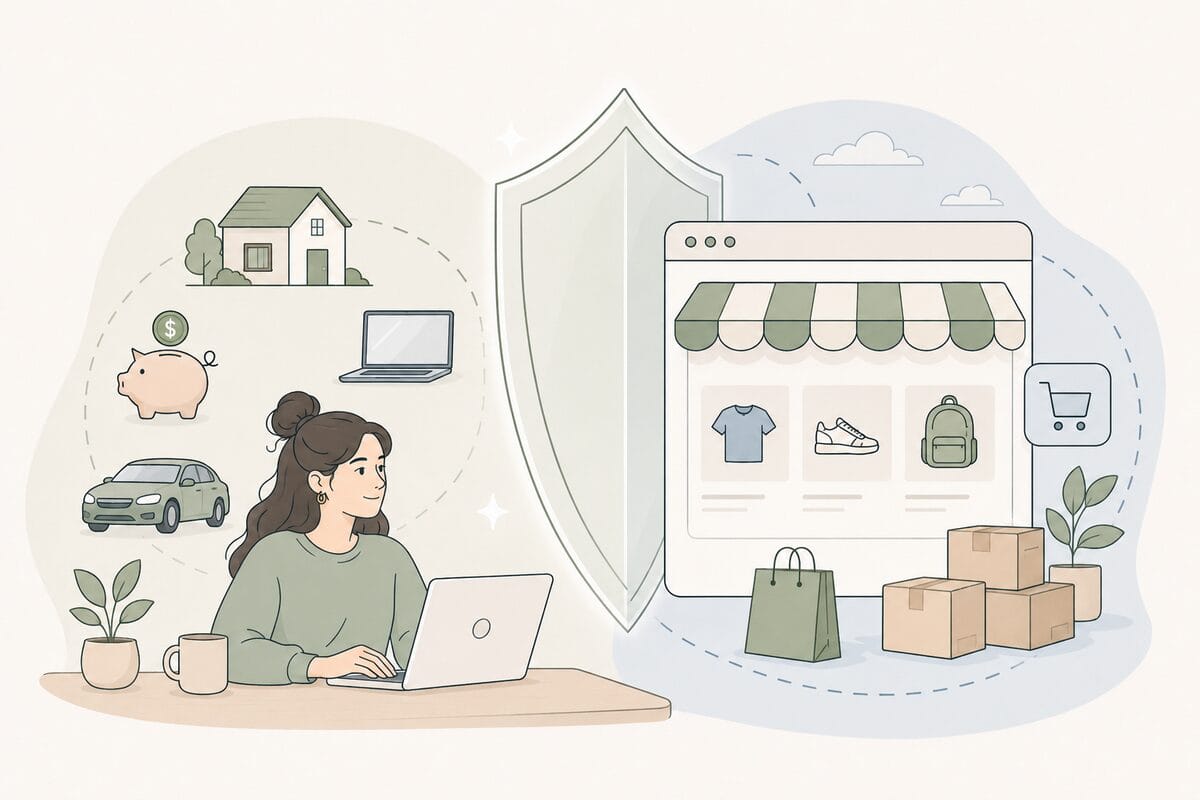
Grab your notebook and your pen because we’re going to get a bit technical. But I promise it’s necessary. An LLC, which stands for Limited Liability Company, is a legal business structure that separates your personal assets from your business activities.
In simpler terms, if something goes wrong with your dropshipping business, an LLC helps protect your personal finances, like your savings account, car, or the laptop currently holding your entire Shopify empire. You get my point.
Without an LLC, most beginner dropshippers operate as sole proprietors by default. That means there’s no legal separation between you and your business. So if your store gets sued, falls into debt, or runs into legal trouble, your personal assets could potentially be at risk.
Instead, an LLC creates a protective layer between “you, the person”, and “you, the business owner”. That’s the main reason why so many entrepreneurs eventually switch to one once their store starts generating consistent sales.
So, to recap, you have two options:
- You either stay with the default sole proprietorship.
- Or you create a separate legal entity, like an LLC.
Both are perfectly fine. They just fit different goals.
Do You Need an LLC for Dropshipping?
Here’s the short answer: no, you don’t need an LLC to start selling online. In fact, dropshipping is legal without it.
In fact, many successful dropshippers begin as sole proprietors. It’s faster, cheaper, and easier when you’re still testing products, figuring out your niche, and praying for your first Facebook ad to work.
That said, there’s a difference between starting a business and growing one. Once your store begins generating consistent sales, an LLC starts becoming much more relevant.
The real question isn’t: “Do all dropshippers need an LLC?”, because the answer is a simple no. It’s: “At what point does my business need that extra protection?” With that question in mind, let’s go through three different scenarios.
When an LLC Is Optional
An LLC is usually optional during the early stages of dropshipping, especially if:
- You’re just testing the business model.
- Your store is not profitable yet.
- You’re validating products before scaling.
- You’re operating with a very small budget.
- You want to keep things simple at first.
At this stage, many beginners prefer avoiding additional costs (yes, there are additional costs with an LLC, which we’ll get into later). And honestly? That’s completely reasonable.
Starting as a sole proprietor lets you move quickly and focus on learning, finding products that work, and making your first few sales.
When an LLC Becomes Important
An LLC becomes much more valuable once your dropshipping store starts operating at a larger scale or carrying more financial risk.
Here are some signs it may be time to form one:
- Your store generates steady monthly income.
- You’re reinvesting significant money into ads or inventory.
- You opened business bank accounts or payment processors.
- You want cleaner bookkeeping and tax organization.
- You plan to build a long-term e-commerce brand.
- You want liability protection as your customer base grows.
For example, imagine a customer files a legal complaint related to a product issue, copyright problem, or refund dispute. Without an LLC, you personally could be exposed to legal and financial trouble.
With an LLC, there’s generally more separation between your personal assets and your business obligations. This is even more important as you expand into multiple stores or hire contractors.
Also (and this isn’t minor), an LLC can make your business appear more trustworthy to suppliers, partners, and even customers. “Your Brand LLC” looks a bit more established on invoices, e-mails, or footers.
Can You Start Dropshipping Without an LLC?
So, going back to the intro. If you’re panicking because you’re running a dropshipping business but don’t have an LLC, now you know: you’re ok. You can totally start dropshipping without an LLC upfront. In fact, thousands of sellers do.
Moreover, platforms like Shopify, eBay, Facebook Marketplace, or Etsy generally allow individuals to start selling without a formal entity first. In many cases, you can begin as a sole proprietor using your personal information and transition into an LLC later, once the business gains traction.
However, just because “you can” doesn’t mean “you should forever”. The longer your business grows without proper separation between personal and business finances, the messier things get.
It’s much easier to organize things earlier than to untangle six months of PayPal transactions, ad expenses, and supplier invoices from your personal bank account afterward.
Benefits of Having an LLC for Dropshipping
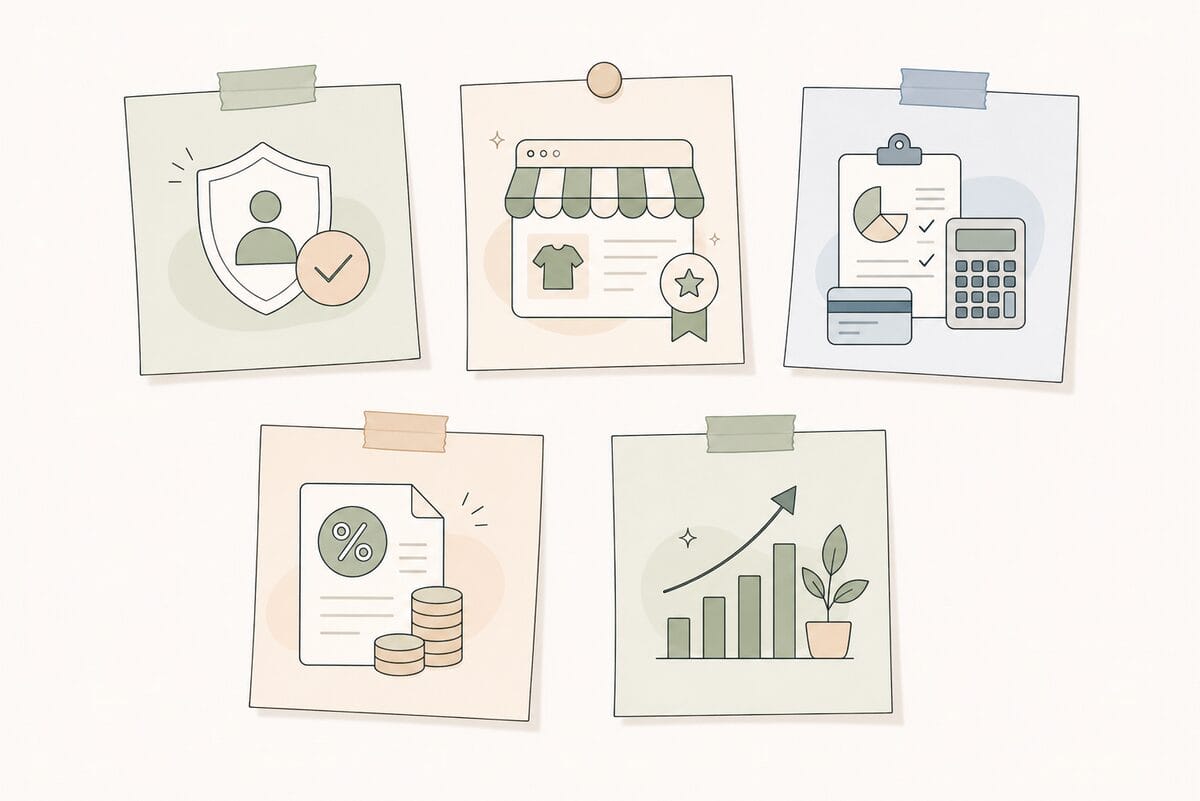
At first glance, forming an LLC for your dropshipping business can feel like a problem for future-you. But once you understand the actual advantages, it becomes clear why it’s actually a good idea, even if you’re just starting out.
Here are the biggest benefits.
Personal Liability Protection
This is the main reason LLCs exist in the first place. A Limited Liability Company helps separate your personal assets from your business liabilities. In practical terms, if your business runs into legal trouble, debt, or financial disputes, your personal finances generally have more protection.
Similarly to the example I’ve already mentioned: if a customer files a lawsuit (for whatever reason), without an LLC, there’s little legal distinction between you and the business. Your personal bank account, savings, or other assets could potentially be exposed.
Instead, with an LLC, the business becomes its own legal entity, reducing personal risk. Now, this doesn’t mean you suddenly become legally untouchable. If you commit fraud, ignore regulations, or mix personal and business finances carelessly, you can still create problems for yourself. But if you do things right, an LLC adds an important layer of protection.
More Professional Business Presence
Fair or not, how your brand looks matters in e-commerce. Having an LLC instantly makes your business look more established to suppliers, payment processors, banks, and customers. “Your Brand LLC” simply sounds more legit than receiving invoices from someone’s personal Gmail account named “potterhead2007”.
All in all, a more professional image can help open business bank accounts, partner with better suppliers, apply for payment processors, and build customer trust.
Easier Financial Management
One of the most underrated benefits of an LLC is organization. Once you form an LLC, it’s easier to open separate business bank accounts, payment processors, and accounting systems. This creates a much cleaner financial structure and makes bookkeeping easier.
Without this separation, things can get messy. You would find your personal Uber Eats charges, mixed with ad spend and random supplier invoices, buried in personal transactions from last weekend. You don’t want that.
Instead, keeping things separate helps you track profits more accurately, monitor expenses clearly, simplify accounting, prepare taxes more efficiently, and reduce financial confusion as you scale.
Potential Tax Advantages
Depending on your country, state, and income level, an LLC may provide certain tax advantages compared to operating as a sole proprietor.
In the USA, for example, LLCs offer flexible taxation options. Many single-member LLCs are taxed similarly to sole proprietorships by default, but some business owners later elect different tax structures that may reduce self-employment taxes or improve overall tax efficiency.
Even better? Operating as an LLC can make it easier to deduct dropshipping tax expenses, such as e-commerce software, advertising costs, home office expenses, internet and utilities, and business subscriptions.
💰 Financial Tip: Taxes and laws vary significantly depending on where you live. So, this is where I legally and morally tell you: talk to a qualified accountant or tax professional before making decisions based on TikTok or YouTube finance advice.
Better Long-Term Scalability
If your goal is to build an actual e-commerce business and not just test a side hustle for a few weeks, an LLC creates a much stronger long-term foundation.
As your business grows, operations naturally become more complex. You get more sales, transactions, payments, suppliers, partners, and so on. An LLC makes it easier for you to manage that growth in a more structured and professional way.
It can also help you if you eventually want to sell your business, bring in business partners, apply for financing, or expand internationally.
Downsides of Starting an LLC For Dropshipping
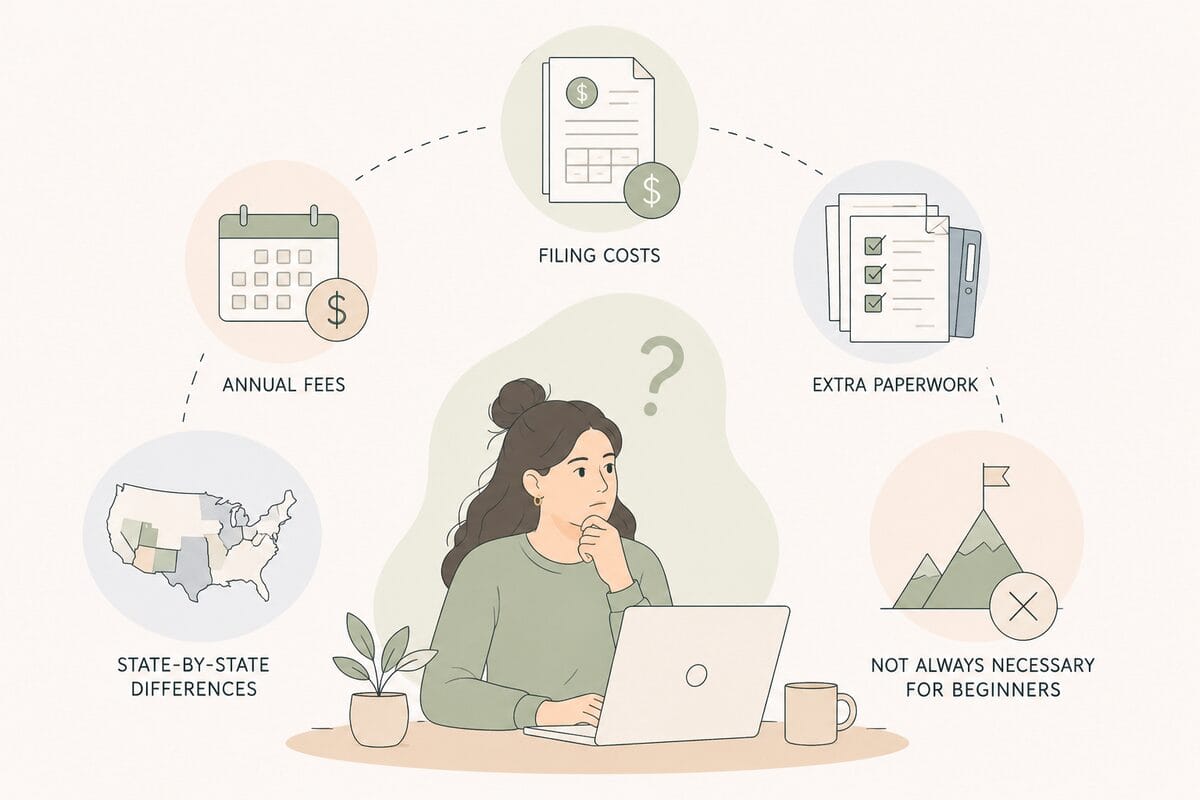
At this point, LLCs might sound like the perfect solution for every dropshipper on Earth. Let’s all get an LLC! But before you rush to register your Shopify empire after the second sale, it’s important to understand the downsides too.
An LLC can absolutely be worth it, but it also comes with costs, responsibilities, and extra admin work that not every beginner actually needs right away.
First things first: Starting an LLC is not free. Remember when I said we were going to talk about costs later on? Well, that moment has come.
Costs Of An LLC In The US
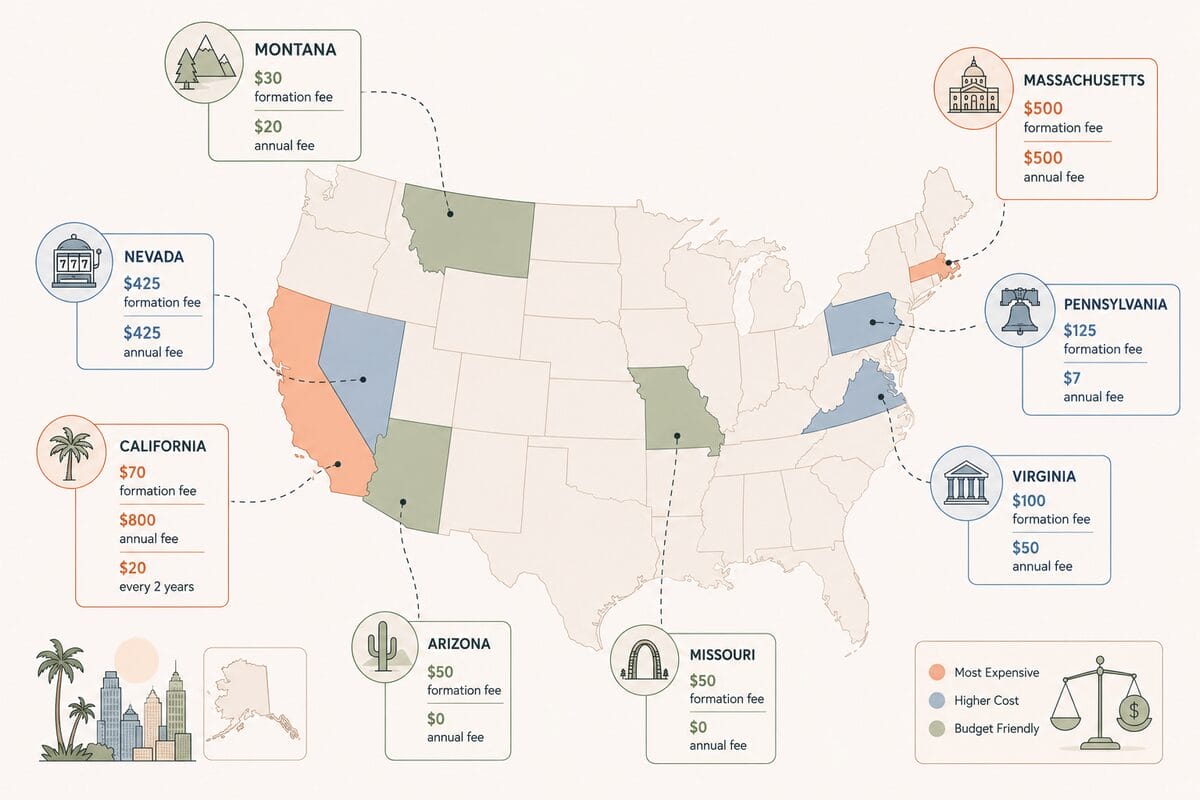
Depending on your country or US state, formation costs and annual fees can range anywhere from under $50 to several hundred dollars. Some states are fairly affordable, while others treat LLC fees like a Marvel movie budget.
Let’s see a few examples.
- Massachusetts is one of the most expensive states to form an LLC. The formation costs $500, with annual fees of another $500. Nevada is another expensive one at $425/formation, plus $425/year in fees.
- On the complete opposite side, you have Arizona or Missouri, where the formation costs $50 with no annual fees (lucky dropshippers from these states!), or Montana, with a $30 formation fee + $20/year.
- Somewhere in the middle lies Pennsylvania at $125/formation + $7/year, and Virginia at $100/formation + $50/year.
- Also, some states charge every two years, like New York, Nebraska ($13/two years, not bad!), and Indiana, among others.
- Finally, California deserves its own spot: $70 for formation, then a striking $800 in annual fees + $20 every 2 years.
And yes, annual or biannual fees are mandatory even if you made no money from your business. That’s why many beginners wait until their store starts generating revenue before officially making the big investment (especially in more expensive states).
💰 Financial Tip: While some states are more affordable, it doesn’t mean that you can form an LLC anywhere you want. This could lead you to accidentally operating illegally in your home state and needing to maintain two LLCs instead of one.
Forgetting to pay these fees can create penalties, late fees, or even the administrative dissolution of your LLC. This is why ongoing maintenance matters just as much as the initial setup.
Other Implications To Consider
All of these costs also lead to more paperwork. Compared to a sole proprietorship, LLCs usually require more documentation and organization, including:
- Separate business bank accounts.
- Búsiness tax filings.
- Financial recordkeeping.
- Compliance paperwork.
- State reporting requirements.
For instance, some states charge you $0 in annual rates but require an annual report to be filed, such as Idaho, Mississippi, Minnesota, and Texas. And if you’re wondering about our besties, Arizona and Missouri… no, they have no annual fee and don’t require an annual report either.
💡 Pro Tip: This is the part where you’ll need a bit of help to keep things organized. Tools like AutoDS can help you centralize your e-commerce operations, including order tracking, transaction processing, and business activity monitoring. Give it a try with the $1 trial and see how it can help you keep things tidy.
When Should Dropshippers Start an LLC?
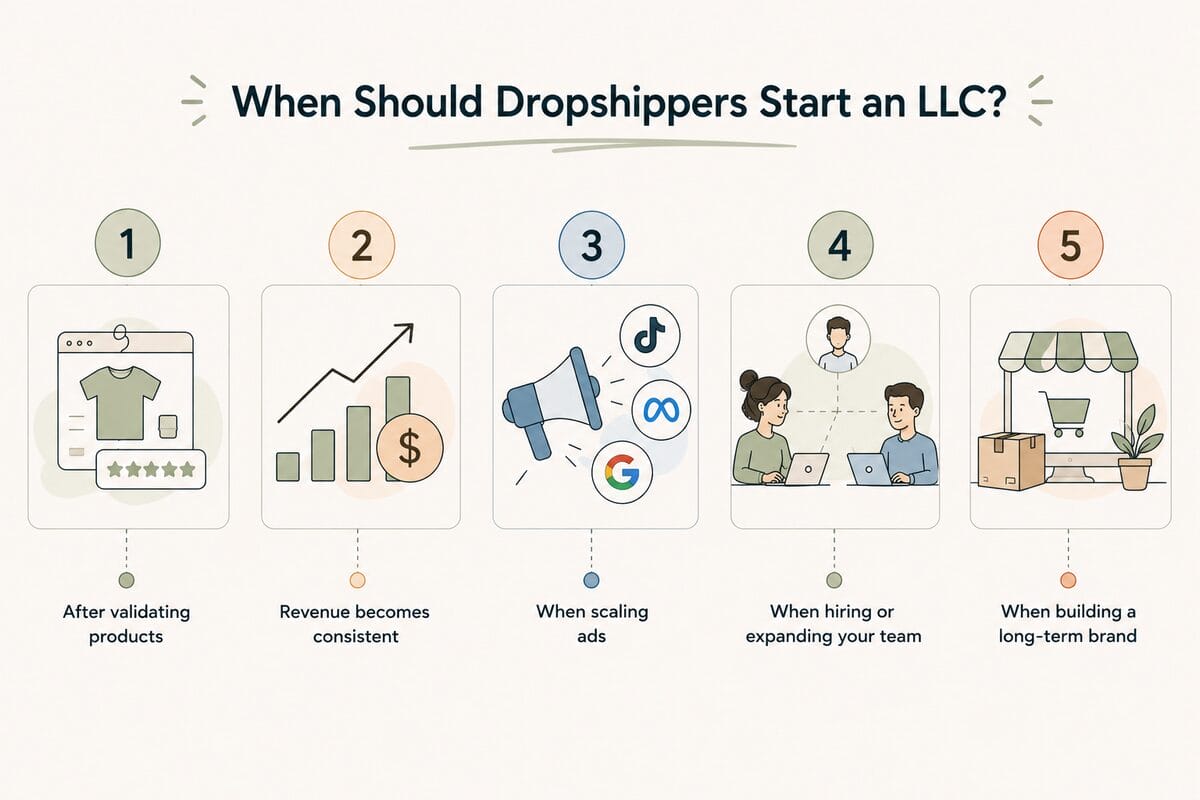
There’s no perfect moment to start an LLC, but there are clear signs that your dropshipping business is moving beyond the side-hustle phase.
Most sellers don’t need an LLC on day one. Instead, they usually form one once the business starts generating real momentum, for example:
- After validating products. You’ve confirmed people actually want your products, and your store is gaining traction.
- Revenue becomes consistent. If your store starts making steady monthly income, you’re no longer casually experimenting. At that point, separating personal and business finances becomes much more important.
- When scaling ads. Higher ad spend means higher financial risk. If you’re investing serious money into TikTok, Meta, or Google Ads, an LLC can help create cleaner accounting and better liability protection.
- When hiring or expanding your team. The moment you start working with assistants, freelancers, agencies, or business partners, having a proper business structure makes operations more professional and organized.
- When building a long-term brand. If your goal is to create a sustainable dropshipping business instead of a short-term side hustle, an LLC helps build a stronger foundation for future growth.
In other words, an LLC usually makes the most sense once your dropshipping business starts taking off.
Best Business Structures for Dropshipping
One of the most confusing parts of starting a dropshipping business is realizing there’s more than one way to legally structure it. Suddenly, you’re hearing terms like sole proprietorship, LLC, corporation, S-Corp… too many options, too confusing.
To keep things simple, dropshippers just need to understand three main options. Each one comes with different levels of protection, complexity, taxes, and costs.
Business Structures – Comparison Table
| Business Structure | Best For | Main Advantage | Main Drawback | Complexity Level |
|---|---|---|---|---|
| Sole Proprietorship | Beginners testing dropshipping | Easy and inexpensive to start | No personal liability protection | Low |
| LLC (Limited Liability Company) | Growing dropshipping businesses | Separates personal and business assets | Filing fees and ongoing compliance + fees | Medium |
| Corporation | Large-scale businesses with investors or teams | Strong legal protection and scalability | Complex setup and more paperwork | High |
Sole Proprietorship
If you start selling online without formally registering a business entity, chances are you’re already operating as a sole proprietorship. There’s no separate company involved. Legally speaking, you are the business.
The biggest perk here is simplicity:
- Minimal paperwork.
- Low startup costs.
- Easier setup.
- Fewer ongoing compliance requirements.
This makes sole proprietorships very popular for beginners testing dropshipping for the first time. That said, the downside is the lack of liability protection. Your personal and business finances are legally connected, meaning you personally assume the risks and obligations of the business.
For casual beginners, that’s no big deal. But as the business grows, many sellers eventually move beyond this structure.
LLC
The star of our show: an LLC (Limited Liability Company). This one is the most common business structure for growing dropshipping businesses.
As we’ve mentioned, it creates a legal separation between you and your business, helping protect your personal assets if the business runs into legal or financial issues. At the same time, LLCs are usually simpler and more flexible than corporations.
That’s why so many e-commerce entrepreneurs choose LLCs once they start making consistent revenue. The main advantages include:
- Personal liability protection.
- More professional business presence.
- Easier financial organization.
- Potential tax flexibility.
- Better long-term scalability.
The trade-off is that LLCs come with additional setup costs, annual fees, and compliance responsibilities depending on where you live.
Still, for many dropshippers, LLCs hit the sweet spot between protection and simplicity.
Corporation
Corporations are the most formal and complex business structure on this list.
They’re typically designed for larger businesses that plan to raise external investment, issue shares, build large teams, or scale aggressively in the long term.
Corporations offer strong liability protection, but they also come with much stricter legal, accounting, and compliance requirements. Compared to LLCs, corporations usually involve:
- More paperwork.
- More reporting obligations.
- More rigid management structures.
- More accounting complexity.
For most beginner and intermediate dropshippers, this is honestly too much.
Unless you’re building a massive e-commerce company with investors and long-term corporation expansion plans, an LLC is usually far more practical.
Which Option Is Best for Beginners?
So, to recap. For most beginners, the answer is simple:
👉 Sole proprietorship is usually best for testing the business model with minimal costs and complexity.
👉 LLC becomes the better option once revenue, risk, and long-term commitment start increasing.
👉 Corporations are generally unnecessary for an early-stage dropshipping business.
Most dropshippers start simple, validate the business, and then upgrade their business structure as they grow. The key is choosing a setup that matches your current stage.
How to Start an LLC for Your Dropshipping Business
Let’s get to work! This is where I walk you through each step of the process to start an LLC for your dropshipping business. It might sound intimidating, but it’s actually pretty straightforward once you take one thing at a time.
Ready? Let’s go.
Step 1 – Choose Your Business Name
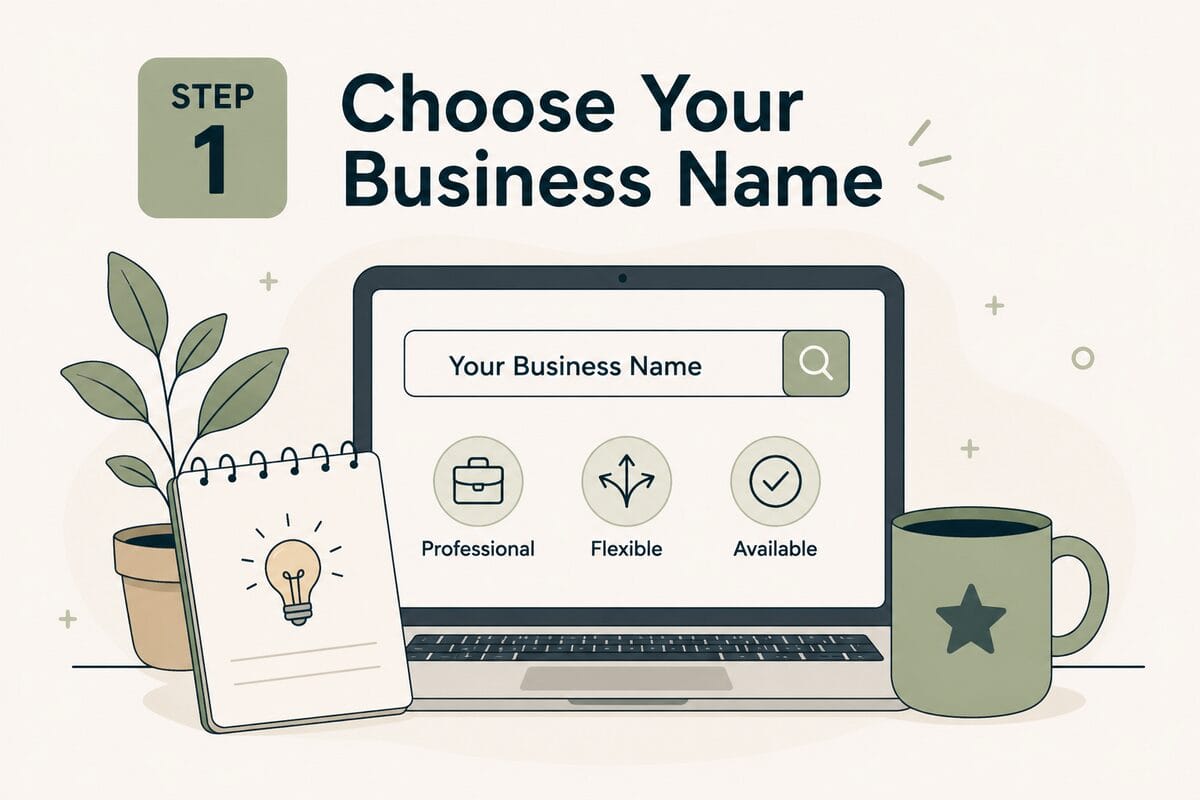
First, you need a business name for your LLC.
Ideally, this should match (or at least align with) your brand name, store name, or long-term business identity. Even if you eventually pivot products or niches, choosing something flexible is usually smarter than naming your company “Ultra Premium Cat Lamp Galaxy LLC” or something like that.
Keep it simple and professional, as the name later appears on invoices, bank accounts, payment processors, and legal docs.
Before registering the name, check:
- State or country business registries.
- Domain availability—super important!
- Social media handles.
- Trademark conflicts.
All good? Then off to the next step.
Step 2 – Pick Your State or Country
Next, you’ll choose where to officially register the LLC. Yes, we all want to register in Arizona or Missouri because of lower costs. But remember, you can’t just register anywhere. The best, easiest, and probably most compliant option is registering in the state or country where you actually live and operate. This avoids unnecessary complications later.
In fact, if you live elsewhere and actively operate the business from another state, you may still need to register in the state where you operate as a “foreign LLC”. That can create extra paperwork, extra fees, and extra headaches.
So, if you’re dropshipping, it’s best to start where you’re already established. Yup, even if you’re in $800-annual-fee-California. No hacking the system here.
For example, if you run your dropshipping store from New Jersey but sell nationwide (as most online sellers do), you would typically form an LLC in New Jersey, even if your customers are in other states. Your buyers’ locations don’t affect where you form your LLC; they may affect sales tax nexus, but that’s a different topic.
Step 3 – File Formation Documents
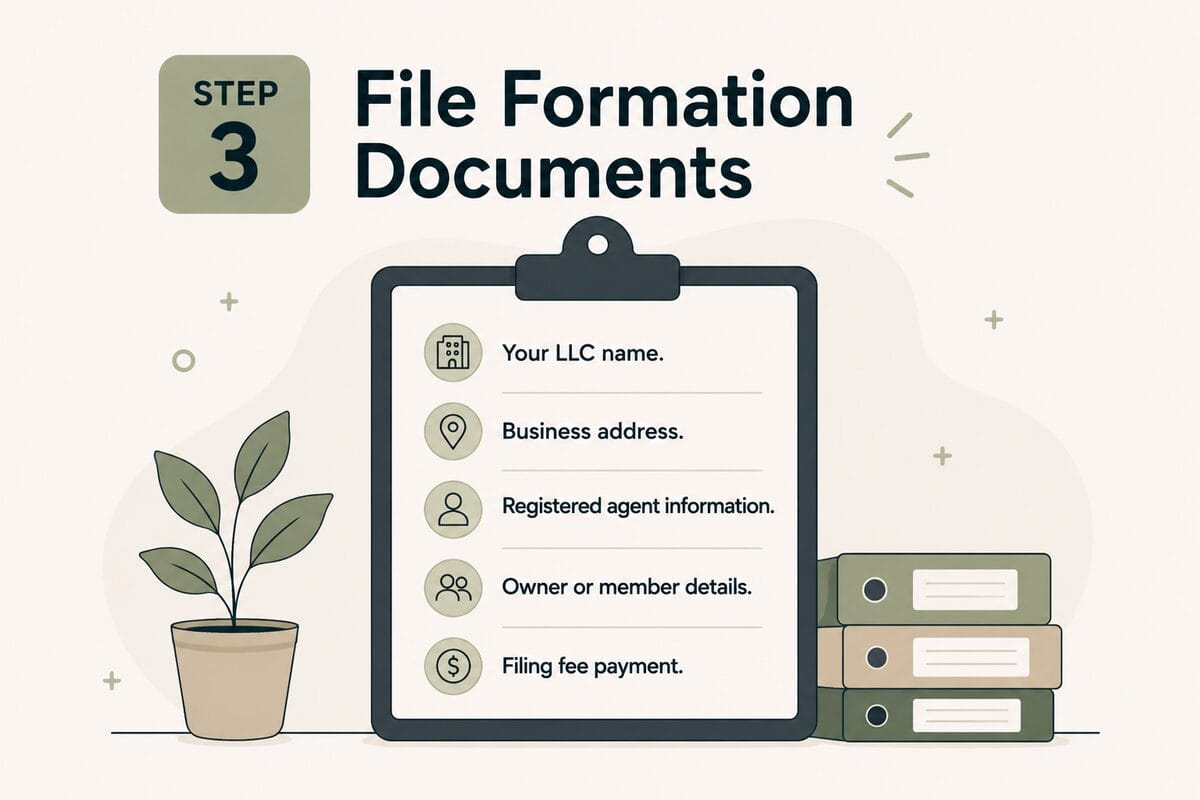
This is the official step where your LLC legally comes to life.
You’ll typically file formation paperwork with your local state or government authority. In the US, this document is often called the “Articles of Organization”.
The filing process usually includes:
- Your LLC name.
- Business address.
- Registered agent information.
- Owner or member details.
- Filing fee payment.
Some dropshipper handle everything online themselves, while others use LLC formation services or accountants to simplify the process. Then, depending on your location, approval can take anywhere from a few hours to several weeks.
Step 4 – Apply for an EIN
An EIN (Employer Identification Number) is basically the business version of a Social Security Number in the US.
This number is necessary to open a business bank account, file taxes, work with payment processors, and separate personal and business finances. It’s basically what turns your little side hustle into an actual business, formalizing your operations.
Applying for an EIN is usually free through the IRS (Internal Revenue Service) if you’re in the US.
Step 5 – Open a Business Bank Account
Once your LLC is approved and you’ve got your EIN, open a dedicated business bank account as soon as possible.
This is what will help you avoid mixing personal and business finances. A separate business account helps keep everything cleaner and more professional from day one.
It also makes it much easier to track profits, manage ad spend, monitor supplier payments, and understand your store’s overall profitability.
Step 6 – Connect Your Store & Automation Tools
Once the legal setup is complete, it’s time to connect the operational side of your business. This includes getting your e-commerce platform (are you going for a customizable Shopify store, or prefer an Amazon / eBay / AliExpress kind of marketplace profile?) and payment processors.
It also includes picking your suppliers, setting up automation workflows, and integrating everything into a single ecosystem: selling channel + supplier network + operational platform.
This is where platforms like AutoDS become especially useful. AutoDS centralizes everything in one single dashboard. It integrates with your selling channel and your suppliers, and then automates product sourcing, imports, inventory monitoring, price updates, order fulfillment, and tracking updates.



As your business grows, having those systems organized becomes incredibly important for maintaining professionalism, financial clarity, and smoother operations.
Do Shopify, Amazon, or eBay Require an LLC?
Good news: most e-commerce platforms do not require an LLC to get started, giving beginners time to start selling before actually forming one.
You can usually begin selling as an individual or sole proprietor first and form an LLC later as your business grows.
That’s the case for some of the most popular selling channels, like Shopify, Amazon, and eBay. None of them requires an LLC to open a store or a seller profile. That said, each one has different requirements to start selling:
- Shopify is generally the most beginner-friendly early on, as you can register with your legal name, personal address, bank account, and personal tax information.
- Amazon tends to have much stricter identity, bank, tax, and address verification requirements before fully activating seller accounts. This includes government-issued ID, proof of address, bank account verification, credit card info, and tax identification information. In general, the Amazon dropshipping policy is a bit stricter than other selling channels, not just for verification purposes but also for selling practices.
- eBay dropshipping policy also requires identity, banking, and tax verification to comply with payment and marketplace regulations. Depending on your country, it may require your legal name, address, bank account information, tax details, and a government-issued ID to verify your identity and receive payouts. Still, the process is less intense than Amazon’s seller verification system.
Also, as your store grows, platforms may require additional business verification documents for compliance, fraud prevention, and tax reporting purposes.
Now, answering the main question: no, you don’t need an LLC to start selling on Shopify, Amazon, or eBay.
Taxes & Legal Considerations for Dropshipping
Let’s talk about the part of running a dropshipping business that nobody likes (but we all need to know): taxes and legal compliance.
The reality is that forming an LLC is just one part of the process. Because here’s the thing: whether as a sole proprietor, LLC, or corporation, you still need to follow compliance and tax requirements.
The first big one is dropshipping taxes. Depending on where you live and where your customers are located, you may be required to collect and remit sales tax on certain transactions. In the US, these rules can vary significantly by state, especially once you reach certain thresholds. Same with other countries through VAT, GST, or other consumption taxes.
Each location has its own business license or permit requirements. Some cities, states, or countries require basic business registrations even for small online stores.
🆕 Beginner’s Tip: Tax and legal rules vary depending on your region and business model. What applies to one dropshipper may not apply to all. So, big disclaimer here: always consult a qualified accountant, tax advisor, or attorney to keep things legal and compliant.
Another area is record-keeping. From day one, keep things organized. This includes records of sales, revenue, supplier invoices, expenses, refunds, chargebacks, and tax-related documents.
Lastly, you should pay attention to supplier compliance. Not every supplier operates to the same standards, and not all comply with marketplaces’ regulations. After all, you’re responsible for what you sell. So, before listing products, make sure your supplier complies with laws, platform policies, intellectual property rules, and product safety regulations.
Common Mistakes Beginners Make With LLCs
An LLC can absolutely help protect your business and make it feel more legitimate. But don’t fall into the trap of thinking it’s a cure-all. Plenty of beginners rush to form one, only to realize they’re still responsible for taxes, compliance, and keeping their finances organized. The paperwork may change, but the work of running a business doesn’t disappear.
Common mistakes include:
- Forming an LLC too early. Some beginners spend more time researching LLCs than actually building their store. Still testing products? Haven’t validated your business model? Then it makes more sense to focus on actually making money with dropshipping first and formalizing the business later.
- Mixing personal and business finances. One of the biggest benefits of an LLC is separating yourself from the business. But if you’re still using the same bank account for supplier payments, ad spend, groceries, and your Netflix subscription, you’re defeating part of the purpose. Open a dedicated business account and keep your finances organized from the start.
- Ignoring taxes because you have an LLC. Forming an LLC is not a magic spell on everything else that comes with your business. You still have tax obligations, which means you need to report income, track expenses, and comply with local tax laws. Many beginners mistakenly assume an LLC somehow does everything for them. Unfortunately, it doesn’t work that way.
- Choosing the wrong business structure. An LLC is a great fit for many dropshippers, but not necessarily for all of them. Depending on your location, income level, and long-term goals, a sole proprietorship or corporation could make more sense. The best structure is the one that matches your specific situation.
- Thinking an LLC guarantees success or protects you from everything. An LLC provides liability protection, sure. That doesn’t mean it will magically make your business profitable, prevent chargebacks, fix supplier issues, and protect you if you ignore laws and platform policies. Think of it as a safety net, not a superhero babysitting you.
The good news? Once you understand the scope of an LLC, you know what it does and what it doesn’t.
How AutoDS Helps You Build a More Professional Dropshipping Business
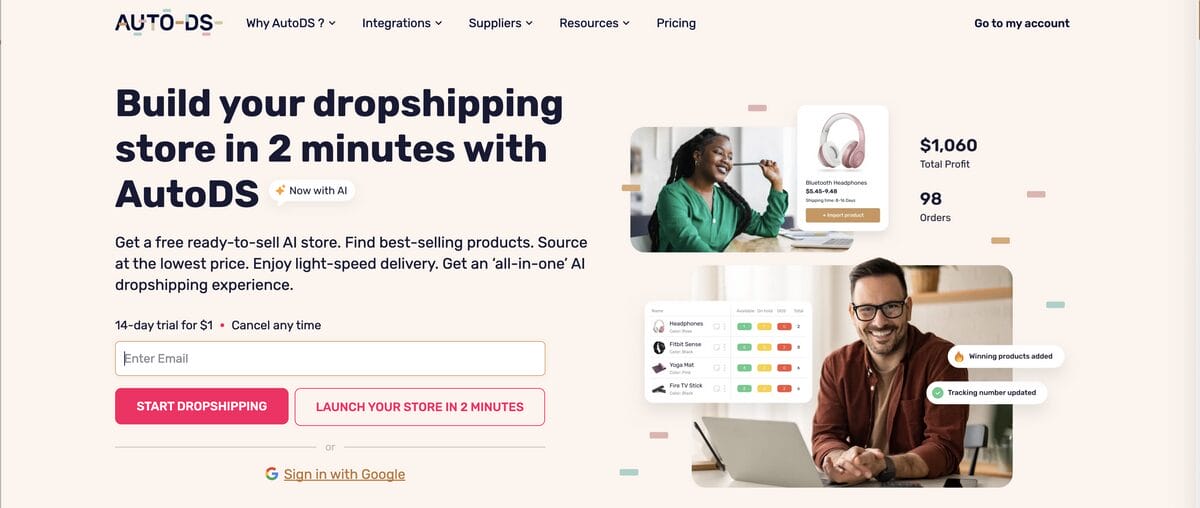
Whether you decide to form an LLC today, six months from now, or never, one thing remains true: running a professional dropshipping business requires systems.
The more your store grows, the harder it becomes to manage everything manually. Product imports, supplier communication, inventory updates, order fulfillment, tracking numbers… All of this is dangerously prone to errors when done manually. And one error can lead to chargebacks, angry customers, and compliance issues.
That’s where AutoDS comes in. With full automation, AutoDS centralizes your entire operation in one place, making it easier to stay organized and run your business more efficiently. How, exactly? Simple:
- End-to-end automation for every step of the workflow, like product importing, price updates, stock monitoring, and tracking updates.
- Automatic order fulfillment to deliver a smooth and immediate customer experience while reducing manual work and eliminating potential errors completely.
- Multi-platform selling to manage multiple stores from one single place. It integrates directly with Shopify, eBay, Amazon, Etsy, Wix, WooCommerce, TikTok Shop, and Facebook’s ecosystem.
- Full supplier management for 25+ global vendors, like Amazon, AliExpress, eBay, Walmart, Target, Costco, and Shein, and private manufacturers vetted for compliance.
- Scaling operations support. What works for 10 orders a month still works at 100 or 1,000 orders. No need to expand your team, juggle multiple tools, or have your operational data all over the place.
So, while an LLC helps you structure your business legally, AutoDS helps you run it operationally.
Frequently Asked Questions
Do I need an LLC for my dropshipping business if I’m the only owner?
No, you don’t necessarily need an LLC for your dropshipping business if you’re the only owner. Many sellers start as sole proprietors, especially when they’re just testing products and learning the business. That said, an LLC can provide additional liability protection and add a layer of professionalism to your store, so it’s good to consider it once the business starts growing.
Can I convert my sole proprietorship dropshipping business to an LLC later on?
Yes, you can convert your sole proprietorship into an LLC later. In fact, that’s the path many e-commerce entrepreneurs take. They start as sole proprietors, validate the business, and then form an LLC once revenue becomes more consistent.
Is it possible to operate a dropshipping business without an LLC and still have personal liability protection?
Generally, no, it’s not possible to operate a dropshipping business without an LLC and still have personal liability protection. One of the main reasons people form LLCs is to create legal separation between personal and business assets. Without that, your personal finances are usually more exposed to business-related liabilities.
Can you dropship without a business license?
In many locations, yes, you can dropship without a business license. However, business license requirements vary by country, state, and even city. Even if a platform allows you to sell without a license, you should always check your local regulations to determine whether one is required.
When should you form an LLC?
You should form an LLC after validating your products, generating consistent revenue, increasing ad spend, hiring help, or committing to building a long-term brand. There’s no universal rule, but it’s usually more important once the business starts growing.
Does Shopify require an LLC?
No, Shopify doesn’t require an LLC. Shopify allows individuals to open stores and sell products with their own information. You can start as a sole proprietor and form an LLC later if it makes sense for your business.
Does Amazon require an LLC?
No, Amazon does not require an LLC. Amazon allows individuals to sell without an LLC, but it requires seller verification documents, such as identification, banking information, and tax details. Many larger sellers eventually form LLCs as their businesses grow.
How much does an LLC cost?
LLC costs depend on where you register. The formation cost is a one-time payment that ranges from $35 to $500, depending on the state. Then, some states have an annual or biannual fee that can range from as little as $7 (like Pennsylvania) to $800 (like California). Others don’t even have this fee at all.
What taxes do dropshippers pay?
Dropshipping taxes depend on your location, but dropshippers are commonly responsible for income taxes on profits and may also need to collect and remit sales tax, VAT, GST, or similar consumption taxes.
Is an LLC better than a sole proprietorship?
No, an LLC isn’t necessarily better than a sole proprietorship, as it depends on each situation. Sole proprietorships are simpler and cheaper to start, making them ideal for beginners. LLCs offer additional liability protection and can make financial management easier, which is why many dropshippers transition to one as their businesses grow.
Start Your Dropshipping Journey with AutoDS
So, going back to your main question: do you need an LLC for dropshipping? Not necessarily. You can start as a sole proprietor and form an LLC once your business takes off with consistent revenue.
The key is understanding when the benefits of liability protection, financial separation, and professionalism outweigh the costs and paperwork.
What you can do before is treat your business like a real store from day one. This means making your operations more efficient, automating workflows, and centralizing everything in one place.
From product sourcing and inventory management to automated fulfillment, AutoDS gives you the tools to stay organized and scale more efficiently. You get everything organized in one single dashboard, even if you manage more than one store and source from multiple suppliers.
You can give it a try with the $1 trial and see how much easier dropshipping becomes with automation on your side.
Want to continue learning and unlocking best practices? Here are a few related reads you might find helpful:
- What Is An LLC?
- Do You Need An LLC For Dropshipping?
- Benefits Of Having An LLC
- Downsides Of Starting An LLC
- When Should Dropshippers Start An LLC?
- Best Business Structures For Dropshipping
- How To Start An LLC For Your Business
- Do Shopify, Amazon, Or eBay Require An LLC?
- Dropshipping Taxes & Legal Considerations
- Common Mistakes Beginners Make With LLCs
- How AutoDS Helps Build A Professional Business
- FAQ
- Conclusion