


Overlooking your Shopify dropshipping costs can drain your budget before you even make your first sale. While it is far more affordable than starting a traditional retail business, hidden expenses like payment processing fees, premium themes, and app subscriptions often catch beginners off guard.
In this guide, we’ll explain the real Shopify dropshipping costs for 2026. We will break down platform fees, advertising budgets, and hidden dropshipping expenses. Plus, we’ll show you how to structure your starter budget to scale efficiently and provide tools to help you keep costs low.
For instance, AutoDS reduces expenses by centralizing your entire dropshipping operation in a single dashboard, eliminating the need for third-party tools and manual operations.
The highest cost isn’t Shopify itself but ads. Your Shopify plan and apps are predictable expenses, but advertising is the main growth level and the highest variable cost.
You can start lean and scale smart. You can start with a budget as low as $50 – $150 (for a subscription, key dropshipping apps, a domain, and a minimal ad spend) and then scale as you grow
Reducing your app stack protects your margins. Avoid stacking multiple apps and overlapping tools. Centralizing automation and fulfillment keeps your monthly costs lower and your store faster and healthier.
AutoDS protects your margins and reduces costs by centralizing the entire dropshipping operation into a single dashboard that integrates directly with Shopify.
How Much Does Shopify Dropshipping Really Cost in 2026?
Let’s get straight to the point: how much does Shopify dropshipping cost in 2026? Well, it depends.
Realistically speaking, most beginners can start dropshipping on Shopify with around $100. But if you want to scale properly (with paid ads, better tools, and automation), your budget naturally grows. Here’s a quick cost snapshot, depending on your stage and goals.
Shopify Dropshipping Costs Snapshot for 2026
| Cost category | Starter-level budget | Scaling-level budget |
|---|---|---|
| Shopify plan | $1/month for first 3 months (trial), then $39/month (Basic plan) | $39–$399/month (Basic or higher tier) |
| Domain | $15 - $20 per year | $15 - $20 per year |
| Theme | Free ($0) | Premium theme optional: $180–$400 one-time payment |
| Apps and automation | $20-$60/month (often trials or limited free plans available) | $40-$150/month for advanced tools |
| Advertising budgets | $50+ to test products | $500-$1,000+ per month (some scale to $5,000+) |
| Payment processing fees | ~2.9% + $0.30 per transaction (varies by region) | ~ 2.4% + $0.30 per transaction on higher plans |
| Estimated total budget | $150+ for first 3 months (depending on testing intensity) | $1,000–$2,000+ per month, largely driven by ads |
Notice something important? Shopify itself is rarely the expensive part. Your ad budget is. If we take away the budget spent from the Scaling-level snapshot, you can have a monthly budget as low as $100 – $200 for a Shopify plan and an automation tool.
In the following sections, we’ll zoom in on each of these costs. We’ll break down what they include, how they impact your margins, and how to manage them strategically without overspending to answer the ultimate question: How much does Shopify dropshipping cost?
One-Time vs Monthly Shopify Costs
Not all fees are paid monthly. Some dropshipping costs happen once, and then you just forget them. Understanding this structure helps you avoid cash flow surprises, calculate realistic profit margins, and plan when to upgrade tools.
Let’s separate them clearly so you can plan your Shopify dropshipping startup budget the smart way:
One-Time Expenses
These are setup costs. You pay them once, and that’s it. These include:
- Domain. Your custom store URL (like yourstore.com) usually costs $15 – $20 per year. It renews annually, not monthly. And yes, it’s worth it for credibility and branding.
- Premium theme (optional). Shopify offers free themes that are good enough to start. But if you want a premium look and advanced customization, expect a $180 – $400 one-time purchase.
- Logo and design (optional). You can design it yourself for free, use AI tools (which are pretty cheap), or opt to hire a designer for $20 – $200 an hour, depending on years of experience and portfolio. Again, this is optional. Your logo doesn’t need to win awards. It just needs to look clean and trustworthy.
Recurring Monthly Costs
These are the real operating costs of running a Shopify dropshipping store, due monthly. The main ones are:
- Shopify plans. This is your base subscription. Most beginners start with the Basic Shopify Plan for $39/month. Higher tiers cost more but reduce transaction fees and unlock advanced reporting.
- Apps. Product sourcing, reviews, upsells, email marketing… all add up. Expect $20 – $100/month, depending on how many tools you use and how advanced they are.
- Automation tools. These include features like inventory management, price monitoring, automatic fulfillment, and automated refunds. This is where serious sellers invest, and are around $20 – $80/month, depending on sales volume.
- Advertising. This is the highest cost in your business. It doesn’t have to be a lot, and it doesn’t have to be the same every month. You can test, reduce the budget for what doesn’t work, and double down on what does. During the testing phase, it’s good to start with at least $100 – $150/month. Then, during the scaling phase, you should go for at least $500 or way more, depending on your goals and budget.
- Payment processing fees. Every sale comes with a percentage fee (usually 2.4% – 2.9% + $0.30 per transaction, depending on your Shopify plan and region). You don’t pay this up front. It’s deducted from each sale automatically.
Shopify Plan Costs (Basic vs Higher Tiers)
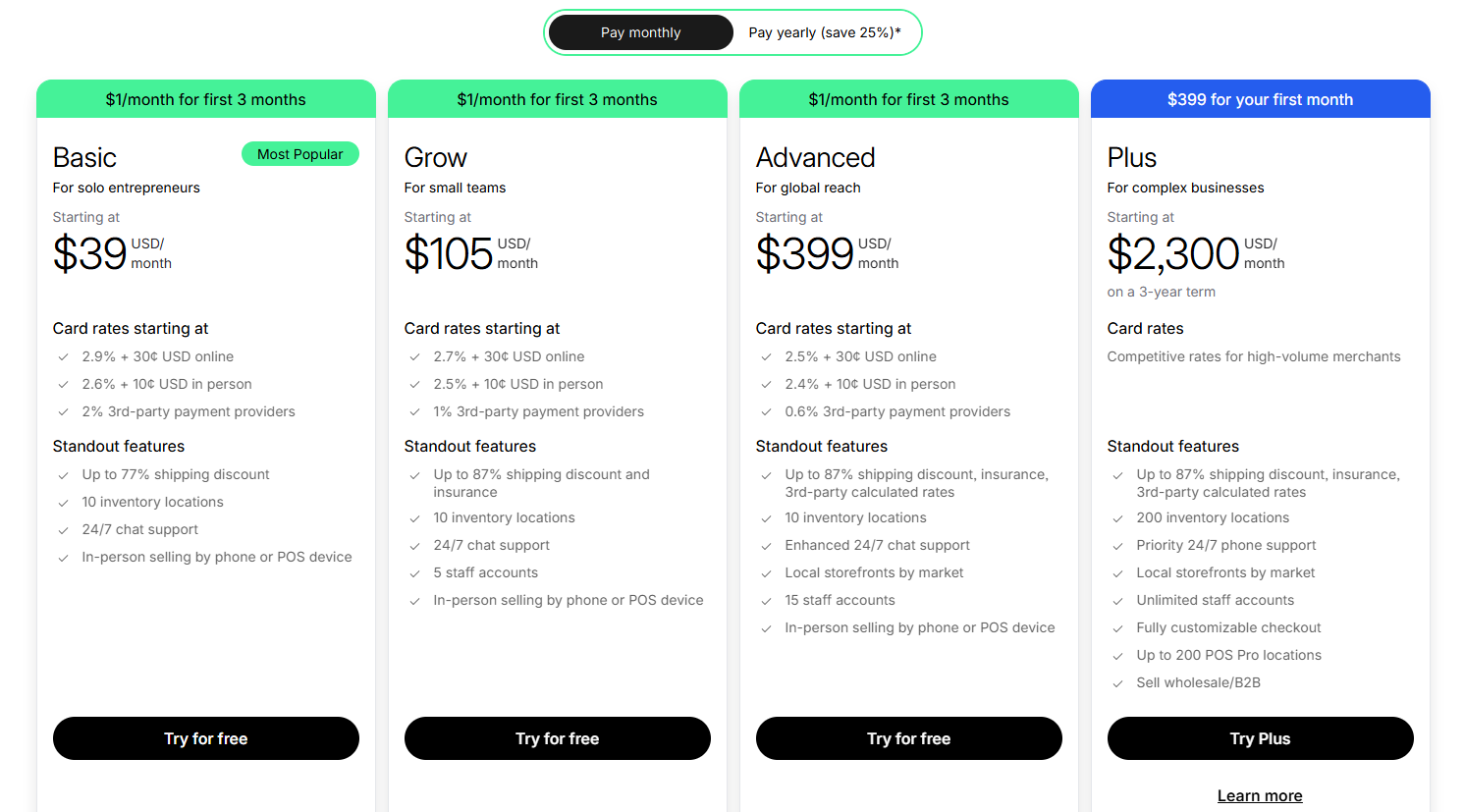
Choosing the right Shopify plan is one of the first decisions you’ll make when budgeting your store. In 2026, Shopify offers a tiered pricing structure with prices that vary depending on how you’re billed (monthly vs. annual).
Here’s the standard Shopify plans breakdown:
- Basic – starter friendly. It starts at $39/month (billed monthly) or $29/month (billed annually). It’s best for solo entrepreneurs, beginners, or simple dropshipping stores. You get a full e-commerce store with product listings, checkout, hosting, and basic features to start selling online. This plan is where most dropshipping stores begin.
- Grow – mid-tier for growing businesses. It’s $105/month (billed monthly) or $79/month (billed annually). It’s best suited for stores that are past the testing phase and need more features. It offers:
- Additional staff accounts.
- Better reporting tools.
- Lower transaction fees.
- Shipping discounts and features.
- More team collaboration tools than Basic.
- Advanced – scaling and analytics. It costs $399/month (billed monthly) or $299/month (billed annually). It’s ideal for established stores with consistent revenue, especially if your store is scaling to a point where insights and automation matter. It adds:
- Advanced reporting and analytics.
- Calculated shipping rates with external carriers.
- Lowest transaction fees among previous tiers.
- More staff accounts and expanded data tools than Grow.
- Plus – enterprise level. This one sits in its own league, as pricing is custom. But, generally, it starts at $2300/month and up, negotiated based on revenue or needs. It’s best for high-volume sales, large global operations, companies that require custom checkout or multiple storefronts, and B2B selling.
Domain & Branding Costs
Branding is what makes your store look professional, trustworthy, and legit. You don’t need to spend $5,000 on brand identity, but you do need to give it some love and attention.
When calculating your Shopify dropshipping costs for 2026, domain and branding are small expenses that make a big difference in credibility. Let’s break them down.
- Domain registration. This is your store’s address. Domain costs typically range between $10 – $20 per year. You buy it directly through Shopify or providers like GoDaddy or NameCheap.
🆕 Beginner’s Tip: When choosing a domain name, stick to .com or .store if possible. They’re easier to remember, more commonly used, and feel more legit.
- Custom email. Using [email protected] gives side project vibes. A custom email like [email protected] looks far more professional. Costs vary by provider. For instance, Google Workspace is about $6 – $12 per month. This is optional but, again, highly recommended.
- Basic branding assets. Branding doesn’t mean overcomplicating things. It means being consistent with how you present your brand. At minimum, you’ll want a simple logo, a color palette across visuals, consistent product images, and a clean font. This translates to costs like:
- If you do it yourself with Canva or AI tools: free to $15/month.
- Freelancer on Fiver or Upwork: $20 – $200+
- Full brand package: not necessary for beginners, but can start at $500+ for a one-time purchase.
👉 Total costs: You can realistically keep your branding and domain costs for around $50 to get started.
Theme Costs: Free vs Premium
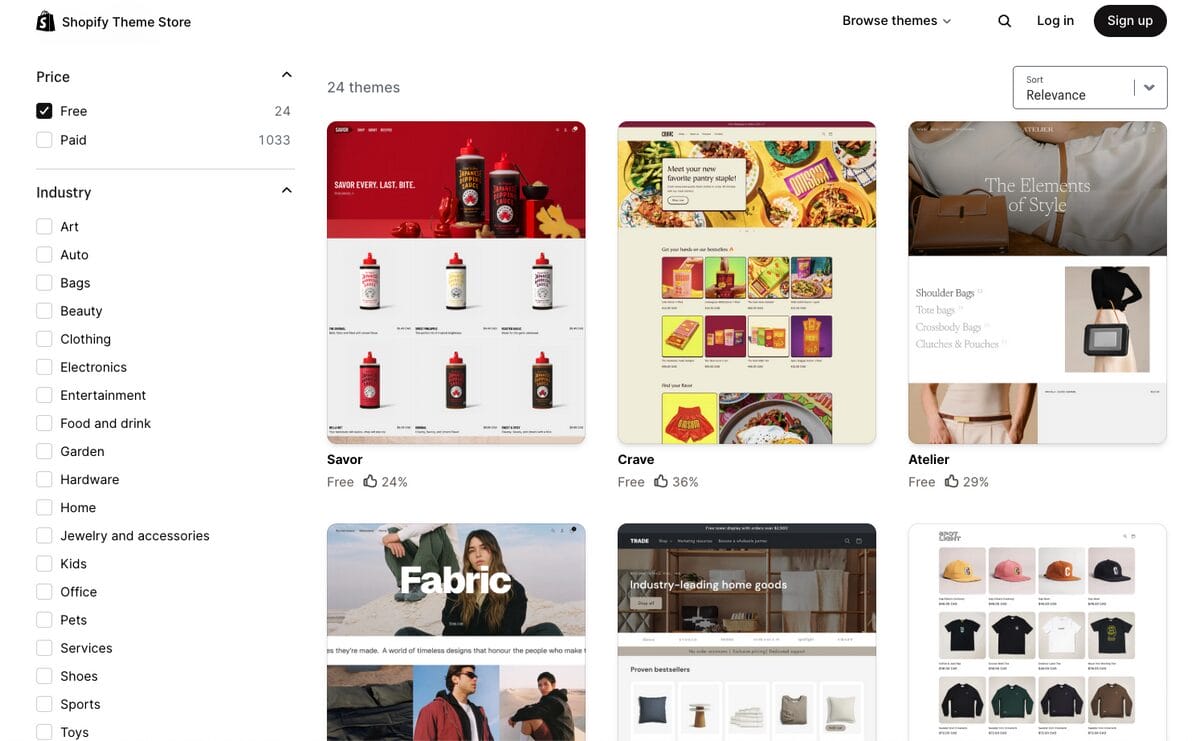
Your Shopify theme is like your storefront window. It sets the first impression, guides visitors inside, and influences how they move through the space. And, just like storefronts, you don’t need a luxury boutique setup to feel authentic and attract shoppers. You just need to find your own style.
In fact, there are solid free options that make it easy and affordable to get started for $0. This way, you can upgrade later when revenue justifies it.
Free themes are more than enough when you’re in the testing phase, validating products, keeping your budget thin, and not needing heavy customization. In these cases, Shopify offers clean, fast, and mobile-optimized themes built to convert.
Then, there are premium themes. These typically cost between $150 and $400 as a one-time purchase. Are they worth it? They’re not essential, but they make sense once you’ve validated your store and are looking to start scaling, especially if you need:
- More advanced layout options.
- Built-in upsell and cross-sell features.
- Enhanced customization.
- Niche-specific design (like fashion, tech, beauty, etc.).
- Polished UX.
So… free or premium? Easy:
👉 If you’re just starting out, go free.
👉 If you’re scaling and want a branded site, consider premium.
Go Live In Minutes With AutoDS’s AI-Built Shopify Store
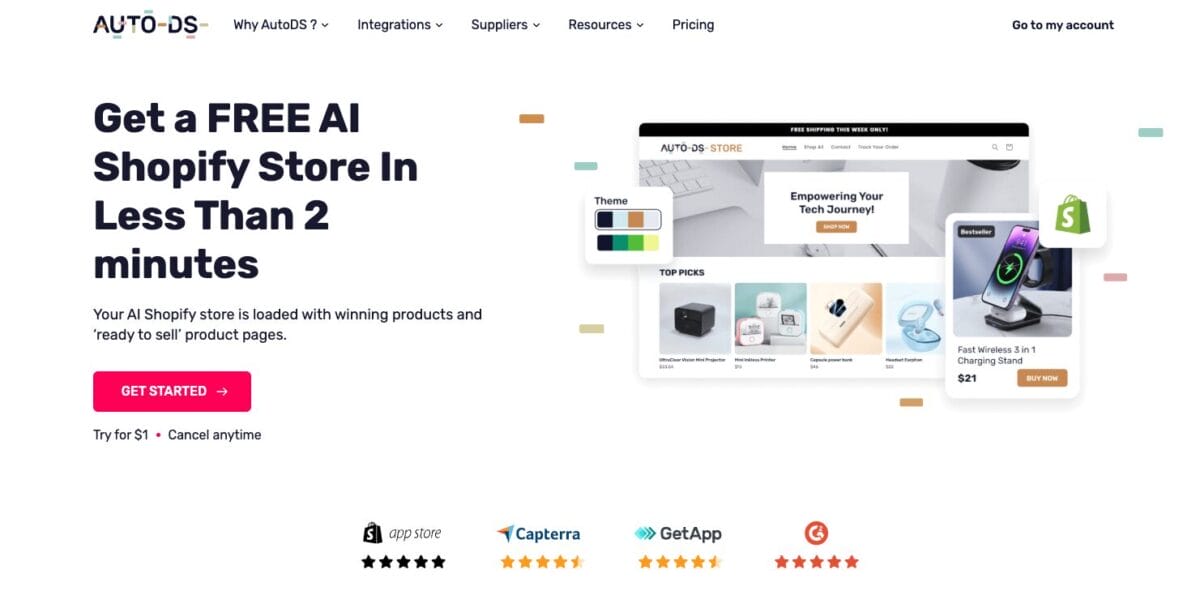
If your goal is to skip the whole “pick a theme, tweak sections, adjust spacing for three hours” phase, there’s another option.
AutoDS’s AI-built Shopify Store lets you launch a ready-to-sell Shopify store in minutes. Instead of manually designing everything from scratch, you get a professionally structured store layout, optimized product pages, and a clean design framework built for conversion. It includes:
- High-converting and customizable themes designed for specific niches.
- 10 proven winning products ready to sell immediately, picked from the AutoDS marketplace.
- Ready-to-sell product pages optimized to convert (including copies, CTAs, and pricing)
- A free .store domain (no extra fees or setting it up yourself).
All in all, AutoDS AI-built Shopify Store reduces expenses not just because it’s included in AutoDS’s base plan, but also because you don’t need to buy a premium theme, you avoid hiring a designer, and you skip the trial-and-error design phase, saving time and money.
This is especially helpful if you’re a beginner and want to move fast, don’t want to overthink design decisions, and care more about launching than perfecting.
Essential Shopify App Costs
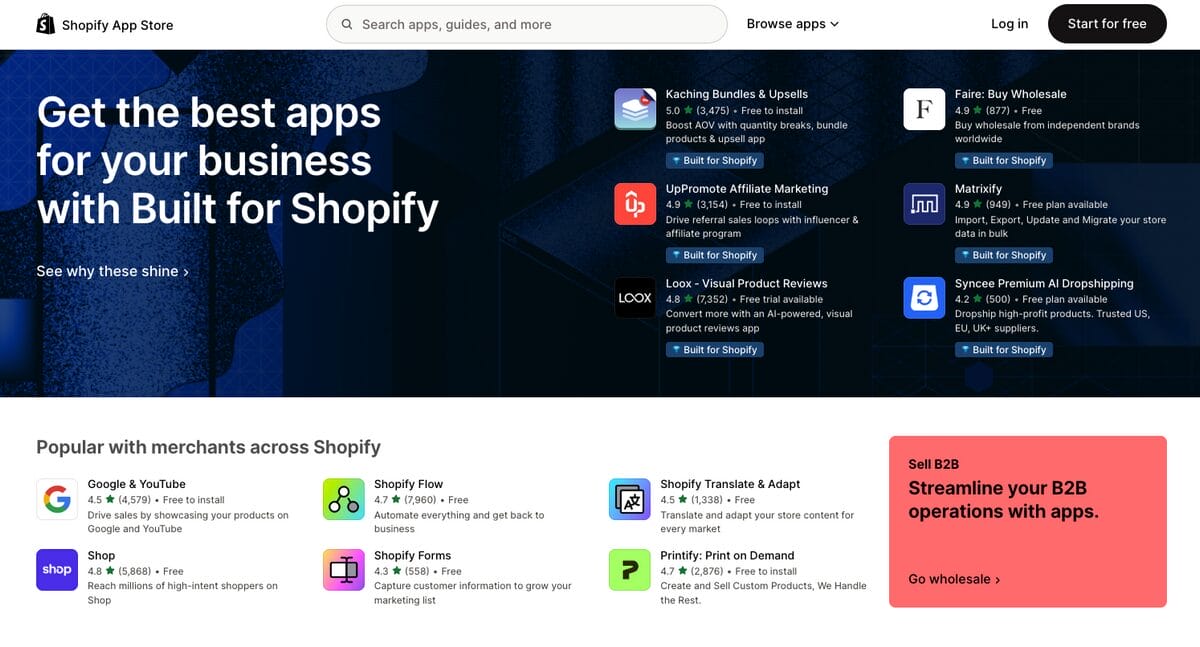
If Shopify is the engine of your store, apps are the upgrades. And when calculating your budget, it’s not the $39 plan that adds up. It’s stacking 6-10 random apps at $20/month and wondering where your margins went. The key isn’t using more apps, but using the right ones. For example:
- Product research tools. These help you know what’s worth selling. They spot trending products, analyze competitors, estimate demand, and validate market potential. They typically cost between $20 and $80 per month, depending on features and data depth.
- Automation and fulfillment tools. This is where dropshipping becomes scalable instead of stressful. Automation tools handle product importing, inventory and price syncing, automatic order fulfillment, and tracking updates. Without automation, you’re stuck updating everything manually, which is not scalable. They typically cost between $20 and $80/month, depending on order volume.
- Upsell and conversion apps. These apps can add bundles, create quantity discounts, show urgency timers, and offer post-purchase upsells. Their cost ranges from $10 to $50 per month, but some premium themes include built-in upsell features, reducing your app stack.
- Email and SMS marketing tools. These tools help you recover abandoned carts, send promos, build customer retention, and create automated flows. Most of them offer free tiers up to a certain number of subscribers, then scale with your database. Costs are around $30 – $100+ per month, depending on subscriber volume.
AutoDS centralizes all of them into one single dashboard and a monthly subscription. This reduces expenses and simplifies workflows. Instead of paying separately for product research, importing tools, and automated fulfillment, you get everything connected in one place.
The result is fewer subscriptions, fewer integrations, and fewer technical back-and-forths. And more importantly, a cleaner, faster store that isn’t overloaded with eight different apps.
So… average app costs? It depends. Here’s a realistic monthly estimate depending on your current phase:
👉 Testing phase: $20-$60/month
👉 Growth setup: $40-$150/month
🆕 Beginner’s Tip: Be careful. The biggest mistake beginners make is stacking too many overlapping tools. Keep it simple, efficient, and budget-friendly. This protects your margins and keeps your site healthy, fast, and optimized.
Payment Processing Fees Explained
This is the part nobody gets excited about, but everyone pays (even those on the $1 trial). Payment processing fees are built into every e-commerce business. They’re not optional, and they’re not upfront. They’re actually automatically deducted from each sale.
So, if you’re calculating your Shopify dropshipping costs for 2026, you need to understand how these fees impact your real profit. Let’s break it down clearly.
- Shopify Payment processing fees. If you use Shopify Payments (Shopify’s built-in payment processor), you avoid additional Shopify transaction fees. You only pay the card processing rate tied to your plan. These are the standard rates for every sale in 2026:
- Basic: 2.9% + $0.30 per transaction.
- Grow: 2.6%+ $0.30 per transaction
- Advanced: 2.4% + $0.30 per transaction
- Credit card fees. Credit card processing is included in the rates above if you’re using Shopify Payments. But keep in mind that international cards may have slightly higher rates, currency conversion fees may apply, and chargebacks can include additional fees. So, while you see “2.9% + $0.30 per transaction”, the real number can slightly increase depending on your region and specific scenarios.
- Third-party payment gateways. If Shopify Payments isn’t available in your country, or you prefer another processor (like PayPal or Stripe), Shopify charges an additional transaction fee on top of the payment provider’s fee. This typically ranges from 0.5% to 2% extra, depending on your plan. In this case, you’re paying the Payment provider fee and the Shopify transaction fee, which makes it a higher expense to keep in mind.
How Fees Affect Profit Margins
The issue with fees is that sellers tend to overlook them. What beginners don’t realize is that even small percentages compound quickly at scale. If you don’t factor them into your pricing strategy from day one, they eat your margins on every single sale.
Let’s say you sell a product for $50 and your product cost is $25. Shipping is free, included in the total cost.
At 2.9% + $0.30 Shopify fee:
- 2.9% of $50 = $1.45
- + $0.30 = $1.75 total fee
Now your gross margin drops from $25 to $23.25 before ads, shipping costs, or even third-party payment gateway fees. That might not sound like much, but multiply that by 500 orders per month, and you’re talking about $875 in fees.
Of course, fees are unavoidable when dropshipping on Shopify or any other platform, for that matter. The goal is not to not pay them, but to understand them, price your products accordingly, and keep them under control.
Advertising & Marketing Budget Expectations
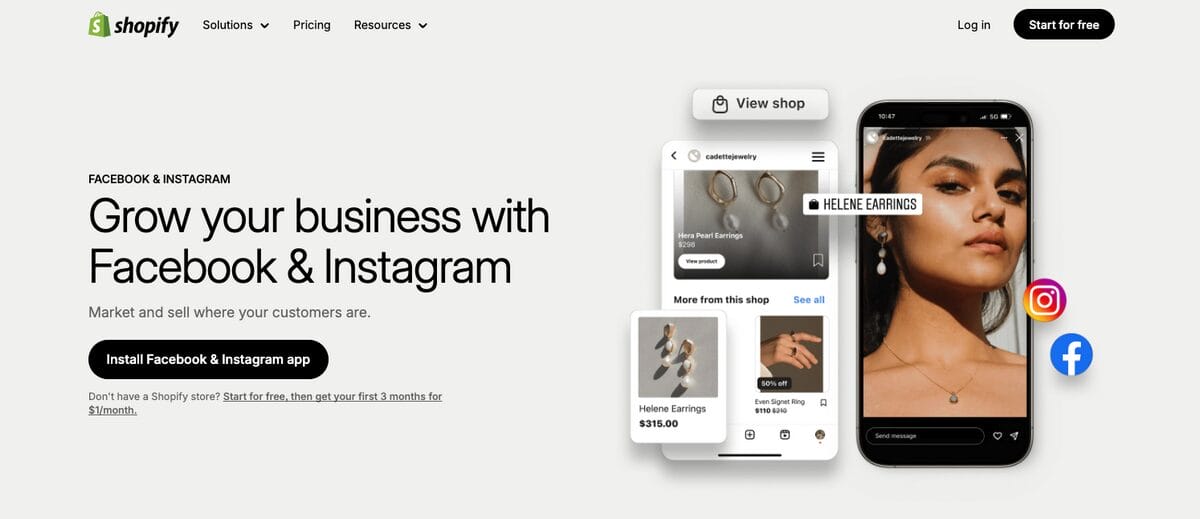
You can absolutely get traffic organically. You can use TikTok, Instagram, and even SEO strategies to drive customers to your site. But organic growth takes time, consistency, and sometimes a bit of luck.
Instead, paid ads give you control and speed. This translates to predictable traffic (you basically pay for specific results) and faster product validation. The tradeoff? It becomes the biggest expense in your budget.
👉 Testing phase: expect to spend between $50 and $500, depending on your budget. That allows you to gather enough data to know a product’s potential.
👉 Scaling phase: expect to spend $500 to $5,000 or more, depending on your margins and goals. This phase typically begins once you’ve identified a winning product and are ready to scale it aggressively. Yes, the investment is big. But the results are even bigger if your numbers make sense and your strategy is based on real performance.
The most important thing is shifting your mindset. Ads aren’t just an expense; they’re an investment in data and scalability. If you manage it effectively, your initial dropshipping marketing budget should deliver a healthy return on investment. The problem is when you manage it blindly and without a strategy. That’s when it becomes a waste of money.
Starter vs Scaling Budget Comparison
As we’ve established so far, there’s no single fixed number for calculating Shopify costs. Yes, there are a couple of generic fees, but most of it depends on your phase, your goals, and your budget.
Are you testing and validating… or scaling and optimizing? Those are two very different stages. And with each one comes a very different budget, fee structure, and goals. Let’s compare both side by side.
Starter Budget (Month 1)
This is your testing phase. You’re not looking to launch a global empire in a month, obviously. You’re testing the waters, seeing what works, what doesn’t, and finding your audience.
During this phase, you can opt for Shopify’s three-month $1 trial, choose a free theme, install only essential apps ($20 – $60/month), and dedicate a small ad budget solely for testing ($50 – $150/month).
👉 Estimated costs for the first month: $50 – $200
But don’t let this scare you away. You can even start dropshipping with no money if you prefer. Just pay the $1 Shopify trial, rely on free trials for third-party tools, and work on your organic strategy. That’s totally possible! Just a little bit harder and slower to take off.
A $50 – $150 starter budget is just more realistic if you want to keep things lean while also achieving results faster.
Scaling Budget (Profitable Store)
This is where you double down on what’s working. You’ve validated a product, your margins make sense, and now you’re optimizing for growth.
In this case, your typical setup includes a higher Shopify plan (Grow or Advanced, between $105 – $399/month), a paid theme (a one-time purchase of $150 – $400), multiple apps ($60 – $150/month), and a larger ad spend ($500 – $5,000/month).
👉 Estimated total: $1,000 – $2,000
At this level, ads are the biggest expense, not Shopify. But the good news is that most of your budget is funded by real revenue. You’re mostly reinvesting profit to generate more profit instead of just burning savings and hoping for the best.
Hidden Costs Most Beginners Don’t Consider
The challenge with budget planning is factoring in every single cost. Most people focus on the obvious stuff, like the Shopify plan, apps, and ads. But there’s more to it, such as:
- Refunds and chargebacks. Not every order ends with a happy customer. Refunds are part of e-commerce. Chargebacks are worse because they often include additional processing fees on top of the refunded amount. So, when crafting your pricing strategy, leave room for a potential refund and chargeback fees.
- Product samples. When putting together your product catalog, you’ll likely need to order a few product samples. These cost money. Expect to spend anywhere from $20 to a few hundred dollars to test quality before scaling a product.
- Creative production costs. Good ads require good creatives, and good creatives require either good editing tools or hiring professionals. This can easily cost between $100 and $500+ per product during scaling.
- Currency conversion fees. Selling abroad? Then it’s time to factor these in. They usually apply when receiving payouts, paying suppliers, or processing international cards. These percentages might seem small, but at volume, they add up quickly.
- Dropshipping taxes and business registration. Depending on your country, you may need to pay for business registration fees, sales tax or VAT compliance, accounting software, and even a professional accountant for bookkeeping. Keep them in consideration in your pricing strategy to protect your margins.
How to Reduce Shopify Dropshipping Costs Without Hurting Growth
I know exactly what you’re wondering: is it possible to cut costs? And I have the answer you’re looking for: Yes! If you manage your expenses strategically, you can lower your Shopify dropshipping costs without slowing down your growth. Here’s how:
- Start with a free theme. Premium themes look great, but they’re not mandatory to validate a product or test the waters. Shopify’s free themes are fast, clean, and optimized for mobile. And honestly? That’s all you need to get started. Upgrade only when revenue justifies it.
- Consolidate apps and avoid overstacking tools. You don’t need 11 different tools for research, automation, fulfillment, optimization, customer support, and so on. You can look for solutions that centralize everything in one single platform. This way, you’re reducing monthly costs, and you’re also making processes more efficient.
- Optimize before scaling ads. When building your paid strategy, don’t just throw money at any random ad. Improve product pages, test pricing, refine creatives, and only double down on what’s actually converting. Otherwise, you might just be burning cash.
- Focus on high-margin products. Thin margins make everything hard, especially with Shopify payment processing fees and ad costs. Products with healthy margins give you room to test, absorb refunds, and scale. A $3 item with a 5% margin is not very sustainable in the long run.
How AutoDS Helps You Consolidate App & Automation Costs
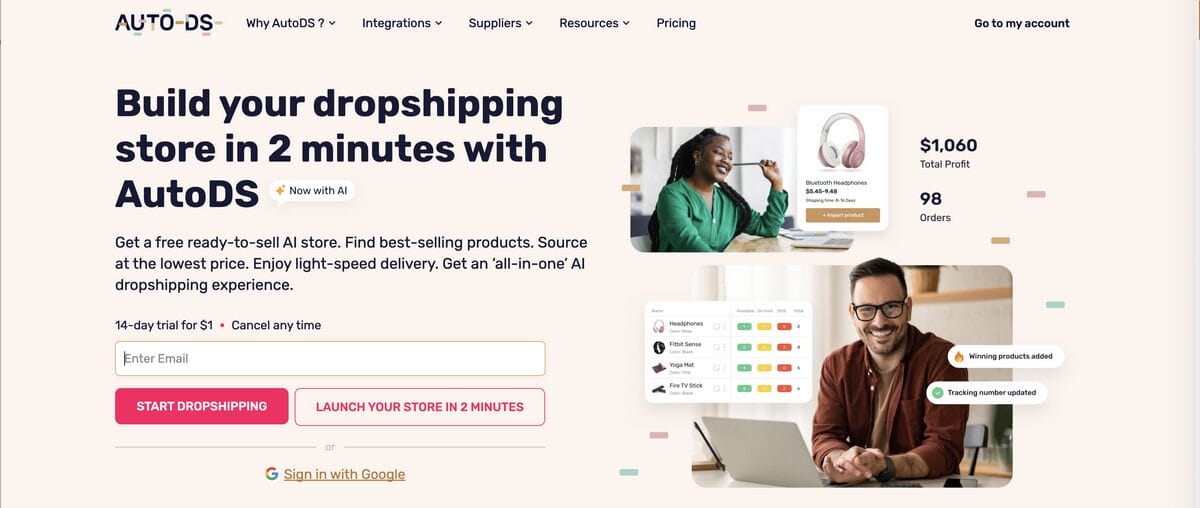
One of the biggest reasons budgets get out of control isn’t Shopify itself, but the app stack. A product research tool here, a price monitor there, and suddenly you’re paying for five different monthly subscriptions and half of them overlap.
Just imagine if you could unify them all into one single thing. Well, that’s where AutoDS changes the equation.
AutoDS integrates directly with Shopify and centralizes your entire dropshipping operation into one platform. This way, you don’t need to stitch together multiple tools just to keep your store running. Instead, you get:
- Price and stock monitoring. AutoDS automatically tracks supplier price changes and inventory levels and updates your store in real time. No manual checking or surprise overselling, just updated listings 24/7.
- Automated fulfillment. AutoDS processes orders automatically, reducing human error and saving hours of repetitive work when volume increases.
- Inventory management. AutoDS keeps all your listings in a single dashboard, letting you edit them in bulk based on multiple parameters.
- Product sourcing and one-click importing. AutoDS provides multiple product-finding tools, an exclusive marketplace, and import features to reduce hours of research and importing to just a few minutes.
And the best part is this: instead of paying $30 here and $40 there, AutoDS bundles these essential features into one single monthly subscription that starts at just $26.90/month (billed monthly) or $19.90/month (billed annually), with a 14-day $1 trial included.
That doesn’t just simplify your workflow. AutoDS helps control your recurring Shopify app costs, keeps your stack clean, and makes scaling smoother.
“This is probably the most popular automated dropshipping product app for Shopify right now. It uses AI to automate a lot of the process. It tracks trending products, and it lets us one-click add them to our store. Plus, AutoDS also manages the entire fulfillment process for you” – Wholesale Ted, dropshipping expert
Is Shopify Dropshipping Still Worth the Cost in 2026?
We’ve broken down every single cost you will face when dropshipping on Shopify. Now, is it worth it? Yes, absolutely, especially if you want to treat your Shopify store like a real business.
Shopify dropshipping still has one of the lowest barriers to entry in e-commerce. Think about it: traditional businesses have to pay for inventory upfront, warehouses, retail leases, and payroll. Instead, in dropshipping, you don’t need stock, physical storage, or a massive upfront investment.
You just need:
- A realistic startup budget. As we’ve covered, you can even start with $50 – $150.
- Smart cost control. A decent spreadsheet can help you manage your monthly expenses.
- Healthy margins, driven by understanding and factoring in all major and minor fees.
- Data-driven decisions based on actual performance from your store.
Dropshipping is as beginner-friendly as ever, and Shopify is one of the most affordable and efficient platforms available. The challenge is that the model has just become more competitive, which means strategy matters more than ever.
Frequently Asked Questions
How much does it cost to start Shopify dropshipping in 2026?
In 2026, most beginners can realistically start Shopify dropshipping with $50 – $150 for the first month, depending on how aggressively they test products. That includes the Shopify three-month $1 trial, a domain, essential apps, and a small testing budget. You don’t need hundreds, but you do need enough to test properly.
What is the cheapest way to start Shopify dropshipping?
The cheapest way to start Shopify dropshipping in 2026 is using a free Shopify theme, leveraging the $1 trial for three months, and then sticking to the Basic plan, and consolidating apps into one automation tool. For instance, AutoDS centralizes the entire dropshipping operation in one single dashboard and a monthly subscription, reducing unnecessary expenses and avoiding overstacking tools.
Do I need a paid theme to start?
No, you don’t need a paid theme to start. Shopify’s free themes are more than enough for beginners. Premium themes cost between $150 and $400 for a one-time purchase and include upgrades for branding and additional features that are not required to get your first sales.
How much are Shopify transaction fees?
If you use Shopify Payments, fees range from 2.9% + $0.30 per transaction for the Basic plan, down to 2.4% + $0.30 for the Advanced plan. If you use third-party payment gateways, additional Shopify transaction fees may apply.
Can I start Shopify dropshipping with $500?
Yes, you can totally start Shopify dropshipping with $500. This covers your Shopify plan, domain, essential apps, and a solid product testing budget. The key is managing your ad spend carefully and focusing on validating one product at a time.
What are the highest hidden costs?
The highest hidden costs are refunds and chargebacks, product samples, creative production (like photos and video ads), currency conversion fees, and taxes. They’re manageable, but only if you plan for them from the beginning into your pricing strategy.
How long does it take to recover startup costs?
Recovering your startup costs depends on your product, margins, and ad performance. Some sellers recover their initial investment within the first few weeks if they find a winning product early. Others may take 1-3 months of testing and optimization. Dropshipping isn’t instantly profitable, but with proper validation and scaling, recovery can happen relatively quickly. You can learn more in our How Long Does It Take To Make Money With Dropshipping guide.
Start Your Dropshipping Journey With AutoDS
Shopify is not expensive, but poor planning and unnecessary app stacking can quickly drain your startup budget. The real costs of dropshipping come from unmanaged fees, manual operational errors, and scaling before validating products.
AutoDS keeps your margins healthy by providing a centralized automation platform that handles product sourcing, price monitoring, and fulfillment all in one place.
By replacing multiple expensive third-party subscriptions with a single dashboard and monthly subscription, AutoDS reduces your operational costs and simplifies your day-to-day tasks.
Tired of wasting your budget on messy workflows? 🚀 Start your AutoDS $1 trial today and replace an entire stack with one single automation platform.
In the meantime, you can check out these articles:
- How Much Does Dropshipping Really Cost
- One-Time VS Monthly Shopify Costs
- Shopify Plan Costs (Basic VS Higher Tiers)
- Domain & Branding Costs
- Theme Costs: Free VS Premium
- Essential Shopify App Costs
- Payment Processing Fees Explained
- Advertising & Marketing Expenses
- Starter VS Scaling Budget
- Hidden Costs Most Beginners Ignore
- How To Reduce Dropshipping Costs
- How AutoDS Helps Consolidate Costs
- Is Dropshipping Still Worth The Cost?
- FAQ
- Conclusion