



Dropshipping is a low-risk business model with a relatively small upfront investment, which makes it especially appealing to entrepreneurs and anyone looking to start a side hustle that could eventually generate solid profit margins.
If you’re here, chances are you want to learn the essentials: what dropshipping is, how it works, and how to start step by step. Luckily, you’re in the right place. In this guide, we’ll break down everything you need to know so you can get started on the right foot.
Along the way, we’ll also look at the role automation software plays in this business model. For beginners, platforms like AutoDS make dropshipping much easier by reducing everyday manual work with specialized features designed for key parts of running an online store.
Dropshipping lets you sell online without buying inventory upfront, making it a lower-risk way to start in ecommerce.
In 2026, success depends less on hype and more on choosing the right products, suppliers, and systems.
A strong beginner setup includes a clear niche, reliable suppliers, proper product research, and a trustworthy store.
Common mistakes, such as weak product choices, poor customer experience, and unrealistic expectations, can slow growth early on.
AutoDS gives beginners a more practical way to launch, manage, and grow a dropshipping business from day one.
What Is Dropshipping?
Dropshipping is an e-commerce business model in which you sell products without keeping inventory. Instead of buying stock upfront and storing it, you list products in your online store, and when a customer places an order, a third-party supplier ships the item directly to them.
That is the main difference between dropshipping and traditional ecommerce. In a conventional business, you have to buy stock in bulk, manage the physical space where it will be stored, hire employees, ship packages, handle logistics, and handle many other operational tasks. In dropshipping, most of that bureaucracy falls on the supplier. They store the items and ship them directly to your customers as soon as someone places an order in your store.
This creates a much lower barrier to entry, since you are not risking all your savings on inventory you are not even sure will sell. Dropshipping gives you the flexibility to test a business model with real growth potential without putting all your capital on the line from the start.
That said, this accessibility does not mean dropshipping is passive income or effortless. Much of its success depends on a few key factors we will cover later in this article, but above all, it depends on managing small, repetitive daily tasks efficiently.
That is where tools like AutoDS come in. AutoDS helps streamline product sourcing, imports, price and stock monitoring, and order fulfillment, so running a dropshipping store does not turn into a fully manual job from day one.
➡️ If you start using AutoDS from day one, you can launch your dropshipping business with one less major concern on your plate. You are still the captain, but now you are running a far more automated ship built to reduce risk, save time, and help you scale without burning out.
How Does Dropshipping Work?
As we mentioned above, dropshipping works as a three-part chain: the customer, the seller, and the supplier. Since you do not hold inventory, you act as a middleman between the buyer and the supplier. Your role is to manage the storefront, marketing, and customer experience, while your main source of profit comes from the difference between the supplier’s price and the price you charge in your store.
For example, if a supplier charges $15 for a product and you sell it for $30, your gross profit is $15 before ad costs, transaction fees, and other business expenses.
Let’s break the process down into clear steps:
- The customer visits your online store and places an order.
- Once the order comes in, you forward the purchase details to your supplier, either manually or through automation software.
- The supplier then prepares the package and ships it directly to the customer on your behalf.
After that, the customer receives the order, while you remain the main point of contact for communication, support, and the overall buying experience. Even though you never physically handle the product, the customer still sees your store as the business they bought from.
Each part of the process has a clear role:
- The supplier is responsible for inventory, storage, packing, and shipping.
- Your store is responsible for product selection, pricing, branding, traffic, and sales.
- The customer is the final buyer who places the order and receives the product.
As explained above, your profit comes from the margin between the supplier’s price and your selling price. But dropshipping is not just about marking products up. It is about building a system where pricing, supplier reliability, and customer acquisition work together profitably.
➡️ This is also where automation starts to matter. Tools like AutoDS can connect your store to suppliers, import products faster, monitor stock and price changes, and help automate fulfillment, making the entire process more scalable and far less manual.
Is Dropshipping Still Worth It in 2026?
Yes, dropshipping is absolutely still worth it in 2026, as long as you treat it like a real business, not a shortcut or a get-rich-quick scheme. The advantages this model offers should not be an excuse to relax, but an opportunity to optimize every part of the process and make the most of it.
Let’s look at the numbers.
🔵 According to Grand View Research, the global dropshipping market was valued at $365.67 billion in 2024 and is projected to reach $1.25 trillion by 2030, with a 22.0% CAGR from 2025 to 2030.
🔵 At the same time, Shopify, one of the platforms most commonly chosen by dropshippers to build their businesses, projects global ecommerce sales to reach $6.4 trillion in 2026. That helps explain why low-inventory models like dropshipping continue to attract new sellers.
The opportunities are there, but of course, you are not the only one noticing them. If dropshipping looks accessible to you, it also looks accessible to thousands of other people.
Growth and competition are happening simultaneously. But that should not discourage you or disappoint you. It means that, if you are a beginner, you are not entering an empty market, but a crowded room. And that is where your ability to stand out starts to matter: better products, better suppliers, faster processes, stronger strategies, and better customer service.
That is also why automation matters more now than it did in the early “Wild West” phase of dropshipping. When the market is more crowded, wasting hours on manual imports, stock checks, repricing, and fulfillment is a competitive disadvantage.
Tools like AutoDS help streamline repetitive tasks, giving you more time to focus on the parts that actually move the business forward.
Dropshipping is still worth it in 2026 for people with realistic expectations. It is a good model for testing products, entering e-commerce without buying inventory upfront, and building a business gradually. It is not a magic income button, and it is definitely not passive on day one. The sellers who succeed treat dropshipping as a system and prioritize optimization from the start.
Pros and Cons of Dropshipping

Like any other business, dropshipping offers clear advantages and a few challenges. The good news is that those challenges are not too many, and most of them can be minimized with the right systems and automation, but judge for yourself.
Pros of Dropshipping
✅ Low upfront investment: In a traditional ecommerce business, buying stock upfront can eat up most of your budget before you even know whether a product will perform. With dropshipping, you can start testing products without tying all your capital to inventory that may not sell.
✅ Lower operational risk: You are not left with shelves full of unsold inventory, and you do not need to worry about warehouse costs, overordering, or products becoming dead stock. That makes dropshipping a much more flexible model for people who want to validate ideas before making bigger investments.
✅ Wide product selection: Since you do not need to pre-purchase inventory, you have far more freedom to test different categories, niches, and products. This makes it easier to experiment, spot trends, and adjust your catalog as you learn what your audience actually wants.
✅ Location flexibility: A dropshipping business can be run from almost anywhere, as long as you have a laptop and a stable internet connection. Because you are not managing a physical warehouse or handling packages yourself, the business is not tied to one specific location. That flexibility is a major advantage for solo entrepreneurs, digital nomads, and anyone building a side hustle around an existing schedule.
✅ Automation-friendly workflow: Dropshipping works especially well with automation, which is one of the reasons it remains relevant in 2026. Tasks such as product import, price and stock monitoring, and order fulfillment can quickly become repetitive when handled manually.
Cons of Dropshipping
❌ Lower profit margins at first: Competition can be intense, and that often puts pressure on pricing. In many niches, sellers are offering similar products from similar suppliers, which can make it harder to maintain high margins. That does not mean dropshipping cannot be profitable, but it does mean you need to be more strategic with product selection, branding, and customer acquisition.
❌ Less control over fulfillment: When you rely on a third-party supplier to store and ship your products, you also give up some control over that part of the customer experience. If a supplier ships late, sends the wrong item, or runs into stock issues, your customer will still associate that problem with your store. This is why choosing reliable suppliers is not optional in dropshipping. It is one of the most important parts of protecting your reputation.
📦 Supplier’s Tip: Through AutoDS, you can connect with a range of private and supported suppliers worldwide, making it easier to find partners that align with your business needs and operating standards.
❌ Customer service can get tricky: Even though you are not handling the product directly, you are still responsible for customer communication. That means delays, damaged items, refund requests, and tracking issues usually land in your inbox first. If your backend operations are messy, customer service quickly becomes stressful. On the other hand, if your systems are well organized and partially automated, this challenge becomes much easier to manage.
Step-by-Step: How to Start Dropshipping
Alright, enough theory. You came here to learn how to start a dropshipping business in 2026, so let’s get into it. Here is the step-by-step process:
Step 0: Connect to AutoDS First
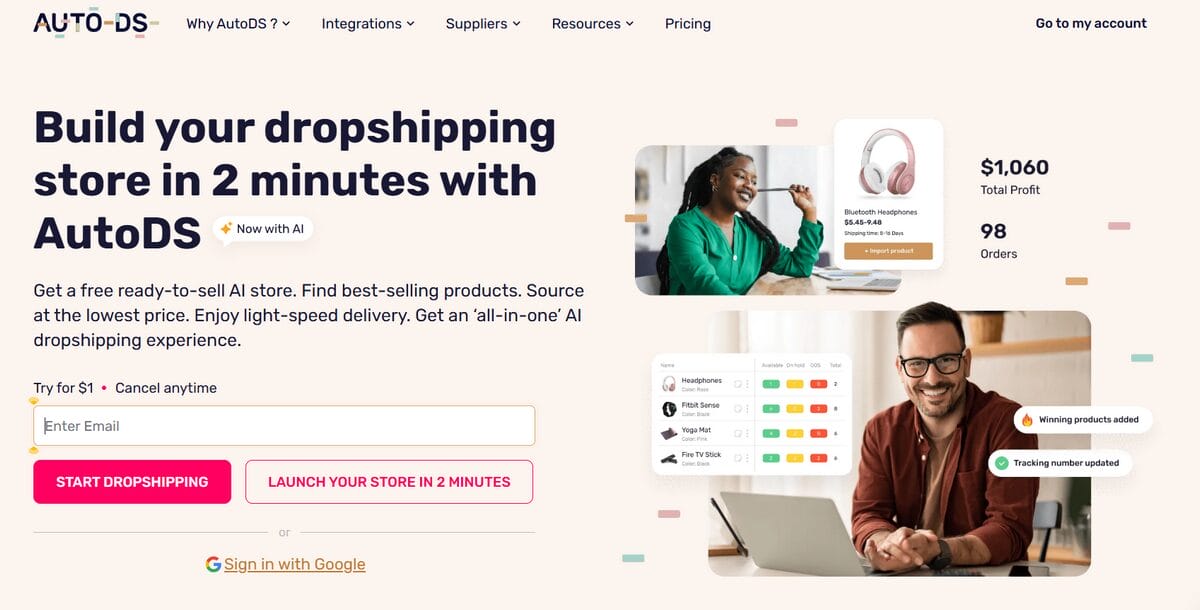
Before anything else, join AutoDS. It is an essential step you will thank yourself for later. The platform handles much of the operational work through integrations with leading selling channels and trusted suppliers, helping you simplify key tasks such as order fulfillment, product import, price monitoring, and more.
Step 1: Choose Your Niche
Do you already know what you want to sell? That is a great place to start. Of course, since dropshipping is a flexible model, you always have room to test different options. But if you begin by focusing on one category or a few specific categories, it becomes much easier to identify the right strategies to reach your audience.
There is an important difference between evergreen niches and seasonal niches. With evergreen niches, demand stays relatively stable throughout the year. Categories like baby products, pet products, beauty, or home improvement tend to be searched consistently, no matter the season.
In these cases, the real opportunity often comes from finding a sub-niche within those broad categories, identifying market gaps, or spotting product demand that is still underserved.
A seasonal strategy is more tied to holiday products, weather-based items, or products that perform better around specific dates, such as Cyber Monday. Of course, even if you work within an evergreen niche, you can still combine both approaches during high-demand periods and take advantage of the stronger buying intent that seasonal products tend to generate at certain times of the year.
Step 2: Find Reliable Dropshipping Suppliers
You already know the supplier’s role: they manufacture or store the product and ship it to the customer. So yes, their importance is huge. If someone buys a product from your store and it arrives broken, late, or different from what they ordered, the problem will fall on your business, even if those issues originated with the supplier. That is why choosing the right one matters so much.
As mentioned earlier, AutoDS can help you find the right partner much faster. Still, here are some of the main factors you should evaluate when comparing suppliers:
- Product quality
- Stock variety
- Shipping and return policies
- Fast shipping times and delivery reliability
- Responsive customer support
📦 Supplier Tip: If you order samples before committing to a supplier, it becomes much easier to check product quality for yourself and make a more confident decision.
Step 4: Do Proper Product Research
This is one of the most important parts of dropshipping. Choosing the right products is also one of the steps where sellers are most likely to fail. It is not about importing whatever looks cool and hoping for the best. It is about making decisions based on real demand and actual data. That is why, at this stage, it is smart to:
- Use tools like Google Trends to explore product demand, seasonality, and broader niche interest
- Check the best-seller sections of major e-commerce platforms, such as Amazon Best Sellers, to see what is already performing well
🔎 Research Tip: AutoDS gives you access to the Hand-Picked Products Hub, a curated and regularly updated collection of winning products that can help you find better profit opportunities faster.
Overall, keep in mind some of the common traits shared by products that tend to sell well:
- They solve a clear problem or serve a specific purpose
- They have a competitive price point or enough room for profit
- They are lightweight and easy to ship
- They are trending or show growing demand
- They have positive reviews on marketplaces or social platforms
- They have a strong visual appeal for ads or product videos
Step 5: Pick Your Selling Channel
Now is the time to decide where you will actually sell. Your selling channel is the platform where people will find your products, browse your store, and place their orders. In other words, this is the space where your business becomes visible.
Some channels work like giant marketplaces with built-in traffic, while others give you the freedom to create your own branded store from scratch. Shopify, eBay, Amazon, Etsy, TikTok Shop, WooCommerce, and Wix are some of the most common options for dropshippers, but they do not all work the same way.
Marketplaces can put your products in front of a large audience much faster, although they usually give you less control over branding, design, and the overall customer experience.
Check this guide, where we break down how Amazon vs eBay vs Shopify compare across key factors like fees, policies, ease of use, and profit potential to have a clear framework to choose the right platform based on your goals.
🦾 AutoDS integrates with most major selling channels, so you can manage products, orders, and automation from one place without turning your workflow into a mess.
Step 6. Build Your Store
Once you choose your selling channel, the next step is building the place where customers will actually interact with your business. This is your storefront, and yes, it matters. You do not need to create the digital version of the Taj Mahal, but you do need a store that looks trustworthy, clear, and easy to navigate.
Your store should include:
- Solid product pages.
- Strong images.
- Detailed descriptions.
- Clear shipping and return policies.
- A checkout experience that does not make people nervous.
A clean layout and simple navigation already make a huge difference, especially when asking someone to buy from a store they have never seen before.
And if you are reading this while already holding your head in your hands, thinking about everything you need to do, do not panic. You no longer need to be a programmer or hire a small army of professionals to build a functional, good-looking store. Once again, automation comes to the rescue.
🏪 For example, the AutoDS AI Shopify Store Builder helps beginners launch a fully structured Shopify store much faster, with ready-to-sell pages and optimized listings in minutes. That means less time stuck in setup mode and more time moving the business forward.

Step 7: Import Your Products
With your store ready and your products selected, it is time to fill your virtual shelves. This is where automation plays a primary role. Imagine if you had to manually select every product, download its information, images, GIFs, and videos, and create each listing on your page one by one.
Sounds tedious, doesn’t it? Fortunately, you don’t have to do that.
With AutoDS’s Automatic Product Importer, you simply copy the product URL, then paste it into the upper-left corner of your marketplace. The product will import automatically, and you can even do this for multiple items at once.

Once the listing is created, do not overlook the importance of optimization. The same product can look very different to a customer depending on its description or title. This also impacts SEO, as it is essential to use keywords that drive more traffic.
Optimizing listings can be time-consuming, which is why we recommend trying the AI Product Title & Description Generator. It is an automated way to enhance your store’s products and offer higher-quality listings to your audience.
Step 8: Set Up Pricing, Policies, and Payments
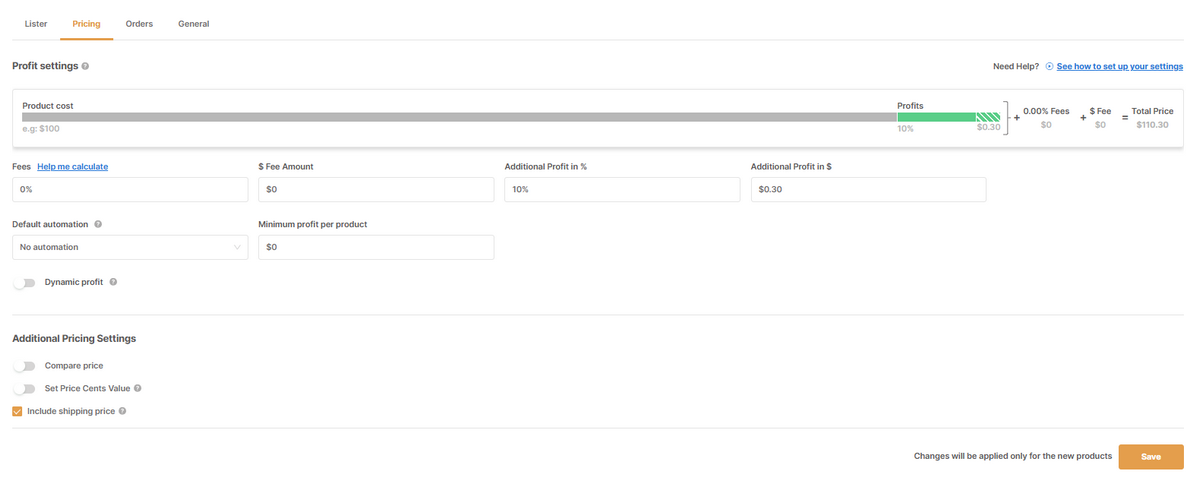
Your pricing should cover supplier costs, platform fees, payment processing fees, and marketing expenses while still leaving room for profit. This is why many sellers rely on automated pricing rules inside AutoDS, which help keep margins stable even when supplier prices change in the background.
You should also set up the core store policies before going live: payment gateways like PayPal or Stripe, shipping policies, delivery estimates, return and refund procedures, and the basic legal pages your store needs. None of this is exciting, but all of it builds trust. When customers can clearly see how your store works, they are much more likely to buy without hesitation.
Step 8: Handle Business Setup and Taxes
Start with the basics: find out whether you need to register a business locally, understand whether sales tax or VAT applies to your sales, and keep organized records of your revenue and expenses from day one. That alone already puts you in a much better position than most people starting out.
A practical tip: before launching a product, calculate your real margin, not a fantasy one. Supplier cost, transaction fees, platform costs, and ad spend all matter. A product can look profitable at first glance and still leave you at break-even once all the hidden costs are factored in.
Step 9: Launch Your Marketing Plan
A store without marketing is basically a very pretty abandoned island. You can have great products, clean branding, and an excellent supplier, but if nobody sees your store, none of that matters. Marketing is what brings people in and gives your products a real chance to sell.
There are plenty of ways to do that: short-form videos on TikTok, Instagram, or YouTube; influencer collaborations; paid ads; SEO; and content marketing are among the most common paths. At the beginning, though, marketing is usually less about mastering one channel perfectly and more about testing. You try different products, creatives, angles, and audiences until the data starts showing you what is worth pushing harder.
This is another reason why having your backend organized matters so much. When the operational side of your business runs more smoothly, you have more time and mental space to focus on testing, improving your creatives, and understanding what actually drives sales.
Step 10: Process Orders and Manage Customer Service
This is the moment where the business becomes real. Once orders start coming in, the operational side of your store is no longer theoretical. Products need to be processed correctly, shipments need to move on time, and customers need updates without having to chase you down.
With manual fulfillment, every order requires you to go back to the supplier, place the purchase, and enter the customer’s information yourself. That may work at the beginning, but it becomes exhausting pretty quickly.
Automation tools like AutoDS make this part much smoother by automating order fulfillment, tracking updates, and inventory monitoring, helping reduce errors and save serious time.
Best Platforms for Dropshipping
To give you a better sense of how to choose your selling channel, here are some of the best platforms to keep in mind:
AutoDS
AutoDS is not just a selling channel, but an all-in-one dropshipping platform built to centralize sourcing, importing, monitoring, and fulfillment. It is a strong option for sellers who want automation, supplier access, and multi-channel management in one place, rather than stitching together separate tools from scratch.
💫 Best For: Beginners who want an all-in-one workflow.
Shopify

Shopify is still one of the best choices for dropshipping if you want full control over your branding, store design, and customer experience. It gives you your own storefront, more control over design and customer experience, and enough flexibility to grow without feeling boxed in by marketplace rules.
💫 Best For: Beginners who want a branded store and long-term control.
eBay
eBay makes more sense when you want access to built-in traffic from the start. People are already shopping there, so you are not starting from scratch, as you would with an independent store. It is a more marketplace-driven environment, which means less branding freedom, but it can be a practical choice if your priority is getting products in front of buyers quickly and learning how demand behaves in real time.
💫 Best For: Sellers who want marketplace traffic right away.
Amazon
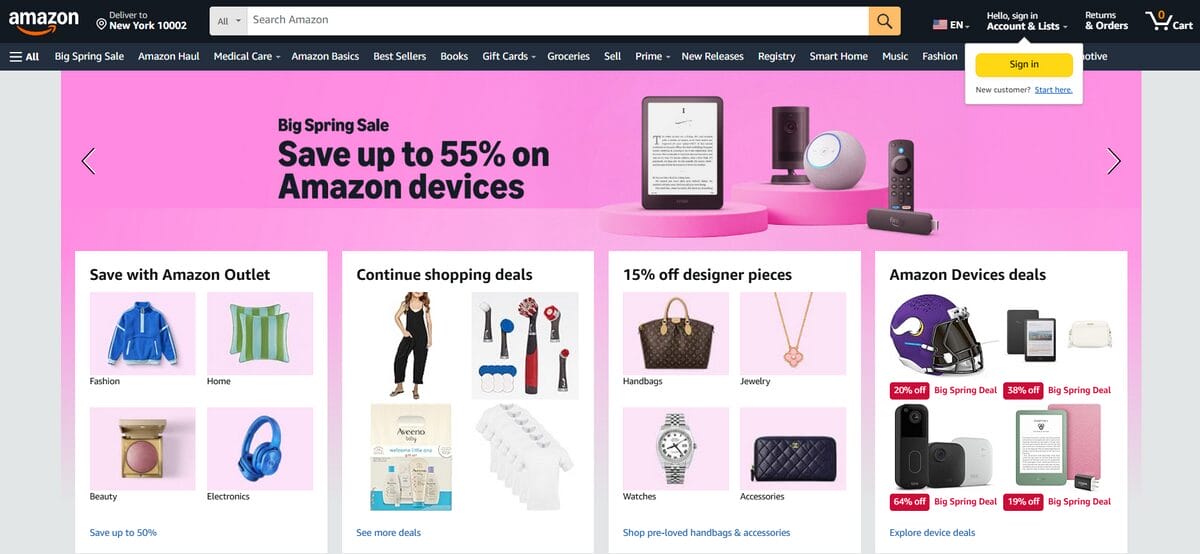
Amazon is powerful because of its reach, but it is not the most forgiving platform on this list. Customers expect fast delivery, clean listings, and a smooth buying experience, so the standard is higher from day one.
That said, if you are comfortable working in a more restrictive marketplace and want access to one of the largest ecommerce audiences in the world, Amazon can be a strong option.
💫 Best For: Sellers who want massive reach and can handle a more demanding marketplace.
Etsy
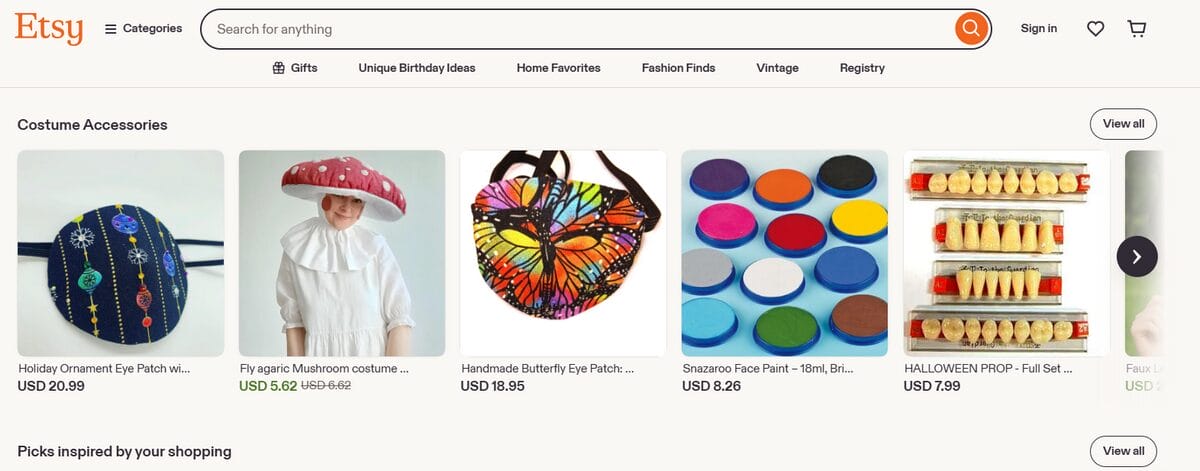
People do not usually go to Etsy looking for generic mass-market items. They go there to find things that feel more distinctive. So if your store leans creative, custom, or design-driven, Etsy can be a better fit than broader marketplaces.
💫 Best For: Sellers in personalized, gift-focused, or design-led niches.
TikTok Shop
TikTok Shop is especially interesting if you like the idea of content and commerce happening close together.
Products can be discovered through short videos, trends, or creator-style content, giving you a more direct path from attention to purchase. It is not the right fit for every niche, but for visually appealing products and trend-sensitive catalogs, it can be a very strong channel.
💫 Best For: Sellers who want to lean on short-form content and trend-driven discovery.
Best Suppliers for Dropshipping
Do not let the search for the right supplier stress you out. Here are some of the best options on the market to keep in mind:
AutoDS Warehouse & Private Suppliers
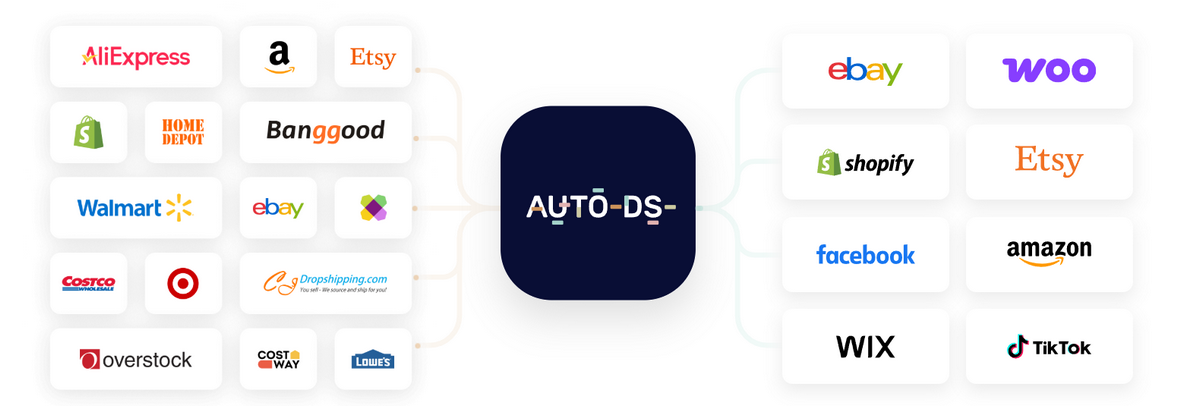
As mentioned above, AutoDS connects you with a global network of trusted, established suppliers, so the search process does not turn into an endless task. On top of that, AutoDS also has its own warehousing system, which can be especially convenient if fast shipping is a priority.
Key Features of AutoDS Warehouse & Private Suppliers
- Faster shipping options
- US warehouse filtering
- Branding options
- Curated private supplier network
- Full automation
AliExpress
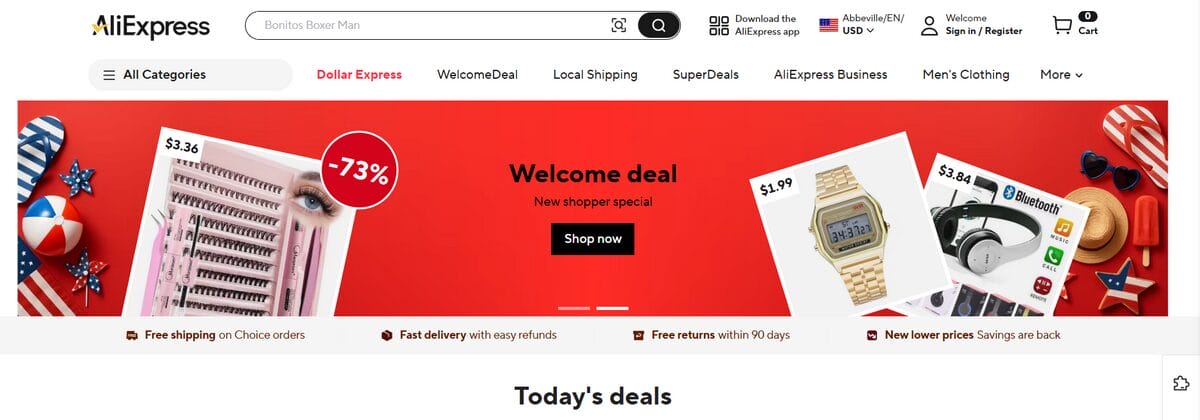
AliExpress is still one of the most common places to start because the catalog is huge and the barrier to testing is low. It gives beginners room to explore many niches without committing to a narrow product range too early. The downside is that variety can also mean inconsistency, so it works best when you treat it as a testing ground and stay selective about which products and sellers you trust.
Key Features of AliExpress:
- Massive product catalog
- Low barrier to product testing
- Broad niche coverage
- Flexible supplier selection
3. Walmart
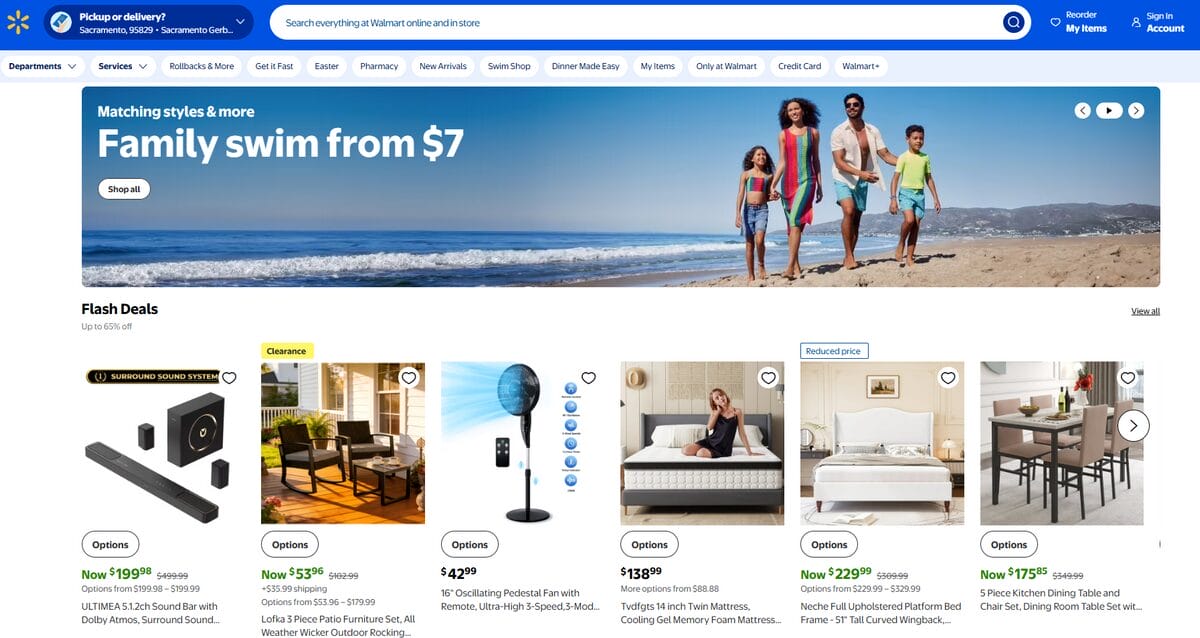
Walmart is useful when you want access to familiar retail-style inventory across broad everyday categories. It is less about niche identity and more about practical product availability. That can make it appealing to sellers who want mainstream products and a supplier catalog that’s easy to understand without getting too deep into specialized sourcing.
Key Features of Walmart:
- Fast shipping options
- Broad everyday product range
- Reliable tracking updates
- Practical return policies
4. CJdropshipping
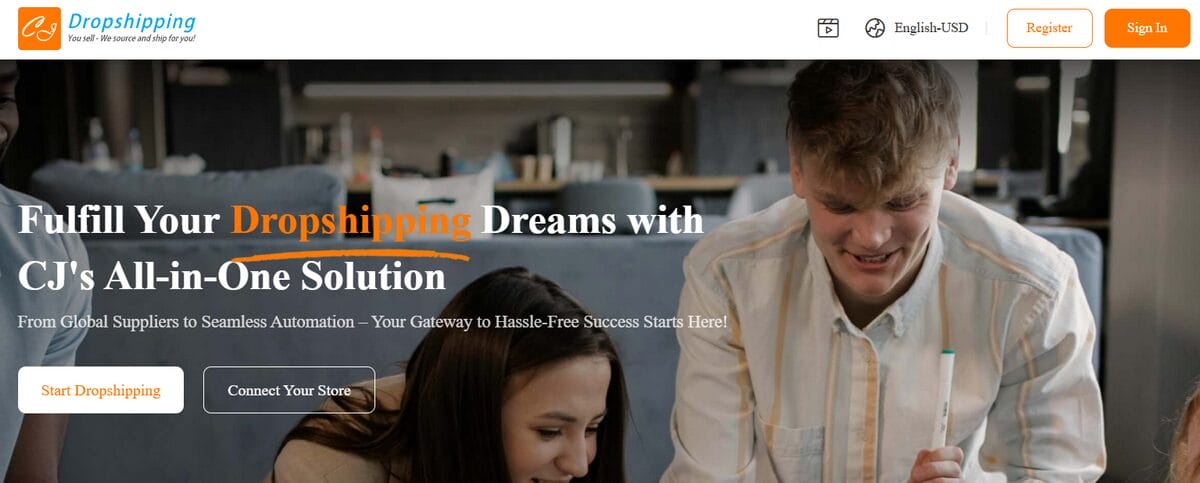
CJdropshipping feels more purpose-built for e-commerce than a general retailer. That can make it attractive to sellers who want a supplier more directly aligned with dropshipping workflows, rather than adapting a standard retail site to fit the model.
Key features of CJDropshipping:
- Dropshipping-focused workflow
- Fast product importing
- Price & stock monitoring
- Automatic price optimization
5. Banggood
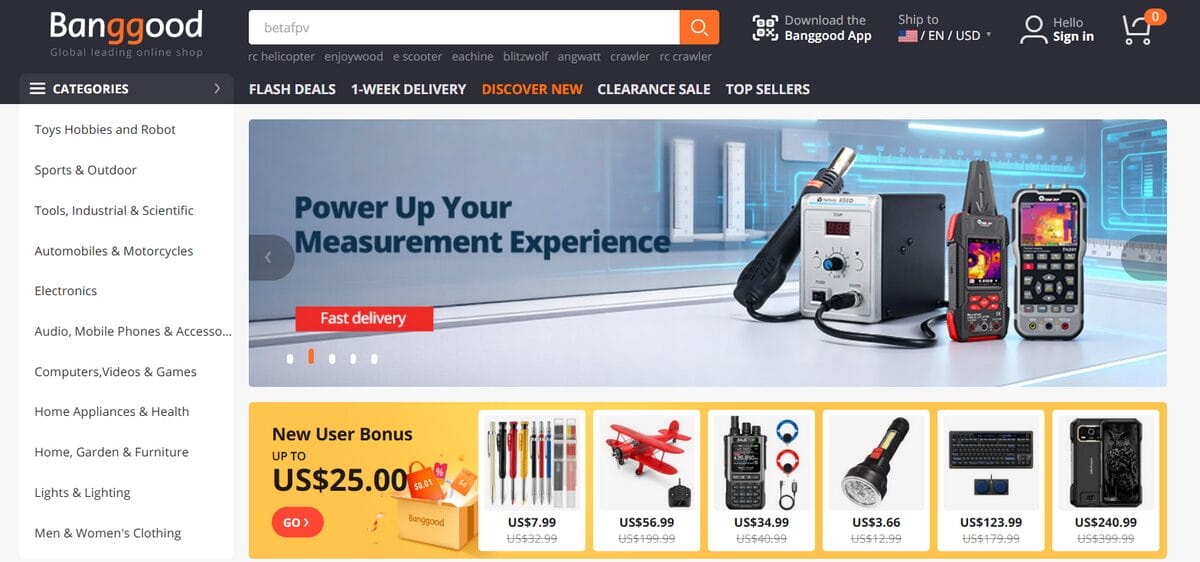
Banggood is especially useful across electronics, tools, home improvement, and other broad niches, with added perks for dropshippers like discounts and marketing assets. That makes it a good middle ground between product variety and a more dropshipper-friendly workflow.
Key Features of Banggood:
- Global warehouses
- Competitive pricing
- Strong catalog in electronics & tools
- Dropshipper perks like discounts and marketing assets
6. The Home Depot
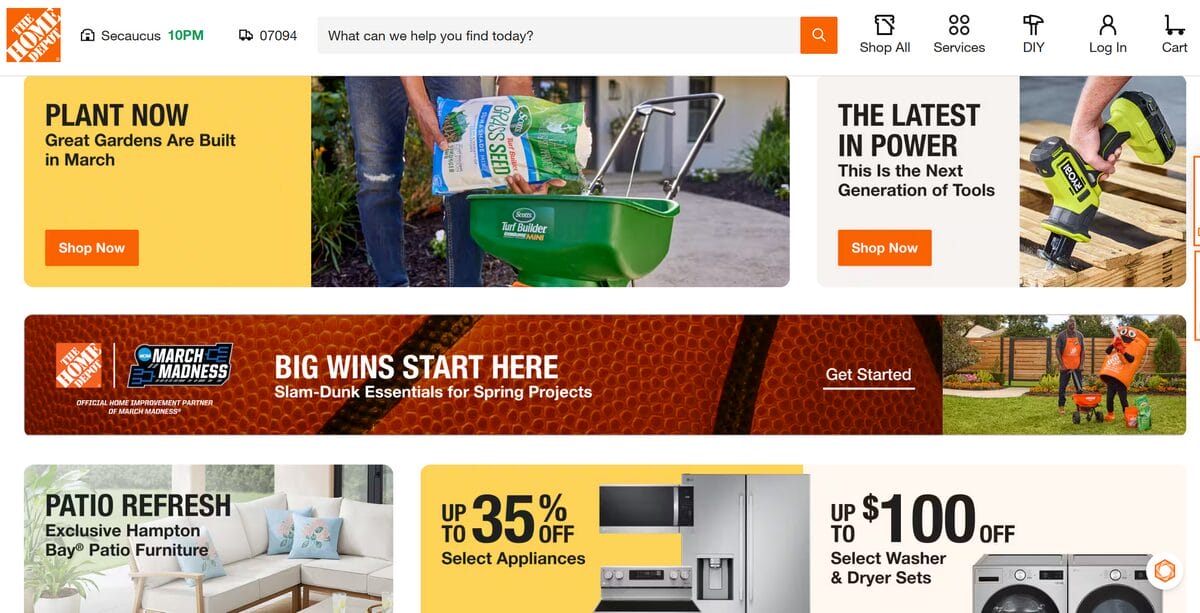
The Home Depot can be a smart supplier if your store leans toward home improvement, furniture, tools, outdoor products, or practical household categories. It is not the most universal supplier on the list, but that is exactly why it can be useful: when your niche aligns with it, the fit is much stronger than a generic all-purpose catalog.
Key Features of The Home Depot:
- Specialized home improvement catalog
- Strong fit for tools, garden, and furniture
- Practical household product range
- Easy supplier automation through AutoDS
Common Mistakes Beginners Make
The reality is that dropshipping is much easier to get started with today than it was a few years ago. The rise of new technologies, especially AI-powered tools, has made the seller’s job much more manageable.
But that does not mean beginners are immune to common mistakes. Many of those mistakes are still very much present, especially in the early stages, and the good news is that most of them can be prevented if you know what to watch for. Here are some of the most common ones:
❌ Choosing the wrong products: Many beginners choose items based on personal taste, whatever catches their attention, or what seems “trendy” inside their own social media bubble. But a product is not good just because it gets a lot of likes. It also needs to show real demand, leave enough room for profit, and, above all, make sense for the customer you are trying to reach.
That is why proper product research is so important, and why it deserves to be one of the very first steps in learning how to start dropshipping.
❌ Ignoring the customer experience: This matters because beginners often get so focused on importing products and launching their store quickly that they forget what actually drives the business forward: people.
Customers are not just looking for a product; they are also seeking a trustworthy place to buy it. If your store does not present the buying process clearly and organizes it well, or if the information on your site feels weak, people will not buy from you, no matter how good your products are.
Fulfillment plays a major role here, which is why optimizing it with tools like Fulfilled by AutoDS is a smart move that can directly influence how your audience sees your business.
❌ Having unrealistic expectations: Some beginners still enter dropshipping expecting instant results, passive income, or a quick escape from regular work. That mindset usually leads to frustration when sales do not materialize overnight.
Dropshipping can be profitable, but it works best for people who approach it with patience, realistic goals, and enough discipline to improve the business step by step.
❌ Lack of consistency: Many stores are abandoned too early, often before the seller has tested enough products, improved enough creatives, or learned enough from the first rounds of traffic and performance data.
Beginners sometimes treat the first setback as proof that the model does not work, when in reality, they just have not stayed in the process long enough to understand what needs fixing.
The truth is that many people quit this business model simply because they were not patient enough to test properly, or because they made rushed decisions without understanding the small but important details of dropshipping.
❌ Trying to do everything at once: Too many products, too many niches, too many platforms, too many ideas running at the same time. What usually works better is starting with a clearer direction, testing more focusedly, and building systems that can scale later. Trying to run before you can walk is still one of the fastest ways to trip over your own store.
How Much Money Do You Need to Start?
The honest answer is: less than many traditional businesses, but not zero. Not having to buy inventory upfront or deal with the expenses tied to a physical business removes the heaviest entry barrier. But there are still smaller costs that add up over time: your store, automation, payment processing, and a marketing testing budget.
Here is the broader picture. To get started, you will probably need a basic Shopify plan, which generally starts at $29 per month when billed yearly. Payment processing is another unavoidable cost. Stripe lists standard online card processing at 2.9% + 30¢ per successful card charge, while PayPal’s US merchant fees list 3.49% + a fixed fee for PayPal Checkout and Guest Checkout.
As for automation, that depends on the software you choose. AutoDS lets you try its features for just $1, which gives you a chance to weigh the costs and benefits before committing further.
So, in simple terms:
- Store platform: around $29/month for a basic, hosted Shopify setup.
- Automation software: AutoDS offers a $1 trial, with paid plans starting at $19.90/month.
- Payment processing: around 2.9% + 30¢ with Stripe or Shopify Payments Basic online rates, or 3.49% + fixed fee with PayPal Checkout in the US.
- Marketing/testing budget: variable, but this is usually where beginners feel the real pressure, since traffic rarely comes on its own.
- Optional extras: a custom domain, paid apps, product samples, or creative tools, depending on how polished you want the store to look at launch. Shopify notes that costs can rise with additional customization and premium design.
So, how much do you really need? If you want the most conservative answer, a beginner can launch with a relatively small budget focused on software and basic setup first, then expand spending once the store starts validating products.
How AutoDS Simplifies Dropshipping for Beginners
If by this point in the article, you are still considering doing dropshipping manually, I will not judge you. Everyone follows their own path. But if you want to make money with dropshipping, your goals will likely take much longer to achieve that way.
Starting a dropshipping business sounds exciting until the operational side begins to pile up. Finding products, importing listings, monitoring price changes, keeping stock updated, processing orders, and sending tracking information can turn a beginner’s store into a very manual job surprisingly fast.
That is exactly where AutoDS becomes useful: it helps reduce the repetitive work that usually slows new sellers down. Let’s break down how.
- Automatic product importing: What manual dropshipping usually turns into, downloading product content and listing everything in your store one item at a time, AutoDS can solve in seconds. By simply copying the product URL into the AutoDS marketplace, the item is imported automatically. You can also do this in bulk to save even more time.
- Price & stock monitoring: Do you really have the time to check your supplier’s website every single day to catch stock issues or price changes, then update them manually in your store? Spoiler alert: most dropshippers do not. AutoDS tracks those changes and updates them in your store based on the rules you set, helping you avoid losing money or selling products you can no longer fulfill.
- Order processing: AutoDS provides automated order processing and tracking updates, enabling the platform to handle orders and push tracking information without requiring the seller to handle every step manually.
- Shopify store creation: The AutoDS AI-built Shopify Store lets beginners launch a ready-to-sell store in less than 2 minutes, with winning products and product pages already prepared. That does not mean you should stop thinking about branding or strategy, but it does remove a lot of the friction that usually keeps new sellers stuck in setup mode for too long.
- Multiple selling channel integrations: AutoDS integrates with major selling channels, including Shopify, eBay, Amazon, Etsy, TikTok Shop, Wix, WooCommerce, and Facebook Marketplace. That means beginners do not have to juggle a disconnected stack of tools from day one just to manage listings, orders, and automation across different channels.



What Happens After You Start? (Next Steps)

Once you have completed all the steps covered in this article, do not think you have reached the finish line. You are just getting started. And this is where you need to be careful, because many beginners put all their energy into launching and then feel confused when the business does not magically take off on its own.
Once your store is live, the real work begins: reading data, making adjustments, and learning how to improve what is already in motion.
One of the first things to understand is that your first sales may not arrive instantly. Sometimes they come faster than expected, and sometimes they take a bit more time. That does not automatically mean something is wrong.
Early on, the goal is not just to get sales, but to understand what the market is telling you:
- Are people clicking but not buying?
- Are they visiting the product page but leaving at checkout?
- Are some products getting attention while others are completely ignored?
Those early signals matter just as much as the sale itself.
Once sales start coming in, the next smart move is reinvesting profits carefully. Instead of treating your first earnings like instant personal income, it often makes more sense to put part of that money back into the business.
That could mean testing new products, increasing your ad budget, improving your store, ordering samples, or upgrading the tools that make your workflow smoother.
After you start, the goal is momentum. Get the store live, pay attention to the signals, improve what needs fixing, and reinvest with intention. That is how a beginner store slowly turns into a real business.
Frequently Asked Questions
What is dropshipping and how does it work?
Dropshipping is an e-commerce business model in which you sell products without holding inventory. When a customer places an order in your store, the supplier handles storage, packing, and shipping, while you make money from the difference between the supplier’s price and your selling price.
Is dropshipping good for beginners in 2026?
Yes, dropshipping is still a solid option for beginners in 2026 because it has a relatively low barrier to entry and does not require upfront inventory investment. That said, it works best for people who approach it like a real business and use automation to stay organized from day one.
How much money do I need to start dropshipping?
You do not need a huge budget, but you do need enough to cover the basics: your store platform, automation software, payment processing fees, and ideally some budget for testing products or marketing. It is a low-cost model compared to traditional ecommerce, but it is not free.
What are the best platforms for dropshipping?
Some of the most popular platforms for dropshipping are Shopify, eBay, Amazon, Etsy, TikTok Shop, WooCommerce, and Wix. The best one depends on your goals, your niche, and whether you want built-in traffic or more control over branding.
How do I find products to sell?
The best way to find products is through proper product research. Look for items with real demand, room for profit, strong visual appeal, and a clear use case, using tools like Google Trends, marketplace best-seller sections, and curated product hubs like AutoDS Hand-Picked Products.
Is dropshipping still profitable?
Yes, dropshipping can still be profitable, but not if you treat it like a shortcut. Profitability depends on choosing the right products, working with reliable suppliers, managing costs carefully, and building a store that customers actually trust.
How long does it take to make money?
There is no fixed timeline. Some sellers make their first sales quickly, while others need more time to test products, improve marketing, and optimize their store before seeing results. Early progress usually depends on consistency, not luck.
What are the risks of dropshipping?
The main risks include low margins, unreliable suppliers, fulfillment issues, customer service problems, and unrealistic expectations. Most of these risks can be reduced by choosing better partners, building stronger systems, and avoiding a fully manual workflow.
Start Your Dropshipping Business with AutoDS
Dropshipping remains one of the most accessible ways to enter ecommerce in 2026, especially for beginners who want to start with lower risk and more flexibility. As we saw throughout this guide, the model itself is simple, but turning it into a profitable business depends on choosing the right products, working with reliable suppliers, building a trustworthy store, and staying consistent once the store is live.
That is also why doing everything manually no longer makes much sense for most people.
AutoDS makes dropshipping easier for beginners by reducing the manual work that often causes stress, errors, and burnout early on. Instead of spending all day doing repetitive admin tasks, new sellers can spend more time on the parts that actually grow the business:
If you are serious about starting dropshipping in 2026, the best move is building the right system from day one. And that is exactly where AutoDS’s trial can give you a much stronger start.
To keep learning about e-commerce and dropshipping, don’t miss the following articles on our blog!
- What Is Dropshipping?
- How Does Dropshipping Work?
- Is Dropshipping Still Worth It In 2026?
- Pros And Cons Of Dropshipping
- How To Start Dropshipping The Right Way
- Best Platforms For Dropshipping
- Best Suppliers For Dropshipping
- Common Mistakes Beginners Make
- How Much Money Do You Need To Start?
- How AutoDS Simplifies Dropshipping
- What Happens After You Start?
- FAQ
- Conclusion