


If you’ve ever thought about starting a dropshipping business, chances are you’ve asked the same question most beginners do: Is it really worth it?
Low startup costs, no inventory to hold, and the flexibility to sell from almost anywhere make a pretty convincing case. But those perks come with their own challenges. That’s why success depends on how well you understand both the pros and cons of this model.
In this guide, I’ll break down the advantages and disadvantages of dropshipping in 2027 in detail. Plus, I’ll compare dropshipping with other business models, put realistic numbers behind startup costs, and help you figure out whether it fits your goals. By the end, you’ll know exactly what to expect and how to build a store that lasts.
Dropshipping remains an accessible and profitable ecommerce model in 2026, offering a relatively low-cost way to sell globally and test products without holding inventory.
Compared with inventory-based models, dropshipping requires less capital upfront but gives you less control over stock, fulfillment, and unit costs.
The main benefits of dropshipping are low startup costs, no inventory, easier product testing, scalability, and flexible fulfillment.
The main disadvantages are strong competition, supplier dependency, less control over quality and shipping, and greater branding challenges.
Whether dropshipping is worth it depends on your priorities: It’s a stronger fit if flexibility and lower upfront risk matter more than maximum control.
Automation can reduce the operational load without replacing your judgment. AutoDS can handle stock, prices, orders, and tracking while you focus on the decisions that shape the store.
Dropshipping Pros and Cons
So, what does that balance actually look like when you’re starting a dropshipping business? Before getting into each advantage and disadvantage, here’s the quick version:
| Pros | Cons |
|---|---|
| Low investment: No need to buy inventory upfront or rent storage space. | Competition: Many sellers offer similar products, making differentiation crucial. |
| Low entry barrier: Minimal setup and no physical product handling make it beginner-friendly. | Less control over product quality: You rely on suppliers to maintain product standards. |
| Scalability: Can expand globally without major infrastructure investments. | No Control Over Stock & Shipping Times: Different suppliers have varying fulfillment speeds. |
| Product flexibility & testing: Replace or test products quickly to find best-sellers. | Selling Channel Policies: Restrictions from marketplaces can limit flexibility. |
| Easy Order Fulfillment: Automation simplifies processing and shipping. | Difficult to Build a Brand: Branding is harder when relying on third-party suppliers. |
| Freedom: Ability to work from anywhere and manage business remotely without holding stock. | Customer Service Responsibility: Returns, complaints, and order issues fall on the seller. |
Notice how the two columns keep bumping into each other. Not holding inventory lowers your upfront risk, but it also means someone else controls that inventory. Handing fulfillment to a supplier saves you from packing orders yourself, but their performance becomes part of your customer experience.
That’s the useful way to read this list. The pros and cons of dropshipping are often connected, not competing scores on a tally sheet. So before deciding whether the model is “worth it,” it helps to see what you’d be choosing instead.
The Benefits of Dropshipping
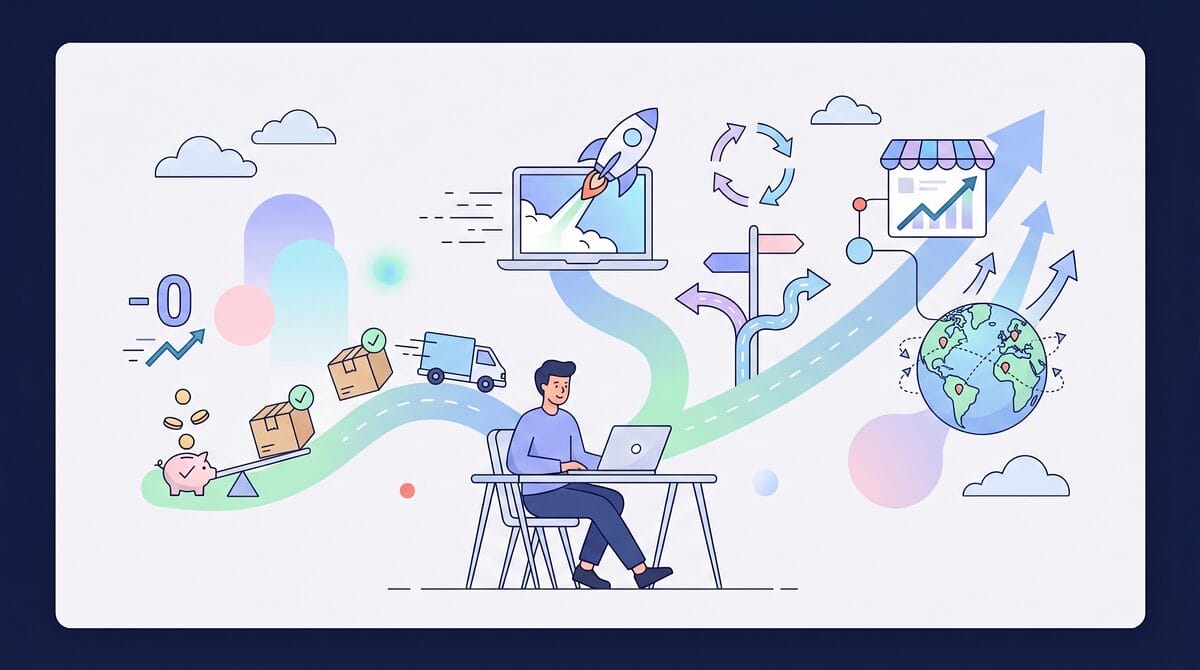
So, what do you actually gain by choosing flexibility over control? The biggest benefits of dropshipping come from what you don’t have to commit to upfront.
That changes more than your starting budget. It affects how quickly you can test an idea, how easily you can change direction, and how much infrastructure you need as sales grow.
Let’s look at what those advantages mean once you put them to work:
Low Investment
The magic of dropshipping: you don’t need a fortune to get started. Unlike traditional retail, there’s no need to rent storage, buy bulk inventory, or invest thousands upfront. All you really need is a computer, a supplier, and a platform like Shopify or eBay to start selling. It’s one of the lowest-cost ways to test the ecommerce waters without risking your savings.
Instead of pouring money into stock that might not sell, you only pay for products after a customer places an order. That means zero dead inventory, no dusty boxes in your garage, and no wasted capital.
No Inventory
One of the biggest appeals of dropshipping? You never have to touch a single product. No renting warehouses, no managing stock, no endless hours of packing boxes. Your supplier handles it all: they store the products, pack them, and ship them straight to your customer once you get a sale. That means you can run your entire store from a laptop, whether you’re at home, at a café, or halfway across the world.
And this is more than just about convenience: it’s about flexibility and scalability. Since you don’t need to worry about holding inventory, you can test new niches, experiment with trends, and pivot quickly if a product doesn’t perform.
Low Entry Barrier
Lower capital is only half the story. Dropshipping also removes several logistical steps that make traditional retail harder to get off the ground. You don’t need to arrange storage, set up a packing operation, or coordinate your own shipping process before you can start selling. That’s what makes it one of the easiest ways to start selling online with minimal risk.
Of course, “low entry” doesn’t mean “no effort.” The real key is using the right tools to make those first steps smoother.
Scalability
Another major advantage of dropshipping is how effortlessly it scales. Getting your first ten orders is one challenge. Getting 100 shouldn’t require you to suddenly find space for ten times as many boxes.
Unlike traditional retail, you don’t need to worry about expanding warehouses, hiring staff, or managing logistics. That’s the structural advantage: your physical workload doesn’t grow at the same rate as your sales volume. Suppliers continue storing, packing, and shipping the products, while automation can absorb repetitive work around orders, stock, prices, and tracking.
Since you’re not tied to physical inventory, your reach can be global from day one. The key is working with suppliers that ship internationally or choosing local ones in your target regions.
Replace & Test Products
One of the coolest parts of dropshipping is how easy it is to experiment. You don’t need to commit to bulk inventory or stress over unsold stock. If a product doesn’t perform, you simply replace it.
This flexibility allows you to keep your catalog fresh, follow market trends, and quickly pivot when customer preferences change. That’s why it’s also one of the smartest ways to discover winning products. Your listings are much easier to treat as something you test and refine, rather than something you commit to once.
🔍 Research Tip: Leverage AutoDS Ads Spy Tools to see which products are trending and performing best across competitors. This helps test replacements more efficiently, turning trial-and-error into data-driven decisions.
Low-Risk
Traditional retail comes with plenty of risk: unsold inventory, warehouse costs, and products that might never move off the shelves. Dropshipping, on the other hand, removes most of that stress. Since you only pay for products after your customers buy them, there’s no need to tie up thousands of dollars in stock that might or might not sell.
This model gives new sellers freedom to experiment without gambling big budgets. You can start small, test different niches, and scale what works.
Easy Order Fulfillment
One of the biggest headaches for new sellers is figuring out how to get orders shipped quickly and accurately, but dropshipping takes that burden off your shoulders. The supplier handles the physical fulfillment: picking the item, packing it, and shipping it to your customer.
Your side of the transaction still matters, though. Order details need to reach the supplier, tracking needs to make its way back to the customer, and exceptions need attention when something goes wrong. Those steps can be automated, which becomes increasingly valuable as order volume grows.
The benefit isn’t that fulfillment fully disappears; it’s that you don’t have to perform its physical side yourself.
Freedom
Last but not least, one of the biggest advantages of dropshipping is its flexibility. Since you don’t need to manage inventory, warehouses, or packaging, you can run your business from almost anywhere — whether it’s your couch, a coffee shop, or halfway across the globe.
This freedom also extends to working hours. You set your own schedule, which is perfect for beginners testing the waters or side hustlers balancing other commitments. The business can keep running even while you sleep, as suppliers and automation tools handle orders in real time.
The Disadvantages of Dropshipping
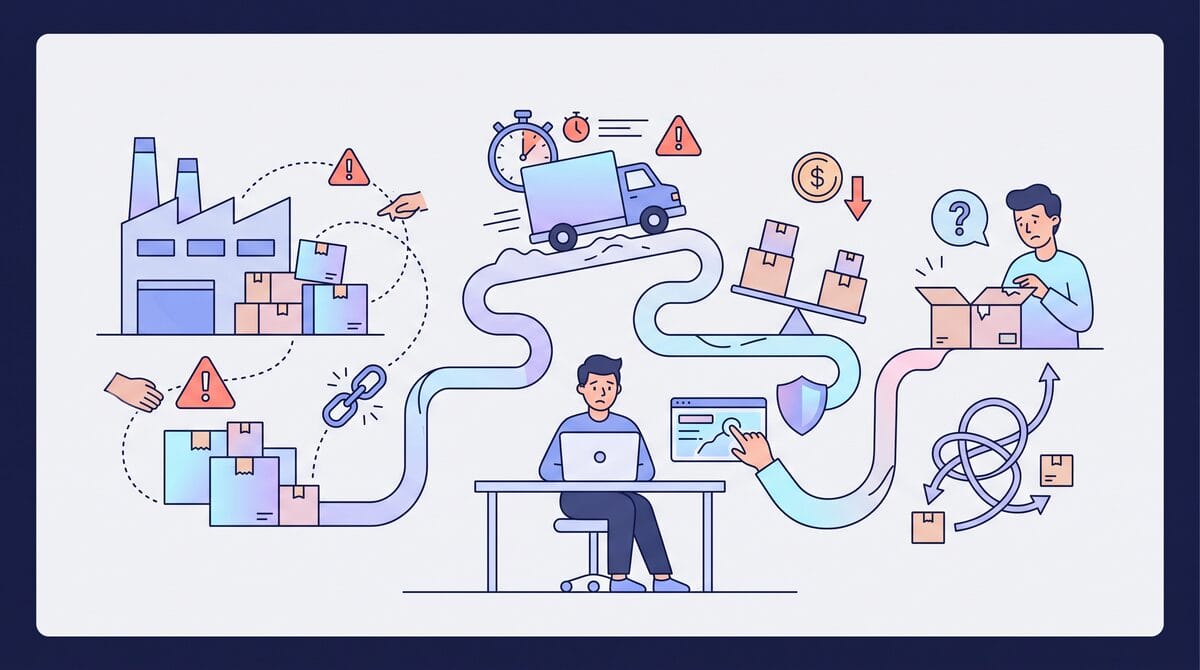
Dropshipping may sound like a dream come true, but like any business model, it comes with its fair share of challenges. The good news? Knowing these pitfalls ahead of time can help turn many of these disadvantages into something manageable.
Let’s break down the key drawbacks of dropshipping in 2027, so you know where you’re giving up control, what can go wrong as a result, and which problems you can actually reduce before they reach the customer.
Competition
The rapid growth of dropshipping has invited thousands of sellers into the space, meaning you’re not just competing with a handful of stores; you’re navigating a crowded marketplace where similar products pop up every minute.
Branded invoices, generic listings, zero niche focus: those won’t cut it anymore. The market now rewards stores that offer a distinct edge. The challenge is clear: provide unique product angles, outstanding customer experience, or carefully selected niches. Sellers who treat dropshipping like a real business are the ones still thriving in this landscape.
No Control Over Product Quality
One of the biggest perks of dropshipping is that you never touch the products yourself—less storage, less hassle, more freedom. But here’s the catch: that same advantage makes product quality one of the trickiest parts to manage in the early days. You’re relying entirely on your suppliers to deliver items that meet your standards. A defect, wrong size, or low-grade material can lead to unhappy buyers and negative feedback—sometimes before you even realize there’s a problem.
This lack of control means proactive supplier vetting is critical. Working with trusted partners, requesting samples, or choosing verified suppliers can help minimize these risks. While you can’t touch every item yourself, you can still set up systems to ensure your customers get what they expect and keep your store’s reputation intact.
No Control Over Stock & Shipping Times
Another tricky part of dropshipping is that stock levels and shipping times are entirely in the hands of your suppliers. Each supplier has different processing, billing, and shipping policies, which means delivery speeds can vary. And if an order is delayed or goes unshipped, the dropshipper faces the consequences.
The secret here is automation and communication. While you can’t physically touch the stock, you can set up systems that keep your store accurate and reliable, turning a potentially chaotic part of dropshipping into a manageable process.
No Control Over Price Changes
Dropshipping means relying on suppliers for product pricing. Prices can change suddenly, sometimes multiple times a week, and if your store doesn’t update accordingly, you could end up selling items at a loss—or worse, losing out on potential profits without even realizing it. It’s one of those quirks that makes dropshipping both exciting and a little nerve-wracking at the same time.
This is where a solid stock and price monitoring system becomes your best friend. By automatically updating your listings to reflect supplier price changes, such a tool keeps your margins intact and your store competitive.
Selling Channel Policies
Each marketplace has its own set of rules, and dropshipping isn’t exempt. Platforms like eBay, Amazon, or even Shopify have policies regarding fulfillment, returns, or listing content. Ignoring these rules (even unintentionally) can lead to removed listings, account restrictions, or worse, suspensions. It’s a reality check for new sellers who thought they could just “set it and forget it.”
The key is to treat each channel like a client: know the rules, follow them, and use automation tools to help stay compliant. Features like automated order fulfillment, tracking updates, and stock monitoring ensure that your store operates smoothly within the platform’s guidelines. With the right setup, channel policies become a manageable part of the workflow rather than a constant source of stress.
🆕 Beginner’s Tip: If you’re deciding where to start, check out this eBay vs. Amazon vs Shopify comparison to see how the two marketplaces differ for dropshipping before choosing a selling channel.
Difficult To Build A Brand
One of the biggest issues of dropshipping is turning a generic store into a recognizable brand. Since sellers don’t hold inventory or control product design, it’s easy for a store to feel like “just another shop” among thousands of similar listings. This makes standing out, creating loyalty, and commanding higher prices a real challenge.
Branding in dropshipping requires creativity beyond the product itself: consistent visuals, compelling storytelling, and a customer experience that leaves a lasting impression. Even small touches like branded packaging, custom emails, cohesive website design, or integrating print on demand products can make a huge difference. Tools that allow easy customization and store optimization help sellers establish a unique identity, transforming a faceless storefront into a brand that buyers trust and remember.
💡 Pro Tip: AI Store Builder can give you a starting point for the storefront itself, with customizable themes and AI-assisted setup. From there, the important part is making those foundations feel specific to your audience rather than leaving the store looking like a template.
Processing Orders
While dropshipping removes the headache of handling inventory, processing orders is still a responsibility that falls entirely on the seller. From confirming orders to ensuring payment is received and forwarding requests to suppliers, there’s a chain of steps that needs attention. Missing any link can lead to delays and potential negative feedback.
Automation tools that integrate with your store can make this process much smoother. They can streamline import orders, send them to suppliers, and update order status without manual intervention. This not only reduces human error but also frees up time for strategic tasks, like optimizing listings or expanding your product range.
Customer Service Is On Us
Even though you don’t touch the products, you are still the face of your store. Any questions, complaints, or returns fall squarely on your shoulders. If a customer has an issue with shipping delays, damaged products, or mismatched orders, it’s your reputation on the line, not the supplier’s.
This is where a strong process can save the day. Tools that sync tracking numbers, monitor stock, and update order statuses keep buyers informed and reduce complaints. Clear communication, fast responses, and reliable automation can turn potential headaches into smooth interactions, helping maintain a strong store reputation and loyal customer base.
How Automation Offsets Each Disadvantage
Dropshipping has its downsides, but you don’t have to manage every one of them manually. Automation can’t make competition disappear or inspect a product for you, but it can reduce much of the repetitive work and catch problems before they become expensive ones.
This is where a smart dropshipping tool like AutoDS becomes useful. Instead of stitching together a different tool for every task, you can automate several parts of the workflow from one place.
Here’s what that changes. And, just as importantly, what it doesn’t:
- Competition → Product research: You still need a strategy to stand out, but tools like AutoDS can help spot trending products and analyze what competitors are already advertising, giving you better signals for what to test.
- Less control over product quality → Better sourcing decisions: No software can inspect the stitching on a backpack through your screen. AutoDS can make sourcing and switching between products or suppliers easier, but samples, supplier evaluation, and customer feedback still matter when quality is the question.
- Stock uncertainty → Automatic monitoring: Instead of revisiting supplier pages to check whether every item is still available, stock monitoring can detect changes and update connected listings accordingly. That helps reduce the risk of selling a product that’s no longer available at the source.
- Supplier price changes → Price monitoring: The same principle applies when sourcing costs move. AutoDS can monitor supplier price changes and adjust listings according to your settings, so one unnoticed increase doesn’t quietly eat into your margin.
- Selling channel policies → Fewer operational mistakes: Automation can’t make your business compliant for you. What it can do is keep operational details such as stock, prices, orders, and tracking more consistently updated, reducing manual mistakes that can put a marketplace account at risk.
- Branding limitations → Less time spent on setup: Automation won’t invent a brand identity, but store-building and customization tools can take care of repetitive setup while you focus on positioning, visuals, messaging, and customer experience.
💡 Pro Tip: Want more control over the product itself? Use AutoDS Print on Demand to add your own designs to customizable items without holding inventory. It’s a practical way to move beyond a generic catalog and give customers something they can’t find in every other store.
- Processing orders → Automated fulfillment: Once a customer buys, order automation can forward the purchase, process fulfillment, and sync tracking information without you repeating the same workflow sale after sale.

- Customer service → Better order visibility: Tracking and order-status updates keep customers informed automatically, reducing some of the “Where’s my order?” traffic before it reaches your inbox.
There’s a pretty clear dividing line here. If a task is repetitive, rules-based, and driven by information that needs to stay updated, automation can probably take some weight off your plate. If it requires taste, judgment, empathy, or strategy, you’re still in charge.
That’s the role of platforms like AutoDS that makes the most sense playing: not running the business instead of you, but handling more of the machinery behind it so your attention can go toward catalog, marketing, customers, and the decisions that actually shape the business.
Dropshipping vs. Inventory vs. Other Business Models
Every ecommerce model asks you to give something up to gain something else, usually across startup costs, control, and margin potential.
With dropshipping, the major benefit is that you don’t buy products before making a sale. Compare that with purchasing inventory upfront, often at wholesale prices: you need more capital before you know what customers actually want, and if your bet is wrong, those unsold products are yours.
Then there’s print-on-demand (POD), a close cousin of dropshipping. You still avoid buying finished inventory upfront, but instead of reselling an existing product, you typically put your own design on something that’s produced after the order comes in. That opens up more possibilities for differentiation and branding, while on-demand production can mean higher unit costs.
So, where does dropshipping land? Closer to flexibility than control. You can put less capital at risk, test a product without ordering 200 units first, and move on quickly if customers aren’t interested. In return, your supplier has a bigger influence on your margins, stock availability, and fulfillment.
If you’re starting with limited capital or still figuring out what people will buy, that can be a very useful exchange. That said, those benefits deserve a closer look.
Realistic Startup Costs for Dropshipping
We’ve called dropshipping a low-investment business model. Now let’s put some numbers behind that. Low doesn’t mean zero, and there’s a difference between opening a store as cheaply as possible and giving yourself enough budget to actually test whether it can sell.
For a beginner starting with Shopify—one of the most widely used platforms for launching an ecommerce store—a lean first-month setup could look something like this:
- Store platform — $29–$39/month: Shopify Basic costs $39 on monthly billing, while the annual plan works out to $29 per month. Keep in mind that choosing annual billing can change how much you actually pay upfront.
- Dropshipping automation — from around $20/month: AutoDS—an all-in-one dropshipping platform that brings several operations into one place—offers plans that vary by selling channel and features, with entry-level annual pricing starting at around $19.90 per month.
- Domain — roughly $10–$20/year: A domain is a relatively small expense, but it’s worth including in the budget rather than treating your store platform as the only setup cost.
- Product testing — around $100–$300 to start: This isn’t a required fee or a magic number. Think of it as a practical testing budget for putting an initial product in front of real shoppers through paid ads and collecting enough early signals to decide whether it deserves more money.
- Miscellaneous — $0–$50: A product sample, an optional app, basic creative assets—small expenses have a habit of showing up once you start building.
Put those pieces together and roughly $150–$400 is a reasonable budget for a lean first-month test, depending on your setup and how you acquire traffic. You can spend less by leaning on organic traffic, free tools, and trials. Test several products with paid campaigns at once, and that number can climb quickly.
That’s the distinction worth remembering: dropshipping lowers the cost of testing a business idea; it doesn’t reduce the cost of running a business to zero. You’re replacing the big inventory bet with a series of smaller expenses. And, importantly, giving yourself the option to stop spending on an idea before you’re stuck with 200 units nobody wants.
Is Dropshipping Right for You?
By now, you’ve seen what dropshipping asks you to trade, what it can cost, and where the biggest headaches tend to show up. So if you’re still asking if dropshipping is worth it, there’s one more variable to consider: you.
The model doesn’t need to be perfect to make sense. It needs to fit your budget, expectations, working style, and priorities. Give yourself a quick reality check:
- Are you comfortable giving up some control? Your supplier handles stock, packaging, and shipping, so you’ll be responsible for a customer experience you don’t control from end to end.
- Can you handle problems you didn’t personally cause? A delayed package, wrong item, or refund request may start somewhere else, but it still ends up in your inbox.
- Do you have enough budget to actually test an idea? As we just saw, low investment doesn’t mean zero investment. Starting cheaply isn’t much use if you can’t give a product a fair chance to prove itself.
- Can you let go of products that aren’t working? Testing only helps if you’re willing to read the signals, change direction, and move on instead of trying to rescue your first idea indefinitely.
- Can you give the business consistent attention? Automation can take repetitive work off your plate, but marketing, supplier decisions, and customer experience still need your judgment.
- Would you rather have flexibility than maximum control? If testing without inventory matters more to you than controlling every package or getting the lowest possible unit cost through bulk purchasing, dropshipping starts to make much more sense.
Mostly yes? Dropshipping could be a good fit. A few no’s don’t automatically rule it out, either. They’re useful signals: they show you where the model is likely to push against your expectations, and where you’ll need a better process if you decide to pursue it.
Because not every friction point requires more of your time. Some of the stressful ones can be handed off to automation. The judgment calls can’t.
Frequently Asked Questions
What are the pros and cons of dropshipping?
The pros of dropshipping are low startup costs, flexibility, and the ability to sell products without managing inventory. The main cons are lower profit margins, strong competition, and limited control over shipping or product quality. Still, with the right automation tools and smart management, most of these drawbacks can be turned into strengths that make your business more efficient and scalable.
Can you earn high-profit margins while dropshipping?
Yes, dropshipping can generate high profit margins, but they depend on how you manage your entire business, from sourcing and pricing to fulfillment and customer service. Sellers who automate processes with tools like AutoDS can identify profitable products faster, optimize pricing in real time, and maintain healthy margins without constant manual work.
Is dropshipping easy?
Dropshipping is easy to start, but it comes with its own set of challenges, just like any other business. Setting up your store takes little time, yet maintaining smooth fulfillment, customer service, and pricing consistency requires ongoing effort. Fortunately, automation can simplify these tasks, helping you stay organized, save time, and scale efficiently.
Can I start dropshipping for free?
You can start exploring dropshipping for free, but realistically, launching and testing a store usually costs money. You won’t need to buy inventory upfront, but you’ll likely have expenses such as an ecommerce platform, domain, product samples, or advertising. The advantage is that you can start with a relatively small budget and increase your spending as you learn what works, rather than committing a large amount of capital to inventory from day one.
How do I know if dropshipping is right for me?
Dropshipping may be right for you if you want to start with relatively low upfront costs, test products without holding inventory, and value flexibility over complete control. You should also be comfortable working with suppliers, handling customer issues, testing what sells, and investing some time and money before expecting results.
Start Your Dropshipping Journey with AutoDS
Dropshipping doesn’t remove the hard parts of ecommerce. It lets you choose a different set of them. You can test without spending on inventory upfront and change direction without boxes of unsold stock following you around. In exchange, you give up some control along the way.
That’s what the advantages and disadvantages of dropshipping really come down to. There’s no perfect scorecard where the pros simply outnumber the cons. What matters is whether this particular balance of cost, control, risk, and flexibility makes sense for you.
And if it does, you don’t have to personally keep tabs on every stock change, supplier price, order, or tracking update. AutoDS can handle much of that operational upkeep in the background, while you stay responsible for the decisions that shape the store. That’s when you can start thinking beyond running it day to day and focus on building a business with real potential.
🚀 You don’t need every one of those decisions figured out before you begin. Start your AutoDS trial for $1, put your first ideas in front of real customers, and use what happens next to decide where to go from there.
Want to learn more about dropshipping? Read the following articles to keep improving your knowledge: