


The steps to start dropshipping are clear if you follow the right framework.
Only 10–20% of dropshipping businesses become profitable in their first year, not because the model doesn’t work, but because most beginners follow scattered advice, skip key steps, or try to manage everything manually. The result? Confusion, slow progress, and missed opportunities.
The reality is much simpler: dropshipping is a structured process. When we break it down into clear steps, it becomes far more manageable and scalable.
In this guide, I walk through the 10 essential steps to start a dropshipping business in 2026, based on what actually works today. We’ll also see how tools like AutoDS can simplify operations, from product research to fulfillment, so we can focus on building a store that generates real sales, not just traffic.
You can launch a dropshipping store in under a day with the right tools and a clear plan.
Niche selection and product research are the highest-leverage steps. Get these right first.
Reliable suppliers and automation tools reduce manual work and costly errors.
Marketing drives your first sale. Start testing paid ads or organic content early.
AutoDS automates product imports, price monitoring, and order fulfillment so you can focus on growing.
Step 1: Determine Your Starting Budget
Like with any new business, the first thing to do is to determine how much money you have to make your first investment in it. That first step will let you know where you’re standing.
Don’t get discouraged here: You can start dropshipping for less than you think. AutoDS offers a $1 trial, and Shopify also charges just $1/month for the first three months, so you can test the model with minimal upfront risk. So, if you were to invest $300 to begin with, that could be a good start.
That said, when you start taking it seriously, you have to factor in a few other expenses that can add up.
Think about: platform subscription fees, automation tools, marketing and paid ads (your highest variable cost), a refund reserve for customer returns, and a cash-flow buffer for delayed payouts.
Starting with a clear budget prevents surprises and keeps you in control of your runway.
Step 2: Choose Your Dropshipping Niche
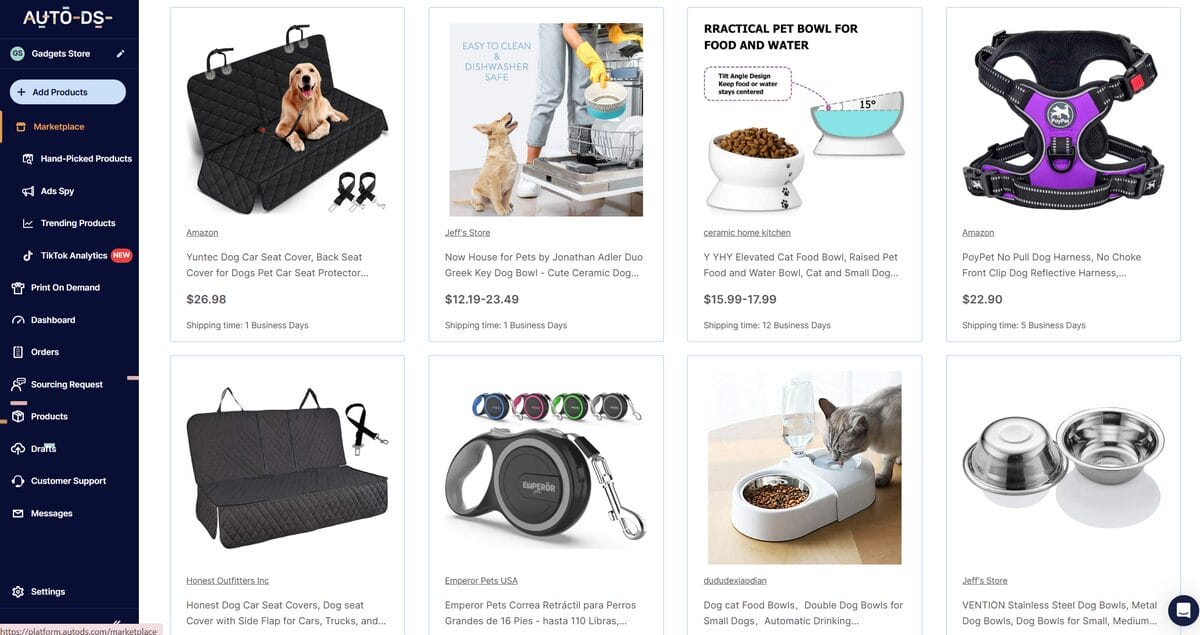
Before you pick products, you need to pick where you’re playing. Your niche defines your audience, your pricing strategy, and how easy (or hard) it will be to stand out.
A profitable dropshipping niche has four core traits:
- Consistent demand (people are actively searching for it)
- Manageable competition (not completely saturated)
- Healthy margins (at least 15–20% after costs)
- Easy logistics (lightweight, low-risk shipping)
To validate a niche, start with data, not guesses. Start with Google Trends to identify search interest over time and avoid short-lived trends. Then move to TikTok to analyze what’s gaining traction organically, since viral products often signal early demand. Finally, review competitor stores to see what’s already selling and how it’s positioned.
You can also leverage tools like the AutoDS, which helps you validate demand and spot rising products before they saturate.
A quick test: if you cannot find at least 20 products in your niche with decent margins (15–20% after all costs), reconsider your niche choice. Choosing the right niche early saves months of wasted effort later.
Step 3: Research Your Competition
Once you’ve chosen a niche, the next move in these steps to start dropshipping is understanding who you’re up against and where you can win. Researching your competitors reveals gaps you can fill.
Start by searching your niche keywords across platforms like Google, Amazon, eBay, and Etsy. Look at:
- Pricing strategies (are they competing on price or value?)
- Product variations (colors, bundles, sizes)
- Store design and messaging (how they present the offer)
Then, dig deeper into weaknesses. Read customer reviews and look for patterns like:
- Shipping delays
- Poor product quality
- Limited options
These gaps are your entry point.
Social platforms give you an extra layer of insight. By analyzing what products get engagement on TikTok or Instagram, you can identify early-stage trends before they peak.
Competitor research tells you where the market is underserved, and that is exactly your opportunity.
🔎Pro Tip: Watch the comment sections for product research. TikTok, Instagram, and even Amazon reviews hide product ideas in plain sight. Comments like “Where do I get this?” or “I need this” often surface demand before tools catch it.
Step 4: Find Reliable Suppliers
At this stage in your dropshipping journey, your supplier becomes the backbone of your business. Everything your customer experiences (shipping speed, product quality, even refund rates) depends on who you choose to work with.
A strong supplier is consistent. They ship on time, keep inventory stable, communicate clearly, and offer transparent return policies. Before committing, it’s always worth ordering a sample yourself. What looks good in a product listing can feel very different in real life, and this is one of the easiest ways to avoid future customer complaints.
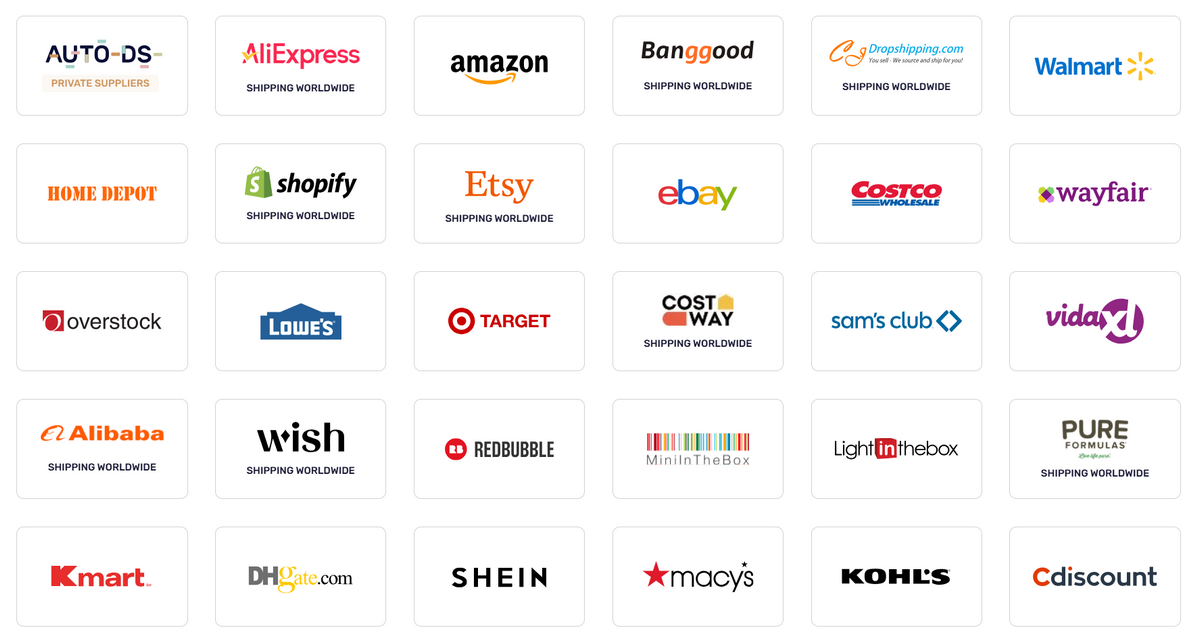
You can source products from platforms like AliExpress or CJ warehouses, but reliability varies. That’s why many sellers lean toward vetted networks like AutoDS Private Suppliers, which are pre-tested for performance. AutoDS also syncs inventory in real time across 25+ suppliers, which reduces the risk of selling products that are suddenly out of stock.
A rule of thumb here: If a supplier has no reviews, no tracking, or inconsistent availability, it’s usually not worth the risk. Taking the time to choose the right supplier early will save you from operational headaches later.
Finding a fast supplier you can trust takes time, but it pays off.
Step 5: Pick Your Selling Channel
One of the most important dropshipping steps is deciding where your store will actually live. Your selling channel affects how customers find you, how much you pay in fees, and how much control you have over your brand.
Usually, Shopify is the most popular starting point for dropshippers, especially for beginners, because it gives you full control over your store and branding. At the same time, marketplaces like Amazon, eBay, or TikTok Shop come with built-in traffic, which can make it easier to get your first sales.
The right choice depends on your strategy. If you want independence and long-term brand-building, Shopify is usually the better option. If you prefer faster validation with existing demand, marketplaces can be a strong starting point.
What matters most is not trying to do everything at once. Start with one channel, learn how it works, and then expand. Tools like AutoDS support multiple platforms, so when you’re ready to scale, you don’t have to rebuild your entire system from scratch.
🆕 Beginner Tip: Don’t spend three weeks perfecting your store before testing. In dropshipping, getting live fast and iterating from data usually beats launching “perfect.”
Step 6: Connect to an Automation Tool
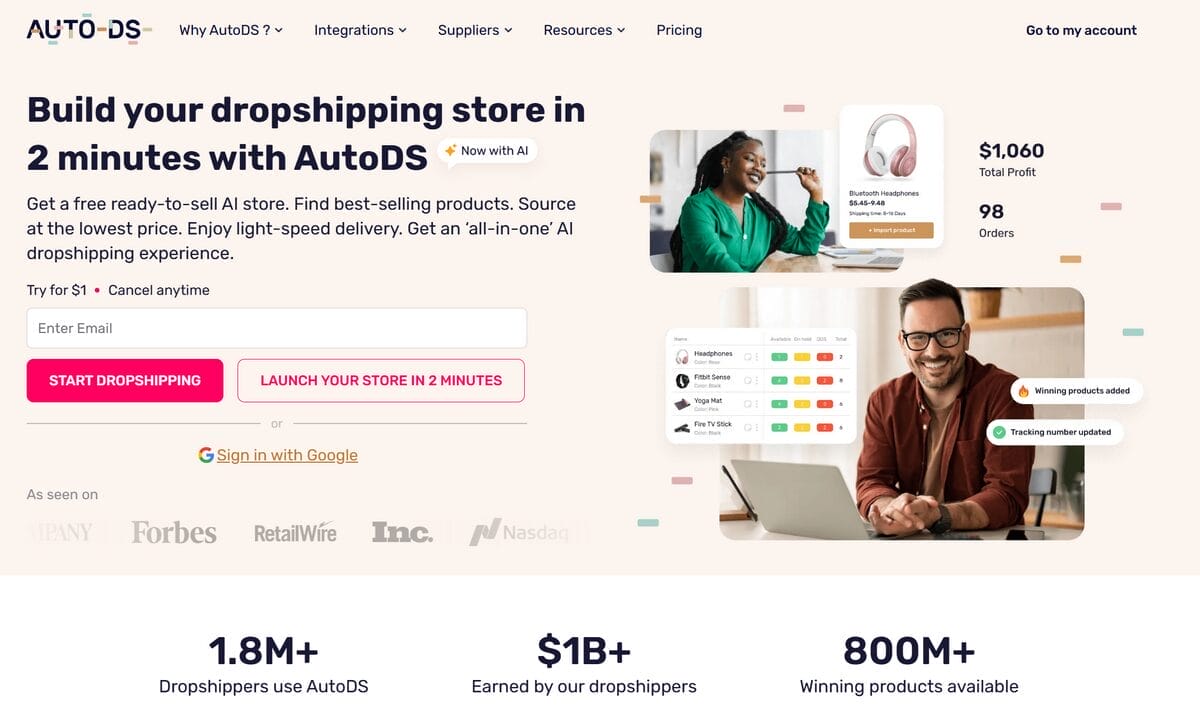
This dropshipping step is not mandatory, but I’d say it is highly recommended.
Automation is what removes the repetitive work that slows you down. Without it, every order requires manual input, from placing the order with your supplier to updating tracking information. That might work for a few sales, but it quickly becomes unsustainable. So, you’d need to let an automation tool take over the operational side of your store.
Basically, automation tools handle product imports, keep prices and stock levels updated, process orders, and push tracking details to your customers. Instead of managing tasks one by one, you’re managing the system itself.
For example, AutoDS is built around this idea. It connects suppliers to your store, automates fulfillment, and even offers an AI Store Builder that can launch a ready-to-sell Shopify store in minutes. That means you can skip the most time-consuming setup steps and focus on testing products and marketing. The best part is that AutoDS also offers a $1 trial, which makes it easier to test automation without a large upfront commitment.
In essence, automation allows your business to grow without increasing your workload.
Step 7: Import Products to Your Store

Once your system is in place, the next step is bringing products into your store and making sure they actually sell. That’s why product listings need to be optimized: to convert browsers into buyers. A good product with a weak listing won’t convert, while a well-presented product can outperform competitors selling the exact same item.
- Start with your titles. They should reflect how real customers search, not how suppliers label products.
- Move to your descriptions, focusing on benefits. Instead of just explaining what the product is, explain what it does for the customer and why it matters.
- Images also play a major role. Supplier images are a good starting point, but whenever possible, improving visuals or adding context can make a noticeable difference in conversion rates.
- When setting your price, include all costs (product, shipping, platform fees) and aim for a net margin of around 15–20%.
As a starting point, uploading 20 to 50 products is usually enough to test your niche without overwhelming your store. AutoDS simplifies the product-importing process by allowing one-click imports from multiple suppliers, giving you a fast starting point that you can refine as you go.
Remember: Well-optimized product listings do the selling work for you.
Step 8: Market Your Products
Marketing is what turns your store from a setup into a business. Without it, even the best products sit unseen. Even if you’ve followed all the previous steps to start dropshipping, nothing happens until people actually see your products.
There are two main ways to approach marketing:
- Paid advertising, especially on platforms like Facebook and Instagram, allows you to test products quickly with relatively small budgets. Many dropshippers start with $10 to $20 per day per product to validate demand.
- Organic content, particularly on TikTok and Instagram Reels, can generate significant reach without upfront costs. Products that can be demonstrated visually tend to perform best in this format.
Beyond that, SEO helps build long-term traffic, while email marketing allows you to retain and re-engage visitors over time.
The opportunity here is massive: The global social commerce market reached $1.48 trillion in 2025 and continues to grow rapidly, which means more consumers are discovering products directly through content.
The key is focus. Choose one or two channels, learn how they work, and scale from there.
📣 Marketing Tip: Build an email/SMS list from day one. Even if traffic is small, start collecting emails immediately. Recovering abandoned carts and launching simple post-purchase flows can raise revenue without spending more on ads.
Step 9: Fulfill Orders

Dropshipping fulfillment is the process of getting products to your customers after they purchase. This is the step where everything connects, the moment your business delivers on its promise. Once a customer places an order, your supplier ships the product directly to them. You don’t handle inventory, but you are still responsible for the overall experience.
To keep things running smoothly, you need to track three things: shipping time (how long from order to delivery), tracking accuracy (does the customer get updates?), and delivery confirmation. Keep in mind that different platforms have their own requirements; for example, TikTok Shop expects orders to move into transit quickly after purchase.
Manual fulfillment can work at the beginning, but as order volume increases, it becomes a source of errors and delays. So, automation tools like AutoDS start becoming essential. Specifically for this step, the Fulfilled by AutoDS feature is key because it automates order processing and updates tracking information, so you do not have to manually copy order details between systems. This matters at scale: one manual error per hundred orders becomes dozens of customer service issues.
Automation keeps fulfillment fast and error-free.
Step 10: Provide Excellent Customer Service
The final step in these dropshipping steps is what determines whether your business grows or stalls over time. Customer service is often overlooked early on, but it directly impacts reviews, repeat purchases, and overall brand perception. A smooth buying experience makes customers more likely to come back and recommend your store to others.
At a minimum, your store should consistently deliver on these expectations:
- Respond within 24 hours: Fast replies reduce frustration and increase trust, especially before and after a purchase.
- Set clear shipping and return policies: When expectations are clear upfront, you prevent most complaints before they even happen.
- Handle refunds proactively: Don’t wait for disputes to escalate. Solving issues early protects your reputation.
- Communicate tracking updates clearly: Customers care less about waiting if they know where their order is.
In reality, dropshipping comes with friction. Refund rates between 10–20% are normal, so the goal is not to avoid issues, but to manage them well.
Over time, this is what compounds. Good customer service turns buyers into repeat customers, and repeat customers are what make a store sustainable.
Tips for Avoiding Common Dropshipping Mistakes
1️⃣ – Do Not Skip Product Testing
One of the biggest mistakes beginners make in these steps to start dropshipping is expecting the first product to work, while the truth is, it rarely does.
Dropshipping is all about structured testing. Most winning products are discovered after going through multiple iterations, not on the first try. In fact, many beginners quit after testing just 2–3 products, when the real data only starts to show after 8–10.
Each product test gives you insight: What kind of creatives work, what price points convert, and what audiences respond. Even “failed” products are valuable because they refine your strategy.
A simple mindset shift: at first, you are running experiments. And experiments need volume to produce results.
2️⃣ – Do Not Ignore Shipping Times
Shipping is a conversion factor, and it should be treated as such.
In 2026, customers expect delivery within 5–7 days, especially if they’re used to Amazon-level logistics. If your shipping takes 10–20 days, you’re hurting your conversion rate before the purchase even happens.
Slow shipping leads to:
- Higher refund rates
- More customer support tickets
- Negative reviews that damage future sales
That’s why choosing suppliers with fast, trackable shipping is critical from day one. This is also where systems like AutoDS help, since they connect you with vetted suppliers and keep tracking updates synced automatically.
You don’t need the fastest shipping in the world, but you do need to meet modern expectations.
3️⃣ – Do Not Rely on One Supplier
Depending on a single supplier puts your business at risk.
If they run out of stock or delay orders, your sales stop. A better approach is to have backup suppliers for your best-selling products, so you can switch when needed.
4️⃣ – Do Not Skip SEO
Paid ads bring short-term traffic. SEO builds long-term, compounding traffic. Optimizing your product pages and content for search allows you to generate consistent visitors without ongoing ad spend.
The best strategy is combining both: ads for testing and scaling, SEO for stability.
5️⃣ – Do Not Treat It as Passive Income
Dropshipping is not fully passive: it’s automation-supported, but strategy-driven.
You still need to monitor products, adjust campaigns, and manage performance. Automation tools like AutoDS can handle repetitive tasks, but growth depends on your decisions.
Treat it like a real business, not a hands-off income stream. Dropshipping can be passive income, but only if you build it that way.
6️⃣ – Do Not Underbudget Marketing
Marketing is where most of your investment goes, and where results come from.
Small budgets often fail because they don’t generate enough data. Instead of expecting instant profit, treat your budget as testing capital.
Once you find a product that works, that’s when you scale. Success comes from testing, learning, and doubling down on winners.
💰 Financial tip: Track contribution margin, not just product margin. A product may have a 25% margin and still lose money after ad spend. Calculate contribution margin (after fulfillment + ads) so you scale products that actually produce cash.
Frequently Asked Questions
How much does it cost to start a dropshipping business?
You can start a basic dropshipping setup for under $100, but a more realistic starting range is $100–$300. This typically covers your store subscription (Shopify), an automation tool like AutoDS (which offers a low-cost trial entry), and initial product testing. The highest cost is not setup; it’s marketing. Most beginners need an additional $100–$300 to properly test products and generate meaningful data.
Is dropshipping profitable in 2026?
Yes, dropshipping is still profitable in 2026, but it is more competitive than before. Typical net profit margins range between 15% and 20% per order, depending on your niche, supplier costs, and advertising efficiency. Profitability comes from product selection, reliable fulfillment, and strong marketing execution, not just listing products.
How long does it take to make your first sale?
With paid advertising, many beginners can generate their first sale within 1 to 2 weeks, assuming consistent product testing.
With organic strategies like TikTok or SEO, it usually takes 1 to 3 months to build enough visibility and traction. The timeline depends on how consistently you test products and publish content.
Can I start dropshipping with no money?
Starting with zero budget is not realistic. While tools like Shopify and AutoDS offer low-cost trials, you still need some investment for marketing to bring traffic to your store. A minimal starting budget is possible, but completely free dropshipping is not sustainable if you want consistent results.
Is dropshipping legal?
Yes, dropshipping is a legal fulfillment method in most countries, including the US, UK, and EU markets. However, you must follow platform policies (like Amazon or Shopify rules), provide accurate shipping times, and comply with local business regulations such as taxes and registration requirements.
Start Your Dropshipping Journey With AutoDS
You now have the 10 dropshipping steps to go from zero to your first sale: set your budget, choose a niche, research competitors, find reliable suppliers, pick a selling channel, connect automation, import products, market your store, fulfill orders, and deliver excellent customer service. Each step builds on the last, and skipping any creates problems downstream.
That’s exactly why automation becomes so important as you move from setup to execution. Managing products, suppliers, pricing, and orders manually across all these stages quickly turns into a bottleneck. Tools like AutoDS streamline this entire workflow, so each step you’ve learned actually works together in practice, not just in theory.
If you want to turn these dropshipping steps into a working store, the next move is simple: start building, start testing, and improve as you go.
To keep learning and leveling up, here are three guides worth reading next:
- Determine Your Starting Budget
- Choose Your Dropshipping Niche
- Research Your Competition
- Find Reliable Suppliers
- Pick Your Selling Channel
- Connect To An Automation Tool
- Import Products To Your Store
- Market Your Products
- Fulfill Orders
- Provide Excellent Customer Service
- Tips For Avoiding Common Mistakes
- FAQ
- Conclusion