



Want to make money dropshipping in 2026? Of course, you can, but the old way of doing everything manually is far too slow, too messy, and too risky if you want real profit.
To start strong today, you need to choose the right niche, find the best suppliers, build a store that looks good and works well, and rely on automation to keep your business running without getting buried in repetitive daily tasks.
AutoDS helps dropshippers become profitable by automating key business processes, reducing human error, and improving overall efficiency. But let’s take it one step at a time.
You can still make money with dropshipping in 2026, but profit depends on strategy, execution, and consistency.
Winning products need real demand, manageable competition, and enough margin to be worth selling.
Reliable suppliers, strong listings, and smart pricing all play a direct role in protecting profit.
Traffic can come from TikTok, SEO, paid ads, or marketplaces, depending on your product and budget.
AutoDS helps streamline product research, importing, pricing, fulfillment, and optimization so scaling feels more manageable.
Step-by-Step: How To Make Money Dropshipping
1. Find Winning Products With Real Demand
There is no profit without demand. So first, we need to make sure we are placing winning products on our virtual shelves. This is not about randomly choosing something that looks “cool,” but about selecting items that meet one or more of the following criteria:
- Solve a specific problem
- Catch attention visually
- Are easy to ship
- Are not too expensive
- Are trending
- Appeal to a specific audience with particular needs
Good product research is an art within dropshipping. And as your business grows, you will sharpen your radar and get better at spotting where the trend is heading. To refine this process, you can use tools like Google Trends to see how demand shifts across different factors, such as population, time of year, location, and more.
You can also rely on platform-based best-seller selections. Amazon, for example, not only has a Best Sellers section, but also a “Most Wished For” section, which helps you distinguish between products people are actively looking for and those they are most interested in.
But if you really want a competitive edge that helps you reach your desired profits faster, AutoDS’s Hand-Picked Products can take you there. Through the AutoDS marketplace, you can access trending items and a curated, constantly updated selection of winning products.
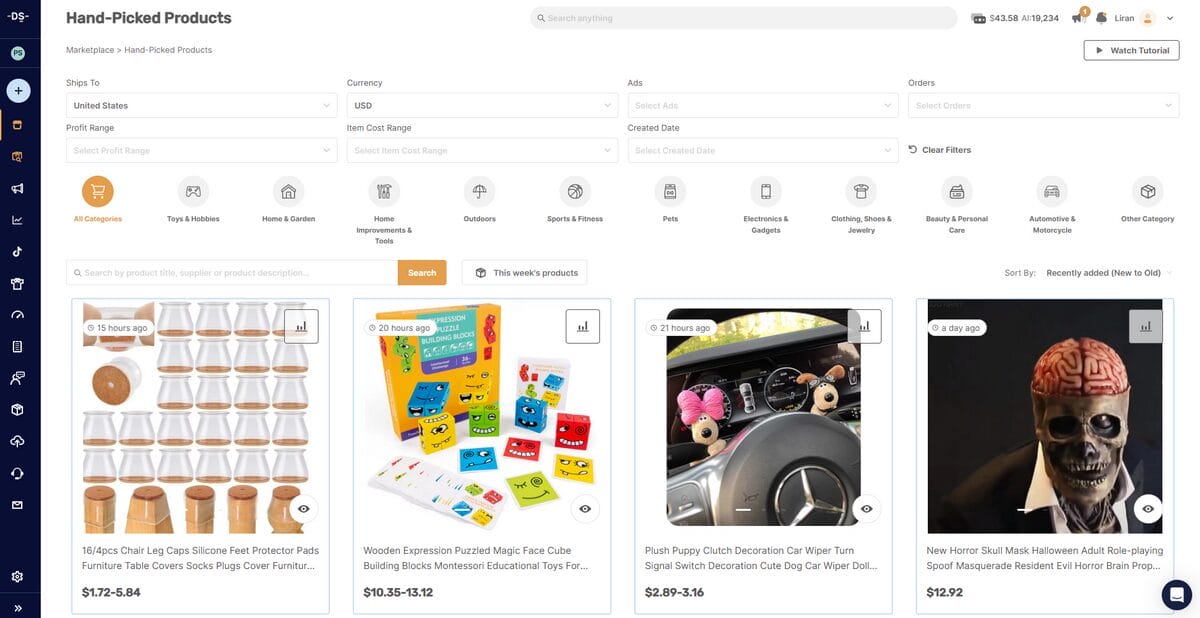
➡️ That is why, before moving on to the next steps and to make everything easier from day one, it makes sense to create an AutoDS account and explore the marketplace to start seeing the advantages that automation can bring.
2. Choose Reliable Dropshipping Suppliers
Once we have a clear idea of what products we want to sell, we need to find the right people to supply them. And this is where one of the essential parts of dropshipping comes in: the supplier.
If we do not have a good supplier, we do not have a business. After all, in dropshipping, we act as the middleman between the supplier and the customer, and any complaint will come back to us. That is why we need to look for suppliers with:
- Fast shipping times
- Good product quality
- Consistent stock variety
- Friendly return and replacement policies
This checklist is essential when seeking the ideal supplier for your business among so many options.
📦 Supplier’s Tip: With AutoDS, you can speed up and optimize the process by choosing from a range of trusted, supported, and private suppliers across different locations, each with its own advantages.
3. Build a Store That Can Actually Convert
It is time to build the digital walls of your business. One distinction we need to make here is the difference between e-commerce marketplaces and customizable e-commerce platforms.
With marketplaces, you already have the advantage of leveraging the platform’s organic traffic, thanks to its active user base. We are talking about giants like eBay, Amazon, and Facebook Marketplace, where you can also benefit from their reputation and scale.
On the other hand, customizable ecommerce platforms let you build your store from scratch with a custom domain name, giving you the freedom to personalize every detail with professionally designed templates, images, logos, and more.
And do not worry, it sounds much more complicated than it actually is. Advances in technology mean you no longer need a degree in programming or a whole team of professionals to get a good result.
➡️ In fact, with AutoDS, you can create your Shopify store in under 5 minutes. Using AI-powered tools, the platform builds an ideal store environment tailored to your chosen niche, including a curated product selection and an attractive store with everything you need to start selling right away.

4. Import Products & Optimize Your Listings
So, we have the products, the supplier, and the store. Now it is time to bring everything together into one complete recipe: importing the products.
This is where automation really becomes a game-changer. Those who choose to do dropshipping manually have to go through a fairly tedious process for every product they want to sell, uploading every image, copying and pasting descriptions, and repeating tasks that quickly become overwhelming, especially if they want to import many items at once.
On the other side, features like the AutoDS automatic importer make the whole process much smoother. All you need to do is copy the product URL from a well-chosen supplier and paste it into the box that opens in your dashboard when you click “Add Product.” You can also do this for multiple products at once.

If you add AutoDS to your dropshipping business, you can optimize this step to make money easier, mainly by using your time more efficiently. That free time is essential for refining your marketing strategies.
⚠️ Important: Importing products alone is not enough. We also need to optimize our listings so they perform at their best, both in terms of SEO and how we appear in search results, and in terms of how customers perceive our store.
That is why product titles and descriptions matter so much. Many dropshippers make the mistake of copying generic supplier titles and descriptions. But if instead we make data-driven decisions and rewrite them based on our audience, what they are looking for, and what is more likely to increase conversions, we move much closer to the profit margins we want.
📢 Marketing Tip: With the AutoDS AI Product Title & Description Generator, you can take a lot of weight off this task and make your listings shine and stand out from the competition.
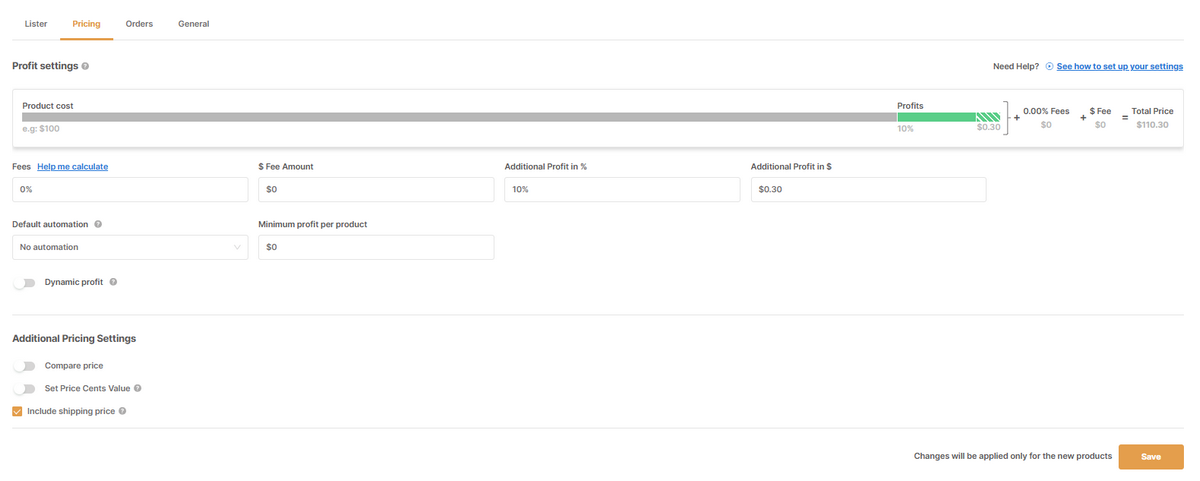
5. Automate & Set Pricing Margins
Do not make the beginner mistake of waiting too long to automate. Yes, manual dropshipping may seem manageable at first, but once sales start picking up, it quickly turns into a bottleneck. And I am not just talking about automatic importing or finding better suppliers, as we saw above, but also about the more delicate side of the business: numbers and margins.
With manual dropshipping, you have to constantly keep an eye on your suppliers to stay aware of every small change they make, because if something slips past you, it will directly affect your profit margins. In these situations, it is very common to sell a product that is already out of stock with the supplier, or to miss a price change and end up losing money.
That is why AutoDS lets you set pricing floors and ceilings, so based on certain parameters, you can decide when a product updates automatically, when it stops appearing as available in your store, and when it goes live again.
6. Market Your Store To Drive Consistent Sales
You can have the best product, the nicest-looking store, and the best supplier. But if nobody knows about it, none of it will matter.
If you want to make money with dropshipping, you need to understand that marketing is one of the most important parts of the business. Marketing is what attracts attention, drives traffic, and generates your first real buying signals. In 2026, that can include:
- Short-form content
- Paid ads
- Influencer collaborations
- SEO
- Email marketing
or a mix of channels, depending on your niche and budget.
📢 Marketing Tip: With AutoDS Ad Spy Tools, you can sharpen your strategy by looking at what is behind your competitors’ decisions.
7. Fulfill Orders Fast & Keep Customers Informed
So far, we have talked about everything that happens before the customer clicks “buy.” We might think the process ends there, but in many ways, it is only just beginning. How we act from now on is crucial to whether that customer will buy from us again.
We live in fast-moving times, and buyers expect speed from their purchase experience. You have probably been on the other side yourself, so you know how stressful it can feel to pay for something and then hear nothing: no updates, no clarity on when it will arrive, just silence from the seller.
That is why fulfilling orders properly is so important. And of course, once you have more than 15 or 20 orders, it can become difficult to keep track of them all and ensure every customer stays informed about the latest updates.
And who shows up here? You guessed it: automation. AutoDS lets you track orders through automatic order fulfillment. With features like Fulfilled by AutoDS, it becomes an essential ally in making order management more efficient, which helps keep customers loyal and more willing to buy from you again.



8. Provide Customer Service That Protects Your Reputation
Customer service is often treated like an afterthought, but it has a direct effect on profitability. When people have questions, delays, or issues with an order, the way you respond can either calm the situation or make it worse.
Good support helps preserve trust, reduce chargebacks, and protect your store’s reputation. It also shows customers that there is a real business behind the purchase. In a competitive space like dropshipping, reliable customer service can be one of the things that separates a one-time sale from a store people feel comfortable buying from again.
How Dropshipping Makes Money (Simple Breakdown)

You can still make money dropshipping in 2026, but profitability depends much more on execution than it did a few years ago. The market is more competitive, customers are less patient, and running everything manually leaves too much room for mistakes.
Sellers who choose better products, work with reliable suppliers, build stores that can convert, and use automation to protect their margins still have real opportunities to build a profitable business.
Dropshipping makes money by letting you sell a product at a higher retail price than you pay the supplier.
In simple terms, your profit is the difference between your selling price and your total costs, which may include product cost, transaction fees, shipping, advertising, and returns.
The bigger the gap between your revenue and your expenses, the healthier your margins become. That is why successful dropshipping is not just about making sales, but about managing pricing, costs, and operations in a way that leaves real profit behind.
A lot depends on marketing and on how we build our brand image. We can take different paths, and each one will require its own strategy.
You can choose to sell a large number of products in a more mass-market way, or choose to focus on a more “boutique” approach. On platforms like Etsy, handmade appeal and a product’s unique character are especially valued.
✨ In the same way, some dropshippers make money through high-ticket dropshipping, selling premium products that may be harder to move but leave much higher profit margins.
Another strong way to stand out in the market is by choosing a print-on-demand strategy. This model is based on adding custom designs to the products you sell. It gives you the chance to add value in a way customers often appreciate, creating a more personal connection with the product.
🖨️ AutoDS offers a professional print-on-demand service, so everything runs smoothly, and you can offer your customers products with a touch of personalization.
Dropshipping Profit Potential in 2026
There is no fixed amount you can make with dropshipping, because earnings depend on your niche, product margins, marketing strategy, supplier costs, and how efficiently you run the business.
Some beginners may only see small profits at first, while others scale to much stronger monthly revenue once they find winning products and improve their systems. What matters most is not just how many sales you generate, but how much profit remains after product costs, ad spend, transaction fees, refunds, and other operating expenses.
In other words, dropshipping income can range from a side hustle to a full-time business, but profitability depends much more on execution than on the model itself.
And if we are talking about productivity and execution, automation gives you an advantage that is almost impossible to match manually.
If you have more free time, you also have more room and energy to test products, experiment with different marketing strategies, evaluate audiences, and explore niches without slowing your store down, because the business is being supported by a platform that handles most of the key aspects of a dropshipping operation.
Best Ways to Make Money With Dropshipping
There is more than one way to make money with dropshipping. The key is choosing one that aligns with how you want to build and sell.
🥇 One-Product Stores
One-product stores are built around a single main item, usually supported by a strong brand angle and a very focused marketing message. This model works especially well when the product solves a clear problem, has a visual “wow” factor, or can be positioned as something unique. Because the entire store revolves around one item, the customer journey tends to feel more intentional and persuasive.
This can make it easier to build trust and create strong landing pages, ads, and product descriptions. The downside is that everything depends on one product performing well, so testing and positioning become even more important.
- Pros: Can make it easier to build trust and create strong landing pages, ads, and product descriptions.
- Challenges: Everything depends on a single product performing well, so testing and positioning become even more important.
- Best for: Sellers with a strong product, a clear angle, and a branding-focused strategy.
🏪 General Stores
General stores let you sell multiple products in a single store, giving you more freedom to test offers, categories, and audiences without rebuilding everything from scratch. This model is often appealing for beginners because it creates more room to experiment and see what products gain traction before committing to a narrower direction.
- Pros: gives you more flexibility to test products, categories, and audiences.
- Challenges: It can be harder to brand and make memorable if the store lacks a clear direction.
- Best for: beginners, product testers, and sellers who want to explore several niches before narrowing down.
🛒 Marketplace Selling (eBay, Amazon)
Marketplace selling involves listing products on platforms like eBay or Amazon rather than relying solely on a standalone store. This model can be attractive because these platforms already have large audiences and strong buying intent, so you do not always need to generate traffic from scratch.
- Pros: gives you access to built-in traffic and customers who are already ready to buy.
- Challenges: come with stricter platform rules, more competition, and less control over branding.
- Best for: sellers who want to tap into existing demand and move faster without relying entirely on external marketing.
📱 TikTok-Driven Stores
TikTok-driven stores rely on short-form content to generate product discovery and drive impulse purchases. Instead of waiting for people to search for your product, this model puts the product in front of them through engaging videos, strong hooks, and visual demonstrations. It works especially well for trendy, eye-catching, or problem-solving items.
The main advantage is speed. A strong video can generate traffic and sales very quickly. The challenge is that this model depends heavily on creative testing, content consistency, and trend awareness, making results harder to predict over time.
- Pros: can drive fast visibility and strong sales through engaging short-form content.
- Challenges: depends heavily on creative testing, content consistency, and trend timing.
- Best for: sellers with visually appealing products and a strategy built around content-led marketing.
How to Find Profitable Dropshipping Products

Above, we looked at some of the characteristics of winning products and how to tell them apart from ordinary ones. Now let’s take a closer look. What seems popular at first glance may not have sufficient demand or healthy profit potential.
If you want to make money with dropshipping, product research should be based on signals that help you validate whether an item can perform in the market.
➡️ Demand Validation
A profitable product needs real demand. People need to actively search for it, talk about it, or show interest in buying it. This is why demand validation should always come before importing a product into your store.
The goal here is to identify one with enough momentum to justify the time, marketing, and operational effort you invest. A product with no proven demand is much harder to sell, no matter how good your store looks.
➡️ Competition Analysis
Demand alone is not enough. You also need to understand how crowded the space is. Some products get attention because they are obvious winners, but that often means many other sellers are already pushing the same item with similar creatives, similar pricing, and similar positioning.
Competition analysis matters. Before choosing a product, take a close look at how it is already being sold. Check how many sellers are offering it, how they present it, what price ranges they use, and what kind of branding or marketing angles appear most often.
➡️ Profit Potential
A product can get clicks and still be a bad business decision if the numbers do not work. That is why profit potential should be part of the selection process from the beginning. To estimate this, compare the supplier cost with your expected selling price, then consider the other expenses involved in successfully running the product.
Those costs may include shipping, transaction fees, advertising spend, returns, and marketplace fees if you are selling through platforms like Amazon or eBay. Once you factor these in, the important question becomes simple: Is there enough margin left to make the product worth selling?
How to Price Products for Profit
Pricing should be treated as a profit strategy. The right price helps you stay competitive, protect your margins, and create enough flexibility to test different offers without losing money too quickly. Let’s look at a few productive approaches at this stage:
Margin Benchmarks
Before setting a final price, it helps to have a rough benchmark in mind. While profit margins vary by niche, product cost, and sales channel, many dropshippers aim for a markup that covers supplier costs and still leaves room for advertising, transaction fees, and unexpected issues such as returns or replacements.
Low-cost products often need a stronger markup because fixed costs take a bigger bite out of every sale. Higher-ticket items may work with lower percentage margins, but they usually require more trust, better creatives, and a more refined sales process. The key is ensuring the product leaves enough room to remain profitable after all real business costs are included.
A healthy pricing structure should give you breathing room. If your margin disappears the moment ad costs rise, or the supplier changes the price, the product may not be strong enough to build around.
Psychological Pricing
Psychological pricing can also help improve conversion without drastically changing your margins. This is where pricing is presented in a way that feels more attractive or easier to justify from the customer’s point of view.
Common examples include pricing a product at $29.99 instead of $30, showing a compare-at price to highlight perceived savings, or creating bundles that make the offer feel more valuable. These tactics may seem small, but they can influence how customers interpret price and whether the product feels like a good deal.
That said, psychological pricing works best when it supports a real offer. It cannot fix weak product-market fit or poor positioning. But when combined with strong branding and a clear value proposition, it can make your pricing feel more persuasive without becoming misleading.
There is no single pricing formula that works for every store. Some sellers use cost-based pricing, which involves calculating the supplier cost and adding a sufficient margin to cover expenses and generate a profit.
Others take a competitor-based approach, comparing how similar products are priced in the market. In practice, many dropshippers combine these approaches. They start with the numbers, check the competitive landscape, and then adjust based on how the product is being presented.
Supplier costs change, competitors adjust their offers, and ad performance shifts over time. That means profitable pricing requires ongoing attention if you want to protect your margins as your store grows.
This is also where automation becomes especially useful:
🔖 With AutoDS, sellers can set pricing automation rules, profit margins, and product monitoring settings to help keep listings aligned with supplier changes. That makes it easier to react faster, reduce manual checking, and protect profitability without having to watch every product all day.
How to Drive Traffic and Get Sales
Earlier, we talked about how important marketing is if you want people to actually find your store and your products. The good news is that you can choose from different strategies to bring in that traffic depending on your preferences.
As always, the best approach will depend on your budget, your product type, and how quickly you can test and scale, which is exactly where automation becomes so valuable.
Let’s go over a few of the main strategies:
Organic Traffic
Organic traffic is one of the most attractive ways to grow because it can bring in visitors without requiring constant ad spend. Instead of paying for every click, you are building visibility through content and search presence over time. This usually takes more patience, but it can become a strong long-term asset for your store.
TikTok is especially useful for visually appealing, problem-solving, or trend-based products. A strong short-form video can put your product in front of a large audience very quickly, especially if the hook is good and the product is easy to understand in a few seconds. This makes TikTok a powerful channel for discovery and impulse buying.
SEO works differently, but it is just as valuable. Instead of relying on viral content, it helps your store appear when people actively search for products, solutions, or related questions on search engines.
Product pages, blog content, category pages, and optimized descriptions can all contribute to more consistent visibility over time. While SEO takes longer to build, it can drive qualified traffic from users with buying intent.
✨ Best for: sellers with a limited budget, strong content ideas, or a long-term growth mindset.
Paid Ads
The advantage of paid traffic is speed and control. You can test different creatives, audiences, and angles without waiting for organic reach to build up. This gives you faster feedback on what is working and what needs adjustment. If a product responds well, ads can quickly become a growth engine.
The challenge is that paid ads also increase your costs, which means your pricing, margins, and conversion rate need to be strong enough to support them. Running ads without a clear strategy can burn through budget very quickly.
✨ Best for: sellers who want faster testing, have some budget to invest, and are comfortable optimizing campaigns as they go.
Marketplace Traffic
Another way to generate sales is to list products on marketplaces like eBay or Amazon. This model gives you access to built-in traffic, meaning customers are already on the platform actively searching for products. Instead of generating all your visibility from scratch, you are placing your offers inside an ecosystem where buying intent already exists.
This can make marketplace traffic especially useful for sellers who want faster exposure without relying only on content or ad campaigns. It also reduces some of the friction involved in building trust, since customers are already familiar with the platform.
✨ Best for: sellers who want to tap into existing demand and start selling without depending entirely on external traffic sources.
There is no single best traffic source for every store. Organic traffic can help you build momentum over time, paid ads can speed up testing and scaling, and marketplaces can connect you with buyers who are already ready to purchase.
In many cases, the strongest strategy is not choosing just one, but combining them based on your business’s stage and the type of product you are trying to sell.
Common Reasons People Fail to Make Money

Most failures come from a small group of repeated mistakes. The good news is that these issues are usually easier to identify than they are to admit. If you want to build a profitable store, this checklist can help you spot what may be holding your results back.
Poor Product Selection
Many sellers fail before they even start marketing because they choose the wrong product. Sometimes the item has no real demand, sometimes the competition is too strong, and other times the margins are too weak to make the product worth selling.
A product may look exciting at first glance, but if it does not solve a problem, catch attention, or fit a clear audience, it becomes much harder to build profitable campaigns around it.
✅ Helpful Checklist:
- Are people actively looking for this product?
- Does it solve a problem or create strong visual interest?
- Is there enough margin after supplier costs and fees?
- Can you explain clearly why someone would buy it?
Weak Marketing
A good product in a quiet store will not make money on its own. One of the most common reasons sellers struggle is that their marketing is too weak, too inconsistent, or too generic.
Strong marketing is about putting the right product in front of the right audience with the right message. Without that, even solid products can go unnoticed.
✅ Helpful Checklist:
- Are you using the right traffic source for your product?
- Is your content or ad creative clear and engaging?
- Are you testing different angles instead of repeating the same approach?
- Does your store support the promise made in your marketing?
Unrealistic Expectations
Another major reason people fail to make money with dropshipping is that they expect fast results with very little testing, patience, or structure.
Many beginners assume that once the store is live, sales should happen automatically. But in most cases, profitable dropshipping takes experimentation, adjustments, and time.
Unrealistic expectations can lead people to quit too early, abandon products before they are properly tested, or panic when the first campaign does not perform immediately. The stores that grow are usually the ones that treat dropshipping like a real business, not like a shortcut.
✅ Helpful Checklist:
- Are you expecting profit too quickly?
- Have you given your product and strategy enough time to be tested properly?
- Are you treating this like a business or like a lucky guess?
Lack of Consistency
Even good strategies fail when they are not applied consistently. A lot of beginners test one product, run one campaign, post a few videos, and then stop the moment results are not immediate. But consistency is what allows product research, marketing, and optimization to actually compound over time.
How to Increase Your Profit Margins With AutoDS
Coincidentally, the same factors that help us increase our profit margins are the ones AutoDS can support us with the most:
Supplier Optimization
Better margins often start with better supplier choices. If your supplier has slow shipping, unstable stock, or weak pricing, your margins get squeezed from the beginning. You can access private and supported suppliers through the AutoDS Marketplace, with benefits such as faster shipping, lower prices, and even customizable branding options.
Pricing Adjustments
Supplier costs change, stock availability shifts, and what looked profitable one week can become much tighter the next. AutoDS automates pricing and stock as one of the platform’s core automation functions.
Reducing Costs
One of the most overlooked ways to improve margins is by reducing the hidden costs of running the store. Manual importing, manual order handling, repetitive listing edits, and slow creative production all consume time and add friction.
AutoDS automates product imports, order fulfillment, and tracking, so sellers can focus on growth rather than repetitive work. That matters because operational inefficiency is still a cost, even when it does not appear as a line item on a spreadsheet.
Improving Conversion Rates
As we said, AutoDS includes AI tools for listing optimization, including AI Rewrite for titles and descriptions, and AI Product Page Templates for Shopify product pages. That matters because weak listings often hurt margins indirectly. If your product page looks generic, you may need to spend more on ads or lower prices to compensate.
How Fast Can You Profit From Dropshipping?
Some dropshippers get their first sale quickly, while others need more time to find the right product-market fit. What matters is understanding that first sale, break-even, and real profitability usually happen at different stages.
Your first sale can happen surprisingly fast, but it can also take time. Some stores get an order within days if the product, traffic source, and offer align early. Others may spend several weeks testing products, adjusting creatives, and refining the store before seeing that first conversion.
A first sale is an important signal, but it does not always mean the business is already working at a profitable level. Sometimes it shows that the product has potential or that your traffic source is bringing in the right audience. That is why the first sale should be seen as an early milestone, not as proof that the system is fully optimized.
Breaking even usually takes longer than getting the first sale. A store can generate revenue and still not be profitable when supplier costs, transaction fees, shipping, ad spend, and returns are factored in.
Making money with dropshipping rarely happens all at once. First comes the first sale, then the effort to reach break-even, and only after that does scaling become realistic.
Frequently Asked Questions
Can you really make money dropshipping?
Yes, you can really make money with dropshipping, but it is not automatic. Profit depends on choosing the right products, working with reliable suppliers, building a store that can convert, and managing your operations efficiently.
How much money can beginners make with dropshipping?
There is no fixed number, because beginner results vary depending on product choice, pricing, marketing, and consistency. Some new sellers only make small profits at first, while others grow faster once they find a product that converts and improve their systems.
How long does it take to become profitable?
That depends on how quickly you find a product with real demand, how efficiently you test your marketing, and how well you protect your margins from the start. Tools like AutoDS can help shorten that learning curve by automating tasks that would otherwise slow testing down.
What is the average profit margin in dropshipping?
There is no universal average that applies to every store, because margins change depending on the niche, supplier pricing, traffic source, and operating costs. In practice, what matters most is whether your pricing leaves enough room after product costs, transaction fees, shipping, returns, and marketing expenses.
Why do most people fail at dropshipping?
Most people do not fail because dropshipping “doesn’t work.” They fail because they choose weak products, market them poorly, expect results too quickly, or give up before gathering enough data to improve.
What is the fastest way to make money with dropshipping?
It depends on your strategy, but adding tools like AutoDS to your workflow can make testing and scaling much more efficient, reducing the time it takes to see results.
Do I need money to start making money?
Compared to a traditional business, you do not need a large amount of money to get started, but there are still some smaller costs to keep in mind, including setup, apps, marketing, and product testing. The good news is that automation platforms like AutoDS can help you run leaner by reducing manual work and helping you manage more of the business from one place.
Can dropshipping be a full-time income?
Yes, dropshipping can become a full-time income, but that usually happens after testing, learning, and building a system that works consistently. Some drosphippers keep it as a side hustle, while others grow it into a more stable long-term business.
Start Your Dropshipping Journey with AutoDS
As we saw throughout this guide, real profitability comes from choosing products with demand, working with reliable suppliers, building a store that can convert, protecting your margins, and using the right traffic strategy to generate consistent sales.
AutoDS helps make that process more manageable by supporting key business functions, including product sourcing and importing, pricing automation, fulfillment, and listing optimization.
If your goal is not just to start dropshipping but to build a store with growth potential, AutoDS can help you lay a stronger foundation.
That is why it is worth going back to step one and checking out everything AutoDS has to offer. Why walk when you can drive a Ferrari?
To keep learning, I recommend the following articles:
- How To Make Money Dropshipping
- How Dropshipping Makes Money
- How Much Money Can You Make?
- Ways To Make Money With Dropshipping
- How To Find Profitable Products
- How To Price Products For Profit
- How To Drive Traffic And Get Sales
- Common Reasons People Fail
- How To Increase Your Profit Margins
- How Long Does It Take To Make Money?
- FAQ
- Conclusion