


Managing inventory is not exactly the definition of exciting. But in dropshipping, it’s what keeps your business from turning into a digital mess. Between fluctuating supplier prices, stock changes, and multiple store listings, staying organized is half the battle.
The good news? You don’t have to do it all manually. Inventory management tools help you keep this under control without losing your mind (or your profit margins). The challenge is finding the tool that fits your business’s needs, as each one has its own take on how to track, sync, and automate your listings.
In this full comparison guide, we’ll explore how five major dropshipping tools handle inventory management: AutoDS, Spocket, Dropified, CJDropshipping, and Zendrop. For example, AutoDS takes a fully automated approach to inventory management, unifying everything in one single dashboard, syncing supplier data, and letting you optimize listings in just a few clicks.
Inventory management isn’t just about stock, it’s about control. Keeping your products centralized, searchable, and editable in one single place is essential for running a scalable dropshipping business.
AutoDS stands out with automation, smart filters, and multi-store management. From bulk editing to AI-powered tools and performance tracking, AutoDS offers a complete dropshipping solution.
Most competitors fall short. Spocket lacks centralized control, CJ Dropshipping offers minimal editing tools, Dropship.io doesn’t handle inventory at all, and Zendrop misses key automation features. Instead, AutoDS brings it all together in one powerful platform.
Why Inventory Management Is So Important When Dropshipping
Running a dropshipping store without proper inventory management is like trying to organize your life using sticky notes on five different walls. One product is out of stock, another has the wrong price, and you can’t remember where anything is. Now multiply that by multiple stores. Total chaos.
That’s why having everything in place is a game-changer. You can see exactly what you’re selling, across all your stores, and actually stay on top of it. But it’s not just about looking organized. It’s about staying in control.
A good inventory system should make it easy to find, edit, and update products. Plus, it should clearly show which products are out of stock, which ones are selling fast, and more.
Think about inventory management as your central hub for dropshipping. This is where things happen. You know, product information, prices, performance, and more. Being able to navigate this easily and quickly is what makes the difference between smooth operations and a tangled mess of tabs and missed opportunities.
AutoDS Inventory Management Feature

Think of the AutoDS Inventory Management feature as a mission control for your entire dropshipping operations. This is where you get full visibility over every single product. Everything is right there, searchable, editable, and built to keep everything under your control. Let’s break it down.
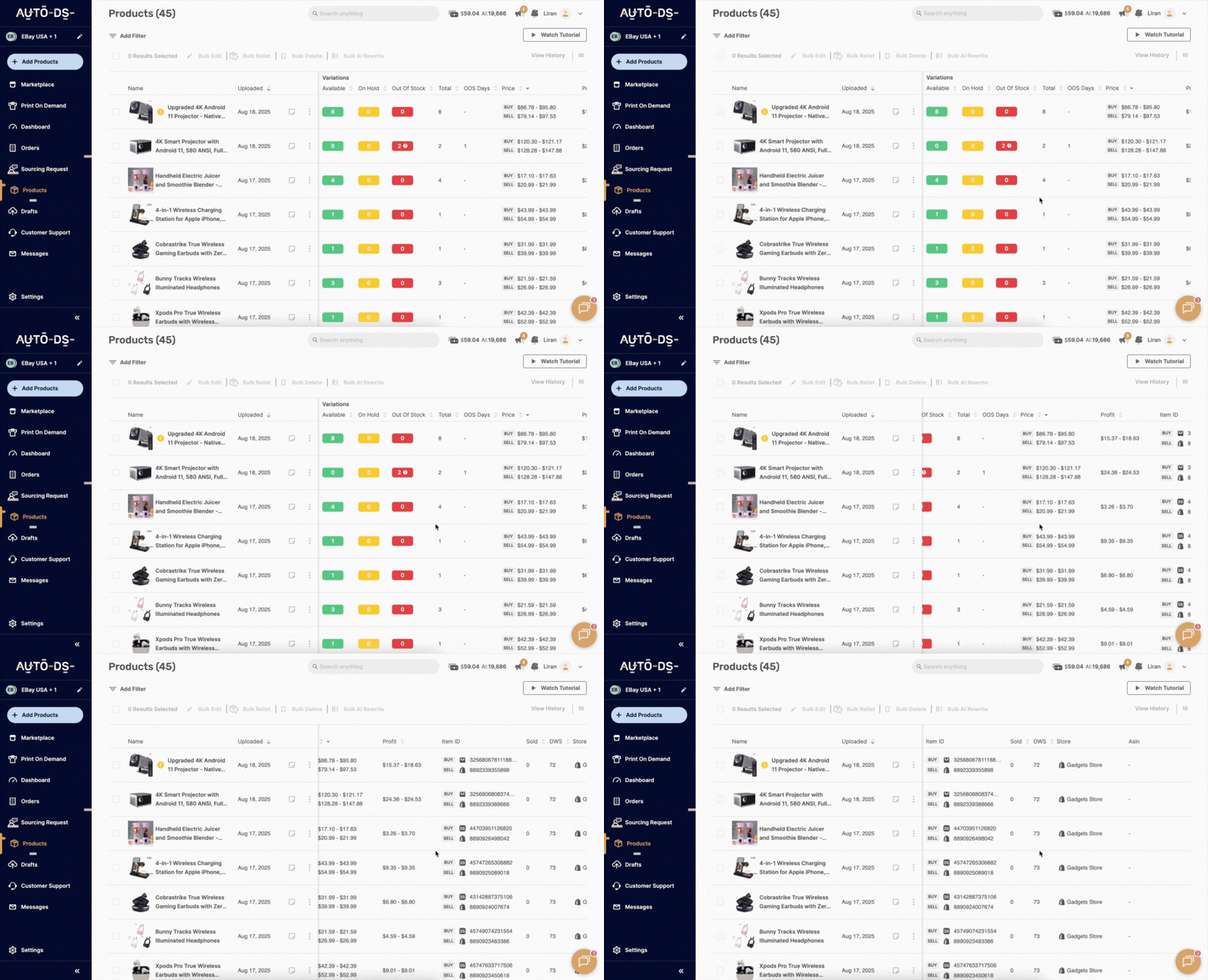
First, if you’re running more than one store, the multi-store management tool pulls them all into one neat dashboard. You can view everything together or filter by store. Then, from that same dashboard, you can update your product titles, prices, variants, and more—no million tabs needed.
Got hundreds of items to tweak? Use the bulk editor to make changes fast for multiple products at once. Looking for a specific kind of product? No problem. You’ve got 30+ smart filters to make changes fast, based on things like price range, stock status, and more.
And there’s more. Let’s say you need to evaluate the performance of your products. Want to cut underperformers and spot best sellers? Easy. You’ll see how many days without sales (DWS) each product has, helping you optimize your listings and double down on your winning items with one click.
With the AutoDS Inventory Management feature, you’re saving time, seeing the full picture from one single place, and protecting your profits by spotting trends. No more micromanaging every product one by one or wasting money on dead listings.
Spending too much time organizing products one by one? AutoDS gives you full control from a single dashboard. It’s fast, easy, and automated 👉 Start your $1 trial now
AutoDS vs Spocket: Inventory Management

Spocket is a dropshipping platform for US and EU-based suppliers. While its inventory management system covers the basics, like a full product editor and smart filters, it lacks advanced capabilities.
First, there’s no centralized dashboard for managing multiple stores. You can have many shops linked to one single account, but each one is unique in terms of product selection, customization, and order processing. Therefore, each one requires a different subscription.
This is a major drawback for sellers looking to diversify their selling channels while still managing everything from one place. All in all, this makes Spocket not just less convenient but also more expensive than AutoDS’s full business dashboard.
Then, there’s bulk editing. Spocket doesn’t include a built-in bulk editor. So, want to make changes across products? You’ll need to download a CSV, make your edits manually, and reupload it. Plus, it lacks advanced features like AutoDS’s AI Title & Description Generator, which is a game-changer for SEO and high-converting copies.
👉 Bottom line: When it comes to inventory management, AutoDS goes a step further than Spocket, giving you full visibility and control across all your stores.
AutoDS vs Dropship.io: Inventory Management

Dropship.io is a tool known for finding trending products. But when it comes to inventory management? That’s not really what it is built for. Dropship.io is a product sourcing tool, not a full dropshipping platform. This means it doesn’t really offer capabilities outside of that. For example, price and stock monitoring, bulk editing, or even the ability to manage your store’s inventory in real time.
There’s no centralized dashboard to view or manage products and no smart filters to organize listings. The result? There’s no way to track what’s selling or make bulk changes on the go. You also won’t find advanced tools like AI-powered title and description editing, performance insights, or automation to fulfill orders.
In short? It works best when paired with other dropshipping platforms that handle the rest of the workflow.
👉 Bottom line: AutoDS is a better alternative than Dropship.io for inventory management and the overall dropshipping process.
AutoDS vs CJDropshipping: Inventory Management

CJDropshipping is known for its global warehouses, branding options, and hands-on sourcing services. But when it comes to managing inventory, it’s not exactly built for speed or convenience. You can see stock levels, but there’s no centralized dashboard to keep everything organized and optimized.
There’s no bulk editing or smart filtering, which means you’re stuck doing things one product at a time. And if you’re looking for tools to help you spot what’s selling, clean out what’s not, or scale your winners, CJ Dropshipping just doesn’t offer that kind of control.
Plus, unlike AutoDS, CJ Dropshipping lacks additional automation features to supercharge inventory management, like price and stock monitoring, an AI-powered copy generator, and automatic price optimization.
👉 Bottom line: This tool is great for sourcing and accessing global warehouses. But when it comes to automation and a full business dashboard, AutoDS outperforms CJDropshipping.
AutoDS vs Zendrop: Inventory Management

Zendrop is known for its product sourcing and automated fulfillment features, and its inventory management system takes a simpler, less technical approach than AutoDS.
While it covers the essentials, like automatic order system and product imports, it’s not designed to give you full visibility over real-time stock data or multi-store operations.
For example, Zendrop doesn’t show live inventory counts from its suppliers. Instead, products display placeholder numbers to avoid “out of stock” warnings. That means you’re not necessarily seeing the actual stock levels. This can become a potential problem if you sell high-volume or time-sensitive products. It’s convenient for quick listing, but less ideal for sellers who need precise tracking.
Zendrop also lacks advanced features like bulk editing, smart filters, or a centralized dashboard to manage multiple stores. You can import and fulfill products easily, but if you want to edit titles, adjust prices, or update stock across all your stores at once, you’ll need to do it manually.
This makes scaling a bit more hands-on compared to AutoDS, which handles all of that in a single dashboard with real-time updates and automation rules.
👉 Bottom line: AutoDS is better than Zendrop when it comes to inventory management, providing real-time updates, supplier data syncing, and bulk editing.
Side-by-Side Feature Comparison Table
| Platform | Automation Level | Multi-store management | Ease of Use | Supported Suppliers | Customization | Pricing |
|---|---|---|---|---|---|---|
| AutoDS | High: includes stock/price monitoring, AI tools, and bulk editing | Yes. Manage all stores from one dashboard, no extra subscriptions | Very intuitive with centralized dashboard for all stores | Wide range of global retailers and private suppliers | Full control: +30 smart filters and pricing rules | Trial for $1, then plans from $29.90/mo (billed monthly) |
| Spocket | Basic: manual CSV uploads, limited automation | Per store subscription + each is managed separately. More stores = more expensive | Easy to use, but no unified dashboard for multiple stores | Spocket’s internal supplier network (mostly US/EU-based) | Limited: No built-in bulk editor or advanced filters | Limited free plan, then starts at $39.99/mo (billed monthly) |
| Dropship.io | None: no inventory automation, just product research | No: not built for store management | Simple for product research | Research only, doesn’t connect to suppliers | None: no dashboard, no filters, no editing | Starts at $39/mo (billed monthly) |
| CJ Dropshipping | Low: basic stock view, no bulk editing or advanced automation features | Stores can be added, but no full centralized business dashboard | Moderate learning curve and more hands-on | CJ Dropshipping’s own suppliers are warehouses | Limited: lacks smart filters, no bulk edit, no AI tools | Free to use, but service fees apply |
| Zendrop | Moderate: automated order syncing and fulfillment, but no real-time stock tracking. | Single-store focused: no centralized multi-store dashboard. | Very beginner-friendly and visually clean interface. | Zendrop’s internal supplier network and branded partners. | Moderate: supports custom packaging and branding, but lacks bulk editing. | Free plan available. Pro plans start at $49/mo (billed monthly) |
Frequently Asked Questions
Which dropshipping platform offers the best inventory management tool?
AutoDS stands out against other dropshipping platforms with the most complete inventory management tool. It automates stock and price monitoring, supports bulk editing, and manages multiple stores from one dashboard. Other tools like Zendrop, Spocket, and CJDropshipping cover the basics but lack the same level of visibility and automation.
Why do I need an inventory management tool for dropshipping?
You need an inventory management system for dropshipping to have visibility over your business. Inventory management prevents overselling, outdated prices, and missed sales opportunities. They save hours of manual work and keep your listings accurate, which is crucial when supplier stock and prices change constantly.
Can I manage multiple stores with AutoDS’s inventory management tool?
Yes, AutoDS lets you manage multiple stores from one single inventory management dashboard. You get a clean overview of everything happening across your Shopify, eBay, Amazon, or Etsy stores from one place, from products to stock levels and price updates.
Which dropshipping tool is the most beginner-friendly for inventory management?
AutoDS is the most beginner-friendly option thanks to its clean dashboard and full automation. It syncs stock and prices automatically, so even beginners can manage inventory easily without manual updates or messy spreadsheets.
How can I get started with AutoDS?
To get started with AutoDS easily, there’s a 14-day trial for just $1 that lets you connect your account to multiple stores, import products, and experience all the inventory management features for yourself.
Final Verdict: Which Tool Does Inventory Management Best?
When it comes to inventory management, AutoDS takes the lead against other dropshipping tools. You get everything in one place: a centralized dashboard for all your stores, bulk editing, smart filters, performance insights, and automation tools like AI-powered copy and price monitoring.
Spocket covers the basics, but lacks unified control and real editing flexibility. Dropship.io stops at product sourcing—no inventory management or comprehensive dropshipping capabilities beyond that. CJ Dropshipping, while solid for sourcing, falls short on automating and optimizing your product catalog. And Zendrop focuses more on fulfillment and branding than real-time visibility or multi-store management.
If you want to stop micromanaging and run your inventory like a pro, AutoDS provides the automation tools for the entire workflow from a single dashboard.
And, before you go, here are some valuable articles you might find useful to learn more about inventory management and AutoDS: