



TikTok marketing for dropshipping isn’t a nice-to-have anymore. With half a million sellers in the US, according to Bloomberg, TikTok has become one of the most popular social commerce platforms.
That means one thing only: to get sales coming, you need to stand out. And that’s where smart, fun, and innovative TikTok tricks come into play. We’re talking about fast content, relatable videos, and jumping on trends before they peak.
In this guide, we’ll break down successful TikTok marketing dropshipping strategies to go viral, from organic tactics and paid ads to content frameworks that actually convert.
Plus, we’ll show you how to combine this with automation to turn views into sales fast. AutoDS helps you connect everything behind the scenes, from product sourcing to order fulfillment, to take full advantage of your TikTok traffic.
TikTok marketing is all about testing and speed. The more content you create and iterate, the faster you find winning products and angles.
Organic + paid is the winning combo. Use organic content to validate ideas, then scale proven videos with ads for consistent sales.
Fresh, authentic creatives are the star of the show. Use diverse formats, like before/after videos or UGC-style reviews, a strong hook that captures attention, and a clear CTA.
Content drives traffic, AutoDS handles the backend. While TikTok brings the views, AutoDS automates the entire dropshipping operation, from sourcing and store optimization to fulfillment and tracking.
What Is TikTok Marketing for Dropshipping?
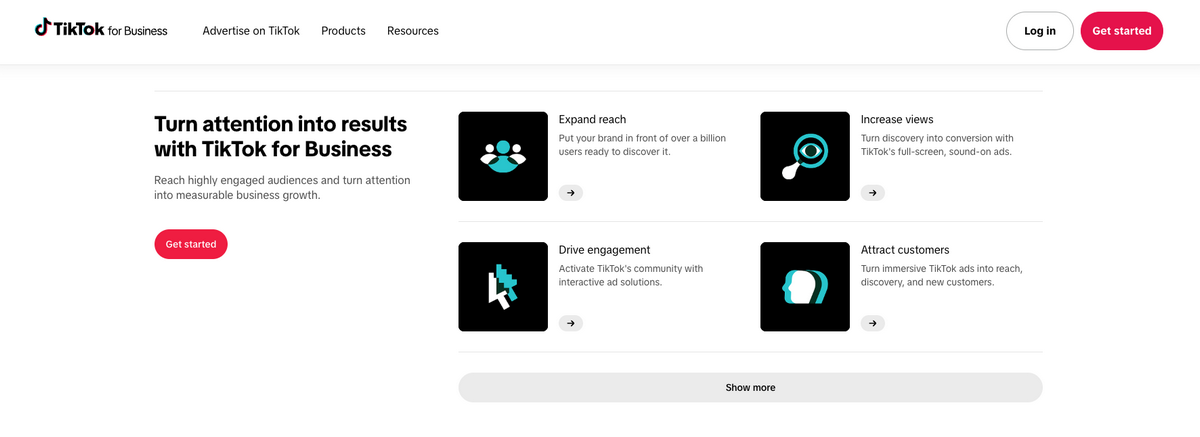
TikTok marketing for dropshipping is all about using short-form video content (you know, TikToks) to attract attention, get traffic, and sell. Here, you’re not relying on traditional funnels or long sales pages. That’s a thing of the past, really.
Instead, TikTok lets you showcase products in action. You can tap into trends fast and reach huge audiences with content that feels natural, not salesy.
There are two main ways to do it:
- Organic content. This is about posting videos without spending money on ads. You post consistently, test different angles, ride trends, and see what sticks.
- TikTok ads (paid strategy). This lets you power up what’s already working. You take a video that performed well organically, and boost it to a larger, targeted audience to drive consistent sales.
The real magic comes from combining both. There’s no better one than the other. Organic helps discover what works and fuel your community, and paid helps you scale it.
Why TikTok Works So Well For Dropshipping
TikTok is basically built for product discovery through pure entertainment. Unlike other platforms where people scroll to stay informed, users on TikTok scroll for fun. And that’s where marketing can sneak in without feeling like marketing at all. It blends into content to catch attention and drive sales.
This results in a natural impulse-buying behavior. Quick videos lead to quick decisions and quick purchases, especially with TikTok Shop built in right inside the platform. Users don’t have to leave to buy. They just watch a video and check out all in the same place.
But let’s get a bit more technical. Because everything is driven by an algorithm, going viral is not hard with good content. TikTok will automatically push a video that’s working, regardless of how many followers you have.
Now, who is this model really for? You should consider it if you are:
- A beginner in dropshipping looking for a low-cost way to validate products without a big budget.
- A scaling seller who wants to test creatives quickly and find winning angles faster.
- A brand owner aiming to build visibility with authentic, relatable content.
- An agency or marketer managing multiple catalogs and needing to test many products at once.
Honestly? Anyone selling online can take advantage of this model, especially if targeting younger generations who are native to TikTok.
How TikTok Marketing Works in 2026
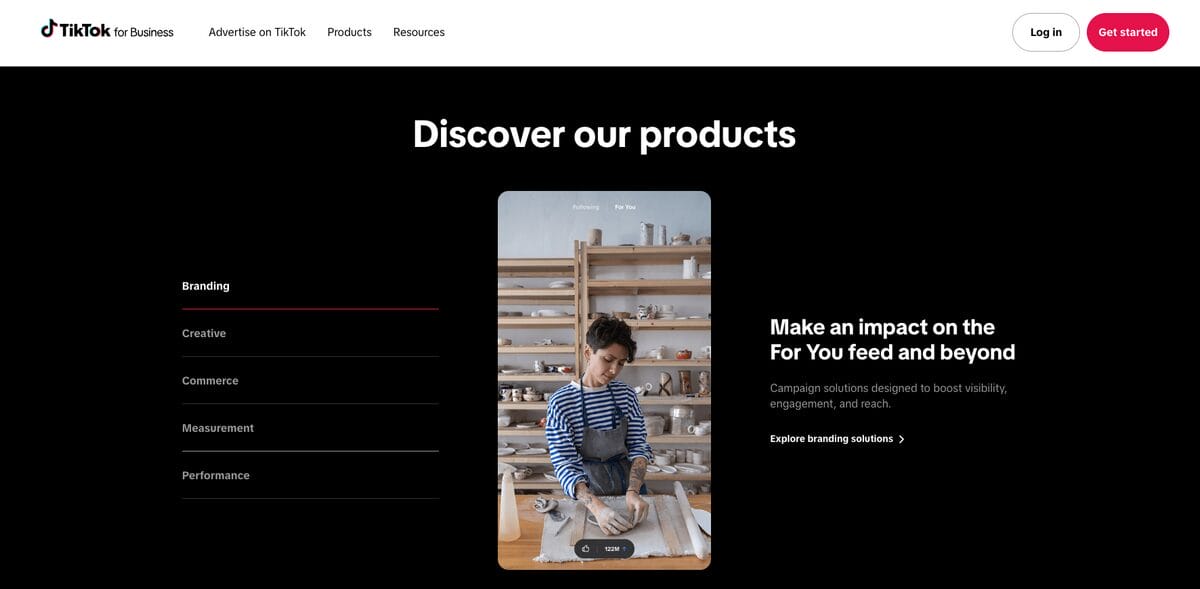
At this point, you’re probably thinking that TikTok works like magic. Well, not really. It’s the algorithm.
TikTok is full of opportunities. But you need to understand how it actually pushes content. The biggest shift? It’s no longer about who posts, but how users interact with it.
TikTok’s algorithm is obsessed with one thing: how long people stay watching your video. If your content gets attention, TikTok keeps pushing it. If people keep scrolling after two seconds, it’s game over.
Here’s what matters the most:
- Watch time. Do people watch until the end?
- Retention rate. How long do they stay before dropping off?
- Engagement. This includes likes, comments, shares, and saves.
- Replays. Are people rewatching? If so, TikTok automatically understands the video is worth it.
TikTok Content That Works In 2026
In this context, short-form video is the king. This isn’t new, but in 2026, the pace is more intense than ever. Attention spans are shorter, trends move faster, and content cycles last a couple of days.
To keep up with this, common tactics include 5-15 second videos, strong hooks in the first couple of seconds, loop-friendly content that makes people rewatch, and unpolished videos that feel natural and native (not like ads).
Think of it this way:
❌ Overproduced content? Too outdated.
✅ Quick, relatable, slightly chaotic videos? More likely to win.
AI is becoming a major ally in content creation. Now that TikToks don’t need to feel overly cinematic, AI can help sellers craft short, quick, and practical videos in minutes.
We’re talking about AI-generated scripts, UGC-style videos, editing tools that replicate winning formats instantly, and bulk content production that doesn’t require a full creative team.
This doesn’t mean everything feels robotic. It’s the opposite. The goal is to create more content, test faster, and double down on what works quickly.
Organic TikTok Strategy for Dropshipping
Organic TikTok dropshipping is where most of the stuff happens. Before spending on ads, this is where you test ideas, find what works, and sometimes even go viral without paying a cent.
But here’s the thing: organic content is not about posting randomly and hoping for the best. You need volume, speed, and a clear content approach.
The ABC Of Organic TikTok Content
The first thing you should keep in mind is that TikTok doesn’t work like other social media channels. Instagram is all about aesthetics, Facebook feels more promotional, and Pinterest is more about inspiration.
In contrast, TikTok is driven by entertainment and discovery. Moreover, it’s all about content that feels raw, natural, and kind of last-minute, like it was something a friend just recorded and sent to you.
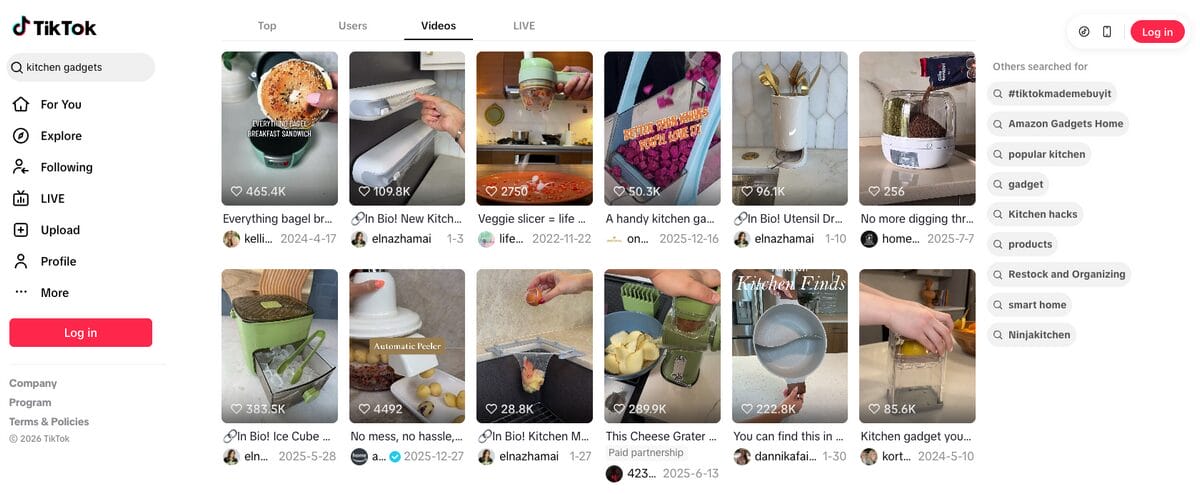
For example, quick before-and-after transformations, narratives that tell a story, showing the product in action, and UGC-style reviews. Again: think of these like your friend just found a product they loved and sent it to you.
Now, here’s the magic trick: the hook. TikTok video structures are hook-first, meaning that it’s all about capturing attention in the first two seconds. Otherwise, users just keep scrolling past your video. So, if you can nail your hook, you have half of your organic strategy done.
The whole point of organic content is simple: test, test, and test some more. Try different hooks, formats, and products. The more videos you put out, the more data you get. Once you have found your winning videos, you can scale them with your paid strategy.
TikTok Content Frequency
There’s no magic number of times you should post daily or weekly. It depends. But a general rule of thumb is this: you need to be consistent. Posting 10 videos one day, and zero for the rest of the month, doesn’t work.
The algorithm rewards active accounts, and each video is a new chance to hit the virality jackpot. Here’s a good baseline:
- 3-5 videos a week when starting. This will get your account up and running and give you time to practice and plan your videos in advance.
- Scale up to 1-3 videos a day, or up to five if you’re testing aggressively.
🆕 Beginner’s Tip: When you’re just starting out, it’s best to focus on volume over perfection. The more you post, the more data you gather about what works and what doesn’t. This will give you information for future videos.
Keep this in mind: one video might flow, and the next one might take off. That’s just how TikTok works. Don’t get frustrated if you don’t find your niche right away.
TikTok Ads for Dropshipping (Paid Strategy)
With the organic strategy covered, it’s time for the next step: your TikTok ads dropshipping strategy. The main difference? Easy: while the first one helps get insights and test, ads help you scale. That’s why using both is so important.
If you’re just starting out, organic TikTok is your testing ground. You post content, try different angles, and see what people actually engage with. No budget needed, just content volume and consistency.
But once you find a video that works, that’s your signal to move into ads. The key is not jumping to a paid strategy without validation. That’s just going to kill your budget without driving solid results.
Planning TikTok Ad Campaigns
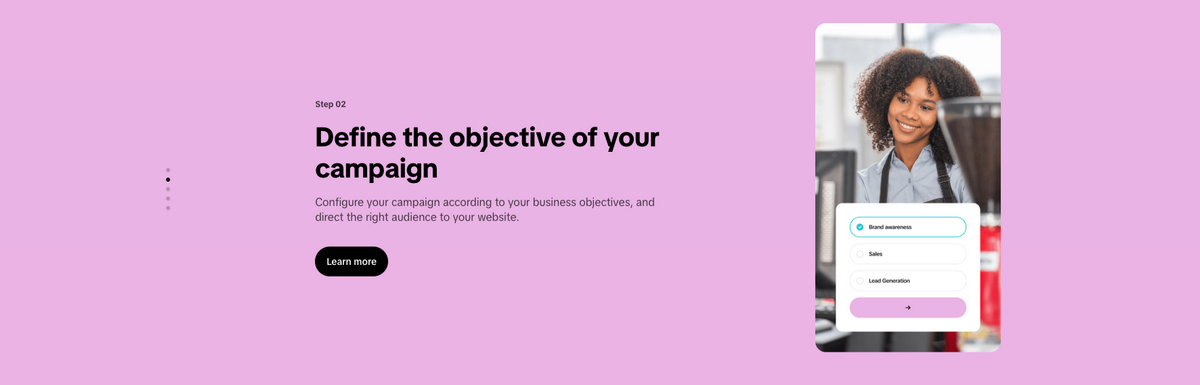
Planning campaigns on TikTok is pretty friendly for beginners. Let’s take it step by step:
1. Set up your campaign. You don’t need a complicated setup to start. A basic campaign structure looks like this:
- Campaign level. This is your goal. Here, it’s best to optimize for Conversions, not Clicks.
- Ad group level. This is where you set up your targeting + budget. Start with broad targeting, and then let TikTok’s algorithm do its magic.
- Ad level. Here you set up your creatives and videos. Test multiple creatives per ad group (3-5 minimum) and then, as time goes by, leave only the ones that work best.
The key here isn’t perfect targeting. It’s strong creatives. That’s why testing first is so important.
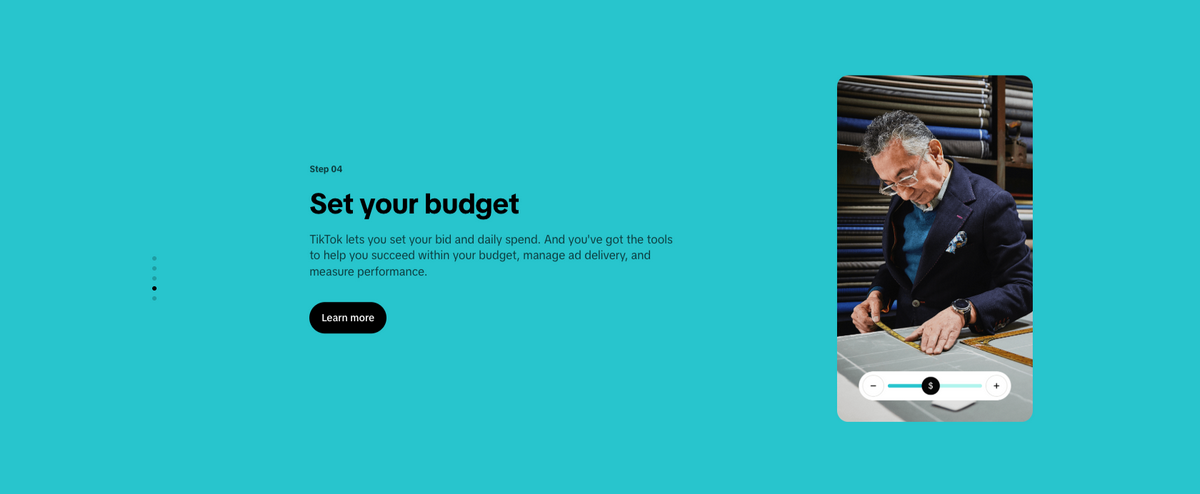
2. Plan your budget. You don’t need a massive one. But you do need enough to test properly. A realistic starting point is something between $10-$30/day per ad group for testing. Also, run tests for 2-3 days minimum before judging results.
Again: what matters isn’t just how much you spend, but how many creatives you test. Spending $50 on one video is risky. But spending $50 across multiple variations is a smarter strategy to gather as much data as possible.
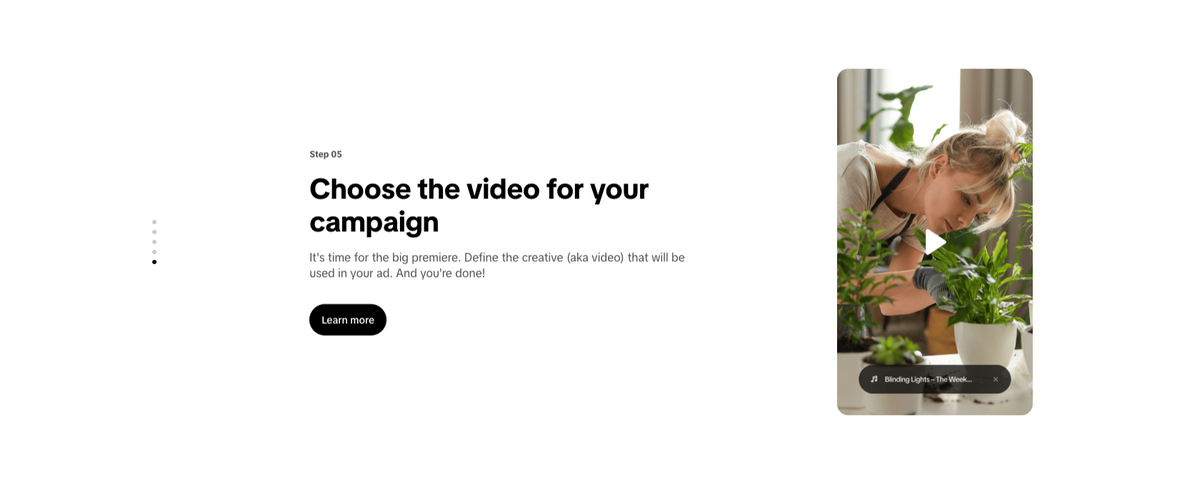
3. Pick your creatives and go live. Once you have your budget, it’s time to plan your content. You should use the ones that already worked for your organic strategy. Pick a few for each ad group, and go live!
4. Scale your ads. Once you find a winning creative with high CTR and conversions, that’s when you scale. Here’s how to do it without breaking anything:
- Increase the budget gradually, around 20-30%.
- Duplicate winning ad groups instead of editing them.
- Test new variations of the same winning angle.
- Expand into new audiences or regions.
- Don’t stop testing. This is the most important part. Trends change fast, so this is not a one-time thing. You need to constantly stay on top of new content formats and trending products.
Step-by-Step: How to Market Dropshipping Products on TikTok
If you get rid of all the noise, TikTok dropshipping marketing comes down to a couple of simple things: test fast, double down on what works, and build a system around it.
Here’s a simple step-by-step flow on how to market dropshipping products on TikTok.
Step 1: Create An AutoDS Account And Choose Products
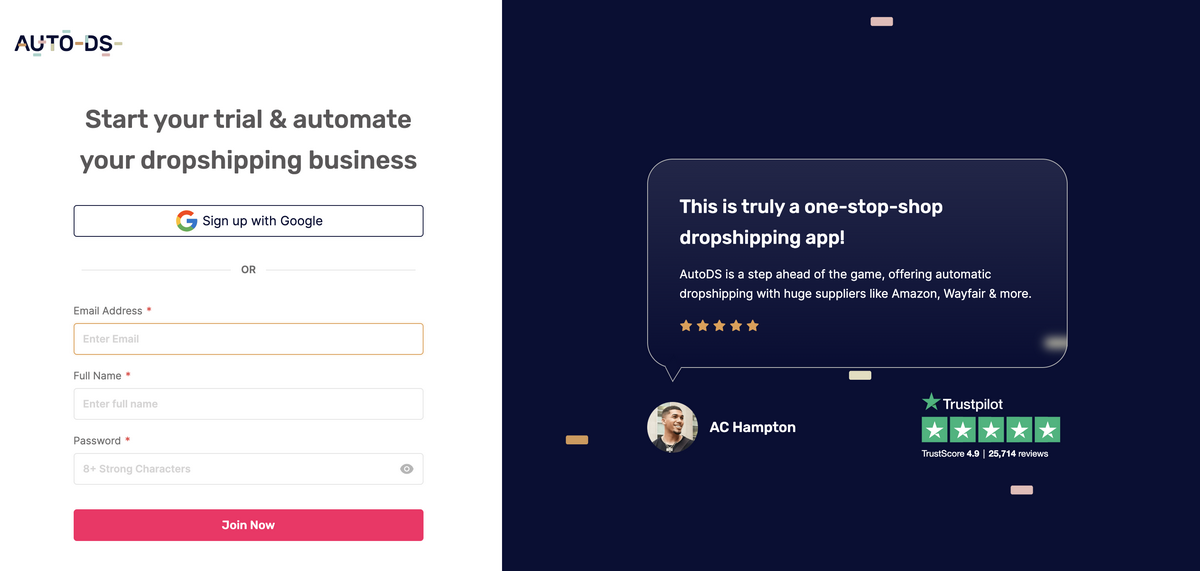
The first step is finding TikTok-friendly products. There are many ways to do this manually (we’ll actually zoom in on this later). But while this is doable, it can take forever, and it doesn’t give you enough data to make informed decisions.
Instead, you can do it automatically with research tools that include real-time market data and analytics. That’s where AutoDS comes in.
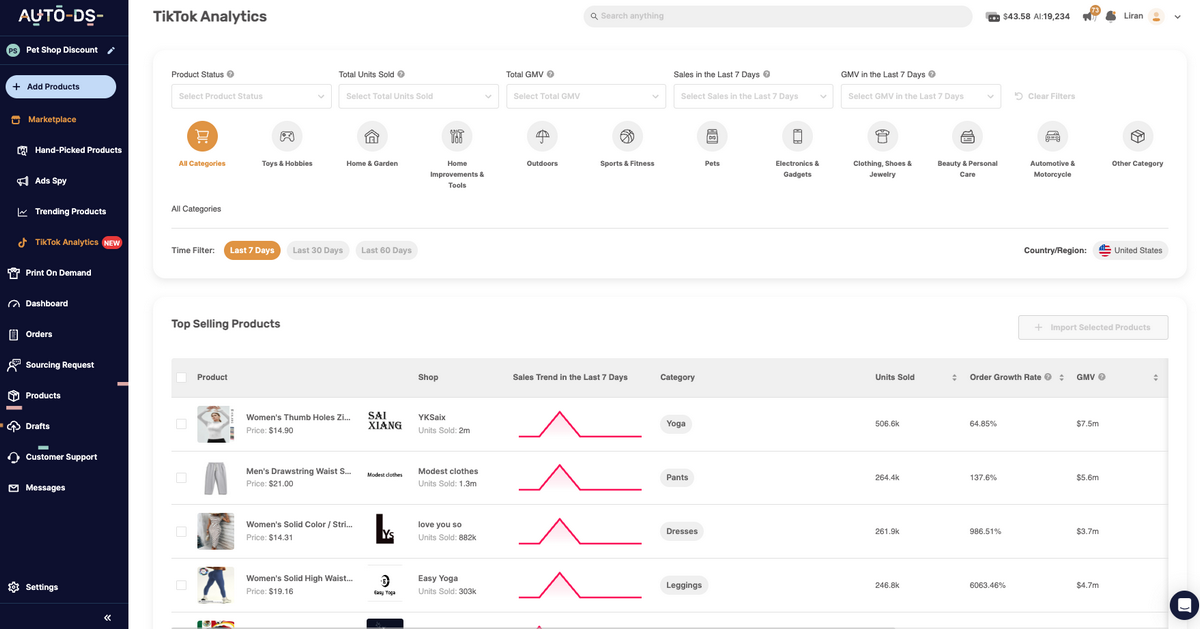
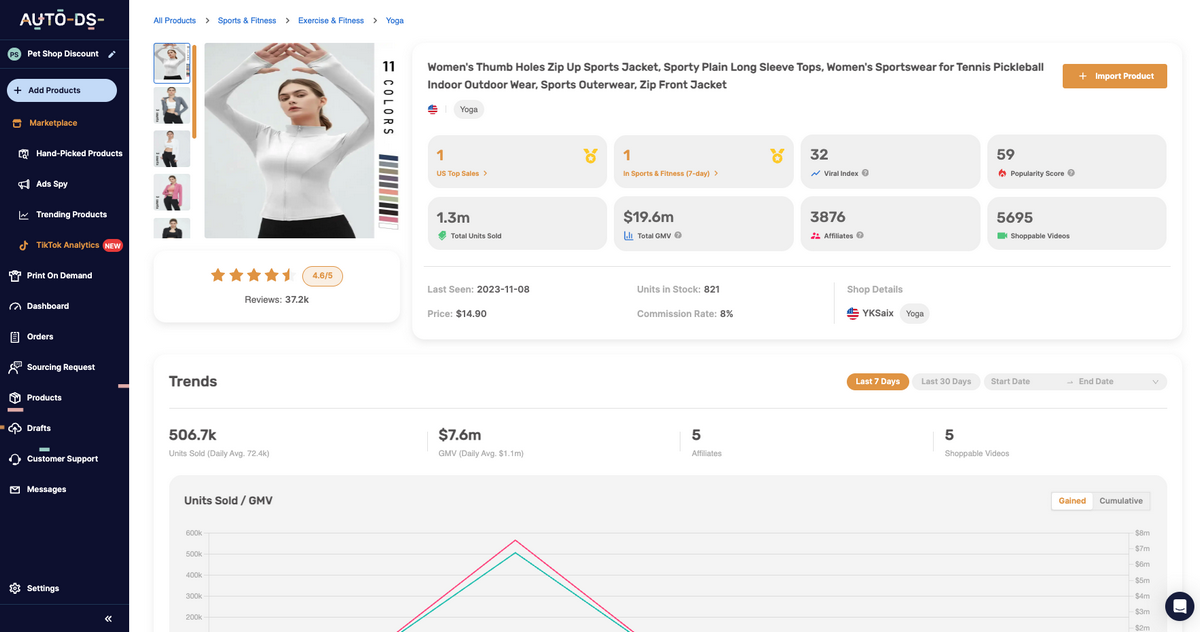
AutoDS offers built-in product research tools like a trending products hub, ad spy tools, and TikTok analytics to catch trending items before they peak. It gives you everything you need to know what’s in high demand, what’s just starting to drive attention, and what’s already saturated.
The best part? You can test it out with the AutoDS $1 trial. No long-term commitment or complex subscriptions.
Step 2: Import Products

Once you have your AutoDS account and explored around for high-converting items, it’s time to import them into your TikTok Shop account. This is super simple:
- Connect your store. Once inside the AutoDS dashboard, connect your TikTok Shop with AutoDS. Just go to Add Store on the top left menu, choose TikTok Shop, grant permissions, and that’s it.
- Import products. AutoDS lets you automatically import items in one click through the marketplace, the Google Chrome Extension, or the bulk importing tool.
Step 3: Optimize Your Store For Conversions
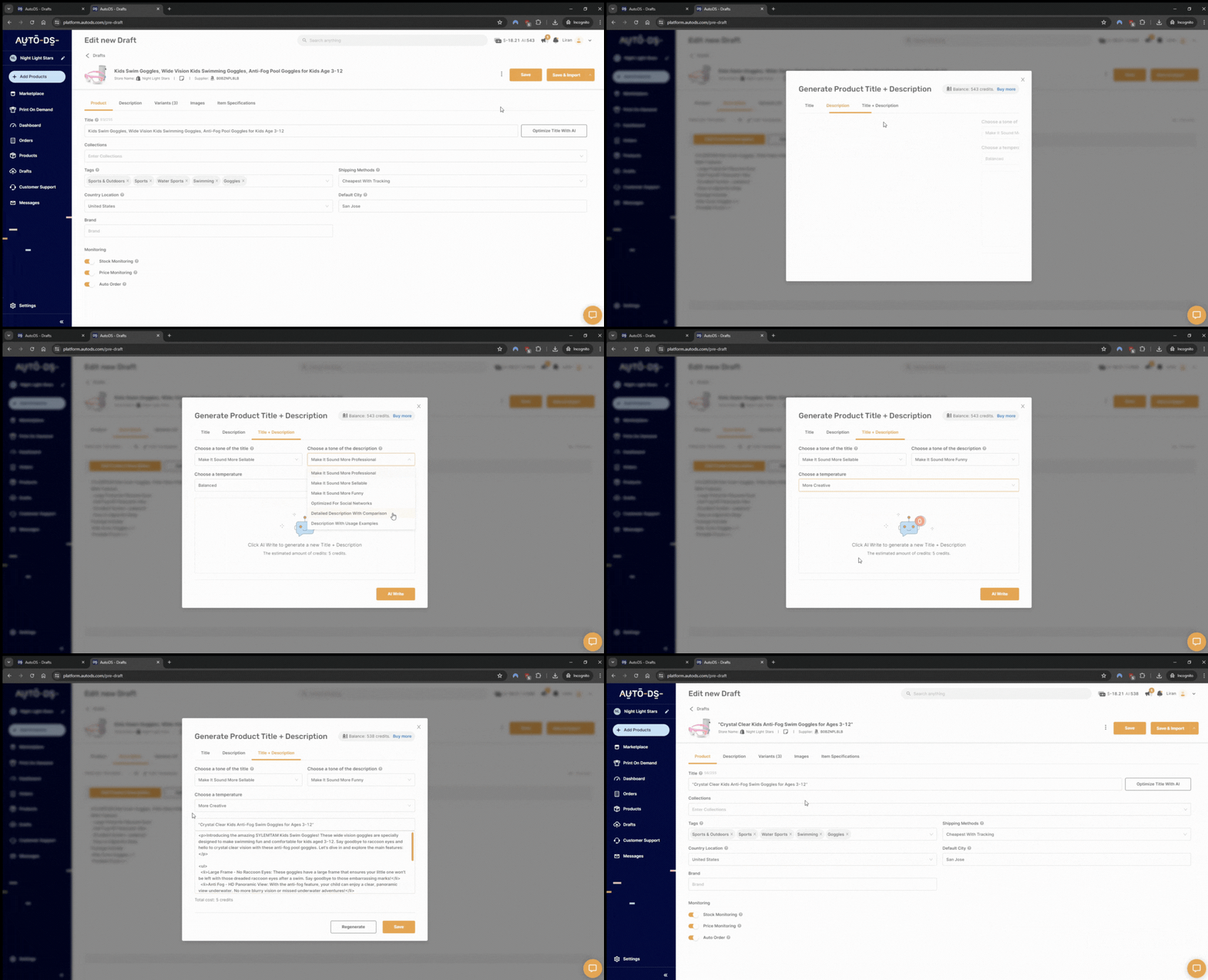
Before you start promoting your products, you need to optimize your store for conversions. This means preparing it for the traffic coming from your TikTok videos.
The whole point is to make sure your listings convince shoppers to buy. Otherwise, you can have the best videos on TikTok but no sales.
Luckily, automation makes this very simple. Once your listings are created in your drafts, you can just use AutoDS’s AI Product Title and Description Generator to automatically create compelling, high-converting copies that sell. This way, your TikTok videos will bring all the traffic, and your listings will instantly convert.
You can also enable automation workflows, like pricing rules and price and stock monitoring.
Step 4: Create Multiple Videos (Not Just One)
Don’t rely on a single piece of content. Create 3-5 videos per product to start. Test different hooks, try different formats (demo, storytelling, UGC-style, etc.), and keep videos short and straight to the point.
This sill let you gather signals to know what actually works.
Step 5: Post Consistently And Watch The Data
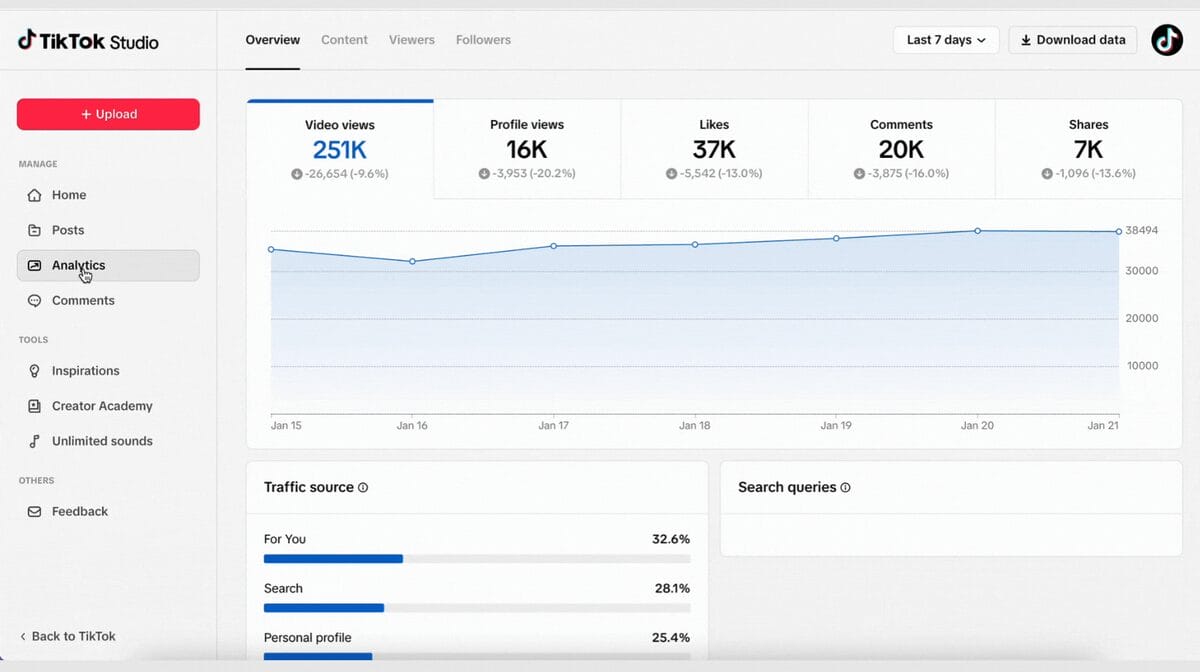
Upload your videos and let TikTok do its thing. Then, pay attention to views, watch time, and engagement. This will tell you if the video is getting picked up, if people are staying, and if it’s driving likes, comments, and shares.
If a video starts gaining traction, congrats! You might have a winner.
Step 6: Double Down On What’s Working
Once something clicks, stick to it. Recreate the same angle with slight variations, test new hooks using the same concept, and post similar content multiple times. This is how you go from one good video to a consistent stream of traffic.
Step 7: Turn Winning Content Into Ads
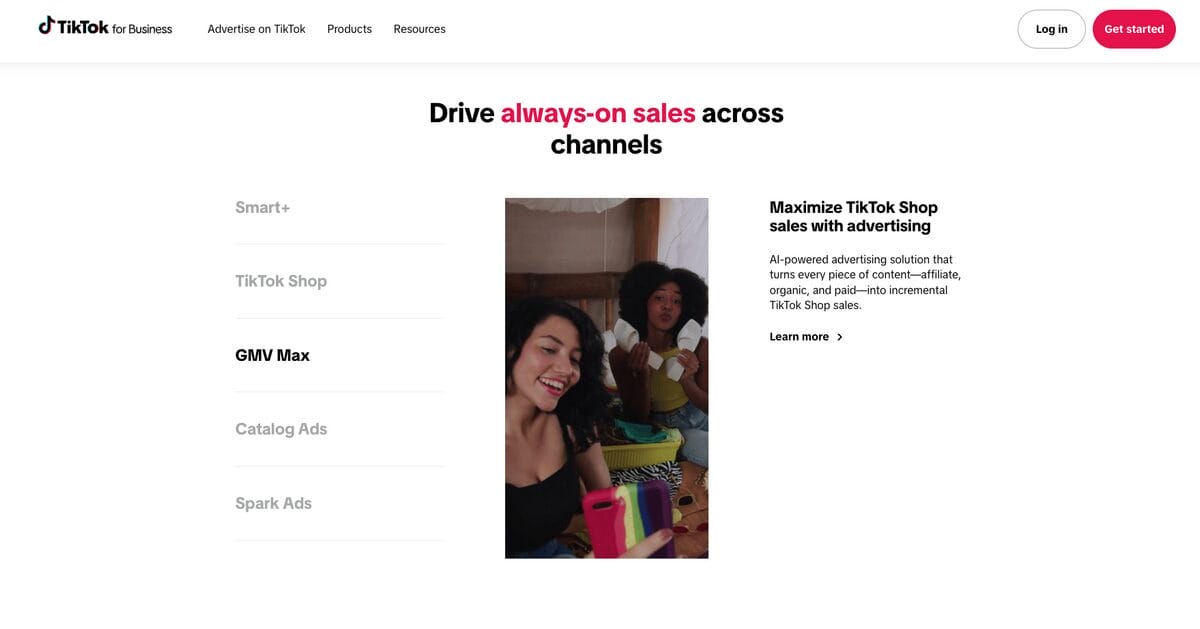
Now comes the scaling part. Take your best-performing organic videos and run them as TikTok ads. Test them across different audiences and increase your budget for the ones that work best.
Remember: keep the format as native as possible. If it worked organically, chances are it’ll work even better with paid research.
Best TikTok Content Formats That Convert
Not all content performs the same. The best-performing videos are usually the ones that don’t feel like ads. They feel like something you’d naturally stop and watch. Mostly, like it’s coming from a real person, not a brand.
Here are some formats that tend to convert:
1. Problem/solution
For example, “I didn’t know I needed this until…”, “My life changed when I found this…”, “This solved my problem forever…”.
2. Before and after transformation
This one is similar to the previous one, but here the star of the show is the result. The video has to highlight in just a couple of seconds how the product changes or improves the situation in a way that’s instantly visible.
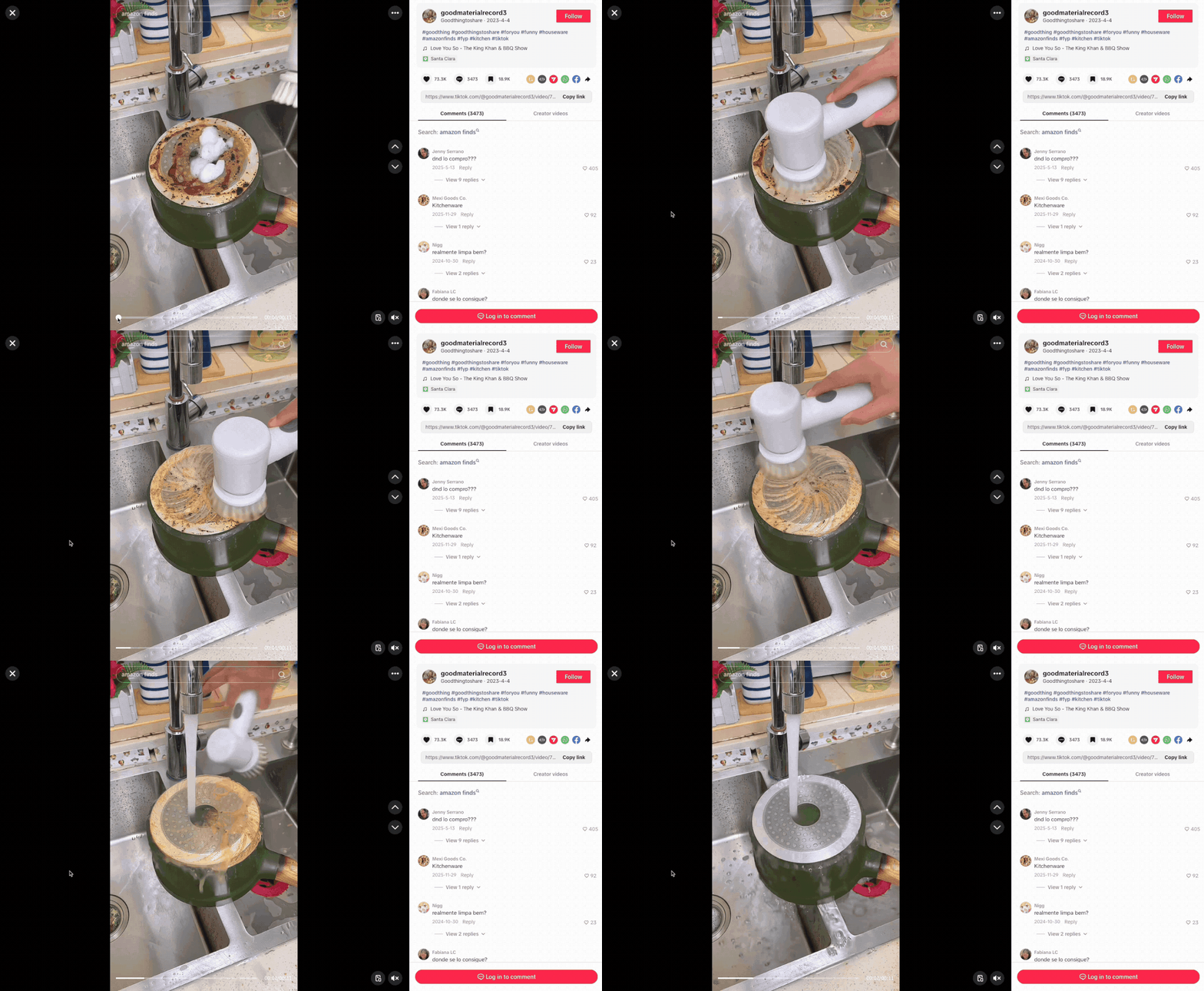
3. Product in action
Think quick demos with satisfying results. Kitchen gadgets are perfect for this. Anything that makes a complex task easy and quick fits perfectly with this format.
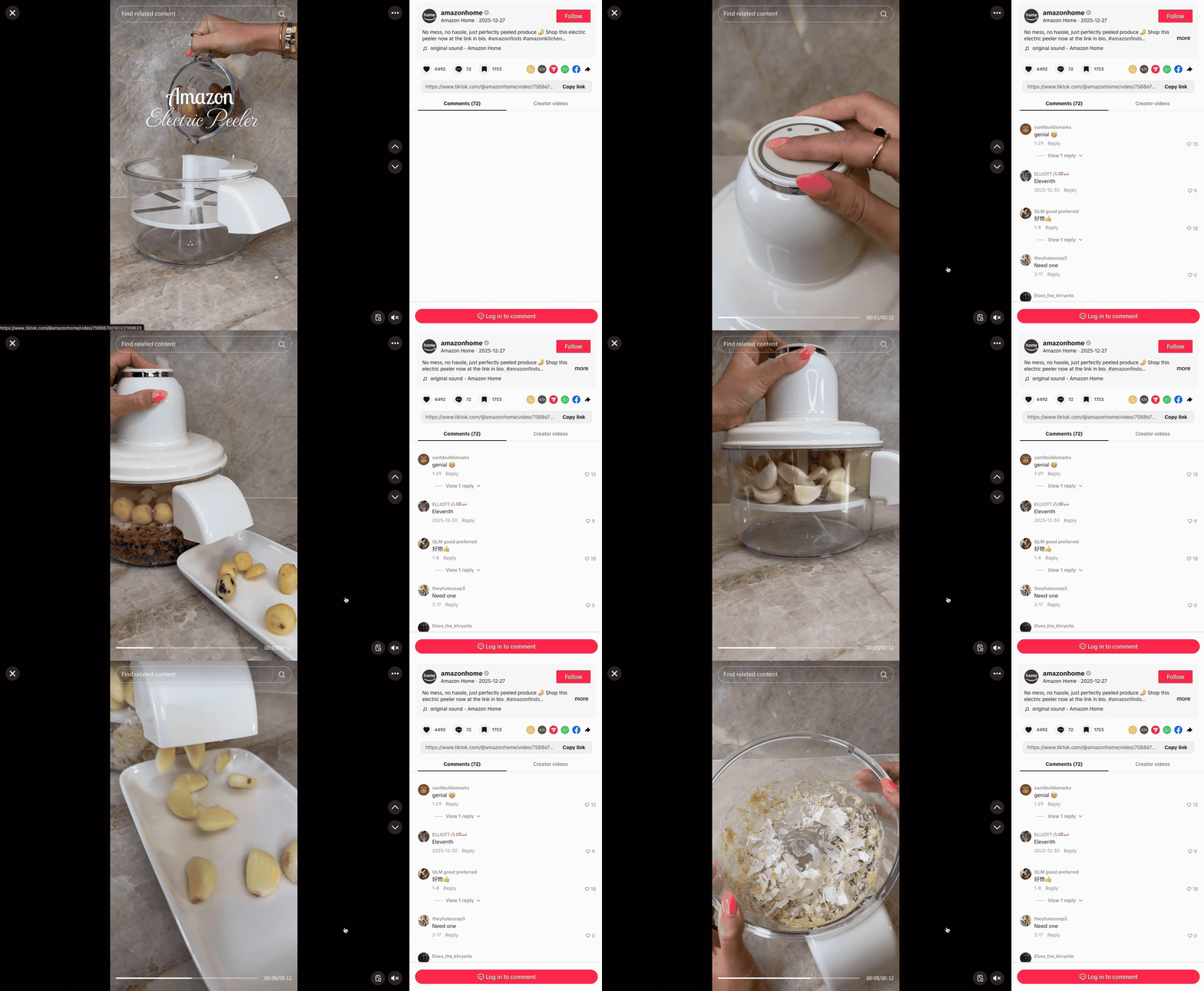
4. Relatable scenarios
Show everyday struggles your product solves. For example, show someone struggling to clean pet hair off their couch, dealing with tangled cables, or rushing to get ready in the morning. Then, introduce your product as the simple fix.
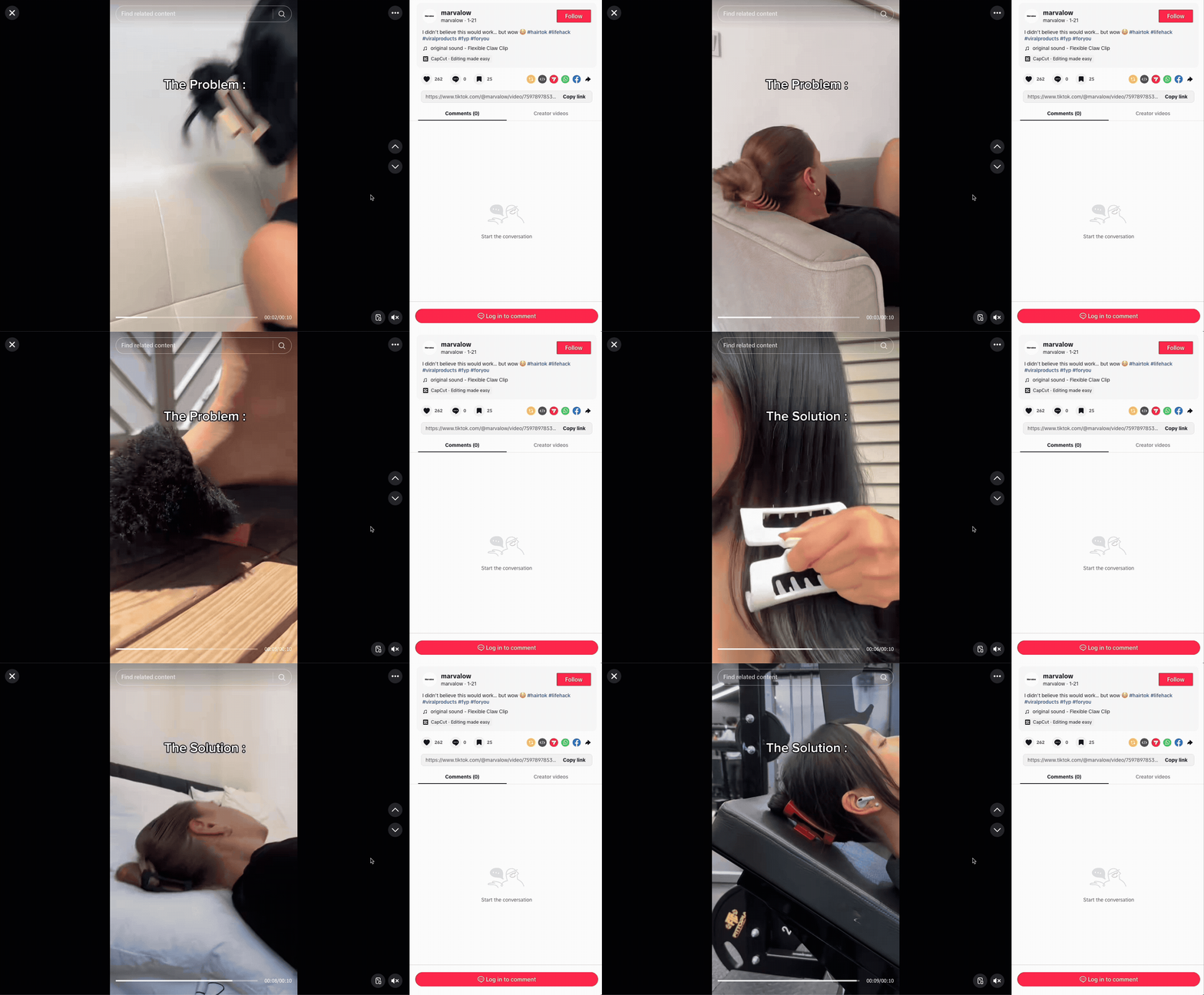
5. Storytelling
This is a mini-narrative with a payoff at the end. The whole point is to keep viewers watching until the last second. It builds curiosity, tension, or reliability so the final reveal (your product) actually hits.
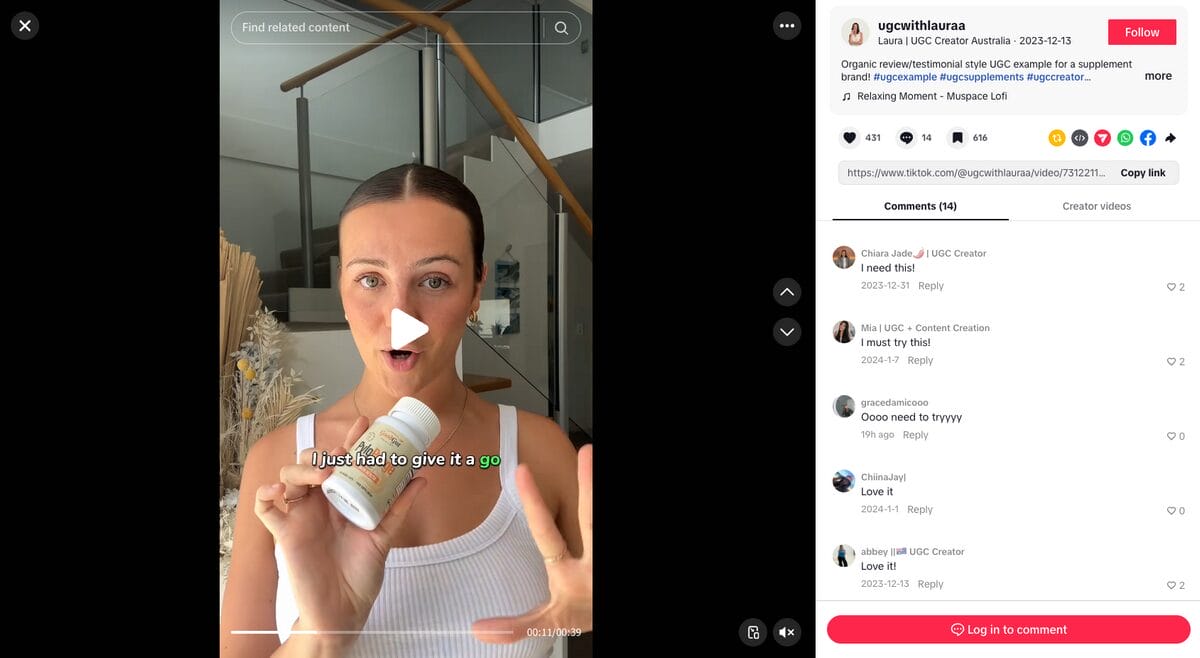
6. UGC-style reviews
These are casual, first-person experiences with a product. They look super natural, trustworthy, and personal, making it easier to drive impulse-purchases.
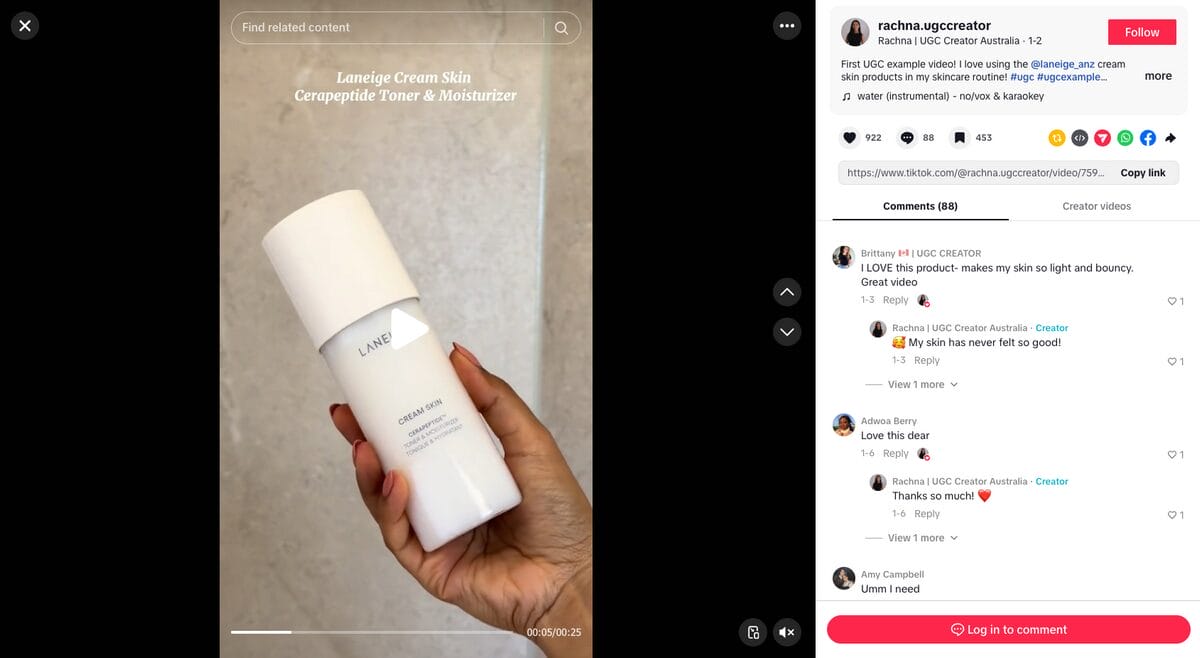
Whichever format you choose, remember: if it feels like a polished commercial, it’s probably not going to work. Try to make it feel like something your friend would send you.
How to Create High-Converting TikTok Videos
Now, let’s get practical. Let’s create a video together! Regardless of the format, high-converting videos usually follow a similar structure:
- A strong hook that drives attention.
- A middle part with the product demonstration that sells the item.
- A clear, direct CTA that leads the buyer to the purchase.
All of this, with a native content style that feels natural to TikTok. This means it should fit right into the scrolling dynamic. Nothing too salesy, promotional, or overly produced.
TikTok is all about short, raw, and personal videos. This is great news for you! It means you don’t have to spend hours editing or filming. The more natural, the better. But you do have to spark curiosity and interest.
Now, let’s break all of this down.
The Hook-First Video Structure
Harsh truth for TikTokers out there: your video dies in the first 1-2 seconds. That’s the timeframe where you either capture people’s attention or lose them forever. Sounds like a challenge, right? It is, but with a smart, well-crafted hook, you have most of the job done.
Because here’s the thing: no hook leads to no watchtime, which leads to no reach and no sales. This makes your hook the most important part of your video, regardless of the format.
Here are a few templates you can follow:
- Curiosity hooks. Make people need to know more. For example: “I didn’t think this would work, but…”, “Wait… why is no one talking about this?”, “This looks fake, but it’s actually real”, and “I wish I knew about this sooner…”.
- Problem-based hooks. This leads to instant relatability! For example: “If you struggle with [problem], watch this…”, “POV: you’re trying to [annoying daily task]”, “This is why your [common item] doesn’t work”.
- Shock hooks. These instantly interrupt the scroll by surprising the viewer. For example, “This changed everything for me”, “I didn’t expect this to be this good”, “Watch this!”, “This feels illegal to know”.
- Product reveal hooks. These usually work best when the product is innovative or in high demand. For example: “I found the best thing on TikTok”, “TikTok made me buy this and…”, “This product is blowing up right now”, “I get why this is going viral”.
- Demo hooks. These introduce what you’re about to show, sparking curiosity. For example: “You need to see this”, “Wait for it…”, “You’re not going to believe the result”.
- UGC-style hooks. This is all about the personal angle. For example: “I had to try this for myself”, “I bought this so you don’t have to”, “Real review after using this for 3 days”.
📢 Marketing Tip: Don’t overthink it. Test the same video with 3-5 different hooks and see which one works best.
Product Demonstration
Once you’ve hooked them, you need to keep them watching. The goal? To make them want the product.
This is where most people get intimidated for no reason. You don’t need to become Mr. Scorsese. No innovative edits or perfect script needed. Just show the product clearly, quickly, and in action.
A few tips:
- Show the product in the first few seconds. Don’t hide it. People should immediately understand what they’re looking at.
- Focus on the benefit, not the features. Listing specs? Boring. Showing what it actually does for the user? Interesting and converting.
- Use real-life scenarios. Make it relatable!
- Keep it fast-paced. Cut the fluff. Every second should move the video forward.
- Make it visually engaging. You can show transformations, results, or before/after moments.
- Be authentic. Use the first-person perspective, a casual tone, and a slightly imperfect aesthetic.
Remember: making it feel real builds way more trust than a polished ad.
Call To Action
You’ve captured the attention and built interest. Now, you need to tell people what to do next while trying not to kill the vibe.
TikTok isn’t the place for aggressive sales language. The best CTAs feel genuine, almost like a natural afterthought.
Your CTA can be something like “I’ll leave it here if you want it” with a link to the product’s listing on TikTok, or “Link in bio” if the product is outside the platform.
If you’re using TikTok Shop, this gets even easier. The platform handles a lot of the friction for you, letting users go from video to checkout in seconds.
Either way, keep it simple and low-pressure.
How to Find Winning Products for TikTok
Finding winning TikTok dropshipping products isn’t about guessing. It’s not like you randomly see something you like, list it, and puff: it’s sold. Solid, consistent results come from spotting signals early and validating them.
Moreover, nowadays trends move fast. What’s viral today might be forgotten tomorrow. The challenge is staying up to date to jump on trends before they saturate. Yes: there’s a lot of research and market strategy involved. But with the right tricks and tools, it’s easy to see the signs.
Here are a few ways to find winning products for TikTok:
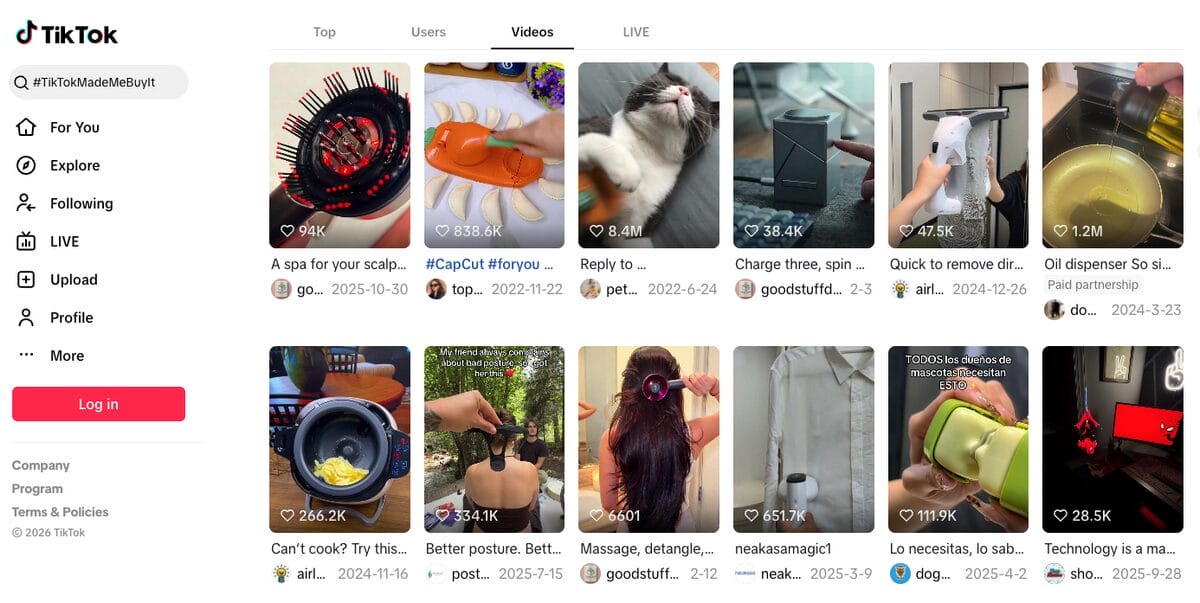
- Look at trends and hashtags. Start where everything happens: the feed. Scroll with intention and pay attention to repeated products, videos with high views, and comments like “where can I buy this?” or “I need this”. You can also search hashtags like:
- #AmazonFinds
- #TikTokShopFinds
- #ProblemSolved
- #TikTokMadeMeBuyIt
- Study competitors. You don’t need to reinvent the wheel. Some of the best product ideas come from simply observing what others are doing. Look for ads running repeatedly, viral product videos in your niche, and competitors targeting similar audiences. Check for patterns. Whatever it’s showing up consistently, it’s probably in high demand.
- Validate outside TikTok. Before going all in, take a quick step outside TikTok to confirm demand. Check Amazon’s Best Sellers, Google Trends, listings on eBay or AliExpress, and product research tools like AutoDS. Do you spot any patterns? Is there proof of demand? If so, you can move forward.
What Makes a Product Viral On TikTok
Wondering how to go viral on TikTok dropshipping? While there’s no magic formula, there are a few patterns, and it all starts with your product.
To spot a viral product, you need to know what a viral product looks like. Truth is, not every product has TikTok potential. The best ones usually share a few key traits:
- Visually engaging. You can show it in action quickly.
- Solves a clear problem. The benefit is obvious within seconds.
- Wow factor. It comes with something surprising, satisfying, or unexpected.
- Easy to understand. No long explanations needed to keep it short and sweet.
- Affordable and impulse-friendly. There’s low friction to buy.
- Broad appeal. Works for a wide audience, making it easier to expand its reach.
Common TikTok Marketing Mistakes
TikTok is super simple to use and one of the most beginner-friendly dropshipping platforms if you’re into content marketing. But, of course, there are a few very common traps you can fall into. Let’s break them down so you know what to avoid:
First, there’s overproduced content. This is probably the biggest mistake. You spend hours editing, perfecting lighting, and adding transitions. It ends up taking forever, and then the video flops. Why? Because TikTok isn’t Instagram. People don’t want polished ads. They want real, quick, relatable content.
Then, there are weak hooks. If your video doesn’t grab attention in the first two seconds, people scroll past it. And once they leave, TikTok stops pushing your content completely. Don’t start slow, avoid “Hi guys” intros (boring), and show the product right away. A general rule of thumb? Go straight to the point.
Inconsistent posting is also a big one. Posting every few days is not going to work. It will slow down learning, reduce chances of hitting a viral video, and make growth unpredictable. Plus, TikTok rewards consistency and volume. Every video is a new chance to go viral, so the more you post, the better your odds.
Finally, another mistake is giving up too early. This one hurts the most. TikTok is a testing ground. You might need somewhere between 10 and 50+ videos before something clicks. Who knows. But when it does, it can change everything. The problem? Most people get frustrated at video #5.
How AutoDS Supports TikTok Dropshipping Workflows
TikTok is where you grab attention and drive traffic. But what happens after someone clicks? That opens a whole new universe of strategies and workflows. Orders, stock issues, pricing changes, supplier delays… welcome to the world of dropshipping.
AutoDS is an all-in-one dropshipping platform that works as your backend system to keep everything running smoothly while your content does the selling.
It provides a set of features and perks that centralize your entire operation in one single place, from sourcing to fulfillment and tracking:
- Direct integration with TikTok Shop dropshipping. This makes it easy to import products to your store, sync listings and inventory, and manage orders, all from the same place.
- Built-in product research powered by TikTok data, such as the TikTok Ad Spy Tool and TikTok Analytics. This lets you see what products and creatives are performing, as well as track trends, engagement, and demand signals.
- Full automation from sourcing to fulfillment. AutoDS automates product research, price and stock monitoring, pricing rules, listing optimization, order processing, and tracking. This way, when a video takes off, your backend is ready to handle the volume.
- Access to 25+ global suppliers and private vendors. This gives you fast-shipping options, access to an exclusive marketplace, and one-click importing from popular marketplaces like Amazon, eBay, AliExpress, Walmart, and more.
- Performance tracking. AutoDS helps you understand what’s happening behind the scenes. You can track orders, revenue, profit, product performance, and store-level metrics. This gives you extra data to see what works and optimize your strategy.
So there you have your favorite duo since Batman and Robin, peanut butter and jelly, or even Rachel and Ross. While TikTok brings the traffic, AutoDS handles everything after the click.
Want to test the TikTok + AutoDS combo? Well, good news: you can get started with the AutoDS $1 trial to test the integration, the features, and the overall centralized workflow.
Organic vs Paid TikTok: Which Should You Start With?
When choosing between organic and paid, here’s the basic rule: start with organic, then start combining both.
If you’re new to TikTok dropshipping, jumping straight into ads is like betting without knowing the game. Organic gives you free testing (no budget needed), real audience feedback, and clear signals on what works.
You get to see what sticks: hooks, angles, products, and formats. The whole point is to post consistently, test multiple creatives, and pay attention to what gets traction. That’s your foundation.
Once you start seeing results organically, it’s time to combine both worlds. The winning formula is a hybrid approach. Use organic content to test ideas and identify winning videos/products, and then turn those ideas into paid ads. Of course, testing never stops, constantly giving you data and helping you find new trends.
The question is when to actually move into ads. Well, there are a few patterns that help you decide:
- A video gets consistent views (not just a random spike).
- Watch time and engagement are strong.
- People are commenting things like “Where can I buy this?”
- You’re getting clicks or even a few organic sales.
From there, take your best-performing content and run it as an ad, test it across different audiences, and scale gradually.
So the real answer is simple:
👉 Start organic, use it to feed your paid strategy, and then scale winners with ads.
Frequently Asked Questions
How do you market dropshipping products on TikTok?
You market dropshipping products on TikTok by creating short, engaging videos that showcase your product in action. Start with organic content to test different hooks, angles, and formats. Once you find what works, turn those winning videos into ads to scale.
Is TikTok good for dropshipping in 2026?
Yes, TikTok is better than ever for dropshipping in 2026. TikTok is built for product discovery through TikTok Shop and UGC-style videos. You don’t need a big following to go viral, which makes it one of the most accessible and scalable channels for dropshippers.
Do you need ads to succeed on TikTok dropshipping?
No, you don’t necessarily need ads to succeed on TikTok dropshipping, but they help you scale. Most sellers find winning products through organic content alone. However, ads allow you to take what’s already working and push it to a larger audience, turning sporadic sales into consistent revenue.
What type of TikTok videos go viral for products?
Videos that go viral on TikTok feel native, fast, and relatable. The best-performing ones usually include strong hooks, quick product demos, before-and-after transformations, problem-solution scenarios, or UGC-style reviews. If it feels like an ad, it’s less likely to work.
How many videos should I post per day?
Ideally, you should post between one and three videos per day when starting out. If you’re testing aggressively, you can go up to 3-5 daily. More content gives you more data and higher chances of finding a winner. In TikTok, it’s more about volume and testing than perfection.
Can beginners succeed with TikTok marketing?
Yes, beginners can totally succeed with TikTok marketing. TikTok is one of the most beginner-friendly platforms because it doesn’t rely on followers. With the right product, consistent posting, and lots of testing, beginners can get results quickly even without experience of a big following.
What is TikTok Shop, and how does it work?
TikTok Shop is TikTok’s built-in e-commerce platform that allows users to buy products directly within the app. Sellers can list products, creators can promote them, and customers can complete purchases without ever leaving the app. This makes the buying process faster and easier.
How do I find trending products for TikTok?
To find trending products for TikTok, start by exploring TikTok itself. Look at trending videos, hashtags like #TikTokMadeMeBuyIt, and products appearing across multiple creators. Then, validate demand using platforms like Amazon or Google Trends, or level up with dedicated research tools like AutoDS, which includes TikTok Ad Spy features and TikTok Analytics.
AutoDS Makes TikTok Advertising More Profitable
TikTok marketing for dropshipping in 2026 comes down to one thing: speed and execution. There’s no need to worry about perfect videos or big budgets. Instead, it’s all about testing fast, finding what works, and scaling it before trends move on.
But what happens after your TikTok audience clicks on your video? That’s where AutoDS comes into play. While TikTok drives traffic and demand, AutoD handles the backend with full automation, from product sourcing and imports to order fulfillment and tracking.
This way, AutoDS integrates directly with TikTok to help you leverage your traffic, automating everything from pre-sale to post-purchase.


Now, ready to keep learning? Here are a few reads you might find helpful:
- TikTok Marketing For Dropshipping
- How TikTok Marketing Works In 2026
- Organic TikTok Strategy For Dropshipping
- TikTok Ads For Dropshipping
- How To Market Products On TikTok
- Best TikTok Content Formats That Convert
- How To Create High-Converting Videos
- How To Find Winning Products For TikTok
- Common TikTok Marketing Mistakes
- How AutoDS Supports TikTok Dropshipping
- Organic VS Paid TikTok Marketing
- FAQ
- Conclusion