


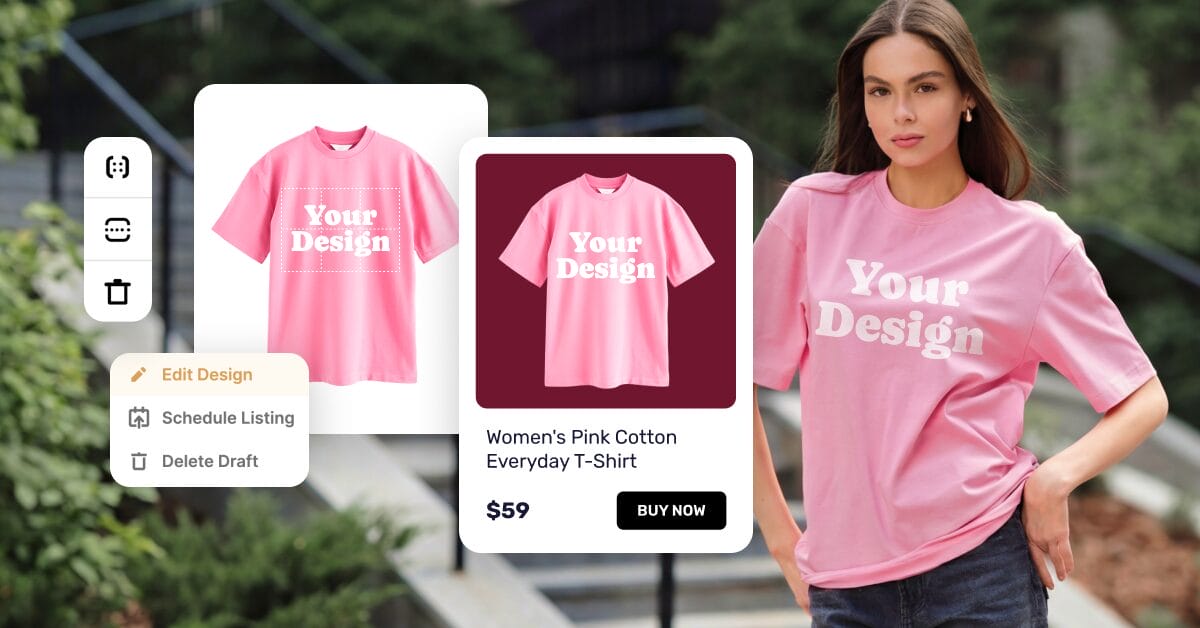
Did you know you can sell personalized apparel without touching inventory, printers, or shipping labels? That’s exactly what happens when you dropship custom clothing. In 2026, this model has become one of the easiest ways to launch a branded apparel business with low risk and high creative freedom.
Dropshipping custom clothing allows you to sell made-to-order apparel (like t-shirts, hoodies, or activewear) while third-party suppliers handle printing, packaging, and delivery. You focus on designs, branding, and marketing. Everything else runs in the background.
In this guide, I’ll break down how custom clothing dropshipping works, why it’s still growing in 2026, and how to start step by step. You’ll also see practical tips to avoid common mistakes and build a brand customers actually remember.
Dropshipping custom clothing allows you to offer personalized apparel tailored to customer tastes with minimal upfront investment and risk.
The POD model lets you create custom designs printed and shipped by a third-party provider, eliminating the need to hold inventory.
Selecting a reliable supplier with good reviews and transparent pricing, like AutoDS, is key to simplifying design, printing, and fulfillment.
You can use social media, SEO techniques, influencer collabs, and email marketing strategies to promote your store.
A crucial step is to create an attractive, user-friendly online store on platforms like Shopify with detailed descriptions and high-quality images.
Can You Dropship Custom Clothing?
Yes, you can absolutely dropship custom clothing—and in 2026, it’s one of the most accessible ways to build a branded apparel business online.
Custom clothing dropshipping usually runs on a print on demand (POD) model. That means products are only printed after a customer places an order. No inventory. No upfront stock. No wasted products.
Here’s how the model works in practice:
- You create custom designs (text, graphics, logos, illustrations)
- You upload them to a POD-enabled dropshipping supplier
- A customer places an order in your store
- The supplier prints the design, packs the item, and ships it directly
The biggest advantage? You’re not guessing demand. Every product is made only when it’s already sold.
In 2026, POD has evolved beyond basic t-shirts. Many suppliers now offer:
- Sustainable fabrics and eco-friendly inks
- Faster production times (often 24–72 hours)
- Integration with social commerce platforms like TikTok Shop
- Automated order routing and tracking
You can launch a niche t-shirt brand with personalized messages or graphics, test designs weekly, and scale what sells—without ever touching inventory.
This model lowers financial risk while giving you flexibility to react to trends, seasons, and viral moments.
How To Dropship Custom Clothing – Easy Guide
The truth is, the world of dropshipping custom clothing can seem a lot at first glance. But we’ve crafted a few super-easy steps to help you start out successfully. Take note!
Find A Print On Demand Niche

Finding the right print on demand niche is the foundation of a profitable custom clothing business. A niche helps you attract the right audience, stand out from generic stores, and charge premium prices.
Instead of targeting “everyone,” focus on a specific group with shared interests, values, or identities.
Strong POD niche examples in 2026 include:
- Eco-conscious buyers (sustainable apparel, minimalist designs)
- Pet owners (breed-specific or funny designs)
- Fitness and wellness communities
- Gaming and internet culture fandoms
- Local pride, events, or micro-communities
- Personal milestones (birthdays, weddings, reunions)
When validating a niche, look for:
- Active communities on Instagram, TikTok, Reddit, or Facebook
- Existing demand (but not extreme saturation)
- Emotional connection, not just utility
The goal is to design apparel that feels personal. When customers feel represented, they don’t just buy once—they come back.
Choose A Reliable Custom Clothing Supplier

Choosing the right clothing supplier is one of the most important decisions you’ll make. Your supplier directly affects product quality, delivery times, customer satisfaction, and refund rates.
When evaluating print on demand suppliers, prioritize:
- Consistent print quality and fabric standards
- Transparent pricing (no hidden fulfillment fees)
- Reliable production and shipping times
- Product mockups and sample ordering
- Easy integration with your selling platform
💡 Pro Tip: Look for suppliers who provide mockups and samples! This way, you can actually see and feel the product before you decide to feature it in your store.
AutoDS simplifies print on demand dropshipping by connecting your store with POD suppliers while automating order fulfillment and tracking. Instead of juggling multiple dashboards, AutoDS centralizes:
- Product imports and listing optimization
- Order automation and fulfillment routing
- Tracking updates for customers
- Scalable workflows as your store grows
This setup reduces manual work and helps you focus on branding, design, and marketing rather than logistics.
Tired of juggling designers, suppliers, and order fulfillment just to sell one custom hoodie? 👉 Start your AutoDS trial and automate your custom clothing store today.
Design And Customize Products

This is where your brand truly comes to life. Once your niche and supplier are set, the next step is designing products your audience actually wants to wear. Successful POD designs in 2026 are simple, emotional, and intentional.
When creating designs:
-
Think in emotions, not aesthetics alone
-
Design for identity, humor, motivation, or belonging
-
Keep readability high (especially for mobile shoppers)
If you design yourself, tools like Canva or Adobe Illustrator are more than enough to get started. If not, freelance platforms like Fiverr make it easy to collaborate with designers. Just be clear with references and expectations.
Once your designs are ready, apply them to products using your supplier’s mockup tools. Test different product types (t-shirts, hoodies, sweatshirts) and color variations to see what converts best.
Set Up Your Custom Clothing Store

Setting up your custom clothing store is where your business becomes visible to the world.
Choose a platform that aligns with your goals:
- Shopify / WooCommerce / Wix for full branding control
- Etsy or TikTok Shop for faster entry and built-in traffic
If you’re building a branded store, focus on:
- Clean layout and mobile optimization
- Clear product categories
- High-quality mockups and lifestyle images
- Product descriptions that explain fit, fabric, and sizing
Don’t skip the trust-building pages, like About Us, Shipping & Delivery, and Returns & Refunds. These pages reduce friction and increase conversion rates, especially for first-time buyers.
Finally, set up secure payment gateways and test checkout before launching. A smooth checkout experience is non-negotiable in 2026.
Promote Your Custom Clothing Products

Promotion is where most custom clothing brands either grow or stall.
Social media is still the strongest driver for POD apparel. Platforms like Instagram, TikTok, and Pinterest work especially well because clothing is visual and emotional.
Effective promotion strategies include:
- Short-form video content showing real use
- Lifestyle imagery instead of flat mockups
- UGC and influencer collaborations
- Paid ads targeted by interests and behavior
SEO still matters. Optimized product titles, descriptions, and blog content help long-term discovery. Email marketing also remains powerful for drops, launches, and limited editions. Promotion is all about consistency and storytelling.
Fulfill Orders & Provide Excellent Customer Service
Order fulfillment and customer service are what turn buyers into repeat customers.
Once an order is placed, fast processing and accurate tracking are critical. Automated systems (like those available through AutoDS) help ensure orders are sent to suppliers instantly, and tracking updates are shared automatically.
Customer service best practices:
- Respond quickly and clearly
- Set realistic delivery expectations
- Handle issues calmly and professionally
- Make returns and refunds simple
Every interaction shapes your brand reputation. In custom clothing especially, transparency builds trust.
Frequently Asked Questions
Can you dropship your own clothing brand?
Yes, you can dropship your own clothing brand. By partnering with print on demand (POD) suppliers, you can create custom designs and have them printed and shipped directly to your customers without needing to hold any inventory. This allows you to build and sell a unique brand of clothing without the overhead costs associated with traditional retail.
Is it profitable to dropship custom clothes?
Yes, it can be profitable to dropship custom clothes. With minimal upfront costs and no need to maintain inventory, the profit margins can be significant. Additionally, custom clothing allows for higher pricing due to the unique designs and personalization options. However, profitability depends on factors such as effective marketing, quality of designs, and choosing the right supplier.
What is better: Print on demand clothes or dropshipping?
Both print on demand (POD) and traditional dropshipping have their advantages. Print on demand is excellent for selling custom-designed products without holding inventory, allowing for high levels of personalization and creative freedom. Traditional dropshipping, on the other hand, is ideal for a broader range of pre-made products and often has faster shipping times. Combining both methods can provide a comprehensive business model, offering a variety of products to meet different customer needs and preferences.
Conclusion
Dropshipping custom clothing remains one of the most creative and flexible e-commerce models in 2026. With print on demand technology, you can build a branded apparel business without inventory risk, upfront production costs, or logistical headaches.
By choosing the right niche, working with reliable suppliers, creating intentional designs, and automating fulfillment, you can focus on what actually grows a brand—connection, creativity, and consistency. AutoDS simplifies custom clothing dropshipping by automating product imports, order fulfillment, and tracking across print on demand suppliers, which helps sellers scale faster while reducing manual work.
Custom clothing works best when creativity isn’t slowed down by operations. 👉 Start your AutoDS trial and turn your designs into a scalable business.
If you’re ready to explore this model further, these guides will help you go deeper: