


In 2026, WordPress remains the #1 CMS for a reason: total control. While other platforms trap you with rising monthly fees and limited customization, WordPress offers the only way to build an empire that you truly own.
But let’s be clear: power without a plan is just a faster way to fail. Simply having a WordPress site isn’t enough to compete in today’s AI-driven market. You need a store that is optimized for speed, conversion, and global scale.
The gap between a hobbyist site and a high-revenue enterprise is defined by the tools you use to manage the chaos of fulfillment and product sourcing. AutoDS offers the ideal features for establishing a profitable WordPress store, ensuring your infrastructure is optimized for maximum ROI from the outset.
By using AutoDS to automate manual tasks, you can bypass the technical headaches of traditional e-commerce and focus on what truly drives growth: marketing and sales. This is how you stop being a platform user and start being a business owner.
Building on WordPress means you own 100% of your data and your business, escaping the restrictive rules and “Platform Taxes” of hosted SaaS solutions.
WooCommerce provides the modularity needed to build a professional, scalable marketplace without transaction fees.
WordPress allows for surgical SEO optimization, giving you the tools to outrank competitors
By using AutoDS to eliminate manual tasks, you can automate price syncing, stock monitoring, and order fulfillment.
What Is WordPress eCommerce?
It’s time to stop viewing WordPress as just a blogging tool. In 2026, WordPress is a robust Content Management System (CMS): a powerful engine that lets you organize, publish, and control every single pixel of your digital presence. While other platforms give you a “storefront in a mall,” WordPress gives you the deed to the land and the blueprints to the building.
It is the foundation upon which over 40% of the internet is built, providing the ultimate balance between user-friendly interfaces and deep technical capability.
By itself, WordPress is a blank canvas. The transformation into a high-performance store happens through the strategic use of plugins. Think of plugins as modular upgrades that inject specialized DNA into your site, turning a simple website into a global marketplace.
The most dominant of these is WooCommerce, which instantly adds shopping carts, secure checkout pages, and inventory management to your dashboard, giving you the infrastructure of a corporate giant with the agility of a startup.
➡️ The primary differentiator between WordPress and hosted (SaaS) platforms like Shopify or BigCommerce is ownership. This distinction is what separates those who are just “testing the waters” from those building a lasting empire.
In a hosted platform, you are essentially renting space. You are bound by their terms of service, their transaction fees, and their rigid templates. If they decide to change their rules, increase their platform tax, or close your account, your entire business vanishes overnight.
Instead, in WordPress, you own the files, the database, and the hosting. You have unrestricted flexibility to customize the checkout flow, integrate any payment gateway, and implement advanced SEO tactics that SaaS platforms simply block.
🥇 The best part? By integrating professional automation from the start, you get the freedom of WordPress without the grind of a traditional self-hosted site.
Here is where AutoDS eliminates manual tasks like price tracking and order processing, allowing you to enjoy the high margins of WordPress while the software handles the heavy lifting usually associated with SaaS convenience.
Why WordPress Is the #1 CMS for Online Selling

In an era where algorithms and platform fees change overnight, WordPress provides a stable, sovereign territory for your business. It is the only ecosystem in which the merchant, not the platform provider, sets the rules of engagement. For online sellers, this translates into a massive competitive advantage across several critical fronts:
- Unmatched Customization & Scalability: Whether you are selling a single digital product or managing a 50,000-SKU dropshipping empire, WordPress scales with you. You aren’t confined to a basic or enterprise plan; you simply add the functionality you need when you need it.
- Superior SEO Capabilities: Because you have access to the site’s underlying code and a suite of advanced plugins like Yoast or RankMath, WordPress sites consistently outrank SaaS competitors. In the battle for organic traffic, having total control over your metadata and site architecture is the difference between page one and obscurity.
- Lower Long-Term Costs: By eliminating the success tax (transaction fees) and high monthly subscriptions common in hosted platforms, WordPress allows you to reinvest that capital into marketing. Your net margins are naturally higher because you aren’t subsidizing a third party’s infrastructure.
- Deep Integration Ecosystem: WordPress integrates with everything. From AI-driven customer service bots to sophisticated logistics trackers, if a tool exists for e-commerce, it has a WordPress integration.
WordPress vs Other eCommerce Platforms
Why choose WordPress over the competition?
➡️ As dropshippers, we are often lured by Shopify’s initial practicality, but that ease of use comes with a hidden cost: the Platform Tax. Shopify traps you with high monthly fees and additional transaction penalties unless you use their specific payment gateway. In contrast, WordPress offers deep customization and financial freedom that Shopify simply cannot match.
Let’s delve into this:
- Shopify is often praised for its out-of-the-box simplicity, but that convenience is a golden cage. If you want to scale, you eventually hit a wall that only a massive upgrade can fix. WordPress breaks those walls down from day one.
- With WordPress, you can surgically modify your checkout experience to maximize conversions without paying for a $2,000/month plan. You have total control over the buyer’s journey.
- Undoubtedly, ownership is the most critical factor. If Shopify decides your products violate their ever-changing policies, they can flip a switch and kill your business instantly. With a self-hosted WordPress site, you are the final authority. Your business cannot be deleted by a corporate whim.
The real victory for WordPress is its ability to handle massive scale. Whether you are integrating AI-driven price optimization or managing a global supply chain, WordPress adapts to your ambition rather than forcing you to fit into a template. This is where most sellers get intimidated, but it’s also where the highest profit margins are found.
By removing middleman fees and restrictive software caps, you keep more of every dollar you earn. By using AutoDS to eliminate manual tasks, you can run a high-scale, high-margin empire with the same operational ease as a basic Shopify store, but with ten times the control.
How WooCommerce Powers WordPress eCommerce

WooCommerce is an open-source plugin designed to seamlessly integrate with WordPress. It is the default eCommerce solution because it mirrors the WordPress philosophy: limitless flexibility.
WooCommerce becomes part of your site’s DNA. It allows you to transform a basic website into a sophisticated storefront capable of handling complex transactions, multi-currency support, and localized shopping experiences without ever leaving your WordPress admin panel.
💡 Pro Tip: Want to become a WooCommerce dropshipping sensei? You might find this step-by-step guide to building a WooCommerce business incredibly useful!
What WooCommerce Adds to WordPress
In 2026, these features will be professional standards required to compete in the global market. Here is exactly what WooCommerce adds to the WordPress ecosystem:
- Advanced Product Management: WooCommerce introduces a sophisticated backend dedicated entirely to your inventory. Unlike simple buy buttons, this system allows you to create unlimited product variations (size, color, material) and manage both digital downloads and physical goods simultaneously. You can set up complex inventory rules and custom attributes that most SaaS platforms often struggle to handle without expensive upgrades. This level of granularity ensures that your product catalog is as organized as an enterprise-level warehouse.
- Professional Payments and Checkout: Security and trust are the cornerstones of online selling. WooCommerce adds a secure checkout framework that integrates with any payment gateway, from industry standards like Stripe and PayPal to modern crypto payments and local banking options. This flexibility allows you to deliver the frictionless, “one-click” experience your customers demand in 2026.
- Automated Shipping and Taxes: Logistics can be the most complex part of e-commerce, but WooCommerce simplifies it by adding automated calculation engines. You can configure real-time shipping rates based on weight, size, or destination, and set up automated tax calculations that adjust according to the customer’s specific location. This ensures that your profit margins remain protected and that your business remains tax-compliant, regardless of where you ship your products.
- Limitless Extensions and Integrations: The true power of WooCommerce lies in its Add-ons or extensions. Whether you need an AI-driven marketing suite, a custom logistics tracker, or a deep connection to a sourcing platform, the WooCommerce marketplace has a solution. This is where you can truly scale: AutoDS is the ultimate extension of your supply chain. By using AutoDS to eliminate manual tasks, you bridge the gap between WooCommerce’s powerful features and the automated efficiency required to run a 2026 dropshipping empire.
What Can You Sell with WordPress eCommerce?
One of the greatest advantages of WordPress is that it doesn’t lock you into a specific business model. While SaaS platforms often charge extra for advanced features like memberships or digital downloads, WordPress allows you to pivot and diversify your revenue streams from a single dashboard.
Whether you are moving physical goods or selling intellectual property, the platform adapts to your ambition.
If you are ready to build, here are the most profitable product categories you can target today:
1. Physical Products
Traditional online retail is the bedrock of WooCommerce. From boutique fashion to industrial hardware, WordPress handles traditional online retail with professional-grade precision. You can manage complex shipping zones, set up local pickup options, and use smart inventory tracking to keep your operations airtight as you scale.
2. Digital Products
If your business revolves around courses, files, or software, WordPress is the industry standard. Unlike other platforms that take a massive cut of your digital sales or limit your file sizes, WordPress lets you keep every cent of your profit. You can automate secure download links, host premium video lessons, or distribute software licenses without any intermediary interference.
3. Subscriptions & Memberships
Recurring revenue is the holy grail of e-commerce, and WordPress makes it simple. You can lock high-value content behind a “Members Only” wall or set up subscription boxes that bill customers monthly. This creates a predictable cash flow and builds a loyal community around your brand, something that is increasingly difficult to achieve on rented platforms.
4. Dropshipping Products
For those who want to sell without holding inventory, WordPress is a powerhouse for supplier-based fulfillment models. It allows you to test viral products with zero financial risk. However, the manual labor of updating prices and fulfilling orders from third-party suppliers is the #1 killer of growth.
Step-by-Step: How to Start Selling on WordPress
Let’s get to work! It’s time to roll up your sleeves. To build a WordPress empire in 2026, simply installing plugins isn’t enough; you need a sales architecture designed for brutal scale and lightning speed.
Following the proven structure of AutoDS success stories, here is the exact step-by-step roadmap to launching your WordPress store, integrating the automation tools that separate the professionals from the amateurs.
1. Laying the Foundation: Domain, Hosting, and WooCommerce
Before you sell your first product, you need solid digital real estate. In 2026, speed is the ultimate ranking factor; therefore, you must opt for Managed WordPress Hosting (such as SiteGround or Cloudways) that guarantees instantaneous load times, which are essential for both SEO and user retention.
Once WordPress is live, install WooCommerce, the engine that transforms your site into a global commerce platform. This step is fundamental to maintaining total ownership of your business and avoiding the restrictive rules and abusive commissions of walled garden platforms.
2. Identifying Winning Products with the AutoDS Marketplace

You must avoid the classic beginner mistake of trying to sell what you think will work when you have the power to use real-world data. While you can use traditional strategies like browsing Amazon’s Best Sellers pages or using Google Trends for valuable insights, these manual methods are slow.
The AutoDS Marketplace changes the game by giving you direct access to a Winning Products Hub, where you can filter items by sales volume, trending status, and profit margins. This allows you to analyze which products are dominating the market in real time, ensuring that every item you add to your catalog has high conversion potential.
3. Selecting Elite Suppliers and Fast Shipping

The supplier is the backbone of your supply chain; your business’s reputation lives or dies by their performance. In 2026, you need partners who offer high product quality, a diverse catalog, rapid shipping, and assertive return policies.
Through AutoDS, you gain exclusive access to private suppliers and global warehouses (US, UK, EU) that guarantee competitive delivery windows. By choosing verified suppliers directly from the platform, you eliminate the risk of low-quality returns and ensure an impeccable customer experience that builds long-term brand loyalty.
4. Connecting and Integrating Your Store
Once your niche is defined, it’s time to connect the brain of your operation. Linking your WooCommerce store to AutoDS is a quick process that centralizes your entire inventory in a single, high-output dashboard.
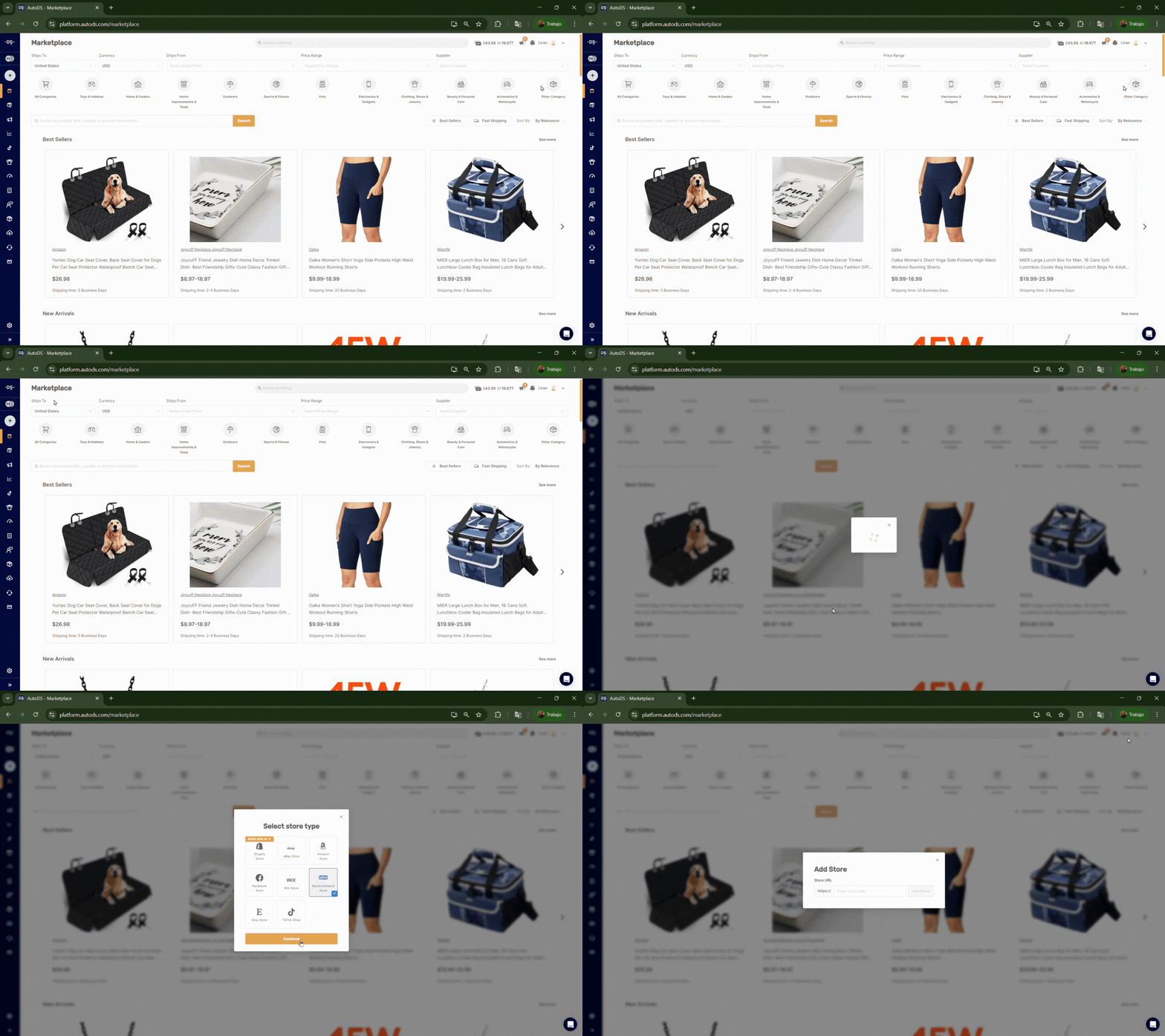
By using AutoDS to eliminate manual tasks, you connect your workflow so that the software reads your store and your supplier simultaneously. This integration is the bridge that allows you to manage thousands of SKUs without hiring an army of virtual assistants, keeping your operation lean, agile, and highly profitable.
5. Bulk Import and Product Optimization

Forget the tedious, soul-crushing process of copying and pasting descriptions and images. With the AutoDS One-Click Importer, you can transfer hundreds of products to your WordPress site in seconds. The tool doesn’t just move data; it lets you optimize titles, tags, and descriptions directly from the draft stage, before they go live.
📢 Marketing Tip: Want to take it even further? Supercharge your listing titles and descriptions with the power of AI! Try the AutoDS AI Product Title & Description Generator to boost your visibility and increase your chances of selling more and selling better!
This mass-customization capability ensures your WordPress store remains unique, helping you avoid the duplicate content traps that penalize search engine rankings and significantly boost your organic SEO.
6. Total Price and Order Automation
The final step to achieving true operational freedom is activating full automation. AutoDS allows you to automate everything, from 24/7 price and stock monitoring to automatic order fulfillment via Fulfilled by AutoDS.
This means if a supplier raises their prices or runs out of stock, your WordPress store updates instantly to protect your margins. By removing human intervention from the logistics chain, you convert your CMS into a passive income asset that generates revenue while you focus 100% of your energy on scaling your marketing strategy.
WordPress eCommerce for Dropshipping
Dropshipping on WordPress is a precision operation that turns your website into a high-speed gateway between global suppliers and hungry consumers.
In this model, you don’t hold inventory or touch a single box; instead, your WooCommerce store acts as the digital storefront where the transaction begins. The order flow follows a strict logic: a customer places an order on your site, the payment is captured, and the order details are routed to your supplier immediately.
In 2026, the success of this flow depends a lot on fulfillment latency; the faster the order moves from your dashboard to the supplier’s warehouse, the more likely you are to secure five-star reviews and repeat business.
However, trying to run a dropshipping business on WordPress manually is a recipe for burnout. To compete with the giants of retail, you must integrate an automation brain into your WooCommerce setup that handles the repetitive, soul-crushing tasks. AutoDS ensures that your automation tools are correctly configured to handle the three pillars of a modern dropshipping business:
- Product Importing: Stop the manual copy-pasting. Using a professional importer lets you pull high-converting product data, including 4K images, optimized titles, and technical specs, into your WooCommerce dashboard with a single click.
- Inventory and Price Syncing: In a volatile 2026 market, supplier prices and stock levels can change in minutes. Your automation platform must monitor these changes 24/7, instantly updating your WordPress store to protect your profit margins and prevent the disaster of selling an out-of-stock item.
- Order Automation: Where the magic happens. By using AutoDS to eliminate manual tasks, your orders are fulfilled automatically as soon as they come in. You no longer need to log in to supplier sites and enter customer addresses; the software handles fulfillment, captures the tracking number, and sends it to the customer while you focus on scaling your brand.
Common Mistakes to Avoid When Selling on WordPress
It’s natural to make mistakes as a beginner, especially when navigating complex platforms that you might not fully understand yet. However, identifying the specific pitfalls that trigger operational failures is the only way to prevent them from sabotaging your business before it even starts.
Awareness is your first line of defense against the common profit killers of the WordPress ecosystem.
1. Overloading the Site with Plugins
Many beginners treat the WordPress plugin repository like an all-you-can-eat buffet, installing a new tool for every minor feature they desire. This leads to “digital obesity,” where a bloated site suffers from slow loading times, security vulnerabilities, and code conflicts.
In 2026, a slow site is a dead site; every extra millisecond of load time slashes your conversion rate and tanks your SEO ranking. You must prioritize a lean tech stack, choosing high-performance, multi-purpose tools over a mountain of single-use plugins.
2. Ignoring Performance and Hosting Quality
Attempting to run a high-volume eCommerce store on a budget is a fatal error. When your marketing hits its stride and traffic spikes, cheap servers will buckle under the pressure, causing your site to crash exactly when you should be making the most money.
Investing in Managed WordPress Hosting is a non-negotiable requirement for professional sellers. High-quality hosting delivers the speed and stability needed for scaling, keeping your store online and responsive during your most critical sales windows.
3. Poor Checkout Optimization
In a mobile-first world, friction at the checkout page is the fastest way to lose a customer. If your process is too long, requires unnecessary information, or lacks modern payment gateways like Apple Pay, you are essentially throwing away your ad spend.
A clunky, unoptimized checkout experience creates cart abandonment that no amount of marketing can fix. You need a streamlined, one-page checkout that builds trust and allows customers to complete their purchase in seconds, not minutes.
4. The Scale Killer: Lack of Automation
Trying to manage a growing business manually is a trap that leads to immediate burnout and costly human errors. Let’s be honest, if you aren’t automating your inventory updates and order fulfillment, you don’t own a business; you own a high-stress job that won’t scale.
By using AutoDS to eliminate manual tasks, such as 24/7 price syncing and automatic tracking updates, you remove the bottleneck of human intervention and allow your business to grow infinitely.
Is WordPress eCommerce Right for You?
Building a business on WordPress is a strategic choice, not a casual one. In 2026, the hard truth is that while WordPress is the most powerful tool in the e-commerce arsenal, it isn’t for everyone.
It requires a mindset of ownership and a willingness to manage your own digital territory. To help you decide whether you’re ready to make the jump, here is a breakdown of who will thrive on this platform and who should look elsewhere.
Who Is WordPress Best For?
- Content-Driven Sellers: In an era where “attention is the new currency,” WordPress is unbeatable for those who sell through content. If your strategy involves high-level blogging, video integration, or complex landing pages that tell a brand story, WordPress provides the depth you need. It lets you seamlessly weave commerce into your content, turning a simple reader into a loyal customer without the clunky limitations of a standard SaaS template.
- SEO-Focused Businesses: If your primary growth engine is organic traffic, WordPress is your greatest ally. Unlike hosted platforms with rigid URL structures and limited metadata control, WordPress enables surgical SEO optimization. You have unrestricted access to the site’s underlying code and a suite of advanced plugins that ensure you outrank competitors who are stuck in “walled garden” platforms with limited SEO flexibility.
- Dropshippers Wanting Full Control: For the serious dropshipper, WordPress is the ultimate way to escape the “Platform Tax.” If you are tired of losing 2-3% of every sale to transaction fees and want the freedom to choose your own payment gateways, hosting, and suppliers, this is your home. It’s for the seller who wants to build a digital sovereign empire that cannot be deleted at the whim of a corporate policy change.
Who Should Avoid WordPress?
- Sellers Wanting Zero Setup: If your goal is to have a store live in ten minutes with zero technical configuration, WordPress will frustrate you. It requires an initial investment of time to set up your hosting, install WooCommerce, and configure your security settings. If you are allergic to “tweaking” or “configuring” and prefer a “pay-and-play” experience, a hosted platform might be a better entry point for your journey.
🆕 Beginner’s Tip: If you’re looking for a ready-to-go, functional store that you can start using in the blink of an eye, try the AutoDS AI Shopify Store Builder!
- Businesses That Prefer Fully Hosted Platforms: Some entrepreneurs prefer to outsource 100% of their technical infrastructure, even if it means paying higher fees and losing control. If you don’t want to worry about software updates, server maintenance, or manual backups, the managed nature of a SaaS platform provides peace of mind that WordPress, while more flexible, cannot offer without a dedicated management strategy.
Regardless of which category you fall into, the goal is always the same: maximum profit with minimum manual labor. For those who choose the power of WordPress, the initial setup doesn’t have to be a barrier.
Frequently Asked Questions
Is WordPress actually good for e-commerce?
Absolutely. By integrating WooCommerce, WordPress becomes a high-performance engine capable of handling massive scale and deep customization. In 2026, it remains the preferred choice for serious sellers who prioritize data ownership and long-term profitability over “rented” simplicity.
Do I need coding skills to sell on WordPress?
No. While WordPress offers deep technical access, most modern stores are built and managed using visual builders and intuitive plugins. You can launch, customize, and scale a professional-grade marketplace without ever touching a single line of code.
Is WordPress eCommerce free?
The core WordPress software and the WooCommerce plugin are free and open-source. However, running a professional operation involves costs for high-quality managed hosting, premium themes, and specialized automation tools to ensure your store remains competitive and secure.
Can I dropship using WordPress?
Yes, and it is one of the most profitable ways to do so. WordPress is a leading platform for dropshipping because it allows you to bypass transaction fees and “platform taxes.” By pairing it with an automation tool like AutoDS, you can manage thousands of products and automate your entire fulfillment process with ease.
Start Your Dropshipping Journey with AutoDS
If you want to dominate the market, you need the right tools in your arsenal. The “Holy Trinity” of modern e-commerce is the combination of WordPress + WooCommerce + AutoDS.
WordPress provides an unshakeable foundation and full data ownership; WooCommerce provides a flexible commerce engine; and AutoDS provides automated logistics that make the entire system run like a high-performance machine. This setup gives you the professional edge of a custom-coded store with the operational ease of a one-person business.
Ready to automate your WordPress success? Don’t let manual management hold your growth back. Start building your automated empire today with our 14-day trial for $1 and see how easy it is to manage thousands of products with zero stress.
Keep learning! ⬇️
- What Is WordPress eCommerce?
- Why WordPress Is The #1 CMS For Online Selling
- WordPress VS Other eCommerce Platforms
- How WooCommerce Powers eCommerce
- What Can You Sell With WordPress?
- How To Start Selling On WordPress
- WordPress eCommerce For Dropshipping
- Common Mistakes To Avoid
- Is WordPress eCommerce Right For You?
- FAQ
- Conclusion