


AI store builders have made launching a Shopify store easier than ever. What once meant starting with a blank theme and a long list of decisions can now begin with a simple description of your idea. In minutes, you could have a polished first draft ready to customize, sometimes with a catalog already in place.
And here’s where things get interesting for anyone looking to start a dropshipping business. These tools can deliver very different results. Some focus on design, others connect your shop to a specific supplier network, and a few go further by even handling daily operations.
To make sense of those differences, I’ll compare five AI store-building tools, looking at what each actually creates, how far its supplier connections and automation go, and what it really costs to start selling. Along the way, I’ll develop a practical framework for choosing based on your plans.
For the sake of transparency: You’re reading a comparison published by AutoDS. I’ll hold its AI Shopify Store Builder to the same standards as the other tools, recognizing both its strengths and where the alternatives might serve you better.
AI store builders offer different starting points: some generate storefront designs, while others connect your Shopify store to suppliers and automation.
Shopify and BuildYourStore simplify store creation, with the latter providing a product-filled starting point and AutoDS integration.
Spocket focuses on its US/EU supplier network, while Storebuild.ai, owned by Zendrop, connects store creation to Zendrop’s fulfillment ecosystem.
AutoDS goes beyond store generation with 25+ supplier sources, inventory monitoring, and order automation.
The right choice depends on what you want built: compare supplier access, ongoing responsibilities, and total operating costs before committing.
AI Built Shopify Store Comparison
Five AI store builders, five different ways to get started. But what exactly are you getting? The differences become much clearer when you compare what each tool builds and what it takes to start selling.
Here are the five tools and how they stack up:
| Tool | Owner | What It Actually Builds | Supplier & Automation Depth | Cost To Generate The Store | Cost To Start Selling |
|---|---|---|---|---|---|
| Shopify's AI Store Builder | Shopify | Customizable AI-generated storefront | Requires separate apps | Free design generation | $39/mo + sourcing |
| BuildYourStore | AutoDS partner | Niche-based Shopify store with preloaded products | Direct AutoDS integration | Free | Shopify suscription + AutoDS Import = $58.90/month |
| Storebuild.ai | Zendrop | AI-built Shopify store with starter products | Zendrop catalog and fulfillment | Free store generation | $68/mo or $88/mo |
| Spocket's AI Store Builder | Spocket | AI-built store with themes and products | Spocket US/EU-focused supplier marketplace, inventory syncing, and order management | Free; themes from $19 | $78.99/mo with Spocket Starter |
| AutoDS AI Store Builder | AutoDS | Niche-based Shopify store with products pre-loaded | 25+ supplier sources + several automation features | Included with AutoDS | From $58.90/month (Import) |
👀 Pricing note (November 2026): Prices are in USD and use monthly billing and the US Shopify Basic rate as a reference. Actual costs vary by location, plan, and enabled features, so check each provider’s current pricing before committing.
An AI Store Builder vs A Dropshipping Automation Platform
Getting your store up and running is one thing. But what happens once customers start placing orders? That’s where the difference between an AI store builder and a dropshipping automation platform becomes especially important.
An AI store builder handles the initial setup: generating a storefront design and organizing product pages. In other words, it helps you create the shopping experience your customers will see.
A dropshipping automation platform, meanwhile, focuses on the recurring work behind that experience. Think importing products, processing orders, keeping prices and stock aligned with suppliers, and updating tracking information.
Here’s how those responsibilities compare across the tools we’ve covered:
- Storefront creation: All five AI store builders.
- Product importing: AutoDS, Spocket, and Zendrop; BuildYourStore through its AutoDS integration.
- Price and stock updates: Spocket within its supplier catalog, and AutoDS.
- Order processing: Spocket with seller confirmation, Zendrop through its fulfillment service, and AutoDS with eligible automation features.
- Tracking updates: Spocket, Zendrop, and AutoDS for orders connected to their respective systems.
Automation still leaves important decisions in your hands, from choosing products and protecting margins to handling customer relationships. Think of the builder as your starting point and automation as the support system for what comes next. Understanding that distinction makes it much easier to evaluate what each platform can genuinely take off your plate.
AI Store Builders For Dropshipping
Now that we’ve covered the bigger picture, it’s time to see how those differences play out in practice. I’ll walk you through what each builder delivers, where it stands out, and what you’ll still need to handle yourself.
Shopify’s AI Store Builder
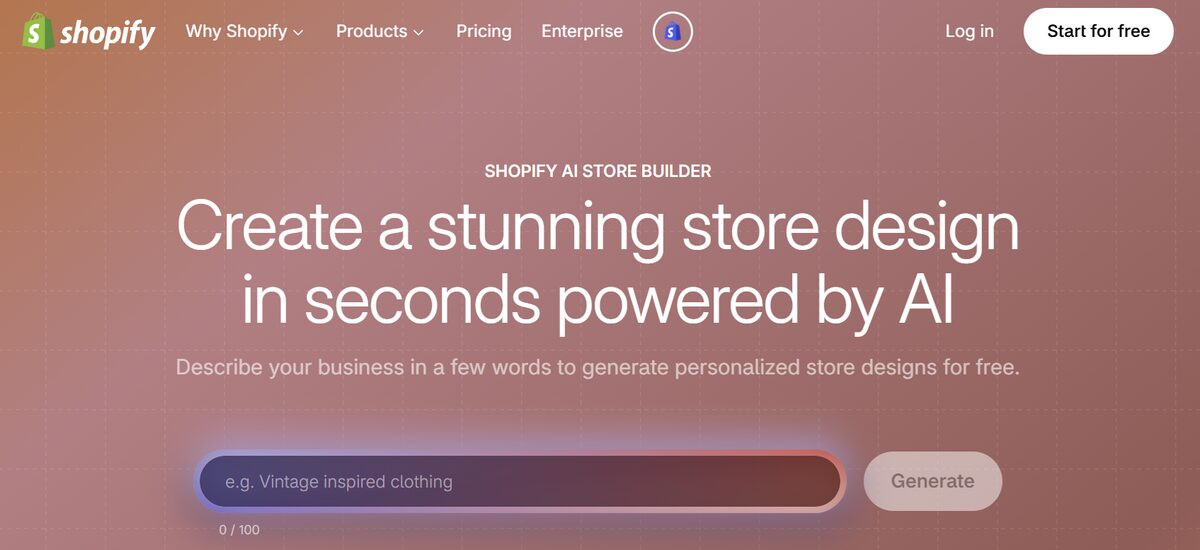
Shopify offers its own AI Store Builder to simplify the first steps of creating a store. The process is straightforward: you can describe your business or niche in a few words, and Shopify generates personalized storefront designs you can preview and customize using its native theme editor.
From layouts and colors to branding and content, it provides a vast scope to shape your store around your target audience. Plus, other AI-powered tools like Shopify Magic and Sidekick can assist with writing, editing, and certain management tasks as you develop your dropshipping business.
- Biggest advantage: Creative flexibility. You can design a store around your chosen niche and select sourcing partners independently, without being tied to a specific supplier catalog.
- Suppliers & automation: Shopify’s AI builder doesn’t include native dropshipping supplier connections, inventory synchronization, or automated fulfillment. Those operations require separate integrations.
- Best for: Beginner dropshippers who want control over their store’s design and prefer building their own sourcing and automation setup.
- Pricing: AI store design generation is free. Shopify Basic starts at $39/month with monthly billing in the US.
AutoDS AI Store Builder
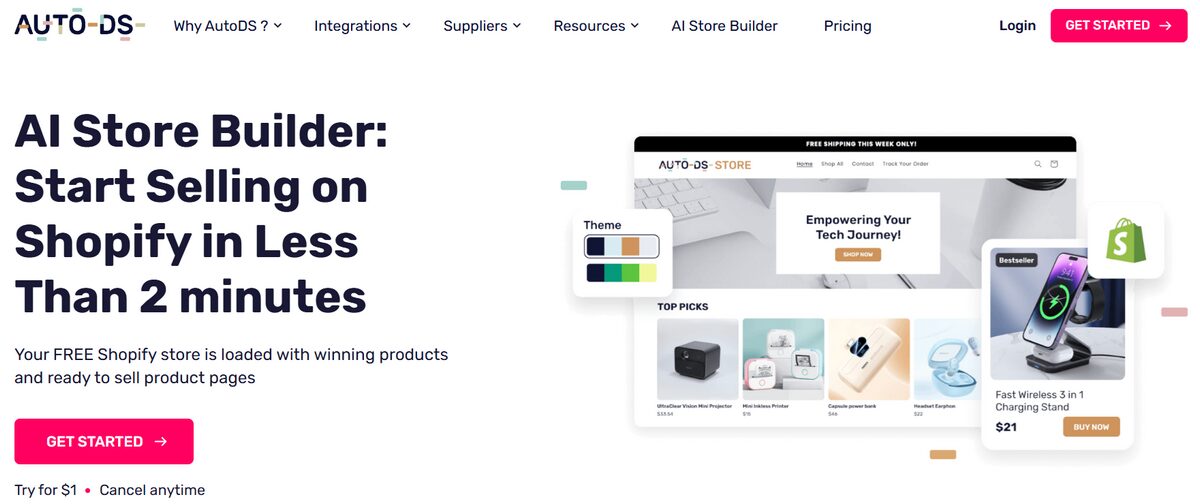
AutoDS integrates its AI Shopify store builder into its broader dropshipping automation platform. You start by choosing your niche and homepage banners, and the builder generates a Shopify store with a customizable design, optimized product pages, and 10 preloaded items. Better yet, your new store comes already connected to AutoDS.
From there, you can discover new products, import listings, and manage orders within the same ecosystem. As your business grows, additional automation features help streamline daily operations, from keeping supplier prices and inventory updated to handling fulfillment and tracking shipments.
- Biggest advantage: An integrated dropshipping workflow. You can move from building your first store to managing products and orders without assembling separate systems for each task.
- Suppliers & automation: Access to a wide net of global and private supplier sources, with product importing and management tools, automatic price and stock monitoring, and automated fulfillment.
- Best for: Dropshippers who want to combine AI-assisted store creation with ongoing automation, especially when working with multiple suppliers or selling channels.
- Pricing: The AI builder is included with AutoDS, with plans starting at $19.90/month, billed annually. Shopify subscriptions and optional order automation costs are separate.
💡 Pro Tip: Want your product pages to feel as polished as your storefront? Try AutoDS’s AI Shopify Product Page Template to create layouts tailored to your products and brand.
Storebuild.ai (Zendrop)
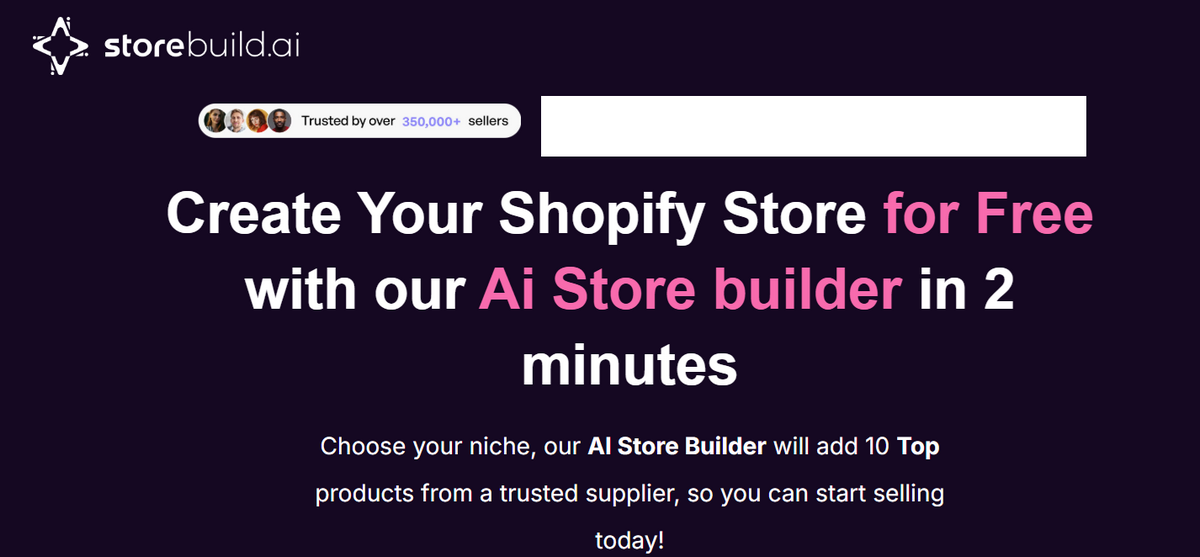
Storebuild.ai is owned by Zendrop, the dropshipping sourcing and fulfillment platform. Its AI builder lets you create a free Shopify store by generating a customizable design and adding 10 preloaded products. It also offers promotional video resources to help you get started with marketing.
That connection to Zendrop is central to how the service works. Your store comes connected to Zendrop’s supplier ecosystem, making it easier to move from the initial setup to product sourcing and fulfillment. You can still customize your Shopify store or integrate other tools, although switching suppliers may require reconnecting or replacing existing product listings.
- Biggest advantage: Fast, free store creation with a starter catalog already connected to a dropshipping fulfillment service.
- Suppliers & automation: Access to Zendrop’s product catalog, with inventory synchronization, order fulfillment, and tracking tools for connected products. Other supplier networks require separate integrations.
- Best for: Dropshippers who want a product-filled Shopify store and are comfortable building their sourcing and fulfillment workflow around Zendrop.
- Pricing: Store generation is free. As of November 2026, Zendrop lists two pricing options: its official website advertises the Pro plan at $49/month, while the Shopify App Store offers linked-product billing starting at $29/month for 1–20 connected products. Shopify subscriptions are billed separately.
Storebuilder.ai (Spocket)
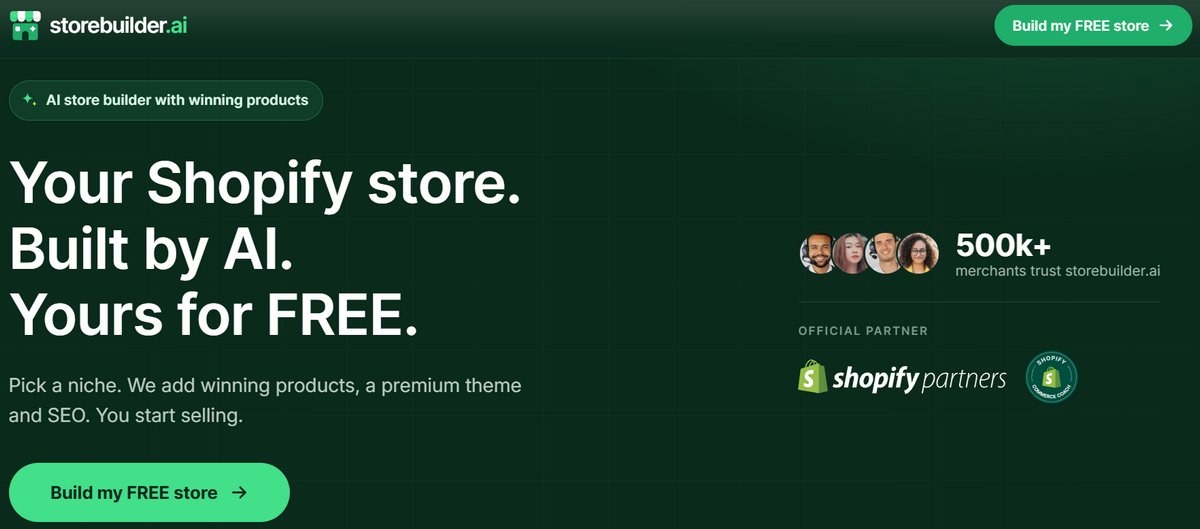
Storebuilder.ai offers a quick way to create a free, AI-powered Shopify dropshipping store. Once you’ve selected your niche, the platform generates a customizable theme, preloaded products, and essential pages. You can start with a free Basic design or choose a premium theme with more products and customization features.
The result is a useful starting point for dropshippers who’d rather work with a product-filled store than assemble every page from scratch. Its catalog comes from a sourcing partner specialized in the US/EU, although the builder and the supplier service have separate responsibilities. You’ll still need to review product connections, shipping conditions, and fulfillment arrangements before launching.
- Biggest advantage: Fast, free store generation with starter products, ready-made pages, and a customizable Shopify theme.
- Suppliers & automation: Products are sourced through a third-party partner with US/EU suppliers. Spocket separately offers product importing, inventory synchronization, and order management, but its integration with the generated store should be verified during setup.
- Best for: Beginner dropshippers who want a product-filled Shopify store with minimal initial setup and prefer sourcing from US/EU suppliers.
- Pricing: The Basic theme is free and includes 10 products. Paid designs start at $19 for Premium, followed by Luxury ($29) and Signature ($49), each featuring 35 products. Spocket’s separate Starter subscription begins at $39.99/month after a seven-day trial, while Shopify costs extra.
BuildYourStore
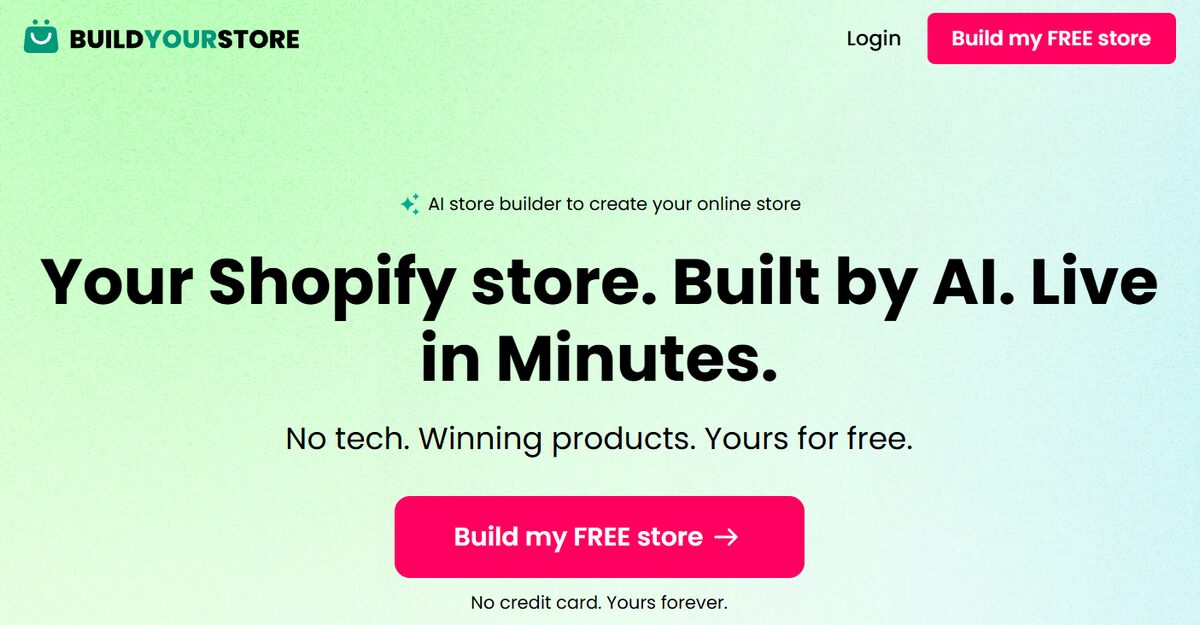
BuildYourStore, a partner tool of AutoDS, helps dropshippers create a Shopify store without spending hours on the initial setup. Based on your chosen niche, it generates a customizable theme, ready-made product pages, and 10 preloaded products, along with a free .store domain. This gives you a solid starting point to personalize and prepare for launch.
Beyond store creation, BuildYourStore integrates directly with AutoDS, giving you access to additional sourcing and fulfillment tools as your business develops. These operational features are available through a separate AutoDS subscription, depending on the plan you choose.
- Biggest advantage: A quick, beginner-friendly setup with niche-specific products and ready-made pages, plus the option to build a more specialized one-product store.
- Suppliers & Automation: Integration with AutoDS for product sourcing, inventory management, and order fulfillment.
- Best for: Beginner dropshippers who want a product-filled Shopify store with minimal technical setup and the flexibility to add automation afterward.
- Pricing: The Beginner Store is free and includes 10 products. The Pro One Product Store costs $97 as a one-time payment. Shopify and AutoDS subscriptions are billed separately.
How To Choose: What Do You Want Built?
You’ve met the five builders, explored their features, and seen how differently they approach dropshipping. Now comes the crucial question: what do you want to have ready when the AI finishes its job? Here’s how to narrow down your options based on what you’re looking for:
1. A storefront you can customize
If your main priority is getting a Shopify storefront up and running quickly, Shopify’s AI Store Builder gives you a design you can shape around your brand without ever leaving the platform. BuildYourStore and Storebuild.ai go a step further with preloaded products, giving you a more complete starting point from day one.
What’s next? Finalizing your design, configuring payments and shipping, and connecting or verifying your sourcing setup before launching.
2. A store connected to one supplier ecosystem
If you’d rather have your initial products and sourcing workflow connected from the start, Storebuild.ai ties store creation to Zendrop’s fulfillment landscape, while Spocket focuses on its own US/EU-oriented supplier marketplace.
Both approaches make sourcing more convenient within a particular catalog, although that also means relying on the platform’s supplier network for its integrated workflows.
What’s next? Reviewing the available catalog, checking product margins and delivery estimates, and activating the appropriate sourcing or fulfillment plan.
3. A business set up for ongoing automation
If you’re thinking about managing multiple suppliers, expanding across selling channels, and scaling your dropshipping operations, AutoDS offers a more flexible setup. It connects AI store creation with a wider sourcing network, inventory monitoring, and order automation.
BuildYourStore also fits into this approach through its direct AutoDS integration, allowing you to start with a ready-made storefront and add operational capabilities as your business grows.
What’s next? Choosing the appropriate automation plan, configuring suppliers and fulfillment settings, and developing a strategy to attract customers.
Here’s the decision at a glance:
| What You Want Built | Tools To Consider | What You'll Still Need |
|---|---|---|
| A storefront, fast | Shopify AI Store Builder, BuildYourStore, Storebuild.ai | Final setup, payment configuration, sourcing |
| A store tied to a supplier ecosystem | Storebuild.ai / Zendrop, Storebuilder.ai / Spocket | Supplier plan, product validation, fulfillment setup |
| A flexible, multi-supplier operation | AutoDS, BuildYourStore | Automation plan, operational configuration, marketing |
What It Really Costs To Get Selling
A free AI-generated store sounds like a great deal. And it can be! But the price of building your storefront is only part of what you’ll spend to start selling. To give you a clearer picture, I’ve put together five example setups using Shopify Basic at $39/month, plus the corresponding builder and supplier or automation plan.
| Setup | Shopify Basic | Store Builder | Supplier / Automation | Example Monthly Total |
|---|---|---|---|---|
| Shopify AI Store Builder | $39 | Included | Supplier solution of your choice | $39 + sourcing costs |
| BuildYourStore | $39 | Free Beginner Store | AutoDS Import: $19.90/month (billed annually) | $58.90 |
| AutoDS AI Store Builder | $39 | Included | AutoDS Import: $19.90/month (billed annually) | $58.90 |
| Storebuild.ai (Zendrop) | $39 | Free | Zendrop: $29 via linked-product billing, or $49 Pro on its website | $68 or $88 |
| Storebuilder.ai (Spocket) | $39 | Free Basic theme; premium themes cost extra | Spocket Starter: $39.99 | $78.99 + optional theme costs |
There’s also room to experiment before committing. Shopify offers a free trial and promotional introductory pricing for eligible stores, with the conditions explained in its free-trial guide.
Ultimately, the most useful comparison is what you’re paying for the work each setup handles. A lower monthly bill might mean more manual tasks, while a more complete automation plan could save time as your operations grow.
Frequently Asked Questions
What’s the difference between an AI Shopify store builder and a dropshipping automation platform?
An AI Shopify store builder helps you create your storefront, while a dropshipping automation platform helps you manage it after launch. Builders focus on generating designs, pages, and sometimes starter products. Automation platforms handle recurring tasks like inventory updates, order processing, and tracking. Some tools, such as AutoDS, combine both capabilities.
Who owns Storebuild.ai, and does that affect which supplier it uses?
Storebuild.ai is owned by Zendrop, and its store-building experience is designed around Zendrop’s supplier ecosystem. That means your initial products and fulfillment workflow are connected to Zendrop. You can still integrate other suppliers through Shopify, but managing those products may require separate tools and configurations.
Does Shopify’s own AI store builder include dropshipping automation?
No, Shopify’s native AI Store Builder doesn’t include built-in dropshipping supplier connections or automated fulfillment. It helps generate and customize your storefront, but you’ll need additional apps to import supplier products, synchronize inventory, and automate orders.
Is Spocket’s AI store builder limited to its own supplier catalog?
Not necessarily. Storebuilder.ai, which Spocket promotes, generates Shopify stores with preloaded products from a sourcing partner, but an exclusive connection to Spocket’s catalog isn’t clearly established. You can also connect other supplier apps to Shopify, although their inventory and fulfillment workflows must be configured separately.
Which AI store builder actually runs the business after the store is built?
None of these builders runs an entire dropshipping business for you. AutoDS offers broader operational automation, including inventory monitoring and optional order fulfillment, while Zendrop and Spocket support fulfillment within their respective ecosystems. You’ll still be responsible for product decisions, profitability, marketing, and customer service.
Can an AI-built store from one of these tools be moved to a different supplier later?
Yes, you can switch suppliers without rebuilding your Shopify store from scratch. However, you’ll likely need to reconnect or replace product listings, match variants, and update inventory and fulfillment settings. The process depends on your original builder, supplier integrations, and the products you’re selling.
From AI Store To Dropshipping Business
An AI-built Shopify store can save you hours of setup, but the real value depends on what happens after those first few clicks. A polished storefront is a great first step. Having the right suppliers, reliable fulfillment, and a manageable workflow is what helps turn it into a functioning dropshipping business.
That’s why there’s no single best AI store builder for everyone. The most feature-packed option isn’t necessarily the smartest choice for all users, and the easiest way to launch won’t always be the easiest way to operate. What matters is finding a setup whose strengths and trade-offs genuinely align with your business.
My advice? Think beyond launch day. Consider where you want to source products, which tasks you’re comfortable handling manually, and how much flexibility you’ll need as your business evolves. Ultimately, the right builder should make those next steps easier.
🛠️ If you’re leaning toward a more integrated approach to store creation, sourcing, and automation, you can try AutoDS for $1 and see how its tools fit your dropshipping plans.
Remember to stay informed and keep learning; that’s how you’ll stand out from the competition. Here are three more articles to keep you going!