


Simply put, AliExpress dropshipping means listing products from AliExpress suppliers in your store and having those suppliers ship each order straight to your customer. You skip the upfront inventory, but you are still running the business. You pay for every order and handle the pricing, delivery expectations, customer support, returns, and compliance.
And here’s the thing: done right, it is a flexible way to test products without turning your garage into a warehouse. Done wrong, it can quickly become a mess of late packages, unhappy customers, and margins that disappear. This guide covers what matters: the practical decisions and systems that turn AliExpress sourcing into a retail operation you can actually manage.
Research a niche and validate demand before you list anything.
Choose a selling channel whose dropshipping policy fits your sourcing model.
Vet suppliers and add automation so stock, prices, and orders stay organized.
Import, rewrite, and price your listings instead of publishing raw supplier content.
Fulfill orders with tracked shipping and send customers realistic delivery updates.
Handle service, returns, and disputes quickly because the post-purchase experience decides whether a store lasts.
Scale your store with automation. It handles manual tasks like product importing and reduces repetitive errors, allowing you to focus on product research and marketing.
What Is AliExpress Dropshipping And How Does It Work In 2026?
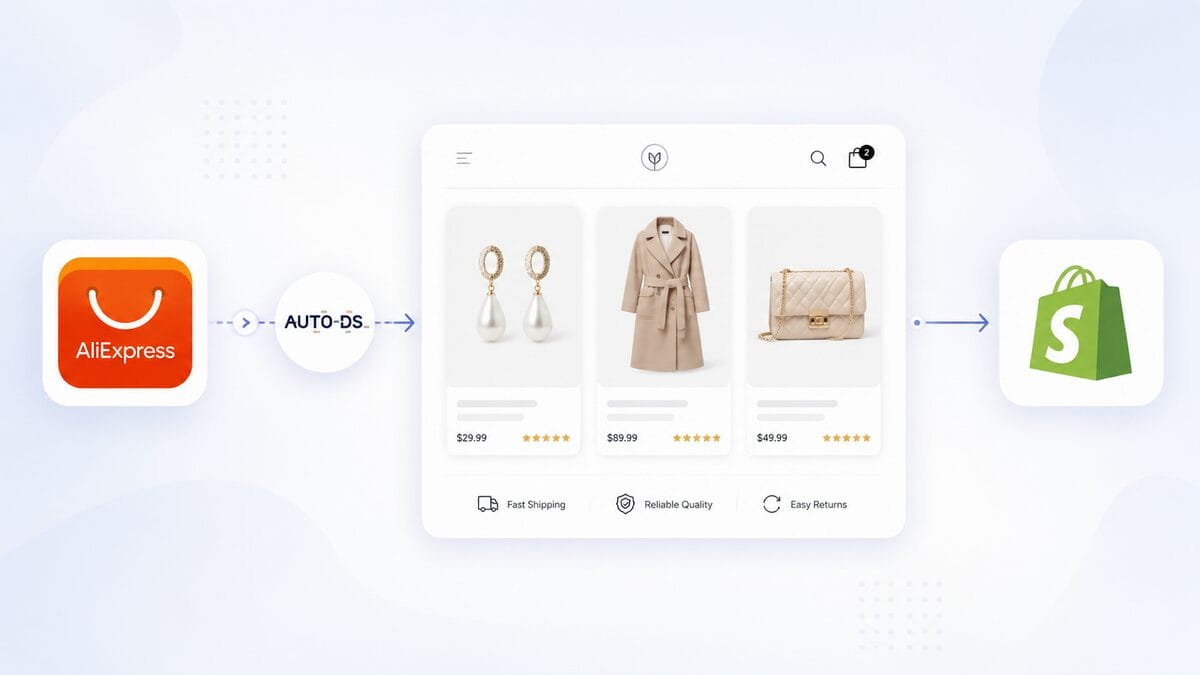
This dropshipping model is straightforward. Your customer orders an AliExpress product from your storefront, you purchase it from the selected supplier, and that supplier ships it directly to the customer. You never store the item yourself.
The basic order flow looks like this:
- You publish an original product listing on your store or an approved marketplace.
- A customer pays you at your retail price.
- You place or automate the supplier order using the customer’s delivery details.
- The supplier dispatches the product and provides tracking when the selected method supports it.
- You remain responsible for the customer experience, including delivery communication, refunds, and returns.
The supplier handles the parcel, but the customer bought from you. If the wrong color arrives, tracking stalls, or the package misses your promised date, your store has to solve it.
Are You Allowed To Dropship From AliExpress?
Yes, AliExpress can be your source. That does not make every product-channel combination acceptable. You still need to follow the channel’s sourcing policy, intellectual property rules, consumer laws, tax obligations, product safety requirements, and your own delivery and return terms.
AliExpress also makes its position pretty clear. The platform created the Dropshipping Center specifically for dropshippers, with tools that help you discover products and review their sales performance before deciding what to test. Our guide to the AliExpress Dropshipping Center explains how the research tools work and how to use them.
eBay is a common policy trap here. eBay permits dropshipping when fulfillment comes from a wholesale supplier, but it does not permit listing an item and then buying it from another retailer or marketplace that ships directly to the customer. Standard retail sourcing from AliExpress, therefore, does not automatically qualify for eBay. Read eBay’s official dropshipping policy and use an eligible wholesale arrangement before building that workflow.
“There’s a very big misconception about AliExpress, and that is that AliExpress itself is a supplier. But it’s not. AliExpress is actually a platform.” – Mario Martinez, dropshipper.
Other channels also set market-specific fulfillment standards. Before importing a product to Shopify, Wix, WooCommerce, TikTok Shop, Facebook Marketplace, or any marketplace, check the current policy for your country and category. A channel integration is a technical connection – it is not permission to sell every supplier’s product.
Another important thing is that some categories are not beginner-friendly. Avoid branded replicas, restricted goods, unsafe products, and anything that requires licenses or special compliance. Supplements, medical devices, children’s products, batteries, cosmetics, weapons, alcohol, and tobacco can carry extra legal, shipping, or platform requirements. When in doubt, choose a simpler product.
Pros And Cons Of AliExpress Dropshipping
Is AliExpress good for dropshipping? It can be a useful sourcing platform for testing products, provided the supplier, shipping route, margin, and selling-channel policy all fit your operation. But like everything, it comes with its pros and cons.
✅ AliExpress Dropshipping Advantages
- Low inventory risk: You purchase only after a customer orders.
- Large product variety: You can test different niches without buying cases of inventory.
- Flexible testing: weak products can be removed without liquidating stock.
- Global and local warehouse options: some products are stocked closer to the customer.
- Automation compatibility: supported tools can sync listings, stock, prices, orders, and tracking.
❌ AliExpress Dropshipping Tradeoffs
- Variable delivery: dispatch and transit time change by seller, route, warehouse, and season.
- Supplier inconsistency: product quality, packaging, communication, and stock accuracy vary.
- Easy-to-copy catalog: competitors can often source the same item.
- Limited branding: many listings ship in generic packaging unless you arrange something better.
- Cash-flow pressure: You may need to pay suppliers before your channel releases customer payouts.
AliExpress works best as a testing ground. It lets you validate products with less inventory risk, but it does not replace the basics of running a real retail business. If the supplier cannot meet your delivery promise, acquisition costs wipe out the margin, or your selling channel does not allow the sourcing setup, it is probably not the right fit.
How Much Does It Cost to Start AliExpress Dropshipping?
You can start fairly lean. Since you are not purchasing inventory in bulk, the initial investment is usually lower than it would be with a traditional online store. Still, “low cost” does not mean “no cost.” You will need to account for your selling channel, product samples, marketing, software, and enough cash to pay suppliers while customer payouts are still processing.
| Expense | Lean starting point | What to know |
|---|---|---|
| Selling channel | Marketplace listings may have no upfront insertion fee; Shopify Basic pricing is $29/month with annual billing or $39 month-to-month | Marketplaces still charge selling fees. A branded store may also require a domain and a customer acquisition budget. |
| Automation | AutoDS offers a $1 trial | Check the ongoing plan price for your selling channel and the expected number of products. |
| Product samples | Around $50-$150 | Order from the exact supplier, warehouse, and shipping method you plan to use. |
| First marketing test | Around $100-$300+ | Treat this as a test budget, not a guarantee of sales. Marketplace traffic may reduce the need for upfront advertising. |
| Working capital | Enough to cover supplier orders | The amount depends on product cost, order volume, and how quickly your selling channel releases payouts. |
| Lean first-month estimate | Roughly $150-$500, plus working capital | A larger catalog, additional apps, expensive samples, or aggressive advertising will increase the total. |
Treat 150-500 as a starting point, not a one-size-fits-all budget. If you sell through a marketplace and rely on organic traffic, you may spend less. Build a branded store around paid ads, and you will probably need more room to test what actually works.
Here’s something beginners often miss: customer payouts may not reach you before supplier payments are due. Keep some cash on hand so you can cover new orders without stressing over every payout delay. Trust me, a sales spike should feel exciting, not like an unexpected bill.
AliExpress Dropshipping Profit Margins and Realistic Earnings
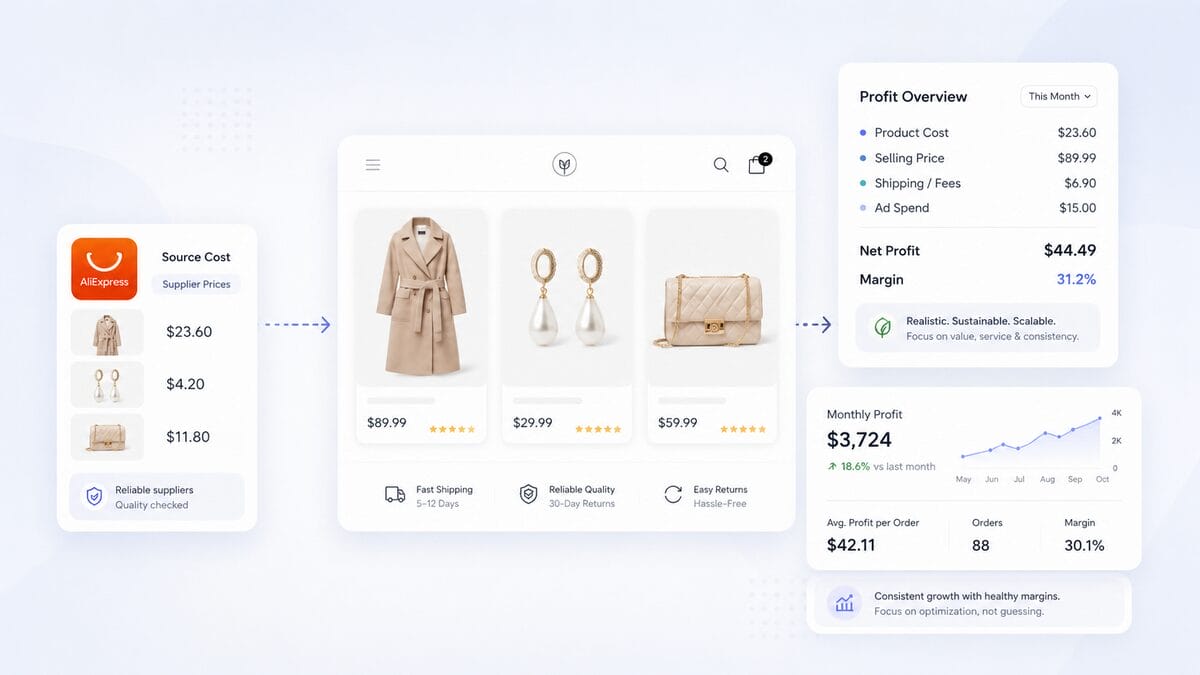
Can AliExpress dropshipping still be profitable in 2026? The short answer is yes. But a low supplier price does not automatically make a product profitable. You still need reliable fulfillment, smart pricing, manageable acquisition costs, and enough room in the margin for fees, refunds, and the occasional order that goes sideways.
And here’s where many sellers get caught: a store can generate plenty of sales and still lose money. If you only compare the supplier cost with the selling price, you are missing the real numbers hiding in between.
Calculate the real profit per order
Before scaling a product, use this formula:
Estimated profit = selling price – product cost – supplier shipping – payment or marketplace fees – advertising cost per order – refund and chargeback reserve – app costs allocated per order.
Here is a simple example. Suppose the product costs $8 and shipping adds another $2. Applying a 2.5x-3x pricing multiplier to that $10 landed cost gives you a $25 selling price.
At first glance, that may look like $17 in profit. But if payment fees, advertising, software, and a refund reserve add up to another $10, your actual estimated profit is closer to $5.
That difference matters. Revenue looks good in screenshots; profit pays the bills.
How much can you realistically earn?
There is no standard income for AliExpress dropshipping. Your results depend on traffic, conversion rate, average order value, estimated margin, repeat purchases, supplier performance, and refund rate.
The most useful approach is to work backward from your target. For example, with a $50 average order value, reaching $10,000 in monthly revenue would require 200 orders, or roughly seven per day.
Reaching $10,000 in monthly profit is a very different goal. If each order generates $10 in estimated profit, you would need 1,000 orders per month, or around 33 per day, before accounting for fixed costs and taxes.
Instead of starting with a big monthly target, focus on proving that one product can attract a customer, fulfill the order reliably, and leave a healthy margin. Then repeat it, measure it, and scale only when the numbers continue to make sense.
💰 Financial Tip: A 2.5-3x multiplier can help with an initial estimate, but run the full numbers before launching. Then revise the price as real advertising, refund, and shipping data arrive. The dropshipping pricing strategy guide goes deeper into margin-based, cost-based, and competitive pricing.
AliExpress Shipping And Delivery: What To Expect
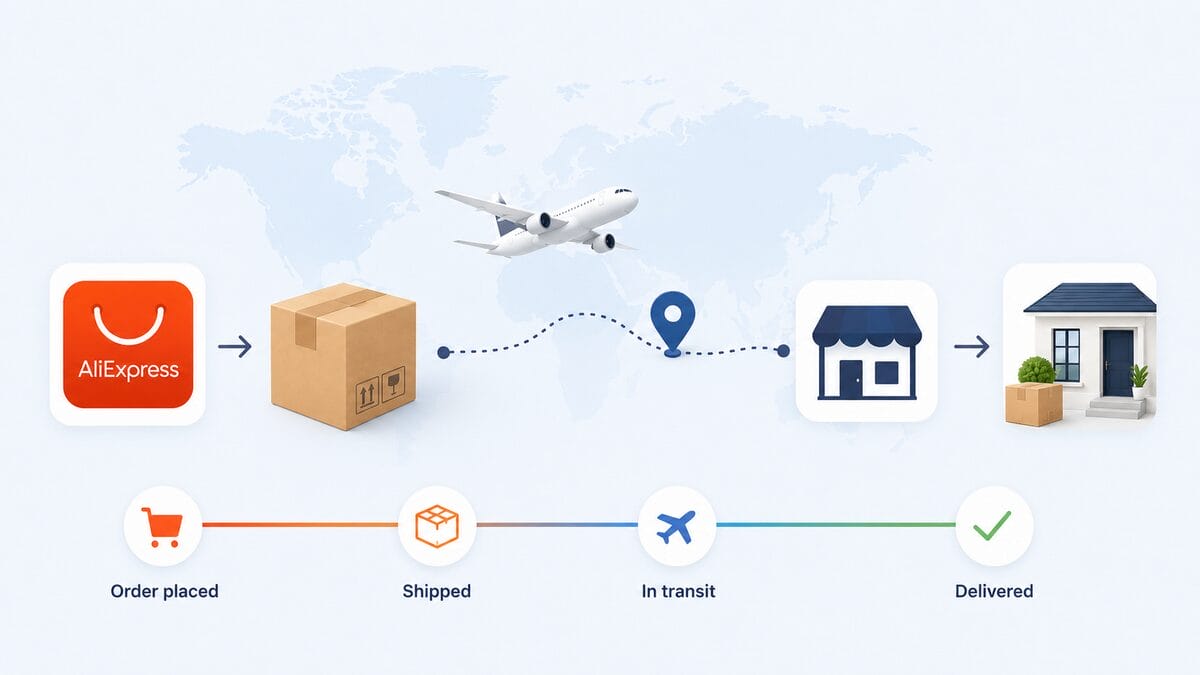
Here’s the thing: AliExpress delivery times can vary a lot. Supplier processing, warehouse location, shipping method, destination, and even the time of year all play a role. Similar listings can arrive days apart, so never assume they offer the same shipping experience.
Many tracked Standard Shipping routes, Choice listings, and regional-warehouse options may arrive within 7 to 20 days, while cheaper economy services can take several weeks. Treat that range as a reference, not a promise. Always check the live estimate for the exact variant and customer location before adding a delivery window to your store.
| Shipping option | Relative speed | Tracking | Best use | Main watchout |
|---|---|---|---|---|
| AliExpress Standard Shipping | Usually a balanced option | Commonly end-to-end | Most everyday dropshipping orders | The same method can show different estimates by route and seller. |
| AliExpress Premium Shipping | Faster displayed options on eligible listings | Usually detailed | Higher-margin or time-sensitive products | The added cost can quickly reduce your profit. |
| AliExpress Saver Shipping | Usually slower than Standard | May be partial or limited | Lightweight, low-cost products | Tracking may become less detailed after arrival in the destination country. |
| Cainiao economy services | Commonly among the slowest | Limited or milestone tracking on some routes | Very low-value items where speed is not the selling point | Delivery can take several weeks, and support tickets become more likely. |
| National postal services | Route-specific and often measured in weeks | Varies by service | Destinations where the postal route is dependable | Handoffs between carriers can create tracking gaps. |
| DHL, FedEx, UPS, or other express courier | Usually, among the fastest displayed choices | Detailed tracking | High-value orders that can absorb the cost | Duties, remote-area fees, and shipping charges may surprise the customer or seller. |
“People need to really open up their eyes and look for the actual delivery time, because not all suppliers are going to have the same delivery time.” – Mario Martinez, dropshipper.
Treat every estimate as live data. Do not copy one shipping window into every listing and forget it. Major sales events, holidays, customs checks, weather, and last-mile capacity can all extend delivery.
If faster delivery is central to your offer, our guide to the top fast dropshipping suppliers compares sourcing options by speed and reliability.
How To Cut AliExpress Delivery Times
- Filter for a local or regional warehouse. Confirm that the selected variant actually ships from that location; some listings change the warehouse when a color or size changes.
- Choose tracked Standard, Choice, or premium methods. The cheapest economy option often costs more later in support time and refunds.
- Check processing time separately from transit time. A fast carrier cannot fix a supplier who waits five days to dispatch.
- Place a sample order. Send it to your target country and record the order date, dispatch date, first tracking scan, delivery date, packaging, and product condition.
- Use a backup supplier. Match the variant, specifications, packaging, warehouse, and shipping method before calling a listing interchangeable.
- Set a customer-facing window with a buffer. Promise what the supplier can consistently beat, not the fastest estimate you saw once.
- Monitor tracking proactively. Contact the customer before a delayed parcel becomes a chargeback or angry comment.
📦 Supplier’s Tip: Ask for operational details. Confirm the exact variant’s warehouse, daily dispatch cutoff, handling time, tracking method, and stock. “Fast shipping” is marketing copy; a documented process is evidence. Compare several routes before selecting the supplier.
Will Buyers Know The Item Came From AliExpress?
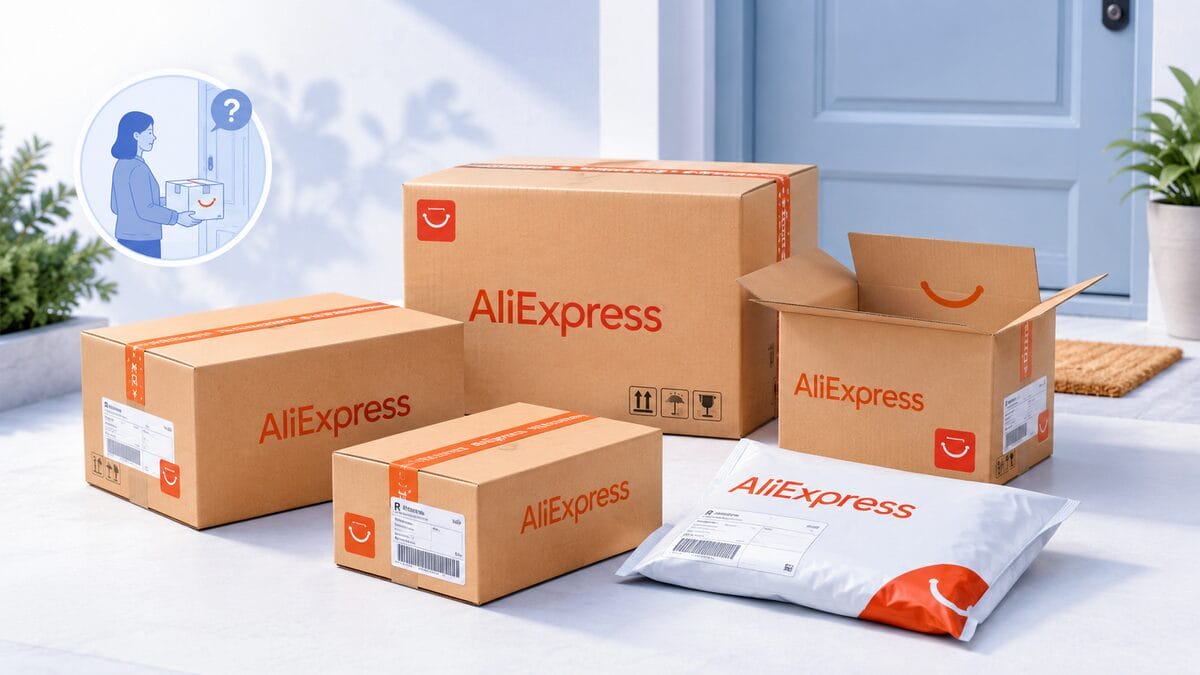
The short answer is yes, they might. Packaging, shipping labels, customs forms, return addresses, inserts, or even a quick image search can reveal the source. Most customers care more about receiving the right product on time, but an unexpected invoice or AliExpress coupon is not exactly a premium unboxing moment.
Check the packaging before you sell. Ask whether the supplier includes invoices, QR codes, coupons, or promotional materials, then confirm everything with a sample order. If you want custom packaging, branded inserts, or white labeling, discuss it upfront and check the minimum order quantity and added fulfillment time.
Above all, be honest about the supply chain. Never misrepresent the country of origin or claim domestic shipping when the item ships from overseas. Branding is about creating a consistent customer experience, not pretending the supply chain does not exist.
AliExpress Returns And Disputes
Returns depend on the listing. Your store policy should not blindly copy a platform-wide promise. The 15-day Free Return service applies only to participating products displaying the Free Return label, participating sellers and buyers, and qualifying returns. Other orders follow the seller’s terms, AliExpress dispute rules, and applicable consumer law.
Before listing, check whether a local return address or prepaid label is available. Your customer purchased from your store, so you remain responsible for the policy you advertised, even when the supplier’s resolution is slower or less generous.
Use a clear resolution process:
- Collect evidence quickly. Ask for the order number plus clear photos or video of damage, defects, missing parts, or the wrong item.
- Choose the customer resolution. Decide whether to refund, replace, partially refund, or request a return under your published policy.
- Open the AliExpress dispute. Use the supplier order, upload evidence, describe the issue factually, and follow the deadline shown there.
- Check return-label eligibility. Do not automatically charge the customer or promise free return shipping without checking the listing and local law.
- Protect the customer timeline. Resolve the customer-facing case within your promised window, then continue recovering funds from the supplier.
- Record the outcome. Repeated defects, late dispatches, or rejected disputes are reasons to replace the supplier.
🆕 Beginner’s Tip: Make your first order a sample. Use the exact warehouse and shipping method you plan to advertise. It is cheaper to discover bad packaging at your own door than through a one-star review.
How To Start Dropshipping With AliExpress In 6 Steps
Opening a store is the easy part. The real test comes when several orders arrive together, and each depends on accurate stock, pricing, addresses, shipping, and support. Follow these six steps in sequence so the operation holds together when the notifications start coming in.
“You want to make sure that you’re getting reviews that actually talk about the pros and the cons of the product.” – Mario Martinez, dropshipper.
Step 1: Research A Niche, Validate Demand, And Vet Suppliers
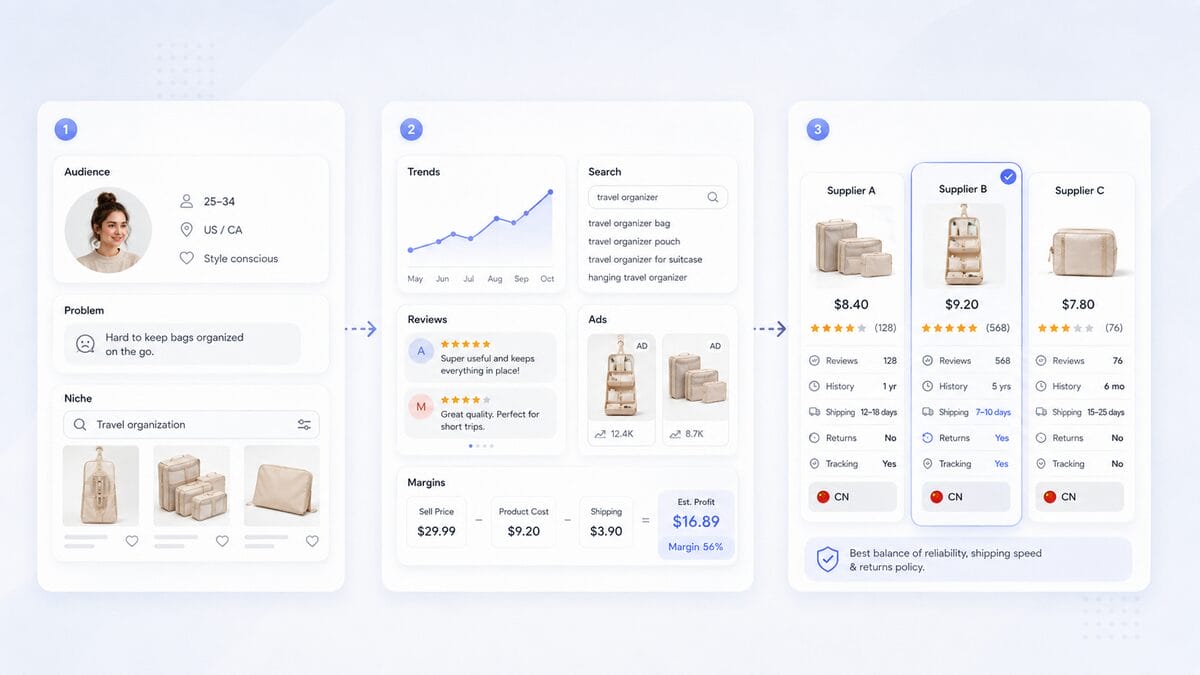
Start with a buyer, not a catalog. Look for a problem, audience, or buying situation you understand. Good test products are easy to demonstrate, hard to find locally, priced high enough to leave a margin, and unlikely to create safety, sizing, or breakage problems.
Validate demand from more than one signal:
- Search behavior: use Google Trends and marketplace search suggestions to see whether interest is stable, seasonal, or fading.
- Customer language: study reviews and comments to learn what buyers love, hate, and misunderstand.
- Competitive proof: check whether multiple stores are advertising the item without copying their creative or claims.
- Unit economics: estimate landed cost, selling fees, acquisition cost, refund risk, and target contribution profit.
- Operational fit: reject products with unclear specifications, fragile parts, restricted claims, or impossible delivery expectations.
Now compare several sellers. Look at recent product reviews, customer photos, order history, seller longevity, communication quality, warehouse options, dispatch estimates, tracking, and return terms. The cheapest listing is not a bargain if every fifth order becomes a support ticket. A store built around one flaky supplier has more red flags than a reality-TV reunion.
🔍 Research Tip: Start with the critical reviews. The newest one-, two-, and three-star reviews expose recurring defects, misleading sizing, packaging failures, and delivery patterns faster than the praise does. Use the AliExpress supplier-vetting checklist when comparing finalists.
Step 2: Choose The Right Selling Channel
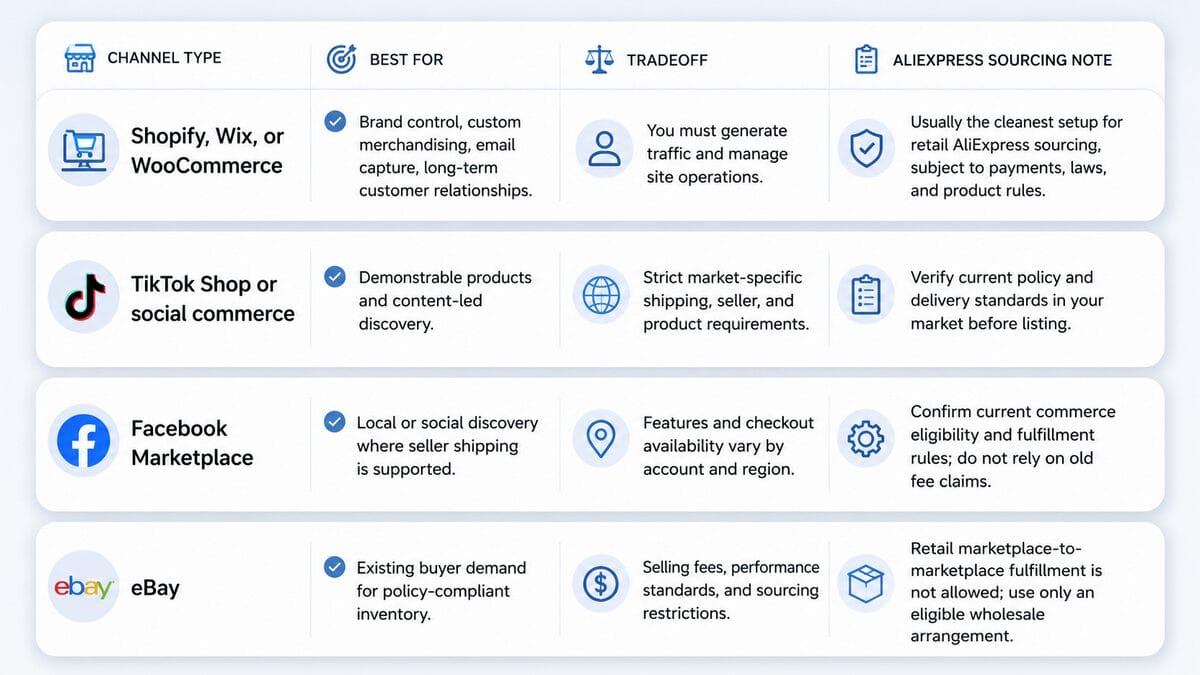
Choose your selling channel first. It shapes almost everything that comes next: traffic, branding, fees, payout timing, customer expectations, and even which sourcing setups are allowed. Make that decision before importing products, or you could end up with a catalog your channel will not accept.
A branded store gives you more control. For beginners sourcing from standard AliExpress retail listings, Shopify, Wix, or WooCommerce is often the most straightforward fit. Marketplaces can bring built-in traffic, which is great, but their policies are not fine print you can simply ignore.
Step 3: Connect Your Store To Dropshipping Automation
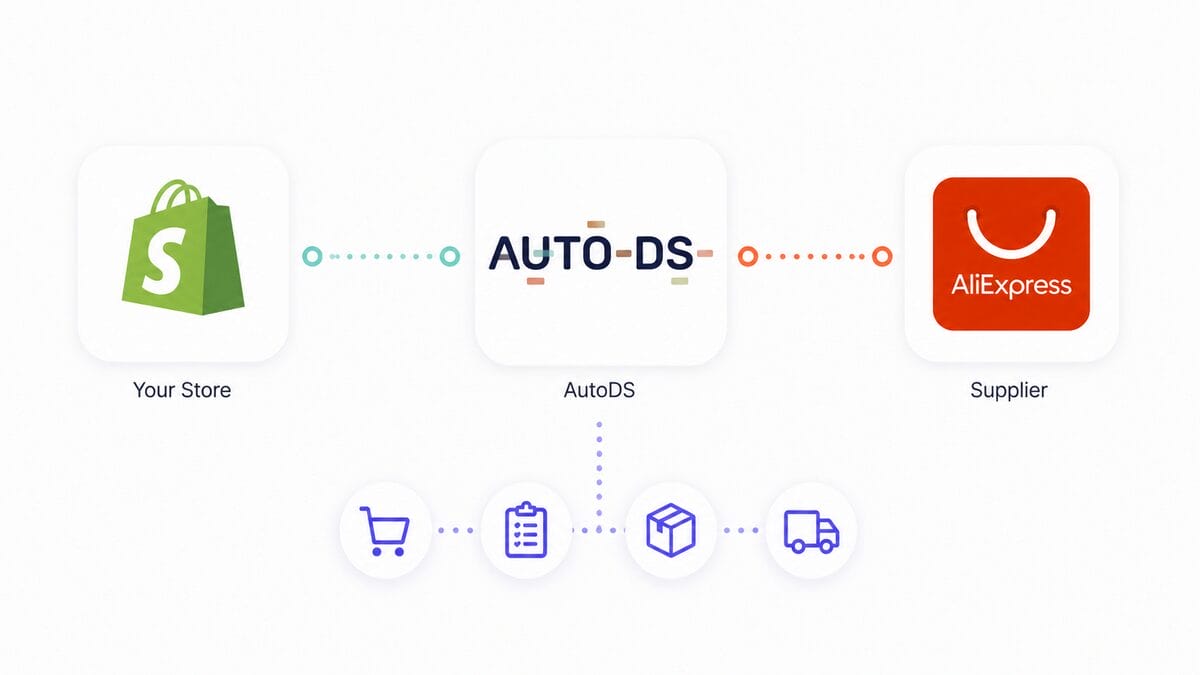
Manual fulfillment works at first, but even with only a few orders, you need a repeatable system. The manual checklist includes copying product details, checking price and stock, entering addresses, placing orders, collecting tracking numbers, and updating the store.
AutoDS connects the moving parts. It links supported selling channels with AliExpress suppliers, imports products, monitors supplier price and stock, applies pricing rules, automates supported order fulfillment, and updates tracking. But automation still needs your judgment. It executes the rules you set; it does not choose the right rules for you. You still decide what to sell, which supplier to trust, how much margin to require, what delivery window to advertise, and when to intervene in a customer case.
Step 4: Import, Optimize, And Price Your Listings
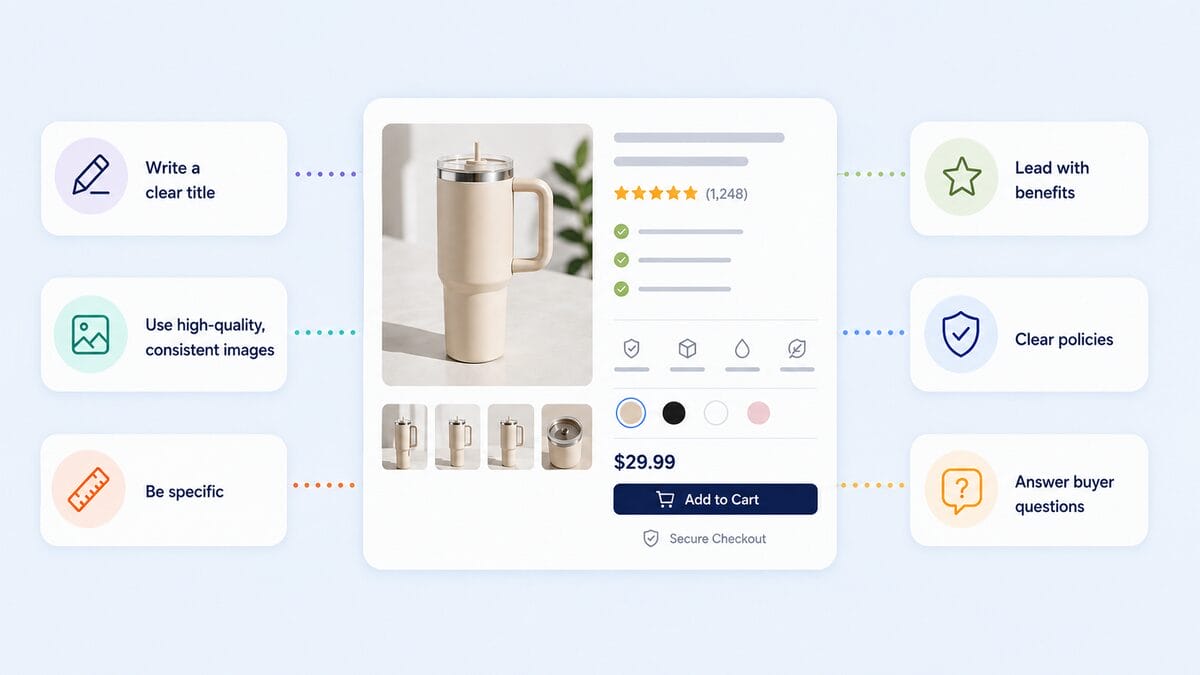
Never publish the raw AliExpress listing. Supplier titles are often keyword-stuffed, descriptions may be unclear, image sets can include inconsistent variants, and unedited claims may create legal or customer service problems.
Build around the buyer’s decision:
- Write a clear title using the product type, defining feature, and relevant use case.
- Lead with benefits. Then support them with specifications and avoid medical, performance, or safety claims you cannot prove.
- Select consistent images that match the exact variant and remove supplier coupons or unrelated graphics.
- Explain dimensions, materials, compatibility, and package contents. Ambiguity is refund fuel.
- Publish realistic policies. Make delivery and returns easy to find instead of hiding them below ten accordion menus.
- Answer real buyer questions. Use reviews and support concerns to cover sizing, setup, care, and compatibility before checkout.
Price from the landed cost. Pricing the item at 2.5 times its landed cost can be a useful first pass, but the final price must cover the product, shipping, selling fees, advertising, refund risk, software, and target profit.
The AutoDS Product Importer speeds up publication. It can import a product URL or bulk data, help edit the listing, apply pricing rules, and monitor supplier changes afterward. Before going live, review every variant, image, shipping method, and price rule yourself.

Step 5: Fulfill Orders And Keep Tracking Accurate
With a manual workflow, every order means copying the customer’s address into AliExpress, choosing the verified variant and shipping method, paying the supplier, saving the order reference, collecting tracking, and updating the customer. It is manageable at first, but automation takes the busywork off your plate. For eligible supplier and channel workflows, AutoDS can automate order processing and tracking updates, reducing repetitive work and the chance of missed status changes.
Now picture ten orders landing while you are eating dinner. One apartment number is wrong, one color has sold out, and another supplier just raised the price. That is where automation earns its keep. The software handles the repeatable steps, while you focus on the exceptions that actually need a human decision.

Start automating with AutoDS for $1 when manual fulfillment begins consuming the time you should spend on product testing and customer experience.
Step 6: Manage Customer Service, Returns, And Supplier Performance
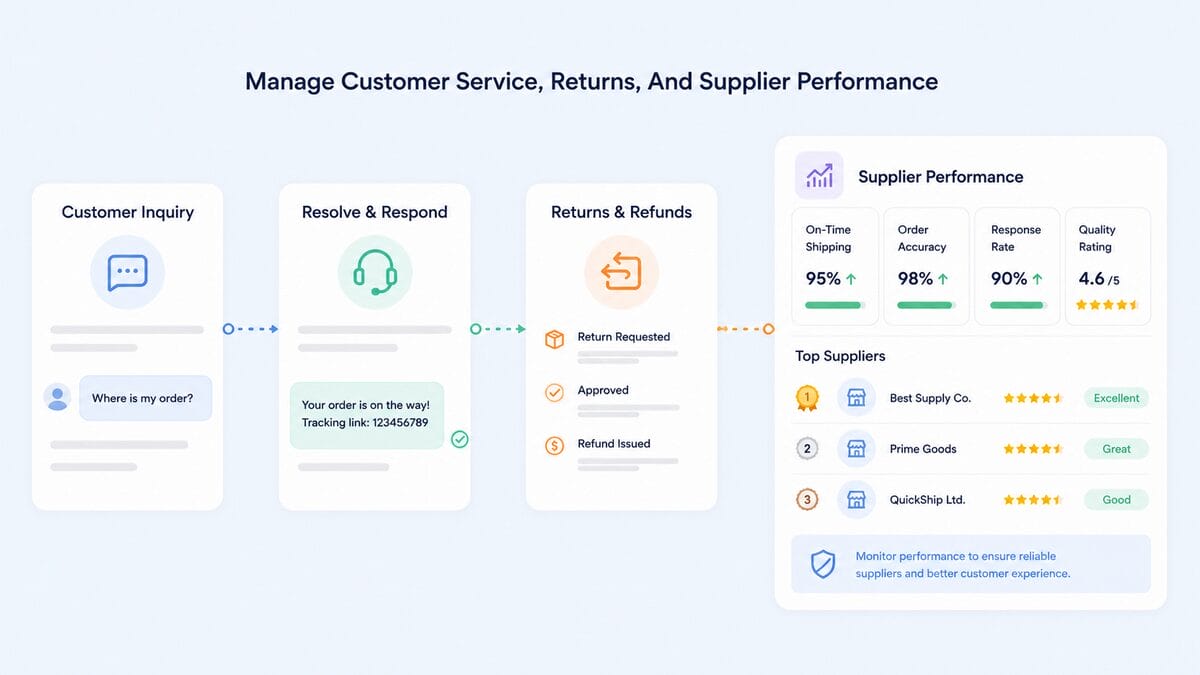
You should always aim to stay one step ahead of the customer. Send the confirmation, a realistic delivery window, and tracking as soon as it is available. If something slips, reach out before they have to. Templates can help with common issues, but personalize the details, skip the supplier jargon, and make the next step clear.
Meanwhile, let real orders (not polished listings) show you which suppliers are reliable. Watch delivery, tracking, packaging, and response quality, then line up a backup supplier for any product gaining traction. If service starts slipping, switching sources or pausing the listing is better than leaving customers to deal with the fallout.
Why Most AliExpress Dropshippers Fail
Most AliExpress dropshippers fail because their stores never become controlled retail operations: The checkout is rarely the problem.
❌ They promise the fastest shipping estimate
Best-case dates create worst-case support. Sellers publish the fastest estimate, choose the cheapest untracked method, and discover too late that supplier handling, customs, and last-mile delivery were never included. Refunds and chargebacks eat the margin.
❌ They sell undifferentiated supplier listings
Copied listings give buyers no reason. Differentiation can come from stronger creative, better education, bundles, positioning, service, guarantees you can honor, or a clearer audience – not just a higher price on the same page.
❌ They choose suppliers by price alone
Cheap cannot compensate for chaos. Incorrect variants, fake tracking, poor packaging, and inconsistent stock all become your customer’s problem. Supplier performance is part of the product, so test it and keep records.
❌ They underfund product testing
A tiny test proves very little. One ad, one creative, or two days of traffic is rarely enough to diagnose a product. But endlessly funding broken economics is not persistence; it is an expensive hobby. Define the budget, success metric, and stop condition before launch.
❌ They ignore cash flow and estimated Profit per Order
Revenue screenshots do not pay supplier invoices. Sellers need enough working capital to place orders while payouts are pending and enough margin to survive fees, returns, discounts, and advertising volatility.
❌ They expect a $10,000 month before building one profitable order
The target needs a system. A $10,000 month is possible only when order volume, margin, traffic, cash flow, and fulfillment capacity support it. Most beginners chase the number before validating the operation. First, prove one profitable product and dependable supplier; then scale what the data supports.
Best AliExpress Extensions For Dropshipping
Every extension needs a job, and it should solve a real bottleneck, not collect dust beside twenty other toolbar icons.
AutoDS Dropshipping Helper
AutoDS Helper speeds up product collection. It supports extraction and importing workflows that connect to AutoDS automation. It is the most relevant starting point when manual product collection or order details are slowing you down.
Alitools Shopping Assistant
Alitools adds a useful browsing context. It surfaces supplier, price history, and product research information while you browse AliExpress. Treat third-party scores as a filter, then verify recent reviews and listing details directly.
Ali Invoice FREE
Ali Invoice FREE organizes records. It can help with bookkeeping and reconciliation, although invoice requirements depend on your jurisdiction and business setup.
AliSave Or Search-By-Image
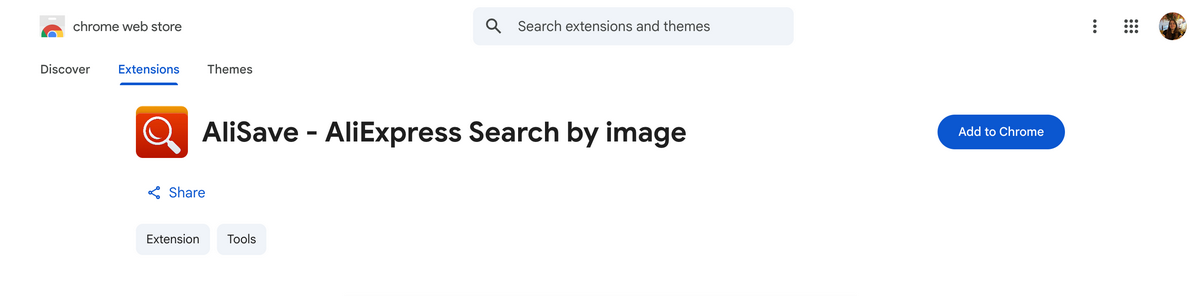
Research tools do not grant rights. Media download and reverse-image tools can save time, but you still need to edit your creative, confirm the exact product, and avoid copying protected brand assets or competitor content.
Keep the tool stack lean. Pick one extension for importing, one for supplier research, and one for records if needed. The AliExpress Chrome extensions guide compares the current options in more detail.
Frequently Asked Questions
What is AliExpress dropshipping, and how does it work?
AliExpress dropshipping is a retail fulfillment model where you list a supplier’s product without holding inventory. After a customer orders from your store, you purchase the item from the supplier, and the supplier ships it directly to the customer. You remain responsible for the listing, delivery promise, support, refunds, and legal compliance.
Is AliExpress dropshipping still profitable in 2026?
It can be profitable, but there is no guaranteed margin. Profit depends on product demand, landed cost, customer acquisition cost, selling fees, shipping reliability, refund rate, and how well the listing is differentiated. Calculate the contribution profit per order before scaling.
How long does AliExpress shipping take?
Many tracked Standard, Choice, and local-warehouse routes can arrive faster than economy services, which may take several weeks. The reliable answer is the live estimate for the exact product variant, warehouse, shipping method, and destination at the time of purchase.
Do you need automation for AliExpress dropshipping?
No. You can place early orders and update listings manually. Automation becomes useful when stock changes, supplier prices, order entry, tracking updates, and multiple stores make manual work slow or error-prone. It improves execution but does not replace product research or supplier checks.
What are the biggest challenges of AliExpress dropshipping?
The main challenges are variable delivery, inconsistent suppliers, easy-to-copy products, limited branding, cash-flow timing, changing stock and prices, and handling returns across two separate customer relationships: your buyer and your supplier.
Can beginners start AliExpress dropshipping in 2026?
Yes. Beginners can start without purchasing inventory in bulk, but they still need a product-testing budget, sample orders, policy research, basic unit economics, and enough working capital to pay suppliers while customer payouts are pending.
What tools are best for AliExpress dropshipping?
The useful stack depends on the workflow. At minimum, you need a selling channel, product and supplier research, order tracking, bookkeeping, and a way to monitor stock and price changes. AutoDS combines product importing, monitoring, pricing rules, supported order automation, and tracking updates in one platform.
How much does it cost to start AliExpress dropshipping?
A lean first-month validation budget is roughly $150-$500 plus working capital, but the real amount varies by channel, samples, software, marketing, and product cost. A marketplace can reduce upfront store and advertising expenses, while a branded store usually needs a subscription, domain, and customer acquisition budget.
Why do most AliExpress dropshippers fail?
Common reasons include unrealistic shipping promises, unoriginal listings, weak supplier checks, underfunded or poorly designed testing, thin margins, inadequate working capital, and expecting fast income before one product has proven profitable fulfillment.
Can you make $10,000 a month dropshipping from AliExpress?
It is possible to build a business that generates $10,000 in monthly revenue or profit, but those are very different goals, and neither is guaranteed. Work backward from average order value and estimated profit to calculate the traffic, order volume, cash, and fulfillment capacity required. Prove profitability at a small scale before using a large income target as a plan.
Conclusion: Build The Delivery Experience Before You Scale
At the end of the day, AliExpress dropshipping is still a retail business. Choose a compliant channel, make sure people actually want the product, test the supplier yourself, run the full numbers, and be honest about delivery and returns. It may not sound glamorous, but getting those basics right is what keeps the model viable in 2026.
Think about a great restaurant. When everything runs smoothly, customers barely notice how much work is happening behind the scenes. Good operations should feel invisible. AutoDS can bring product imports, price and stock monitoring, supported order fulfillment, and tracking updates into one place, giving you more time to focus on better products and a stronger customer experience.
Once your supplier and unit economics are ready, start your AutoDS trial for $1 and connect the workflow you have already validated.
Keep building with these guides:
- What Is AliExpress Dropshipping & How It Works
- Pros And Cons Of AliExpress Dropshipping
- Costs To Start Dropshipping With AliExpress
- Profit Margins & Realistic Earnings
- AliExpress Shipping & Delivery
- How To Start Dropshipping With AliExpress
- Why Most AliExpress Dropshippers Fail
- Best AliExpress Extensions For Dropshipping
- FAQ
- Conclusion