

Yes, you can start dropshipping for free. You don’t need to buy inventory upfront; you can sell on a free platform with built-in traffic (like TikTok Shop or eBay), research products using free resources, create your listings manually, and fulfill each order only after you’ve made a sale.
Depending on the platform, you can have listings live the same day, but consistent sales take testing and patience. Think of this as a low-risk way to learn dropshipping, not a shortcut to passive income.
Keep in mind that “free” doesn’t mean zero costs forever. Marketplaces may charge selling or payment fees, and you’ll still pay your supplier per order. The difference is that these costs come after you make a sale, not before you start.
The trade-off is simple: instead of spending money on ads and automation, you invest more of your own time.
In this guide, I’ll walk you through the entire process: which free platforms and suppliers to use, how to find products without paid tools, how to get your listings live, and the biggest limitations and mistakes to watch out for.
Full disclosure: AutoDS is a paid dropshipping automation platform for product imports, price and stock monitoring, and order fulfillment. You don’t need it to start manually, but it can be worth reinvesting in once you begin making sales.
You can start dropshipping with $0 upfront, but “free” doesn’t mean zero costs forever. Product costs, marketplace fees, and other expenses kick in once you start selling.
Free marketplaces like TikTok Shop, eBay, Facebook Marketplace, and Amazon let you start without a monthly subscription, although each comes with different selling fees, rules, and limitations.
Manual work replaces paid tools at the beginning. You can research products, create listings, fulfill orders, and track shipments yourself until sales start making that process too time-consuming.
Product validation matters more than guessing. Use free resources like TikTok, Google Trends, Amazon Best Sellers, marketplace data, reviews, and competitor listings to find products with real demand.
Reinvest once you get traction. As repetitive tasks start slowing you down, tools like AutoDS can help automate product imports, stock and price monitoring, fulfillment, and tracking, so the business becomes easier to scale.
Can You Start Dropshipping With No Money?
Yes, you absolutely can start dropshipping with no money. But I want to be clear about what that means: you’re starting with $0 upfront, not building a business that will never cost you anything.
When you have no budget, you’re basically trading money for time and effort. Instead of paying for ads, premium tools, or an expensive store setup, you’ll rely on free selling platforms, organic traffic, free product research, and a lot more manual work.
And that’s completely fine. Your goal at this stage is simple: start testing without risking a bunch of money, learn what actually works, and reinvest your first profits as you go.
Now, don’t expect your first product to take off immediately. You might need to test several products before you find something that works. In the beginning, your day-to-day will probably include things like:
- Uploading products manually
- Writing and improving titles and descriptions
- Creating organic content (yes, organic dropshipping is 100% possible, ads are not required from day one)
- Fulfilling orders one by one
- Testing different products and offers
Is that passive? Definitely not. You’re learning product research, marketing, positioning, and customer behavior without needing a big upfront investment. And once you figure out what works, you can start reinvesting and make the whole process way easier to scale.
💡 Pro Tip: Don’t get attached to your first product. Treat your first 10–15 listings like experiments. At this stage, your goal is to learn what works as quickly as possible, not to get everything right on the first try.
Is It Possible to Dropship for Free?
If you take one thing from this, it is this: Yes, it’s totally possible to start dropshipping for free by using platforms with no upfront selling fees, free product research methods, organic traffic, and suppliers you only pay after making a sale.
Instead of investing in inventory, ads, or paid tools from day one, you can handle most of the process manually and use your customer’s payment to cover the supplier cost after you make a sale.
Just remember: free means $0 upfront, not $0 forever. Once you start selling, you’ll still need to cover product costs, marketplace fees, and any other transaction-related expenses.
What “Free” Actually Costs
Now, “no money” doesn’t mean never spending a dime. You still have to pay your supplier the product price, and platform and transaction fees come into play once you make a sale.
Here’s the important distinction: zero upfront doesn’t mean zero cost. You can avoid buying inventory, paying for ads, or subscribing to premium tools before you make a sale, but certain costs kick in once orders start coming in.
The good thing about dropshipping is that you’re not buying a bunch of stock and hoping it sells. You only order the product from your supplier after a customer places an order, so the product cost is tied to an actual sale rather than the inventory you bought upfront.
An important note: Marketplace payout timing varies, so you may still need a payment method or temporary working capital to place the supplier order. But don’t worry: once the payout comes through, that sale helps cover the cost.
Here are the main costs you need to account for:
| Cost | When It Applies | What To Expect |
|---|---|---|
| Product cost | After you make a sale | You purchase the item from your supplier only after the customer orders it. The goal is to cover this cost with the revenue from that sale rather than buying inventory upfront. |
| Listing fees | When you publish listings or exceed a platform’s free allowance | Not all platforms charge this. eBay, for example, offers 250 zero-insertion-fee listings per month. After that, most categories cost $0.35 per additional listing. |
| Marketplace selling fees | When an item sells | Marketplaces take a percentage of each transaction. For example, most TikTok Shop US categories currently have a 6% referral fee, while eBay fees vary by category. |
| Payment processing | When a payment is processed | This depends on the platform. On eBay, payment processing is already included in its final value fee rather than charged as a separate third-party processing fee. |
So when I say you can start for free, I mean you can get your products listed and start testing without a big upfront investment. You still need to build these costs into your pricing strategy once you start selling.
And this is exactly why margins matter. A product might look profitable when you compare its supplier price with your selling price, but marketplace fees and other transaction costs can eat into that profit pretty quickly. Always do the math before you list.
Don’t worry: Further down, I’ll break down the best platforms you can start dropshipping on for $0, and I’ll also be completely upfront about the fees and extra costs that can kick in once you start selling.
Step-by-Step: How To Start Dropshipping With No Money
If you’re starting with $0, don’t overcomplicate this. You don’t need the perfect store, a bunch of paid tools, or some crazy setup before you can make your first sale. What you need is a simple process that gets you from choosing where to sell to actually fulfilling an order.
So, here’s how I’d do it step by step. I’ll keep this part quick so you can see the full process first, and then I’ll break down each step in more detail.
Step 1: Choose A Free Selling Platform
First, you need somewhere to sell. And if you’re keeping the upfront budget at zero, the easiest way to do that is to use a marketplace where people are already shopping.
The best options are TikTok Shop, Facebook Marketplace, eBay, and Amazon. Other platforms, like Etsy, Shopify, or Wix require upfront payments, so I don’t recommend them if you want to start dropshipping with no money at all.
Now, don’t make the mistake of trying to launch on all four at once. Pick one and learn it first. Figure out what people search for, what good listings look like, what sells, and how orders work on that platform.
You can always expand later. Right now, the goal is to get moving.
Step 2: Find Free Dropshipping Suppliers
Once you know where you’re selling, you need free dropshipping suppliers. That means you can start sourcing products without paying a monthly subscription upfront, which is exactly what you need when you’re starting with no money.
For example, eBay, AliExpress, and CJ Dropshipping (I’ll get into each one in the following section).
A tip? Don’t just pick the cheapest supplier you find. Cheap doesn’t help you much if the product takes forever to arrive or shows up looking nothing like the pictures.
Here’s what I’d check:
- Good supplier and product reviews
- Real customer photos
- Reliable communication
- Reasonable, clearly stated shipping times
- Warehouses close to the market you’re selling in, when possible
Really pay attention to the reviews. I’d rather see specific comments about the quality, shipping time, and actual experience with the product than a hundred generic “Great product!” reviews. That gives you a much better idea of what your customer is actually going to receive.
📦 Supplier’s Tip: Always check real customer photos before listing a product. Supplier images can look amazing, but what matters is what actually shows up at your customer’s door.
Step 3: Choose Products To Sell
Now let’s talk about product research. And this is where I see a lot of beginners start guessing.
They scroll through TikTok, save a few random products, pick one they personally like, and hope it works. That’s not really a strategy. You want some evidence that people are already interested.
You don’t necessarily need to find the perfect “winning product” on day one. What you need are products worth testing. I’d look for products that:
- Solve a real problem
- Have some kind of visual or “wow” factor
- Make life easier, faster, or more convenient
- Already show signs of demand
- Leave enough room for a healthy profit margin
- Aren’t so saturated that everyone is selling the exact same thing
Then validate them for free. Check Google Trends to see whether interest is growing or staying steady, browse Amazon Best Sellers and eBay listings to see what people are already buying, and search TikTok or Instagram using relevant product and niche hashtags.
Look at views, engagement, comments, reviews, pricing, and how other sellers are positioning the product. The goal is to collect enough signals to tell whether there’s real demand before you list it.
The mindset here is simple: instead of asking “Do I think this will sell?”, ask “Is there already evidence that people want this?” That takes a lot of the guesswork out of product research.
Step 4: Create Your Listings
Once you have a product, it’s time to actually get it in front of people.
If you’re working with no budget, this part will probably be manual. And that’s completely fine. When you only have a handful of products, you can upload the images, write the title and description, set your price, and publish everything yourself.
Keep the listing simple and focus on what actually matters:
- A clear, searchable title
- A description that explains what the product does and why someone would want it
- Clean, high-quality images or videos
- Accurate shipping and return information
- Pricing that leaves enough room for fees and product costs
You don’t need to spend hours trying to make every word perfect. Get a clean, legit listing live, see how people respond, and improve it from there.
If you’re selling on a platform like TikTok Shop, don’t just publish the listing and hope people find it. Study content that’s already performing, test different hooks and angles, and keep posting. Organic content is free and gives you real feedback before you ever spend money on ads.
💡 Pro Tip: This is where doing everything manually starts getting old really fast, and automation becomes more than just a nice-to-have. AutoDS is a dropshipping automation platform that imports products, optimizes listings, monitors prices and stock levels, and manages products from a single dashboard.
Step 5: Fulfill Orders Manually
And now for the good part: you made a sale. Congratulations!
At the beginning, fulfillment is pretty simple. Once an order comes in, you:
- Get the customer’s order and shipping details
- Go to your supplier
- Place the order with the customer’s delivery information
- Pay the supplier for the product
- Add the tracking information to your selling platform once it becomes available
Doing that manually for your first few orders is no big deal. To be honest with you, when you’re starting with $0, you can do almost everything manually. It’s just going to take more time.
The problem comes once you start getting 10, 20, or 30 orders and you’re placing every order, updating every tracking number, and checking every product yourself. That can get chaotic really fast. And trust me, once orders start coming in, the last thing you want is to spend all day copying and pasting information between different websites.
But that’s a good problem to have. At that point, you’ve already proven that people are willing to buy what you’re selling. Then you can take some of what you’ve earned, reinvest it, and start making the process easier to manage and scale.
Best Free Platforms to Start Dropshipping
First, let’s rule out platforms that aren’t really free to start selling on. For instance, Etsy charges a one-time shop setup fee that varies by location, plus $0.20 per listing, while Shopify has no permanent free selling plan and requires a paid subscription after its trial or promotional period.
So, for a true $0-upfront approach, I’m going to focus on marketplaces where fees mainly kick in after you sell.
Here are the best options that are free to start:
TikTok Shop
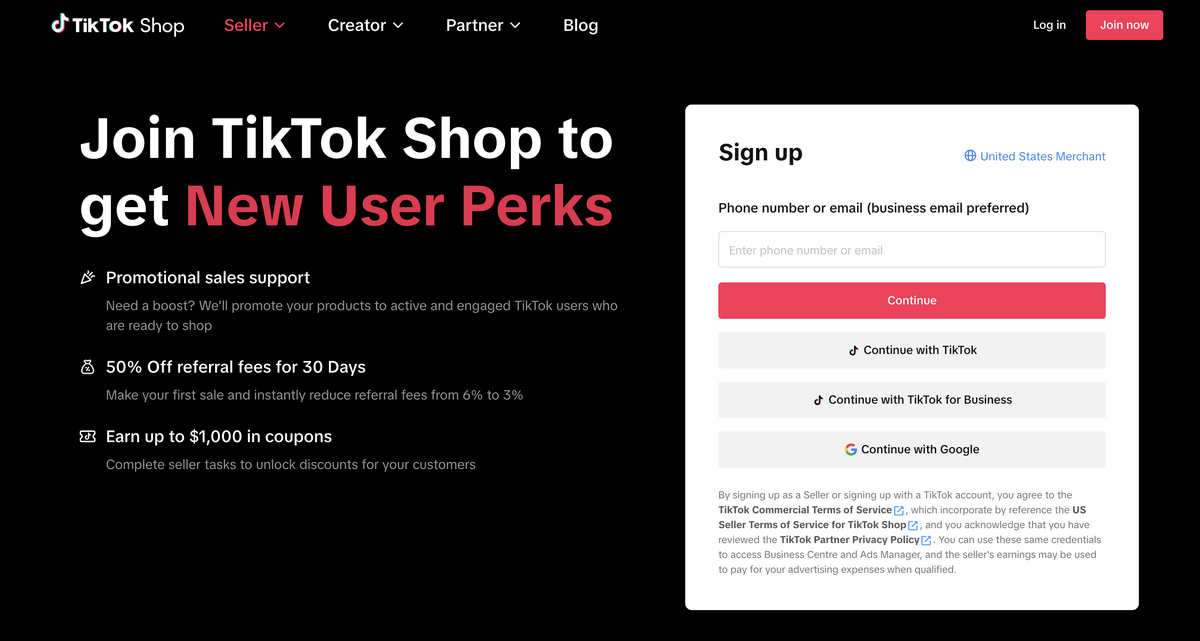
If you’re comfortable creating content, TikTok Shop is one of the most interesting places to start with no budget. You can sell directly inside TikTok, so you’re putting products in front of people on a platform they’re already using instead of building a separate store and then figuring out how to drive traffic to it.
The trade-off? Dropshipping on TikTok requires content. This isn’t a platform where I’d upload a couple of products and just hope for the best. You need to post consistently, test different hooks and angles, and pay attention to which videos actually stop people from scrolling and drive clicks.
That’s why you should focus on products that show value quickly on camera: problem-solvers, visually satisfying products, before-and-after items, or anything with a strong “wow” factor. For example, a cleaning tool that shows an instant before-and-after, a clever kitchen gadget, or a pet product that gets an immediate reaction.
Getting started is pretty straightforward. You create a TikTok Shop Seller Center account, verify your identity or business, submit your tax information, set up your warehouse details, and upload your first products. TikTok also lets you link an official TikTok account to the shop so you can start promoting those products through content.
The main cost comes once you sell. TikTok Shop currently charges a 5–6% referral fee, depending on the category. If an order is refunded, there can also be a refund administration fee equal to 20% of the refunded referral fee, capped at $5 per SKU.
eBay
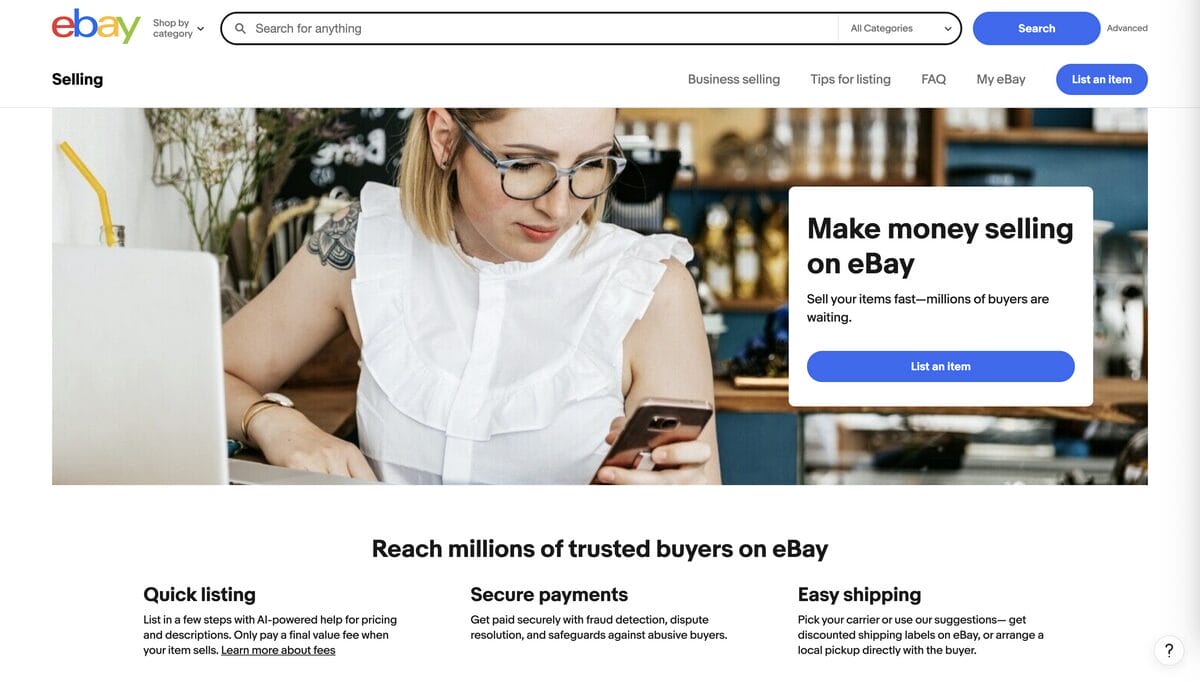
eBay is probably my favorite option if you want something a little more straightforward. People already go to eBay looking to buy, so instead of creating demand from scratch, you can focus on finding products people are actively searching for.
Just make sure you understand eBay’s policies and rules. Dropshipping from a wholesale supplier is allowed, but listing an item and then buying it from another retailer or marketplace to ship directly to your customer is not.
To start dropshipping on eBay, create a seller account, choose your product, build the listing, set your price, shipping, and return details, and publish it.
There’s already a ton of buying intent on this platform, so I’d look for practical, searchable products with proven demand rather than something that needs a long video to explain why people need it.
Some of eBay’s most popular categories include electronics, clothing and accessories, home and garden, auto parts, collectibles, toys and hobbies, sporting goods, and health and beauty. For dropshipping, I’d focus on categories with lightweight, practical products that have steady demand and enough margin to cover eBay’s fees.
You can totally start without a paid Store subscription. That said, there are small costs to keep in mind. According to eBay’s Seller Center, sellers without a store subscription get 250 zero-insertion-fee listings per month.
After that, most additional listings cost $0.35. Once you sell, final value fees vary by category, ranging from 2.5% to 15.3%, plus a small per-order fee: $0.30 for orders of $10 or less and $0.40 for orders above $10.
Facebook Marketplace
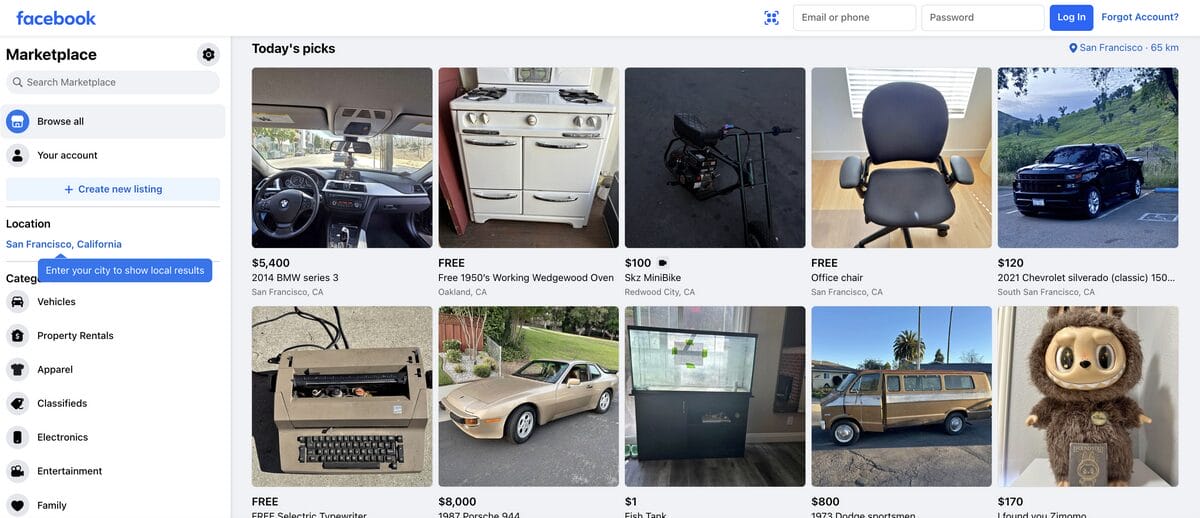
You might be surprised, but Facebook is still one of the most widely used platforms in the world—and not just by everyday users. According to Statista, 86% of marketers were using Facebook as of January 2026, which shows just how relevant it still is for reaching potential buyers.
When you’re dropshipping on Facebook Marketplace, you’re taking part in that same ecosystem, offering a quick option to create listings without building a website first.
It’s not as content-driven as TikTok Shop, which can make it less intimidating if you don’t want to post videos every day. Here, your product choice, pricing, images, and listing itself do more of the heavy lifting.
Getting started is about as easy as it gets: log in with your Facebook account, create a Marketplace listing with your photos, title, description, price, and delivery details.
I’d keep the products simple here. Think useful home products, everyday problem-solvers, and items people can understand almost immediately from the image and title.
The catch is that Marketplace was built around person-to-person selling, so the experience isn’t as ecommerce-focused as Amazon or eBay. And if you use Marketplace shipping, Meta requires eligible orders to be shipped within its shipping deadlines, which means you really need a supplier you can rely on.
For U.S. Marketplace orders completed with shipping and checkout, Meta currently deducts a 10% selling fee, with a minimum of $0.80 per order, from the seller’s payout (0% for local pickup sales).
Amazon
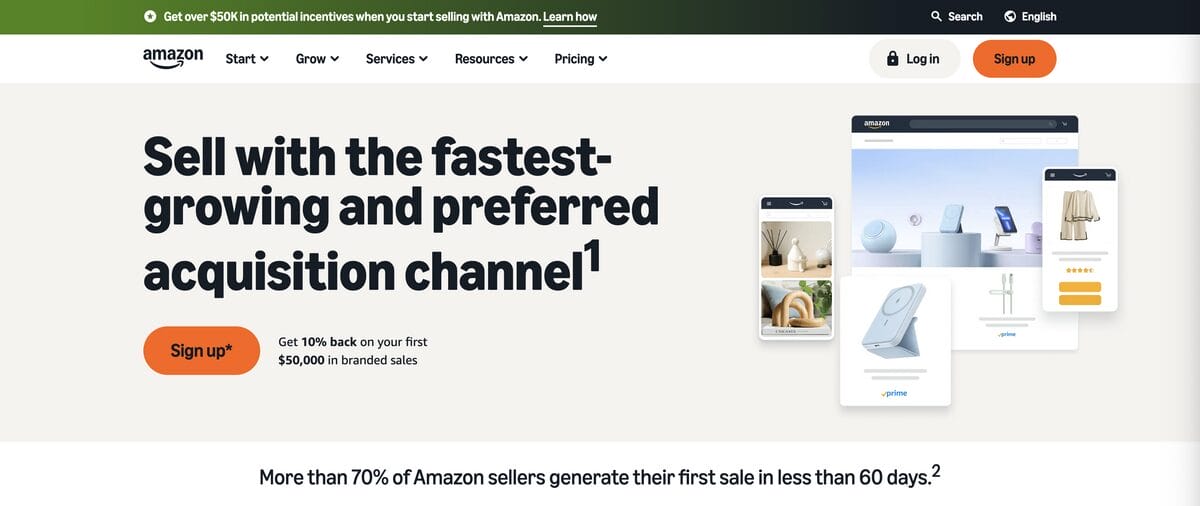
Let’s start with the good news: you can start dropshipping on Amazon with no money. You choose the Individual selling plan and pay fees only after each sale.
With the Individual plan, Amazon charges $0.99 per item sold, plus a referral fee that varies by category, often around 8%–15%, with some exceptions. Then, once you’re selling more than 40 items per month, the $39.99/month Professional plan usually becomes more cost-effective because you no longer pay the $0.99 per-item fee, but that would require an upfront monthly payment.
Also, keep in mind that the Individual plan comes with fewer selling tools. For example, Amazon’s Automate Pricing tool and access to Selling Partner apps are tied to the Professional plan, along with other tools designed for sellers managing a larger operation.
Is that a problem at this stage? Not really. Like I’ve said before, you’re not trying to build the perfect store for $0. You’re just getting started, testing products, and trying to land those first few sales. At this point, doing things manually is totally fine—you’re not dealing with enough volume to make it a real headache yet.
Now, here’s where it gets tricky: Amazon would not be my first recommendation for a complete beginner. The marketplace has stricter selling and dropshipping requirements than the other options on this list. The Amazon dropshipping policy states that you must remain the seller of record, remove any third-party supplier branding from orders, handle customer service and returns yourself, and ensure every product and category you sell is allowed.
The upside, obviously, is huge buying intent, as people come to Amazon ready to shop. But if you’re starting from zero and still learning how dropshipping works, I’d probably get some experience on a more beginner-friendly platform first and come back to Amazon once you’re comfortable with the basics.
If you do decide to move on with Amazon, start by creating a seller account. For a zero-budget dropshipping setup, you’d normally be looking at seller-fulfilled orders rather than sending inventory into FBA.
For products, I’d stick with useful, evergreen items that people are already actively searching for. Amazon’s own product guidance highlights demand across categories like Home & Kitchen, Beauty & Personal Care, Pet Supplies, Electronics, clothing, and fitness products.
The key here is finding products with steady search interest, manageable competition, and enough margin left after Amazon’s fees.
Which Free Dropshipping Platform Should You Choose?
So, which one should you choose? TikTok Shop is great for content-driven products, eBay for search-based demand, Facebook Marketplace for a simple starting point, and Amazon if you’re comfortable following a stricter marketplace structure.
Pick one, learn how it works, and start testing before trying to be everywhere at once.
Here’s a quick overview of how the main free-to-start dropshipping platforms compare, including their fees and what type of seller each one fits best.
| Platform | Cost to Start | Listing Fees | Fees | Best For |
|---|---|---|---|---|
| TikTok Shop | ✅ Free | ✅ $0 | 5%-6% referral fee, depending on category | Sellers offering visual, trending, and problem-solving products |
| eBay | ✅ Free | ⚠️ First 250 listings/month free, then generally $0.35 each | 2.5%-15.3% final value fee + $0.30–$0.40 per order for most categories | Beginners who want built-in search traffic |
| Facebook Marketplace | ✅ Free | ✅ $0 | 10% per shipped order ($0.80 minimum) | Beginners who want simple listings and practical everyday products |
| Amazon | ✅ Free (with Individual plan) | ✅ $0 | $0.99 per item sold + 8%–15% referral fee (with some exceptions) | Sellers comfortable with stricter rules and looking for high buying intent |
Best Free Dropshipping Suppliers
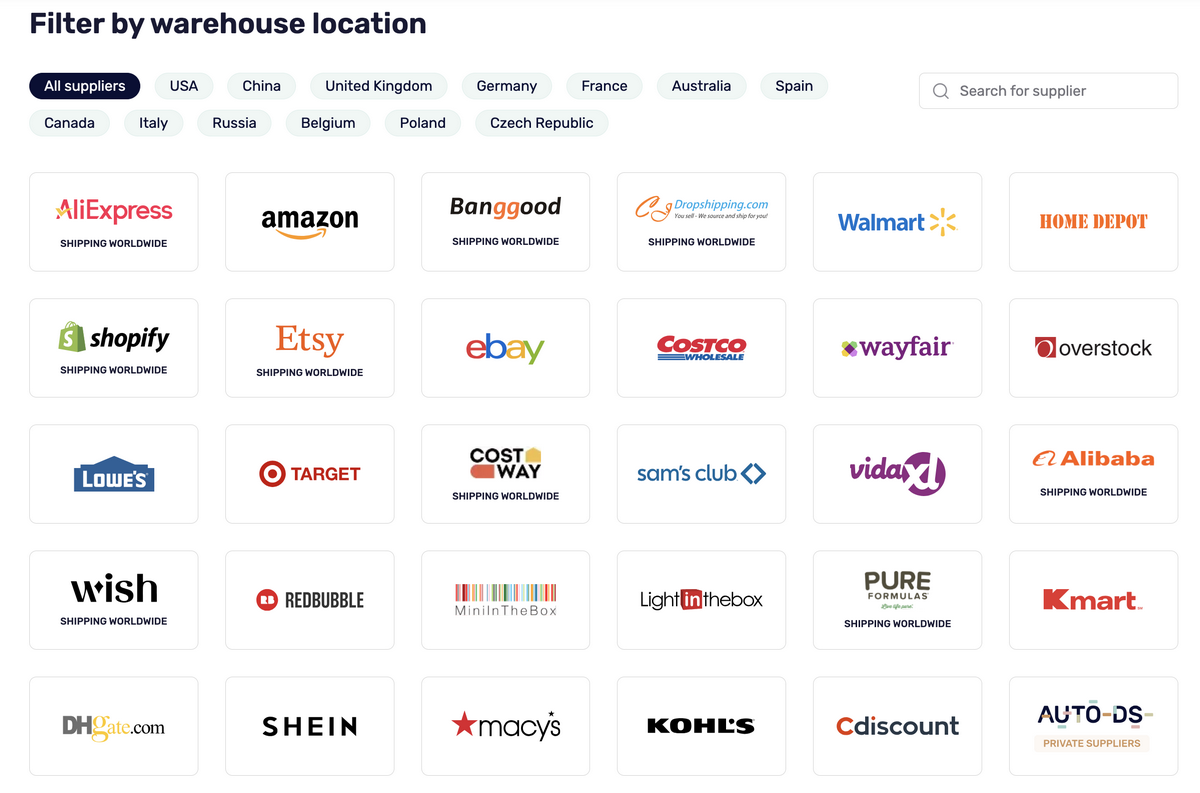
When you’re starting with no money, you need suppliers that let you find and list products without buying inventory upfront, then place the order only once you actually make a sale. That’s the whole reason dropshipping can work with such a small starting budget.
Like I’ve mentioned before, pay attention to shipping times, supplier reviews, communication, and warehouse location. Remember, your customer doesn’t really care who your supplier is. They’re buying from you, so if something arrives late or in bad condition, you’re the one who has to deal with it.
Here are some free dropshipping suppliers worth checking out:
- AliExpress: Probably one of the easiest places to start testing products. You get access to a massive catalog, there’s no membership required to browse or source, and you can order products individually after you make a sale. The biggest thing I’d watch here is shipping: look for reliable sellers, strong reviews, and local warehouses whenever possible.
- CJdropshipping: CJDropshipping is another beginner-friendly option because there’s no monthly subscription required to start sourcing. You can browse products, place orders only after you make a sale, and access sourcing services plus warehouses in different regions. I’d mainly look at CJ if you want more shipping options and a little more flexibility than a typical marketplace supplier.
- eBay, Walmart, and Target: These are retail marketplaces rather than traditional dropshipping suppliers, but some sellers use them as sourcing options because of their huge catalogs and fast domestic delivery. Just be careful: retail sourcing isn’t allowed in every dropshipping setup. Always check the rules of your selling channel before using another retailer as your source. With Walmart specifically, keep in mind it offers free shipping on orders over $35.
- Etsy: Etsy can be useful when you’re looking for more unique, creative, personalized, or niche products that you won’t find everywhere else. Just remember that Etsy itself isn’t really a traditional dropshipping supplier. It’s a marketplace made up of individual sellers, so you’ll need to check whether a particular shop can reliably handle the volume and fulfillment you need.
- Home Depot: If you’re interested in home improvement, tools, outdoor, or practical household niches, Home Depot gives you a huge catalog to research and potentially source from. As with any retail supplier, pay close attention to margins, stock changes, and the policies of the channel where you’re selling.
The goal here isn’t to find one “perfect” supplier and stick with them forever. Start with suppliers that make it easy to test, and once you find products that actually sell, you can start comparing better pricing, faster shipping, and more reliable fulfillment.
How to Find Products Without Paid Tools
You absolutely do not need paid software to find products worth testing. It’s going to take you more time, sure, but you can still do a lot manually if you know what signals to look for.
And honestly, there’s a benefit to doing it this way at the beginning. You start learning why certain products get attention, what people are actually buying, and how demand shows up across different platforms. Paid tools can speed that up later, but first you need to understand what you’re looking at.
Here’s how I’d do it.
Use Marketplace Data
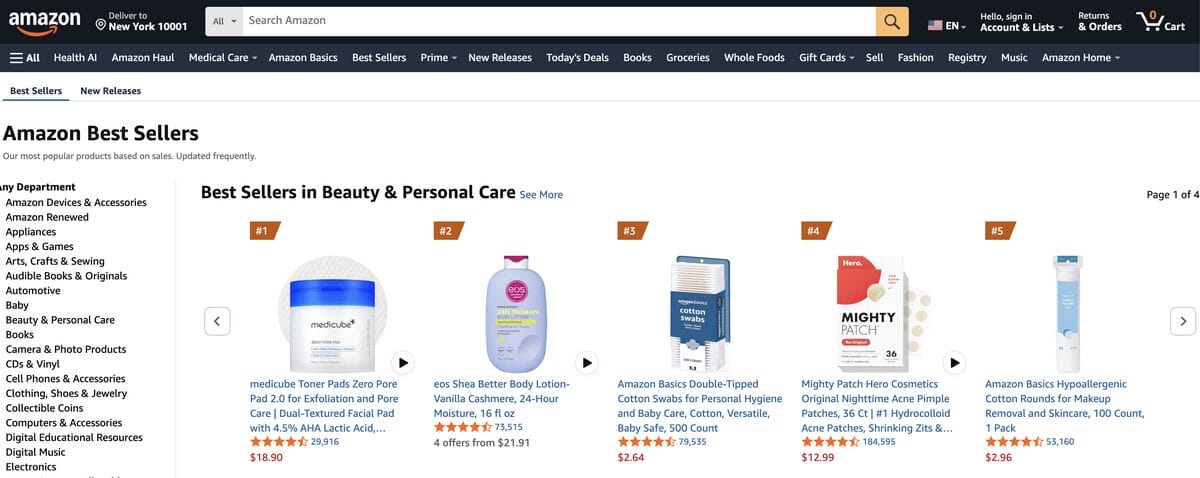
Your first product research tool is completely free: the marketplaces themselves.
Amazon, eBay, Facebook Marketplace, and other major platforms are already showing you what people are searching for and buying. Look at best-seller sections, trending products, reviews, order volume, and products that keep showing up across multiple listings.
Amazon’s best-seller pages are especially useful here, but don’t just grab the first popular product you see and import it. Look for patterns. Are similar products appearing repeatedly? Are people leaving recent reviews? Is there consistent demand, or did the product just have one quick spike?
The whole idea is to stop asking, “Do I think this product is cool?” and start asking, “Is there actual evidence that people want this?”
Do Manual Product Research
This part takes a little longer, but it’s where you start building a really useful skill: comparing products instead of guessing.
For every product you’re considering, check things like:
- The supplier price versus the selling price
- Product and supplier reviews
- Real customer photos
- Shipping times
- How competing listings present the product
- Whether there’s enough margin left after fees
You’ll start noticing little things pretty quickly. Maybe one seller has much better images. Maybe another can explain the problem more clearly. Maybe a product looks amazing in the supplier photos but terrible in the customer reviews.
That context matters. It’s slower than clicking through a dashboard, but you’re learning how to spot a good opportunity for yourself.
And if you already know a niche well, use that to your advantage. For example, I used to be a photographer, so I already understand how photographers think, the problems they run into, and the kinds of products they might actually find useful. The more you understand the customer, the easier it becomes to spot products that solve a real problem.
Look For Social Media Trends
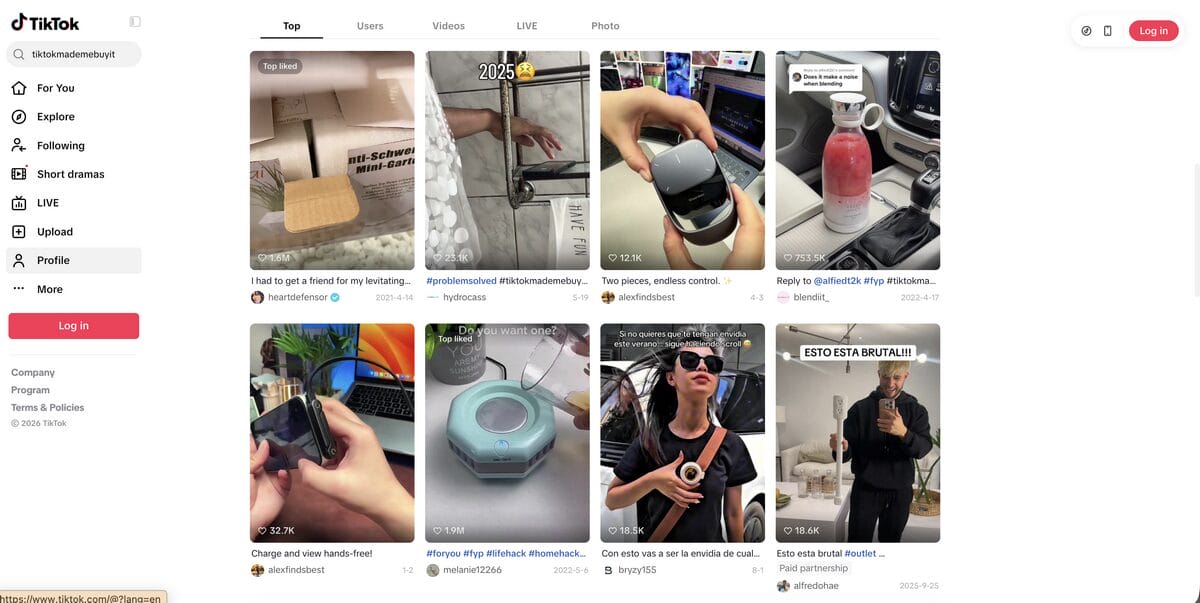
This is one of my favorite free methods because social media can show you what people are reacting to right now.
Go on TikTok, Instagram Reels, or YouTube Shorts and search for products in your niche. On TikTok, you can also search terms like #TikTokMadeMeBuyIt and filter toward newer content to see what’s starting to pick up.
Don’t just look at views. Pay attention to:
- How quickly the video gets your attention
- The problem the product solves
- What people are saying in the comments
- Whether viewers are asking where to buy it
- Whether several creators are featuring similar products
You can even train your TikTok feed by engaging with product videos so the algorithm starts showing you more of them. It’s a simple way to turn your feed into a basic product-research tool.
What you’re really looking for is buying intent disguised as content. If people are saying “I need this,” asking for the link, or tagging friends, that’s much more interesting than a video that simply got views.
Study Your Competitors
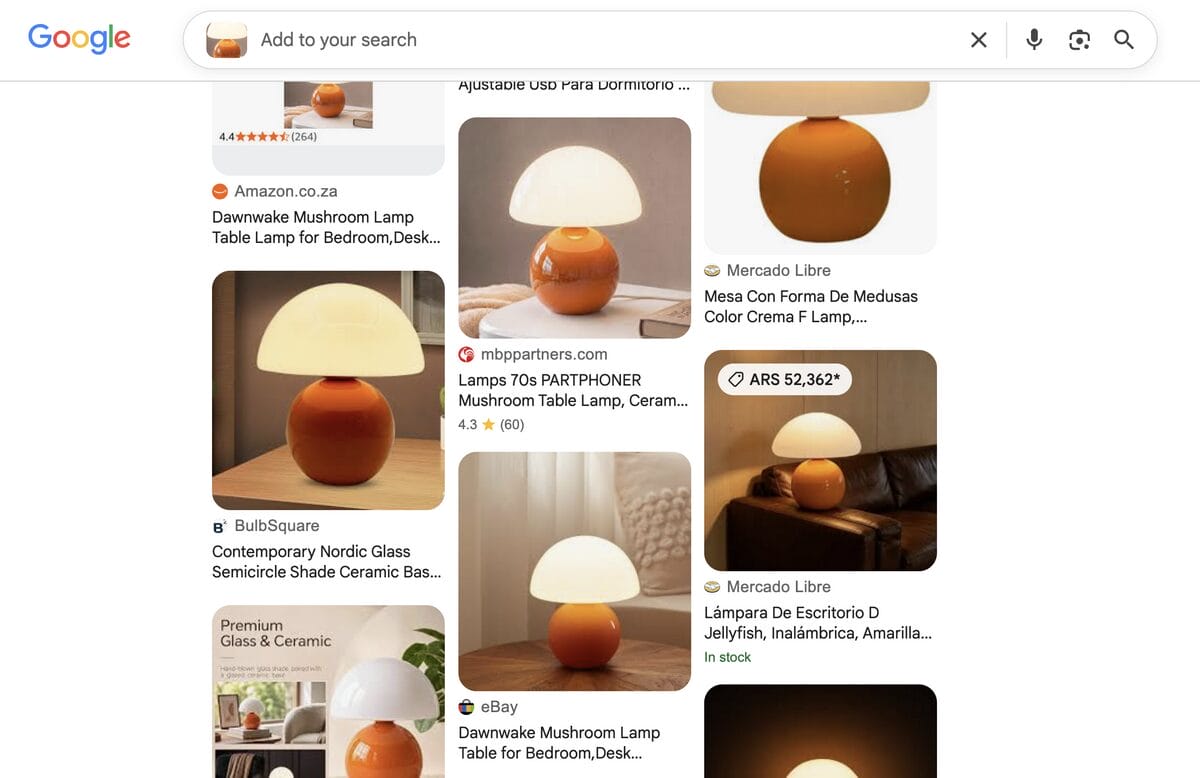
Sometimes the easiest way to find an opportunity is to look at what other sellers have already validated.
Search your niche on TikTok, eBay, Amazon, or Facebook Marketplace and look for products that keep showing up. Then study how sellers are positioning them:
- What problem are they leading with?
- What images or videos are they using?
- What price are they charging?
- What do buyers like or complain about?
- What could you explain or present better?
And don’t panic if you see multiple sellers pushing the same product. That usually means there’s already demand, which is exactly what you want. You’re not trying to invent demand from scratch—you’re trying to find a way to compete inside demand that already exists.
The same applies to content. If a particular hook or video angle is working, study it and create your own version. Don’t copy it word for word—remix the idea and make it yours.
💡 Pro Tip: If you find a product on TikTok or a competitor’s store and don’t know where to source it, use Google Lens. Right-click the product image, search for it on Google, and you can often find the same or a similar item on AliExpress, Amazon, Temu, and other suppliers. It’s one of the easiest free ways to reverse-engineer where a product is coming from.
At the end of the day, free product research is really about collecting evidence. If the product solves a real problem, people are already engaging with it, you can source it at a workable margin, and the market isn’t completely saturated, you’ve got something worth testing.
Easiest Products To Start With
If you’re starting with no money, I’d keep your first products simple, useful, lightweight, and easy to understand. You don’t want something that needs a five-minute explanation, costs a fortune to ship, or comes with a ton of sizing and compatibility issues.
Here are some of the easiest dropshipping niches to begin with:
- Pet accessories: grooming gloves, slow-feeder bowls, portable water bottles, or simple interactive toys.
- Home organization: drawer dividers, cable organizers, under-sink storage, or vacuum storage bags.
- Kitchen gadgets: oil sprayers, silicone air-fryer liners, vegetable choppers, or reusable food-storage accessories.
- Cleaning products: reusable lint removers, electric cleaning brushes, gap-cleaning tools, or microfiber dusters.
- Desk and phone accessories: phone stands, cable clips, laptop risers, or compact desk organizers.
- Beauty accessories: heatless curling sets, makeup organizers, scalp massagers, or reusable beauty tools.
What do all of these have in common? Exactly what I’ve mentioned earlier: they solve a clear problem, are easy to show in a photo or short video, and usually don’t require much explanation before someone understands why they’d want one.
I’d avoid starting with complicated electronics, fragile products, oversized items, or anything with a high risk of returns. At this stage, the easier the product is to source, explain, ship, and test, the easier your life will be.
Limitations of Starting With No Money
Starting dropshipping with no money is absolutely possible, but I want to be realistic with you: there are trade-offs. When you remove the budget, you usually replace it with more time, more manual work, and a little more patience.
Here’s what you should expect:
- Slower growth – Without paid ads or premium tools, you’re relying mostly on organic traffic and consistent testing. That can work, but it usually takes longer. You might need to test several products, listings, or content angles before something really starts moving.
- More manual work – At the beginning, you’ll probably be creating listings, checking prices and stock, placing orders, and updating tracking yourself. And honestly, when you only have a few products or orders, that’s totally manageable. The problem comes when things start picking up. At some point, your time becomes the real cost.
- Less control over branding – Marketplaces make it easier to start because the traffic and infrastructure are already there, but you’re still building inside someone else’s platform. That means less control over your storefront, design, checkout experience, and sometimes even how you communicate with customers. Right now, that’s okay: you’re focused on proving that you can sell first and building the brand later.
- Platform rules and restrictions – Every marketplace has its own policies, fees, product restrictions, and seller requirements. You need to learn and follow them because listings can be removed or accounts restricted if you don’t. That’s one of the trade-offs of using somebody else’s platform instead of running your own store.
Now, none of this is a reason not to start. It just means you need to know what you’re signing up for. Start simple, work with what you have, and upgrade the parts of the business that start slowing you down once you’re actually making sales.
How Risky Is Dropshipping?
Dropshipping is lower-risk than traditional retail because you don’t need to buy inventory upfront. But lower-risk doesn’t mean risk-free.
If you’re starting with $0, the biggest risks are usually wasting time on the wrong products, choosing unreliable suppliers, or losing money on thin margins and untested ads.
Here’s what I’d watch most closely:
- Products: Don’t get attached to one idea. Look for real signs of demand before you spend too much time on it.
- Suppliers: Slow shipping, poor quality, or poor communication quickly become your customer service problem.
- Margins: Marketplace fees, shipping, and refunds can eat into profits fast.
- Platforms: You’re selling inside somebody else’s rules, so policy mistakes can lead to removed listings or account restrictions.
- Ads: Don’t throw money at a product before you know it works. Like I’ve said before, guessing with your money is gambling, not testing.
So, how risky is dropshipping? It depends on how you approach it. Start small, validate demand, choose reliable suppliers, and only take on more costs once you’ve actually proven something works.
How to Work Around These Limitations
The limitations mentioned above shouldn’t stop you from starting, and none of them have to be permanent. The whole idea is to work with what you have right now, prove that something works, and then reinvest as you go.
You don’t need to fix everything on day one. Focus on the parts that can actually move the business forward. Here are a few specific (and very important) examples:
Focus On Product Selection
When you don’t have money for ads or expensive branding, your product needs to do a lot of the heavy lifting.
Look for something that solves a real problem, has clear demand, and gives you enough margin to work with. If the product is naturally interesting or easy to demonstrate, even better, as it makes your listings and organic content much easier to create.
And don’t spread yourself too thin. Instead of throwing a bunch of random products at the wall, focus on a few strong products you can actually test properly. Learn what people respond to, improve your offer, and double down when you start seeing traction.
💡 Pro Tip: If one product really starts working, that’s when you can think about building a more focused store or brand around it. Always prove the demand first.
Optimize Your Listings
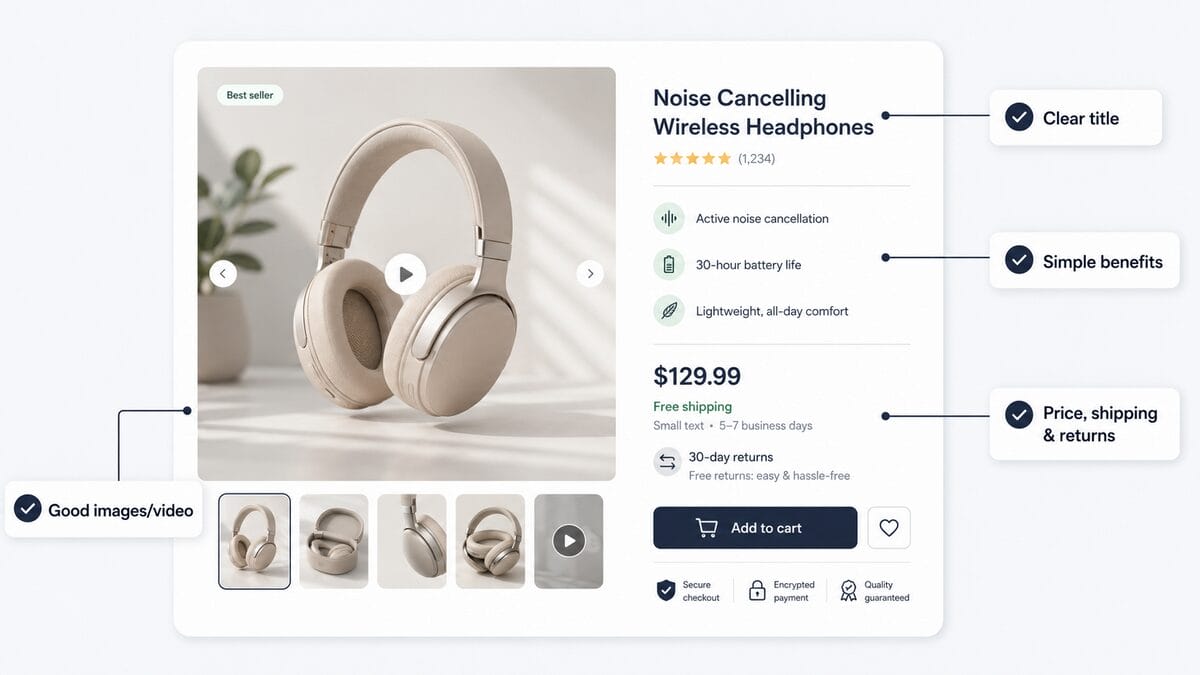
You don’t need some crazy design or perfect copy to make a sale. You just need a listing that looks clean, feels legit, and makes the product easy to understand.
A lot of beginners simply copy whatever title, description, and images the supplier gives them. I wouldn’t do that. Take a few extra minutes to clean everything up and focus on:
- Clear, searchable titles
- Simple descriptions that explain the benefit
- Good-quality images or videos
- Accurate pricing, shipping, and return information
Remember, people make decisions quickly, so always try to stand out from the crowd, make your offer easy to understand, and give them a clear reason to buy.
Reinvest Your Profits Early
Once you finally start making sales, it can be tempting to take every dollar out. But if you want to make the business easier to manage, reinvesting some of those first profits can make a huge difference.
You can use that money to:
- Test more products
- Improve your content or listings
- Upgrade your store
- Pay for tools that save you time
- Start experimenting with paid traffic once you know what already works
This is where I’d start thinking about dropshipping automation. In the beginning, doing things manually is fine. But once you start getting traction, repetitive tasks like importing products, monitoring stock, fulfilling orders, and updating tracking can become a headache pretty quickly.
Use Free Tools Efficiently
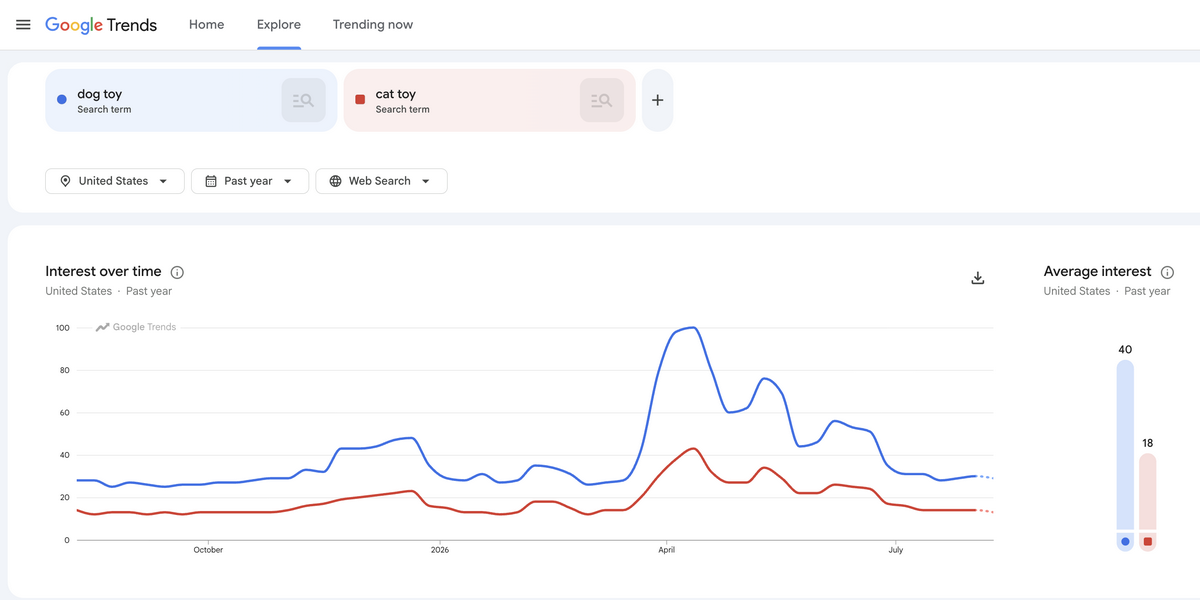
If your budget is $0, you need to get a little resourceful. Luckily, there are already plenty of free tools you can use to research products, create content, and validate ideas.
For example:
- TikTok, Instagram, and YouTube Shorts to spot products and content trends
- Amazon and eBay to see what people are already buying
- Google Trends to compare search interest
- Google Lens to find suppliers for products you discover online
- Canva to create simple graphics and listing visuals
- ChatGPT to create titles and descriptions
The important part isn’t having a hundred tools. It’s actually using the ones you have with intention. If you’re scrolling TikTok for product research, study the hooks, comments, engagement, and products that keep showing up instead of just scrolling randomly.
Over time, once the business starts making money, upgrading your setup becomes much easier to justify. At that point, you’re reinvesting in something you’ve already validated.
Common Mistakes Beginners Make
By now, I’ve made it clear that dropshipping with no money is possible and doable. But when you’re working with a $0 budget, wasting time can hurt almost as much as wasting money.
The good news is that most beginner mistakes are pretty predictable:
- Expecting instant results: Your first product might not sell, and your first video might flop. That’s normal. You need to test, adjust, and give yourself enough time to learn what actually works. Quitting after a few days is one of the easiest ways to guarantee you never get there.
- Overthinking the setup: I see beginners spend days stressing over logos, fonts, colors, and tiny store details. Don’t overcomplicate it. Get something clean and legit-looking live, then improve it as you learn. The faster you launch, the faster you can test.
- Choosing products blindly: Scrolling TikTok, picking something random, and hoping it sells isn’t really a strategy. Look for actual demand, but also make sure the market isn’t so saturated that you have no room to stand out.
- Ignoring margins: A sale doesn’t mean much if there’s no profit left. Product cost, marketplace fees, shipping, and refunds can eat into your margin fast, so do the math before you start scaling anything.
- Spending on ads too early: If you haven’t proven that the product or content works yet, throwing money into ads is basically guessing with your money. Start organically, see what gets traction, and scale from there.
- Not reinvesting: Your first profits are exciting, but taking everything out too early can slow you down. Reinvesting even a small amount in better products, content, tools, or automation can help you overcome the limitations of starting with $0.
At this stage, you’re not trying to do everything perfectly. You’re trying to learn faster, avoid unnecessary mistakes, and keep moving forward.
When to Reinvest and Scale
Starting for free gets you moving. But at some point, doing everything manually becomes what slows you down.
That’s usually your signal to reinvest. Not when everything is perfect, and not because you feel like you should be spending money. You reinvest when something is already working, and a better tool, supplier, or workflow can help you do more of it.
Signs You Should Start Investing
You don’t need to guess when it’s time. A few signs make it pretty obvious:
- You’re getting consistent sales, not just one random order.
- One or more products are showing real traction.
- You’re repeating the same manual tasks every day.
- Orders, stock checks, or tracking updates are starting to feel chaotic.
- You’re spending more time managing the business than actually growing it.
As I said before, doing everything manually at the beginning is completely fine. But once you’re placing 10, 20, or 30 orders yourself, you’re going to feel it pretty quickly.
What To Invest In First
I wouldn’t start throwing money at random tools just because you finally made a few sales. Invest where you’re actually feeling friction.
That could mean:
- Automation to handle repetitive tasks like orders, stock, pricing, and tracking.
- Better suppliers for faster shipping, stronger product quality, or better margins.
- Better content once you know which hooks, products, or videos are already getting attention.
- Paid ads only after you’ve validated what works organically.
That last one is important: prove the concept first, then scale it. Spending on ads before you know what works is basically guessing with your money.
Transitioning From Free To Paid Tools
The shift from free to paid tools doesn’t need to happen all at once. In fact, it probably shouldn’t.
Instead, upgrade only when there’s a clear reason to. Look at where you’re losing the most time, where mistakes are happening, or what’s preventing you from growing, and invest there first.
If a free solution is still doing the job, keep using it. If something has become a bottleneck, that’s where spending a little money can actually make a difference. For example:
- If manual product research is taking hours ⏩ invest in a research tool that helps you spot opportunities faster.
- If creating listings one by one is slowing you down ⏩ use an importer or listing automation tool.
- If you’re constantly checking prices and stock ⏩ automate those updates to reduce errors and overselling.
- If order fulfillment is eating up your day ⏩ invest in a tool that can streamline or automate the process.
- If organic traffic has plateaued ⏩ consider putting a small, controlled budget into paid ads or better creative.
- If supplier issues are hurting the customer experience ⏩ look into better sourcing, faster shipping, or more reliable suppliers.
The goal isn’t to build the most expensive setup. It’s to spend strategically as your needs change.
💰 Financial Tip: Reinvest into whatever saves you time or helps you repeat something that’s already working. That’s a much smarter use of your first profits than upgrading everything at once.
How AutoDS Helps When Starting With No Money
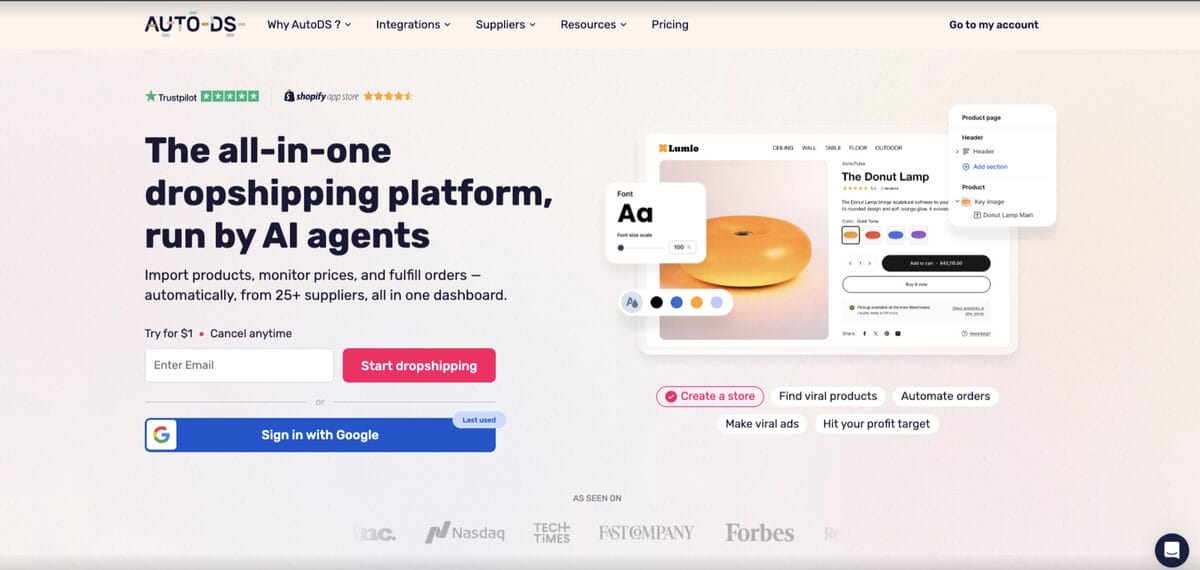
Once a manual task becomes a bottleneck, AutoDS can be a strategic upgrade, as it brings everything together in a single dashboard—from product and supplier management to full automation at every step.
I do want to be clear here: you don’t need automation when you’re just getting started. If your budget is $0, you can research products, create listings, fulfill orders, and update tracking manually. It’s going to take longer, but that’s completely fine at the beginning.
The problem is that once you start getting traction, you’re going to feel all that manual work pretty quickly. Copying product information, checking stock, placing orders one by one, and updating tracking might be manageable with a few sales. Try doing it with 20 or 30 orders, and things can get chaotic fast.
That’s where AutoDS starts to make a lot more sense.
A Low-Cost Way To Move Faster
AutoDS is a dropshipping automation platform that helps manage product research, importing, stock and price monitoring, order fulfillment, and tracking from one place. It isn’t free, but you can start the AutoDS trial for just $1, which is technically almost no money.
This is a low-cost way to test whether automation actually makes your workflow easier before committing to it. I’d think of this as something you reinvest in once you start seeing traction, rather than as another expense you need before you can even begin.
Find Products With More Data
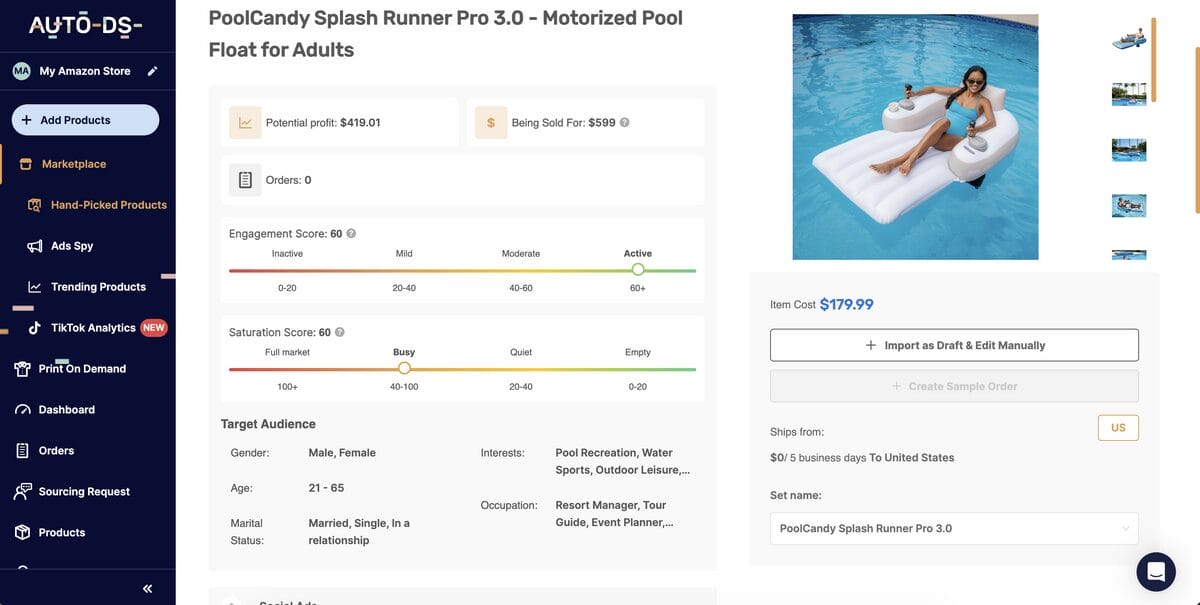
Manual product research works—it really does. But it also involves a lot of scrolling, comparing, and guessing.
AutoDS includes product-finding features such as TikTok Analytics, TikTok Ad Spy, the AutoDS Marketplace, and handpicked product recommendations. These tools help you look at products that are already showing signs of demand, rather than just picking something because you personally think it looks good.
Instead of guessing, you’re using real signals (demand, engagement, and existing sales) to decide whether a product is actually worth testing.
Import And Monitor Products Faster

Listing products manually is totally fine when you only have a couple. But once you want to test 20, 30, or even more products, copying titles, descriptions, images, variations, and prices one by one gets old really fast.
AutoDS can import product information into your store, optimize titles and descriptions with AI, automatically monitor supplier stock and price changes after the product is listed, and automate price optimization.
This can help keep your listings accurate, protect your margins, reduce manual checks, and save you from constantly jumping back to supplier websites just to make sure everything is still accurate.
Automate Order Fulfillment And Tracking

Fulfillment is another one of those tasks that seems easy until the orders start piling up.
AutoDS automates order fulfillment and tracking updates, reducing the need to place each supplier order and manually copy tracking information. Instead of scrambling every time somebody buys something, a lot of that repetitive work can already be handled for you.
And trust me, once orders start coming in, the last thing you want is for managing them manually to become the reason you feel overwhelmed.
Make The Business Easier To Manage
At the beginning, manual work helps you understand how everything fits together. But you don’t want manual work to become the thing that stops you from growing.
AutoDS brings products, orders, suppliers, monitoring, and tracking into a single dashboard, so you spend less time jumping between tabs and more time focusing on product research, marketing, and actually growing the store.
That’s really the point of automation: you’re using it to make something that already works much easier to manage and scale.
Frequently Asked Questions
Can you start dropshipping with no money?
Yes, you can start dropshipping with no money by using free platforms, free suppliers, and organic traffic. You list products first, and only pay for them after you get a sale. The trade-off is that growth is slower, and most of the work is manual at the beginning.
How do I start dropshipping for free?
You start by choosing a free selling platform like TikTok Shop, eBay, or Facebook Marketplace, then sourcing products from suppliers like AliExpress. From there, you create listings manually and drive traffic through organic content. Once you get a sale, the customer’s payment covers the supplier cost.
What is the best platform to start dropshipping with no budget?
TikTok Shop is often the best option if you’re comfortable creating content, since it offers strong organic reach. eBay is more stable and search-based, while Facebook Marketplace is the simplest to use. The best choice depends on whether you prefer content-driven selling or straightforward listings.
Can I use Shopify for free to start dropshipping?
Not exactly. Shopify offers a free trial, but it’s not a fully free platform in the long term. If you’re starting with zero budget, it’s usually better to begin with marketplaces and move to Shopify once you’re ready to invest and build your own store.
What are the best free dropshipping suppliers?
AliExpress is the most common starting point because of its flexibility and product variety. CJdropshipping is another strong option with more structured sourcing and shipping. Retail suppliers such as Amazon, Walmart, and eBay can also be used for faster fulfillment in some cases.
How do I find products without paid tools?
You can use marketplace data, social media trends, and competitor analysis to spot demand. Platforms like TikTok, Amazon, and eBay already show you what people are buying and engaging with. It takes more time, but it helps you understand why products sell instead of relying on automation.
Is dropshipping with no money realistic?
Yes, but it’s not effortless. It’s realistic if you’re willing to trade time for money, test products consistently, and stay patient. Most successful sellers start small, learn through repetitive tasks, and then scale once they have proof that something is working.
When should I start reinvesting in my dropshipping business?
Start reinvesting when manual work takes too much time, leads to mistakes, or limits your growth. That could mean paying for better product research, faster sourcing, ads, or automation. Tools like AutoDS can be a useful next step once repetitive tasks like importing products, monitoring stock and prices, or fulfilling orders start becoming bottlenecks.
How much money do I need to eventually invest?
You can start with zero, but eventually, even a small budget helps you grow faster. Many sellers begin reinvesting after their first sales, starting with low-cost tools, better suppliers, or content improvements. The exact amount varies, but even a small reinvestment can make a big difference.
Do I need a website to start dropshipping for free?
No. You can start without your own website by selling through marketplaces like eBay, TikTok Shop, or Facebook Marketplace. This helps you avoid hosting, domain, and store subscription costs while you test products and learn what sells.
What costs should I expect after starting for free?
Even if you start with $0 upfront, costs will arise as you begin making sales and growing. These can include marketplace fees, payment processing, product costs, returns, paid tools, advertising, and eventually a domain or e-commerce platform. The key is to reinvest gradually rather than paying for everything from day one.
Starting With No Money: What To Do First
If there’s one thing I want you to take from this guide, it’s this: you do not need the perfect setup to start dropshipping.
Pick one free platform, find a product worth testing, choose a supplier you can rely on, get your listing live, and start learning from real results. You can do the research, marketing, listings, and fulfillment manually at first. It takes more time, but that’s fine. The goal right now is simply to start, test, and figure out what actually works.
Then, once those first sales start coming in, use them to make the business easier to run. AutoDS helps automate product imports, stock and price monitoring, order fulfillment, and tracking as you grow.
So when manual work starts to slow you down, reinvest your first sale—try AutoDS for $1 to see whether automation makes sense for your workflow.
And if you’ve been sitting on the idea waiting for the perfect moment, this is your sign to just start. Not next week. Not when everything is perfect. Pick your platform, find your first product, publish your first listing, and see what happens.
Here are a few more guides that can help you through that process:
- Can You Start Dropshipping With No Money?
- What “Free” Actually Costs
- How To Start Dropshipping With No Money
- Best Free Platforms For Dropshipping
- Best Free Dropshipping Suppliers
- How To Find Products Without Paid Tools
- Limitations Of Starting With No Money
- How To Work Around These Limitations
- Common Mistakes Beginners Make
- When To Reinvest and Scale
- How AutoDS Helps To Succeed
- FAQ
- Conclusion