The best dropshipping platforms in 2027 don’t all solve the same problem, and that’s where choosing one gets tricky. DSers suits AliExpress-centered workflows; Spocket and Zendrop place more weight on supplier location and fulfillment; AutoDS is built to scale as suppliers, sales channels, and repetitive tasks multiply.
That leaves you with a crowded field. My job here is to make those differences useful. In this guide, I’ll compare the major dropshipping platforms across cost, supplier network, automation depth, sales-channel support, and overall fit. By the end, you should know which setup makes sense for your budget, sourcing model, and channel mix, and when a platform that works today may become too narrow (or too expensive) as the business grows.
👀 Full disclosure: Yes, this is the AutoDS blog. No, that doesn’t mean AutoDS will be my answer for every use case. I’ll judge every platform by the same criteria and hold each one to the same standard, so the comparison stays as fair as possible.
The best dropshipping platforms solve different problems, so the right choice depends on your budget, sourcing model, and how much work you want to automate.
DSers, Zendrop, and Spocket suit more focused setups: DSers keeps AliExpress-centered workflows lean, Zendrop leans toward faster US fulfillment, and Spocket prioritizes vetted US/EU suppliers.
Other platforms specialize in different sourcing models: CJdropshipping combines global sourcing and fulfillment, while Syncee centers on a vetted supplier marketplace.
AutoDS stands out when the operation gets more complex, bringing multiple supplier sources, sales channels, monitoring, and supported order workflows into one system.
Automation isn’t all-or-nothing: importing, price and stock monitoring, order fulfillment, and tracking may each work differently depending on the platform, plan, supplier, or channel.
What Is A Dropshipping Platform?
A dropshipping platform is the operational layer behind the store. It helps you source products and handle tasks like importing listings, syncing price and stock, processing orders, and updating tracking.
That’s different from a selling platform like Shopify, Amazon, eBay, or Etsy. Those are the places where customers actually browse and buy. A dropshipping platform works in the background, connecting that storefront with suppliers and fulfillment.
The category itself is broad:
- Automation tools connect suppliers and sales channels while handling parts of the workflow from one dashboard.
- Supplier marketplaces or networks give you a catalog of products to source from, often with built-in order and inventory syncing.
- Supplier directories such as SaleHoo help you find vetted wholesalers or manufacturers without managing the full operational workflow.
Most platforms blur those lines to some degree. That’s why it’s worth looking at each one on its own terms: what it actually covers, where its limits are, and how well that scope matches the way you run your store.
Let’s put the shortlist on one screen. If we reduce the comparison to a few fundamentals, the biggest differences between dropshipping platforms come down to what you can source, what gets automated, and how far the setup can stretch as you add stores or sales channels.
Here’s the fast read:
| Platform | Best for | Starting price | Sourcing model / network | Automation | Sales channels supported |
|---|---|---|---|---|---|
| AutoDS | Multi-supplier, multichannel operations | From $19.90/mo annually | 25+ retail, private & warehouse supplier sources | Orders: Yes · Price/stock: Yes · Tracking: Partial | Shopify, eBay, Amazon, Etsy, Wix, WooCommerce, TikTok Shop, Facebook |
| DSers | Lean, AliExpress-first workflows | Free; paid from $19.90/mo | AliExpress, Alibaba, 1688 & verified agents | Orders: Yes · Price/stock: Partial · Tracking: Yes | Shopify, Wix, WooCommerce, eBay, Amazon, TikTok Shop, Walmart & more |
| Zendrop | Faster US fulfillment | $29/mo | Zendrop catalog, factories & US suppliers | Orders: Yes · Price/stock: No · Tracking: Yes | Shopify, TikTok Shop US, Wix, ClickFunnels |
| Spocket | Vetted US/EU sourcing | $39.99/mo | Curated US, EU & global suppliers | Orders: Partial · Price/stock: Partial · Tracking: Yes | Shopify, WooCommerce, Wix, BigCommerce, Squarespace, Amazon, eBay & more |
| CJdropshipping | Flexible sourcing without a subscription | Pay per order/service | CJ catalog, sourcing agents & global warehouses | Orders: Yes · Price/stock: Partial · Tracking: Yes | Shopify, WooCommerce, eBay, Etsy, TikTok Shop, Wix, BigCommerce & more |
| Syncee | Vetted marketplace sourcing | Free to browse; Basic $39.99/mo | 8M+ products from global suppliers | Orders: Partial · Price/stock: Yes · Tracking: Yes | Shopify, WooCommerce, Wix, BigCommerce, Squarespace, Ecwid & more |
📢 Heads up: Pricing and feature availability were checked in November 2026. Plans, integrations, and automation coverage can change, so treat these numbers as a current snapshot and always double-check each platform’s official pricing and feature pages before committing.
For Automation, I scored three ongoing workflows: orders, price and stock syncing, and tracking. Yes means the workflow can run automatically; Partial means automation is limited by the plan, supplier, sales channel, or still requires some seller input.
How We Compared These Platforms
A comparison like this only works if every platform is judged by the same rules. So rather than chasing the longest feature list, I focused on the things that actually change how a dropshipping business runs day to day:
- Supplier network: How broad the sourcing options are, where products can ship from, and whether you’re tied to one ecosystem or can work across several.
- Automation depth: What actually happens without manual input (from price and stock updates to order processing and tracking) and where seller involvement still kicks in.
- Price: Not just the number on the pricing page, but what you get at that level, what sits behind a higher tier, and how costs can grow as the operation scales.
- Sales channels: How many stores and marketplaces the platform can connect to, and whether managing more of them from the same setup is realistic.
- Shipping options: Where products are fulfilled from, what delivery choices are available, and how much control you get over speed and coverage.
I’m also paying attention to fit, because context changes the answer. That’s the lens I’ll use from here on out.
Now, let’s get into the platforms themselves.
Top Dropshipping Platforms In 2027
AutoDS
The AutoDS all-in-one dropshipping automation platform is strongest when the operation stretches beyond one supplier network or one place to sell. That’s where its core value as a dropshipping platform comes into play: breadth and centralization.
Rather than building the business around a single sourcing ecosystem, AutoDS connects multiple suppliers and sales channels while bringing product management, monitoring, orders, and tracking into one dashboard. Its automation also goes beyond basic syncing, covering several stages of the workflow alongside AI tools for product research, analysis, listings, and copy.
- Best for: Dropshippers working with multiple supplier sources, stores, or sales channels who want to centralize more of the day-to-day operation.
- Supplier network: AutoDS supports 25+ supplier sources, including AliExpress, Amazon, Walmart, Alibaba, CJdropshipping, Home Depot, private suppliers, and AutoDS-managed sourcing, with warehouse options across multiple regions.
- Starting price: Import starts at $19.90/month billed annually for up to 200 products and includes product importing plus price and stock monitoring. Higher tiers expand product limits and add features such as custom sourcing, automatic tracking updates, and multiple-store management.
- Sales channels: Supported integrations include Shopify, eBay, Amazon, Etsy, Wix, WooCommerce, TikTok Shop, Facebook Shop, and Facebook Marketplace, with some regional restrictions.
- Automation: AutoDS can monitor supplier price and stock changes and automate parts of ordering and tracking through supported workflows.
Where AutoDS Stands Out
- Supplier flexibility: You’re not locked into one source, which matters more once the catalog starts pulling from different places.
- Centralized management: Products, stores, orders, monitoring, and supported automation can live inside the same workspace instead of being split across several tools.
- Room to scale the workflow: The platform becomes more compelling as stores, channels, and repetitive operational tasks begin to pile up.
What To Watch
- Breadth can be overkill for a simple setup. If one store and one source cover everything you need, a narrower tool may be enough.
- Costs can grow with the operation. Higher product limits, multiple stores, and some fulfillment features sit beyond the entry-level setup.
Choose AutoDS if
Your operation is starting to involve several supplier sources, stores, or sales channels and you’d rather manage those moving parts from one place.
Skip it if
You’re keeping things intentionally lean (say, one AliExpress-centered store on a tight budget) and don’t need the extra supplier or channel coverage yet.
⭐ Shopify App Store: 4.6/5 from 1,350+ reviews, checked November 2026.
DSers
DSers is the focused option of this list. It’s an official AliExpress dropshipping partner, and that relationship still shapes what the platform does best: making an AliExpress-centered workflow faster, easier to manage, and surprisingly deep without demanding much upfront.
- Best for: Beginners who rely heavily on AliExpress or adjacent sourcing platforms and want to keep software costs relatively low.
- Supplier network: DSers supports AliExpress, Alibaba, 1688, and its Agent workflow. Supplier location, stock, and shipping options depend on the underlying seller rather than DSers itself.
- Starting price: The Basic plan is free and supports up to 3 stores and 3,000 products on one sales-channel platform. Advanced starts at $19.90/month and raises the limits to 10 stores and 20,000 products while adding automatic pricing, price sync, stock sync, and deeper order automation.
- Sales channels: DSers supports Shopify, Wix, WooCommerce, eBay, TikTok Shop, Amazon, Walmart, BigCommerce, Squarespace, Ecwid, and several others. One important limit: Basic and Advanced can each connect stores from only one sales-channel platform.
- Automation: DSers can streamline product importing, supplier mapping, bulk ordering, order-status syncing, and tracking. Paid tiers add automatic price and stock syncing, but sellers still need to keep an eye on supplier choice, shipping methods, payments, and exceptions.
Where DSers Stands Out
- A free tier: You can test or run a relatively lean store without immediately adding another monthly bill.
- AliExpress depth: Supplier Optimizer, mapping, shipping rules, and bulk-order workflows tackle many of the repetitive jobs that appear once an AliExpress catalog starts growing.
- Low-friction learning curve: The narrower sourcing focus makes DSers easier to grasp than platforms trying to cover many unrelated supplier ecosystems at once.
What To Watch
- The free plan leaves more work manual. Automatic pricing and stock syncing start on Advanced, so Basic is useful without being fully hands-off.
- Its strength is also its boundary. If sourcing starts spreading across unrelated retailers, private suppliers, and warehouse networks, DSers becomes less natural as the operational hub.
- Multi-channel support has plan limits. Supporting many ecommerce platforms doesn’t mean every plan lets you run several different channel types at once.
Choose DSers if
AliExpress is doing most of the sourcing heavy lifting, and you want a capable workflow without paying for a much broader platform than you need.
Skip it if
Your supplier mix is already moving well beyond AliExpress, or managing several different sales-channel platforms from one setup is becoming a priority.
⭐ Shopify App Store: 5.0/5 from 6,300+ reviews, checked November 2026.
Zendrop
Zendrop puts fulfillment much closer to the center of the experience. Its catalog combines China-based sourcing with US suppliers that can deliver domestically in around 3–5 business days, giving US-focused stores a faster route than relying exclusively on overseas shipping.
That makes Zendrop especially appealing when shipping speed and a streamlined supplier-to-customer workflow are priorities. Orders can sync from connected stores, fulfillment can be automated, and tracking flows back once the package ships.
- Best for: Dropshippers targeting US customers who want fast domestic fulfillment and a relatively streamlined sourcing-to-delivery workflow.
- Supplier network: Zendrop works with its own China-based fulfillment network plus US suppliers. China-sourced products can ship internationally, while US supplier inventory is limited to domestic US delivery.
- Starting price: Zendrop is free to install and browse, while its current Shopify pricing starts at $29/month for 1–20 linked products. Higher tiers increase the number of linked products and add access to features such as Zendrop AI and custom branding.
- Sales channels: Direct integrations currently include Shopify, TikTok Shop US, Wix, and ClickFunnels. Products can still be sold through channels such as Amazon, eBay, or Facebook, but those orders need to be handled manually in Zendrop.
- Automation: Connected orders can sync automatically, auto-fulfillment can remove the manual fulfillment step, and tracking updates push back to the store. Inventory is less hands-off, since Zendrop doesn’t provide real-time stock counts across its supplier network.
Where Zendrop Stands Out
- Fast US fulfillment: US supplier orders typically deliver within 3–5 business days, compared with roughly 10–15 business days for China-to-US shipping.
- Fulfillment stays simple: Product sourcing, order processing, shipping, and tracking sit within the same ecosystem instead of requiring separate supplier workflows.
- US-ready sourcing: A dedicated “Ships from US” filter makes it easier to build a catalog around domestic fulfillment, including products suitable for TikTok Shop US requirements.
What To Watch
- The speed advantage is product-specific. US fulfillment only applies when the selected item is actually stocked by a US supplier; China-sourced products follow longer delivery windows.
- US suppliers are domestic-only. Those products can’t fulfill international orders, and custom branding isn’t available on US supplier inventory.
- The integration list is relatively focused. Shopify, TikTok Shop US, Wix, and ClickFunnels connect directly; broader marketplace selling involves more manual work.
Choose Zendrop if
The US is your main market and faster domestic fulfillment is worth paying for, while keeping sourcing and order handling inside one ecosystem appeals to you.
Skip it if
You need a broader mix of unrelated supplier sources, extensive multichannel integrations, or real-time stock monitoring across the catalog.
⭐ Shopify App Store: 4.5/5 from 1,270+ reviews, checked November 2026.
🆕 Beginner’s Tip: Wondering how Zendrop’s fulfillment speed holds up against AutoDS? Check out this AutoDS vs. Zendrop fulfillment comparison for a closer look at delivery times, reliability, and how both workflows handle orders.
Spocket
Spocket makes the supplier itself part of the selling proposition. Instead of opening the door to virtually any marketplace seller, it works with a curated network of vetted suppliers, with much of that sourcing concentrated in North America and Europe.
That regional focus can mean shorter shipping distances and a more controlled sourcing experience, particularly if your customers are in the US or EU.
- Best for: Dropshippers targeting US or European customers who value vetted regional suppliers and a more curated sourcing experience.
- Supplier network: Spocket vets suppliers before they join and gives priority to businesses in North America, Europe, and Australia, while still accepting qualified suppliers globally.
- Starting price: Starter costs $39.99/month after a 7-day trial and supports up to 25 unique products. Professional costs $59.99/month and expands that to 250 unique products, including 25 premium products.
- Sales channels: Direct store integrations include Shopify, WooCommerce, Wix, BigCommerce, Squarespace, Square, and Ecwid. Spocket also supports selling through Amazon and eBay, with availability and workflow varying by channel.
- Automation: Store orders sync into Spocket automatically, but you still need to review, pay for, and place each order before the supplier fulfills it. Tracking follows once the order ships, while supplier price changes trigger alerts rather than automatically updating your store price.
Where Spocket Stands Out
- Curated suppliers: Every supplier goes through an onboarding and vetting process rather than simply appearing in an open marketplace.
- Regional sourcing: Strong US and European coverage gives you more opportunities to source closer to the customer.
- Easy supplier testing: You can order samples directly through the platform before committing a product to your catalog.
What To Watch
- Local doesn’t automatically mean fast. Processing and shipping times vary by supplier, product, carrier, and destination, so every listing still needs to be checked individually.
- Orders aren’t fully hands-off. They sync automatically, but checkout and payment still require seller action before fulfillment begins.
- Price syncing is limited. If a supplier changes its price, Spocket notifies you; it doesn’t automatically rewrite the retail price in your store.
- The curated model costs more upfront. Starter begins at $39.99/month, so a lean store may find cheaper ways to source if supplier vetting isn’t a priority.
Choose Spocket if
You want to build around vetted suppliers and prefer a curated sourcing environment over an open marketplace.
Skip it if
Keeping software costs as low as possible, fully automating order placement, or sourcing across a much wider mix of unrelated supplier ecosystems matters more.
⭐ Shopify App Store: 3.6/5 from 620+ reviews, checked November 2026.
💡 Pro Tip: Not sure Spocket’s supplier model is the right long-term fit? This Spocket alternatives guide compares other platforms by automation, supplier reach, pricing, and shipping.
CJDropshipping
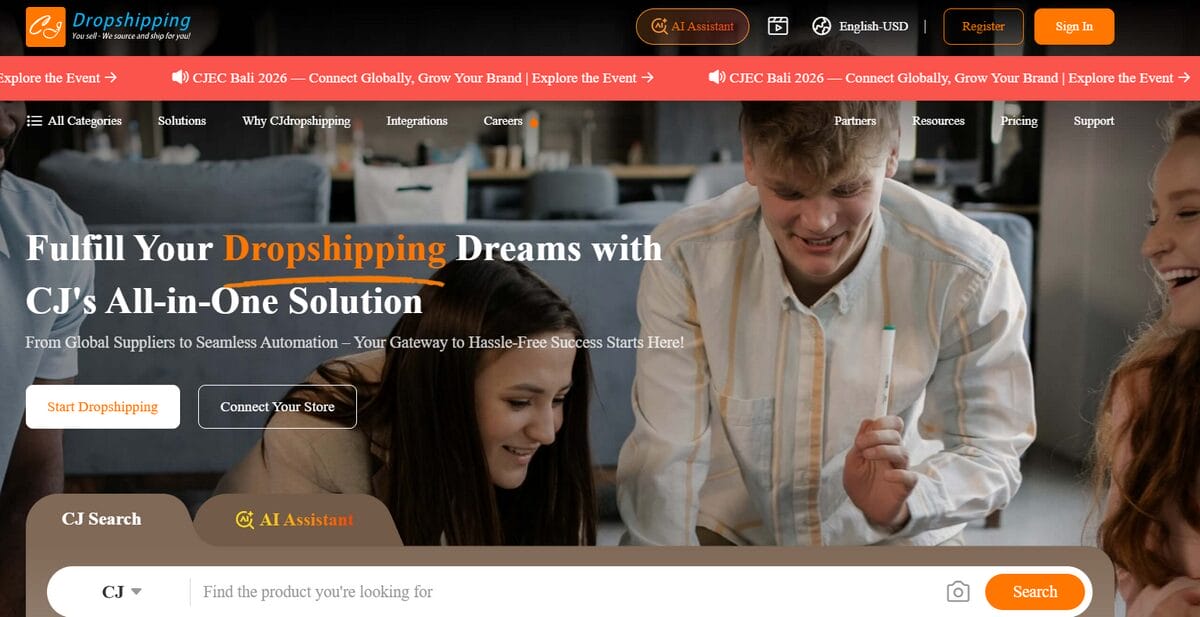
CJdropshipping takes a more flexible route. Instead of charging a required monthly subscription, it combines a large product catalog with on-demand sourcing, global fulfillment, and warehouse services, so you can start lean and add more logistics support as the business grows.
If a product isn’t available, you can submit a sourcing request and let CJ look for it through its supplier network. The platform currently lists more than 2.5 million ready-to-import items and says sourcing requests are typically handled within 48 hours.
- Best for: Dropshippers who want broad sourcing and fulfillment flexibility without committing to a monthly software subscription.
- Supplier network: CJ combines its own catalog with sourcing agents and factories, plus fulfillment through a global warehouse network. Its current site advertises 10+ warehouses across North America, Europe, and other regions, while its service documentation covers facilities in China, the US, Poland, Germany, and the UK.
- Starting price: There’s no required monthly fee for standard dropshipping. You generally pay for the product and shipping when an order is placed, while warehousing, labeling, inbound/outbound handling, and other fulfillment services can add separate charges depending on the setup.
- Sales channels: CJ supports integrations with Shopify, WooCommerce, eBay, Etsy, TikTok Shop, Wix, BigCommerce, Squarespace, Temu, Amazon, and others.
- Automation: Once a store is authorized and products are connected, orders can sync into CJ automatically for fulfillment. Tracking can also sync back to supported stores, and inventory syncing is available for setups such as Shopify.
Where CJdropshipping Stands Out
- Flexible sourcing: You’re not limited to what already appears in the catalog; sourcing requests can open up additional products and supplier options.
- No required subscription: There’s less fixed software cost upfront, which makes testing products or running a smaller operation easier.
- Global logistics options: Overseas warehouses and CJ shipping lines give sellers more ways to balance delivery speed, destination, and fulfillment cost.
What To Watch
- “Free to start” doesn’t mean cost-free. Product and shipping costs still apply, and warehouse or fulfillment services can add inbound, outbound, labeling, storage, or processing fees.
- Costs are more variable than a fixed subscription. What you pay can change by product, shipping method, warehouse, storage time, and any extra services you use.
- More flexibility means more variables to manage. Supplier sourcing, shipping routes, warehouse availability, and service fees can make the setup less immediately predictable than a tightly curated platform.
Choose CJdropshipping if
You want room to source beyond a fixed catalog, keep recurring software costs low, and combine sourcing with fulfillment across several regions.
Skip it if
You’d rather work with a smaller curated supplier network, prefer highly predictable monthly costs, or want the simplest possible sourcing setup.
⭐ Shopify App Store: 4.9/5 from 2,900+ reviews, checked November 2026.
Syncee
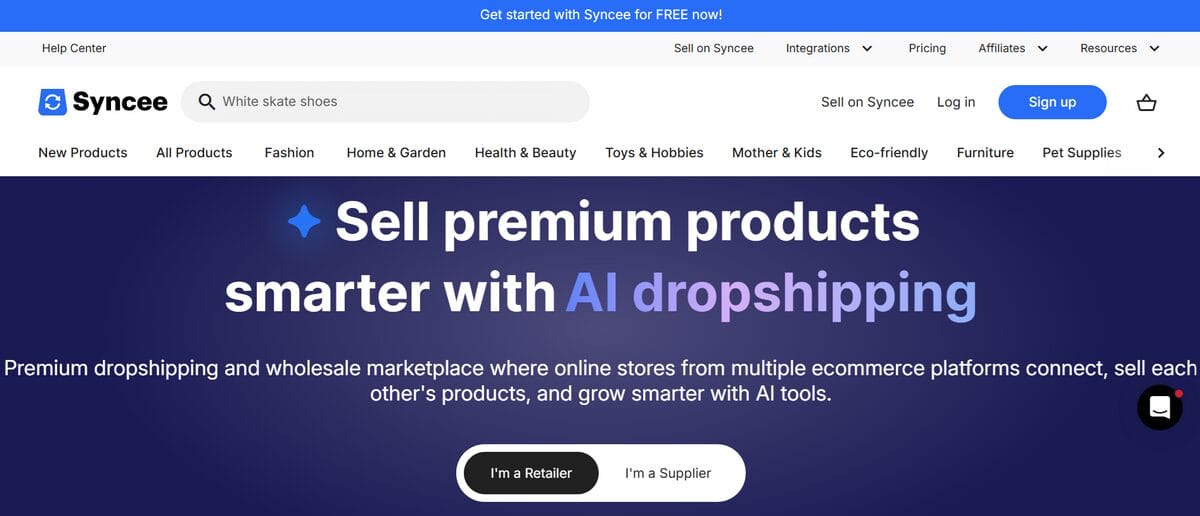
Syncee takes a marketplace-first approach. Instead of sourcing through one agent or warehouse network, it gives retailers access to a broad catalog from reviewed suppliers and brands, with particularly strong coverage across the US, Canada, Europe, the UK, and Australia.
- Best for: Dropshippers who want a vetted supplier marketplace with strong Western-market coverage.
- Supplier network: Syncee advertises 12,000+ trusted brands and access to 8M+ products from global suppliers.
- Starting price: The Free plan is mainly for browsing and supplier discovery. Basic costs $39.99/month and allows 100 imported products from 1 supplier, while Pro costs $59.99/month and raises that to 250 products with unlimited suppliers.
- Sales channels: Syncee works with Shopify, WooCommerce, Wix, BigCommerce, Squarespace, Ecwid, Jumpseller, Shoprenter, EKM, KMO Shops, and others.
- Automation: Product data can update automatically, store orders can sync into Syncee, and tracking information can flow back through supported integrations. The retailer still purchases the order from the supplier before fulfillment, so automation doesn’t remove every step.
Where Syncee Stands Out
- Curated supplier marketplace: Suppliers go through an application and review process before being accepted, giving the catalog more structure than an open marketplace.
- Strong regional coverage: Filters for supplier location and shipping destination make it easier to build around US, Canadian, European, UK, or Australian markets.
- Product-data automation: Daily product updates, dynamic pricing settings, and bulk management reduce the manual work of maintaining a larger catalog.
What To Watch
- The free plan is mostly for discovery. To actually import and manage products at scale, you’ll need a paid tier.
- Orders still require retailer payment. Synchronization is automated, but the seller still has to fund the supplier order before fulfillment.
- Supplier quality and shipping still vary. Syncee reviews applicants, but each supplier controls its own inventory, processing, delivery, and return terms.
Choose Syncee if
You want a broad but curated supplier marketplace, especially across Western markets, with product, order, and tracking synchronization built in.
Skip it if
You want fully hands-off purchasing, a lower-cost one-supplier workflow, or direct sourcing and fulfillment through an agent-style network.
⭐ Shopify App Store: 4.1/5 from 550+ reviews, checked November 2026.
How Dropshipping Platform Automation Works
“Automation” is one of those ecommerce words that can stretch to mean almost anything. A platform may call itself automated because it imports a listing in one click, while you still place every order manually. Another might handle purchasing and tracking but leave price changes up to you.
So, rather than treating automation as one big switch, think of it in layers:
| Automation area | What it takes off your plate | What to look for |
|---|---|---|
| Product importing | Pulls titles, images, variants, prices, and other product data into your store or drafts. | Single vs. bulk uploads, supported suppliers, variant handling, and editing before publishing. |
| Price & stock monitoring | Keeps listings aligned with supplier price and availability changes after they go live. | Automatic updates vs. alerts, scan frequency, out-of-stock handling, and plan or supplier restrictions. |
| Order fulfillment | Moves a customer order from your store to the supplier and, at a deeper level, can place the purchase for you. | Whether orders only sync or are actually purchased, which suppliers qualify, and whether seller approval, buyer accounts, or a managed balance are still involved. |
| Tracking updates | Retrieves shipment information and sends it back to the connected store or marketplace. | Whether tracking updates automatically, which suppliers and channels support it, and where manual input is still required. |
A key distinction: product importing saves setup time; ongoing automation saves operational time. Once a listing is live, price and stock monitoring, order fulfillment, and tracking determine how much repetitive work the platform can actually remove.
Take AutoDS as one example. Its product importer supports single and bulk uploads, while price and stock monitoring checks supported supplier listings through scheduled scans and reacts to changes based on your settings.
Fulfillment goes another level deeper. With Auto-Order, supported orders can be processed through your own connected buyer account; with Fulfilled by AutoDS, AutoDS uses its own buyer accounts and a managed balance to place eligible orders and handle supported tracking workflows.
That’s the useful test for any platform on this list: look past the word “automation” and ask exactly what happens without you.
💡 Pro Tip: Many dropshipping platforms also include features to speed up product research and validation. Check out our guide to the best product research tools to see which ones can help narrow down what’s worth testing.
How To Choose: Best Platforms For Dropshipping By Use Case
At this point, the challenge is matching the right platform to the way you actually plan to run the business. I’d narrow that decision down to three practical questions: How much do you want to spend? How broad does your sourcing need to be? And how many places are you planning to sell from?
Here’s how those three variables reshape our shortlist:
| Decision | Your setup | Platforms to consider | Why |
|---|---|---|---|
| Budget | Tight budget + mostly AliExpress | DSers | A functional free tier keeps the setup lean without giving up the core AliExpress workflow. |
| Low fixed costs + broader sourcing | CJdropshipping | No required monthly subscription, with costs tied more closely to products, shipping, and services. | |
| Willing to pay more for regional sourcing or fulfillment | AutoDS, Zendrop, Spocket, Syncee | You’re paying more for faster fulfillment, curated suppliers, or stronger regional sourcing coverage. | |
| Supplier breadth | One main sourcing ecosystem | DSers, Zendrop, Spocket | Each works best when most of the catalog stays inside a focused network or sourcing model. |
| Broader marketplace or sourcing network | CJdropshipping, Syncee | Both widen your options without requiring you to manage dozens of unrelated retail suppliers yourself. | |
| Many different supplier sources | AutoDS | Centralized management matters more once products start coming from marketplaces, private suppliers, and different warehouse sources. | |
| Sales channels | One store | DSers, Zendrop, Spocket | A single storefront usually doesn’t need a heavy multichannel layer. |
| Two or three channels | CJdropshipping, Syncee, AutoDS | Broader integrations start carrying more weight as products and orders move across several destinations. | |
| Many channels | AutoDS | Centralizing suppliers, stores, monitoring, and supported order workflows becomes much more valuable. |
The pattern is pretty clear: focused setups reward focused tools; broader operations put more value on flexibility and centralization. As budget, supplier count, and channel mix expand, the platform has to manage more moving parts without creating extra work of its own.
Your best fit usually lies where those three answers overlap and where the platform’s strengths align with the complexity you actually need to manage.
Other Platforms Worth Considering
Modalyst
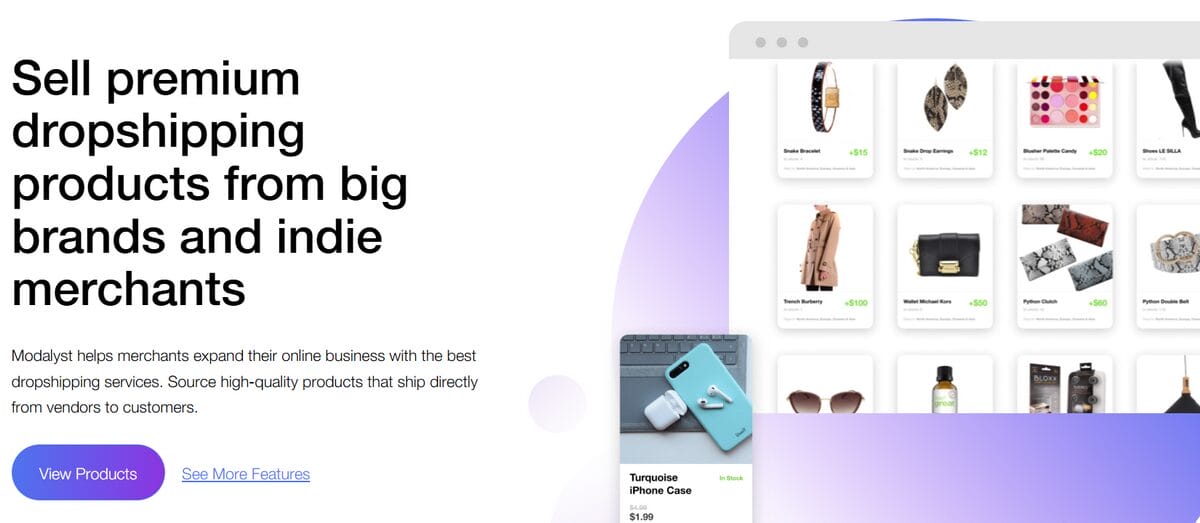
Modalyst is a curated dropshipping marketplace with a strong mix of independent brands, fashion and lifestyle products, plus access to AliExpress sourcing. It’s worth a look if you want more differentiated inventory with real-time product and stock updates built into the workflow.
The catch is the fee structure: Hobby is free for up to 25 products, and Start-Up costs $35/month for 250, but every plan also carries a 5% transaction fee on retail order value. That extra percentage can matter much more than the monthly subscription once sales start climbing.
SaleHoo
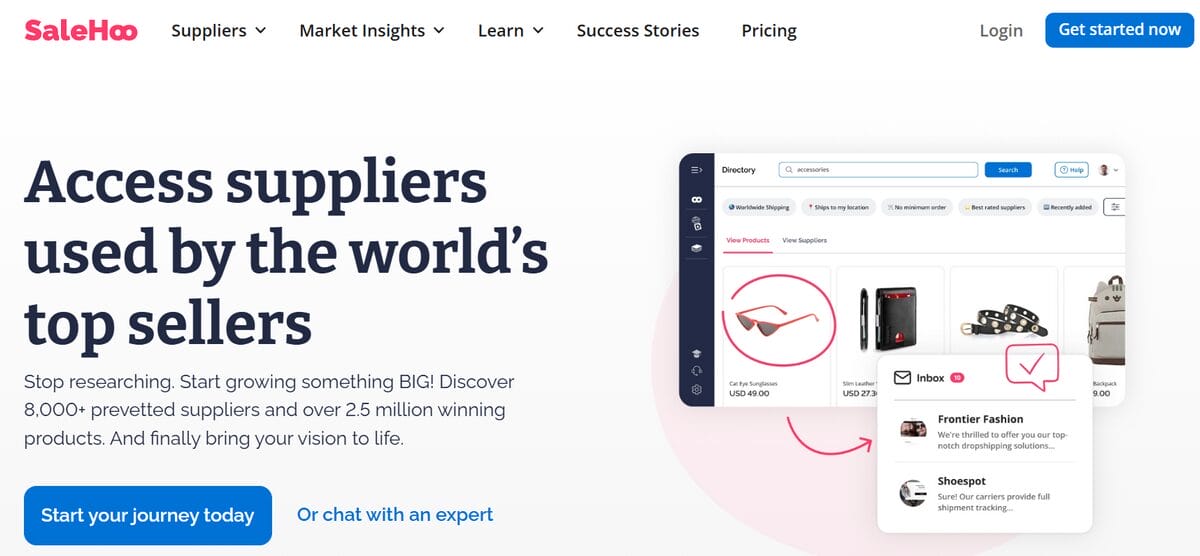
SaleHoo plays a different role: it’s primarily a supplier directory and product-research platform, with 8,000+ vetted global suppliers. That makes it more useful when your challenge is finding and evaluating suppliers than automating the entire operation.
Its current plans do include Shopify imports and store connections (Starter begins at $9/month billed annually), but SaleHoo still shouldn’t be treated as equivalent to an end-to-end automation platform. Outside its Shopify workflow, inventory feeds, ordering, and fulfillment depend much more heavily on the supplier and your own setup.
Dropified
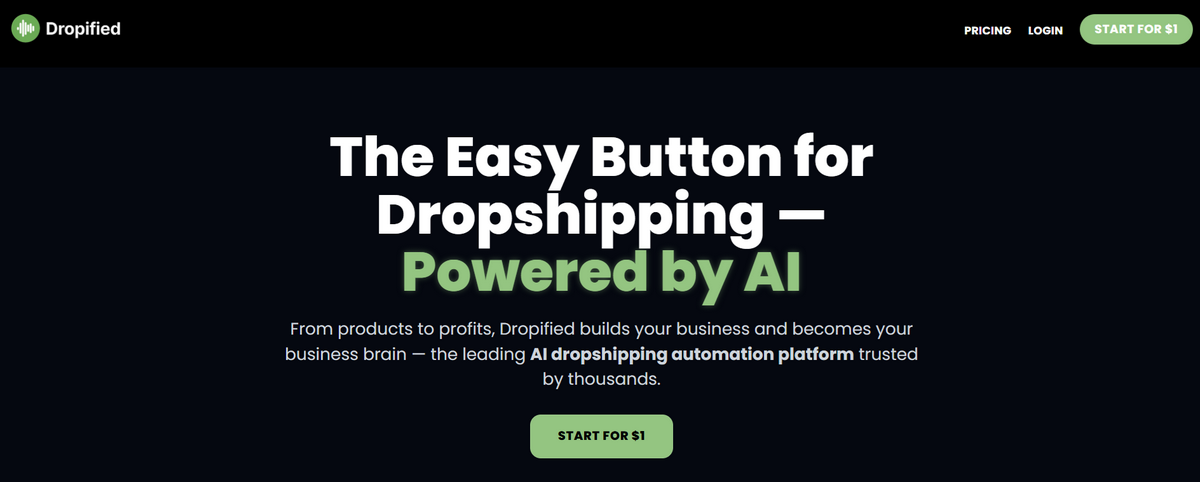
Dropified is still active, but it has changed lanes. Today, it positions itself as an AI-heavy ecommerce automation suite, combining product research, Shopify store building, marketing content, ads, order workflows, tracking, and customer-facing tools rather than acting as a proprietary supplier marketplace.
The plan costs $50/month for one store, or $500 annually. So think of Dropified primarily as the software layer around the business: you still need to decide where the products themselves come from and how that sourcing model fits your store.
EPROLO
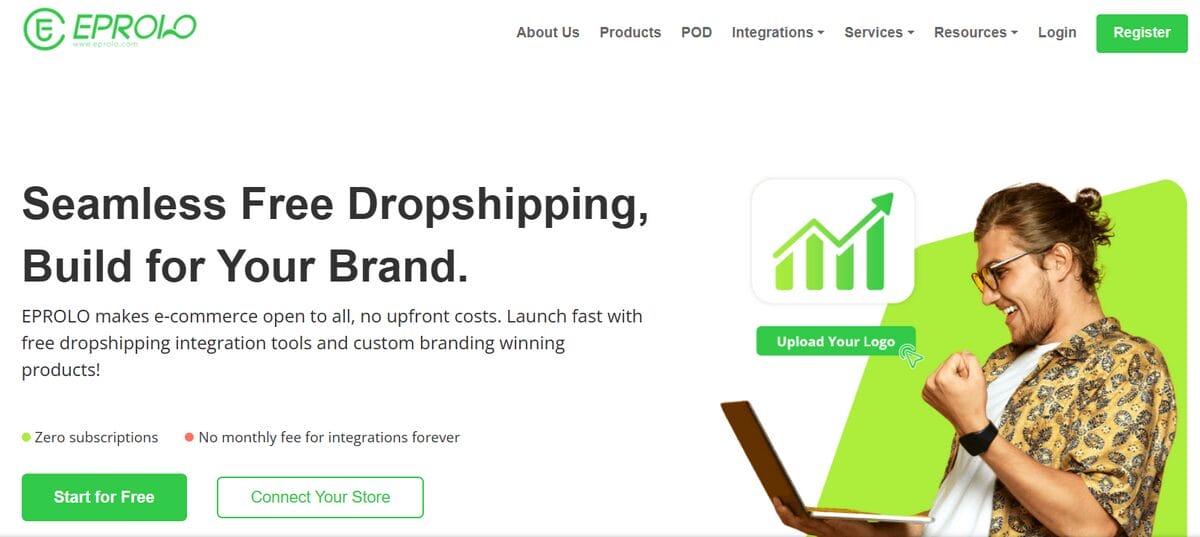
EPROLO sits closer to CJdropshipping: it combines product sourcing, store syncing, fulfillment, and private branding within its own supply chain ecosystem. It currently advertises 26+ global warehouses across regions including China, the US, the UK, and the EU, with integrations for Shopify, WooCommerce, eBay, Etsy, TikTok Shop, Amazon, Wix, and more.
There’s no monthly subscription for the core platform. You pay product and delivery costs when orders are placed. That keeps fixed software costs low, although it also means your sourcing and fulfillment stay largely inside EPROLO’s own network.
Doba
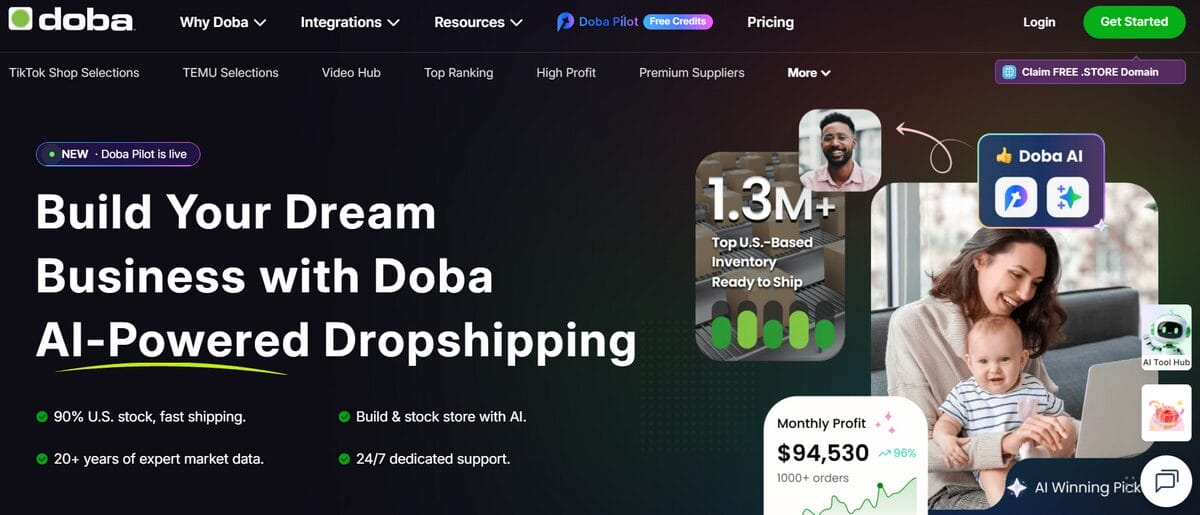
Doba combines a supplier marketplace with inventory, listing, ordering, and fulfillment tools, and its strongest angle is clearly the US market. The platform says roughly 90% of its products are stocked in US warehouses, while pricing and inventory can sync automatically with connected stores.
That convenience comes with a heavier subscription model. The Limited tier supports only 30 one-click listings, while larger catalogs and deeper automation quickly move into higher-priced plans.
Frequently Asked Questions
What’s the best dropshipping platform for beginners?
The best dropshipping platform for beginners depends on how you plan to source and how much support you want from the software. DSers is an easy entry point for an AliExpress-centered store, while AutoDS suits beginners who want broader sourcing and more automation from the start. CJdropshipping is another strong option if keeping fixed monthly costs low is the priority.
Which dropshipping platform has the best automation?
The dropshipping platform with the best automation depends on how much of the workflow you want handled for you. AutoDS offers one of the broadest automation setups, combining product importing, price and stock monitoring, supported order automation, and tracking across multiple supplier sources and sales channels. Just check which features apply to your supplier, plan, and store setup.
Is AutoDS better than Spocket or Zendrop?
Yes, AutoDS can be better than Spocket or Zendrop if you need broader sourcing, multiple sales channels, and deeper centralized automation. Spocket may be the stronger fit for vetted US/EU suppliers, while Zendrop makes more sense when streamlined fulfillment and faster US delivery are the priority.
What’s the cheapest dropshipping platform to start with?
The cheapest dropshipping platform to start with is often DSers for an AliExpress-focused store, since its free plan can support an active setup. CJdropshipping also has no required monthly subscription, although product, shipping, and service costs still apply. AutoDS isn’t free long term, but its trial costs $1, giving you a low-cost way to test the platform before committing.
Do I need a different platform for Amazon vs Shopify dropshipping?
You don’t necessarily need a different platform for Amazon and Shopify dropshipping, as long as your tool supports both channels and the workflows you need on each. AutoDS and DSers, for example, can work across both, letting you manage Amazon and Shopify from the same broader setup.
Which dropshipping platform has the widest supplier network?
The dropshipping platform with the widest supplier network depends on how you define “wide.” AutoDS covers a particularly broad mix of marketplaces, retail suppliers, private suppliers, and warehouse sources, while Syncee and Spocket offer large but more curated supplier marketplaces.
Pick Your Platform & Start Dropshipping Today!
After all the features, fees, supplier networks, and automation claims, here’s the good news: the best dropshipping platform is simply the one that fits the way you want your business to work.
A focused setup can stay focused. If AliExpress does most of the sourcing and you’re running one store, a leaner tool may be all you need. If supplier location, faster fulfillment, or a curated marketplace matters more, platforms like Zendrop or Spocket make a stronger case. And as suppliers, stores, and sales channels start multiplying, broader systems such as AutoDS have much more room to earn their keep. That’s the thread running through this guide: the more moving parts you add, the more valuable centralization and automation become.
So, look at what you spend, where you source, and how many places you sell. Then choose the tool that takes work off your plate instead of adding more.
⚙️ Need deep automation, great supplier access, and several sales channels under one roof? Try AutoDS for $1 and put that broader workflow to the test with your own store.
Still weighing your next move? Keep going with these guides to compare platforms, switch workflows, and explore where to sell next: