


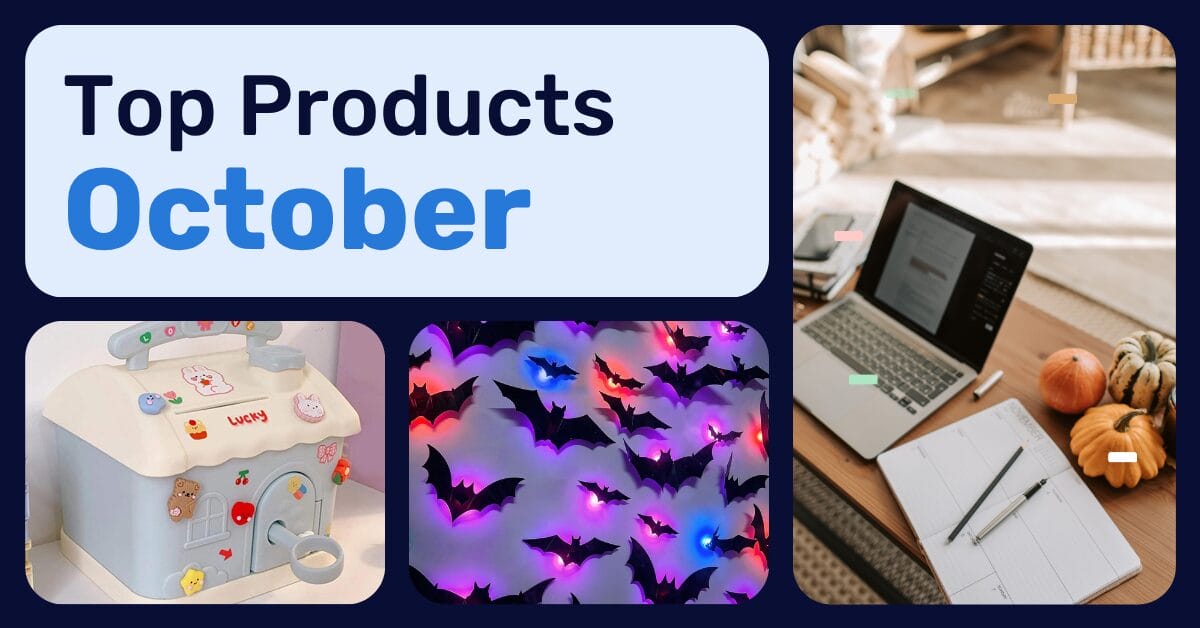
October has range. One customer wants a haunted doorway; another is already shopping for Christmas gifts. For you, that overlap makes it a useful month to test products before the holiday rush and figure out which ones deserve more than a hopeful ad budget.
Q4 is already underway, but there’s still time to test your offer, order samples, and check supplier delivery times before Black Friday and Cyber Monday.
To curate the best dropshipping products for October 2026, I’ve combined AutoDS data with marketplace pricing and external trend reports. Each pick includes pricing potential, reasons it fits the season, and seller-page or ad examples to inspire your own approach.
Below, you’ll find what each product does, who to target, potential pricing, and a marketing angle you can actually test. Because “look at this cool thing” is a start, but giving someone a reason to buy is where the work gets interesting.
Best Overall October Product: Wine Glass Charcuterie Toppers – Visual, giftable, and relevant to holiday hosting.
Best for Beginners: House-Shaped Piggy Bank – Simple to demonstrate, with customizable decor and gifting angles.
Best for TikTok Creative: Fire Extinguisher Drink Dispenser – An unexpected design with an attention-grabbing pouring reveal.
Best Cold-Weather Product: Heated Winter Jacket – Practical warmth for chilly commutes and outdoor routines.
Best Halloween Product: Animated Eyeball Doorbell – An interactive decoration made for button-press-and-reaction videos.
Best Evergreen + Seasonal Product: 4-in-1 Laser Level & Drill Dust Collector – Useful for year-round DIY and pre-holiday home projects.
Best Holiday Gift Products: Spinning Whiskey Glass & Ice Ball Mold – A distinctive demonstration and a clear home-bar gifting angle.
Top 10 Products to Sell in October 2026
From spooky doorstep upgrades to gifts people might actually use, these products give you different ways to approach October. Start with the audience you understand best, then test whether the product, price, and delivery promise work together.
1. Heated Winter Jacket
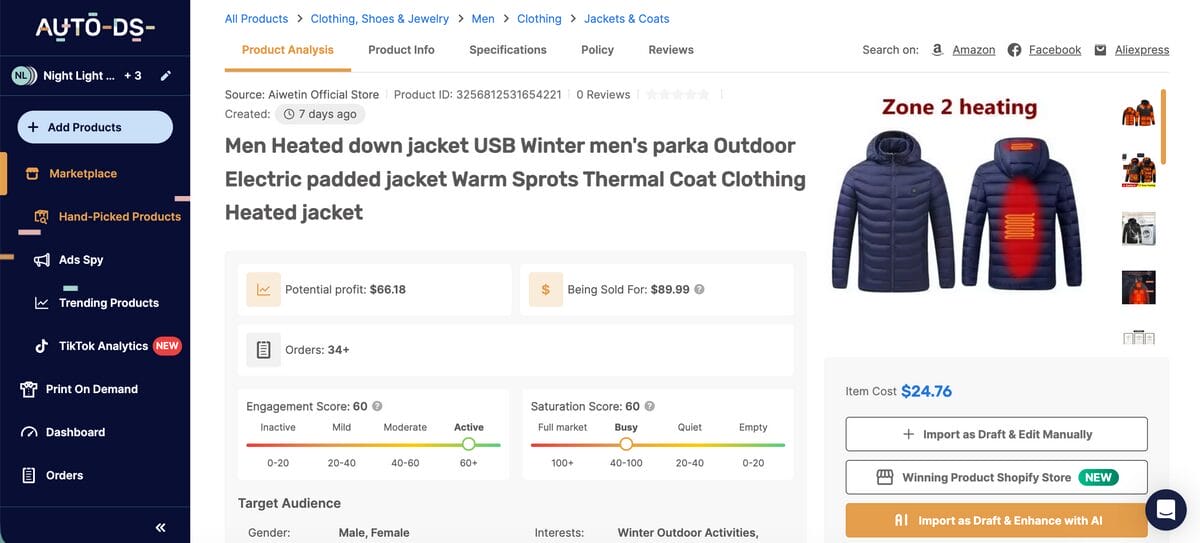
Walking the dog on a cold morning is already a commitment. Doing it while your teeth provide the soundtrack? Hard pass. This padded jacket features USB-powered heating zones for extra warmth, giving you a practical cold-weather product to demonstrate as temperatures drop.
Position it around everyday outdoor routines: early commutes, weekend walks, or standing on the sidelines at a game. You’re selling a more comfortable morning, not an extreme-weather survival promise.
- Price reference: The AutoDS screenshot shows a $24.76 item cost and an $89.99 selling-price reference. That leaves $65.23 before shipping, ads, fees, and returns—room to investigate, provided your chosen size and heating configuration carry the same cost.
- Target audience: Commuters, dog owners, and outdoor spectators who want extra warmth without changing their everyday routine. Focus on buyers in colder markets and show the jacket in situations they already recognize.
- Marketing angle: Sell the morning upgrade: stepping outside, switching on the heating, and getting on with the day. Try “Your dog loves cold morning walks. Now you might, too,” alongside clear footage of the fit, controls, and power connection.
- Trend proof: Fortune Business Insights estimates the global heated-jacket market will grow from $190 million in 2025 to $210 million in 2026, and identifies everyday commuting as an expanding use case. That gives you a broader audience than winter-sports enthusiasts alone. Use October to test practical cold-weather routines before winter in Northern Hemisphere markets.
📦 Supplier’s Tip: For heated clothing, check availability by size and color. A supplier having “stock” won’t help much if the variant featured in your best-performing ad is unavailable.
Seller’s website review
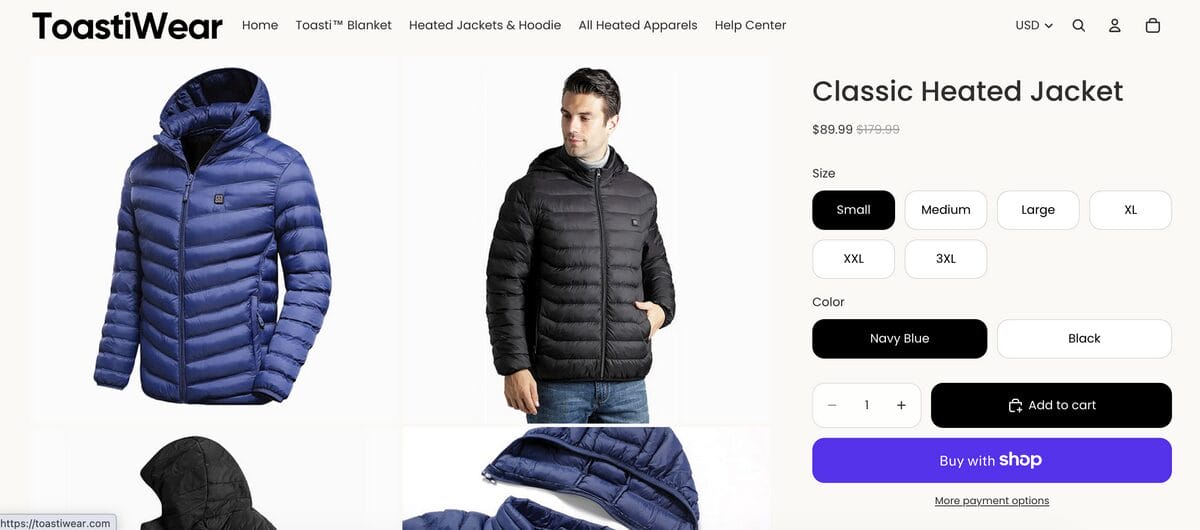
ToastiWear’s product page gives shoppers a useful starting point: straightforward size and color options, concise heating-feature bullet points, and FAQs covering washing and returns. I like that it answers practical ownership questions alongside the sales pitch, especially for a jacket that buyers may be unsure how to clean.
What I’d tighten is the consistency of the offer: winter-sale messaging at the top competes with a “last day” fall promotion further down. Use one clear promotion and put power-bank inclusion, expected runtime, and delivery estimates near the purchase button. If you’re selling a heated jacket, those details help shoppers decide whether it fits their routine; “supreme comfort” leaves more to the imagination.
2. House-Shaped Piggy Bank
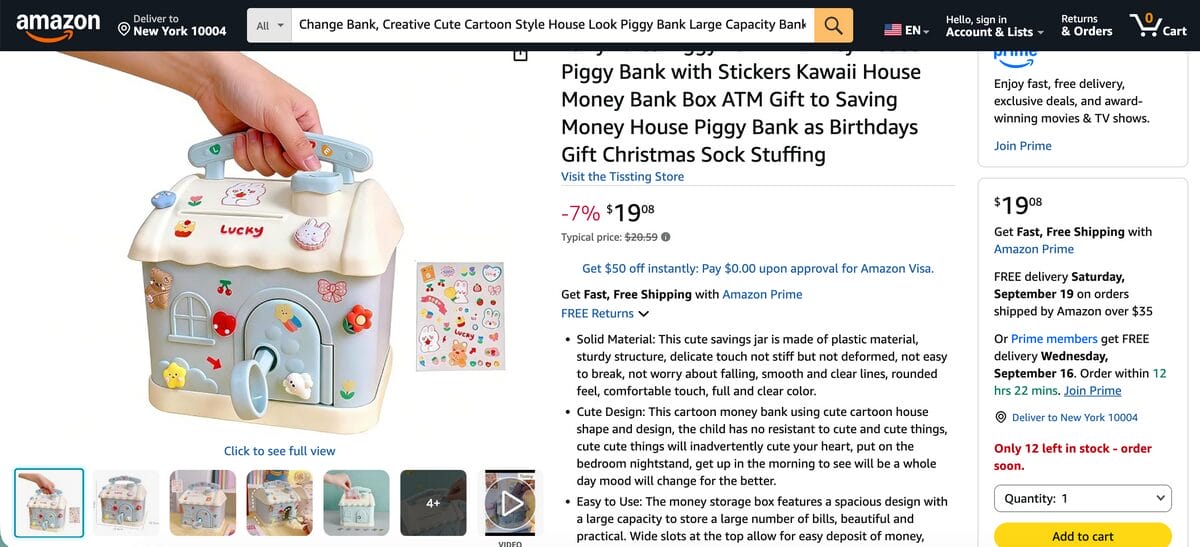
Your spare change deserves better than the bottom of a tote bag. This house-shaped piggy bank comes with decorative stickers, turning coin storage into a cute, customizable desk accessory. It’s a practical-meets-playful option for shoppers who want their savings habit to match their room aesthetic.
The angle I’d test is “give your next little goal a home.” Whether that’s concert money, a weekend trip, or a holiday gift fund, a specific savings goal gives the product a story beyond “here’s an adorable plastic house.”
- Price reference: The pictured bank sells for $19.08 on Amazon, and I’d consider $34.99–$39.99 an optimistic resale range to test with strong presentation and reliable delivery. If your acquisition cost were $19.08, that would leave $15.91–$20.91, or 45.5%–52.3% of revenue, before shipping, advertising, fees, and returns. Recalculate using your actual supplier cost, and give shoppers a clear reason to choose your offer over Amazon’s.
- Target audience: Young adults who love cute desk accessories, plus gift shoppers buying for someone with a savings goal. Concert tickets, a first trip with friends, or a small holiday fund give this little house a personal purpose.
- Marketing angle: Combine an unboxing with sticker customization and the first coin drop. A hook like “My concert fund finally has an address” turns a cute object into a relatable story viewers can picture for themselves.
- Trend proof: In NRF’s 2025 holiday survey, 42% of shoppers planned to start browsing and buying before November. Etsy’s fall/winter 2025 trend report also highlighted playful, expressive gifts and nostalgic decor. Together, those signals support an October test built around a playful, personal gift, especially when you connect the bank to the recipient’s next goal.
TikTok ad review
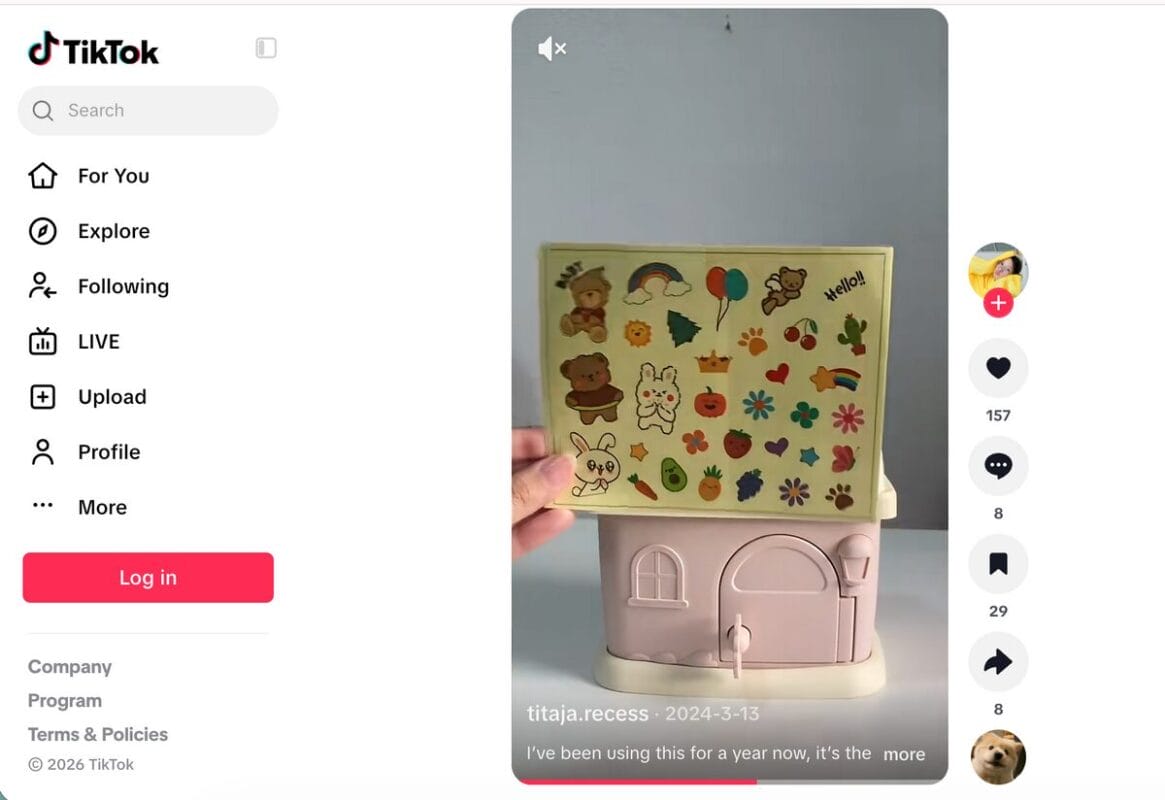
The video pairs a simple product reveal with brief text overlays, giving viewers an easy introduction to the piggy bank. The caption adds a personal touch: saying she’s used it for a year makes the recommendation feel more grounded than a first-impression “so cute!”
3. Portable Mesh Nebulizer
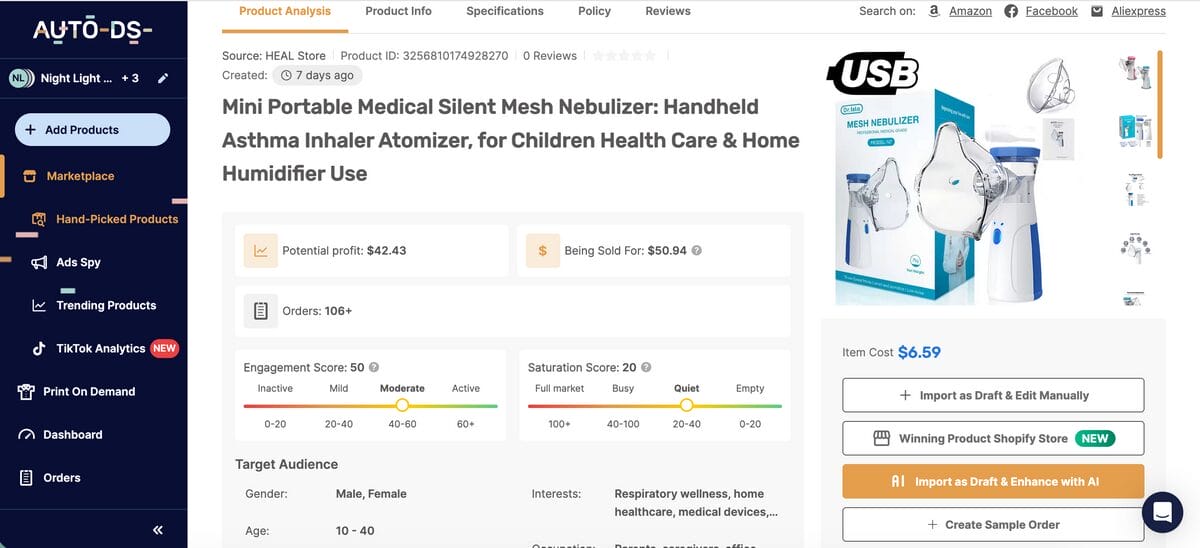
This handheld device turns liquid into an inhalable mist and is listed with USB power and mask attachments. Its compact format puts portability at the center of the product, but this is one category where you should look beyond the price gap before getting excited.
Unlike a desk accessory or Halloween decoration, a nebulizer needs a more specialized selling approach. In the US, nebulizers are classified as medical devices under federal regulations. The screenshot alone doesn’t establish whether this particular model meets the requirements for your market.
- Price reference: AutoDS displays a $6.59 item cost against a $50.94 selling-price reference, leaving $44.35 before other expenses. For this category, your pricing also needs to cover reliable sourcing, product documentation, and customer support.
- Target audience: Adults and caregivers shopping for a portable device that fits their healthcare professional’s recommendations. These buyers need confidence in the exact model, included accessories, and instructions before purchasing.
- Marketing angle: Build the presentation around clear product information: show the size, power setup, accessories, and manufacturer-approved operation. Prioritize a calm, helpful demonstration over dramatic health claims or a “winter wellness must-have” pitch.
- Trend proof: Grand View Research projects 6.35% annual growth in the nebulizer market from 2025 to 2030, citing demand for home-healthcare devices and growing acceptance of compact mesh models. The opportunity here is a developing year-round category, with portability giving buyers a specific feature to compare. Consider it for a specialist store with verified products and appropriate support, rather than a Halloween-driven impulse purchase.
Seller’s website review
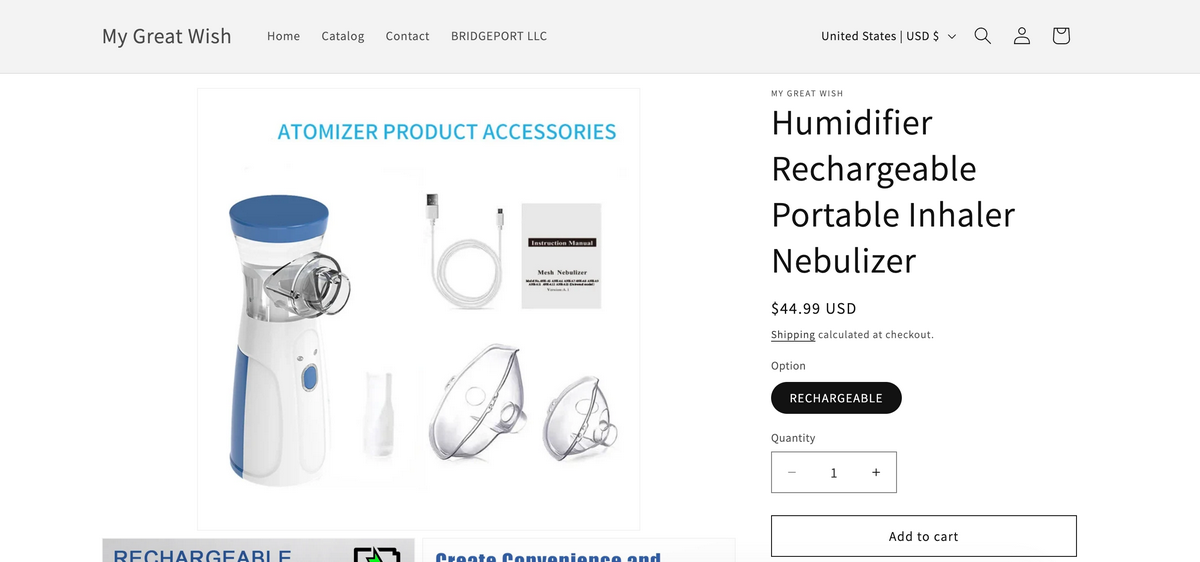
The page includes a package checklist and handling precautions, giving shoppers useful details beyond the sales pitch. Listing the masks and USB cable helps explain what arrives in the box; an approach worth borrowing for products with multiple accessories.
Clarity and copy quality could improve. The title mixes “humidifier,” “inhaler,” and “nebulizer,” while the power specification says “battery not included/rechargeable,” leaving the selected version unclear. For your own listing, use the verified device name, explain the exact power setup, and replace vague breathing-benefit claims with manufacturer-supported information. Buyers shouldn’t have to decode the product before deciding whether it meets their needs.
4. Spinning Whiskey Glass
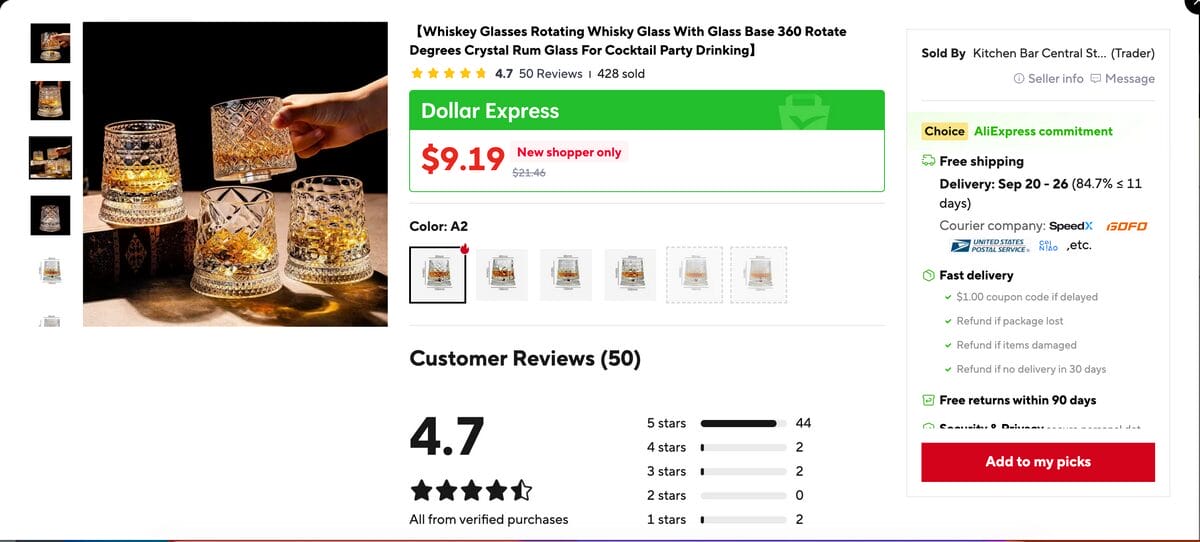
Shopping for someone whose answer to “What do you want?” is always “Nothing”? Here’s a more interesting option than another pair of socks. This patterned whiskey glass rotates on its base, giving a familiar gift a little visual theater.
- Price reference: The AliExpress image shows $9.19 as a new-shopper offer, so confirm the repeat purchase price before calculating margins. Mizuro’s pictured two-glass bundle costs $90 before optional extras, providing a separate premium retail benchmark. Its ice mold is an add-on, so make your own bundle contents explicit.
- Target audience: Adult home-bar enthusiasts and gift buyers shopping for someone who already has the usual whiskey accessories. The rotating design gives them something distinctive to discover and demonstrate.
- Marketing angle: Lead with a close-up of the spin, then reveal the glass in a styled home-bar or gift-box setting. Try “For the person who says they don’t want anything,” and show exactly what arrives with the order.
- Trend proof: Etsy reported glassware-set searches increased twelvefold in the fall/winter 2025 report, comparing the three months through September 2 with the same period a year earlier. Its “Supper Club” theme specifically highlighted statement glassware, bar tools, and entertaining at home. That makes distinctive drinkware a relevant holiday-gifting category to test, with the rotating design providing your creative hook.
Order a sample to check the rotation, rim, stability, and packaging. Also, verify the material before repeating the supplier’s “crystal” description. A fancy product title isn’t a material certificate.
Seller’s website review
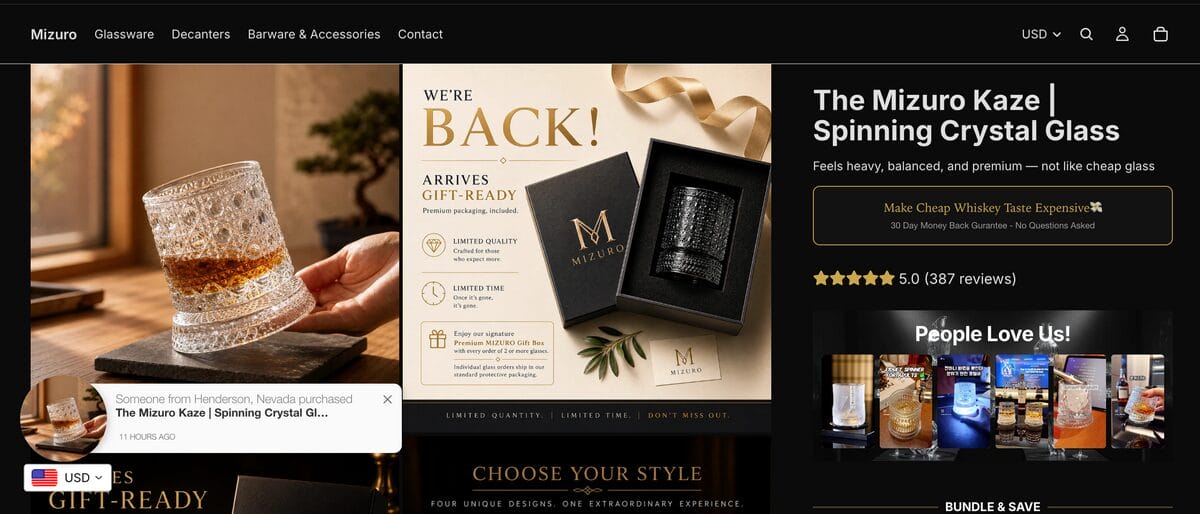
Mizuro’s product page makes the glass feel like a considered gift through consistent black-and-gold styling, close-up photography, and packaging shots.
I’d make the gift-box conditions more prominent: the large headline says it arrives gift-ready, but the smaller text limits premium packaging to orders of two or more glasses. The add-ons also appear checked in the screenshot; I’d let shoppers actively choose them and keep the total clear. For your own store, borrow the cohesive presentation, but replace the promise of making cheap whiskey taste expensive with demonstrable details about the glass’s rotation, finish, and feel.
5. 4-in-1 Laser Level & Drill Dust Collector
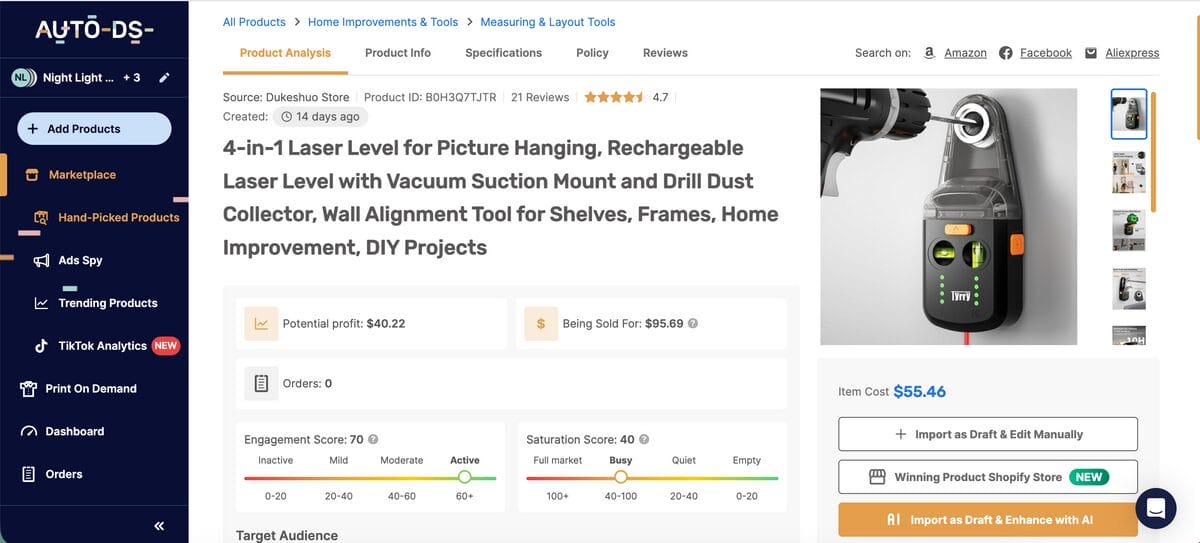
One crooked picture frame. Three pencil marks. Dust everywhere. A “quick little project” has officially taken over your afternoon. This rechargeable tool combines a laser level, bubble levels, a vacuum suction mount, and a drill dust collector to help with alignment and cleanup when hanging frames or installing shelves.
For October, you can build the story around getting the house guest-ready: finally hanging that gallery wall or putting up the shelf that’s been sitting in its box since spring. It also gives you a practical gift angle to test with shoppers buying for DIY enthusiasts.
- Price reference: The updated AutoDS screenshot shows a $55.46 item cost and a $95.69 selling-price reference, leaving $40.23 before other expenses. The Gain Express example is a different 3-in-1 model, so use it for presentation ideas rather than treating its price and specifications as interchangeable.
- Target audience: Homeowners and hands-on DIY shoppers installing shelves, hanging pictures, or finishing small room updates. I’d target a specific project instead of trying to appeal to everyone who owns a drill.
- Marketing angle: Turn “I’ll get around to it” into a satisfying before-and-after: a bare wall, the tool in action, and the finished shelf. Show alignment and dust collection clearly, with a hook like “That shelf is finally going up before the guests arrive.”
- Trend proof: The 2026 U.S. Houzz & Home Study found that 52% of surveyed homeowners decorated in 2025, while 41% planned to decorate in 2026. That points to an active audience for home updates, even though the figures aren’t specific to DIY tools. Connect this product to achievable projects (straight picture frames and new shelves) with guest-ready rooms as the October angle.
Check which walls it actually works on. Test the sample’s suction, alignment, and dust collection on manufacturer-approved surfaces, and explain any limitations in the listing. With less room between cost and selling price than several other products here, returns or expensive ads could quickly eat into the potential margin.
Seller’s website review
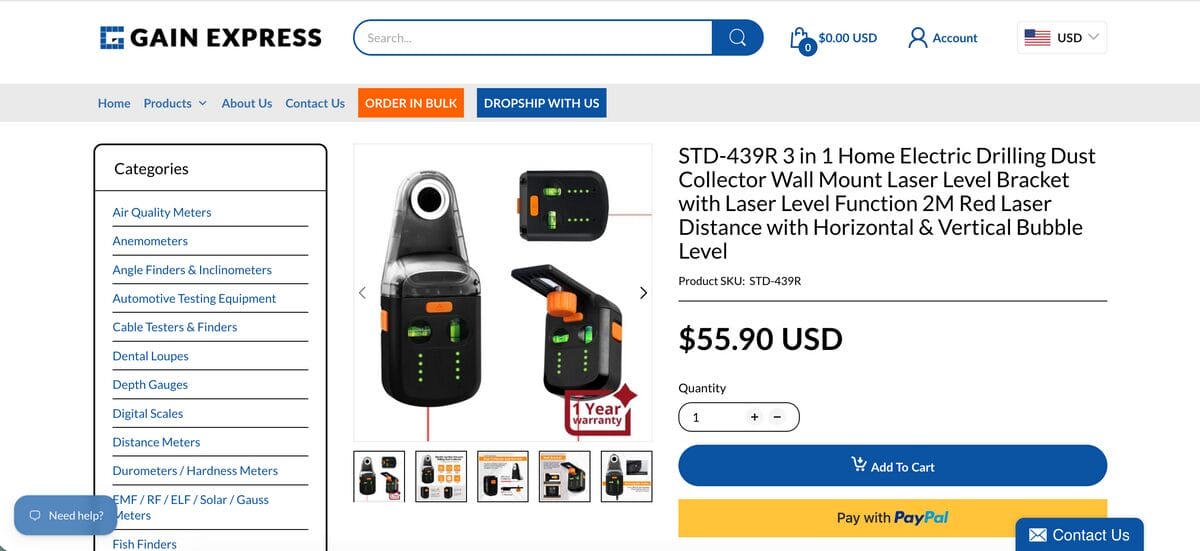
Gain Express’s product page gives detail-oriented buyers plenty to work with: battery capacity, working distance, dimensions, and an included-accessories list. The technical detail is useful for shoppers comparing tools, and the embedded video offers another way to explore the product. It’s a relevant reference for this category, although the seller labels its model as 3-in-1.
6. Wine Glass Charcuterie Toppers
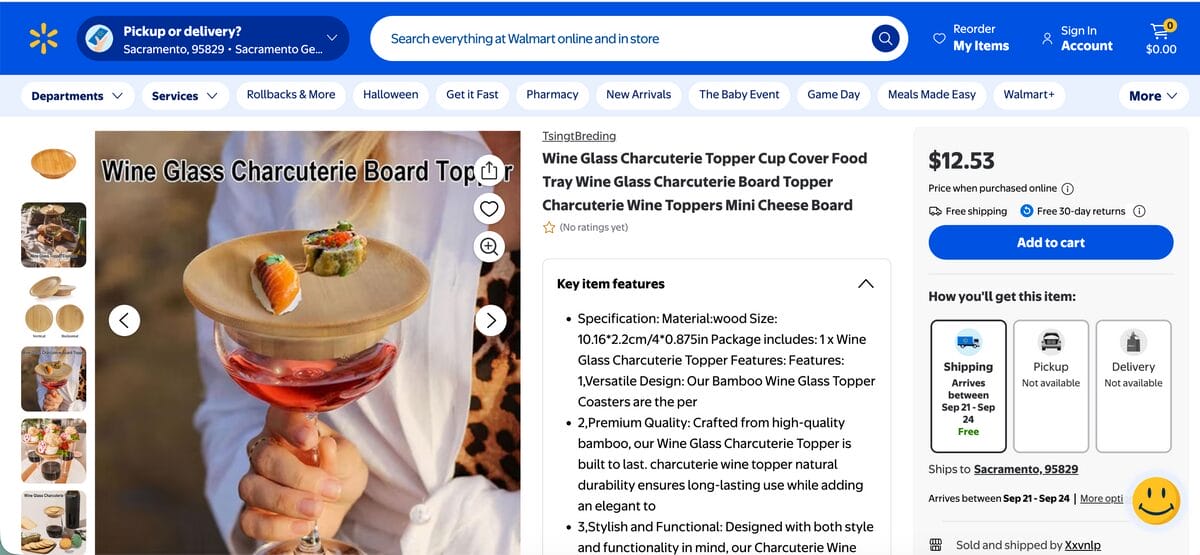
A wine glass in one hand, a plate of cheese in the other, and absolutely no strategy for saying hello. These small wooden appetizer plates sit on top of a wine glass, giving guests a place to rest their snacks between sips. The pictured listing is for one topper, so a hosting bundle would be an offer you put together separately.
I like this one for the transition from Halloween hosting to holiday entertaining. Style it with spooky snacks in October, then switch to a festive spread for November and December without rebuilding the whole pitch.
- Price reference: The Walmart screenshot shows $12.53 for one topper. I’d consider $24.99–$29.99 an optimistic resale range to test with appealing presentation and reliable delivery. At a $12.53 acquisition cost, that leaves approximately $12.46–$17.46, or 49.9%–58.2%, before shipping, advertising, fees, and returns. If you offer a multipack, calculate its full sourcing and shipping cost separately before setting the bundle price.
- Target audience: Dinner-party hosts, charcuterie fans, and shoppers looking for a small host gift. Think of the friend who invites everyone over for “a few snacks” and somehow produces an entire grazing table.
- Marketing angle: Arrange the snacks, place the topper on the glass, and show how it lifts off for drinking. Try “Your next hosting trick” as a short overlay, and clearly state how many pieces shoppers receive.
- Trend proof: Etsy’s fall/winter 2025 report recorded a 1,000% increase in searches for table settings, comparing the three months through September 2 with the same period a year earlier. It also highlighted entertaining essentials and host gifts, giving these toppers a relevant connection to broader hosting interest. That supports testing the occasion, although it doesn’t establish demand for this exact product.
Before selling, check which glass-rim sizes the topper fits, whether it sits securely, and how the wood should be cleaned. Verify its suitability for food contact and make the quantity explicit in your listing. A styled photo showing four glasses shouldn’t leave someone expecting four toppers when they ordered one.
TikTok ad review
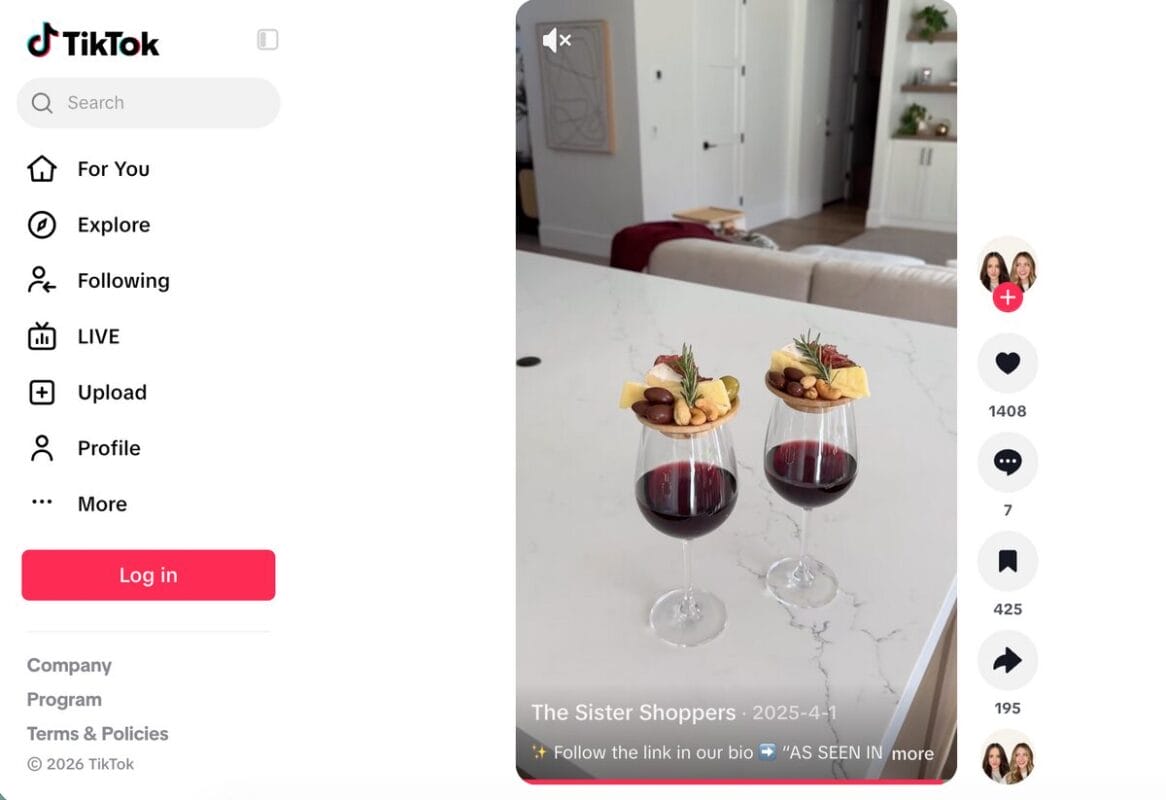
The Sister Shoppers’ demonstration lets the serving idea sell the product. The styled cheese, olives, and nuts make the toppers look inviting, while the everyday kitchen setting helps viewers picture using them at home. With no text overlays, the focus stays on the product and how it works. A good fit for such a visual hosting accessory.
Test one short hook for context, such as “Hosting friends? Try this serving trick,” while keeping the rest uncluttered. The caption already directs viewers to the link in the bio; a brief closing cue could make that next step easier to catch. Include lifting the topper to take a sip, so the demonstration answers the practical question behind the pretty setup.
📢 Marketing Tip: Film two occasions in one shoot. Style these toppers for a Halloween gathering, then change the snacks and background for a holiday-hosting version. You’ll have fresh creative ready when the seasonal angle shifts.
7. Fire Extinguisher Drink Dispenser
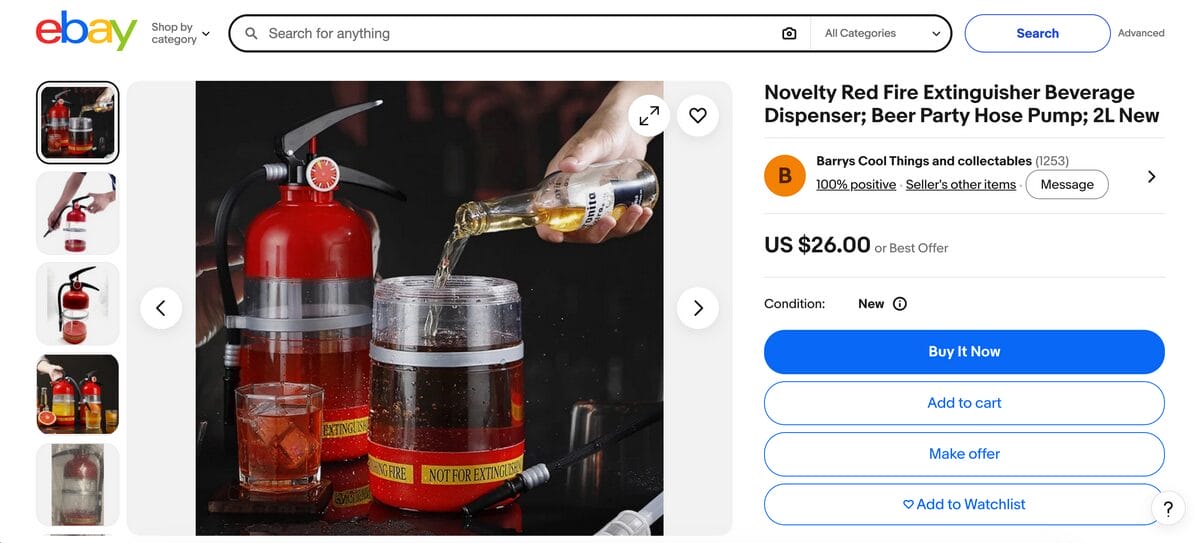
Someone at the party is going to ask, “Wait, is that a fire extinguisher?” That’s your opening. This novelty beverage dispenser has a fire-extinguisher shape, a dispensing hose, and a listed two-liter capacity, making the serving setup part of the entertainment.
Halloween gives you an obvious first scene: fill it with a colorful party drink and demonstrate the pour. After October, shift toward novelty gifts and home-bar setups, keeping the playful appeal without depending on spooky-season styling.
- Price reference: The eBay screenshot lists the two-liter dispenser at $26.00. I’d test an optimistic resale price of $49.99–$59.99, supported by a convincing party demonstration and clear delivery information. If you acquire it for $26.00, that leaves approximately $23.99–$33.99 per sale, or 48.0%–56.7%, before shipping, advertising, fees, and returns.
- Target audience: Adult party hosts, home-bar enthusiasts, and shoppers buying a funny gift for someone who loves entertaining. I’d also test nonalcoholic party setups to give the product appeal beyond whiskey and beer drinkers.
- Marketing angle: Make the pour the punchline: reveal the extinguisher-shaped container, pump the handle, and fill a glass with colorful party punch. “Your Halloween punch needed a costume, too” gives you a seasonal hook while showing exactly what the product does.
- Trend proof: In NRF’s 2025 Halloween survey, 32% of consumers celebrating planned to throw or attend a party. That creates a relevant occasion for a novelty serving accessory, especially one that doubles as a conversation starter. Test Halloween-party creative first, then shift toward home-bar gifts for the rest of Q4.
Seller’s website review
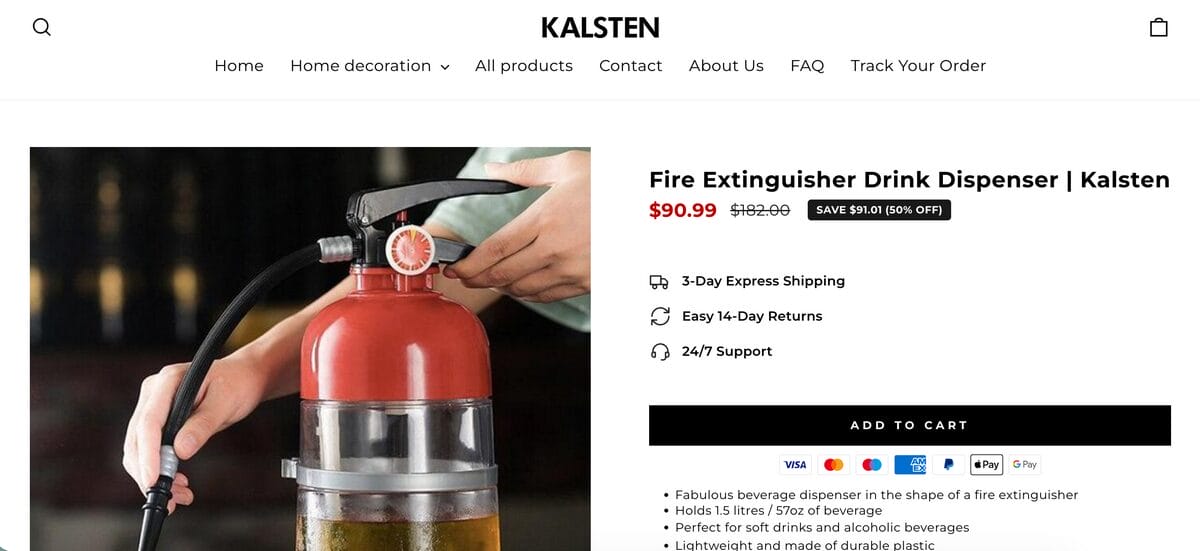
The product page gets straight to the party appeal, then backs it up with easy-to-scan product details: dimensions, material, and how the pump handle works. Mentioning both soft drinks and alcoholic beverages also gives shoppers more ways to picture using it, from a Halloween punch station to a home-bar setup.
I’d improve the details that justify the price. The capacity is listed as “1.5 litres / 57oz,” which needs correcting because those measurements don’t match, and the description leaves cleaning instructions unexplained. At $90.99, I’d add a clear filling-and-pouring demonstration and show how the dispenser comes apart for cleaning.
Kalsten lists a different capacity from the two-liter eBay reference, so confirm your own model’s specifications before borrowing its copy.
8. LED Halloween Bats
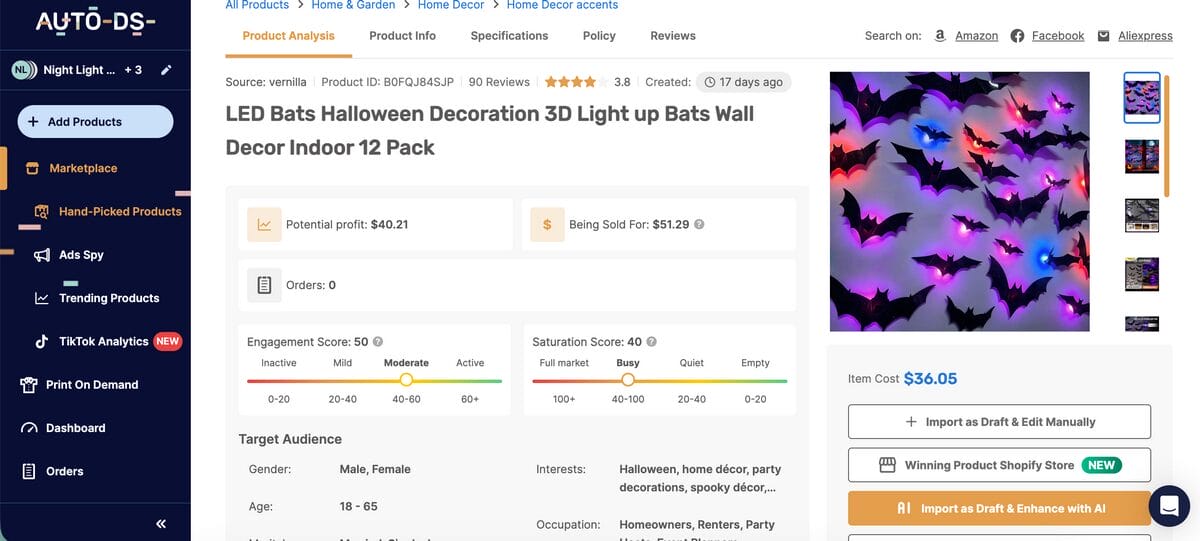
An empty hallway can become a Halloween backdrop with a few well-placed bats and a lights-off reveal. This set is listed as 12 three-dimensional bat decorations with LEDs for indoor walls, giving shoppers a spooky upgrade for a small space.
The creative practically storyboards itself: plain wall, decorating sequence, glowing reveal. Lean into an at-home haunted-house aesthetic (a little Wednesday Addams energy) while using your sample footage to show how bright the lights actually look.
- Price reference: AutoDS shows a $36.05 item cost for the 12-pack and a $51.29 selling-price reference. I’d test $54.99–$59.99 with strong room-transformation visuals that make the full set’s value clear. At the pictured cost, the potential margin would be approximately $18.94–$23.94, or 34.4%–39.9%, before shipping, advertising, fees, and returns.
- Target audience: Halloween decorators who want to transform a hallway, staircase, or party corner without assembling a huge display. Focus on shoppers drawn to atmospheric lighting and easy-to-picture room upgrades.
- Marketing angle: Borrow the TikTok example’s decorated-staircase concept and show your own space before and after installation. Add “One hallway. Instant Halloween atmosphere,” and tell viewers how many packs you used so they can recreate the look.
- Trend proof: NRF’s 2025 survey projected $4.2 billion in Halloween decoration spending, with 78% of Halloween shoppers planning to buy decorations, up from 75% in 2024. That gives these bats a clear category opportunity: a small decorative purchase with a visible room-level effect. Lead with the transformation, then make quantity, light color, and delivery timing easy to understand.
TikTok ad review
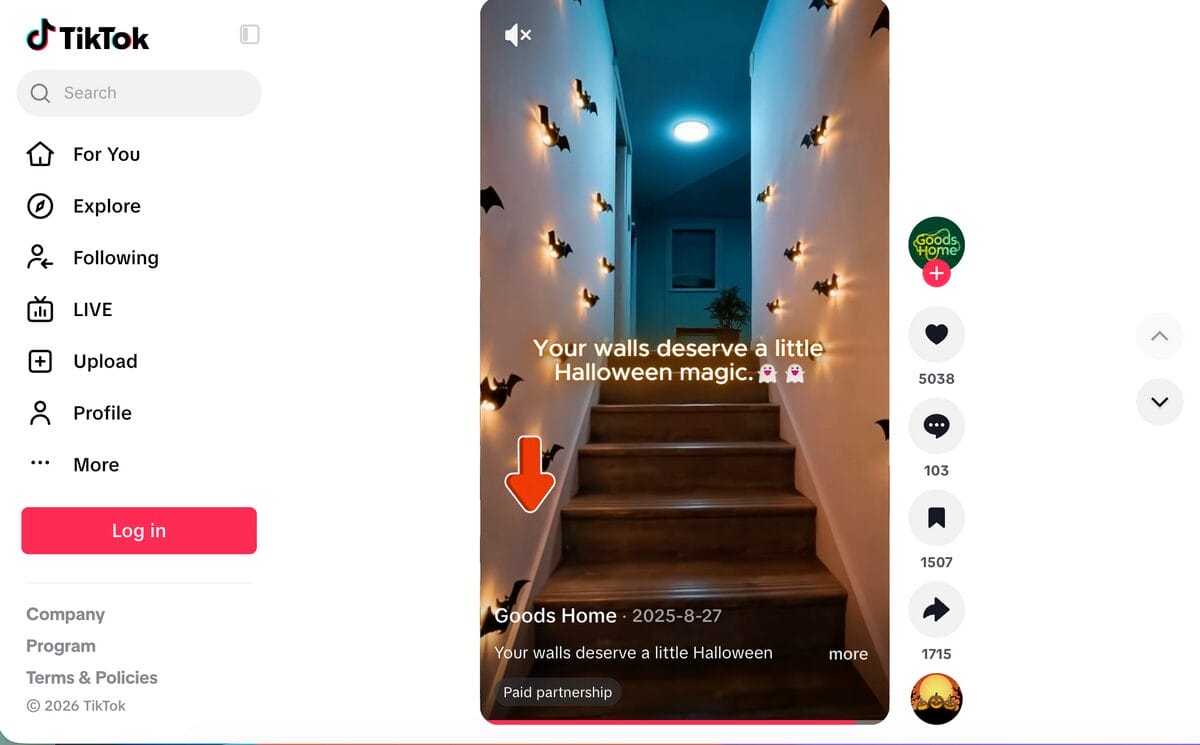
The ad sells the decorated space, not just the bats. In the screenshot, warm lights turn a staircase into a Halloween scene shoppers can imagine recreating, while the short overlay adds a playful invitation without explaining every feature. It’s an approachable take on spooky decor that could appeal to buyers who prefer atmosphere over jump scares.
9. Animated Eyeball Doorbell
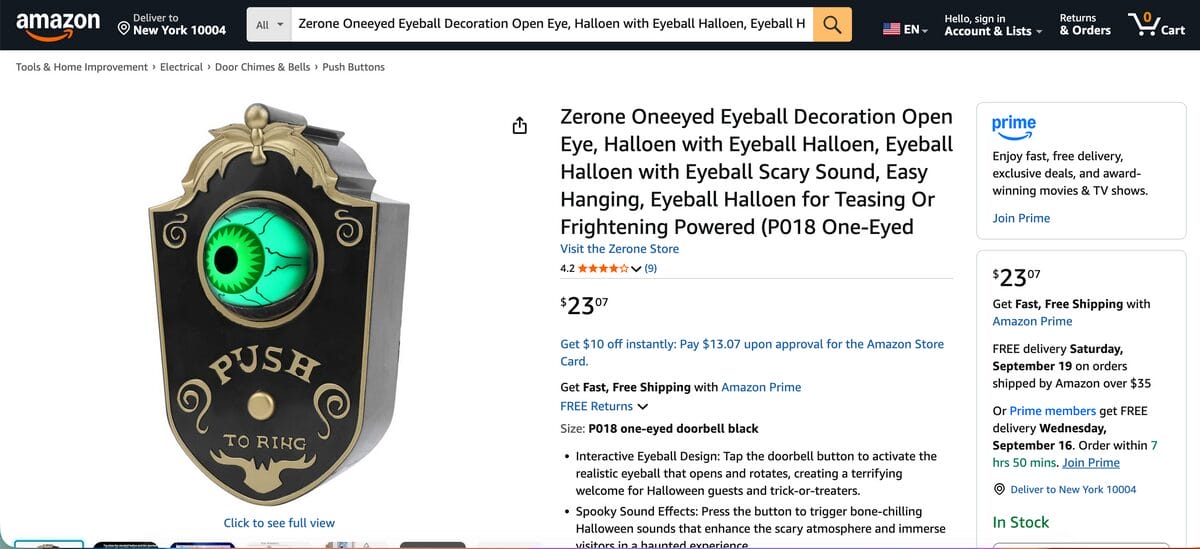
“Go on, press it” is pretty much the entire pitch. This Halloween doorbell decoration features an animated eye and spooky sound effects, turning a button press into a small jump-scare moment for visitors.
Unlike decorations that simply sit in the background, this one invites interaction. Make the button-to-reaction sequence the centerpiece of the ad: finger presses, eye opens, guest reacts. Show the actual movement and sound from your sample so the product doesn’t need editing tricks to seem entertaining.
- Price reference: The Amazon screenshot shows $23.07 for the selected black, one-eyed doorbell. An optimistic resale range to test would be $39.99–$49.99, with a close-up demonstration showing the animated effect. Using $23.07 as your acquisition cost, that leaves approximately $16.92–$26.92, or 42.3%–53.9%, before shipping, advertising, fees, and returns.
- Target audience: Halloween hosts and decorators who want guests to interact with their setup. It’s particularly suited to shoppers who enjoy a playful surprise and have limited space for larger props.
- Marketing angle: Open with “Would you press it?” and keep the button press and animated-eye response in the same shot. Follow Denali’s demonstration-led approach, but add captions so viewers watching without sound can understand the explanation.
- Trend proof: NRF’s 2025 Halloween survey found that 66% of celebrants planned to hand out candy and 51% planned to decorate their home or yard. Those activities create a natural setting for an interactive door decoration: the moment visitors arrive. Build the offer around that experience, using placement shown to be suitable for your specific model.
TikTok ad review
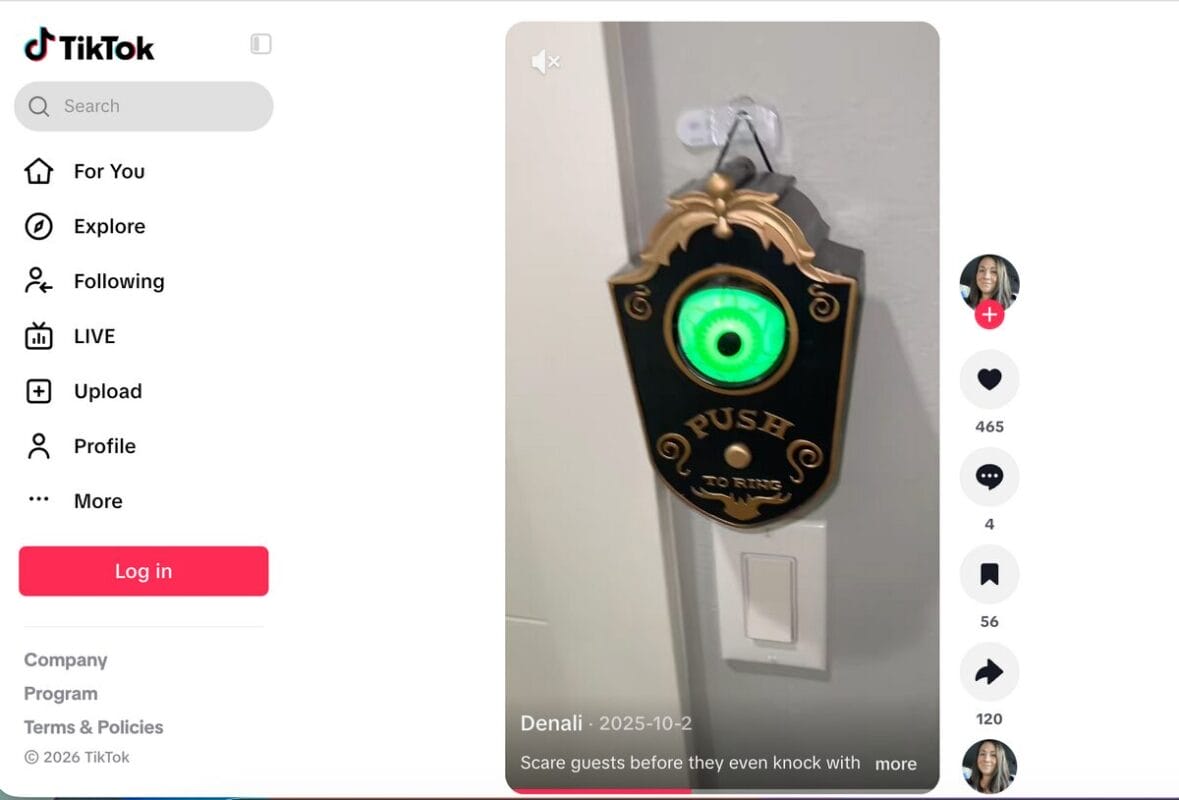
The video combines a product demonstration with a spoken explanation, helping viewers understand how the decoration works while seeing it in a home setting. The close-up of the glowing eye makes the product the clear focal point, and the visible hanging hook gives shoppers a useful look at how it’s displayed.
The main improvement I’d make is adding captions to the spoken explanation so viewers watching without sound can follow along. A short opening overlay like “Would you press this doorbell?” could invite curiosity without covering the eye.
10. Squishy Brain Fidget Toy
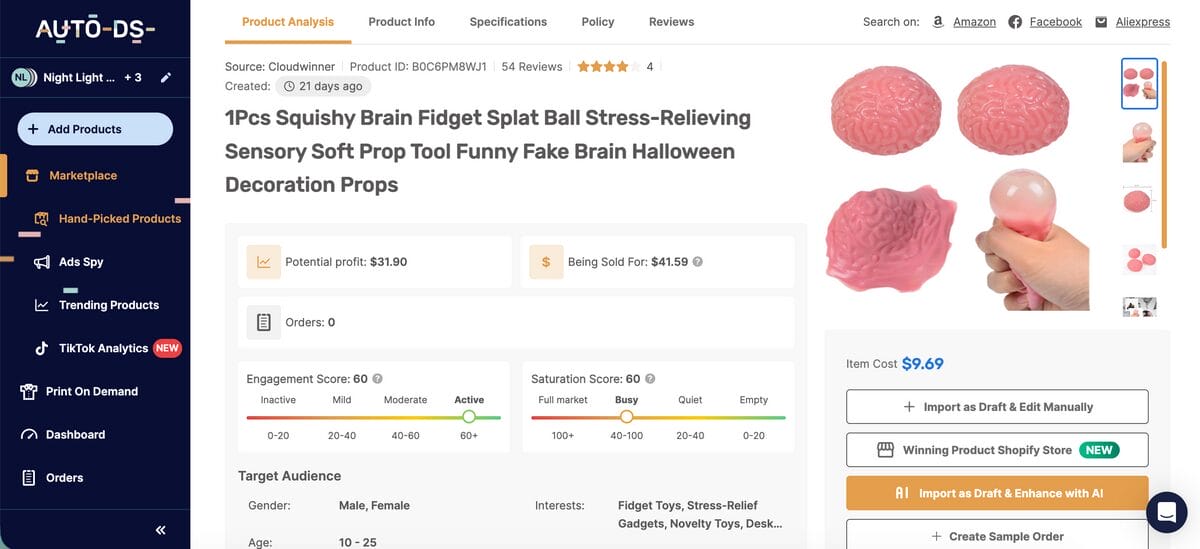
For the coworker who says “my brain is mush” by 3 p.m., here’s the literal version. This soft, brain-shaped squeeze toy doubles as a Halloween prop and a goofy desk accessory, with a squishing action that’s easy to capture in a close-up.
October gives the brain design a reason to enter the conversation, but the humor can outlast Halloween. Test a desk-break angle alongside spooky content: one video styled with cobwebs, another next to a laptop after a very long meeting.
- Price reference: AutoDS lists $9.69 for one toy, alongside a $41.59 selling-price reference. I’d start by testing $24.99–$29.99, keeping the purchase more approachable while leaving room above the product cost. That gives a potential margin of approximately $15.30–$20.30, or 61.2%–67.7%, before shipping, advertising, fees, and returns.
- Target audience: Adult desk-toy fans, novelty-gift shoppers, and Halloween enthusiasts who appreciate slightly weird accessories. Office humor gives you a specific audience without relying on therapeutic claims.
- Marketing angle: Film a close-up squeeze beside a laptop with “My last brain cell after this meeting.” Test a Halloween-styled version alongside an everyday desk version, showing the actual toy’s texture and movement rather than borrowing another model’s effects.
- Trend proof: The Toy Association’s 2026 trend report highlights growing interest in tactile, screen-free play and reports that 81% of surveyed parents in 2025 were likely to add a toy or game for themselves to their holiday shopping list. That supports testing adult gift and desk-play angles alongside the Halloween theme. The brain design supplies the seasonal joke; the tactile interaction gives you something to keep demonstrating afterward.
💡 Pro Tip: Give seasonal winners a second audition. After Halloween, test this toy with desk humor and novelty-gift messaging before scaling it for the holidays. A new occasion needs its own evidence.
Seller’s website review
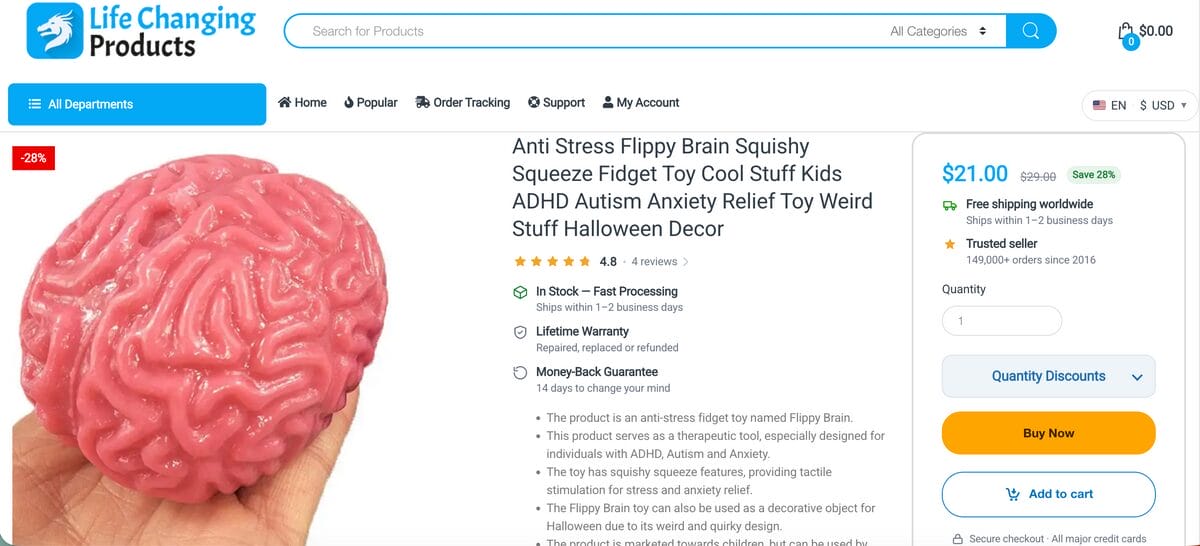
LCPShop’s product page makes the price, processing time, and purchase guarantees easy to find. It also lists dimensions and confirms that the package contains one toy, giving shoppers practical details before they buy. Connecting the brain design to Halloween decor adds a second use beyond keeping it on a desk.
I’d tighten the product name and benefit claims. The title stacks keywords, while the description promises therapeutic benefits for ADHD, autism, and anxiety without presenting supporting evidence. It also wanders into references to a heart and a dinner plate, which makes the copy confusing.
For your own listing, use a simple name, demonstrate the squeezing action, and focus on playful desk breaks or Halloween gifting: the product has enough personality without extra promises.
Getting Ready For Holiday Season
Finding a product people want is only part of the job. October is your chance to test the operation behind it, too—from supplier availability to what happens when a customer asks for a return. Get these basics sorted before increasing holiday spending:
- Plan stock around actual sales. If you dropship, confirm supplier availability and replenishment schedules before scaling. For the heated jacket, check individual sizes and colors. If you hold inventory, start with a small quantity supported by test results; keep Halloween-only items on a tighter buying schedule than products you can sell through December.
- Work backward from delivery dates. Ask suppliers about processing times, shipping options, and peak-season delays. Set order cutoffs for the LED bats and eyeball doorbell using realistic delivery estimates, with a buffer. For the whiskey glass, sample-test protective packaging before holiday gift orders start coming in.
- Get your ad setup working early. Verify billing, conversion tracking, and product-feed accuracy, then run controlled tests you can afford. Use October to compare hooks—like the charcuterie toppers’ hosting angle versus their gift appeal. “Warming up” shouldn’t mean spending randomly or assuming an older ad account guarantees better results.
- Make mobile buying feel easy. Check page speed, compress oversized images, and complete a purchase on your phone. Put dimensions, delivery estimates, and included items where shoppers can find them. The squishy brain listing should clearly say one piece; the heated jacket page should explain whether a power bank is included.
- Prepare customer support for repeat questions. Create clear replies for tracking delays, damaged deliveries, sizing, and missing parts. If the drink dispenser takes off, have cleaning and assembly instructions ready. Set a response-time target you can maintain, and arrange extra help before your inbox becomes a second full-time job.
- Sort out returns before gift orders arrive. Explain the return window, process, costs, and applicable conditions before checkout. Decide whether you can support an extended holiday window, and confirm the supplier’s process for defects or damage. Your customer-facing promise needs to work even when the supplier’s policy is less generous.
Scale the product and its support together. A strong ad for the spinning glass means little if the packaging fails, just as jacket demand won’t help if the popular sizes are unavailable. Those are the problems October testing should uncover while you still have room to adjust.
Frequently Asked Questions
Why is October a good time to test new products?
October brings together Halloween shopping, colder-weather needs, and early holiday gifting. That gives you several angles to test before Black Friday and Cyber Monday. Use the month to learn which products attract paying customers—and whether your supplier can deliver on your promises.
How do I know if a product will sell?
Start with evidence of demand, then test your own offer. Search trends, relevant reviews, and competitor activity can help you shortlist products, but purchases at a sustainable acquisition cost are the stronger signal. Track what remains after product costs, shipping, advertising, and fees; plenty of clicks won’t pay those bills.
What’s the best platform to sell these products on?
The best fit depends on how your customers discover products. A standalone store gives you room to demonstrate visual picks like the drink dispenser or eyeball doorbell, while a marketplace can put practical products in front of shoppers already searching for them. Check the channel’s product and fulfillment requirements before listing, especially for a specialist item like the nebulizer.
How much inventory should I order to start?
If you’re dropshipping, you can test without buying inventory upfront by ordering a sample and confirming supplier availability. If you plan to hold stock, start with a small batch you can afford to sell through slowly. Keep Halloween-only purchases especially tight: leftover bats have a much longer wait for their next big moment than a whiskey glass.
What makes a product trending right now?
A convincing trend usually has several signals behind it: rising searches, recent purchasing activity, and growing attention from a relevant audience. Seasonal demand can strengthen the case, but one popular video doesn’t establish lasting demand. For this list, the external reports provide category context; your own tests need to establish whether the specific product and offer connect with buyers.
How long should I test a product before scaling it?
Plan an initial one- to two-week test, then judge the results by traffic, spending, and purchases rather than the calendar alone. A handful of visits or one lucky sale won’t tell you much. Scale gradually when sales repeat at an acquisition cost your margin can support, and pause sooner if you discover a product or delivery problem.
Which of these products also work well for the holiday season?
The spinning whiskey glass, charcuterie toppers, house-shaped piggy bank, and drink dispenser all have gift or hosting angles to test beyond October. The heated jacket suits colder markets, while the DIY tool and squishy brain can work as practical or novelty gifts. LED bats and the eyeball doorbell depend much more heavily on Halloween timing.
When should I transition from testing to stocking up for the holidays?
Make that decision once you have repeat sales, workable margins, and a supplier you’ve checked—not simply because November is approaching. Work backward from your promised delivery dates, allowing for processing, transit, and a buffer for delays. If you’re staying with dropshipping, the equivalent step is confirming stock and fulfillment capacity before increasing ad spend.
Conclusion
October gives you plenty to work with: a doorbell that startles the neighbors, a jacket that makes early mornings less miserable, or a hosting accessory that gets an immediate “Where did you get that?” The best dropshipping products for October 2026 give shoppers a reason to stop, look, and picture using them.
Start with one or two picks that fit your audience. Order samples, film your own demos, and check what’s left after the costs add up. A satisfying video might earn attention; repeat purchases and reliable delivery give you something worth building on.
And when a product clicks, think about its next chapter. Those charcuterie toppers can go from Halloween snacks to holiday hosting with a change of scenery.
Ready to put a shortlist to work? Start your AutoDS trial to explore products and compare sourcing options, then build your first test around an offer you can confidently deliver. The goal is to enter the following month with fewer guesses and better decisions.
For your next planning session, keep these guides handy: