


Diwali, or Deepavali, is often called the Festival of Lights, but that label only tells half of the story. Celebrated by millions of people across India and Indian communities around the world, Diwali carries religious and cultural significance that can vary depending on the community, region, and family celebrating it.
For sellers, that context matters: these aren’t just “seasonal products”, but items connected to real traditions and celebrations.
At the same time, Diwali is undeniably a major shopping period. Gifts, clothing, home décor, lighting, and festive essentials all factor into the buying cycle, and online shopping plays an increasingly important role.
Diwali can create strong seasonal demand, especially across décor, lighting, gifting, hosting, and festive home products, but the best items are the ones that are both culturally relevant and practical to dropship.
Timing matters as much as product choice. Start preparing in August or September, launch campaigns by early October, and make sure orders can arrive before the main festive period begins.
Supplier location and delivery speed are critical. Whether you’re selling to customers in the UK, USA, or Europe, prioritize local or fast-fulfillment options.
Respectful marketing is part of good e-commerce. Use realistic festive settings, avoid stereotypes or unverified religious symbolism, and focus on how the product genuinely fits into Diwali celebrations.
AutoDS can simplify the seasonal workflow by helping you research products, compare supplier locations, import listings, monitor price and stock changes, and automate orders where supported, all from one place.
Why Sell Diwali Products?
Diwali creates something e-commerce sellers are always looking for: a concentrated period of demand, spread across different product types. Now, there isn’t one standardized “Diwali item.” People are shopping for home decorations, choosing gifts, dressing for celebrations, and hosting family and friends in the weeks leading up to the festival.
Let’s take a look at what that seasonal demand actually looks like among Indian diaspora communities in the UK, as well as markets like the US. And that distinction matters: the same product, price point, delivery promise, or even ad language won’t necessarily work equally well in London and New York.
Localizing for the audience means understanding where your customers live, what they can already buy nearby, how quickly they expect delivery, and which products feel genuinely useful in that market.
Diwali Is a Major Shopping Period
For UK sellers, the opportunity starts with the size of the community itself. Around 1.9 million people in England and Wales identified as Indian in the 2021 Census (the most recent one), representing 3.1% of the population. And while not every British Indian celebrates Diwali (and Diwali isn’t celebrated exclusively by Indians), that still gives you a sense of the audience already living locally.
And the opportunity isn’t limited to the UK. The US had around 5.6 million people identifying as Asian Indian in 2024, according to the US Census Bureau, and major retailers are increasingly treating Diwali as a retail occasion in its own right. Target, for example, now has a dedicated Diwali shop covering décor, lighting, crafts, gifting, and food.
Now, here’s where the diaspora angle really matters. Selling Diwali products in London isn’t quite the same as selling them in New York, even if customers in both places are celebrating the same festival. The celebration itself doesn’t need to be “localized,” but the shopping experience around it does.
In the UK, Diwali already has relatively broad mainstream recognition. According to YouGov, 84% of Britons have heard of Diwali, compared with 49% of Americans. There’s also direct evidence of online demand among diaspora shoppers: reports show that e-commerce is the fastest-growing channel for this festivity, with web traffic spiking around Diwali as customers order early, send gifts directly, and search for products or assortments they can’t necessarily find in stores.
That makes the UK particularly interesting for distinctive décor, personalized gifts, curated bundles, and products that offer more than what shoppers can already find locally. Convenience matters, but so does giving people a reason to choose your store in the first place.
The US needs a slightly different lens. Marketing to a non-Indian audience may require a little more context about what the product is and how it’s used. At the same time, don’t mistake that lower mainstream awareness for a weaker cultural connection within the diaspora. A survey found that 87% of Indian Americans consider being Indian very or somewhat important to their identity.
So, the takeaway is pretty simple: localize the shopping experience, not the celebration itself. Adapt your suppliers, delivery promises, pricing, product selection, and advertising context to the market you’re selling in, while keeping the cultural meaning of Diwali intact.
Diwali Supports Several Product Categories
15 Best Diwali Dropshipping Products for 2026
So, what to sell this Diwali season? That is the question. A product can be popular during Diwali and still be a terrible dropshipping choice.
So, rather than simply listing whatever tends to sell during the festival, I focused on dropshipping-first products: items that are relatively lightweight, easy to ship, and unlikely to create problems with spoilage, breakage, or complicated regulations.
I also prioritized products with clear seasonal relevance without being overly dependent on local availability. That matters during Diwali, when many shoppers can already get traditional essentials quickly from nearby stores or quick-commerce apps.
That’s why the products below make more sense when they offer something decorative, reusable, giftable, customizable, or simply less convenient to source locally.
Of course, that deliberately leaves out a few obvious Diwali products:
- Firecrackers come with safety, shipping, and regulatory issues.
- Religious idols and puja kits are ritual objects I don’t think belong in a “best products to profit from” list.
- Sweets or other food products add unnecessary complications around freshness, ingredients, storage, and regulation.
In those cases, I’d rather recommend products that fit the tradition, such as the gift box instead of the mithai, or the serving piece instead of the food inside it.
With that in mind, here are the best 15 Diwali dropshipping products for 2026.
LED Flameless Diya Sets
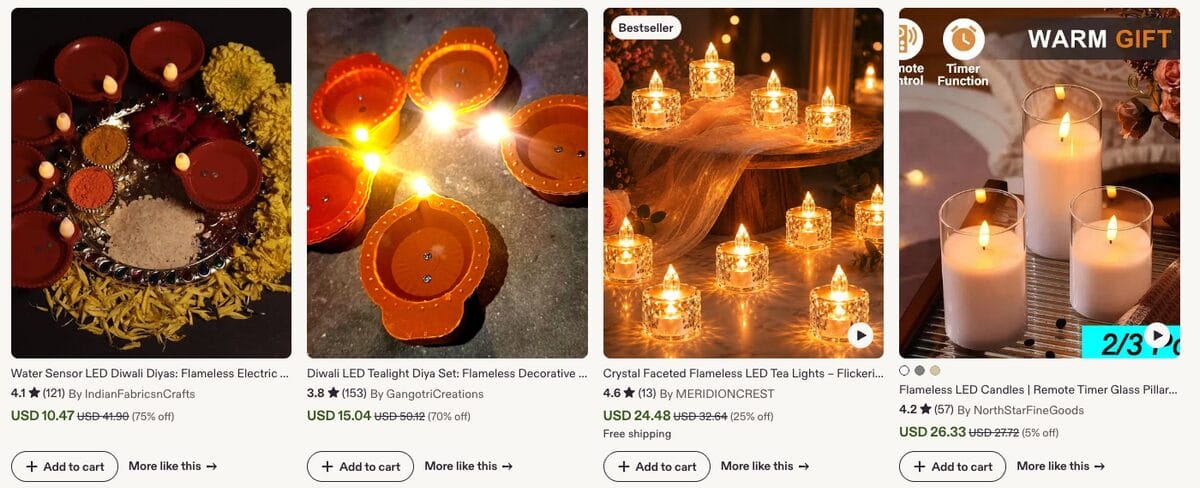
For Diwali, it makes total sense to start with diyas, but… with a twist. Traditional diyas are small oil lamps, often made of clay, that hold cultural and religious significance during Diwali.
So why recommend the LED version here instead? Mostly because this is a dropshipping-first list. Traditional clay diyas are inexpensive, fragile, and widely available from local potters, retailers, and even quick-commerce platforms during the festive season.
That makes them difficult to compete with if you’re shipping from farther away. And, frankly, not especially interesting from a dropshipping perspective.
On a more personal note, I’d also argue for leaving this category closer to its handmade pottery traditions and production, rather than turning a traditional handmade object into just another generic imported product. In other words, just because something can be dropshipped doesn’t mean it should be, especially when the craft and handmade production are part of what gives the object its cultural value in the first place.
Now, LED diya-style lights solve a different problem. They’re reusable, easier to ship, and work well as decorative lighting in places where an open flame isn’t practical, such as apartments, offices, shops, or homes with children and pets.
They shouldn’t be treated as a replacement for traditional diyas, but as an additional decorative option that happens to fit the dropshipping model much better.
Decorative String Lights With Warm LEDs
“String lights” can mean much more than the tiny fairy lights that end up tangled in a drawer for eleven months of the year.
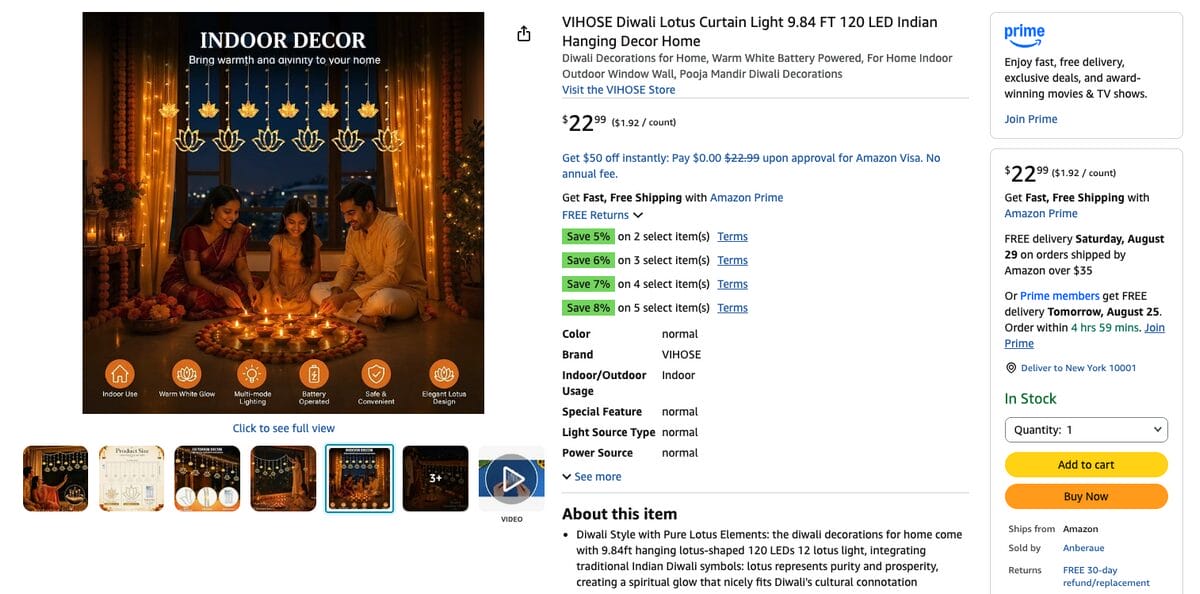
For Diwali, look for warm LED curtain lights, cascading strands, star-shaped designs, and longer strings that can frame entrances, windows, balconies, or interior walls. These formats are already widely used in festive home decoration, with curtain lights and cascading lights particularly suited to larger surfaces.
They also check several dropshipping boxes: they’re lightweight, reusable, visually easy to market, and useful beyond Diwali, which gives you a longer selling window. For outdoor products, though, check that they’re actually rated for exterior use rather than assuming every decorative light can survive a balcony.
And when sourcing Diwali-specific designs, look for curtain-style lights featuring lotus, star, or other festive motifs.
Reusable Rangoli Stencil Sets
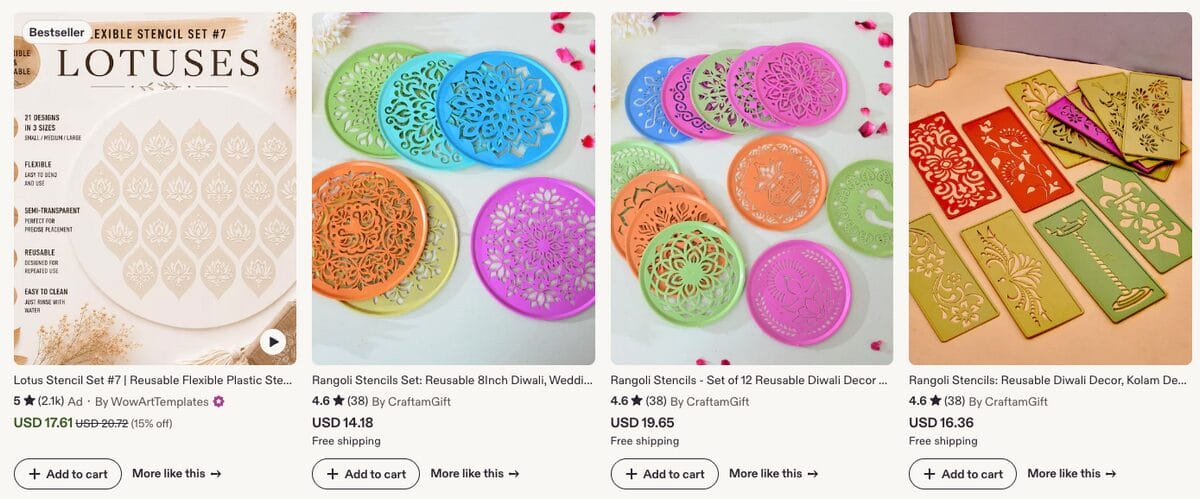
Rangoli is a decorative art form in which patterns are created on the floor, often near entrances, using materials such as colored powder, rice, flower petals, or sand. These designs appear across different Indian traditions and celebrations, including Diwali, where they are commonly used to decorate homes and welcome guests.
Reusable stencils make the process more accessible: place the stencil, add the colors, lift it away, and the design appears underneath. That simple process is exactly what makes this an interesting dropshipping product.
Stencils are lightweight, reusable, inexpensive to ship, and, most importantly, very easy to demonstrate visually. Rather than selling a fairly unremarkable piece of plastic, you’re really selling what someone can create with it.
📢 Marketing Tip: Process videos should work particularly well in this case. Show the stencil going down, the colors being added, and then the final reveal when it’s lifted. That transformation is much more compelling than simply showing the stencil sitting inside its packaging.
Reusable Acrylic Rangoli Floor Décor
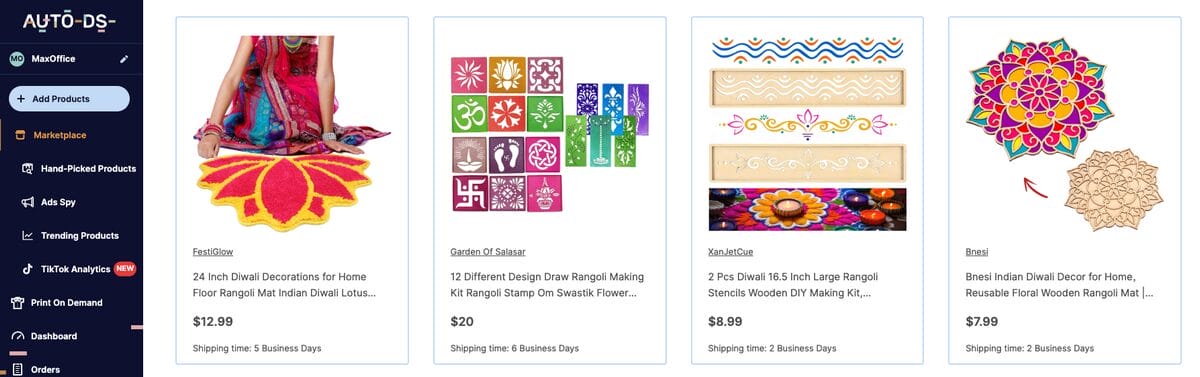
If stencils are about making the rangoli yourself, acrylic rangoli décor is the shortcut version. These are ready-made decorative pieces, often floral, geometric, or diya-inspired, that can be arranged directly on the floor, around an entrance, or as part of a larger Diwali display.
From a dropshipping perspective, the appeal is pretty straightforward: they’re reusable, lightweight, easy to store, and instantly decorative. They also work well for shoppers who want the visual effect of rangoli but don’t necessarily have the time, materials, or confidence to create one from scratch.
The one thing I’d be selective about is the design itself. Since these pieces are placed on the floor, I’d avoid products featuring deities or sacred imagery that could be stepped on, and instead stick to floral, geometric, lotus, or diya-inspired motifs.
Artificial Marigold Toran / Door Garland
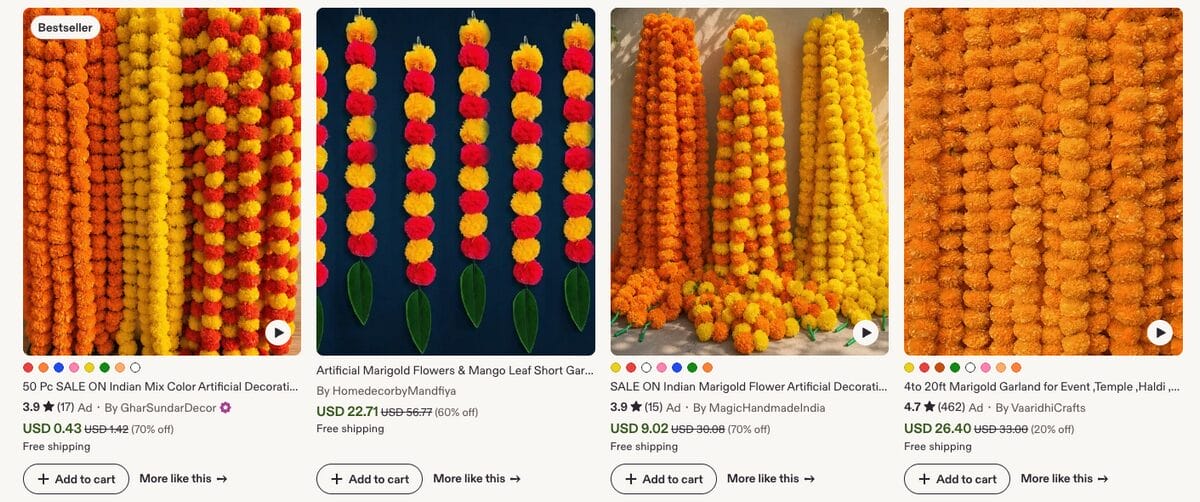
Torans are decorative garlands traditionally hung around doors and entrances, and marigold flowers are especially common in festive decoration across India. They help frame the home’s entrance, which is traditionally decorated during Diwali as a sign of welcome and auspiciousness.
For dropshipping, I’d focus on artificial marigold-style torans rather than fresh-flower versions. They’re lightweight, reusable, easy to store, and definitely more realistic to ship across longer distances without arriving wilted.
Look for fuller garlands, layered designs, or versions mixed with decorative leaves and beads rather than the cheapest plastic-looking options. This will increase the perceived value.
📢 Marketing Tip: Pair a marigold-style toran with LED diya-style lights or reusable rangoli décor to create a complete entrance-decorating set.
Decorative Lotus Tealight Holders
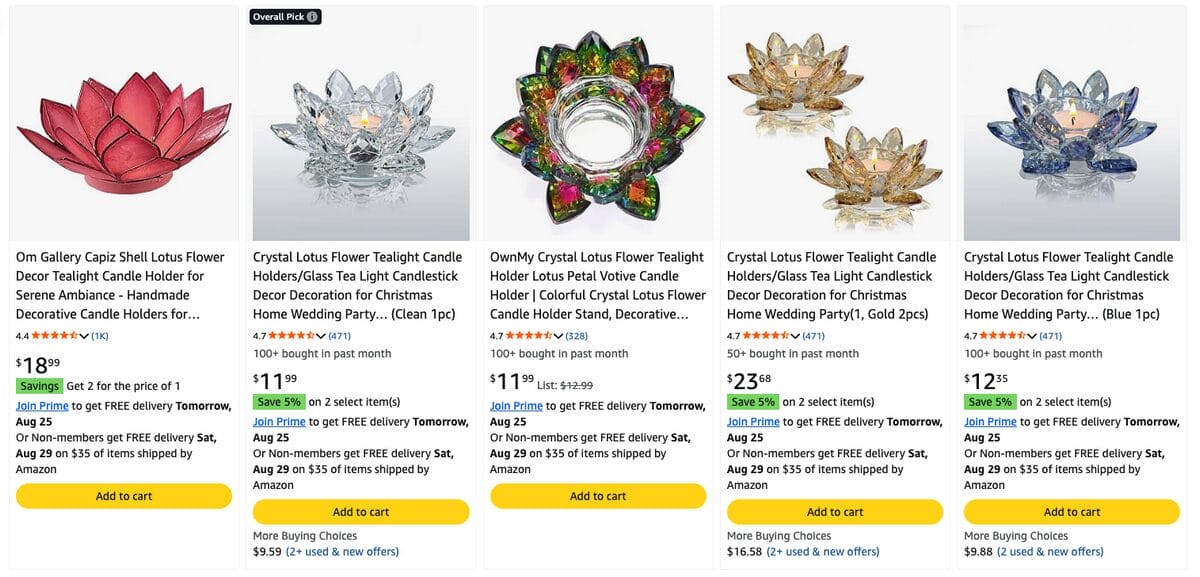
Lotus-shaped tealight holders fit naturally into Diwali décor because they combine two familiar visual elements of the festival: light and floral decoration. The lotus also appears frequently in Indian art and religious imagery, so for this product I’d keep the design tasteful and decorative rather than leaning too heavily on sacred symbolism in the marketing.
From a dropshipping perspective, these work best when they’re small, lightweight, and sold in sets. Metal or acrylic versions are generally easier to ship than delicate glass or heavy ceramic ones, and they can be used on tables, shelves, entrances, or as part of a larger festive arrangement.
They’re also easy to bundle with other décor on this list, especially LED diya-style lights or string lights, to create a coordinated lighting setup rather than selling each piece in isolation.
Decorative Urli Bowl With Floating Décor
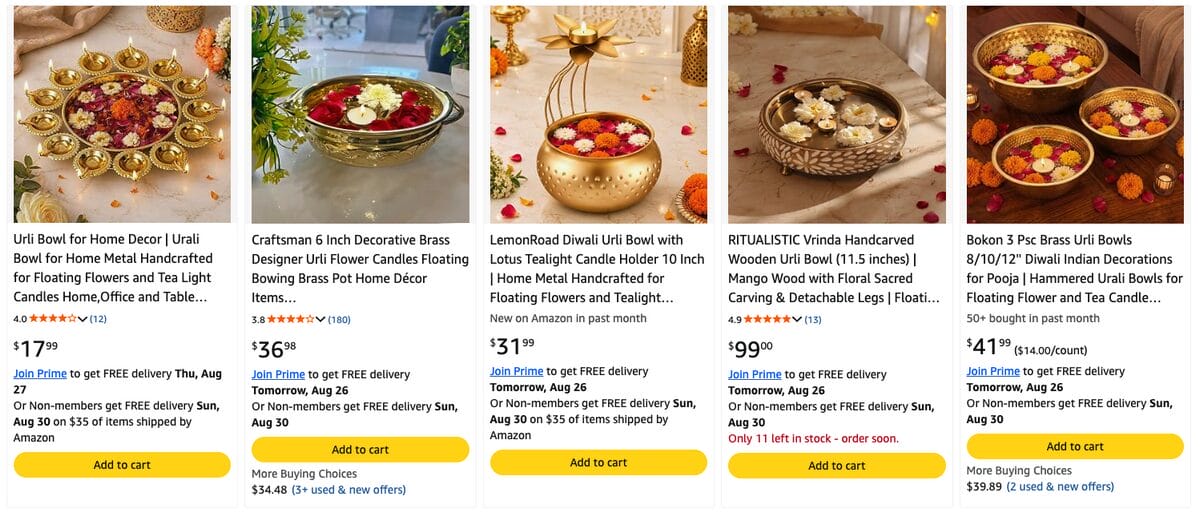
An urli is a wide, shallow vessel traditionally used in South India and now commonly repurposed as décor with water, flowers, petals, candles, or LED lights. During Diwali, it works especially well as a centerpiece for entrances, living rooms, or dining areas.
For dropshipping, though, the material matters. Traditional brass or bronze urlis can be heavy and expensive to ship, so I wouldn’t recommend those. Instead, look for lightweight decorative versions made from thinner metal or acrylic that recreate the same visual effect without the fulfillment headache.
This can still be a higher-value décor item when the design feels substantial or comes as a coordinated set, but if the supplier version is heavy, fragile, or costly to ship, skip it.
📢 Marketing Tip: This is also an easy product to build around. Pair it with floating LED candles, artificial flower petals, or lotus tealight holders to turn one decorative item into a complete festive setup.
Diwali Gift Hamper Boxes / Empty Gift Packaging Sets
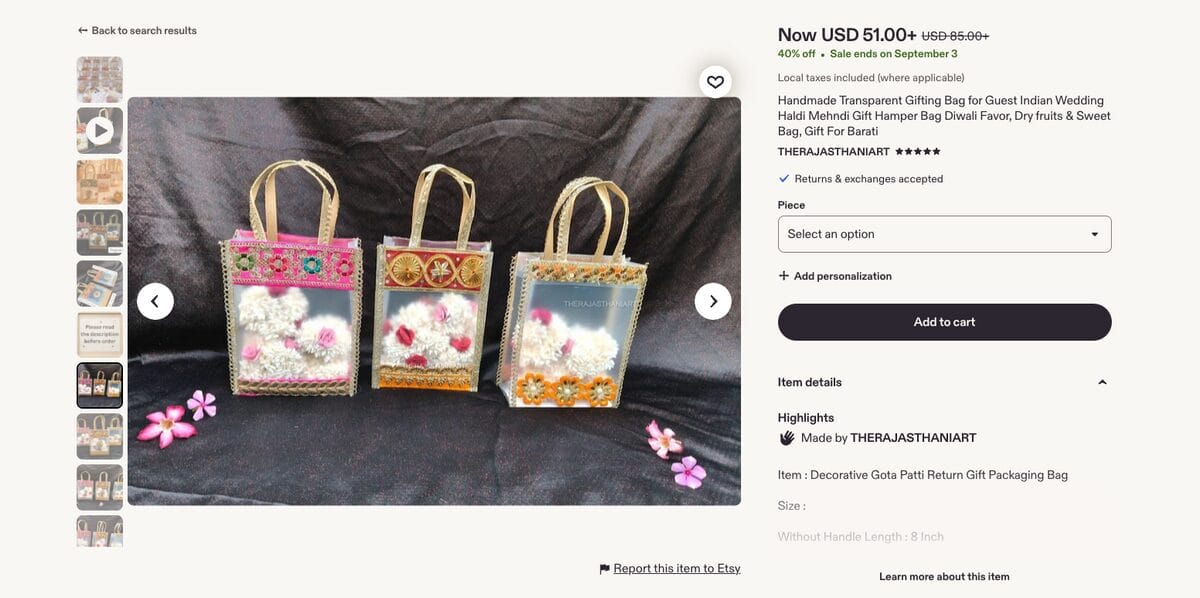
Gift-giving is a big part of Diwali, which makes empty hamper boxes and decorative packaging sets an interesting way to tap into the season without having to dropship food, sweets, or other perishable items.
Look for rigid gift boxes, compartment boxes, reusable fabric-covered boxes, decorative gota patti gift bags, or sets with festive patterns that shoppers can fill themselves with sweets, dry fruits, candles, skincare, or small gifts. They’re relatively easy to ship and can also appeal to small businesses putting together their own Diwali hampers.
💡 Pro Tip: Sometimes the best e-commerce opportunity around a tradition isn’t the traditional item itself. Selling the tools, packaging, or accessories around the activity can reduce issues with perishability, shipping, and cultural authenticity.
Decorative Dry Fruit Serving Box
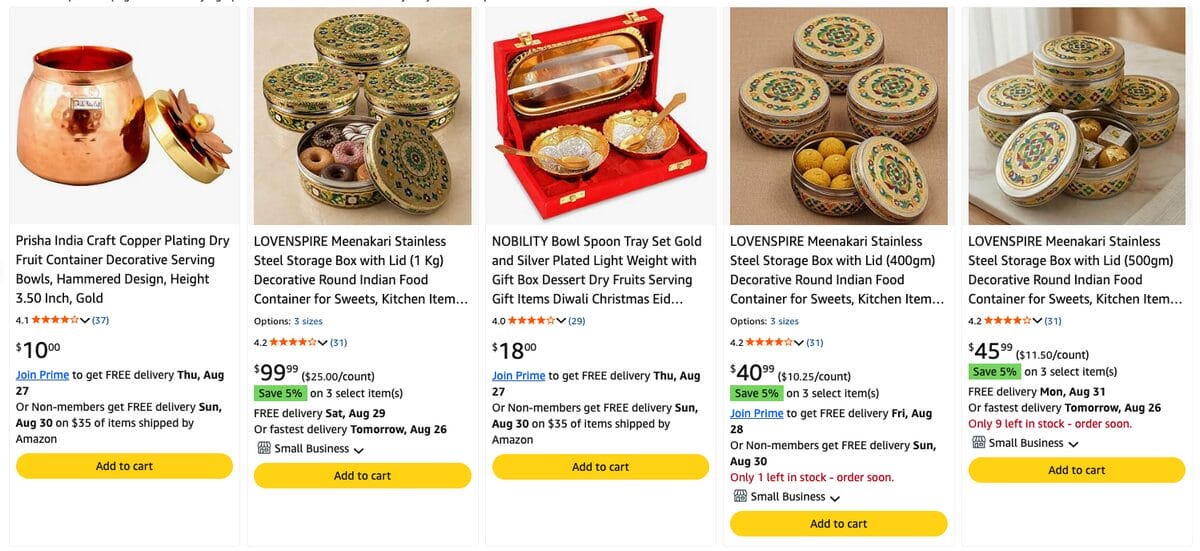
Dry fruits are a common Diwali gift and a hosting staple, making the box itself a smart product to focus on. Think compartmentalized wooden boxes, decorative metal cases, or reusable serving boxes designed for almonds, cashews, pistachios, and other small treats.
For dropshipping, the advantage is obvious: you can tap into the gifting tradition without shipping food. That avoids expiry dates, storage requirements, and other complications that come with edible products, while still giving shoppers something they can fill themselves or reuse later.
I’d look for designs that feel gift-worthy on their own, like engraved lids, festive patterns, or multiple compartments, while keeping an eye on weight. A beautiful, solid-wood box is pretty, but not dropshipping-friendly.
Personalized LED Name / Family Sign
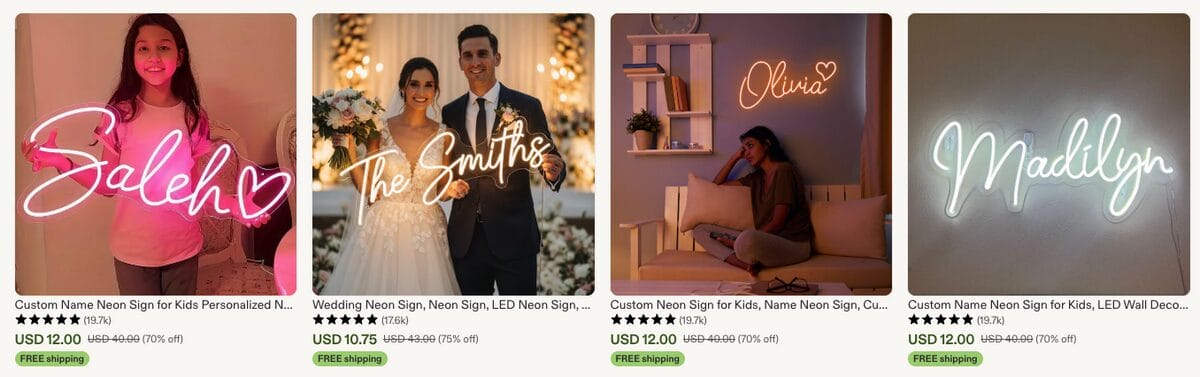
Personalization gives this product an immediate advantage. Instead of selling a generic festive decoration, you can offer an LED sign customized with a family name, surname, or a short message.
This is also where print-on-demand can be especially useful. The supplier produces the sign only after the customer submits their personalization, so you can offer custom designs without holding inventory yourself.
That customization can significantly increase perceived value, giving you more room to price above a comparable non-personalized LED sign and potentially protect your margins.
For Diwali, I’d position these primarily as personalized home décor or gifting products, rather than as traditional festival items. The appeal is that shoppers can make their festive setup feel more personal, and you’re selling something local that quick-commerce is less likely to deliver off the shelf.
Embroidered Potli Gift Bags
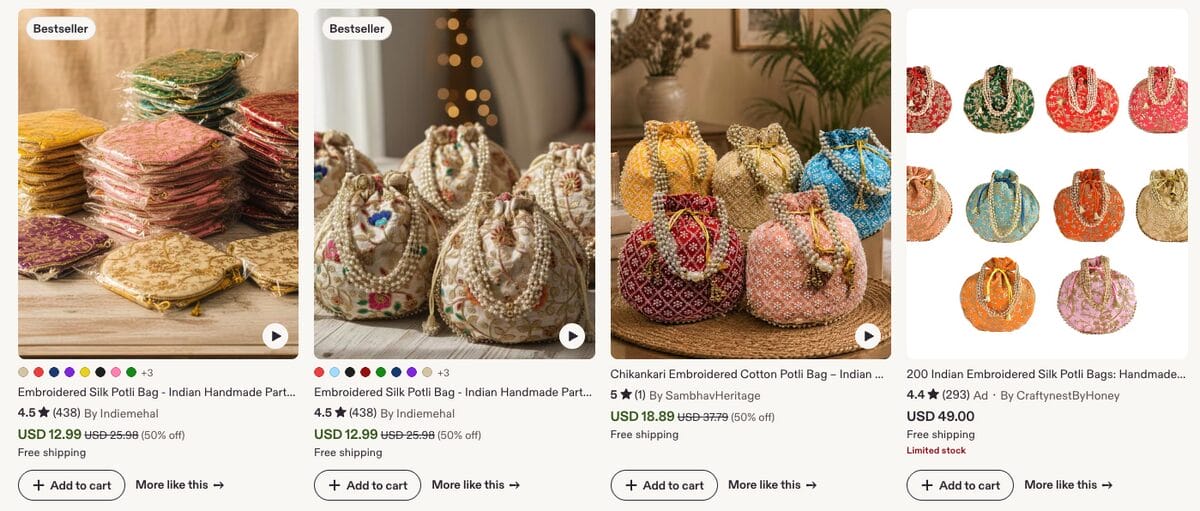
Potli bags are small drawstring pouches traditionally used in India and now commonly seen as festive accessories and gift packaging. For Diwali, these work especially well for presenting sweets, dry fruits, jewelry, small favors, or other gifts in a way that feels more decorative than a standard bag or box.
They’re also a very practical dropshipping product: lightweight, compact, inexpensive to ship, and easy to sell in sets. Embroidery, beadwork, mirror details, or metallic trims can raise the perceived value without adding much weight, giving you more flexibility on margins.
You can also position them in two ways: as gift packaging or as a small festive accessory in their own right. That makes them easy to bundle with dry fruit boxes, jewelry, or other Diwali gifting products.
Gold-Tone Decorative Serving Tray Set
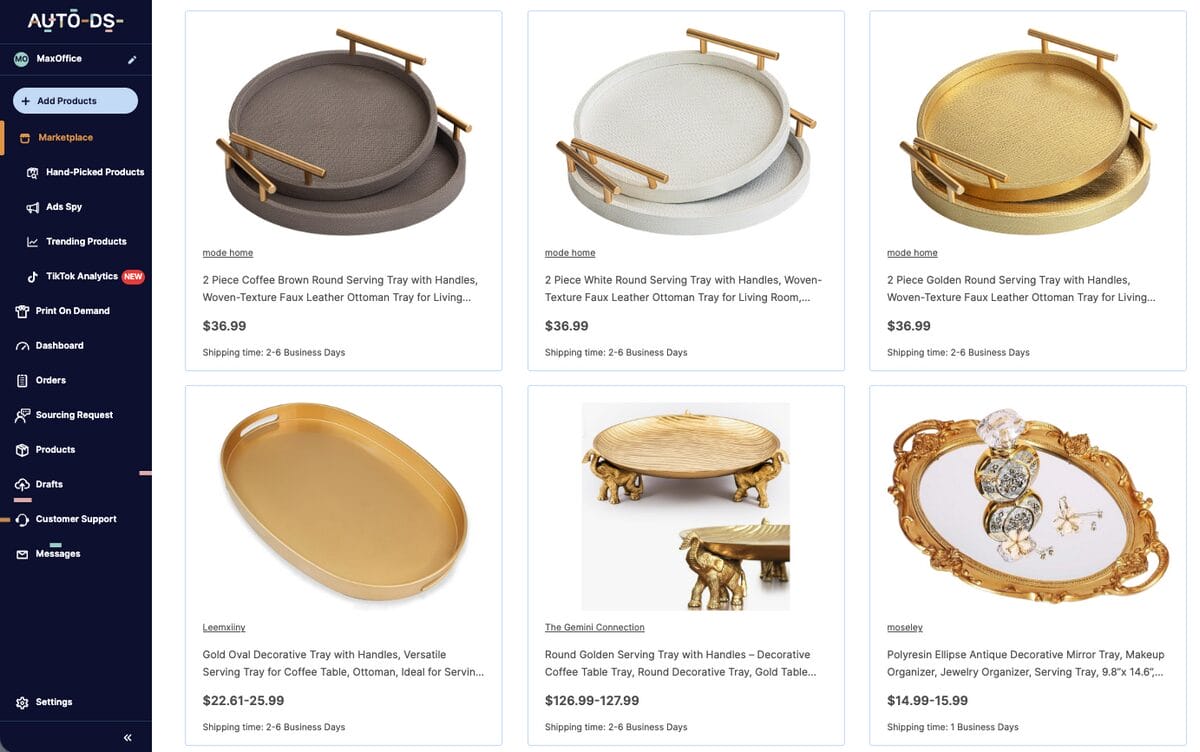
Serving trays make sense during Diwali because the festival often involves hosting, visiting family and friends, and presenting sweets, dry fruits, drinks, or small gifts.
For dropshipping, I’d focus on gold-tone metal or lightweight alloy sets rather than actual brass or other heavy materials. They can still look polished and gift-worthy without creating unnecessary shipping costs, and sets of two or three usually feel more valuable than a single tray.
📢 Marketing Tip: This is an easy product to bundle with dry fruit serving boxes, potli bags, or tealight holders for shoppers putting together a coordinated hosting or gifting setup.
Cushion Cover Sets
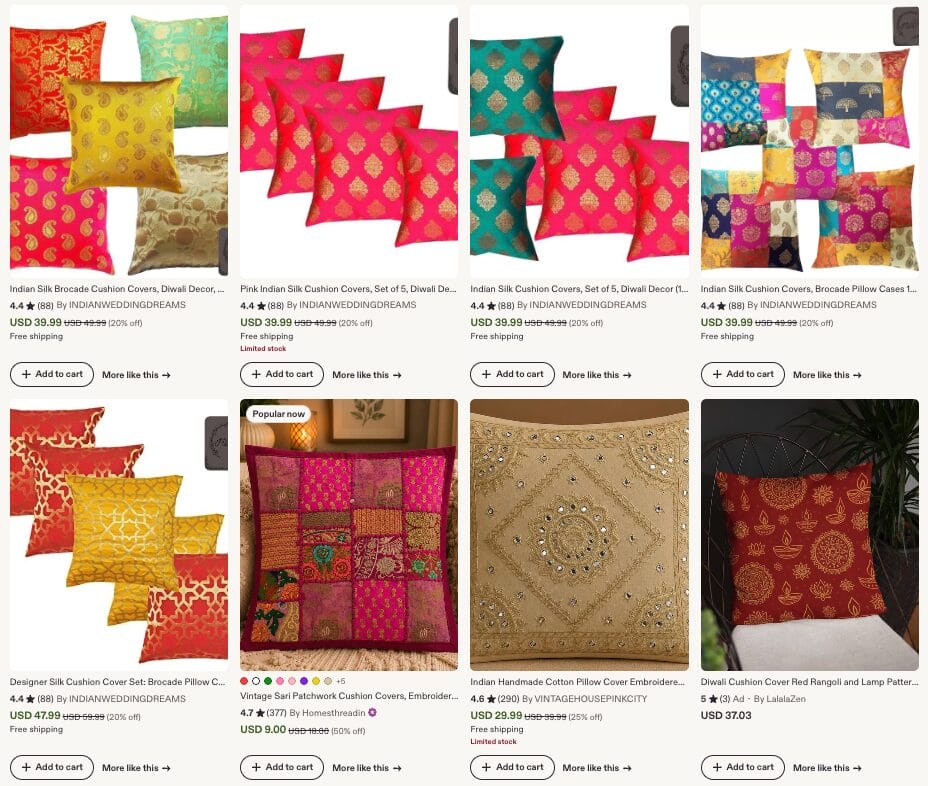
Cushion covers are a simple way to refresh a room for Diwali without committing to larger décor pieces. They’re lightweight, compact, easy to ship, and easy to sell in coordinated sets, which makes them a much better fit for dropshipping than bulkier home textiles like cushions.
For Diwali, look for rich colors, metallic details, embroidery, or geometric and floral patterns that work well with festive home styling. Just avoid assigning a specific religious or cultural meaning to a motif unless you’ve actually verified it.
📦 Supplier Tip: Festive textiles are one of those categories where product photography can be very flattering. Embroidery quality, fabric weight, stitching, and finishing may look quite different in person, so check customer review photos and consider ordering samples before scaling anything positioned as premium.
Festive Table Runner & Placemat Set
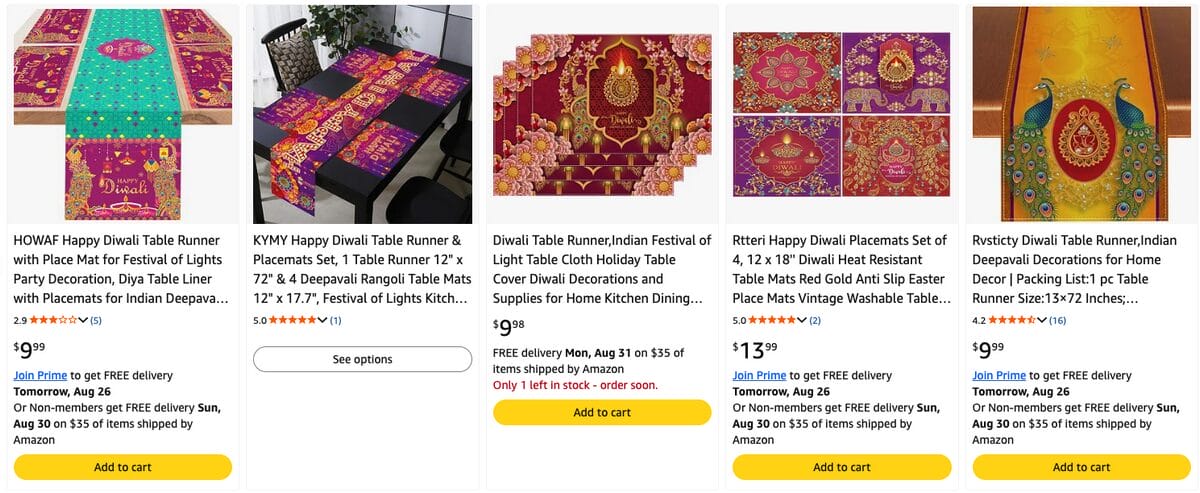
As I’ve already mentioned, Diwali often means hosting, shared meals, sweets, and family gatherings, so, of course, we can’t miss table textiles on this list, a must on pretty much any festivity around the world, from Diwali to Thanksgiving.
For dropshipping, they’re a strong fit because they’re lightweight, foldable, easy to bundle, and inexpensive to ship. Look for sets with embroidery, metallic accents, rich colors, or floral and geometric patterns that feel festive without making unverified claims about cultural symbolism.
They also work well as a bundle with serving trays, dry fruit boxes, or tealight holders, especially for shoppers preparing their home for guests.
Decorative Lantern / Hanging Kandil
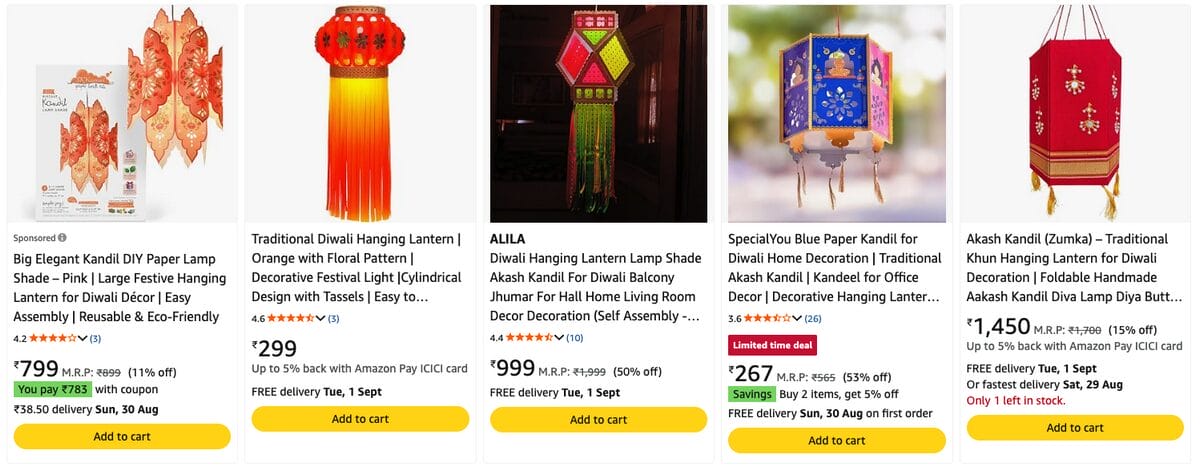
A kandil, or akash kandil, is a colorful hanging lantern traditionally displayed outside homes during Diwali, particularly in Maharashtra and other parts of western India. Often made from paper and built around a geometric frame, it becomes part of the lighting that marks the home for the festival. Traditional kandil makers have even described them as something like a “flag” announcing Diwali.
This is a perfect dropshipping-friendly product because it’s lightweight and foldable, making shipping very low-cost. Paper, fabric, and thin decorative materials make far more sense than bulky lanterns, while bright colors and intricate cut-out designs give sellers plenty to work with visually.
📢 Marketing Tip: Add some regional context when marketing this product. Rather than presenting the kandil as something that every Diwali celebration looks the same without, explain what it is and where the tradition is especially relevant.
When Should You Start Selling Diwali Products?
The key to seasonal dropshipping is starting early. This applies to Diwali as well as to other festivities around the world. For 2026, Diwali falls on Sunday, November 8, but the real work should start way before that (seriously: waaay before).
First thing to consider: There isn’t one universal date when everyone starts preparing for Diwali. In many households, cleaning, shopping, and decorating begin gradually in the weeks leading up to the festival, while the main five-day celebration starts with Dhanteras. For 2026, that falls on November 6, so ideally, your products should already be in customers’ hands before then, not still somewhere in transit.
To meet these deadlines, I personally recommend starting your product research in August or early September (yup, more than two months in advance). Then, use September to order samples, check shipping times, and prepare listings.
By early October at the latest, your campaigns should already be live. This gives you time to see what people actually respond to, while also getting ahead of the competition.
The closer you get to Diwali, the more fulfillment starts to matter. If you’re selling in the UK or US, you’re also competing with major retailers, specialist South Asian stores, and marketplaces offering fast domestic fulfillment. So, by late October and early November, I’d only keep pushing products that can still arrive comfortably before the festival.
Here’s your timeline cheat sheet:
| Period | What Sellers Should Do |
|---|---|
| August–September | Research products and suppliers |
| September | Order samples and prepare listings |
| Early October | Begin campaigns and product testing |
| Mid–late October | Scale products that are already performing |
| Early November | Prioritize fast or local fulfillment |
| After Diwali | Stop event-specific campaigns and transition reusable products into broader home décor or gifting angles |
Now, keep in mind that some products are very Diwali-specific, while others can still work year-round. For example, a kandil or rangoli stencil has a much tighter seasonal window, while string lights, cushion covers, and serving trays can stay in your catalog as long as you reframe your marketing.
How to Choose Diwali Products to Dropship
So, how to choose the best Diwali products for dropshipping? The best options aren’t the ones that simply look festive. They need to survive the practical side of the model: shipping, timing, margins, and customer expectations.
To make it easy for you, I put together a bunch of filters to help you build your catalog.
Cultural Relevance
Start with the obvious question: does this product genuinely have a place in Diwali celebrations, or are you simply adding the word “Diwali” to it? Products tied to decorating, gifting, hosting, lighting, or festive preparations make sense, but random products with a diya graphic slapped onto them usually don’t.
At the end of the day, always remember that this is a cultural celebration, so it’s important to be respectful.
Visual Appeal
Diwali is an extremely visual celebration, which is great news for dropshipping because it makes it really easy to market these products in short-form video. I mean, you’ve seen the products above: they’re gorgeous, colorful, and look very good on camera.
So, to make the most of it, look for items that photograph well, create a clear before-and-after effect, or can be demonstrated naturally, like a rangoli appearing from a stencil, warm lights switching on, or an entrance coming together piece by piece.
Shipping Practicality
The ABC of dropshipping: avoid products that are fragile, oversized, heavy, or difficult to package whenever possible. A beautiful metal centerpiece might look profitable, but it isn’t if shipping costs eat into your margins and breakage risk comes into play.
Delivery Reliability
This one matters more than usual because, like other festivities and special occasions, Diwali products have an expiration date… in a very literal sense. An order that hasn’t arrived before November 8th will probably become a customer complaint, a bad review, or a return ticket soon enough.
This is why it is super important to prioritize suppliers with predictable shipping times, tracking, and ideally local or regional fulfillment within the UK or US. And hey, your side of the operations is equally important: the sooner you transfer the order to your supplier, the sooner the whole process will get moving.
Here’s where automation can help you keep operations running on autopilot without your constant input, especially as demand increases.
Reusability
Products customers can bring out again next year, or use for other celebrations and home décor, tend to offer stronger perceived value. String lights, serving pieces, textile sets, and reusable rangoli tools all benefit from this.
That advantage works well for you as the seller as well: those exact items can stay in your catalog well after Diwali itself, meaning you don’t need to immediately remove them and can still profit from best sellers.
Bundle Potential
Look for products that naturally belong together. Entrance décor, lighting sets, gift packaging, table decorations, and hosting accessories can often be bundled into a more complete setup, increasing average order value without making the offer feel forced.
Margin Potential
Finally, run the numbers carefully. Many decorative products are so inexpensive that they just don’t make sense, as ad spend, shipping, transaction fees, and returns can eat into the margin.
Products with customization, bundling potential, distinctive craftsmanship, or stronger perceived value usually give you more room to price sustainably.
Where to Find Diwali Dropshipping Products
Diwali products are awesome. Now, the real questions: where to find them and how to source them? Since we’re mainly targeting Indian communities in the UK and the USA, the supplier question becomes much more straightforward than if we were trying to ship into India.
The priority is to source products from suppliers that can deliver reliably within your target region, ideally from local or regional warehouses when possible. That gives you a better chance of meeting seasonal delivery windows and competing with the retailers your customers already use.
So, before recommending any supplier for Diwali, check two things:
- Does it reliably deliver to your target market?
- Can the specific product arrive comfortably before the festival?
The good news is that sellers in the UK and the US have access to a much wider pool of mainstream dropshipping suppliers and marketplaces, including options with domestic fulfillment. The key is still to validate each product individually, especially for something as time-sensitive as Diwali.
AutoDS Marketplace
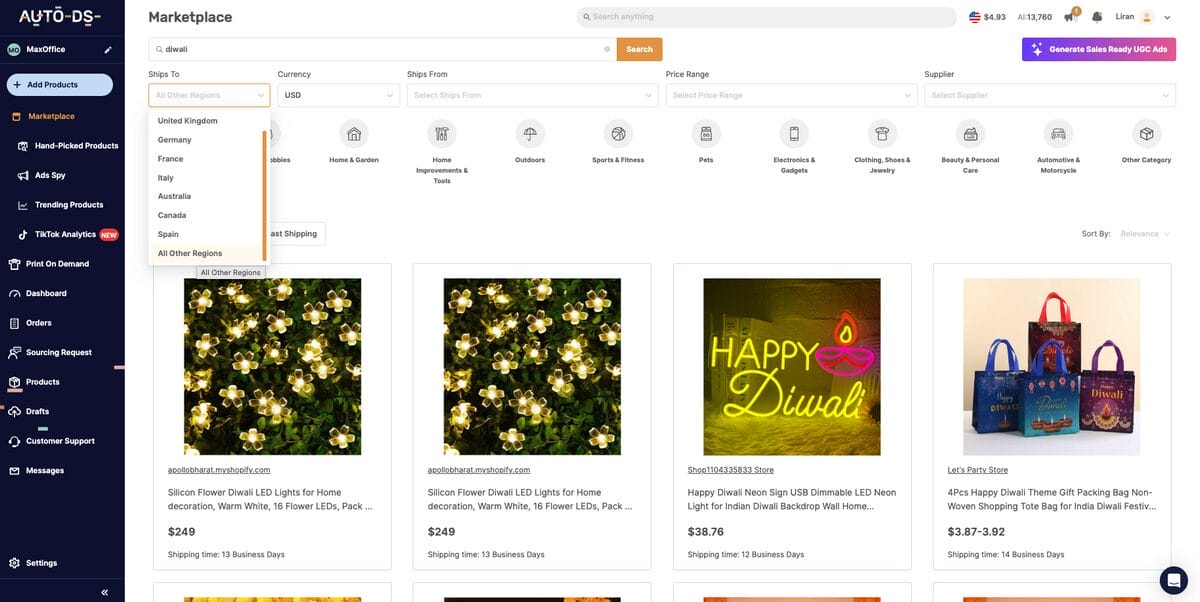
The AutoDS Marketplace is probably the easiest place to start because you can handle product discovery and fulfillment all in the same workflow.
Start by searching for products such as rangoli stencils, LED décor, potli bags, or festive textiles, then use the Ships To and Ships From filters to narrow results by warehouse and supplier location. AutoDS also displays shipping estimates based on those selections. You can even use GBP as the currency, so everything stays local. Same for other regions, such as the US, Canada, Germany, Italy, France, and Australia.
Once you find a viable option, check the supplier, delivery estimate, reviews, policies, and shipping origin before importing it to your store.
AutoDS also supports 25+ global suppliers (such as Amazon, Etsy, eBay, and AliExpress) with regional fulfillment options across markets such as the US, UK, Russia, Australia, and Europe, which is especially useful when you want to mix private suppliers with global vendors. This gives you more flexibility and variety across your catalog.
From there, AutoDS can help with product import, price and stock monitoring, and order automation (as long as the selected supplier is supported). AutoDS is an all-in-one dropshipping platform that centralizes the entire workflow in one place, from connecting you with global suppliers to syncing product data and automating order fulfillment where supported.
For a seasonal campaign like Diwali, that centralization is especially useful because you can compare sourcing options and delivery locations without managing each supplier separately.
If you want to check it out, you can try AutoDS for just $1 to see how it fits your workflow.
Best Marketplaces For Diwali Sourcing
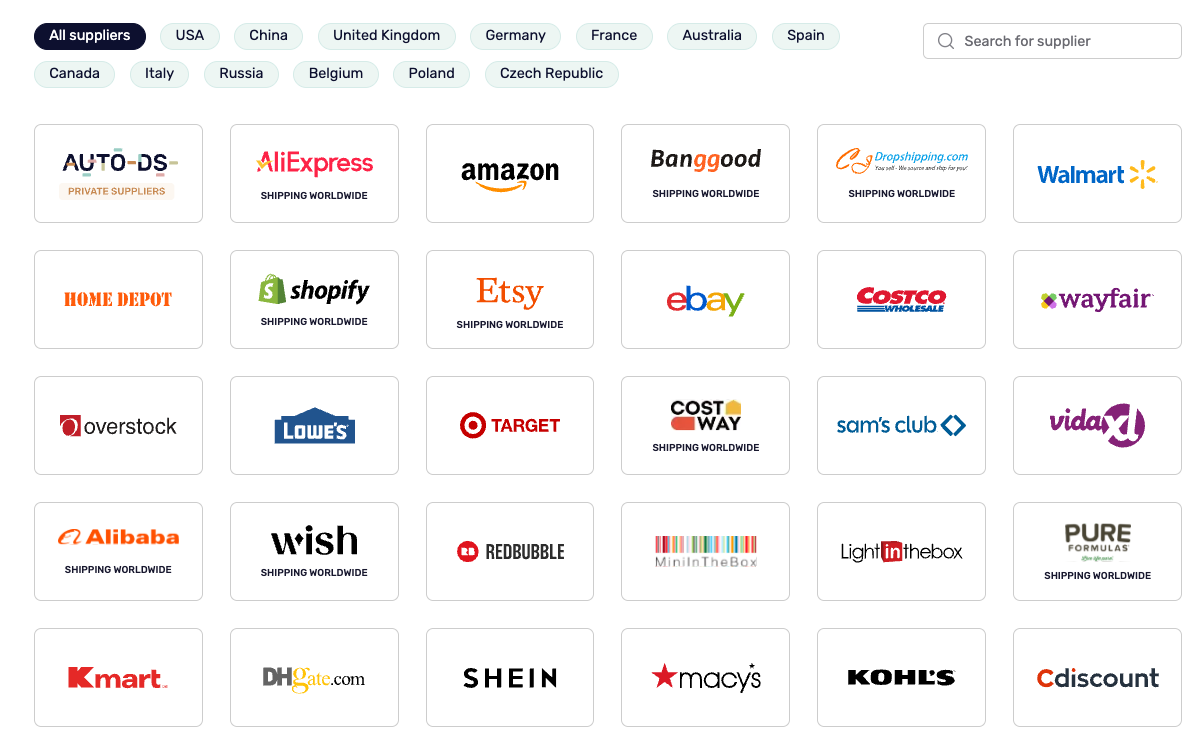
I’ve already said this multiple times: local fulfillment is essential in seasonal dropshipping. It’s more reliable, usually faster, and gives you a much better chance of getting orders to customers before the date they actually need them. That’s where global marketplaces with local warehouses or local shipping come in.
For instance, if the UK is your main market, there’s very little reason to use long-distance fulfillment when you can source many Diwali products from stock already located in the UK. That can shorten delivery times, reduce customs complications, and give you much more breathing room as November 8 gets closer. For example, here are some of the best UK dropshipping suppliers for Diwali season:
- Amazon UK is probably the most straightforward option. You can find everything from LED diya-style lights and rangoli products to torans, gift packaging, textiles, and festive décor, while Amazon’s domestic fulfillment network can make delivery considerably faster. As of 2025, Amazon operated 31 fulfillment centers across the UK, with further expansion underway.
- AliExpress has a huge selection of decorative lighting, textiles, gift packaging, and Diwali-style décor. The advantage for UK sellers is that selected products can be filtered by UK warehouse or “Ships From: United Kingdom” availability, helping you avoid cross-border delivery when local inventory is available. Just verify the shipping origin on each listing rather than assuming every AliExpress product is stocked locally. AutoDS also lists AliExpress as one of its UK supplier options.
- Banggood is particularly useful for lightweight products such as LED lighting and decorative accessories, and it operates a dedicated UK warehouse option alongside its international warehouses. Again, check the individual product because not everything in Banggood’s catalog is stocked in Britain.
- eBay UK is worth exploring for more niche Diwali décor, including torans, rangoli products, candle holders, and handmade-looking accessories. eBay itself doesn’t warehouse all of this inventory, so use the item location filter to prioritize products already located in the UK. There are currently Diwali listings dispatching directly from UK locations, which can be far more practical than importing each order individually.
- Etsy UK is my favorite for this occasion because of its handmade, vintage approach. You can find kandils, personalized signs, tealight holders, torans, rangoli décor, and gift packaging, typically designed by the seller, giving these products a more unique, handcrafted vibe. Just keep in mind that Etsy doesn’t operate its own fulfillment warehouses, but you can specifically filter for products sent from the United Kingdom, and its UK marketplace currently has dedicated Diwali listings from UK-based sellers.
The same list may apply to other Western markets, including the US, Canada, and parts of Europe, where many of these marketplaces also operate local sites, regional warehouses, or domestic seller networks. The principle remains the same: prioritize products already stocked near your customer whenever possible, especially for a seasonal event where delivery timing can make or break the sale.
📦Supplier’s tip: Want to check out the best options for your region? Check out AutoDS’s global supplier network and see which one operates locally in your target region.
Market Diwali Products Respectfully With These Tips
Something worth mentioning is how to sell Diwali products respectfully, especially if you’re not Indian yourself or don’t know much about Indian culture.
Respectful marketing here is mostly about specificity. Diwali has its own traditions, visual language, and regional variations, so the safest approach is not to flatten all of that into a vague idea of “Indian festivity.”
Show the product for what it is, explain how it fits into the celebration, and avoid making cultural claims you haven’t actually checked.
Also, as I’ve mentioned before, respecting handcrafted production and recognizing when a traditional product is better sourced from local artisans than turned into a generic imported item is part of approaching the season responsibly.
1. Show Products in Realistic Festive Settings
If you’re selling rangoli stencils, show them being used on an entrance floor. If it’s a toran, photograph it above a doorway. If it’s an urli, style it with water, flowers, and lights.
In other words, show the product doing the job you’re selling it for. Avoid simply Photoshopping it onto a generic “Indian” background with random colors, temples, or decorative motifs. Besides being culturally lazy, it usually makes for weaker advertising anyway.
2. Focus on Celebration, Home & Gifting
Many of the products on this list naturally fit into decorating the home, welcoming guests, exchanging gifts, entertaining, and preparing for the festival. Those are strong enough marketing angles on their own.
You don’t need to exaggerate the religious significance of a cushion cover or claim that a decorative LED light carries some deep traditional meaning. Sometimes it’s perfectly fine for festive décor to simply be festive décor.
3. Avoid Religious Stereotypes
Diwali isn’t celebrated in the same way by everyone, and its meaning varies across religions, regions, and communities. Avoid ads that present one ritual, symbol, outfit, or family scene as the universal Diwali experience.
The same goes for sacred imagery. Don’t use a deity, mantra, or religious symbol simply because it makes the ad look more “authentic.”
📢 Marketing Tip: If you don’t understand the meaning of a symbol, ritual, or phrase, research it before putting it in an ad. Cultural accuracy is part of good marketing.
4. Localize for the Audience
Your Diwali customer may be in London, Birmingham, New York, Toronto, Sydney, or even Mumbai, and those are very different e-commerce environments. Product availability, price points, shipping expectations, and even mainstream awareness of Diwali can change from one market to another. The product mix, price point, shipping expectations, language, and even what feels difficult to find locally can change substantially depending on the market.
📢 Marketing Tip: Don’t assume all diaspora markets behave the same. Localize the shopping experience (product selection, pricing, fulfillment, and messaging) to the audience you’re actually targeting.
5. Build Curated Bundles
This is one season where bundles can feel genuinely useful rather than like an excuse to throw three products together. Think an entrance décor set with a toran, LED diya-style lights, and rangoli décor, or a hosting bundle with a serving tray, table runner, and tealight holders.
💰 Financial Tip: Bundles don’t only increase AOV. During festive shopping, they also sell convenience. “Everything you need to decorate your entrance” can be a much stronger proposition than asking shoppers to find and choose four separate products themselves.
Frequently Asked Questions
What are the best Diwali dropshipping products?
Some of the best Diwali dropshipping products are LED diya-style lights, string lights, rangoli stencils, artificial torans, festive gift packaging, potli bags, table décor, cushion covers, and hanging kandils. Prioritize products that are lightweight, reusable, visually appealing, and easy to deliver before the festival.
When is Diwali in 2026?
Diwali falls on Sunday, November 8, 2026. The main five-day festive period begins shortly before that, so sellers should plan for customers to receive their orders ahead of the main celebration.
When should I start selling Diwali products?
Ideally, start researching products and suppliers in August or September, prepare listings during September, and begin marketing by early October. By late October, focus only on products with reliable pre-Diwali delivery.
Is Diwali a good time for dropshipping?
Yes, Diwali can be a strong seasonal opportunity for dropshipping because shoppers spend across gifting, home décor, lighting, fashion, hosting, and festive essentials. The catch is timing: products need to be culturally relevant, suitable for dropshipping, and delivered before the celebration.
What products sell the most during Diwali?
Major Diwali spending categories include clothing, jewelry, gifts, home décor, lighting, sweets, dry fruits, electronics, and household products. For dropshipping specifically, décor, lighting, gifting accessories, and lightweight textiles generally make more sense than food, valuable jewelry, fireworks, or fragile traditional products.
Can I dropship Diwali products in India?
Yes, you can dropship Diwali products in India, but supplier location and delivery speed are especially important. India has strong domestic e-commerce and quick-commerce networks, so slow cross-border shipping can be difficult to compete with. Prioritize local or fast-fulfillment suppliers and verify the delivery estimate for every product.
Can I sell Diwali products outside India?
Yes, you can absolutely sell Diwali products outside of India. Diwali is celebrated by Indian communities around the world, including large communities in the US, UK, Canada, Australia, and elsewhere. Selling abroad can be particularly interesting for décor and gifting products that may be harder to find locally.
How can I market Diwali products respectfully?
To market Diwali products respectfully, show products in realistic festive settings, focus on home, gifting, hosting, and celebration, and avoid reducing Diwali to stereotypes or generic “Indian” imagery. If you’re using a religious symbol, ritual, phrase, or cultural reference you don’t understand, research it first rather than guessing.
Start Selling Diwali Products With AutoDS
Diwali creates a huge e-commerce opportunity, but this isn’t about grabbing anything vaguely festive and throwing it into your catalog to see if it sticks. Understand the celebration first, then focus on products that have a genuine place in Diwali decorating, gifting, hosting, and home preparation (and that also make practical sense for dropshipping).
From there, timing and logistics do most of the heavy lifting. Launch early, verify supplier locations and delivery windows, and make sure every product can realistically arrive before the festival. Just as importantly, market these products with cultural accuracy rather than leaning on stereotypes or generic “Indian” visuals.
AutoDS can help bring the operational side together by centralizing product research, supplier sourcing, importing, stock and price monitoring, and order automation.
That gives you more time to focus on the part that actually needs judgment: choosing the right products, presenting them respectfully, and getting them in front of the right audience at the right moment.
And if you’re looking to join other seasonal festivities around the world, here are a few articles you might find helpful: