


Dropshipping on Facebook Marketplace is, hands down, one of the most accessible ways to start selling online today. And it’s easy to see why: billions of users, a setup you can knock out in an afternoon, and zero need to build a full e-commerce website. That said, it comes with its own set of rules, and knowing them upfront saves you a lot of trial and error.
So in this guide, I’ll walk you through how to dropship on Facebook Marketplace step by step, what sets it apart from other selling channels, and the strategies that actually move the needle.
Along the way, I’ll also show you where automation earns its keep at every stage of the workflow. AutoDS, for instance, connects directly to Facebook Marketplace to automate product imports, monitor prices and stock, and process orders, so you’re not doing all of it by hand.
By the time you’re done reading, you’ll know exactly what to do. And just as importantly, what mistakes to skip entirely.
Facebook Marketplace is a low-cost, beginner-friendly way to start dropshipping in 2026, giving you access to built-in traffic without needing your own website.
Success on Facebook Marketplace depends on smart choices, balancing demand and healthy margins with reliable fulfillment.
Meta’s policies shape what and how sellers can sell on Facebook Marketplace, covering products, fulfillment, account health, and seller performance.
Clicks, saves, margins, and fulfillment data reveal what deserves to scale, making performance more important than catalog size.
Automation is the game-changer. AutoDS streamlines your workflow, prevents costly mistakes, and helps you comply with Facebook Marketplace’s requirements.
What Is Facebook Marketplace Dropshipping?
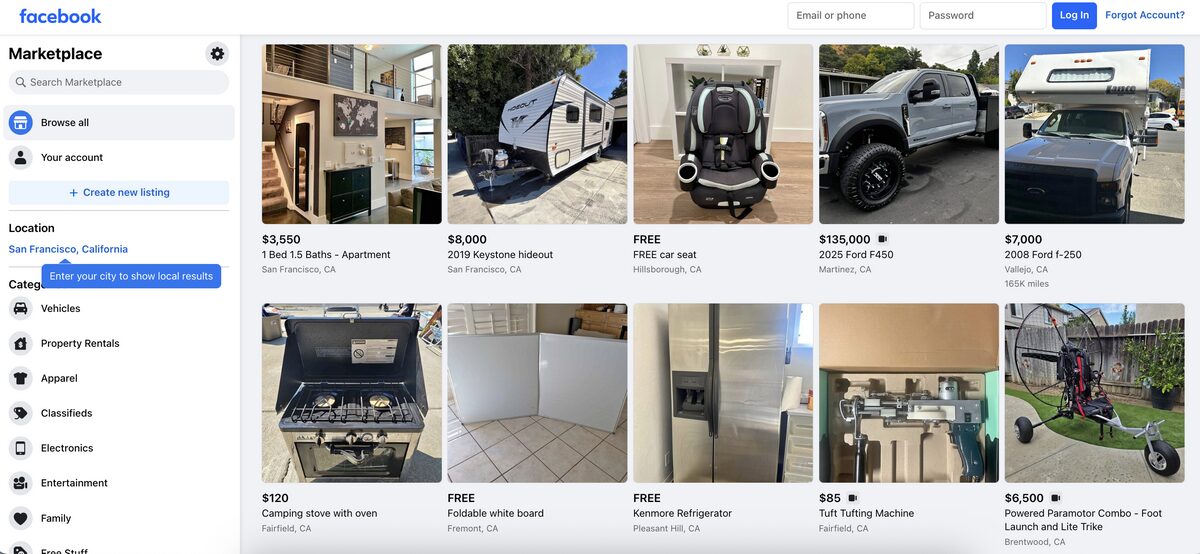
Like on any other sales channel, dropshipping on Facebook Marketplace comes down to listing products for sale on Facebook without holding any inventory. That’s basically the ABC of dropshipping:
- You list an item you don’t physically own
- A customer buys it from your Facebook Marketplace listing
- You forward the order to your supplier
- The supplier ships it directly to your customer
The payoff? You keep the profit margin, which is the difference between your listing’s price and your supplier’s, without ever touching the product itself. So what’s actually your job in all this? As a dropshipper, you handle the actual transaction: sourcing products, listing them on Marketplace, driving sales, and fulfilling orders.
You could build this same model on your own website, sure. But here’s what makes Marketplace different: the traffic’s already built in. Billions of shoppers are actively searching for products there every single day, which means you’re not the one who has to go find them. That’s exactly why it’s such a low-barrier way to start, especially if you’re still testing whether e-commerce is even for you.
Bottom line: Facebook Marketplace dropshipping is about connecting suppliers with buyers and pocketing the margin in between. No warehouse, no shipping boxes piling up in your garage. Get it right, and it turns into a genuinely reliable income stream.
👉 Quick heads-up: Facebook Marketplace is not the same thing as Facebook Shops, and it’s definitely not the same as running Facebook ads. Marketplace is the buyer-and-seller space we’re covering here, while Shops and ads play different roles in Meta’s commerce ecosystem. Get the full breakdown in this Facebook Shops vs. Facebook Marketplace guide.
Is Facebook Marketplace Dropshipping Worth It in 2026?
Yes, dropshipping on Facebook Marketplace is worth it in 2026, as it’s one of the smartest, low-cost entry points into e-commerce.
Let’s look at the numbers. Social commerce is booming. U.S. sales are on track to hit $102.68 billion in 2026, up about 18% year over year, according to eMarketer. Facebook remains a major part of that market, while Marketplace itself is anything but quiet: Meta reported in July 2026 that 430 million items get listed globally, every single month.
But audience size alone isn’t what makes Marketplace interesting for dropshippers. The real advantage is how much you can test before committing serious money or infrastructure. You don’t necessarily need to build a standalone store to start listing, and you can use real Marketplace demand to test different products, niches, price points, and suppliers before deciding which ones deserve more of your time and budget.
There are tradeoffs, though. You’ve got less control than you would running your own store. Competition can get fierce in the popular categories. And selling features aren’t identical across every account or region. You’re also operating inside Meta’s rules, which means eligibility, product restrictions, shipping requirements, and the risk of account restrictions all factor into how you actually run this.
Let’s take a look at the pros and cons of this model:
| Features | Regular | White Label | Private Label |
|---|---|---|---|
| Best for | Testing demand fast | Building a brand without inventory risk | Building a defensible, long-term brand |
| Branding | Supplier's brand | Your brand, existing formula | Your brand, custom formula |
| Time to Launch | Inmediate | Days to weeks | Weeks to months |
| MOQ | None | None to low | Low to high |
| Uprfont Investment | Minimal | Low | Moderate to high |
So, worth it in 2026? Absolutely. But a low barrier to entry doesn’t mean zero learning curve. The sellers who actually make money here treat it like a real business from day one: know the rules cold, and use the right tools to skip the parts that don’t need to be done by hand. That’s exactly what I’m going to walk you through next.
How to Dropship on Facebook Marketplace Step by Step
Facebook Marketplace can absolutely be a great place to start. But the results depend on what you actually do once you decide to sell there. The good news? Break it into the right steps, and this stops feeling complicated fast.
And you don’t have to do it all manually either. There are dropshipping tools built specifically to make this whole process simpler and faster, and I’ll point out where they fit in as we go. Here’s how I’d walk you through dropshipping on Facebook Marketplace, step by step, in 2026:
Niche & Product Research
When you’re starting out, the first job is to understand your market. That means confirming demand, picking a niche with margins that make sense, and knowing what shipping times you’re realistically working with. In short: get to know what you’re selling before you ever try to sell it.
First, run some quick manual checks on the platform itself. Look at the best-selling items on Facebook Marketplace in your niche, compare similar listings, note the price points that keep showing up, and look for signs of real demand versus real competition. Second, cross-check what you’re seeing with Google Trends, Facebook Groups, and social media to confirm the interest.
Remember: you’re not hunting for a product that checks one perfect box. You’re hunting for the combination that gives you enough room to compete and still walk away with real profit.
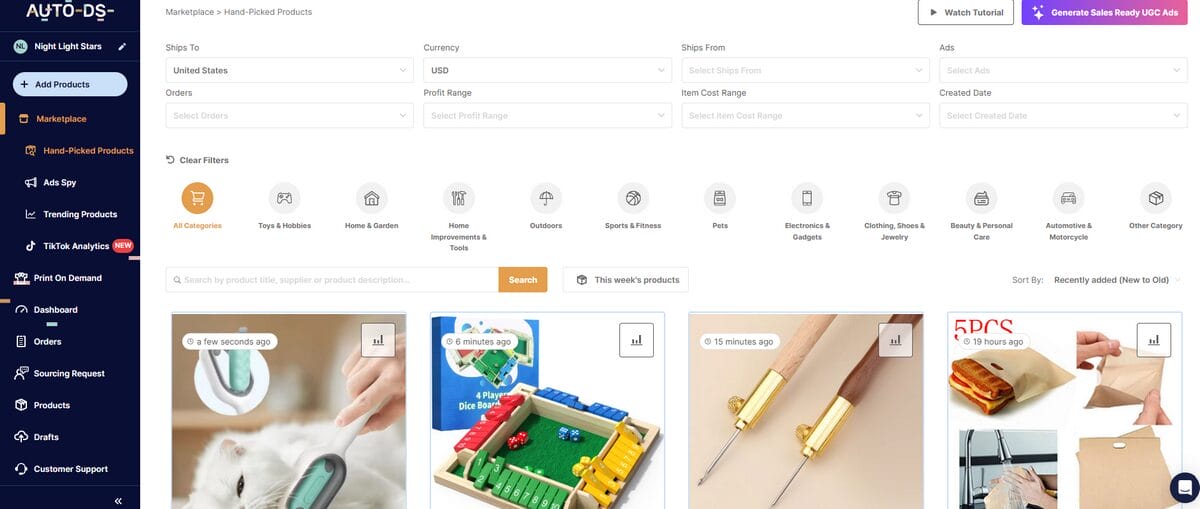
This is exactly where dropshipping solutions earn their spot in your workflow. For example, AutoDS takes the usual sourcing grind and speeds it up with dedicated research tools — filters for shipping times, supplier reliability, and profitability, plus:
- Hand-picked products section, curated by specialists, with the profit potential, audience, and competitor insights already worked out.
- Trending products section, which uses live performance data to surface what’s actually gaining traction right now.
- Ads Spy tools, which let you see the actual ads running for a product on Facebook, what’s getting engagement, and how other sellers are positioning it.
And if you’d rather just talk through it instead of digging through filters yourself, AutoDS’s Claude MCP connector lets you research in plain language. Ask it something like “find home and garden products under $15 with shipping under 10 days,” and it’ll pull the results and help you shortlist candidates without you having to manually work through the catalog.
Got your product sourcing research in place? Now look for at least 3-5 product candidates with a profit margin above 25% after fees and acceptable shipping times (around 7 days).
Find Reliable Suppliers & Order Samples
You’ve got your products. Next step? Choosing your suppliers. The goal is to find partners that can guarantee reliable stock, fast shipping, and low return rates.
To do that, start by comparing top suppliers. Explore AliExpress, look for local wholesalers, and research private sellers. Then order samples. Check the product quality, the packaging, the tracking experience, and whether the delivery time you were promised is the one you actually got.
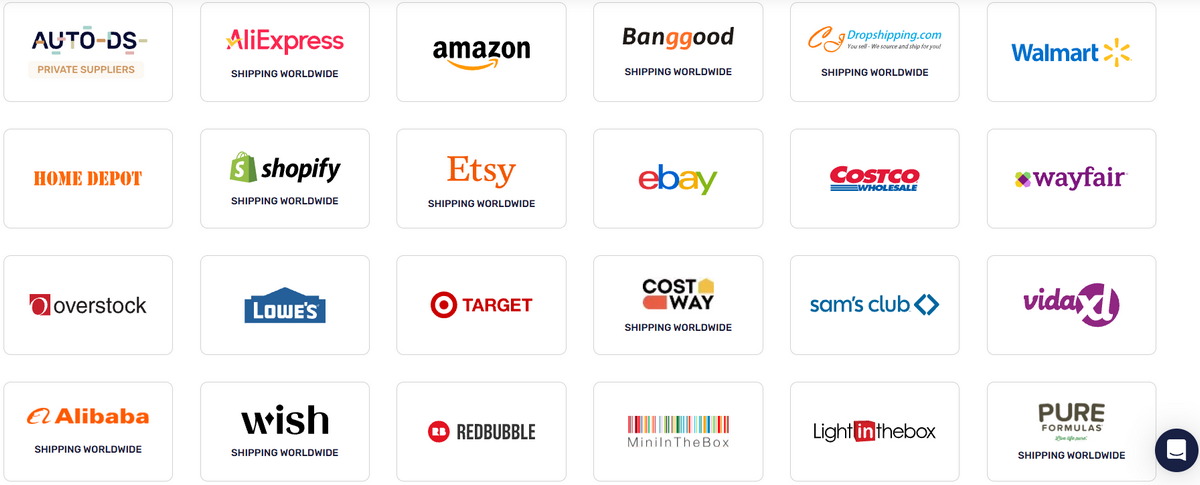
Looking for a shortcut? AutoDS supports 30+ global and private suppliers, like Amazon, eBay, Walmart, Target, Home Depot, and more—all vetted for quality, reliability, and shipping times. That makes comparing sourcing options a lot less painful, and it’s a lot easier to land on a supplier-and-warehouse combination that actually fits the market you’re selling to.
Even better, once you’ve picked your suppliers, you can import products straight into your store in just a few clicks. Do it one at a time, or drop a batch of product URLs and bulk-import several at once. Either way, the system pulls in the details instantly, so you’re not rebuilding every listing by hand.
🆕 Beginner’s Tip: Need help building your supplier shortlist? Start with this Facebook Marketplace dropshipping suppliers guide to explore the best sourcing options for this channel.
Set Up Facebook Marketplace
With your products and suppliers lined up, it’s time to actually set up the selling side:
- Start with an account in good standing. You’ll need an active Facebook account with no history of violations, and you’ll need to confirm Marketplace is actually available for your account and your location.
- Get familiar with the interface before you list anything. Open Marketplace, hit “create a new listing,” and just look around first: the categories, location settings, delivery options, and seller features available to you.
- Connect your store to automation. If you’re on AutoDS, link your Facebook Marketplace store and use it to publish listings and keep supported products monitored for supplier price and stock changes.
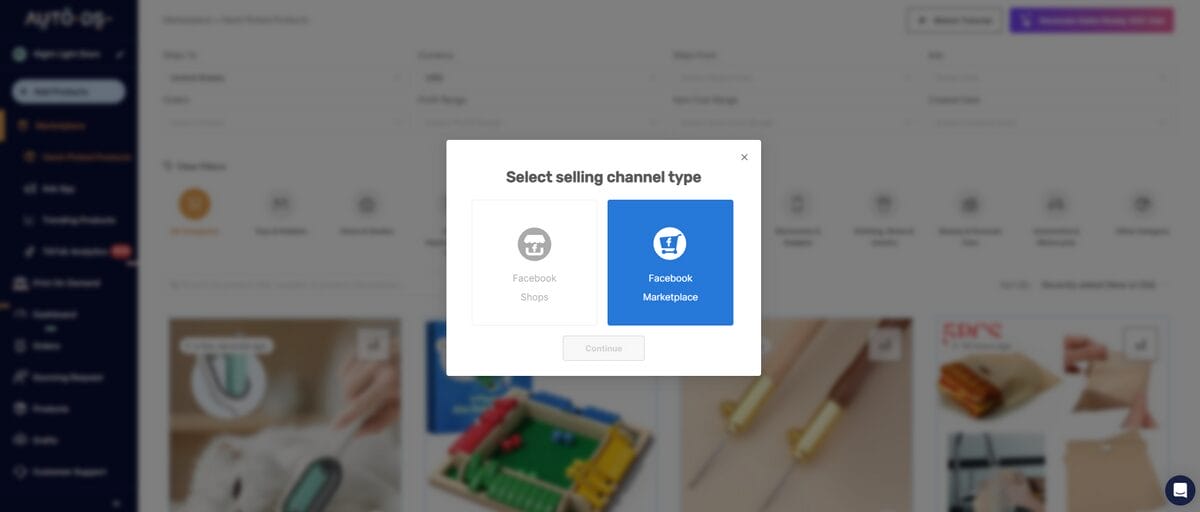
💡 Pro Tip: Meta recently launched Seller, a dedicated Marketplace app for sellers in the U.S. It puts listing creation, buyer messages, and performance insights in one workspace. If you’ve got access to it, I’d check out this Facebook Seller App guide to see exactly how it works.
Create & Optimize Your Listings
Once your products are imported into your store, it’s time to actually make them yours. Supplier listings are almost always plain, generic, missing key details, stuffed with keywords, and just not written to make anyone actually want to buy. Which, conveniently, is exactly the opportunity you’ve got here.
Start with the title and description:
- Make them SEO-friendly without reading like a pile of keywords someone dumped on the page.
- Match your local audience. Selling to the U.S.? Or maybe dropshipping in Ireland? Both need their own flavor of English. Copy that reads natural in one can sound off in the other.
- Keep the language clear and natural, built around what buyers actually type into search.
- Add an estimated shipping timeline and a clear return policy. Buyers trust listings that don’t leave them guessing.
- Let a bit of your own voice come through. Personality is what makes a listing stand out from ten near-identical ones.
If the images need it, replace your supplier’s photos with better ones. If you ordered samples — and you should have — take your own pictures. It’s the fastest way to make a listing look like nobody else’s. Just keep them clear, high-quality, and realistic about what the buyer’s actually getting.
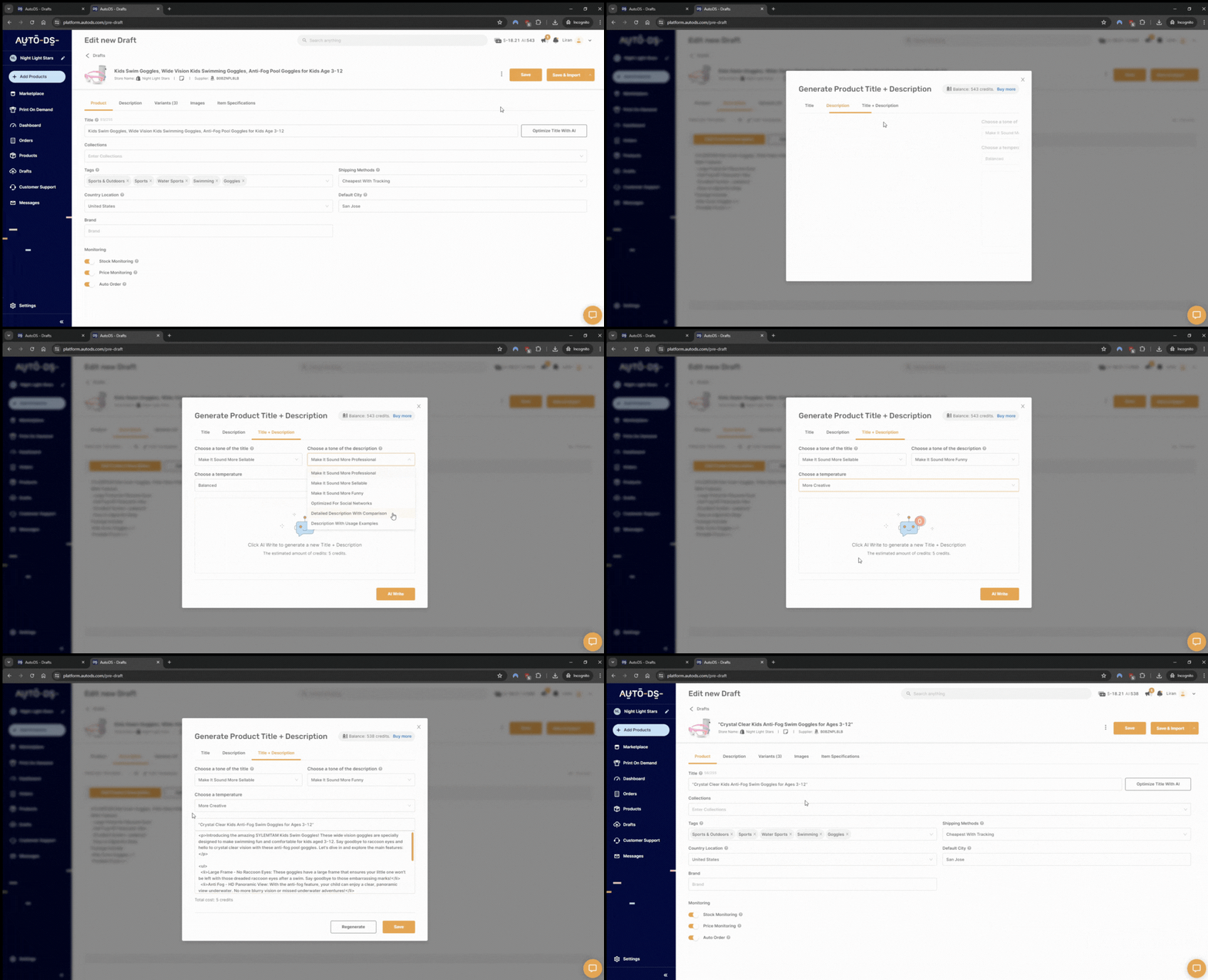
This takes real time and a bit of copywriting instinct to do well by hand. But if you’re on AutoDS, most of that heavy lifting gets done for you. The AI Product Title & Description Generator turns supplier copy into something SEO-friendly and polished in seconds. Your listings stand out without you agonizing over every line.
Set Your Pricing & Inventory Strategy
Getting your products live is only the beginning. From there, you’ve got two things to watch closely: pricing and stock. Your job is to stay competitive without sacrificing your margins or selling something your supplier can no longer fulfill.
Start with your dropshipping pricing strategy. Factor in your supplier cost, shipping, applicable Facebook Marketplace fees, potential returns, and target profit margin before setting your final price. For Individual Sellers with shipping enabled, Facebook takes a 10% commission on the total sale (item price, shipping, and tax included), with a minimum of $0.80 per order. Price with that fee baked in from the start, or it’ll eat into a margin you thought was safe.
💰 Financial Tip: Run your numbers through a profit calculator before listing anything, and build a small buffer into every price. That gives you room to breathe if supplier costs tick up, fees eat more than expected, or you want to run a discount without wiping out your profit.
Then there’s inventory. Your supplier’s stock can change without warning, so you need a system that catches that before a customer buys something you can no longer source. The more products you’re testing at once, the harder that gets to manage by hand.
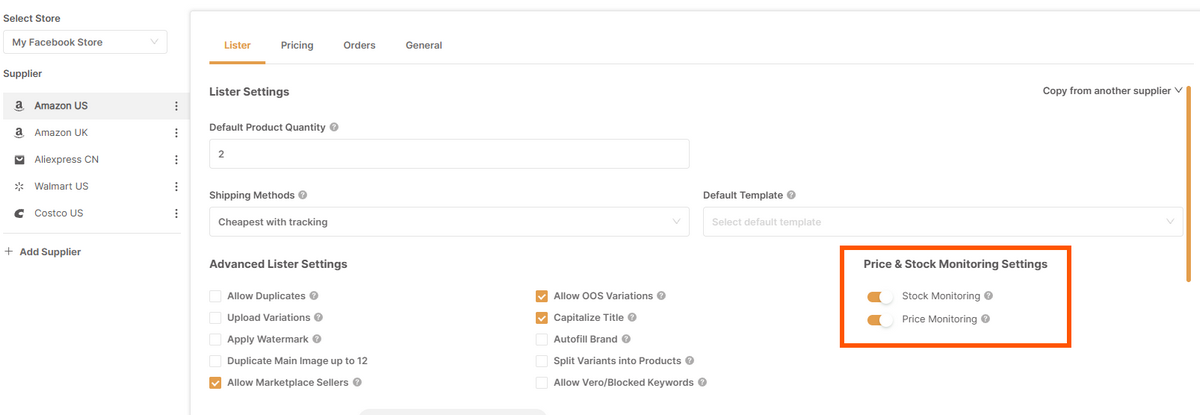
That’s exactly where the Price & Stock Monitoring feature of AutoDS earns its place. It checks supported supplier prices and stock multiple times a day and adjusts monitored listings the moment it detects a change. Set your own rules once, and the system handles pricing while preventing overselling.
Process & Fulfill Orders
Finally, the part everyone’s actually here for: selling. Once an order comes in, your job is to fulfill exactly what you told the customer you’d deliver: place the supplier order with the correct customer details, choose the shipping method you said you’d use, and track it until it lands in their hands.
Before you send anything to your supplier, double-check the order details and current stock. A price that shifted, a variant that’s no longer available, a sudden stockout: any of these turns into a cancellation or an unhappy buyer if you don’t catch it first. Having a backup supplier lined up for your proven products means you’ve got an option ready instead of scrambling after the sale’s already been made.
From there, stay on top of tracking and order status right inside Facebook Marketplace. Add shipping info as soon as it’s available, keep an eye out for delivery problems, and don’t let a buyer sit there wondering where their package went. These seller-side steps still need your attention, specifically on Marketplace, even as automation streamlines everything else around it.
As you scale, AutoDS keeps reducing the work around fulfillment, monitoring supported products for supplier changes, and keeping everything centralized in one place. But don’t mistake that for hands-off Marketplace fulfillment. Managing the order, the tracking, and the buyer-facing updates Facebook expects is still on you.
Handle Customer Service, Returns & Chargebacks
Good dropshipping customer service isn’t optional. It’s mandatory. That’s true on any platform, but especially on Facebook Marketplace, where Facebook tracks how quickly you respond, penalizes sellers who don’t follow their own return policies, and expects clear info and honest shipping timelines every time.
So start with the fundamentals: respond fast, keep your answers clear, and make sure what you tell a buyer actually matches the delivery and return expectations you set in the listing itself.
Returns deserve their own process. Know your supplier’s return policy and the one you’ve promised your buyer. When one comes in: document the request, communicate next steps clearly, and track both the refund and any supplier reimbursement, so you actually know what that return costs you.
Then there are chargebacks and payment disputes. These are worth flagging specifically because Meta documents them explicitly as their own category. A buyer might dispute a charge over an unauthorized payment, non-delivery, an item that arrived nothing like what was described, an incorrect charge, or a return policy you didn’t actually follow.
This is exactly why accurate listings, clear communication, and organized order records matter beyond just looking professional. They’re your paper trail the moment something goes sideways.
Analyze & Scale
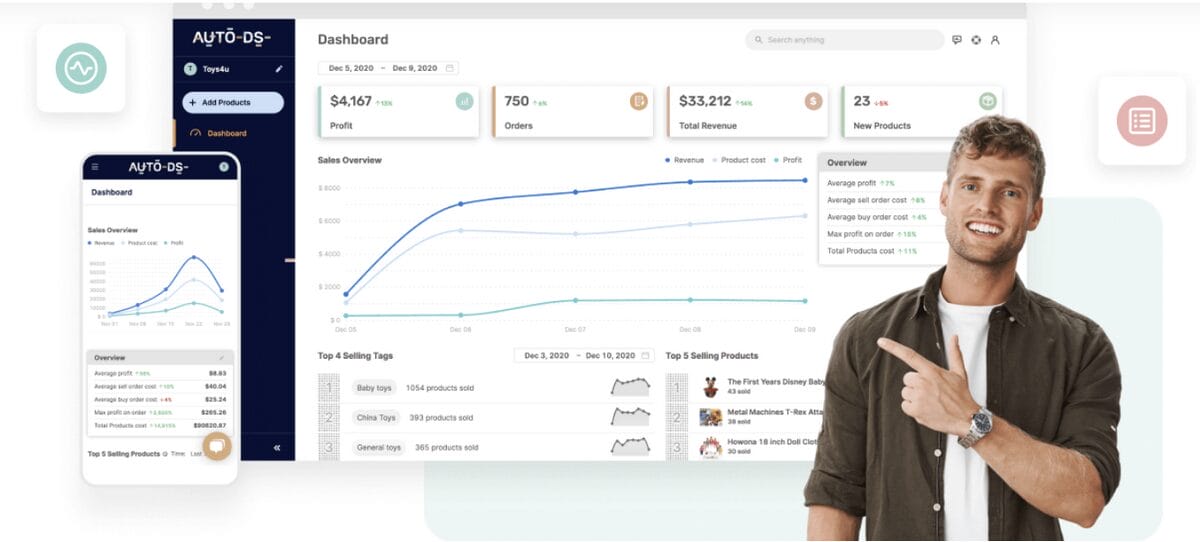
Last but not least: constantly improving. That’s literally the recipe for growth. In dropshipping, this is about understanding how your listings perform. Let the data tell you what’s actually attracting buyers, what’s genuinely making money, and what needs to change before you pour more time into it.
Start with Facebook Marketplace Insights. You can track Marketplace-native signals: listing clicks, saves, shares, profile follows, and seller or shipping performance. Look at these across 7-, 14-, and 30-day windows. Patterns tell you something; one-off spikes usually don’t.
Then, pair those Marketplace signals with your own numbers: conversion rate, profit per order, cancellation rate, refund and return rate, and actual margin. A product racking up clicks and saves isn’t automatically a winner if supplier costs, cancellations, or returns are quietly eating everything you’d have made.
Use both sides of the picture to decide what comes next. Fix listings that get attention but don’t convert, cut the products that consistently lose you money, and put real weight behind the ones that combine genuine demand with healthy margins and fulfillment you can trust.
The point was never to list more for the sake of listing more. It’s to put more resources behind exactly what the data’s already shown you is worth growing.
Facebook Marketplace Requirements & Policies in 2026

Marketplace may be easy to start using, but that doesn’t mean you can sell anything, from anywhere, under any account. So it’s worth knowing the actual rules and requirements for dropshipping on Facebook Marketplace before you start scaling.
One more thing to keep in mind: Meta updates them over time. Always check the current Marketplace and Commerce Policies for your specific account and location, rather than assuming your setup looks like everyone else’s.
Marketplace eligibility
Before anything else, you need to actually be eligible to use Facebook Marketplace. And that’s not automatic just because you’ve got a Facebook account. Here’s what Meta requires:
- Age: You need to be 18 or older to list anything.
- Account status: Your profile has to comply with Community Standards, with no recent violations on record.
- Location: You need to be in a country or region where Marketplace is actually supported.
- Account type: Access has to come through your main Facebook profile, not a secondary one. New or inactive accounts may not have Marketplace access yet, and violating Meta’s Terms, Commerce Policies, or Community Standards can take that access away.
Country & account restrictions
Marketplace functionality isn’t the same for everyone. What you can actually do depends on your country, your account, your device, and even the kind of transaction you’re trying to run. A few examples worth knowing:
- Shipping isn’t guaranteed. Meta says outright that whether you can offer shipping depends on where you live. Having access to Marketplace doesn’t automatically mean you have access to Marketplace shipping. In places where it’s not supported, you may be limited to arranging transactions locally instead.
- The new Seller app isn’t available to everyone. Meta launched this standalone app for frequent Marketplace sellers, and right now it’s iOS-only, U.S.-only, and limited to sellers 18 and older.
The takeaway here is simple: don’t build your dropshipping operation around a Marketplace feature until you’ve actually confirmed you have access to it.
Products you can’t sell
Not every product belongs on Marketplace. Every listing must comply with Meta’s Commerce Policies and Community Standards, which prohibit or restrict a fairly specific range of products.
Straight from Meta’s own policy text, these are explicitly prohibited:
- Weapons, ammunition, and explosives
- Alcohol
- Human body parts or fluids
- Non-physical items — services, subscriptions, digital products, and rentals
A couple of categories are restricted rather than banned outright. Event tickets, gift cards, or vouchers are limited to approved sellers only, so you can’t just list them freely. Beyond that, the same policies typically cover:
- Animals
- Tobacco and drug-related products
- Hazardous materials
- Counterfeit goods
- Recalled products
- Certain healthcare items
And on top of category restrictions: every listing needs to represent an actual physical product for sale, one that matches exactly what the buyer ends up receiving.
For a dropshipper, this means product research is a policy check too. A product can have real demand and a healthy margin and still be the wrong product to touch.
Shipping & Fulfillment Requirements
Fulfillment matters just as much as the product itself. A couple of hard deadlines worth knowing upfront: Meta’s Seller Protection Policy requires the item to actually reach the carrier within 7 calendar days, or the order can be automatically canceled by Meta. And separately, any order left unmarked as shipped gets automatically canceled after 30 days.
That said, don’t treat either figure as a universal delivery requirement. The real standard is simpler and less forgiving: meet the window you promised in the listing. Whatever timeframe you communicate to a buyer needs to match what your fulfillment setup can realistically pull off.
On top of that, sellers need to respond to buyer inquiries within 2 business days. Miss that, and you’re opening the door to a dispute claim.
For a dropshipper, this puts your supplier’s processing time front and center. A supplier can advertise fast shipping and still be the wrong fit if their handling time is slow or they can’t get you tracking information when you need it.
Seller Performance
Following the rules gets you in the door. Staying inside it long-term is a different story. That’s where seller performance metrics come in.
Two numbers worth watching: Cancellation Rate and Missed Handling Rate. The lower both stay, the better. Falling short of Meta’s standards can temporarily cost you access to shipping altogether.
Remember: supplier problems become your performance problems, every time. If a product keeps going out of stock after customers order it, or your supplier can’t meet the handling window you promised, you’re the one who eats the consequences of someone else’s mistake.
And it goes beyond just looking bad on a dashboard. Shipping performance and history can affect how your listings are distributed on Marketplace, which means fulfillment is also directly tied to whether people even see your products in the first place.
Tips for Successful Facebook Marketplace Dropshipping
Now that you know how the process works, a few habits make the real difference between a store that limps along and one that actually compounds. So, here are a couple of practical tips:
- Optimize for Marketplace search intent. Marketplace shoppers scan fast and decide based on what they can understand at a glance. Use a clear title that says exactly what you’re selling, the right category, and a strong main image. In the description, give buyers what they need to decide. Quick gut check: if someone only saw your title, image, and price, would they immediately get what you’re selling?
- Prioritize reliable fulfillment over the cheapest supplier. The lowest cost isn’t automatically the most profitable. A cheap supplier gets expensive fast the moment they cause a stockout, a late shipment, or a return you didn’t see coming. This matters even more on Marketplace, where Meta tracks shipping performance. When you’re comparing suppliers, look for stock reliability, handling time, tracking, product quality, and actual delivery performance.
- Use Marketplace insights to improve listings. Look at the relationship between clicks, saves, and actual purchases. That pattern tells you something real. Lots of clicks but almost no saves? The product’s catching attention, but the offer isn’t landing. Plenty of saves with no purchases? That’s usually a sign to revisit price, details, or the offer as a whole. Let those signals decide what you test next.
- Protect your margin against price changes, returns, and fees. Supplier costs shift, returns happen, and fees take a bite out of what you keep. Build enough room into your pricing to absorb that without your margin disappearing, and keep checking your actual profit instead of assuming day-one math still holds.
- Scale proven products, not catalog size. When an item consistently attracts buyers, converts at a healthy margin, and fulfills reliably, that’s your signal to go deeper. Test variations, a second supplier, and similar offers in the niche. If a product keeps getting ignored, adding more listings just like it isn’t growth.
Frequently Asked Questions
Is dropshipping allowed on Facebook Marketplace?
Yes. Facebook doesn’t explicitly prohibit dropshipping as a business model. That said, every listing and transaction must comply with Meta’s applicable Marketplace, Commerce, and Community policies. That means: eligible product categories, accurate listings, and on-time fulfillment with tracking.
Can I dropship on Facebook Marketplace in my country?
You can dropship on Facebook Marketplace if the necessary selling features are available in your country and account. Marketplace functionality varies by location, and having Marketplace access doesn’t necessarily mean all features are available to you. So before getting started, check Meta’s official Marketplace information and your local Facebook experience to confirm if it’s currently supported in your country.
Who is eligible to sell on Facebook Marketplace?
Facebook Marketplace sellers generally need to be adults under their country’s laws, live in a location where Marketplace is available, and use an eligible main Facebook profile. New, inactive, or policy-restricted accounts may have limited or no Marketplace access.
Do I need a business account to sell on Facebook Marketplace?
No, you don’t need a business account to sell on Facebook Marketplace. Eligible sellers can access Marketplace through their main personal Facebook profile.
Does Facebook Marketplace charge selling fees?
Facebook Marketplace doesn’t charge a listing fee, but it does apply a selling fee on orders fulfilled through its shipping checkout — 10% of the total sale, with a minimum of $0.80 for Individual Sellers. Local pickup or cash transactions aren’t subject to this fee, so factor in payment, transaction, and shipping costs based on how you actually process each sale.
How does shipping work on Facebook Marketplace?
Facebook Marketplace shipping options vary by location and account, so they aren’t available to every seller. Where shipping is supported, sellers must mark orders shipped with valid tracking within 3 business days and respond to buyer inquiries within 2 business days. Orders left unmarked as shipped are automatically canceled after 30 days, and buyers can cancel unshipped orders themselves within 30 minutes of purchase. This makes reliable suppliers and trackable shipping especially important for dropshipping.
What products can’t I sell on Marketplace?
Products prohibited on Facebook Marketplace include weapons, ammunition, and explosives; alcohol; event tickets, gift cards, or vouchers (except through approved sellers); and non-physical items such as subscriptions, digital products, and rentals. Beyond these, Meta’s policies also cover categories commonly cited as restricted, including animals, tobacco, and certain healthcare items. Always check Meta’s current Marketplace rules, as specific categories can change over time.
Can AutoDS automate Facebook Marketplace dropshipping?
Yes, AutoDS can automate core operational tasks, such as product research, product import, listing creation, and inventory and price sync. Just make sure to still provide your human touch in your strategy and customer service for your brand to feel human and trustworthy.
How do I avoid getting restricted on Marketplace?
To avoid getting restricted on Facebook Marketplace, follow Meta’s policies, list only permitted products, keep your listings accurate, and maintain reliable fulfillment. Avoid preventable cancellations and missed handling deadlines, and resolve buyer issues promptly.
How do returns and refunds work?
To handle returns and refunds, first create a clear return policy in your listing and make sure it’s accessible to buyers. Then, once return requests start rolling in, arrange with your supplier. Finally, keep records of orders, tracking, and buyer communication in case of a dispute. All in all, doing it promptly protects your reputation and account.
How do I find products to sell on Facebook Marketplace?
To find products to sell on Facebook Marketplace, research Marketplace demand, competition, and common price points, then validate promising ideas before listing them. On AutoDS, the Trending Products and Hand-Picked Products sections, the Ads Spy tools, and the Claude MCP connector are especially useful for narrowing down potential winning products and suppliers.
Is Facebook Marketplace dropshipping profitable in 2026?
Yes, Facebook Marketplace dropshipping can be profitable in 2026, but results depend on your products, margins, suppliers, fulfillment, and seller performance. Focus on profit per order, test products before scaling, and incorporate automation to streamline repetitive tasks, reduce manual errors, and manage your operations more efficiently as you grow.
Choose the Right Supplier Strategy with AutoDS
Facebook Marketplace is one of the easiest ways to start dropshipping in 2026. Get the catalog right, get the listings right, stay compliant, and this can go from a side hustle to a real business faster than you’d expect.
But long-term success comes down to something less flashy: automation, and picking the right partners to run it with. Reliable stock, realistic shipping times, real tracking, healthy margins: that matters a lot more than chasing the lowest price tag you can find. AutoDS lets you research products across supported sources, import listings, and monitor price and stock changes, all from one place instead of a dozen open tabs.
Pair sourcing you can actually trust with everything we’ve covered here, and you’ve got a real foundation.
🤝 Ready to put it into practice? Try AutoDS for just $1 and start building a smarter, more manageable Facebook Marketplace workflow.
Want to keep learning about Facebook Marketplace dropshipping? Here are a few reads you might find helpful: