

Selling products online without filling your spare room with boxes sounds appealing. But what is dropshipping, exactly, and what are you actually responsible for when someone else ships the orders?
The basic idea is simple: you run the store, and a supplier stores and ships the products. You still need to attract customers, cover your costs, and handle questions when something goes wrong. I’ll walk you through how the business works, what it costs, and how to decide whether it fits your goals.
You sell; your supplier ships. You manage the store and customer service without storing or packing products.
Lower upfront costs don’t mean zero risk. Budget for samples, selling fees, marketing, and supplier payments.
Profit is what remains after expenses. Your selling price needs to cover more than the product itself.
Your supplier shapes the customer experience. Check product quality, delivery times, and return arrangements before selling.
Start small and test your idea. Choose a niche, find a supplier, pick a channel, set up your store, and start marketing.
What Is Dropshipping?
Dropshipping is a retail fulfillment method where you sell products without keeping them in stock yourself. When a customer orders from your store, you purchase the item from a supplier, who ships it directly to the customer. You manage the sale and customer relationship; the supplier handles the physical product.
There are three roles:
- Seller: You choose products, set prices, market your store, and handle customer service.
- Supplier: Your partner holds inventory, packs orders, and ships them to customers.
- Customer: The buyer orders from your store and contacts you for help.
How Does Dropshipping Work?
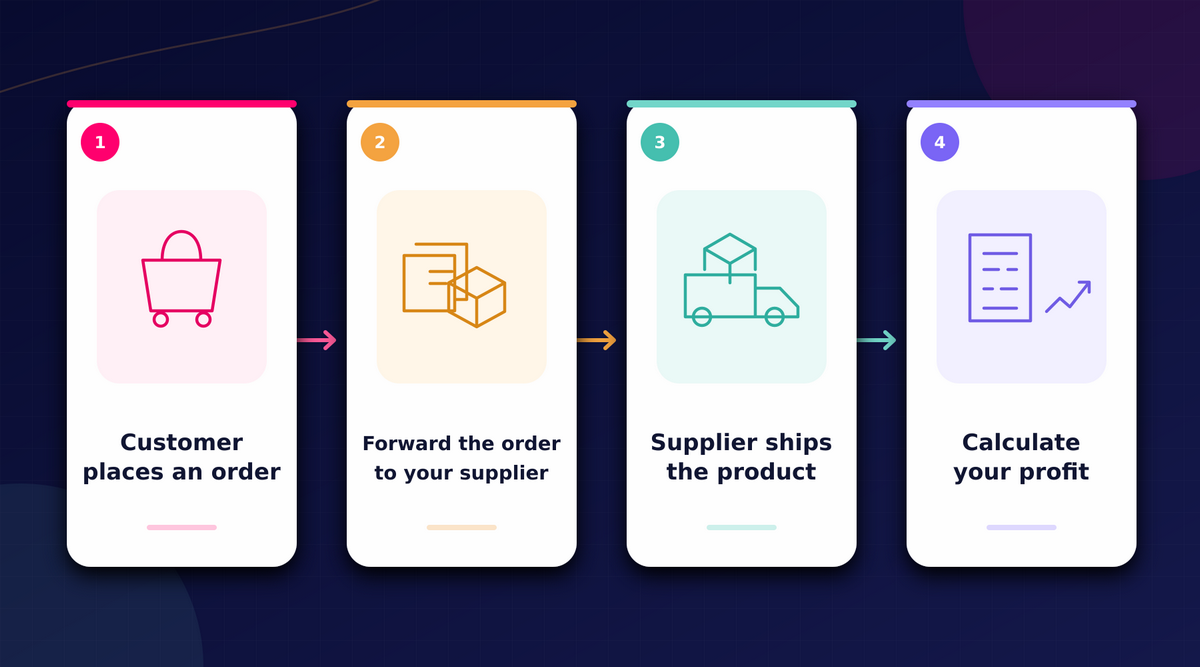
Once you’ve listed a supplier’s products in your store, each order follows this basic flow. At first, it might feel like there are a lot of moving parts, but the process is fairly straightforward once you understand what happens at each step:
- A customer places an order. They buy a product from your store and pay your selling price.
- You forward the order. You send the details to your supplier and pay the product and shipping costs.
- The supplier ships the product. The package goes directly to your customer, while you manage updates and questions.
- You calculate your profit. What remains after the product, shipping, fees, marketing, and other expenses is your profit.
Here’s a hypothetical example: you sell a desk organizer for $30. Your supplier charges $12 for the item and $4 for shipping, leaving $14. That isn’t your final profit yet. Payment fees, advertising, and your other business expenses still need to come out of it.
For a closer look at the numbers, this guide to dropshipping profit margins explains what to include.
💰 Financial Tip: Calculate before you list. A product can sell regularly and still lose money if the costs outweigh the selling price.
Pros and Cons of Dropshipping
Dropshipping removes the need to buy and store inventory in advance, but it also means depending on another business to deliver orders. Here are the main benefits and drawbacks to consider.
Pros of Dropshipping
- Lower upfront inventory costs: You don’t need to buy bulk stock before knowing whether it will sell.
- No warehouse to run: Your supplier handles storage, packing, and shipping.
- Flexible product testing: You can change your product selection without being left with unsold inventory.
- Remote management: You can manage your store, marketing, and customer service online.
- Room to expand your catalog: You aren’t limited by your own storage space.
Cons of Dropshipping
- Margins can be tight: Supplier costs, selling fees, payment processing, and advertising can reduce what you keep.
- Less control over fulfillment: Product quality, packaging, and delivery depend on your supplier.
- Availability can change: Suppliers may run out of products, change prices, or discontinue items without much notice.
- Customer service stays with you: Buyers expect you to resolve delays, returns, damaged products, and order mistakes.
- Competition can be high: Other sellers may offer the same products, making it harder to stand out.
Is Dropshipping Right for You?
Dropshipping could be a good fit for you if you’re looking for a flexible way to explore ecommerce without investing heavily in inventory from the start. In my experience, it tends to work best for people who enjoy learning as they go, testing different ideas, and staying involved in the customer experience.
It may be worth considering if:
- You want to test an online business without buying bulk inventory.
- You prefer marketing and customer service to packing orders.
- You’re willing to check suppliers and order samples.
- You can budget for testing without depending on immediate income.
- You’re comfortable having limited control over shipping.
- You have time to learn and manage the business consistently.
How Much Does It Cost to Start Dropshipping?
There’s no single startup price. Your selling channel is one part of the budget; samples, tools, marketing, and paying suppliers also matter.
These common platform costs give you a starting point. Prices exclude temporary promotions and may vary by location, billing arrangement, and account type.
- Shopify: The Basic plan costs $39 per month when billed monthly or $29 per month when billed annually. You may also need to budget for payment processing, a custom domain, optional apps, and applicable transaction fees.
- Amazon: The Individual plan costs $0.99 per item sold, while the Professional plan costs $39.99 per month. Additional expenses can include referral fees, supplier fulfillment costs, and optional advertising.
- eBay: You don’t need a Store subscription to start, and you can receive up to 250 zero-insertion-fee listings per month, subject to exclusions. You may still pay final value fees, additional listing fees, and optional listing upgrades.
Your platform fee isn’t your full launch budget. You’ll also want to account for sample orders, any business registration costs that apply to you, and whatever you can comfortably spend reaching potential customers. Paid ads are optional, but keep in mind that organic marketing usually takes time.
Also, you’ll need enough cash to pay suppliers before your payouts arrive. Just because a customer pays at checkout doesn’t mean the money is immediately available in your bank account.
🆕 Beginner’s Tip: Keep a cash cushion. Leave room for supplier payments, refunds, and unexpected costs instead of spending your entire budget on the storefront.
How to Start Dropshipping
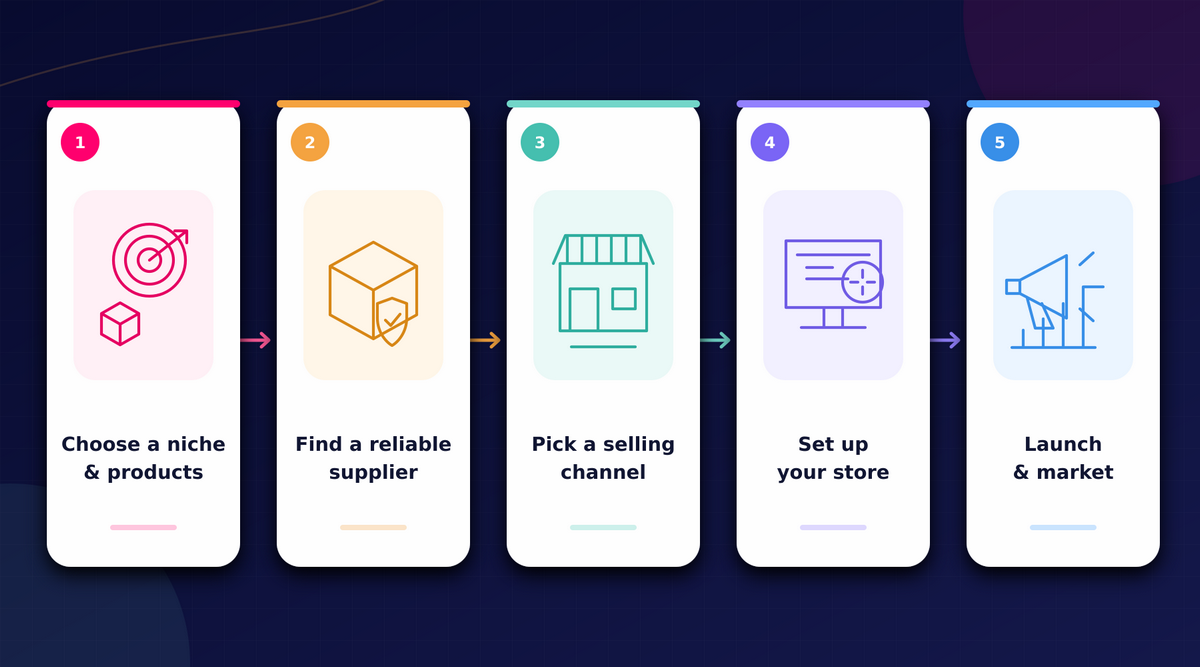
Getting started comes down to five basic decisions. You don’t need an enormous catalog or a complicated setup to begin testing an idea.
1. Choose a niche and products
Start with a specific customer and something they need. Desk accessories for small home offices, for example, give you a clearer direction than a store selling unrelated gadgets. Look for evidence of demand in customer reviews, search interest, and competing stores. This guide to finding products can help you research your options.
2. Find a reliable supplier
Compare product quality, total costs, delivery estimates, and return arrangements. Order a sample before relying on a supplier’s photos or promises. The cheapest item isn’t much of a bargain if customers keep asking for refunds. Use this supplier selection guide when you’re ready to compare candidates.
📦 Supplier’s Tip: Test the delivery experience. Check how long your sample takes to arrive, what the packaging looks like, and whether the product matches its description.
3. Pick a selling channel
Choose between your own online store and a marketplace. A store gives you more control over your brand; a marketplace gives you access to an existing audience, alongside its fees and competition. Check the channel’s dropshipping rules before committing to a supplier or product.
4. Set up your store
Add your products, prices, payment options, contact information, and shipping and return policies. Account for any business registration or tax requirements that apply to you. Before opening, test the checkout and make sure buyers can understand what they’re ordering and when to expect it.
5. Launch and market
Start reaching customers through a channel you can manage consistently, such as social content, marketplace search, or a small advertising test. Watch what customers actually do: visits, questions, purchases, and returns tell you more than likes alone.
As orders grow, an all-in-one dropshipping platform like AutoDS can help with sourcing and automate supported fulfillment tasks. For the detailed setup process, follow this step-by-step dropshipping launch guide.
So, Is Dropshipping Worth It in 2026?
Dropshipping can still be worth exploring if you want to test an ecommerce idea without investing in bulk inventory from the start. Whether it’s worth your time will depend on the product you choose, the supplier you work with, your costs, and the customers you’re able to reach.
My advice: test one realistic offer before deciding whether the whole business model is for you. Can you sell something people actually want, deliver it as promised, and still have money left after expenses? If your numbers only work when every video goes viral, it’s probably time to rethink the plan.
Your store can absolutely be part of your entrepreneurial era, but a pretty aesthetic doesn’t guarantee sales. Give people a clear reason to buy from you, follow through on your promises, and decide in advance how much you’re comfortable spending while you test.
Frequently Asked Questions
What is dropshipping in simple terms?
Dropshipping means selling products that a supplier stores and ships for you. Customers buy from your store, you pay the supplier to fulfill the order, and you handle the customer relationship.
Do I need inventory to start dropshipping?
You don’t need to buy bulk inventory or store products yourself. Your supplier holds the stock, but you still need to check availability so you don’t sell items they can’t deliver.
How much money do I need to start dropshipping?
Your starting budget depends on your platform, products, and marketing approach. Include selling fees, samples, any tools you need, and money to pay suppliers while waiting for customer payments to become available. A low platform fee alone doesn’t cover the full cost of starting.
Is dropshipping legal?
Yes, dropshipping is a legitimate fulfillment method when you follow applicable laws and the policies of your selling channel and suppliers. You still have responsibilities involving taxes, product safety, intellectual property, and consumer rights.
Is it easy to start dropshipping?
The setup can be relatively straightforward because you don’t need a warehouse or bulk stock. Building a profitable business takes more work: you need reliable suppliers, customers willing to buy, and prices that cover your costs.
Who is dropshipping best for?
It can suit beginners and existing sellers who want to test products without investing heavily in inventory. It’s particularly relevant if you’re interested in marketing and customer service and comfortable relying on suppliers for fulfillment.
Can you lose money dropshipping?
Yes. Advertising, subscriptions, refunds, and supplier problems can cost more than your sales bring in. Avoiding bulk inventory reduces one type of risk, but it doesn’t remove the possibility of financial losses.
Conclusion
Dropshipping gives you a way to sell online while a supplier handles storage and shipping. Start with a small, manageable test: choose a customer, check a supplier, and work out whether the numbers make sense before expanding.
If you’re ready to explore tools that can support that process, you can try AutoDS for $1 to investigate sourcing and supported automation options for your store.
For your next step, pick the guide that answers your biggest remaining question: