



Choosing a dropshipping platform rarely feels like a clear decision. Wix and Shopify both look solid, both promise simplicity, and both claim they can grow with you. But once you’re actually ready to build (or migrate), one question cuts through the noise: which platform truly matches how you want to run your dropshipping business day to day?
That’s exactly what this guide is here to answer. This isn’t about naming a single “best” option for everyone. Wix and Shopify both support dropshippers, but they do it in very different ways. The right choice depends on whether you’re just getting started, switching platforms, or planning for growth.
This comparison breaks down Wix vs Shopify across what actually matters in real operations: usability, automation, pricing, and scaling potential. You’ll also see how tools like AutoDS connect with both platforms, helping dropshippers automate product management, fulfillment, and growth workflows, so your store can scale without adding unnecessary complexity.
Wix and Shopify both support dropshipping, but they’re built for different seller profiles, workflows, and growth expectations in 2026.
Key decision factors include ease of onboarding, automation needs, pricing structure, catalog size, and how far you plan to scale beyond a side hustle.
Wix prioritizes ease of use, visual control, and fast setup, making it a strong option for beginners and branding-focused stores with simpler operations.
Shopify offers a more mature eCommerce ecosystem, with deeper automation, broader app integrations, and stronger scalability for growing dropshipping businesses.
Automation plays a critical role on both platforms as order volume increases, helping reduce manual work, pricing errors, and fulfillment friction.
AutoDS connects seamlessly with both Wix and Shopify, automating product importing, price and stock monitoring, and order fulfillment, turning either platform into a scalable dropshipping operation.
What Is Wix and What Is Shopify?
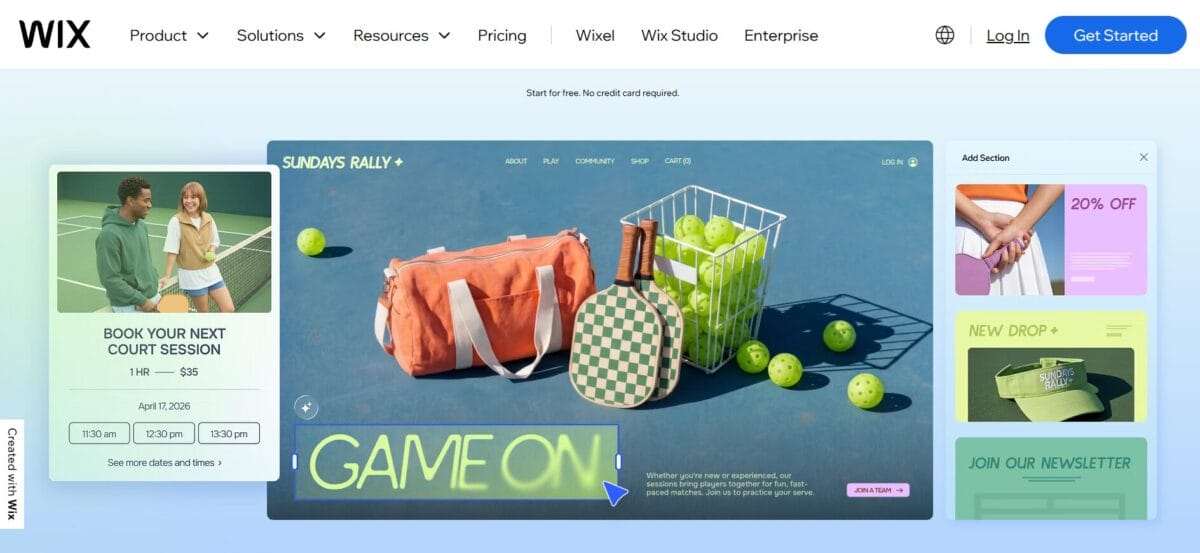
Wix started as a website builder, and that DNA still shows, in a good way. The platform is built around simplicity, visual freedom, and quick setup, allowing users to design an online store without touching code. For many sellers, especially beginners, Wix feels intuitive from the first click: drag, drop, customize, publish.
When it comes to eCommerce, Wix offers built-in selling tools combined with app-based integrations. You can manage products, payments, and basic automation from one dashboard, which makes it a popular choice for creators, side hustlers, and small sellers who want to get online fast without dealing with technical complexity.

Shopify, by contrast, was built specifically for selling online. Unlike general website builders, its structure revolves around products, catalogs, payments, and order management. From the start, Shopify positions itself as a dedicated eCommerce platform, offering a centralized environment to create, manage, and operate an online store.
The platform combines a native set of commerce features with an extensible architecture that allows sellers to add functionality as needed. Store owners can manage products, variants, inventory, payments, and shipping from a single dashboard, while additional tools can be connected through integrations. This modular approach gives Shopify flexibility across different business models and store sizes, while keeping the selling experience consistent.
At a glance, both Wix and Shopify let you build an online store and run an online business. It’s precisely why they’re frequently compared among the best dropshipping platforms; the difference is how they get you there.
Wix vs Shopify for Dropshipping: Overview
That difference is exactly what this comparison explores. While both platforms can be used as a foundation for a dropshipping store, the experience changes depending on how you set up products, automate workflows, manage costs, and plan for growth.
That’s why we’ll break down Wix vs Shopify across the areas that shape real-world dropshipping results, so you can see which platform aligns better with the way you want to build and scale your store.
Ease of Use: Wix vs Shopify

Wix is designed to reduce friction during onboarding. New users are guided through store setup with visual prompts, prebuilt layouts, and a drag-and-drop editor that makes navigation intuitive from the start. The dashboard centralizes core store functions such as:
- Product and catalog management.
- Payments, taxes, and basic settings.
- App and integration access.
This structure makes it easier for beginners to understand where things live and how daily tasks connect. For early-stage sellers, Wix offers a shorter path from signup to launch. That simplicity, however, can introduce constraints as workflows grow, which can slow down operations over time.
Shopify takes a more structured approach. The initial setup involves more configuration, especially around products, payments, and shipping, but the dashboard is built around scalability. Core areas are clearly separated and optimized for recurring workflows, including:
- Inventory, product variants and order management.
- App-driven automation and integrations.
- Store analytics and performance tracking.
For beginners, Shopify’s learning curve is slightly steeper. However, that upfront structure tends to pay off in the long run, as sellers gain clearer operational visibility and spend less time reworking processes as their business grows.
Dropshipping Apps and Integrations
For dropshipping businesses, apps are part of the operational backbone. A lot of the processes involved depend on how well a platform connects with third-party tools. This is where the differences between Wix and Shopify become more visible.
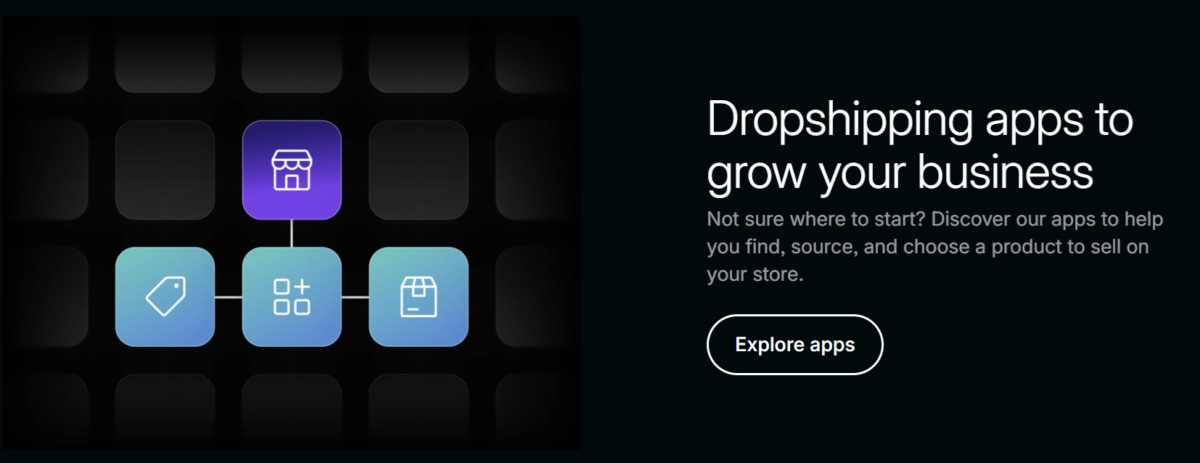
Shopify offers a large and mature app ecosystem built specifically around eCommerce operations. Its App Store includes a wide range of dropshipping, automation, marketing, and analytics tools designed to integrate deeply with the platform. Many Shopify dropshipping apps are built with scalability in mind, supporting multi-supplier setups, bulk actions, and advanced workflows as stores grow.

Wix also provides app integrations, but its ecosystem is more limited in depth. While it covers core needs (such as product sourcing, basic automation, and order management), the selection is smaller and often geared toward simpler use cases. Integrations tend to focus on ease of setup rather than complex operational logic.
In practical terms, the biggest gap lies in flexibility:
🟢 Shopify’s ecosystem favors sellers who plan to expand functionality over time.
⚫ Wix’s integrations are better suited for straightforward workflows and smaller catalogs.
Product Management and Automation
Product management is where dropshipping either becomes a repeatable system or a manual grind. Importing products, syncing inventory, updating prices, and processing orders all happen daily, and the way a platform handles these workflows has a direct impact on how scalable the business can be.
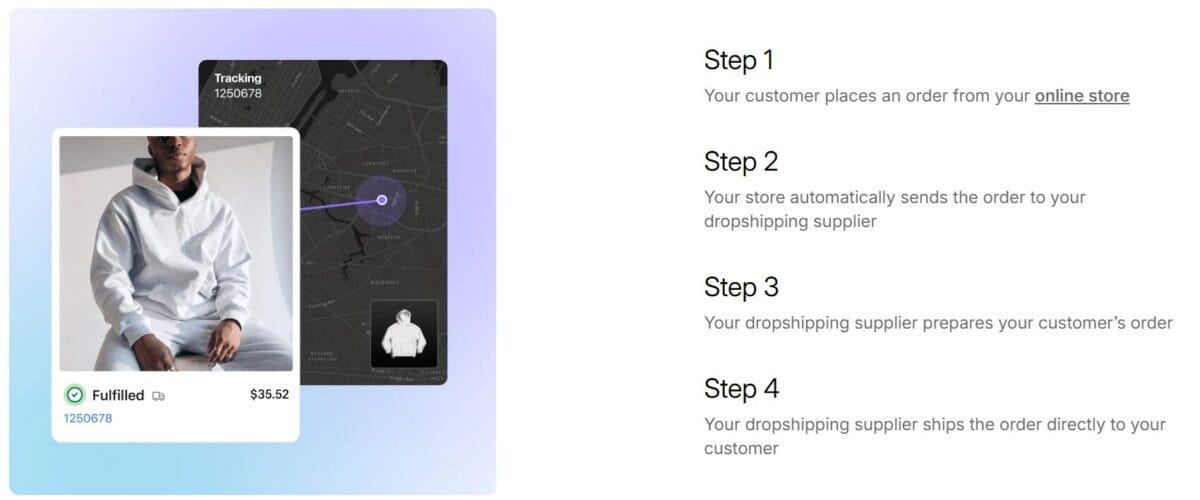
Shopify is built around automation-friendly product workflows. Product importing tools typically allow bulk actions, variant management, and structured data syncing across suppliers. Inventory levels, pricing changes, and order status updates are designed to flow automatically between apps and the Shopify backend, reducing the need for manual checks as volume increases.
This structure becomes especially relevant when managing:
- Larger product catalogs.
- Multiple suppliers or fulfillment sources.
- Frequent price and stock fluctuations.
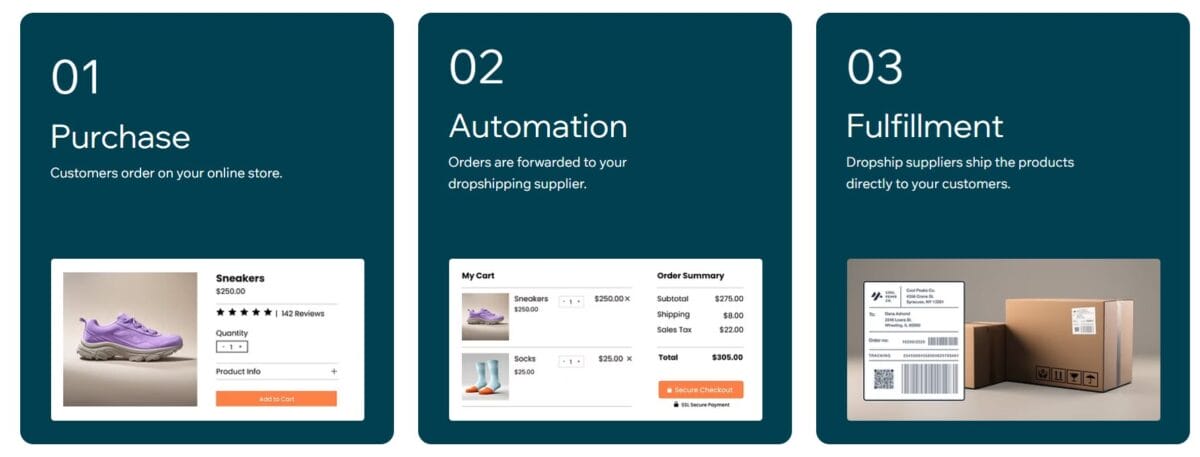
Wix, by comparison, supports product importing and basic automation but with more limitations. Workflows tend to be simpler and better suited for smaller catalogs or single-supplier setups. Syncing inventory and prices is possible, but often requires more manual oversight, especially as product count and order volume grow.
From a scaling perspective, the difference is clear. Shopify’s product management logic is designed to support ongoing automation as operations become more complex, while Wix’s approach works best when workflows remain relatively straightforward and predictable.
Design, Customization, and Storefront Control
Design plays a different role depending on your dropshipping goals. For some sellers, the priority is launching fast with a clean storefront. For others, it’s building a recognizable brand with full visual control. Wix and Shopify approach this balance from opposite directions.
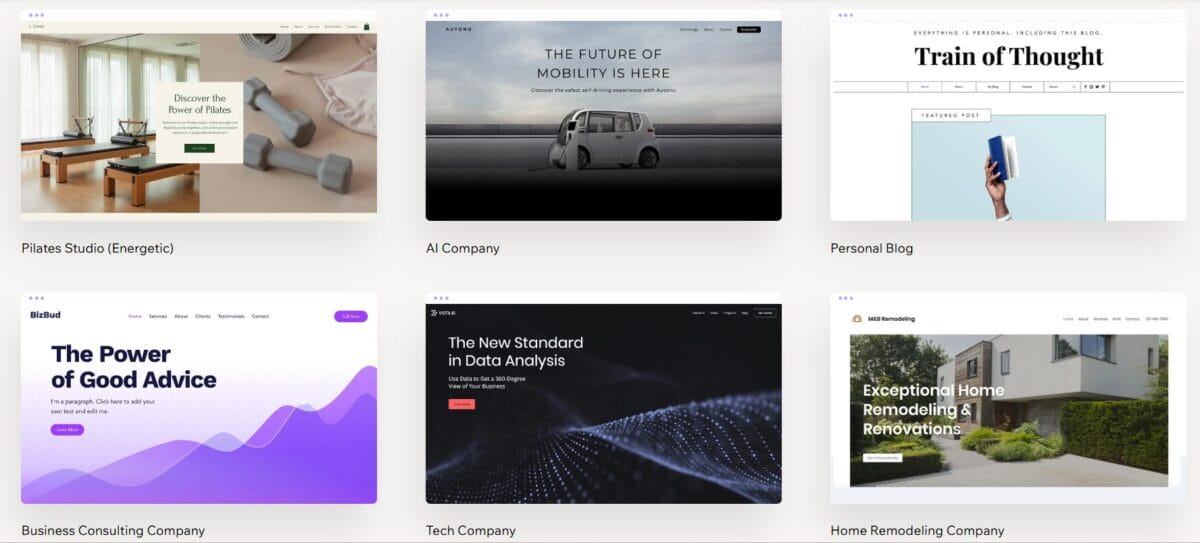
Wix is centered around a visual-first editing experience. Its drag-and-drop editor allows precise control over layouts, sections, and individual elements, making it easy to customize the look and feel of a store without touching code. This flexibility works well for sellers who want strong branding, creative layouts, or niche-specific designs from day one.
Key strengths include:
- Free-form visual editor with high layout flexibility.
- Design control at the page and element level.
- Fast customization without technical setup.

Shopify’s design philosophy favors structure over free-form editing. Its theme-based system prioritizes consistency, performance, and conversion-focused layouts. Customization happens within predefined sections and blocks, which limits visual freedom but speeds up setup and helps maintain clean storefront logic across devices.
This makes Shopify a strong fit for sellers who value:
- Faster store setup using proven templates.
- Conversion-optimized layouts out of the box.
- Easier design scaling across large catalogs.
In short?
⚫ Wix gives you more creative control over how your store looks.
🟢 Shopify gives you more control over how your store behaves as it grows.
Pricing and Ongoing Costs
When comparing Wix vs Shopify, pricing goes beyond the monthly subscription. The real difference lies in how costs scale as your store grows and how many operational features are included (or added later through apps).
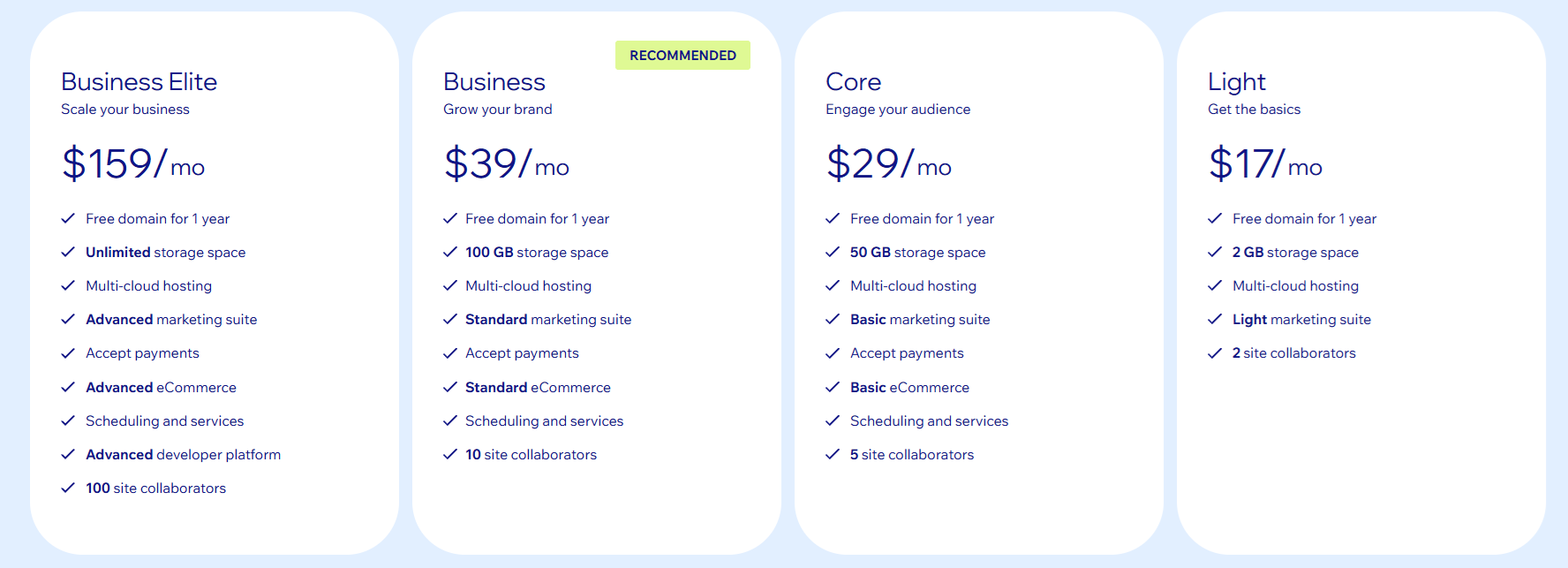
Wix follows a more straightforward pricing structure. Most plans bundle core website and eCommerce features into a single package, which makes initial budgeting simpler. For new sellers, this can reduce upfront complexity, since fewer add-ons are needed to launch a functional store.
However, indirect costs may appear as operations expand:
- Limited automation features may require manual work or external tools.
- Fewer advanced integrations can restrict efficiency at higher volumes.
- Scaling often means upgrading plans sooner to unlock needed functionality.
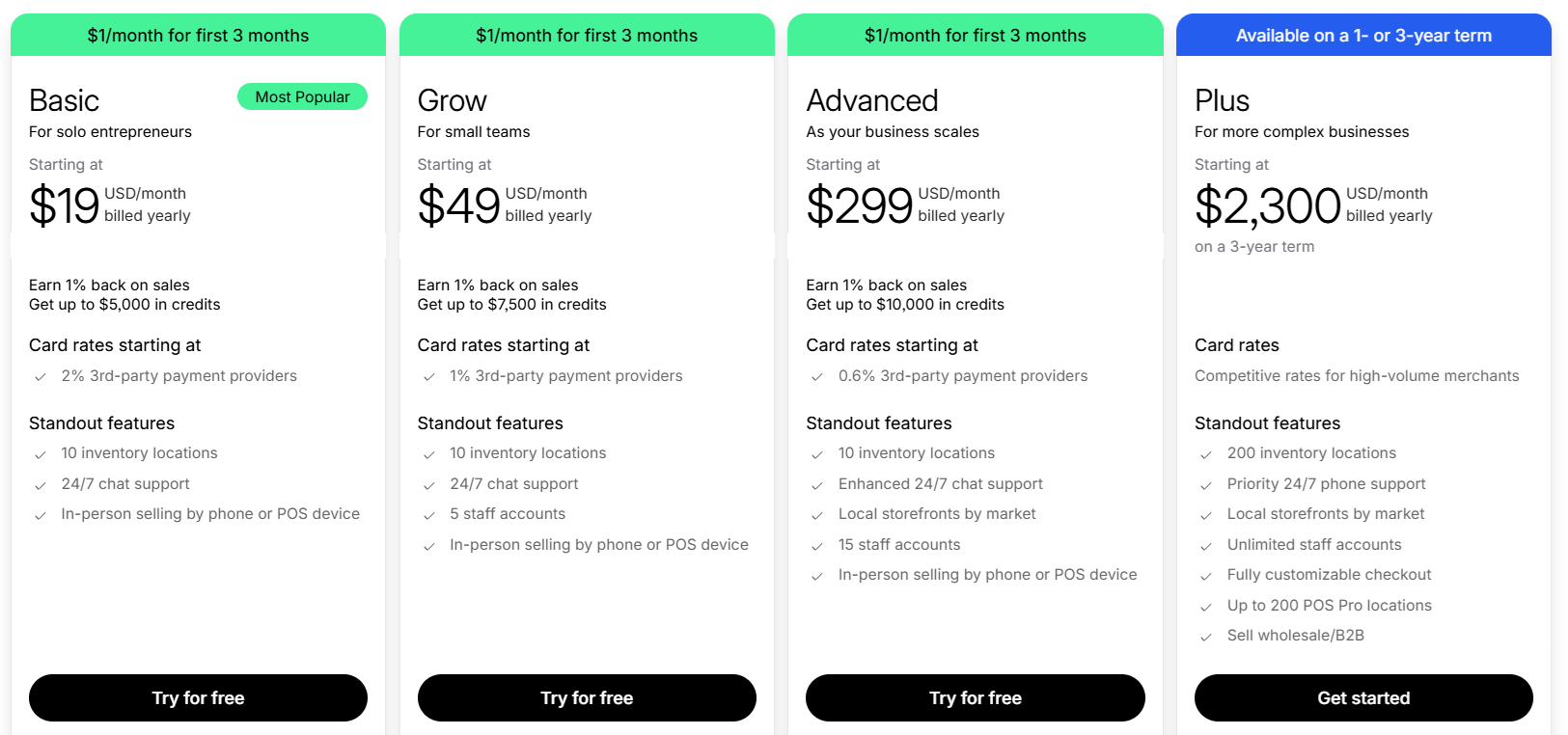
👀 Pricing shown in the images is accurate at the time of writing and may change. Always check the official Wix and Shopify websites for the most up-to-date plans and fees.
Shopify uses a modular pricing model. The base platform covers storefront and checkout functionality, while many dropshipping, automation, and optimization features come through apps. This gives sellers more control over which tools they pay for, but also introduces variable costs over time.
Hidden or indirect considerations include:
- App subscriptions for sourcing, automation, and fulfillment.
- Transaction or processing fees depending on payment setup.
- Higher costs are tied to advanced workflows and scaling features.
In practice, Wix tends to feel more predictable at smaller scales, while Shopify’s cost structure reflects its flexibility. The key question isn’t which platform is cheaper, but which pricing model aligns better with how complex your dropshipping operation is likely to become.
Scalability for Growing Dropshipping Businesses
Scalability becomes a real concern once a dropshipping store moves beyond a handful of products and occasional orders. As order volume increases, so do the demands on inventory syncing, pricing accuracy, fulfillment speed, and operational visibility. This is where platform differences start to matter more.
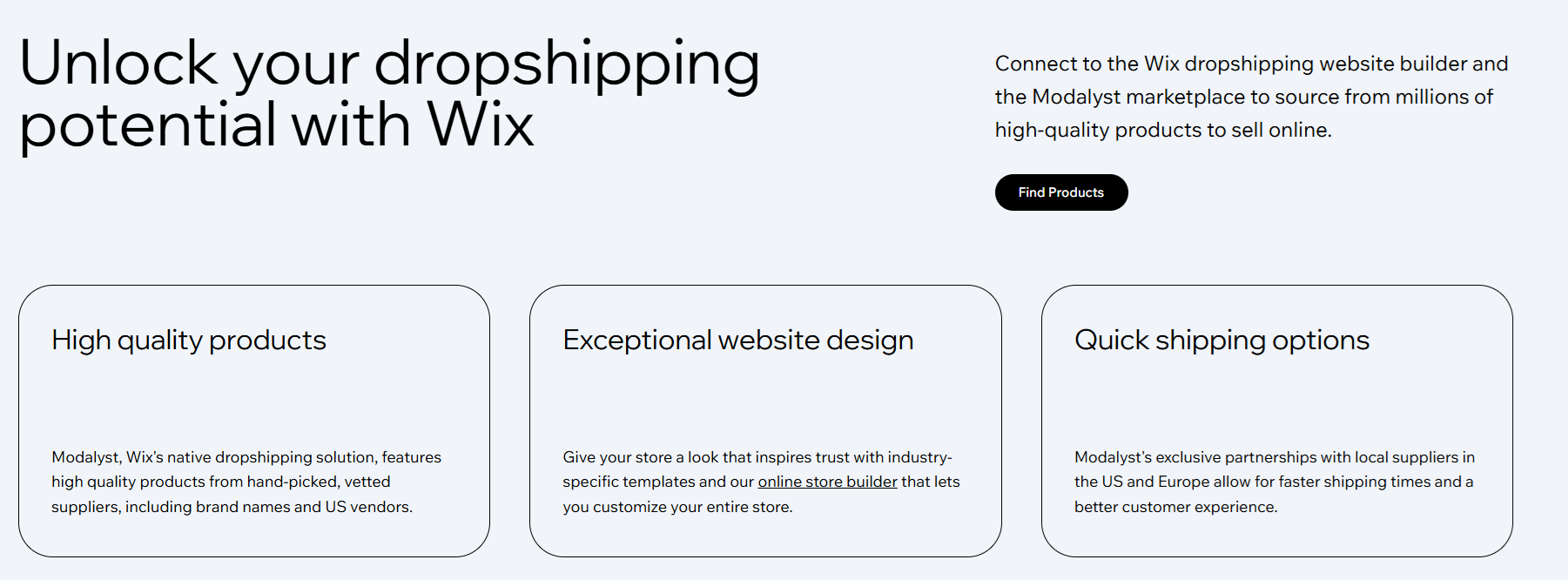
Wix can support growth up to a point, especially for stores with controlled catalogs and steady (but not explosive) order volume. Its infrastructure handles moderate scaling well, but automation depth and workflow flexibility tend to become limiting factors as complexity increases. Managing larger product catalogs or multiple suppliers often requires more manual oversight.
This makes Wix more suitable for:
- Smaller to mid-sized catalogs.
- Predictable order volume.
- Businesses that prioritize simplicity over advanced automation.
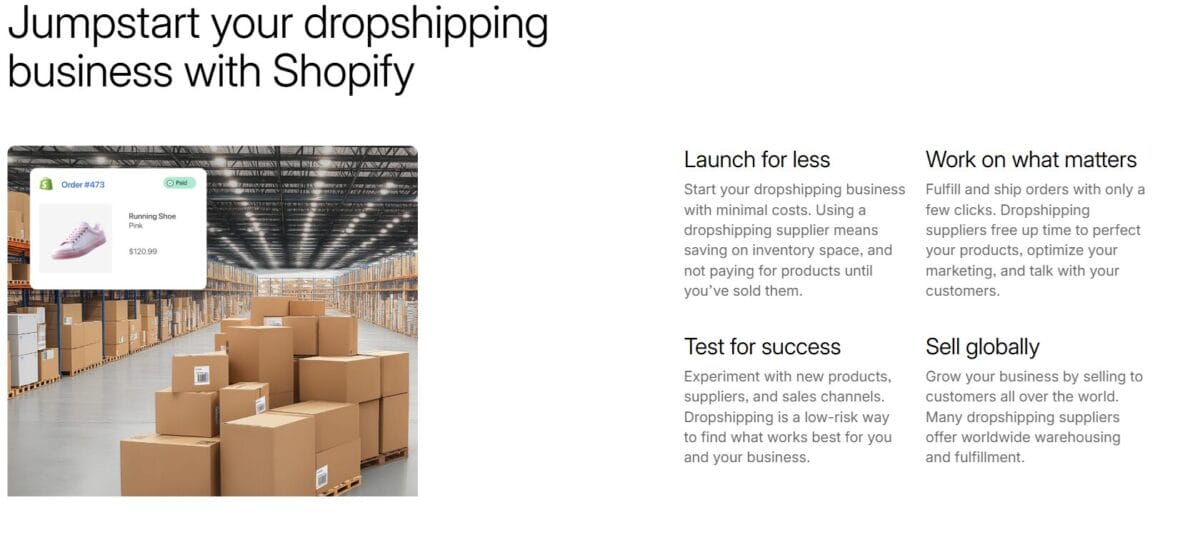
Shopify, by contrast, is built with scale as a core assumption. Its backend and ecosystem are designed to support elevated product counts, frequent inventory changes, and large order volumes without disrupting operations. Automation-heavy workflows, bulk actions, and multi-supplier setups are easier to implement as the business grows.
Shopify is better aligned with:
- High-volume order processing.
- Expanding product catalogs.
- Sellers planning multi-store or multi-market strategies.
In simpler terms:
⚫ Wix works well for dropshipping as a focused business or side project.
🟢 Shopify is structured for sellers who expect growth, complexity, and increasing automation needs over time.
SEO, Marketing, and Traffic Capabilities
Traffic acquisition plays a major role in dropshipping success, and both Wix and Shopify offer built-in tools to support SEO, content, and paid marketing. The difference lies in how much control each platform gives sellers, and how well those controls integrate with broader marketing systems.
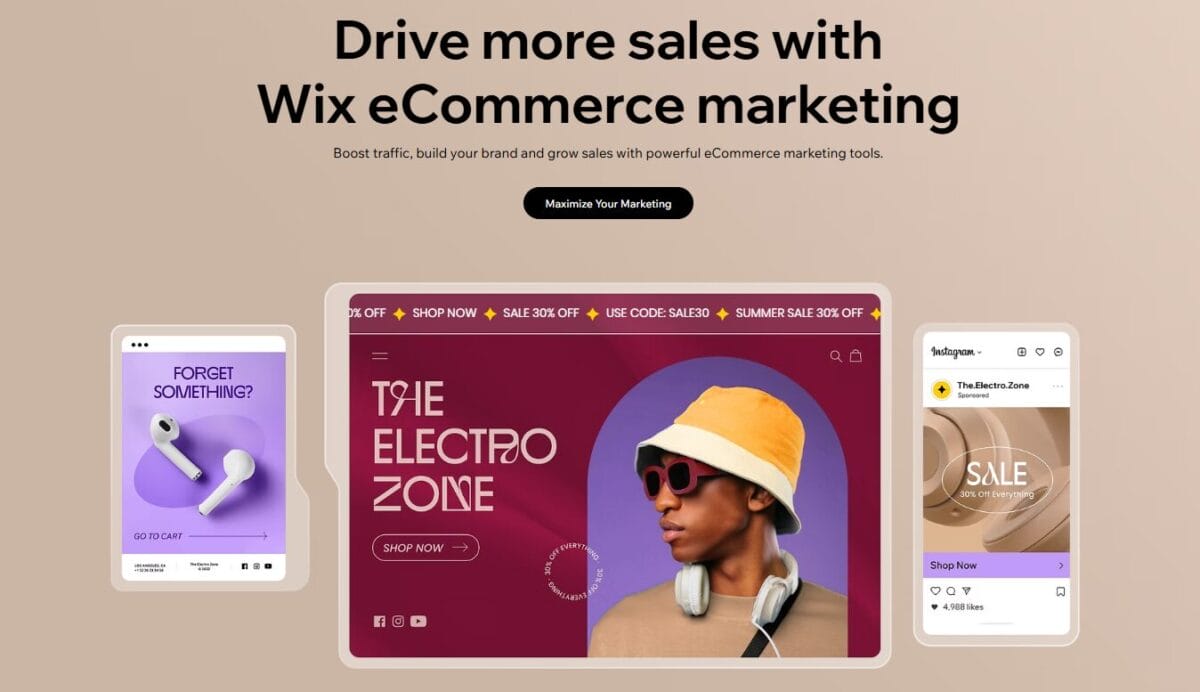
Wix provides accessible, well-guided SEO tools directly in its dashboard. Sellers can manage page titles, meta descriptions, URLs, and structured data without technical complexity. Its SEO setup is especially friendly for content-driven strategies, making it easier to combine blogging, landing pages, and product pages in a single environment.
From a marketing standpoint, Wix supports:
- Native email marketing and basic automations.
- Social media integrations.
- Straightforward paid ad connections.
This makes Wix effective for sellers relying on organic traffic, branded content, and simpler marketing funnels.
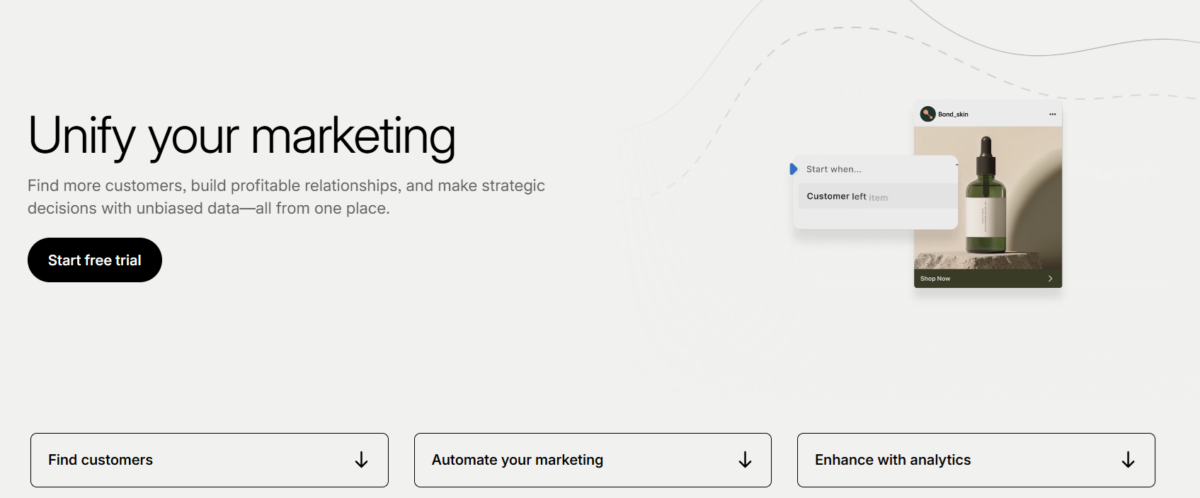
Shopify offers deeper SEO and marketing flexibility, particularly for stores running multi-channel or paid traffic strategies. While core SEO controls are similar, Shopify integrates more tightly with advanced analytics, ad platforms, and external marketing tools. Its ecosystem supports complex attribution models, performance tracking, and channel-specific optimization.
Shopify is especially strong for:
- Paid traffic at scale (Google, Meta, TikTok).
- Advanced email and SMS marketing integrations.
- AI-driven search, recommendation, and personalization tools.
In terms of AI search relevance, Shopify’s structured data handling and app ecosystem make it easier to adapt to evolving discovery models, where clean product data, performance signals, and automation increasingly influence visibility beyond traditional keyword rankings.
Customer Support and Ecosystem
When running a store, support goes beyond answering tickets. Documentation quality, community knowledge, and third-party resources all play a role in how quickly sellers can solve issues and keep operations moving.

Wix offers centralized customer support with clear documentation and guided help resources. Its support experience is designed to be approachable, especially for newer users who need step-by-step assistance. Tutorials, help articles, and in-dashboard prompts make it more effortless to resolve common setup and management questions.
That said, the broader ecosystem is more limited:
- Smaller seller community focused on general websites, not only eCommerce.
- Fewer advanced, third-party operational resources.
- Less peer-driven troubleshooting for complex dropshipping workflows.
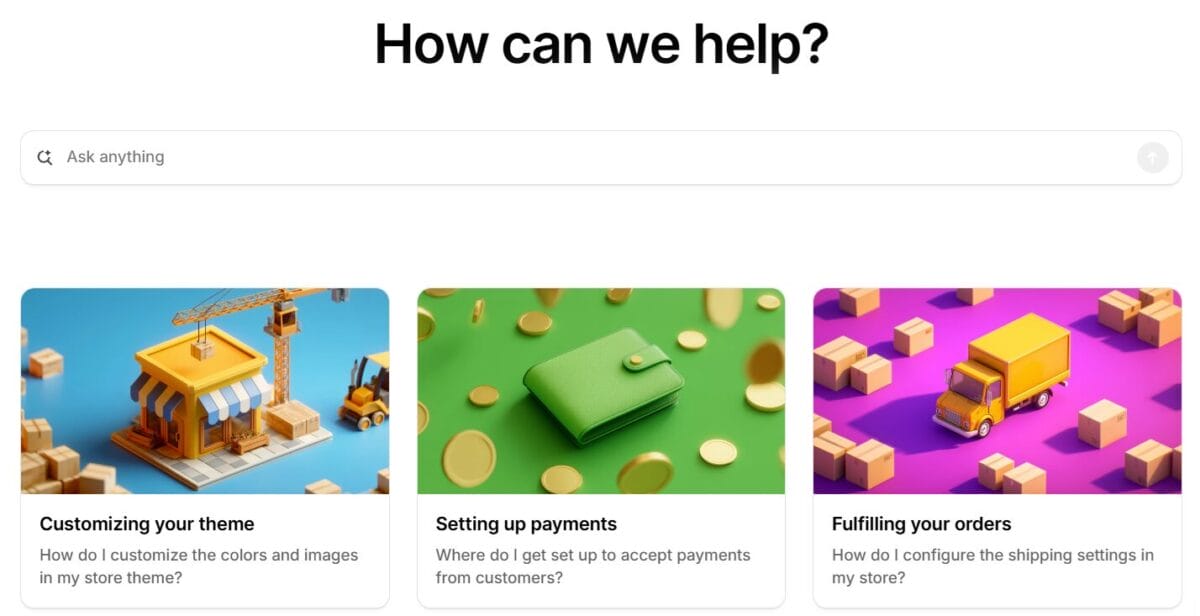
Shopify benefits from a large global seller community. Support is available through multiple channels, but its biggest strength lies in the surrounding ecosystem. Thousands of guides, forums, agencies, developers, and tool providers contribute to a deep pool of shared knowledge.
Shopify’s ecosystem stands out for:
- Extensive documentation and developer resources.
- Active communities, forums, and case studies.
- Wide availability of third-party experts and service providers.
Summing up, Wix’s support structure favors clarity and ease of use, while Shopify’s ecosystem prioritizes depth, specialization, and long-term scalability, especially for sellers navigating more complex dropshipping operations.
Wix vs Shopify Dropshipping: Side-by-Side Comparison Table
| Feature | Wix | Shopify |
|---|---|---|
| Ease of Use | Super intuitive | Steeper learning curve |
| App Ecosystem | Small | Large |
| Product importing | Available through compatible apps | Widely supported with bulk and automation tools |
| Automation Capabilities | Basic | Advanced |
| Design & Customization | High visual flexibility | Theme-based customization |
| Pricing structure | Bundled plans with fewer add-ons | Tiered plans with add-on apps and services |
| Scalability | For small to mid-size stores | For high-volume scaling |
| SEO & Marketing Tools | Strong native SEO & content tools | Deep integrations for paid ads, analytics & AI search |
| Support & Resources | Centralized support, guided documentation | Large community, extensive third-party resources |
| Best For | Beginners | Experienced sellers planning long-term growth |
Which Platform Is Better for Different Types of Dropshippers?
Rather than asking which platform is better, the more useful question is: better for whom? Wix and Shopify serve different types of dropshippers depending on experience level, goals, and operational complexity.
- If you’re starting your first dropshipping store, Wix is often a comfortable entry point. Its visual editor, guided setup, and lower operational overhead make it easier to launch quickly and focus on learning the basics. For sellers testing ideas, building a small brand, or running a side project, Wix keeps the barrier to entry low and the workflow simple.
- If you’re an intermediate seller planning to grow, Shopify tends to offer more long-term flexibility. As product catalogs expand and order volume increases, Shopify’s ecosystem supports more advanced automation, multi-supplier setups, and performance tracking. This makes it a practical choice for sellers who have already validated products and want smoother scaling.
Once you move past experience level, the decision often comes down to how you want to operate day to day.
- If efficiency is a priority, Shopify’s structure aligns better with system-driven workflows. Bulk product imports, price and stock syncing, and order automation are easier to manage as complexity increases. Wix can still support automation, but it’s better suited to lighter operational demands.
- If branding and content are central to your strategy, Wix’s design flexibility can be a strong advantage. Sellers focused on storytelling, niche positioning, or content-led traffic may appreciate the creative control it offers, especially in early stages.
Taken together, Wix tends to suit sellers who value simplicity and creative control, while Shopify fits those preparing for deeper automation and scalable operations, each serving a different path within the dropshipping journey.
💡 Pro Tip: Thinking beyond a single store? AutoDS lets you connect and manage multiple platforms and selling channels from one system. It’s a smart way to test Wix and Shopify in parallel, without doubling your daily workload. Here’s a detailed breakdown on how it works.
How AutoDS Works with Wix and Shopify
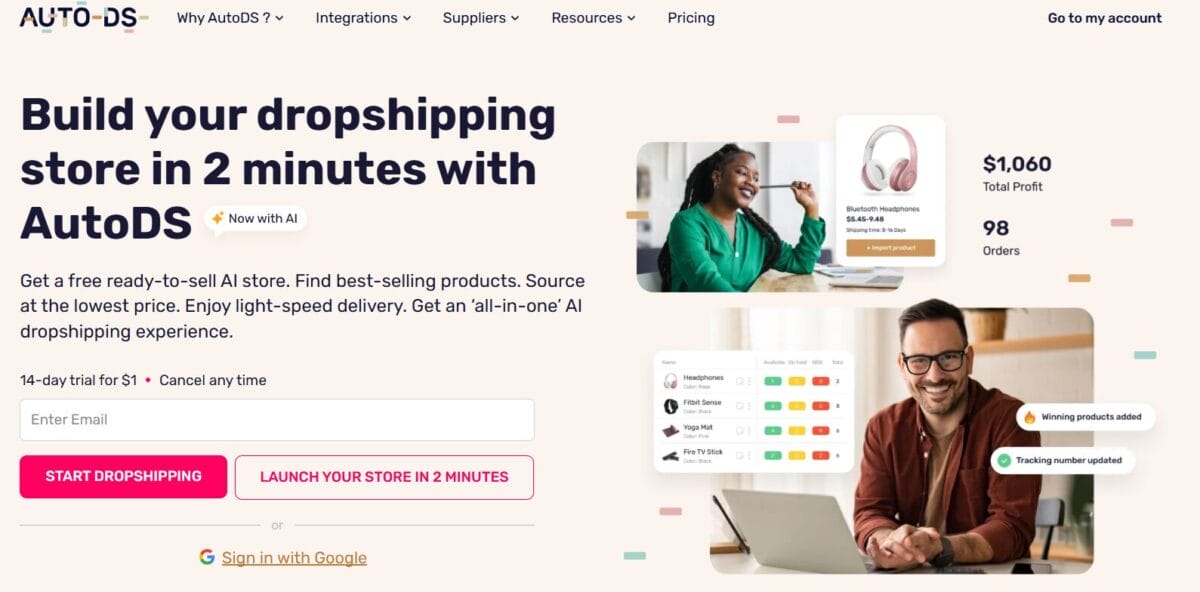
No matter which platform you choose, AutoDS acts as the operational layer that sits above your storefront. Wix and Shopify handle how your store looks and functions for customers; AutoDS handles what happens behind the scenes so your dropshipping business can actually run at scale.
💬 As dropshipping expert AC Hampton explains: “You can actually connect more than just a Shopify store; you can connect eBay, Facebook, Wix, and so much more.”
With both Wix and Shopify, AutoDS supports streamlined product importing from trusted suppliers. Instead of manually recreating listings, sellers can bring products into their store with structured titles, images, variants, and pricing, saving time and reducing setup errors, especially when testing multiple products.
Automation becomes even more valuable once the store is live. AutoDS enables price and stock monitoring, helping sellers stay aligned with supplier changes and avoid overselling or pricing mismatches. This matters on both platforms, but it becomes especially critical as catalogs grow and order volume increases.
For order fulfillment, AutoDS helps automate the flow from customer purchase to supplier order. Tracking updates, order syncing, and fulfillment status are handled consistently, reducing manual work and fulfillment friction, regardless of whether the store runs on Wix or Shopify.
Where the experience differs is how each platform scales with automation. As a Wix dropshipping tool, AutoDS helps simplify and stabilize everyday operations. As a Shopify dropshipping tool, it unlocks deeper system-level workflows that support larger catalogs, higher order volumes, and multi-supplier setups.
At the end of the day, AutoDS allows dropshippers to focus on product research, branding, and growth, while automation handles repetitive operational tasks, on both Wix and Shopify, adapted to each platform’s strengths.
Frequently Asked Questions
What is dropshipping?
Dropshipping is a business model where you sell products online without holding inventory. When a customer places an order, the supplier ships the product directly to them. This allows sellers to launch with lower upfront costs and focus on marketing, product selection, and store optimization.
Is Shopify better than Wix for dropshipping?
Whether Shopify is better than Wix for dropshipping depends on your goals. Shopify offers deeper automation, integrations, and scalability, while Wix focuses on ease of use and design flexibility. Neither is universally better; it comes down to how complex and scalable you want your operation to be.
How much does it cost to dropship on Wix?
The cost to dropship on Wix includes a paid website plan, dropshipping apps, and transaction or payment processing fees. While entry costs can be lower for small stores (starting at $17 per month), indirect costs may increase as you add apps or automation tools.
How much does it cost to dropship on Shopify?
The cost to dropship on Shopify typically involves a monthly subscription (with the most basic plan starting at $19 per month), app fees, and payment processing charges. While Shopify may feel more expensive upfront, its ecosystem often reduces manual work and supports long-term efficiency as stores grow.
Is Wix or Shopify better for dropshipping in 2026?
In 2026, Wix and Shopify both support dropshipping, but they serve different needs. Wix is well-suited for beginners and smaller catalogs, while Shopify is built for sellers planning to automate, scale, and manage higher order volumes over time.
Can you automate dropshipping on Wix and Shopify?
Yes, you can automate dropshipping on both Wix and Shopify using tools like AutoDS. Automation can cover product importing, price and stock updates, and order fulfillment. Shopify generally supports more advanced automation workflows.
Which platform is cheaper for dropshipping?
Which platform is cheaper for dropshipping depends on store size and complexity. Wix may cost less for simple setups, while Shopify can become more cost-efficient at scale by reducing operational friction and manual work through automation.
Is Shopify better than Wix for scaling a dropshipping business?
Shopify is generally better than Wix for scaling dropshipping businesses because of its mature app ecosystem and automation capabilities. It handles larger catalogs, higher order volumes, and multi-supplier workflows more effectively over time.
Can beginners use Wix for dropshipping?
Yes, beginners can use Wix for dropshipping thanks to its intuitive editor and simpler setup process. It’s often a good starting point for first-time sellers who want to launch quickly without dealing with complex technical workflows.
Do both platforms support the same dropshipping suppliers?
Both platforms support many of the same dropshipping suppliers, but availability depends on app integrations. Shopify typically offers broader supplier coverage, while Wix supports a smaller but functional range of dropshipping tools. However, tools like AutoDS connect sellers to a broader set of suppliers, regardless of whether you run your store on Wix or Shopify.
Can I switch from Wix to Shopify later?
Yes, you can switch from Wix to Shopify later as your business grows. Many sellers start on Wix and migrate once they need more automation, integrations, or scalability, though migration requires planning for products, URLs, and data transfer. This step-by-step Wix to Shopify dropshipping migration guide breaks down the process so you can switch platforms without disrupting your store.
Final Verdict: Wix vs Shopify for Dropshipping in 2026
Choosing between Wix and Shopify for dropshipping comes down to how you want to build, manage, and scale your store over time. Both platforms support dropshipping in 2026, but they’re designed around different workflows, levels of complexity, and long-term expectations.
Wix stands out for ease of use, visual control, and fast setup, making it a strong choice for beginners or sellers focused on branding and content-driven stores.
Shopify, in contrast, offers a more mature eCommerce infrastructure, deeper automation capabilities, and a broader ecosystem built to support higher order volumes and long-term growth.
And here’s the deal: no matter which platform you choose, AutoDS acts as the operational layer that ties everything together. The tool helps dropshippers automate product importing, monitor price and stock changes, and streamline order fulfillment across both Wix and Shopify, turning either platform into a scalable, system-driven online business.
🤝 So, what are you waiting for to simplify your operations and build with growth in mind? Start the AutoDS trial for $1 and see how much smoother dropshipping can be in Shopify or Wix.
Want to keep building a successful dropshipping store? These related articles are a smart next read: