


Let’s start this article by getting straight to the point: Yes, Etsy is a legitimate and trustworthy marketplace. That said, dropshipping on the platform comes with important considerations. Unlike traditional eCommerce platforms, Etsy only allows products that meet its Handmade, Vintage, or Craft Supplies policies, meaning not every business approach is permitted.
That’s why the key is choosing products that comply with Etsy’s policies. Once you’ve identified compliant items, solutions like AutoDS can help simplify product sourcing, supplier management, and order fulfillment, making it easier to run your operation efficiently.
In this guide, you’ll learn how Etsy’s policies work, what products you can legally sell, what fees to expect, and how to build a successful business while staying compliant.
Etsy is a trusted global marketplace built around handmade, vintage, and custom goods, making it an ideal stage for dropshippers with creative, niche-focused products.
Dropshipping on Etsy is 100% possible when ran as a clean, well-managed business that delivers great customer service and avoids generic, mass-produced items.
Both sellers and buyers benefit from Etsy’s strong safety net, with clear policies, verified reviews, and an active dispute resolution process.
The platform’s strengths (built-in audience, higher perceived value) shine alongside challenges like strict product rules and a limited product scope.
AutoDS empowers Etsy dropshippers to stay compliant and profitable by simplifying product research, imports, automation, and store management.
What Is Etsy? A Quick Overview
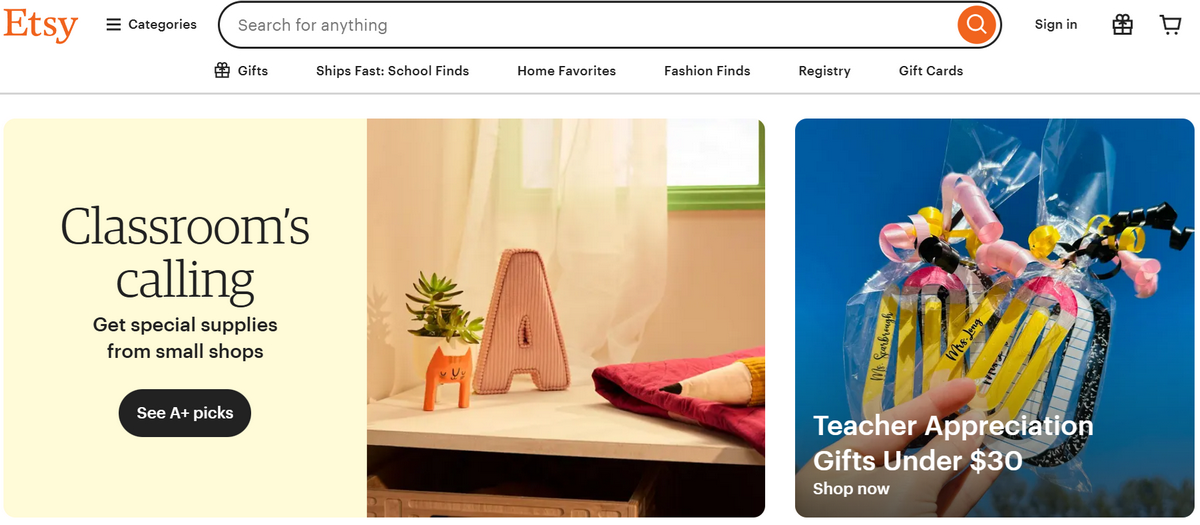
First off, let’s zoom out for the big picture. Etsy is a one-of-a-kind online marketplace known for its handmade goods, vintage treasures, and creative products. Its distinct niche attracts buyers looking for originality, which sets it apart from mainstream eCommerce platforms.
In figures, as of early 2026, Etsy hosts around 88.5 million active buyers and 5.4 million active sellers, with over 100 million unique items listed. The platform sees nearly 400 million monthly visits, maintaining strong engagement and expanding its global reach.
No wonder it’s become a treasure trove for dropshippers aiming to tap into a high-intent audience and offer unique, high-quality products that stand out from the crowd. But with all that potential, dropshipping on Etsy still raises a couple of essential questions that anyone online seller should ask first.
Why Etsy Is a Legitimate Marketplace
Etsy is a legitimate marketplace that has been connecting creative sellers with millions of buyers for over a decade. Its focus on handmade, vintage, and unique products has earned it a solid reputation and a loyal global audience.
Being legit doesn’t mean it’s without rules or risks, though. Etsy enforces strict policies around authenticity, handmade guidelines, and intellectual property. It operates within a well-defined ecosystem, where trust is built through transparent transactions, clear communication, and consistent quality. For anyone considering selling here, understanding how the platform functions (from listing policies to how disputes are handled) is just as important as choosing what to sell. That’s the kind of knowledge that separates thriving shops from those that struggle to get noticed.
In the next sections, we’ll break down how Etsy handles dropshipping, and what safety looks like for both sellers and buyers. This way, you’ll know exactly how to approach the platform with confidence.
Is Dropshipping Allowed on Etsy?
Yes! Just know that Etsy plays by its own creative rules. The platform’s DNA revolves around handmade, vintage, and custom-designed products, which means your dropshipping model needs to align with that creative, authentic spirit. In practical terms, this means avoiding generic, mass-produced goods and steering clear of trademarked content that infringes on intellectual property.
Etsy’s current seller policy splits products into three categories: items “made by a seller” (physically handmade), “designed by a seller” (original designs produced by a partner), and “sourced by a seller” (craft supplies, vintage, or customizable items). However, that doesn’t mean you have to manufacture every item yourself. Etsy allows sellers to work with approved production partners to produce or fulfill, as long as those partnerships are disclosed transparently in your shop.
Actually, many sellers thrive by combining dropshipping with strategies like print on demand on Etsy, focusing on customizable gifts, craft-related tools, or items designed to feel personal rather than mass-market. These product types naturally fit Etsy’s vibe and keep your store policy-friendly.
As Etsy explains in its Seller Handbook, “transparency about production helps buyers understand your process.” That’s the real dividing line on Etsy: not whether you use a production partner, but whether you’re upfront about it and bring genuine design or curation to the table.
In other words, when you run your shop smoothly (working with trusted suppliers, offering excellent customer service, and keeping fulfillment quick) Etsy has no problem with you dropshipping. In fact, done right, it blends seamlessly into the platform’s ecosystem, letting you grow a creative, profitable business that customers genuinely love.
Understand the rules, deliver value for your customers, and Etsy can be one of the most rewarding marketplaces for a creative dropshipping store.
🆕 Beginner’s Tip: If you’re ready to take the plunge but not sure where to start, check out our step-by-step Etsy dropshipping 101 guide. It walks you through everything, from finding the right products to setting up your store, so you can launch with confidence.
How Safe Is Etsy for Sellers?
For clever dropshippers, Etsy can be not only safe but incredibly rewarding, a marketplace where the right approach pays off. Success here comes from working in harmony with the platform’s spirit, sticking to allowed categories like handmade goods with your own design input, print on demand, vintage finds, or genuine craft supplies.
What Etsy values most is the customer experience. That means working with trusted suppliers (even major retail suppliers if used carefully), keeping operations smooth, and delivering exactly what you promise. Consistent quality and fast fulfillment naturally lead to positive reviews, which are the single biggest trust signal for both buyers and Etsy’s algorithm. It’s a win-win: satisfied customers share glowing feedback that boosts your visibility and credibility, while the platform’s seller protections help resolve disputes fairly.
Etsy’s policy enforcement is strict, but it’s not a roadblock when you play it smart. The key is simple: understand the rules and use them to your advantage. List mass-produced items without customization or fall short on customer service, and you risk listing removals and suspensions. Focus on designs, branding, and service that wow your customers, and you’ll be rewarded.
With tools like AutoDS automating order processing, inventory sync, and product imports, you can set up your Etsy store and run it efficiently and confidently, while delivering the kind of experience buyers come back for.
🔍 Research Tip: AutoDS’s powerful research tools help you find trending, niche-friendly products that comply with Etsy’s rules and earn great reviews, boosting your dropshipping store’s success.
How Safe Is Etsy for Buyers?
From the buyer’s side, Etsy is also a widely safe place to shop, thanks to robust buyer protection programs, a structured dispute process, and highly visible trust signals such as product reviews.
The platform’s built-in buyer protection policy ensures that if an item doesn’t arrive, arrives damaged, or isn’t as described, customers can open a case and receive assistance from Etsy’s support team to resolve the issue.

Reviews also play a huge role in building trust. Every seller’s profile shows detailed ratings, written feedback, and transaction history, making it easy for shoppers to gauge reliability before purchasing. That’s why high-rated stores with a steady stream of positive reviews tend to get more visibility and conversions.
And because Etsy’s dispute process is well-structured, buyers feel confident knowing there’s a clear path to refunds or problem resolution. For dropshippers, this means transparency and great customer service aren’t just nice to have, they’re essential to building trust and driving repeat sales.
How Much Does Etsy Cost for Dropshippers?
Etsy isn’t free to sell on, and understanding its fee structure upfront is essential for pricing your products profitably. Here’s what every Etsy seller pays, regardless of niche:
- Listing fee: $0.20 USD per item, charged when you publish a listing (whether or not it sells). Listings run for four months or until sold, and auto-renew for another $0.20 if they expire unsold.
- Transaction fee: 6.5% of the total order amount (item price, shipping, gift wrapping, and any personalization fee included).
- Payment processing fee: 3% + $0.25 per transaction for US-based sellers (rates vary by country).
Combined, these core fees typically add up to around 9.5% + $0.45 per sale for US sellers, before factoring in product cost or optional advertising.
If your shop earns more than $10,000 in the past 365 days, Etsy’s Offsite Ads fee becomes mandatory at 12% of the order total for sales attributed to those ads (15% for sellers under that threshold, though it’s optional in that case). This is worth factoring into your margins if you’re scaling.
Quick example: On a $30 item with $5 shipping, mandatory fees come out to roughly $3.78, before any advertising costs. Use Etsy’s fee calculator in Shop Manager to check exact rates for your account, since payment processing varies by country.
For dropshippers, the takeaway is simple: price your products with all three mandatory fees baked in from the start, not as an afterthought. Tools like AutoDS can help by tracking your costs and margins across listings, so you’re not manually recalculating fees every time you price a new product.
Pros and Cons of Dropshipping on Etsy
So, what do we take away from all of this? In conclusion, dropshipping on Etsy has some unique advantages, but it also comes with some limitations. Knowing both will help you play by the rules and set realistic expectations:
✅ Pros of Etsy Dropshipping:
- Built-in audience: Etsy gives you instant access to millions of high-intent buyers actively looking for unique, creative products.
- Niche appeal: The platform thrives on specialized markets like weddings, pets, or home décor, letting your store feel curated from day one.
- One-of-a-kind items: Perfect for stores that want to stand out with handmade, vintage, or custom designs. Plus, unique products can often be sold at higher profit margins.
- Quick shipping: Many Etsy sellers ship locally, with delivery times as fast as 1–3 days.
🚩 Cons of Etsy Dropshipping:
- Strict policies: Etsy enforces handmade and originality guidelines, so mass-produced or generic items won’t fly.
- Limited product scope: Your catalog needs to fit Etsy’s creative and handmade vibe, which narrows options compared to general marketplaces.
If you understand these trade-offs and choose products that fit the platform’s personality, Etsy can definitely be a powerful channel for your dropshipping business.
Frequently Asked Questions
Is Etsy legit for dropshipping businesses?
Yes! Etsy is legit for dropshipping businesses, as long as they align with its spirit and policies. That means selling items that fit the handmade, vintage, or custom criteria, avoiding generic mass-produced reselling. Well-run dropshippers can build sustainable stores on the platform.
Can I use AliExpress or similar suppliers for dropshipping on Etsy?
Yes! You can use AliExpress or similar retail suppliers, but you must be careful. Avoid generic, mass-produced products and focus on items that align with Etsy’s handmade or custom spirit. Work with trusted suppliers, keep shipping times reasonable, and add creative design or branding so your listings meet Etsy’s quality standards.
Can dropshipping get my Etsy shop suspended?
Dropshipping can get your Etsy shop flagged or suspended if you’re reselling generic, mass-produced items without any original design or disclosed production partner. That’s why on of the safest path is print-on-demand dropshipping: you own the design, a partner handles fulfillment, and you disclose that partnership on every relevant listing.
What product types can I actually sell as a dropshipper on Etsy?
Etsy organizes listings into three categories: items made by a seller (physically handmade or produced with tools like a 3D printer), designed by a seller (your original design, produced by a disclosed production partner — this is where print-on-demand dropshipping fits), and sourced by a seller (craft supplies, genuine vintage items, or personalized items). Reselling mass-produced items outside these categories is not recommended.
How does dropshipping with print-on-demand work on Etsy?
Dropshipping with print-on-demand on Etsy means selling personalized designs while a production partner handles printing and shipping. With AutoDS, it’s a smooth, policy-friendly process: connect your shop, upload original designs, and work with compliant POD suppliers to launch, automate, and scale, while staying true to Etsy’s handmade and customization spirit.
Is it safe and legit to use AutoDS for Etsy dropshipping?
Using AutoDS for Etsy dropshipping is safe and legit. AutoDS helps you find best-selling products on Etsy, automate sourcing and importing, and provides order management tools that help sellers stay aligned with Etsy’s policies while scaling efficiently.
Final Verdict: Should You Dropship on Etsy?
Dropshipping on Etsy isn’t just viable, it’s one of the smartest moves you can make if you love selling products with personality and story. The platform rewards originality, niche focus, and clean execution; generic reselling or ignoring its handmade/custom spirit will only hold you back. Success comes from thoughtful product selection and delivering an exceptional customer experience.
AutoDS enables Etsy dropshippers to work smarter by surfacing winning product ideas, automating sourcing and fulfillment, and helping keep listings compliant with platform standards. With the right approach and tools, Etsy it’s a highly profitable, standout channel for dropshipping.
🔒 Want to keep your Etsy business safe and thriving? Start your AutoDS trial for just $1 and get the tools to navigate Etsy policies while maximizing your dropshipping profits.
Ready to keep learning? Check out the following reads and boost your dropshipping game: