


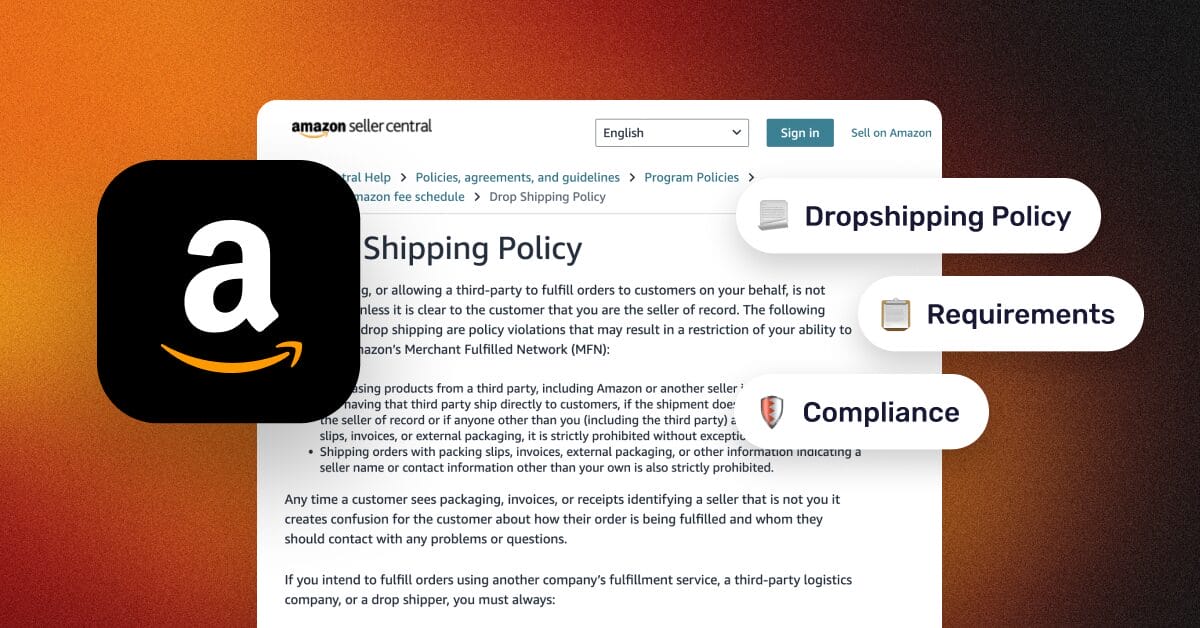
Thinking about starting a dropshipping business on Amazon in 2027? Well, you’re not alone. This is still one of the most popular (and profitable) ways to sell online. It’s pretty simple: you list products on Amazon without holding inventory, and when a customer places an order, your supplier ships it directly to the buyer. Easy, right?
Well, let’s stop there for a minute. Amazon has very specific rules about how to dropship on the platform. And breaking them can quickly get your account suspended. So, yes: dropshipping on Amazon is still 100% possible. That said, you still have to follow some requirements.
In this guide, I’ll break down the Amazon dropshipping policy: what’s allowed, what isn’t, and what you and your supplier are responsible for, including common mistakes to avoid and the practices that can help you stay within the rules.
For instance, automation tools like AutoDS can make it easier to follow those requirements consistently by automating supplier sourcing, order management, and tracking uploads.
Amazon still allows dropshipping in 2026, but only if you follow its rules. You must be the seller of record, remove third-party seller information, handle returns, and meet Amazon’s applicable requirements.
Wholesale dropshipping is the model to aim for on Amazon, as it makes it easier to meet seller-of-record requirements, while retail dropshipping setups can lead to policy violations.
Compliance goes beyond choosing the right supplier. Amazon verifies seller information, monitors performance metrics, and restricts certain products, while qualifying US sellers may also be subject to the federal INFORM Consumers Act.
Most Amazon suspensions come from avoidable mistakes, like using retail stores as suppliers, shipping late, including third-party invoices, or selling prohibited items.
AutoDS makes compliance effortless with a direct integration with Amazon, automated order processing, vetted suppliers, and real-time inventory tracking.
What Is the Amazon Dropshipping Policy?
Amazon’s official rule is called the Drop Shipping Policy. And while it’s strict, the basic idea is pretty straightforward: you can use third-party suppliers to fulfill your orders, but it must be clear to the customer that you are the seller of record.
Okay, but what does seller of record actually mean here? In practice, being the seller of records means that your business name—and no one else—needs to be identified as the seller on packing slips, invoices, external packaging, and other information included with the order. Not your supplier’s.
Quick example. You are selling an item from a third-party supplier. A customer places an order on your store, but your supplier is the one who ships it. So far, so good. Now here’s the important part: the customer must receive a package and an invoice with your logo. There cannot be any trace from the actual supplier. In short, dropshipping is only allowed when it’s clear to the customer that they’re buying from you, not from another store.
Here’s a recap of what Amazon’s official seller requirements say you must do:
- Have an agreement with your supplier to be listed as the seller of record on all product listings.
- As seller of record, you’re responsible for setting the price, recording the purchase as revenue, and handling sales tax.
- Identify yourself as the seller on all packaging and invoices.
- Remove any materials or information that identify a third-party supplier before shipping.
- Handle all customer returns under your own business name.
- Take responsibility for processing returns and providing customer service that meets Amazon’s policies.
Another big rule-breaker? You can’t buy products from another retailer (like Walmart or Target) and ship them directly to customers. That’s considered retail arbitrage, and it violates Amazon’s policy big time.
Is Dropshipping Allowed on Amazon in 2027?
So yes, dropshipping is still allowed on Amazon in 2027, but you can do it only under very specific conditions. The key? Amazon wants you to have full ownership and accountability over every order. This means you can’t just act as a middleperson while another retailer does all the work.
The easiest way to understand the policy is through one distinction:
- Wholesale dropshipping (allowed): You work with a wholesaler, distributor, manufacturer, or print-on-demand partner that fulfills orders while you remain the seller of record.
- Retail dropshipping (not allowed): You buy a product from another retailer after receiving an Amazon order and have that retailer ship it directly to your customer.
So, what can you actually do?
- Use a third-party supplier or wholesaler to fulfill orders on your behalf.
- List and sell products under your own brand or business name.
- Automate fulfillment and inventory management with third-party tools (like AutoDS).
- Work with legitimate distributors or private-label manufacturers that provide neutral packaging.
- Sell custom-made items (like shirts, mugs, or posters) under your own brand, and use a print-on-demand services that ship products on your behalf.
And what should you avoid?
- Buy products from another retailer (like Walmart, eBay, or AliExpress) and ship them directly to Amazon customers. This counts as retail arbitrage and isn’t allowed.
- Send orders in branded packaging or with invoices from third-party suppliers that reveal someone else fulfilled the order.
- Misrepresent another business as your own or confuse customers about where their order came from.
- Ignore returns or customer support. As the seller of record, Amazon expects you to handle every issue directly.
📦 Supplier’s Tip: Sounds a little too hard to keep up with, but the truth is…it all comes down to the suppliers. Make sure to partner only with verified wholesalers or manufacturers who offer neutral packaging and allow white labeling. A little trick? Order a few samples to make sure they comply with everything.
Account & Compliance Basics: What You Need to Start
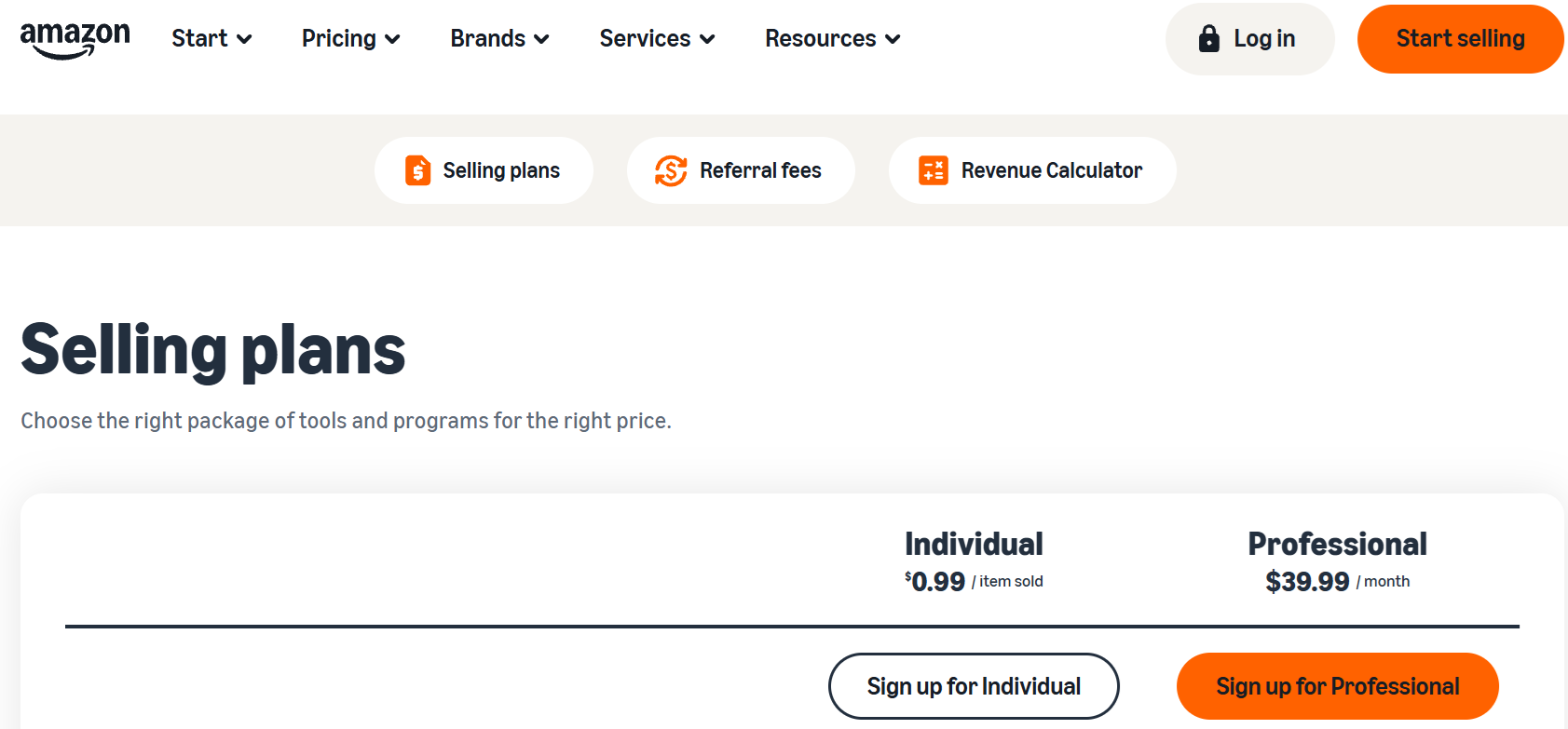
Before you start dropshipping, you need to get the account side right. Amazon offers two selling plans:
- Individual plan: No monthly subscription, but you pay $0.99 for every item sold. That per-sale fee can quickly eat into your margins as order volume grows.
- Professional plan: Costs $39.99 per month, regardless of how many items you sell, making it a better fit for sellers planning to handle regular order volume.
Then comes registration. And this is your first compliance checkpoint. Amazon needs to verify who’s behind the seller account, so you’ll need to provide accurate, up-to-date information and documentation, including:
- Identity and contact details: A government-issued ID, phone number, email address, and proof of residential address from the last 180 days.
- Business and tax information: Your business license or registration, along with the applicable tax information.
- Payment details: A bank account and routing number, plus an internationally chargeable credit card.
- Store and product information: Details about your store, products, certifications, and manufacturer or brand status, where applicable.
The important part? Treat registration as part of compliance, not paperwork to rush through. All your data should be accurate and consistent across your documents. Once Amazon can verify who you are and how your business operates, you can move on to the dropshipping-specific requirements.
Amazon Dropshipping Requirements (2027 Update)
There’s more to Amazon dropshipping requirements than being the seller of record. Let’s recap the most important requirements every dropshipper should know before listing their products.
1. Be the seller of record
We’ve already covered this, but to summarize it, just remember all listings, invoices, and packaging must identify your business as the seller (not your supplier).
2. Control your fulfillment process
Your supplier can handle shipping, but you must manage orders, tracking, and returns through your own Amazon account. And, by the way, returns must be handled within 24-48 hours.
3. Remove all third-party branding
Before a package goes out, make sure your supplier removes any logo, invoice, or message that reveals their identity.
4. Take full responsibility for returns and customer service
You, and not your supplier, are responsible for handling customer questions, complaints, and refunds.
5. Avoid selling restricted products
This includes counterfeit or replicated items, weapons, illegal drugs, narcotics, explosives, toxic chemicals, human parts or body fluids, stolen goods, and unsafe products (identified by authorities).
Then, there are also conditionally restricted products that are only allowed with approval or if they meet certain criteria. For example, cosmetics and skin care products require ingredient lists, safety data sheets, and country-specific labeling. Another example is supplements and vitamins, which need proper labeling and third-party testing to be allowed on Amazon.
Finally, there are branded products. To sell these, you need to either be an authorized reseller or have approval from the original brand
6. Comply with Amazon’s seller performance standards
In basic terms, Amazon wants you to be a good seller. To make sure you do this, they have certain metrics that establish the accepted (and unaccepted) standards. Let’s see:
- Order defect rate (ODR): keep it under 1% to avoid account warnings or suspensions.
- Late shipment rate: must stay below 4%. While you’re not in control of shipping, you can control how fast you fulfill your order. Automating this process is key to avoiding wasting time throughout the process. Also, make sure you partner with reliable, fast suppliers.
- Pre-fulfillment cancel rate: keep it under 2.5%.
- Tracking and valid delivery: always provide valid tracking numbers for shipped orders. To do this, it’s always best to work with an automation platform like AutoDS. These tools generate and send out tracking numbers automatically, so the customer can track their orders right from the start.
- Product authenticity and listing accuracy: sell only genuine items and match Amazon’s details exactly. Before listing your products, always order a few samples from your suppliers to make sure everything is as detailed.
- Customer experience metrics: respond quickly to buyer messages and try to keep customer feedback positive.
In short, you can delegate shipping to your suppliers, but not accountability. Amazon expects you, the seller, to operate like an actual business. As long as you deliver a professional and consistent experience from checkout to doorstep, you’ll be ok.
Amazon Supplier Requirements for Dropshipping
There aren’t really Amazon supplier requirements per se. It’s not that they have to comply with certain Amazon rules to be able to partner with you, the seller. Always remember: the responsibility is all yours. The logic is actually the other way around: you are the one who has to choose suppliers based on all the Amazon requirements.
Yes, it’s a bit confusing. But it all comes down to the same general idea: you’re the seller of record. Therefore, all requirements fall on you. You are responsible for choosing suppliers that…
…are verified, meaning they provide invoices, tax ID registration, and business credentials.
…offer neutral packaging and invoicing.
…guarantee product authenticity and quality.
…match their products with the descriptions and pictures on their listings.
…collaborate with returns and refunds (which are handled by you).
If one of these things fails at some point in the dropshipping process, the penalty falls on your Amazon account, not theirs.
So, how can you avoid that from happening? Choose your suppliers for Amazon wisely. Then, have an agreement with them to make sure they are aligned with these requirements. Finally, order samples, check for reviews, and make sure pictures and descriptions are accurate.
The INFORM Consumers Act: What Dropshippers Need to Know
Okay, one more thing to keep on your radar, because there’s a requirement for US sellers that doesn’t come from Amazon itself: the INFORM Consumers Act. This is a federal law that requires online marketplaces like Amazon to collect and verify information from certain high-volume third-party sellers. Its goal is to make online transactions more transparent and help prevent the sale of stolen, counterfeit, or unsafe products.
The law generally applies when, during any continuous 12-month period within the previous 24 months, you’ve had:
- 200 or more separate sales or transactions of new or unused consumer products.
- And $5,000 or more in gross revenue from those transactions on the marketplace.
Once you meet that definition of a high-volume third-party seller, Amazon must collect and verify information such as your identity, bank account, contact details, business address, and tax ID. You’ll also need to keep that information current and certify its accuracy when requested. If you fail to provide or certify the required information, Amazon may deactivate your selling account as required by law until you comply.
But don’t panic. This is mostly about having your paperwork in order. Keep your business information accurate and up to date, respond to Amazon’s verification requests, and treat them as another part of running a compliant store.
Common Amazon Policy Violations and How to Avoid Them
With so many rules, requirements, standards, and performance metrics, it’s easy to accidentally miss something. If that’s you, no worries. It can happen to anyone. Plus, the platform doesn’t exactly hand out warnings before going full police mode. So knowing what can trigger a violation is key to keeping your account healthy.
Here are the most common Amazon dropshipping policy violations (and how to avoid them like a pro):
- Using other retailers as suppliers. Buying from stores like Walmart, AliExpress, or eBay and shipping straight to Amazon customers is retail arbitrage. To avoid this, stick to verified wholesalers or manufacturers. Better yet? Use dropshipping tools like AutoDS to source from trusted, compliant suppliers only.
- Including third-party packaging or invoices. If your customer opens the box and sees another brand’s logo or receipt, Amazon sees a major red flag. Always confirm your supplier ships in plain packaging (or offers white-label services to add your logo) and removes all third-party branding before sending orders.
- Late shipments and missing tracking info. Amazon’s performance metrics are strict. Late or untracked deliveries can quickly hurt your seller rating. Avoid this by automating tracking updates and using reliable suppliers with fast shipping times.
- Selling counterfeit or restricted products. Amazon has quite a long list of prohibited or restricted products. Listing one of them is one of the quickest ways to get your account suspended. So, advice? Always keep your cheat sheet of products to avoid and… just avoid them.
- Ignoring customer service or return policies. You’re the seller of record, so you can’t blame your supplier for slow replies or poor return handling. Make sure to create a system where every stage of the dropshipping workflow is managed quickly and efficiently.
💡 Pro Tip: Keep your order defect rate under 1%, late shipment rate below 4%, and pre-fulfillment cancel rate under 2.5% with automation tools that handle them automatically and immediately. These are Amazon’s golden metrics. Miss them, and you risk account warnings or even suspension.
This may sound like too much. But before you decide to drop Amazon dropshipping for good, just think about this: staying compliant isn’t complicated. It’s all about transparency, reliability, and taking full ownership of your business.
How AutoDS Helps You Stay Amazon Compliant
The bad news? Keeping up with the Amazon dropshipping policy can be overwhelming. But the good news? Automation takes most of that stress off your plate. AutoDS integrates with Amazon, helping you keep things under control with full automation. It covers each step of the dropshipping workflow, making sure nothing slips through the cracks. Let’s zoom in.
First, AutoDS offers automated order management and tracking. It automatically processes orders, syncs tracking numbers, and sends delivery updates. This way, everything goes straight from the customer order to the system without your manual input.

Moreover, Fulfilled by AutoDS takes automation even further when it comes to dropshipping on Amazon. It doesn’t just automate the entire fulfillment process. It also uses its own Amazon seller accounts to ensure the order meets Amazon’s fulfillment and delivery standards. All while keeping your metrics intact and managing orders under your name. Perfect for complying with the Amazon dropshipping policy without stressing or lifting a finger.
Then, AutoDS offers a verified supplier network. The platform is not just an automation tool. It also offers an exclusive marketplace with vetted, trusted suppliers who meet Amazon’s fulfillment and branding requirements. AutoDS constantly monitors supplier reliability, packaging standards, and product authenticity to do the vetting for you so you don’t have to.
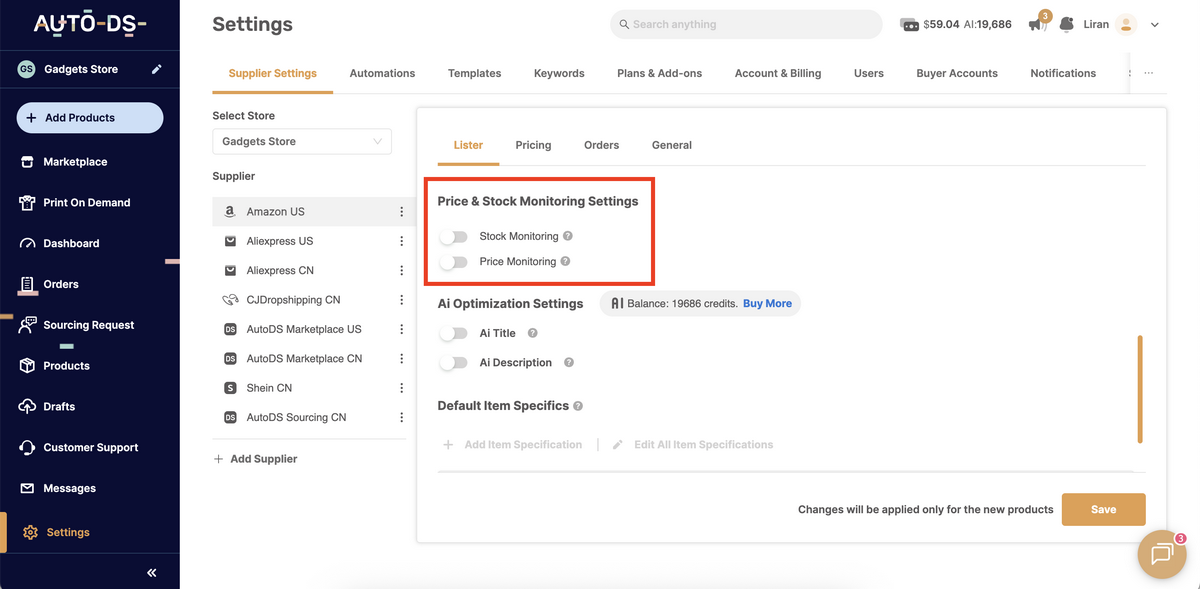
Finally, it offers real-time stock and price monitoring. AutoDS instantly updates your listings when your supplier’s stock or price changes. This prevents you from overselling items that are out of stock, avoids cancellations, and keeps prices accurate. All in all, this is a great tool to protect your seller metrics.
Step-By-Step Guide To Connecting Amazon With AutoDS
Ready to keep things compliant and hands-free? Just follow these quick steps to get started with AutoDS:
1. Connect your Amazon account to AutoDS
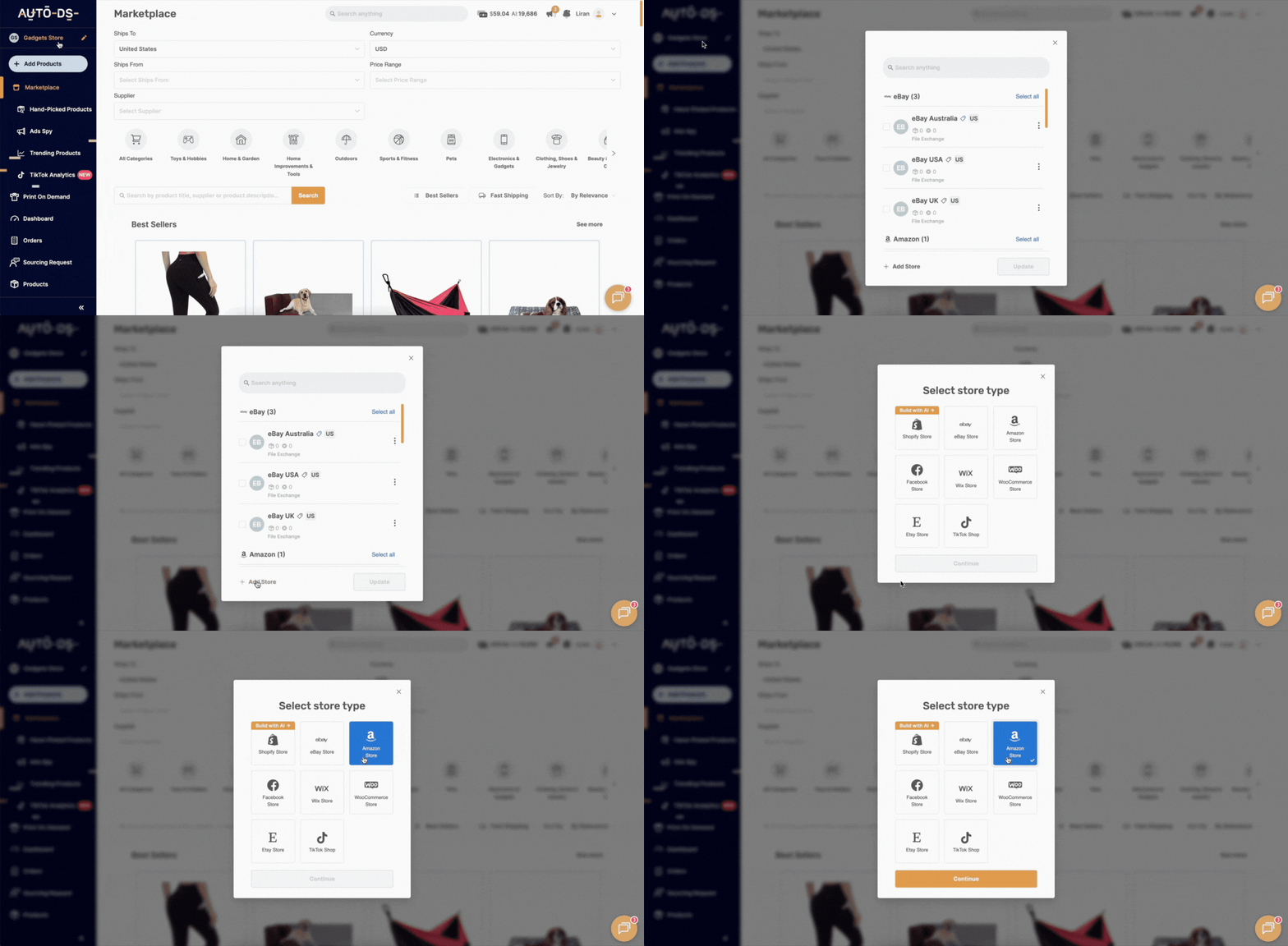
Sign up for AutoDS if you haven’t already (you can start the trial for just $1!). Then, head to the left side bar and click on Add Store. Then, just choose Amazon and follow the instructions to link both accounts.
2. Choose only Amazon-approved suppliers
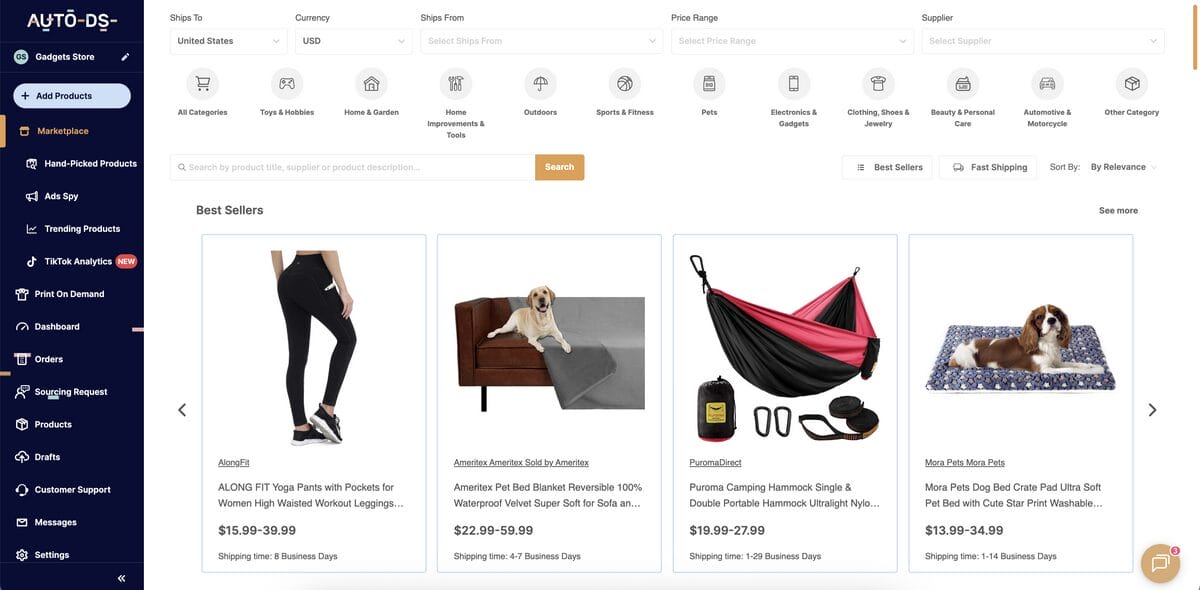
Explore the AutoDS marketplace and use the smart filters to make sure you’re choosing the right suppliers. Then, just import your products to your Amazon store in just one click by clicking “Import Draft”. Finally, you can optimize the listing with AutoDS’s AI Product title & description generator.
3. Automate pricing and tracking
Finally, head to Settings > Supplier Settings > Lister to turn on price and stock monitoring.
And that’s it. Now enjoy policy-safe fulfillment and dropshipping automation.
Frequently Asked Questions
Is dropshipping still allowed on Amazon in 2027?
Yes, dropshipping is still allowed on Amazon in 2027, but only if you follow Amazon’s dropshipping policy. You must be the seller of record, identify yourself on all packaging and invoices, handle returns directly, and remove any third-party branding. In short, dropshipping is fine; retail arbitrage is not.
Can I use AliExpress or Walmart to dropship on Amazon?
No, using AliExpress or Walmart to dropship on Amazon is strictly forbidden. Amazon explicitly prohibits buying from other retailers and shipping those orders directly to customers. This is considered retail arbitrage and violates Amazon’s dropshipping policy. Stick to verified wholesalers or private suppliers instead.
What are Amazon’s main dropshipping requirements?
To comply with Amazon’s main dropshipping requirements, you must be the seller of record, identify yourself as the seller on all packaging and documents, remove any third-party branding from shipments, handle returns and customer service yourself, and keep your seller metrics under Amazon standards.
How do I find compliant Amazon dropshipping suppliers?
To find compliant Amazon dropshipping suppliers, you can use the AutoDS marketplace. This is packed with private suppliers who offer neutral packaging, fast shipping, and real-time inventory shipping. Moreover, it lets you filter by location, fast shipping, and more to make sure you’re choosing the right suppliers.
Can AutoDS automate Amazon dropshipping safely?
Yes, AutoDS can absolutely automate Amazon dropshipping safely. AutoDS integrates directly with Amazon to automate order processing, tracking, and pricing updates, all while complying with Amazon’s dropshipping policy. It also offers Fulfilled by AutoDS, a service to use AutoDS’s own seller accounts to avoid compliance issues, as well as vetted, Amazon-safe suppliers. This way, you protect your own seller metrics.
What is Amazon’s official Drop Shipping Policy called?
Amazon officially calls it the Drop Shipping Policy (G201808410). It defines when third-party fulfillment is permitted and requires you to remain the seller of record, among other seller responsibilities.
Do I need a Professional Seller account to dropship on Amazon?
No, Amazon doesn’t require a Professional plan specifically for dropshipping—but it’s usually the better choice. Individual costs $0.99 per item sold, while Professional costs $39.99 per month. If you’re building for consistent sales volume, Professional makes more sense as your store grows.
What is the difference between retail dropshipping and wholesale dropshipping?
Retail dropshipping involves sourcing an order from another retailer, while wholesale dropshipping uses a wholesaler, distributor, or manufacturer for fulfillment. Amazon favors the wholesale model because it makes it easier to meet its seller-of-record and packaging requirements, while retail dropshipping setups can easily conflict with its Drop Shipping Policy.
What is the INFORM Consumers Act, and does it apply to dropshippers?
The INFORM Consumers Act is a US federal law, not an Amazon policy. And yes, it can apply to dropshippers if they qualify as high-volume third-party sellers, generally meaning 200+ transactions and $5,000+ in gross revenue during a continuous 12-month period within the previous 24 months, subject to the law’s definitions and exemptions.
What happens if my Amazon account gets suspended for a dropshipping violation?
A violation of Amazon policies can lead to restrictions on your ability to fulfill orders using Merchant Fulfilled Network (MFN). If Amazon takes action against your account, check your Account Health and Performance Notifications to understand the issue and the steps Amazon requires from you.
Can I appeal an Amazon suspension caused by a policy violation?
Depending on the enforcement action, Amazon may give you an opportunity to appeal or provide information to restore your selling privileges. Follow the instructions in your Account Health or Performance Notifications and address the specific issue Amazon identified rather than submitting a generic appeal.
Amazon Dropshipping Is Still Viable in 2027 with AutoDS
Bottom line? Dropshipping is legal, 100% safe, and possible, as long as you strictly follow Amazon’s dropshipping policy. The key to achieving this? Complying with all the specific requirements, choosing reliable suppliers who guarantee neutral branding and fast shipping, and automating most of the dropshipping workflow to avoid mistakes or violations.
AutoDS enables Amazon dropshippers to stay compliant, save time, and scale safely without risking account suspension. With automated fulfillment, Fulfilled by AutoDS services, vetted suppliers, and automation at every step, it protects you on every front to make sure you’re doing everything right.
You know the rules. Now make them easier to follow. Start your $1 trial with AutoDS to build a more efficient Amazon dropshipping operation.
Here are a few articles that can help you elevate your dropshipping game: