


Picking the wrong dropship vendors is one of the fastest ways to kill a new online store. Slow shipping, unreliable stock, and poor product quality all trace back directly to the sources you work with.
Knowing how to find suppliers that are trustworthy is a core skill every seller needs to start a dropshipping business. And the right tools make it significantly easier. AutoDS connects you to a wide network of vetted sources worldwide, giving you a supply chain that stays stable as your store scales.
That’s what this guide covers: a decision-making framework for choosing dropshipping vendors that match your niche, store, and stage as a seller.
Dropship vendors (also called dropshipping suppliers) handle packing and fulfillment — your job is to choose based on shipping times, reliability and transparency.
The right vendor depends on your niche, target market, and selling channel.
There are four main vendor types and each serves a different business goal. Matching the right type to your stage saves significant time and money.
Vetting before committing is non-negotiable. Sampling, testing response times and running a 7-day sprint are the steps that separate reliable suppliers from expensive mistakes.
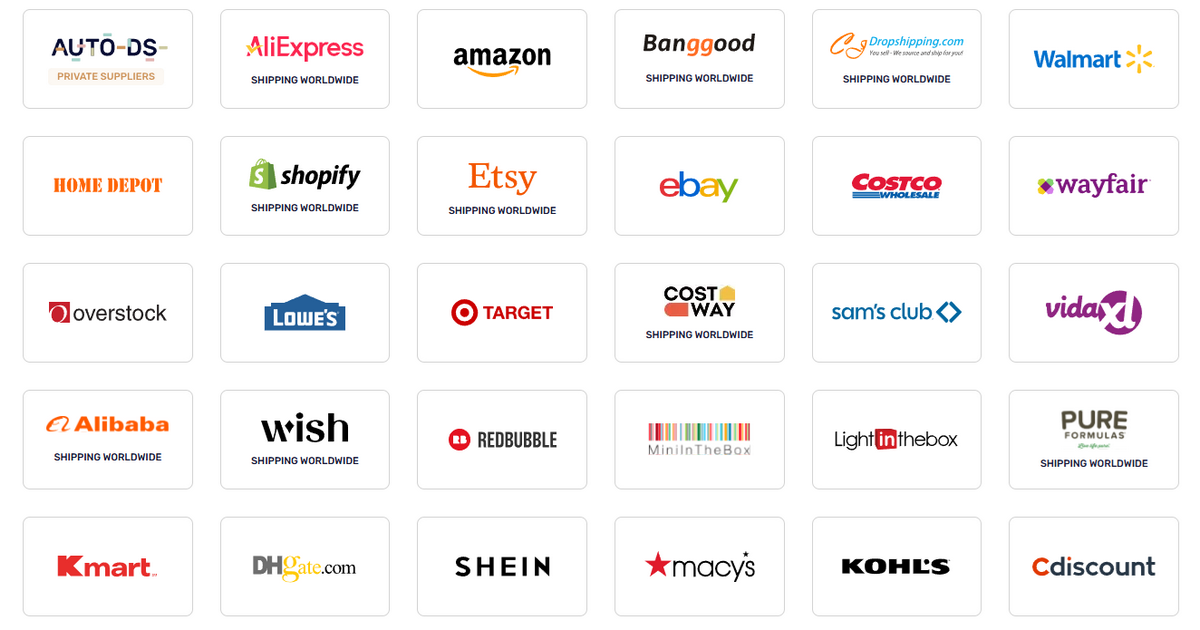
AutoDS connects you to 30+ global suppliers and a private network with warehouses, so you can develop a vendor strategy that scales with your store.
How To Evaluate Dropship Vendors: Selection Criteria

The best dropship vendors for your store are the ones that perform consistently. Not just on the first order, but on the hundredth.
Most supplier problems don’t show up immediately. They show up at order 30, or 80, or when your store starts getting traction and the cracks become impossible to ignore. With that in mind, these are the seven criteria I use to evaluate every supplier before committing, and the standard they should hold to every month:
1. Shipping Speed
Shipping speed is one of the first things shoppers notice, and it shows. Customers typically expect delivery within 3–7 business days. Anything that stretches significantly beyond that window — let’s say, 15 to 30 days or more — risks refund requests, negative reviews, and lost repeat business.
That’s why working with fast dropshipping suppliers is one of the clearest ways to reduce these issues. Prioritize vendors with local warehouses in your target market, clear timelines, and a track record of meeting them, especially when you are starting out. The shorter the fulfillment path, the more predictable the experience for your customer.
2. Product Quality
Poor product quality is a sales killer. A low price means nothing if the item generates returns. One bad batch can wipe out weeks of margin and leave your store with a review score that’s hard to recover from. I’ve seen dropshippers launch with a product that looked great in supplier photos, only to receive a flood of complaints two weeks in because the real item looked nothing like the listing. That gap between the photo and the box is where most quality problems hide.
So, before scaling any product, order a sample and evaluate it the way your customer will: check the packaging, the materials, the finish, and whether it matches the listing exactly. If it doesn’t meet your standard, it won’t meet theirs.
3. Pricing Transparency
Hidden fees, membership requirements, and variable wholesale pricing are among the most common reasons dropshippers lose margin without realizing it. A vendor that looks profitable on paper can quietly erode your numbers once you account for monthly platform fees, minimum order requirements, or pricing that shifts without notice.
Before committing to any supplier, map out the full cost structure: what you pay per unit, what recurring fees apply, and under what conditions pricing can change. A vendor with clear, consistent pricing is easier to work with and to scale with, because your margin calculations stay reliable as your order volume grows.
4. Return Policies
Your vendor’s return policy becomes your return policy the moment a customer asks for a refund. In dropshipping, you never touch the product, but your customer holds you responsible for it. A vendor with a vague return window, unclear refund process, or a policy that shifts return shipping costs onto you creates a liability that’s hard to absorb, especially early on.
According to Shopify data, 67% of customers would avoid future purchases from a business after a negative return experience. Before committing to any supplier, know exactly:
- What their return window is.
- Who covers return shipping costs.
- How refunds are processed.
An unclear answer at the evaluation stage is a warning sign, not something to figure out when a real order goes wrong.
5. Inventory Accuracy
Selling an out-of-stock item is one of the fastest ways to damage a new store’s reputation. The typical sequence goes like this: a customer places an order, the supplier can’t fulfill it, and by the time you find out, they’ve already paid and are waiting. What follows is a refund, an apology, and — more often than not — a review you can’t undo.
The problem is that supplier stock levels change constantly, and without real-time visibility, you’re always one sold-out product away from that scenario. Tools like AutoDS monitor inventory levels in real time and automatically pause or remove listings when a product goes out of stock, so the problem gets eliminated before it starts.
6. Communication & Support
When something goes wrong with an order — and occasionally, it will — your vendor’s response determines how much damage reaches your customer. A missing tracking number, a product held at customs, a batch with quality issues: these are problems you can manage if your supplier responds quickly and accurately. Your customers will hold you to that standard, even if the problem started with the source.
So, test response time before you commit. Send a support inquiry before placing your first order and time the reply. A vendor that takes 48 hours to reply during the evaluation phase will take longer when you have a real problem on your hands.
7. Platform Integration
Platform integration is what separates a vendor you can scale with from one you’ll outgrow in 90 days. When a vendor doesn’t integrate with your store, every order becomes a manual task: copy the customer’s details, place the order on the supplier’s site, track the shipment separately, and update the tracking in your store by hand. Multiply that by 20 orders a day, then 50, then 100 — and it becomes a full-time job with a growing error rate.
The fix is straightforward: integrate your vendors directly with your store with automation. AutoDS does exactly that — when a customer places an order, AutoDS places the corresponding order with your supplier automatically, including tracking updates sent back to your store. No missed orders, no fulfillment delays caused by human error.
What makes that possible is the infrastructure behind it: a single dashboard that gives you access to a global network of suppliers. That means product variety, sourcing flexibility, and the ability to swap or add sources without rebuilding your workflow from scratch. When your vendor integrates with that system, every part of the operation gets easier. Ultimately, that is what lets your store actually grow
Applied consistently, these criteria are what turn a supplier relationship into a reliable backbone. The best dropship vendors for your store are the ones that:
- Reliably ship on time.
- Sell quality products.
- Price their products transparently.
- Communicate clearly and respond when it matters.
- Integrate with your store and your workflow.
Miss one, and the gaps show up eventually. With that framework in place — and AutoDS to automate the backend — the next step is finding the right match for your business.
Best Dropship Vendors by Use Case (2026)
Finding the right vendor starts with understanding what you actually need from a supplier. That also depends on what you sell, where your customers are, and how fast you need to ship. Those three variables narrow the field faster than any top-ten list.
In my experience, dropshippers mistakes at this stage come from choosing a supplier that works in general, but doesn’t fit their specific niche or market. The vendors below cover the most common use cases in dropshipping and are evaluated against the factors that actually move the needle for your store.
Summary Comparison Table
Vendor | Best For | Shipping (US) | Pricing | AutoDS Integration |
AutoDS Warehouse & Private Suppliers | Reliable fulfillment & exclusive products | 2–7 days | $1 trial, then subscription | Native (Fulfilled by AutoDS) |
AliExpress | Budget product testing | 7–20 days | Free | Full |
Amazon | Fast US delivery | 1–5 days (Prime) | Free to browse | Full |
Walmart | US general store | 2–5 days | Free | Full |
Wayfair | Home & furniture niche | 3–7 days | Free (MYWAY $29.99/yr optional) | Full |
Costco | Bulk & premium products | 3–7 days | Membership required | Supported |
Home Depot | Home improvement niche | 3–10 days | Free | Supported |
Banggood | Electronics & gadgets | 5–15 days (US warehouse: 3–7) | Free | Full |
CJ Dropshipping | Print-on-demand & private label | 7–15 days (US warehouse: 3–7) | Free | Full |
AutoDS Warehouse & Private Suppliers
AutoDS operates differently from every other vendor on this list. Its warehouse gives you access to a curated catalog of vetted products, stored and fulfilled directly through the platform. Beyond that, AutoDS works with a wide ecosystem of private suppliers worldwide — which means fast shipping options to the US and other key markets, without having to source and vet each supplier independently. You’re not hoping a supplier ships on time. You’re working within a system built to do exactly that.
Products are available with white-label branding and print-on-demand options, making this one of the most accessible paths to building a recognizable brand without holding inventory. The operational side runs through Fulfilled by AutoDS — imports, pricing, order placement, and tracking all handled automatically, with no manual intervention required.
Pros:
- Access to a curated catalog of vetted products fulfilled directly through the platform.
- Wide ecosystem of private suppliers with fast shipping to the US and key markets worldwide.
- White-label branding and print-on-demand options available.
- End-to-end fulfillment automation through Fulfilled by AutoDS.
Cons:
- Requires an active AutoDS subscription.
Best Use Case: Dropshippers who want reliable, end-to-end fulfillment backed by a curated supplier ecosystem, without manual work.
AliExpress
AliExpress is a global marketplace with over 100 million product listings, making it one of the most widely used sourcing platforms for new dropshippers.
AliExpress dropshipping gives sellers access to an enormous catalog at highly competitive prices, with options to filter by warehouse location for faster delivery. The tradeoff is variability: product quality and shipping times depend heavily on the individual seller, which means vetting is key here.
Pros
- 100M+ products across every category.
- Seller-specific warehouses, including US and EU options.
- One-click import and automated order forwarding through AutoDS.
- Pricing is free to access.
Cons:
- Product quality varies significantly by seller — sampling before scaling is essential.
Default international shipping times can be slow without warehouse filtering.
Best Use Case: Dropshippers in the early testing phase who need volume, variety, and low sourcing costs.
Amazon
The main advantage of dropshipping on Amazon is speed. Prime-eligible products ship in 1–2 days from multiple US warehouses. That velocity, however, comes with responsibility: Amazon has strict policies, and listing products without understanding them is one of the fastest ways to get a seller account flagged.
Pricing is free to browse, and the catalog covers virtually every category. The key discipline here is vetting: not every Amazon item is suitable for resale, and quality varies across third-party sellers on the platform. Through AutoDS, product imports and order placement are fully automated.
Pros:
- Massive product variety — nearly any category covered.
- 1–2 day Prime shipping sets strong customer expectations.
- Multiple US warehouses ensure consistent delivery.
- Full AutoDS integration for streamlined operations.
Cons:
- Products must be carefully vetted for quality and resale suitability.
- Amazon has strict dropshipping policies — review them before listing.
Best Use Case: Dropshippers who prioritize delivery speed and are willing to vet products carefully to meet Amazon’s policy requirements.
Walmart
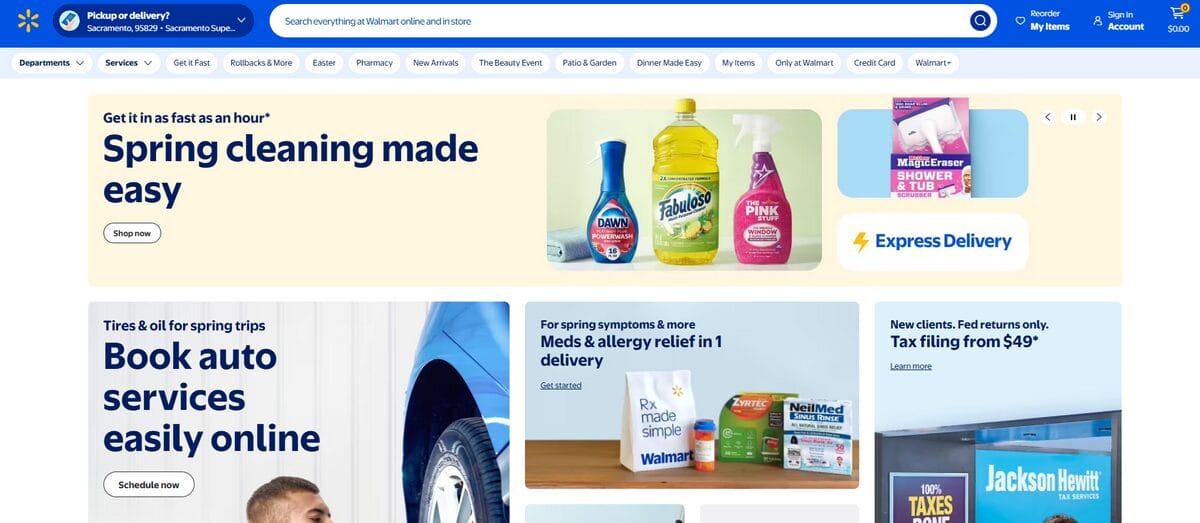
Walmart’s strength is breadth. With over 160 million SKUs across various categories, it’s one of the most versatile sourcing options for sellers building a US-focused general store. Shipping is fast and free on most items — 2–5 days domestically — and pricing is competitive enough to support healthy margins across a wide range of categories.
The limitation is geography: Walmart ships within the US only, which makes it a poor fit for stores targeting international buyers.
Pros:
- 160M+ SKUs — one of the broadest catalogs available.
- Fast and free US shipping across most categories.
- Competitive pricing supports healthy margins.
- Fully integrated with AutoDS for automated imports.
Cons:
- US-only shipping — no international fulfillment.
- Limited reach for stores targeting buyers outside the United States.
Best Use Case: Dropshippers building a US-focused store who need a wide catalog and reliable domestic shipping.
Wayfair
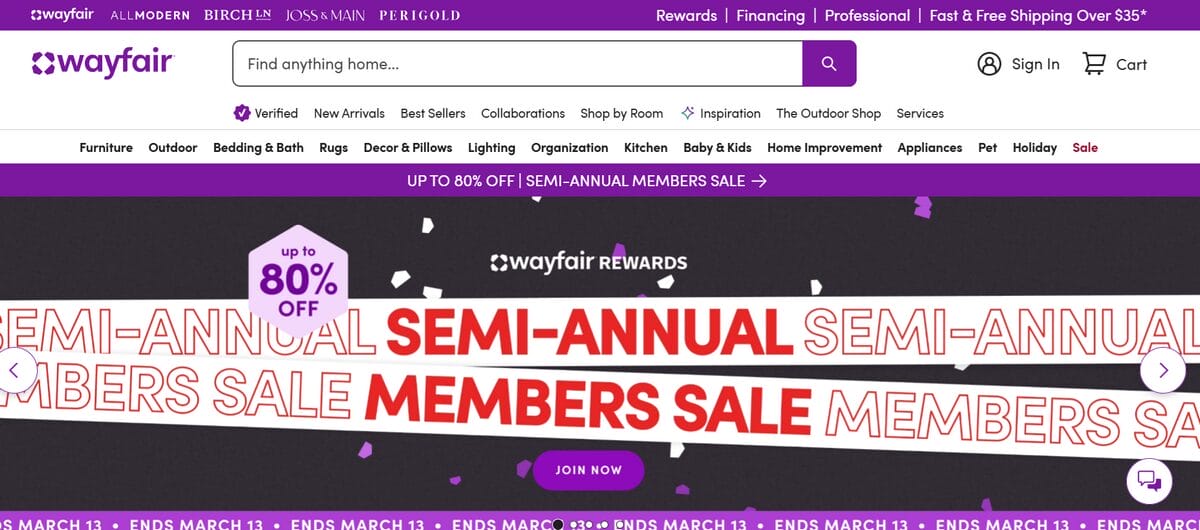
Wayfair is a dedicated home goods and furniture marketplace with deep US warehouse coverage and a catalog built for interior-focused sellers. Outside of that niche, it has limited utility.
Shipping runs 3–7 days domestically. Access is free, with an optional membership for additional benefits. One detail worth noting: Wayfair ships without branded inserts or marketing materials in the package, which keeps the customer experience clean and consistent with your store’s branding. Through AutoDS, the full catalog is accessible with automated imports, order placement, and tracking updates handled without manual input.
Pros:
- Deep furniture and home decor catalog — best in class for this niche.
- US warehouse network ensures reliable shipping.
- No branded inserts in packages — clean customer experience.
- Full AutoDS integration.
Cons:
- Niche-specific — less useful outside home and furniture.
- Higher product price points compress margins on lower-end items.
Best use case: Dropshippers building a home goods or furniture niche store for US buyers.
💡 Pro Tip: If you’re building a home goods or furniture store, Wayfair pairs especially well with eBay as a selling channel. Learn how to set up the full workflow in our Wayfair to eBay dropshipping guide.
Costco
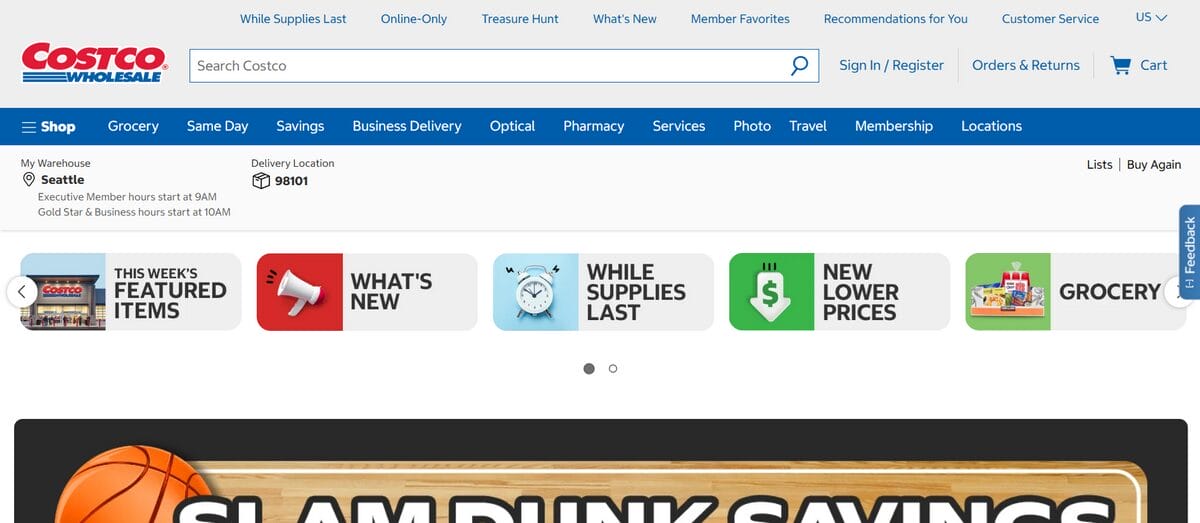
Costco carries a curated selection of premium brands and bulk items. The catalog is narrow rather than expansive, but it includes premium, recognizable brands that carry inherent trust with US buyers. That trust can translate into stronger conversion rates for sellers targeting customers who prioritize quality.
Shipping runs 3–7 days domestically. Access requires a paid membership, which needs to be factored into your margin calculations before committing. Through AutoDS, Costco is supported for product sourcing and order management, streamlining the operational side.
Pros:
- Access to premium, recognizable brands.
- Competitive bulk pricing supports solid margins on premium listings.
- Fast, reliable US shipping.
- Supported within AutoDS for streamlined sourcing.
Cons:
- Membership fee adds to your operational costs.
- Limited dropshipping-suitable product categories compared to general marketplaces.
Best Use Case: Dropshippers targeting US buyers who prioritize brand recognition and product quality, and can absorb the membership cost into their margins.
Home Depot
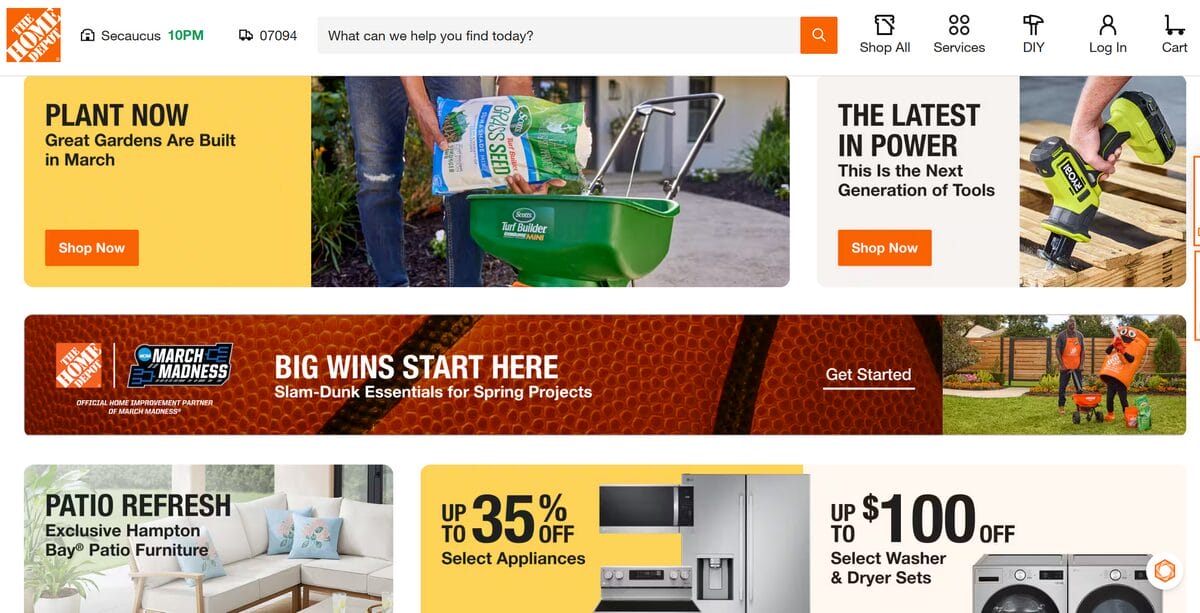
Home Depot brings category authority. In the home improvement and tools niche, it’s the most recognized retail brand in the US. Its catalog is extensive, shipping is reliable on most items at 3–10 days domestically, and access is free.
The constraint is specificity. Home Depot works well if you’re building a store around home improvement, tools, or DIY products, but outside that niche, the catalog offers little. Large or heavy items also introduce freight shipping complexity that can complicate fulfillment and compress margins.
Pros:
- Massive home improvement and tools catalog.
- High brand trust among US consumers.
- Reliable shipping across most product categories.
- Supported within AutoDS for product sourcing.
Cons:
- Niche-specific — primarily suitable for home improvement stores.
- Some large or heavy items require freight shipping, which complicates fulfillment.
Best Use Case: Dropshippers building a home improvement or tools niche store for US buyers.
Banggood
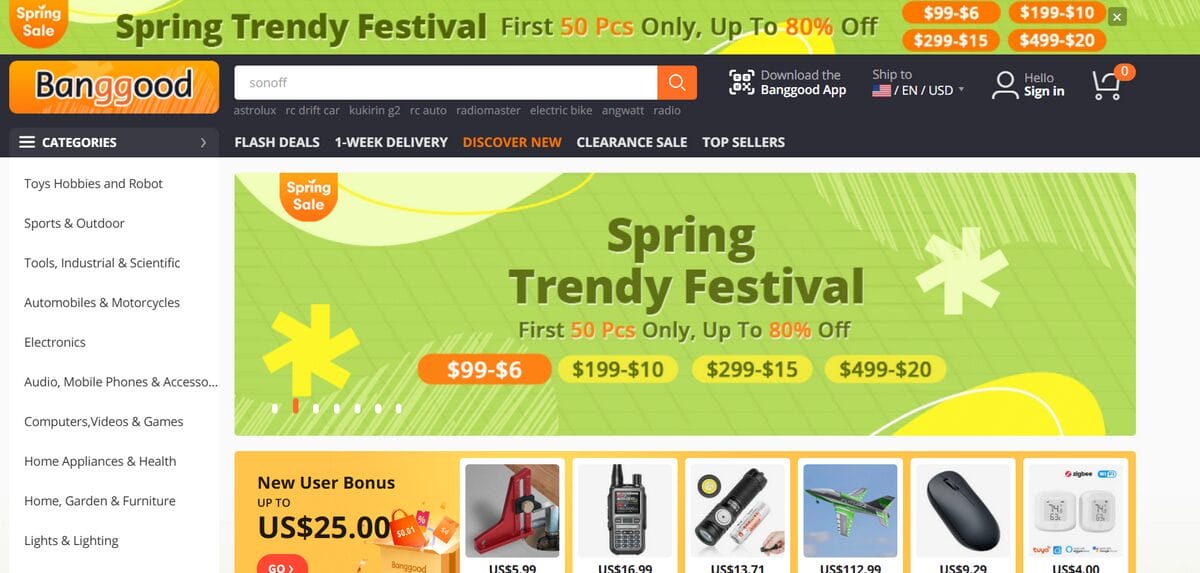
Banggood specializes in electronics, gadgets, and hobby products, with a global network that includes US-based fulfillment options for faster delivery. The catch is that shipping times vary significantly depending on which warehouse you source from.
That warehouse discipline is the key to making Banggood work. Sellers who filter by US warehouse from the start get a reliable, cost-effective supplier for tech and gadget niches. Through AutoDS, Banggood integrates fully — imports, order placement, and tracking updates all automated, with no manual steps required.
Pros:
- Strong electronics catalog — well-suited for gadget and tech niches.
- Multiple global warehouses reduce shipping times when you select the right warehouse.
- Competitive pricing supports good margins on tech products.
- Fully integrated with AutoDS.
Cons:
- Shipping times vary significantly depending on the warehouse selected.
- Quality can be inconsistent across some product categories.
Best Use Case: Dropshippers building an electronics niche store.
CJ Dropshipping
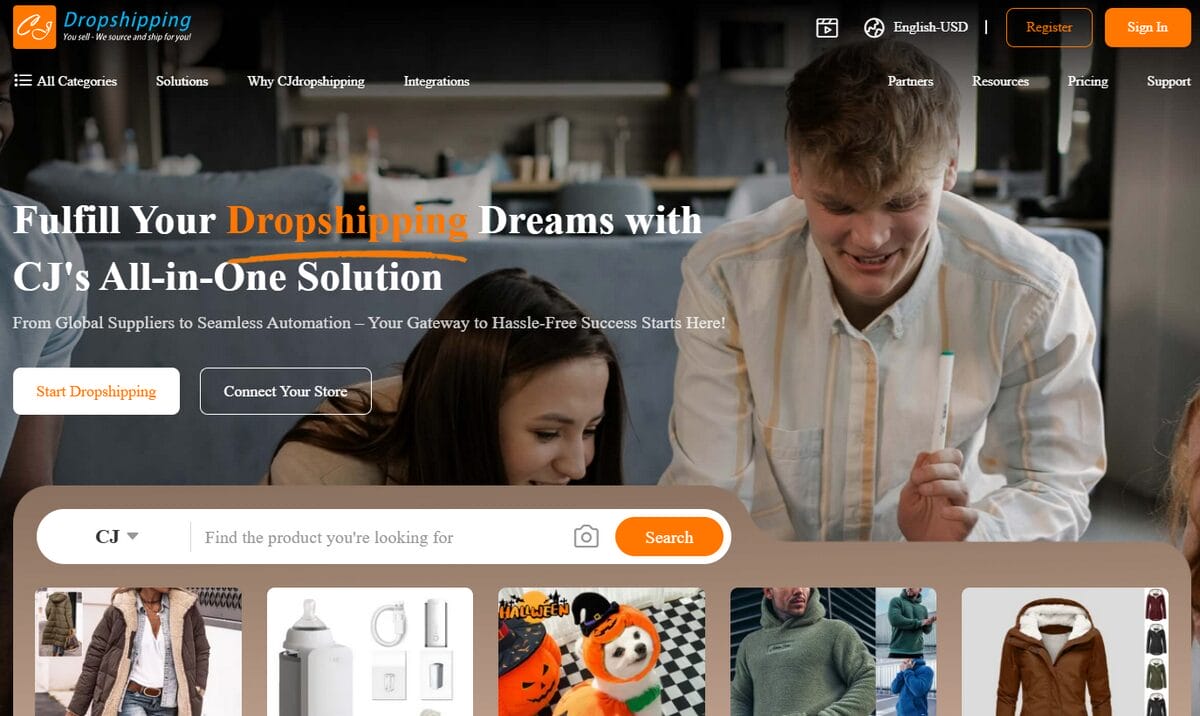
CJ Dropshipping offers a broad sourcing service with strong POD and white-label capabilities, making it a flexible option for sellers who want custom branding without a large upfront investment.
The interface is a common friction point for new users: it’s functional but cluttered, and the learning curve is steeper than more streamlined platforms. However, through AutoDS, CJ Dropshipping integrates fully, and that automation level offsets much of that interface complexity in day-to-day operations.
Pros:
- Free custom sourcing service — useful for finding unique products.
- POD and white-label branding options available.
- Multiple US warehouses improve domestic shipping speeds.
- Full AutoDS integration.
Cons:
- Interface can feel cluttered and overwhelming for new users.
- Shipping times vary considerably based on warehouse and destination.
Best Use Case: Dropshippers who want print-on-demand or private-label options with full AutoDS automation support.
How AutoDS Helps You Manage Multiple Dropship Vendors
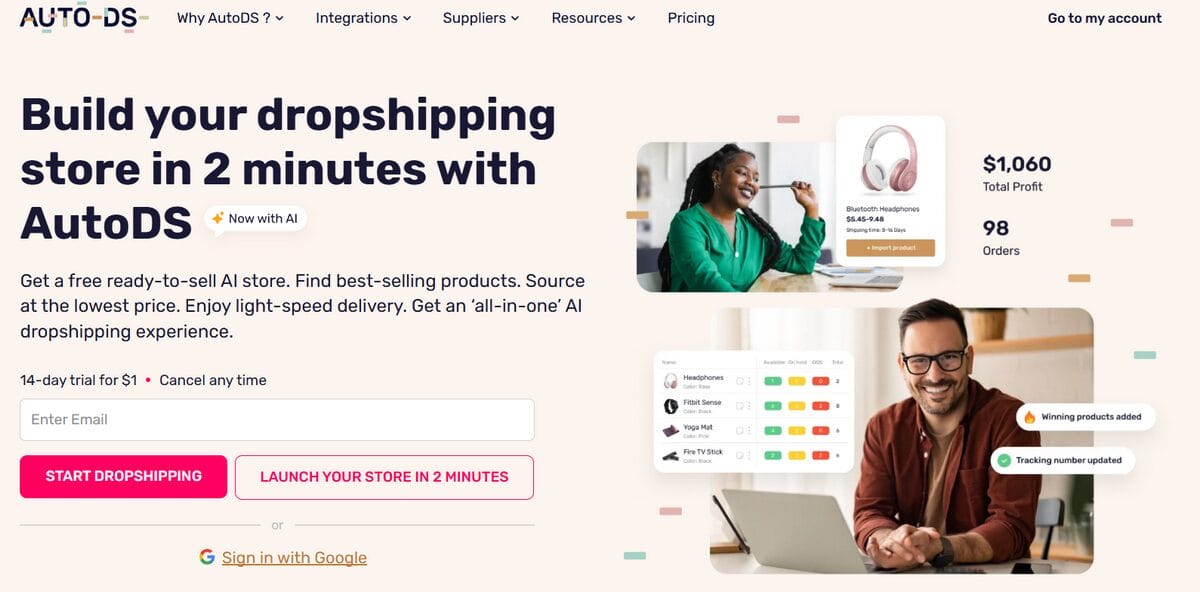
Here’s something I’ve seen consistently: the sellers who scale aren’t the ones who found one great supplier. They’re the ones who built a network of them. More sources means more product range, better pricing leverage, and a store that keeps running even when one vendor doesn’t.
Where it gets complicated is managing that network manually. Each vendor has its own catalog, its own pricing logic, its own stock fluctuations. And keeping track of all of it across separate tabs and spreadsheets compounds errors fast.
AutoDS solves that by bringing every supplier connection into one place. Whether you’re sourcing from Banggood, Walmart, or AutoDS’s own private network, the same dashboard handles imports, pricing updates, stock monitoring, and order fulfillment across all of them simultaneously. So, adding a new supplier means one more source feeding into a system that’s already running.
Take this scenario: if a supplier runs out of stock on a product, AutoDS detects the change automatically and updates your listings in real time. Problem solved. Your store never sells something it can’t fulfill, and your customer never experiences the delay. That’s the difference between a supplier strategy that scales and one that stalls.
Liran Zablo, an international dropshipper, credits supplier diversification as the move that made his business stable enough to grow. He scaled multiple eBay stores to 1,000+ listings each, sourcing from AliExpress, Amazon, and Home Depot through AutoDS.
📈 The AutoDS $1 trial is a good place to start this kind of operation and handle your entire supplier network without adding extra complexity.
What Are Dropship Vendors & Why Do They Matter?
A dropship vendor — also called a dropshipping supplier — is the company that stores the product, packs it, and ships it directly to your customer after you make a sale. The fulfillment chain is simple:
- Your customer places an order on your store.
- You forward that order to the vendor.
- The vendor ships the product directly to your customer under your store name.
It’s also worth knowing the difference between a vendor and a wholesaler. A wholesaler typically requires you to purchase inventory in bulk before selling. With a vendor, you pay only after a customer pays you — which is what keeps the start of every dropshipping business low-risk.
What I’ve learned running stores and working with sellers who’ve scaled past five figures monthly is that the vendor you pick shapes the entire shopping experience, from shipping speed and product quality to your return rate.
Picture this: a customer orders a gadget from your store. The vendor ships late, the tracking number doesn’t update for five days, and the product arrives with visible defects. Your customer opens a dispute, leaves a one-star review, and never comes back. You didn’t pack the box. You didn’t choose the carrier. But in their eyes, it was your store that failed them. The numbers back it up: according to Ipsos, 85% of online shoppers won’t order from a store again after a poor delivery experience.
That’s why the right vendor is not just a logistics partner; it is the foundation your business is built on.
Types of Dropship Vendors & When to Use Each
Not all dropship vendors work the same way. Selecting the wrong type for your stage or goal is one of the most common reasons people waste time on suppliers that are never going to fit.
Beyond comparing individual names, it helps to understand the four main categories of dropship vendors. Each type has a place depending on your goal: testing, scaling, or building a long-term brand.
Types of Dropship Vendors Comparison Table
Type | Best For | Speed | Cost to Start | Branding |
Marketplace Aggregators | Product testing, variety | Variable | Free | None |
Wholesale Suppliers | Established niches, margins | 3–10 days | Low to medium | Limited |
Print-on-Demand | Custom products, gifts | 5–12 days | Free | Full custom |
Private-Label | Brand building | 5–15 days | Medium | Full custom |
Marketplace Aggregators
Platforms like AliExpress, Amazon, and Walmart fall into this category. They are massive catalogs where you source individual products from third-party sellers with no minimum order and no upfront cost. They’re the natural starting point when you’re still testing products and don’t know what sells yet.
The tradeoff is consistency: you have no control over packaging or branding, and product quality varies by seller.
Wholesale Suppliers
Wholesale suppliers sell at discounted prices in exchange for higher order volumes. But in a dropshipping context, some offer single-unit programs that make them viable without holding inventory. The payoff is better pricing and more consistent quality than marketplace aggregators, which makes them a stronger fit once you’ve identified winning products and want to improve your margins.
The challenge is time: finding wholesale suppliers with reliable dropship programs takes more vetting upfront than browsing a public marketplace. AutoDS supports a range of wholesale suppliers directly, reducing the sourcing legwork and keeping pricing and stock levels monitored automatically once you’ve made the connection.
Print-on-Demand Suppliers
POD suppliers produce custom-designed products (t-shirts, mugs, posters, phone cases) only when an order comes in. There is no inventory to pre-purchase and no waste, which makes it one of the lowest-risk entry points for entrepreneurs who want to build a differentiated product line without upfront investment.
The catch is margin: POD products cost more per unit to produce than standard dropshipping products, so pricing strategy matters more here than in other categories. The operational side is where it can get complicated without the right setup. AutoDS connects you with suppliers that offer POD services directly, keeping custom orders processed and fulfilled automatically without manual intervention.
🔍 Research Tip: Not sure which custom products to sell first? Check out our guide to the best-selling print-on-demand products to find designs and niches with proven demand before you launch.
Private-Label Suppliers
Private-label dropshipping means you brand an existing product under your own label. It’s the most brand-forward approach on this list, and the one that takes the longest to set up. The payoff is a product line that’s harder to copy and a store identity that builds equity over time.
The entry barrier is lower than most sellers expect. Through the AutoDS Marketplace, private suppliers in the US and EU offer true white-label and private-label options — custom packaging and product branding — without requiring large inventory investments. AutoDS handles the operational side automatically, so the focus stays on building the brand, not managing the logistics.
How to Vet Dropship Vendors Before You Commit
Knowing which type of vendor fits your goal is the first filter. Knowing which specific supplier within that category is reliable is the second and it requires a different kind of due diligence. These five steps are the ones I run through before committing to any new supplier, regardless of how established they look on paper.
Step 1 — Order a Sample
Place a real order before you list anything. Check the packaging, product quality, actual delivery time, and unboxing experience — not against your expectations, but against what your customer will receive and judge you by. Supplier photos are curated. The sample is the truth. If it doesn’t clear that bar, no amount of competitive pricing makes it worth listing.
Step 2 — Test Response Time
Send a support inquiry before placing your first order. Ask something specific about shipping times, return conditions, or a product spec. The topic matters less than the response time. A vendor that replies within a few hours during the evaluation phase is signaling how they’ll behave when something actually goes wrong. One that takes more than 2 days to answer a routine question will take longer when you have a real order in dispute and a customer waiting for a resolution.
Step 3 — Check External Reviews
Look for reviews outside the vendor’s own platform. Search for the supplier on Reddit, Trustpilot, or relevant eCommerce forums, places where real sellers talk about real experiences without a moderation filter. What you’re looking for isn’t a perfect score. It’s patterns: repeated complaints about the same issue (late shipments, inconsistent quality, unresponsive support) are far more telling than an isolated negative review. A supplier with a 4.2 rating and consistent complaints about delivery times is a more reliable red flag than one with a 3.8 rating and isolated, varied feedback.
Step 4 — Verify Legitimacy
Before committing, confirm the basics:
- A real business address.
- Clear contact information.
- Published return and refund policies.
These are the minimum signals that a supplier operates as a real business and stands behind what they sell. Any supplier that can’t provide basic business documentation, asks for large upfront payments before your first order, or has no published return policy is telling you something important before you’ve spent a dollar with them. Pay attention to it.
Step 5 — Run a 7-Day Test Sprint
Before scaling any supplier, list 3–5 products and run them for seven days. Seven days is enough to surface the patterns that matter: a supplier that misses fulfillment windows, sends tracking numbers that don’t update, or runs out of stock on active listings in the first week will do all of those things more frequently at higher volume.
🆕 Beginner’s Tip: Run your 7-day sprint through AutoDS. Stock changes, price updates, and fulfillment status are tracked automatically, so you’re working from real data instead of checking each order by hand.
Vetting takes time upfront, but it’s the most cost-effective investment you can make before scaling. A supplier that fails this process will cost you far more in refunds, disputes, and lost reviews than the time you spent evaluating them.
How to Connect Your Dropship Vendors to Your Dropshipping Store
Once you’ve vetted your suppliers and know which ones fit your store, the next step is connecting them to your workflow. With AutoDS, that process takes minutes and once it’s done, in removes all the manual work. Here’s how to set it up from scratch.
Step 1 — Create Your AutoDS Account
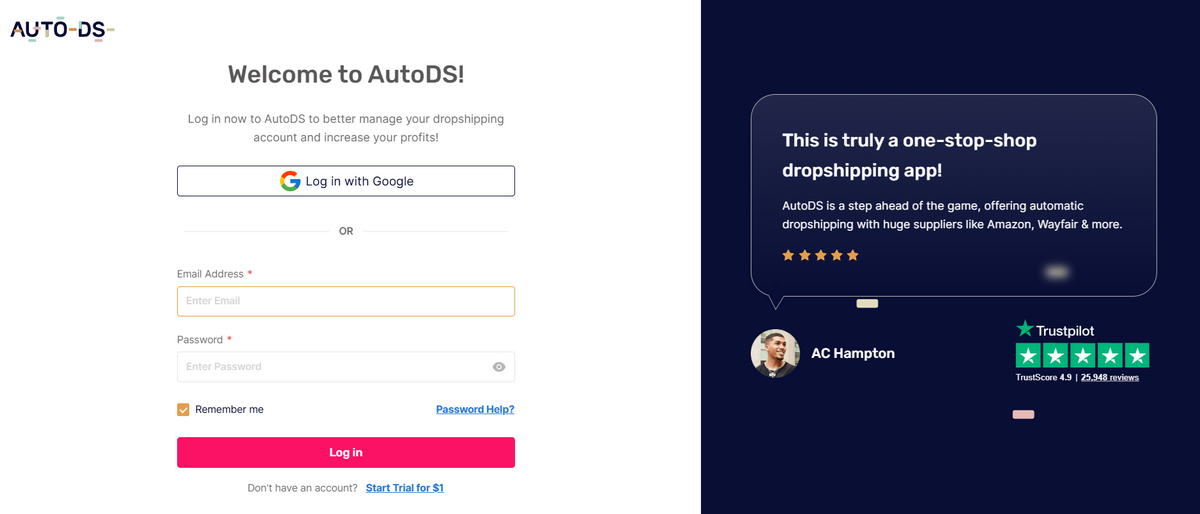
If you don’t have an AutoDS account yet, this is where to start. The $1 trial gives you full access to the platform — enough to explore the supplier network, test the automation features, and connect your first store before committing to a subscription.
Once inside, the View Stores section in your dashboard is where you connect and manage your selling channels: Shopify, eBay, Etsy, Wix, and more.
Step 2 — Go to Suppliers Settings
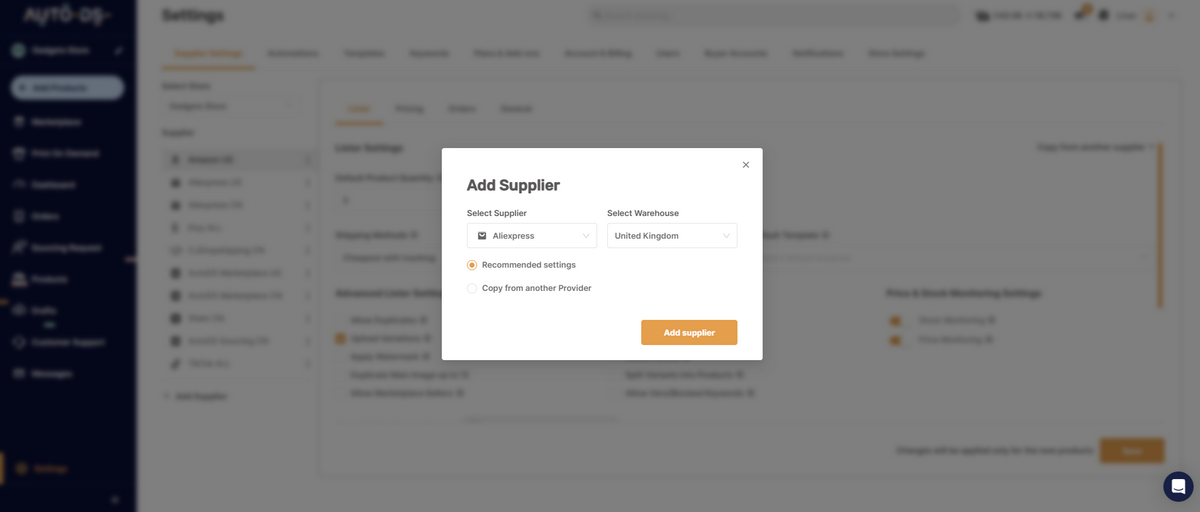
From your dashboard, navigate to Settings > Supplier Settings and click Add Supplier to connect the platforms you want to source from (AliExpress, CJ Dropshipping, Amazon, and more). For each supplier, you can also select the specific warehouse you want to fulfill from, which is where shipping times get defined. This setup can be configured independently for each store you manage through AutoDS.



Step 3 — Explore the AutoDS Marketplace
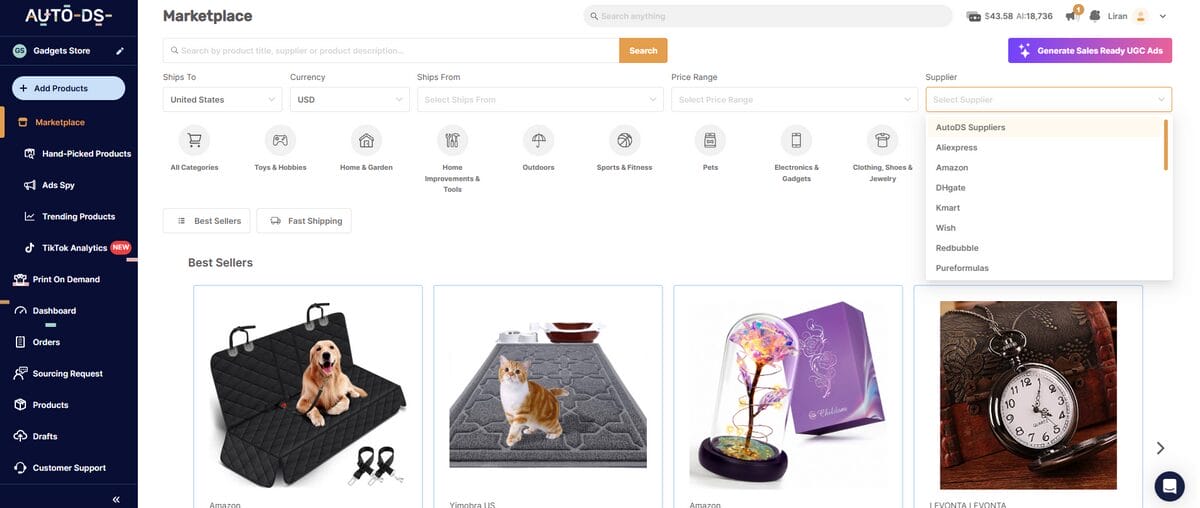
From your dashboard, head to the Marketplace. This is where your supplier connections come to life. Use the Select Suppliers tab to filter your product search by specific supplier, including all supported vendors and AutoDS’s own private supplier network. Instead of jumping between platforms, every catalog is browsable and searchable from one place.
Step 4 — Import Products
Once you’ve found a product you want to sell, there are a couple of ways to import it.
From the AutoDS Marketplace, you can hit Import Draft & Edit on any listing. AutoDS pulls the title, description, images, and pricing directly into your store, optimized for your selling channel, and lets you review and edit before publishing.

Alternatively, from the supplier’s own page, use the Add Products function to import by URL: paste the link of a single product or multiple products at once, and AutoDS brings them into your store automatically. Both paths eliminate the manual work of copying and reformatting listings by hand.
Step 5 — Set Pricing Rules
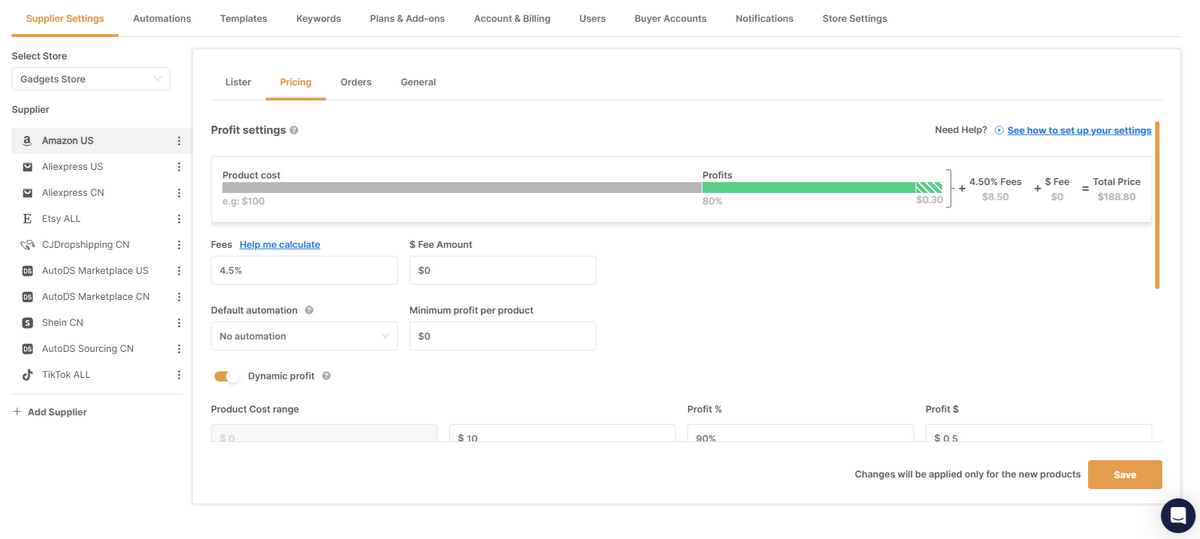
From Settings > Suppliers, configure how AutoDS calculates your selling prices. You can define break-even fees, set profit margins as a percentage or fixed fee, and enable dynamic pricing so your listings update automatically when supplier prices change.
Rules can be customized per supplier and per store. So if you source from both AliExpress and Amazon, each can run on its own pricing logic without manual adjustments. Once configured, your margins stay protected in the background without you touching them.
Step 6 — Enable Fulfillment Automation
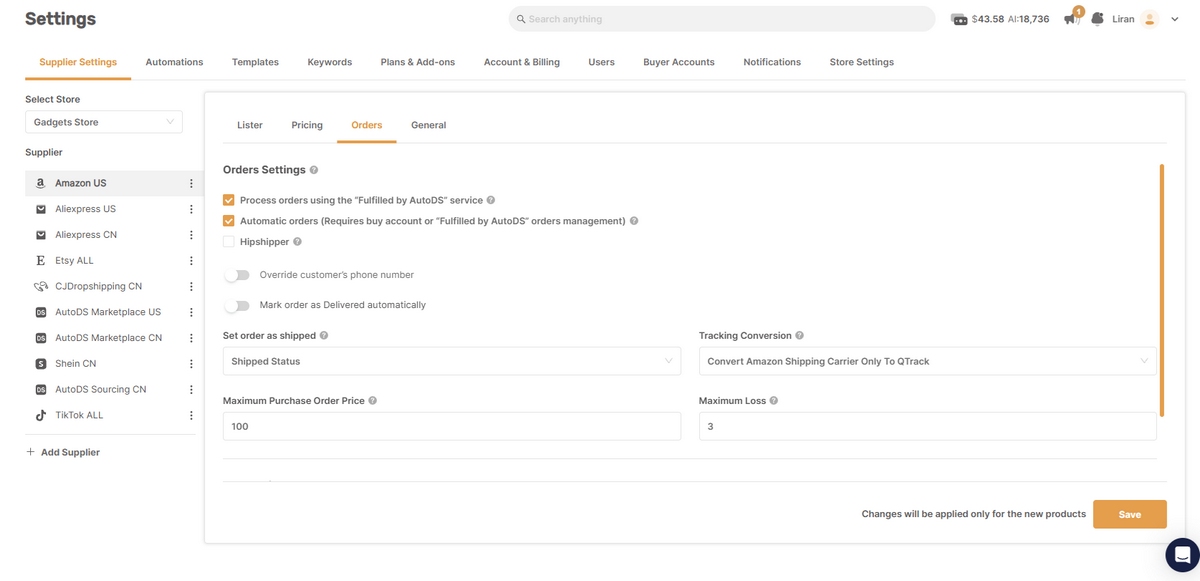
Back in Supplier Settings, select your supplier and enable two options: ‘Fulfilled by AutoDS‘ service and Automatic Orders. Once both are active, the fulfillment loop runs without manual intervention. When a customer places an order in your store, AutoDS places the corresponding order with your supplier automatically and sends the tracking number back to your store.
From that point on, the operational side of your supplier connection runs entirely in the background.
Frequently Asked Questions
Who is the best dropshipping supplier?
The best dropshipping supplier depends on your niche, selling channel, and target market. AutoDS Warehouse for exclusive products with full automation, Amazon and Walmart for fast US shipping, or AliExpress for budget product testing. Whichever fits your store best, AutoDS connects and manages them all from a single dashboard.
Is $100 enough to start dropshipping?
Yes! Dropshipping has one of the lowest startup costs of any eCommerce model. For example, the AutoDS trial combined with free selling channel trials (Shopify’s trial, eBay’s free listings) means you can get operational for under $50. The remaining budget covers product samples and initial testing, which is where early spending pays off most.
Can you make $10,000 per month dropshipping?
Some sellers do reach five figures monthly — but it’s not a guaranteed outcome, and it doesn’t happen overnight. It requires the right product selection, reliable suppliers, consistent marketing, and automation that scales with your order volume. That last part is where most stores hit a ceiling. AutoDS handles the operational side so the system grows with your store
How do you avoid supplier scams?
Follow the vetting steps covered earlier in this guide: sample before you list, verify business credentials, check third-party reviews, and never pay large sums upfront to an unvetted vendor. Working with established platforms and managing suppliers through AutoDS adds a layer of accountability that independent sourcing doesn’t provide.
What is the difference between a dropship vendor & a wholesaler?
The difference between a dropship vendor and a wholesaler is that wholesalers sell products in bulk at discounted rates — you buy inventory upfront and store it yourself. A dropship vendor ships individual orders directly to your customers without you holding stock. The key difference is timing: with a dropship vendor, you pay only after a customer pays you. Wholesalers require upfront capital and storage before you make a single sale.
Choose the Right Dropship Vendor Strategy With AutoDS
Choosing the right dropship vendor is an ongoing process. The suppliers that work for you at the testing stage won’t necessarily be the ones you rely on at scale. What changes is your understanding of what your store needs: faster shipping, better margins, more consistent quality, or a sourcing base that supports a real brand identity.
What doesn’t change is the framework. Vet before you commit. Integrate before you scale. Monitor continuously, and explore more than a single source. That’s the pattern behind every dropshipping operation that lasts.
What makes it sustainable is the right infrastructure. And AutoDS is exactly that. AutoDS connects you to 30+ vetted suppliers and a private network with global warehouses, so your vendor strategy grows with your store, without growing your workload.
💼 If this guide gave you the roadmap, the next step is putting it into practice. You can start building your supply chain today with the AutoDS $1 trial, and put the operational side of the business on autopilot.
Not ready to close the tab yet? Don’t worry, I’ve got a few more reads for you: