

TikTok Shop is easily the single biggest opportunity in e-commerce right now. I’ve personally made over six figures dropshipping on this platform. The coolest part is that TikTok literally hands you free organic traffic the second you list a product, meaning you don’t have to spend a dime on ads to start seeing views. So if you’re wondering if TikTok Shop allows dropshipping, the short answer is yes.
But let’s be 100% real: it is not a complete free-for-all, and the TikTok Seller policy will hit you if you don’t play by their rules. To keep your seller account healthy and build a highly profitable business from scratch, you have to set up your shipping templates, handle orders, and work with reliable suppliers the right way.
This guide covers the fundamentals to help you set up your TikTok Shop account, stay compliant, and get that ball rolling fast. Plus, I’ll show you how I use AutoDS to automate the entire dropshipping process and put your business on complete autopilot.
Dropshipping is allowed on TikTok Shop, but only when sellers meet strict standards for fulfillment, product quality, and customer experience.
TikTok prioritizes buyer trust, making shipping speed, listing accuracy, and service reliability critical to long-term success.
TikTok’s ecosystem differs from traditional platforms, offering built-in demand, native checkout, and algorithmic reach, but with stricter enforcement.
Higher-risk products can trigger refunds, chargebacks, and policy actions, making supplier quality and compliance essential.
AutoDS supports more reliable operations through inventory visibility and order management, helping sellers align with TikTok Shop requirements without bypassing policy.
Does TikTok Shop Allow Dropshipping?
Yes, you can dropship on TikTok Shop. It’s fully supported, and honestly, it might be one of the friendliest platforms out there for getting started with this business model.
Unlike some of the more established marketplaces that treat dropshippers as an afterthought, TikTok Shop is still fairly new to e-commerce, which works in your favor. You can set up a seller account and list products for $0, and there’s no cap on how many items you can add to your store. The only time money actually changes hands with TikTok is when you make a sale — they take a referral fee, and that’s it. No monthly subscription just to keep your doors open.
You can open a seller account in a range of regions (the US, the UK, Europe, South Asia, and more), but the US is often the strongest starting point due to its buying power and order volume. It’s more competitive, sure, but there are also far more buyers to reach, and as a dropshipper, fulfilling orders to US customers domestically tends to be fast and straightforward.
That said, “allowed” doesn’t mean “anything goes.” Every seller, dropshippers included, has to follow TikTok Shop’s Seller Terms of Service, which cover everything from handling times and valid tracking to a detailed list of restricted and prohibited product categories. Getting familiar with those rules before you start sourcing products will save you a lot of wasted effort later on. Don’t worry, we’ll go through exactly what you can and can’t sell a little further down.
Pros & Cons Of TikTok Shop Dropshipping
| Pros | Cons |
|---|---|
| Free organic traffic + recommendation algorithm | Fast shipping and accurate tracking are non-negotiable |
| Native in-app checkout reduces buyer drop-off | Late dispatches or cancellations hurt your shop health score fast |
| New sellers can gain traction without ad spend | Policy violations can lead to warnings, suspensions, or bans |
| Massive range of approved product categories | Certain categories require certifications or special approval |
| No cost to list products or open a store | Trend-driven demand can cause unpredictable sales swings |
| Content and creators can drive viral, low-cost growth | Requires tighter operational discipline than many other platforms |
TikTok Shop is a completely different game compared to the traditional dropshipping platforms you might be used to. Instead of just throwing up a store and hoping people find it through Google or paid ads, you’re inside an app where content, creators, and live shopping are doing a lot of the heavy lifting for you. That’s a huge opportunity, but it also means TikTok expects a lot more from you when it comes to actually running the shop the right way.
Before you jump in, I want you to see both sides clearly, because I don’t want you to go in blind. TikTok Shop can get you sales fast without spending a cent on marketing, but it also comes with real expectations around how quickly you ship and how well you follow their rules. Let’s go over it.
Advantages
The free organic traffic is honestly one of the best things TikTok Shop has going for it. The second you list a product, it can start showing up to people who are literally searching for that exact item on the platform — no marketing required, no budget needed. New sellers with just a handful of products can already start picking up views within hours of going live. That’s not something you get on most other platforms, where you’re stuck paying for every bit of visibility from day one.
On top of that, when someone finds your product, they buy it right there in the app. No getting redirected anywhere, no extra friction, which just means more people actually follow through on the purchase.
And because TikTok’s algorithm is pushing content to people based on what they’re interested in, not how much you’re spending, even a brand-new seller with barely any products listed can start seeing real traction. It’s a completely different game from the days when you had to pay to test every single product just to see if it would sell.
Disadvantages
Now here’s the flip side, and I’ve seen sellers get burned by it. TikTok cares a lot about the buyer’s experience, so they’re watching you: your handling time, your shipping speed, and whether you’re actually giving customers a valid tracking number they can trust.
If you’re late getting orders out, or you’re canceling too many, or your tracking isn’t up to standard, that’s going to show up on your shop health score. But don’t worry: TikTok won’t suspend you right away forever. You get warnings first, then it can turn into a temporary suspension, and in the worst cases, a permanent one.
Bottom line, this isn’t a “list it and forget it” business. You’ve got to treat your account health like it’s your reputation, because on TikTok, it is.
How Much Do Dropshippers Actually Make?
This is probably the question I get asked the most, so let’s talk numbers. Some TikTok Shop sellers are pulling in a few thousand dollars a month, and the top performers are clearing six figures monthly. According to recent reports, the median seller earns around $1,150/month, while the top 1% clears roughly $215,000/month, so where you land really depends on your niche, your creator strategy, and how consistent you are.
But here’s what I need you to understand before you get too excited: revenue is not profit. What you actually keep depends on your product costs, shipping, returns, and TikTok’s fees, so don’t confuse a big sales number with a big payday.
Let’s break down the fees so there’s no confusion. TikTok Shop takes a referral fee, which usually lands around 6% (sometimes 3% for your first 30 days, depending on your region), plus a small transaction fee (2% to 3.29% per successful order). So if you sell a product for $100, TikTok is taking roughly $8 to $9 off the top before you even look at your profit.
That’s why I always tell people to aim for at least a 60% profit margin after their break-even point. Anywhere from 20% to 50% margin is realistic, depending on the product, but you want to be pricing with enough room that TikTok’s cut doesn’t eat into what you actually take home.
Now, because TikTok Shop runs on trends and algorithm-driven exposure rather than steady search traffic, you’re going to see bigger swings than you would on a traditional store. A product can take off fast when the content clicks with people, then cool down just as quickly once interest moves on. Your shop health plays a big role here, too: ship fast, keep your listings accurate, and upload valid tracking, and you’ll keep your visibility and conversion rates healthy. Slip up on fulfillment or rack up policy violations, and you’ll watch that momentum disappear just as fast as it came.
The real trap is chasing the viral spike instead of building something that lasts. A product can blow up overnight and get you a great month, but the sellers who are still around years later (and I’ve been doing this for 8 years) are the ones who build repeatable systems: working with reliable TikTok suppliers, reusing what works in their creatives, and setting up workflows they can scale instead of relying on luck. Consistency beats a lucky viral hit every single time.
What Are You Allowed To Sell On TikTok Shop?
Now that you know you can safely dropship on TikTok, let’s dive into the details. One of the very first things you need to nail before anything else is your product research. This is the heart of your strategy (not your logo, not your store name, not how polished your videos look).
It all comes down to finding products that actually solve a problem, stand out from what’s already out there, and give you room to build a real brand around them instead of just blending in with every other seller.
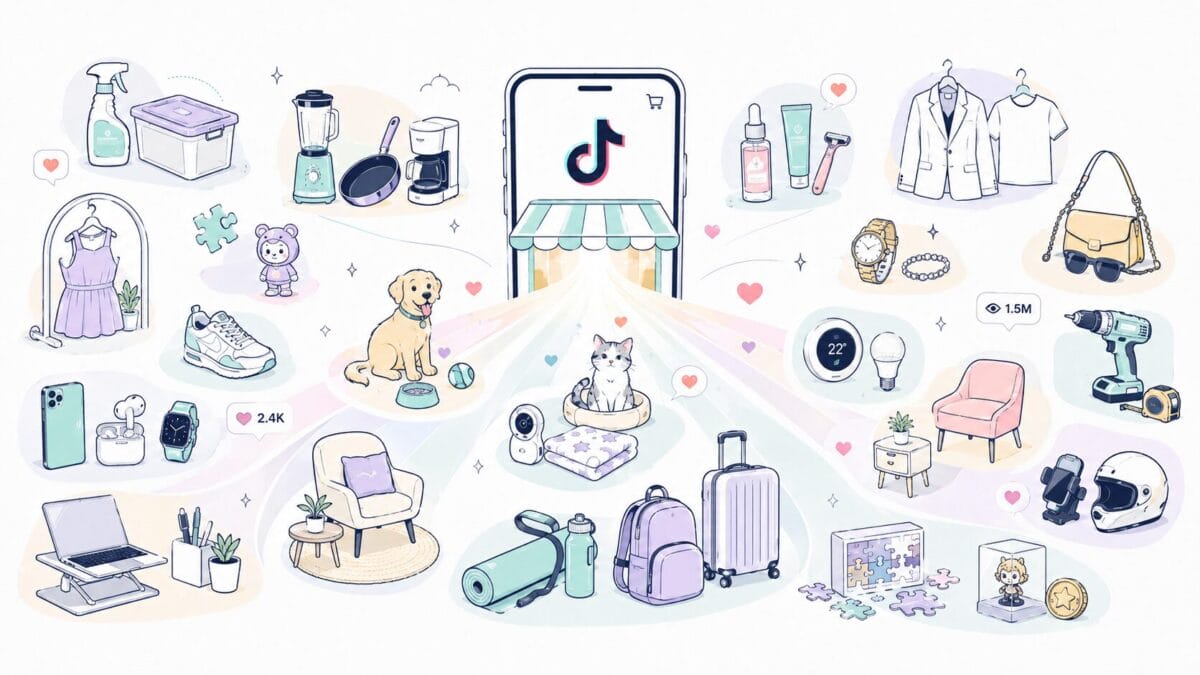
So what can you actually sell on TikTok Shop? Good news: the list of allowed categories is huge, and it covers a wide range of niches. Here are the main ones you shouldn’t run into any trouble with:
- Home Supplies: Your everyday household stuff — cleaning products, storage bins, home decor, laundry accessories, party supplies. Easy, low-risk category to start with.
- Kitchenware: Utensils, small appliances, and all the essentials people are always replacing or upgrading. Think non-stick pans, blenders, and coffee makers.
- Textiles & Soft Furnishings: Anything that makes a home more comfortable — cushions, curtains, rugs. Great margins and genuinely good for dropshipping.
- Womenswear & Underwear: One of the biggest niches out there. Dresses, tops, lingerie, pajamas — no problem selling any of it.
- Menswear & Underwear: Same deal for men — blazers for the formal stuff, boxers and tees for the everyday basics.
- Shoes: People are always buying shoes. Sneakers, sandals, dress shoes — just stay away from the big-name brands, we already covered why.
- Beauty & Personal Care: This one’s always hot, but be careful — skincare, haircare, grooming tools are fine, but anything with medicinal claims or liquids/lotions can get you flagged, as I showed you earlier.
- Phones & Electronics: You can’t sell phones themselves, but the accessories around them — cases, smartwatches, wireless earbuds — are a goldmine.
- Computers & Office Equipment: With everyone working from home now, ergonomic chairs, desk organizers, and laptop stands sell really well.
- Pet Supplies: People spend big on their pets. Beds, grooming kits, interactive toys for cats and dogs — just remember, no pet food or pet meds.
- Baby & Maternity: Maternity clothing, baby monitors, soft blankets — solid category, just remember actual baby products (like toys) need extra approval.
- Sports & Outdoors Gear: One of my favorite categories, honestly. Yoga mats, hiking gear, camping equipment — tons of room to find unique products here.
- Toys & Hobbies: Mostly hobby items for adults — puzzles, crafting kits, non-electronic collectibles. Stay cautious with actual kids’ toys, since those need certification.
- Furniture: Everything from a small coffee table to a full bed frame. Side tables, bookcases, outdoor seating — great for higher-ticket sales.
- Tools & Hardware: DIY crowd loves this stuff — tool sets, power drills, measuring tapes.
- Home Improvement: Smart thermostats, LED lighting, painting supplies — people are always upgrading their space.
- Automotive & Motorcycle: Can’t sell the vehicles, obviously, but accessories like seat covers, phone holders, and bike helmets do great.
- Fashion Accessories: Sunglasses, belts, handbags, scarves — the stuff that finishes an outfit and sells itself.
- Jewelry Accessories & Derivatives: Earrings, bracelets, watches — just remember the material matters here, so double check what’s allowed.
- Luggage & Bags: Suitcases, backpacks, travel organizers — always in demand, especially around travel seasons.
- Collectibles: Figurines, coins, limited-edition merchandise — a smaller niche, but collectors will pay well for the right item.
The list is huge, right? And that’s a good thing. It means no matter what kind of store you want to build, there’s room for you in there. But here’s the thing: having thousands of products to choose from doesn’t make product research easy. If anything, it’s the opposite. When you’re just starting out, staring at so many options can be overwhelming, and finding a clear winner in the mix is where most people get stuck.
Tip: Don’t overthink it. Use a tool like AutoDS’s Hand-Picked Products to get a curated, constantly-updated list of products that are already showing real demand — it takes a lot of the guesswork out of the equation.
At the end of the day, what you’re allowed to sell on TikTok Shop comes down to one thing: keeping the customer’s trust. Your listings need to follow the platform’s rules, accurately describe the product, and meet any applicable safety requirements. On top of that, you’re expected to actually deliver a good experience. This means shipping on time, keeping your shipping windows realistic, and taking care of your customers when they reach out.
And here’s something I want you to really take in: just because you’re allowed to sell something doesn’t mean it’s actually easy to sell or scale. A product that causes shipping delays, quality complaints, or a ton of returns will kill your momentum, no matter how “allowed” it is. So, beyond just picking legal products, look for ones you can source and ship reliably. That’s what actually lets you grow long-term.
Avoid Dropshipping These Products On TikTok Shop
If I’m being honest, knowing what you can’t sell matters way more than knowing what you can. Get this wrong, and you’re putting your entire account on the line. A ban is bad enough on its own, but depending on what you tried to sell, you could be looking at real legal trouble too. So let’s slow down here and actually get this right.
Unlike the list of approved categories, this one isn’t as simple as “yes or no.” Some products need special certifications or permission from TikTok before you can touch them, and others are just flat-out banned, no exceptions, no paperwork that’ll save you. Knowing the difference between the two matters because it’ll save you from wasting time chasing a certification for something that was never going to be approved in the first place.
When you’re picking products, think about risk the same way TikTok does. Anything with shaky stock levels, long processing times, or a complicated shipping path is more likely to end in a refund or a frustrated buyer. TikTok cares a lot about reliable delivery, so protecting your fulfillment performance should always be part of your product research, not an afterthought.
And I can’t stress this enough: stay away from anything shady. No counterfeits, no sketchy “inspired by” branded merchandise, no descriptions that stretch the truth about what the product actually does. Those are exactly the kinds of listings that trigger disputes and refund claims, and enough of those will tank your account health fast. Work with suppliers you actually trust and sell products you’d be comfortable standing behind — that’s the real foundation for staying in this business for the long haul.
Product Categories That Require Certifications
- Beauty and Personal Care Products: Skincare, lotions, deodorants, sunscreens, anti-dandruff treatments — anything in this space that makes a medicinal claim is going to need approval before you can list it.
- Oral Care and Medical Devices: Toothpaste, dental floss, toothbrushes, and anything classified as a Class I or II medical device (laser hair removal tools fall in here) — these all need certification to prove they’re actually safe.
- Eyewear and Protective Gear: Glasses, sunglasses, hearing protection — safety-related items like these need to meet standards before TikTok will approve them.
- Electrical and Electronic Products: Beauty appliances, electronic accessories, power tools — anything with electronics running through it needs proper testing and certification first.
- Packaged Food and Pet Food: Selling anything edible, for humans or pets, means you need certifications to prove it’s safe and compliant.
- Products with CO₂ Cylinders, Knives, or Solar Eclipse Glasses: These come with their own risks, so TikTok wants extra approval before they go live.
One more thing worth flagging: certain categories, like children’s products, fine jewelry, watches, and luxury accessories, need a specific quality qualification altogether, and you’ll have to apply for that through the Qualification Center inside your Seller Account settings.
Getting the right certification affects your ability to grow in the long term. As a dropshipper, you’re relying on your supplier to have the paperwork, and many newer sellers get stuck right here because their supplier can’t provide any verifiable documentation. Without solid documentation to back your products, you’re looking at delisting, launch delays, or being blocked from expanding further down the line, even if your first few sales went great.
So before you fall in love with a product in one of these categories, make sure your supplier can actually back it up on paper.
TikTok Shop Prohibited Products
TikTok Shop draws a hard line on certain products, no exceptions, no certifications that’ll save you. These are banned across the board, usually for safety, legal, or ethical reasons. Here’s what to stay away from completely:
- Adult Products: Anything sexually suggestive — bondage gear, fetish wear, erotic clothing — is completely off-limits.
- Alcohol, Tobacco, and E-cigarettes: No alcohol, no tobacco products, no e-cigarettes, period.
- Animal-Related Products: Anything tied to protected wildlife or plants, like ivory, is banned.
- Baby and Maternity Products: Breast pumps, nursing equipment, and certain baby vitamins are all restricted. Teething jewelry and similar items are banned outright for safety reasons.
- Certain Beauty and Personal Care Products: Anything claiming a medical benefit without FDA approval, imported cosmetics that don’t meet US regulations, and skinlightening products all fall under this ban.
- Hazardous or Dangerous Items: Firearms, lock-picking devices, and other genuinely dangerous products — this one should go without saying, but it’s worth spelling out.
- Electronic and Automotive: Certain batteries, cell phone power banks, and rechargeable items are restricted due to safety concerns.
So, to circle back to the question we started with: Does TikTok Shop allow dropshipping? Yes, it does, but with real limits you need to respect.
Here’s the good news: the list of what you can sell is way longer than what you can’t. But that doesn’t mean you can afford to be careless with this list.
TikTok takes this seriously because they’re protecting both buyers and their own platform. Anything that violates intellectual property gets zero tolerance. That means immediate listing removal, and depending on severity, real consequences for your account. The same goes for anything that raises safety concerns: hazardous materials, illegal items, weapons, and regulated goods.
My advice? Don’t treat compliance as an afterthought or something you’ll “figure out later.” Bake it into how you do product research from day one, because staying eligible to sell is what actually lets you build something long-term here.
How AutoDS Fits Into TikTok Shop — Compliant Selling
At the end of the day, running a successful TikTok Shop store comes down to fulfillment performance, accurate inventory, and order workflows you can actually rely on. This is exactly where automation earns its place, and it’s why I’ve been using AutoDS since almost day one. It gives you the full picture of your business in one place, so you catch small problems before they turn into customer complaints that hurt your account health.
Here’s what AutoDS actually does for your day-to-day operations:
- Inventory syncing — so you’re never overselling a product that just went out of stock on your supplier’s end
- Automated order workflows — cutting out the manual errors that come from processing orders by hand
- Supplier monitoring — catching price or stock changes fast, before they become a problem on your storefront
- Centralized product management — full control over your listings from one dashboard instead of juggling tabs
- Operational insights — the data you need to actually make smart decisions instead of guessing
Now, I want to be clear about something: AutoDS isn’t a shortcut around TikTok’s rules. It’s not going to get you out of following platform standards, guaranteeing your products are legit, or hitting your shipping windows. That part’s still on you. What automation does is take the repetitive, error-prone parts of the job off your plate, so you can cut down on the mistakes that put your account at risk and scale in a way that just isn’t possible if you’re doing everything manually.
Frequently Asked Questions
Is dropshipping allowed on TikTok Shop in 2026?
Yes. TikTok Shop still fully supports dropshipping, as long as you follow their seller policies. That means sourcing from legitimate suppliers, sticking to approved product categories, and keeping your handling times, tracking, and account health in good shape.
What is TikTok Shop’s official dropshipping policy?
TikTok allows dropshipping but holds sellers accountable for shipping performance, product authenticity, and service quality. Fulfilling orders from another retailer in a way that creates long delivery times or a confusing buyer experience may violate platform expectations.
How much money do TikTok Shop dropshippers make?
Results vary widely. Some sellers generate a few thousand dollars per month, while top performers surpass $50K–$100K+ in monthly revenue. Profit margins often range from 20%–50%, depending on costs like fees, commissions, shipping, and returns.
What happens if TikTok flags my fulfillment?
TikTok may apply account-level actions if performance drops, such as reduced visibility or temporary selling limits. Improving supplier reliability, processing speed, and inventory accuracy can help stabilize performance and protect your account.
What are the requirements for dropshipping on TikTok Shop?
Some requirements vary depending on whether you are an individual seller or have a business, but you must be 18 years old and provide valid U.S. identification. Additionally, you need to go through a verification process, submit tax documents, and have a U.S. bank account for businesses. Of course, you must also comply with TikTok’s content guidelines.
What are the fees associated with using TikTok Shop for dropshipping?
The main fees to consider when dropshipping on TikTok Shop include the marketplace commission fee, which is ~6% standard (3% promotional for the first 30 days). Keep in mind that these rates are subject to change, so it’s important to check TikTok Shop’s latest policies to stay up to date.
Start Dropshipping On TikTok Shop
So, does TikTok Shop allow dropshipping? Absolutely, and honestly, if you’re just getting into e-commerce, I don’t think there’s a better platform to start with right now. But that opportunity comes with homework. You need to know what’s fair game, what needs a certification, and what’s completely off the table before you start listing products, not after you’ve already run into a wall.
If you’ve made it through this guide, you’re already ahead of most people who jump in blind. You know what you can and can’t sell, you know what TikTok expects from you operationally, and you’ve got a real foundation for doing your product research the right way. Now it’s just about putting it into action: find your products, set up your store the right way, and get that ball rolling.
And when you’re ready to actually run this thing without burning hours a day on manual work, that’s where AutoDS comes in. From product research to supplier sourcing to order fulfillment and inventory syncing, it handles the repetitive parts of the business so you can focus on growth instead of getting buried in tasks. It’s the difference between dropshipping as a side hustle you’re constantly putting out fires for, and a business you can actually scale.
If you want to keep learning, here are a few more articles worth checking out: