


Making money online used to mean becoming an influencer, building a personal brand, or spending hours creating content. Ghost commerce flips that idea on its head. In simple terms, it’s a low-profile, high-potential business model that lets you sell products online without ever showing your face.
That’s exactly why so many beginners are paying attention to it right now. Part of what makes it so attractive is how accessible it feels. You don’t need a warehouse or even a huge budget to begin. Better yet, platforms like AutoDS make it easier to handle product sourcing, imports, pricing, and fulfillment without getting buried in repetitive tasks.
In this article, you’ll learn what ghost commerce is, how it works, the most common models behind it, and how to start your own. It also covers the best platforms to use and how automation can help scale your business.
Ghost commerce is a low-risk commerce model that lets you sell online anonymously without holding inventory or making upfront investments.
In 2026, it’s easier than ever to start and scale a ghost commerce business, thanks to the rise of social commerce, faceless content, and automation tools.
Popular ghost commerce models include dropshipping, affiliate marketing, print-on-demand, white labeling, and digital products, all built around low operational overhead.
AutoDS simplifies ghost commerce by automating product imports, pricing, order fulfillment, and more, so you can focus on the strategy. 👇
What Is Ghost Commerce?
Ghost commerce is a business model where products are sold online without relying on a personal brand or public-facing identity. I know: its name might sound a little mysterious, maybe even shady. But in reality, the concept is surprisingly simple. Instead of becoming the “face” of the business, you just run an online store, promote products, and generate sales without putting yourself at the center of the brand.
In most cases, it all comes down to making smart moves behind the scenes. Imagine a TikTok account posting viral product videos with AI voiceovers that direct viewers to an online store automatically connected to a supplier. No warehouse, no inventory, and no personal content required.
That’s also what separates it from other online business models. With traditional ecommerce, sellers are usually responsible for managing inventory, handling shipping, and overseeing the entire supply chain. Ghost commerce simplifies much of that process by relying on third-party suppliers, allowing sellers to focus more on product selection, marketing, and growth.
This makes it especially attractive for new sellers looking for:
- ⭐ Lower startup costs.
- ⭐ Flexible work setups.
- ⭐ Minimal personal exposure.
- ⭐ Easier automation opportunities.
- ⭐ Faster product testing.
And the timing makes sense. Global ecommerce sales are forecast to grow from $6.42 trillion in 2025 to $7.89 trillion by 2028. As online shopping continues to expand worldwide, business approaches with lower operational barriers and more versatile structures are becoming increasingly appealing to new entrepreneurs.
That shift is the biggest reason why ghost commerce for beginners has become such an attractive entry point into online selling.
How Ghost Commerce Works

Ghost commerce is all about selling products you don’t physically own. This means you only pay for products after making a sale.
At its core, it combines three main elements:
- A profitable niche.
- A selling system.
- A strong marketing strategy.
The goal is simple: attract attention, generate interest, and turn that traffic into sales without needing a public-facing personal brand. Here’s what the process usually looks like:
1️⃣ Pick a Niche With A Viral Potential
Ghost commerce relies on picking a niche that’s trending, shareable, and full of buying intent. These highly specific shopping themes attract buyers based on their passions and interests. Think fitness hacks, beauty stuff, tech gadgets, clever kitchen tools, or pet products. The more targeted your audience, the easier it is to create content that sells.
A good niche also makes product research easier. When you understand the audience’s interests, habits, and frustrations, spotting items with potential becomes much more natural.
🆕 Beginner’s Tip: Pick a niche that is both in high demand and appealing to you. The more you know about it, the more likely you are to know what items to source and how to market them.
2️⃣ Set Up a Low-Maintenance Selling System
Unlike traditional ecommerce, ghost commerce usually relies on third-party suppliers and external tools to handle much of the operational side of the business. That means products, inventory updates, order fulfillment, and shipping can all run in the backend.
This setup is a huge reason why ghost commerce appeals to beginners. Instead of spending time packing boxes or managing stock, sellers can focus on finding products, testing ideas, improving marketing, and scaling what works.
3️⃣ Create Content (Faceless-Style)
You don’t need to be an influencer to sell online. You just need the influence. How? Creating engaging content. Here are some ideas:
- Create AI-generated product demos or memes. Let technology do its magic. Just make sure they stand out in people’s feeds.
- Post product photos and videos without showing your face. You can use a voice-over, cool music, and your hands to show the product itself.
- Build theme-based Instagram pages or Pinterest boards with curated content from other users (as long as you do it ethically). You can also repurpose viral posts going around social media feeds.
The key is making the product feel useful, entertaining, or curiosity-inducing enough for people to stop scrolling. Sometimes, a simple “Why didn’t I know this existed?” reaction is all it takes. And yes, you can absolutely do all of this without showing your face on camera.
📢 Marketing Tip: Faceless content becomes much easier with tools like CreateUGC. Use it to generate AI-powered product videos with avatars and optimized scripts designed for short-form social media content.
4️⃣ Promote and Scale
Once the engine is running, ghost commerce relies on constant promotion to reach new audiences. Again, you don’t need to show your face. Here are some ideas to do this anonymously:
- Organic content on social media is the foundation of your distribution strategy. It’s supposed to build trust, provide value, showcase your products, and engage with your audience. Videos are gold for organic and viral content, but if you don’t feel comfortable, photos and carousels work too.
- Paid ads (especially on TikTok, Meta, and YouTube). When you have a product (or a post) that’s converting, paid ads can scale it fast, reaching new audiences. These are crucial to acquire new shoppers, so it’s good to always have some ads running. Just make sure to start with a small budget, test, and then see what works.
- Influencer collabs. Don’t want to show your face? Let the extroverts do the promotion for you! Influencers tend to have reach, highly engaged audiences, and creative content ideas. Send them your product, negotiate a shoutout, and let them do the selling.
- Email or SMS marketing. There’s more to the digital world than just social media. Email and SMS let you follow up with discounts, product drops, bundles, exclusive promotions, and helpful content. It’s a powerful way to boost repeat purchases and returning customers.
- SEO strategies. Optimizing your product pages for search engines can bring steady, long-term organic traffic. Include keywords in your titles and descriptions, add alt text in your images, write helpful content, and make sure your online store is mobile-ready (especially when using Shopify, Wix, or WooCommerce).
📢 Marketing Tip: Track your metrics on social media, Google Analytics, and AutoDS to see what works. Then, continuously optimize your strategy. Double down on what performs well, and forget about what doesn’t.
Is Ghost Commerce the Same as Dropshipping?
Yes and no. Let me explain: ghost commerce isn’t a completely separate business model from dropshipping. Instead, dropshipping is one of the most common ways to run a ghost commerce business.
Think of ghost commerce as the bigger umbrella. It refers to online ventures that operate mostly “in th shadows” often without a physical location or a strong public-facing personal brand. Dropshipping fits perfectly into that structure because sellers don’t need to manufacture products, hold inventory, or manage shipping themselves.
In a dropshipping setup, a supplier stores and ships products directly to customers after a purchase is made. That allows sellers to focus primarily on product research, store management, and marketing rather than physical operations. In many cases, the business can run without the owner ever becoming the “face” of the brand, which naturally aligns with the idea behind ghost commerce.
That said, not every ghost commerce business is necessarily dropshipping. Other models can also fall under the same category because they rely on similar principles: low overhead and the ability to sell online without building the business around a personal identity.
Types of Ghost Commerce Business Models

One of the biggest reasons this model has become so popular is its flexibility. Whether you want to sell physical products, promote brands, or monetize digital content, there are multiple ways to build a business without becoming the public face behind it.
Here are some of the most common ones:
Dropshipping
Dropshipping is one of the most well-known forms of ghost commerce. With this model, you sell products online while a third-party supplier handles inventory storage, packing, and shipping. That means you can focus on sourcing, marketing, and scaling your store without dealing with physical logistics.
Its popularity keeps growing fast, with the global dropshipping market expected to reach $514.3 billion by 2030, driven by the rise of ecommerce and automation tools.
Affiliate Marketing
Affiliate marketing is all about promoting someone else’s products and earning a commission for every sale generated through your referral links. Instead of running your own store, the focus is usually on content, traffic, and audience-building through blogs, social media pages, YouTube channels, or niche websites.
This model fits naturally into ghost commerce because it can operate almost entirely behind the scenes, often without inventory, customer support, or personal branding.
Print-on-Demand
Print-on-demand allows sellers to create custom-designed products like t-shirts, mugs, hoodies, or phone cases without keeping inventory. Once a customer places an order, a third-party provider prints and ships the product automatically.
It’s a popular option for creators who want more control over branding and product aesthetics while still keeping operations relatively low-maintenance.
White Labeling
White labeling involves selling pre-made products manufactured by another company under your own business identity. Unlike dropshipping, this model puts more emphasis on branding and long-term customer loyalty while still outsourcing production.
This approach is common in industries like skincare, supplements, coffee, and cosmetics.
Selling Digital Products
Digital products include things like ebooks, templates, online courses, guides, presets, or downloadable resources. Since there’s no physical inventory or shipping involved, this model can become highly scalable once the product is created.
Many ghost commerce businesses use faceless content, niche pages, or automated funnels to sell digital products anonymously.
Best Platforms for Ghost Commerce
One of the biggest advantages of ghost commerce is that you don’t have to build everything manually. Today, there are tools for almost every part of the process, from product sourcing and automation to content creation and affiliate management. The right platforms can save hours of repetitive work and make scaling your business much more realistic, especially for starters.
Here are some of the best platforms for running a ghost commerce business:
AutoDS: Automation
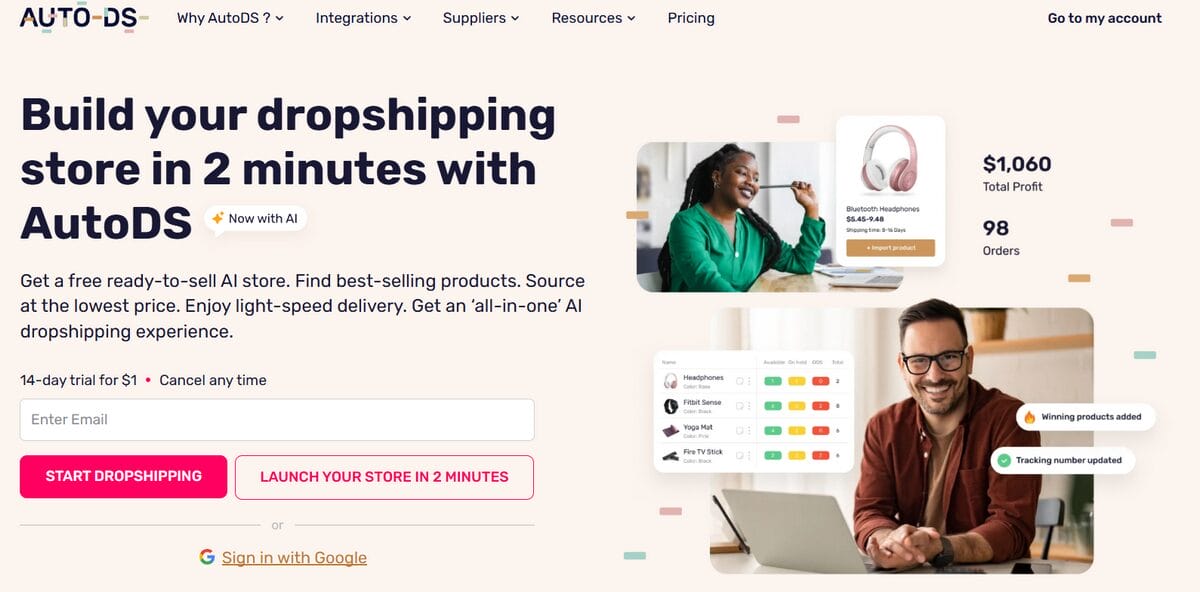
Automation tools play a huge role in keeping a business scalable. Managing products, suppliers, pricing updates, inventory, and fulfillment manually can quickly become overwhelming, especially as orders start growing.
That’s where AutoDS helps simplify the process. The platform is built specifically for dropshipping automation, allowing sellers to source products, import them to their stores, monitor stock and price changes, and automate order fulfillment from one dashboard.
AutoDS also includes tools for product research, AI-generated store creation, print-on-demand integrations, and analytics, making it easier to manage the operational side of a ghost commerce business.



Shopify: Ecommerce Store
Every ghost commerce business needs a place where customers can browse products and complete purchases, and Shopify remains one of the most popular ecommerce platforms for doing exactly that. It’s intuitive, highly customizable, and works especially well for dropshipping and automated selling models.
Shopify also integrates smoothly with automation tools, payment gateways, apps, and suppliers, making it easier to build a professional-looking store without needing advanced technical skills.
🆕 Beginner’s Tip: Want to skip the hardest part of setting up a store? AutoDS AI Shopify Store Builder can generate a ready-to-sell Shopify dropshipping store in just a few clicks, including winning products, design, and high-converting pages.
TikTok Shop: Affiliate Marketing
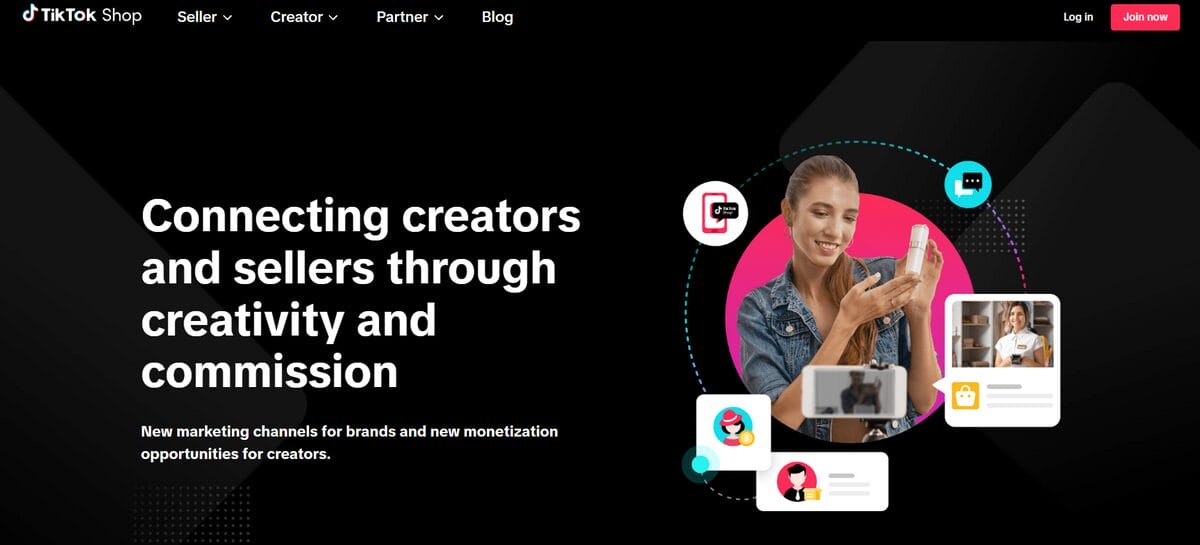
TikTok Shop Affiliate allows creators and sellers to earn commissions by promoting products directly through TikTok content. It has become one of the fastest-growing affiliate ecosystems thanks to short-form videos, algorithm-driven discovery, and impulse-driven shopping behavior.
For ghost commerce sellers, TikTok Shop Affiliate is ideal whether they want other creators to promote their products through affiliate links or prefer promoting other people’s products themselves. It offers a low-barrier way to generate sales without needing to build or manage a traditional online store.
Canva: Visual Content
Canva is one of the easiest tools for creating product visuals, thumbnails, carousels, infographics, and branded social media posts. It’s beginner-friendly, highly customizable, and perfect for ghost commerce sellers who want polished content without needing advanced design skills.
Even if you’ve never touched Photoshop before, Canva makes content creation feel surprisingly approachable.
CapCut: Short-Form Video Editing
CapCut has become one of the go-to editing apps for TikTok, Instagram Reels, and YouTube Shorts. It’s especially useful for creating fast-paced product videos with captions, transitions, voiceovers, and trending audio.
For faceless content strategies, tools like CapCut make it much easier to produce engaging videos quickly without complicated editing workflows.
How to Start a Ghost Commerce Business
Starting a ghost commerce business might sound complicated at first, but the setup is actually pretty straightforward. No secret formula, no spooky internet magic, just the right systems, smart product choices, and a workflow that can scale over time.
Here’s how to get started step by step:
Step 1: Log In to AutoDS
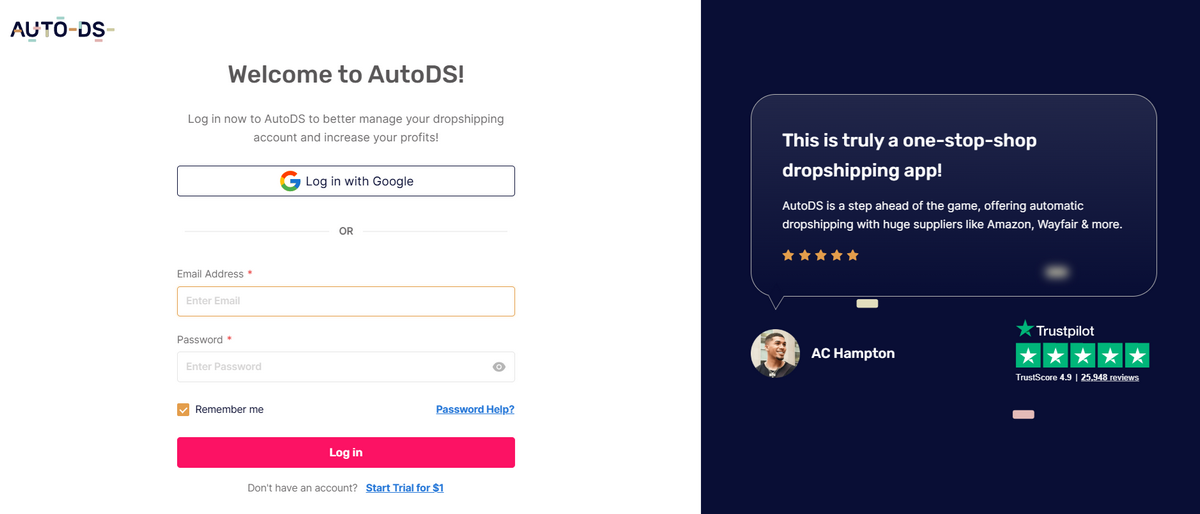
Technically, you could build a ghost commerce business using dozens of separate apps, spreadsheets, tabs, and caffeine-fueled organization skills. Or… you could use a platform that centralizes most of the process for you.
Using AutoDS makes the process much more efficient as multiple parts of the workflow can be managed from one platform. From product sourcing and importing to fulfillment and automation, making operations simpler from the start.
If you don’t already have an account, this is the perfect moment to get started. AutoDS trial for $1 is an easy way to test the platform and follow the rest of the process hands-on.
Step 2: Choose Your Selling Channel
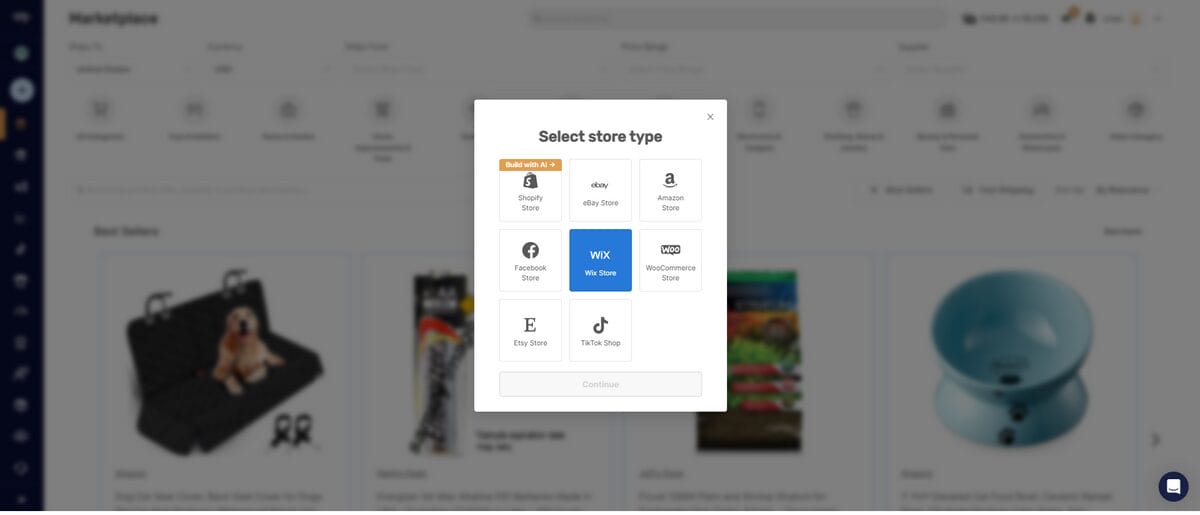
Every ghost commerce setup needs some kind of storefront, whether that’s a full ecommerce website or a marketplace where customers can discover your products.
Through AutoDS, sellers can connect and manage stores across multiple ecommerce platforms and marketplaces, including Shopify, Wix, TikTok Shop, Amazon, eBay, and more.
The best option depends on your niche, audience, and selling strategy, but having everything connected in one dashboard makes the process much easier to manage.
Step 3: Conduct Product Research
Now, it’s time to choose what to sell, because it’s not just about selling anything. Ghost commerce thrives on hot, in-demand products that people want right now. Your job is to spot those winning items before they go viral and cool off. This way, you’re making the most of them, exactly when they’re thriving.
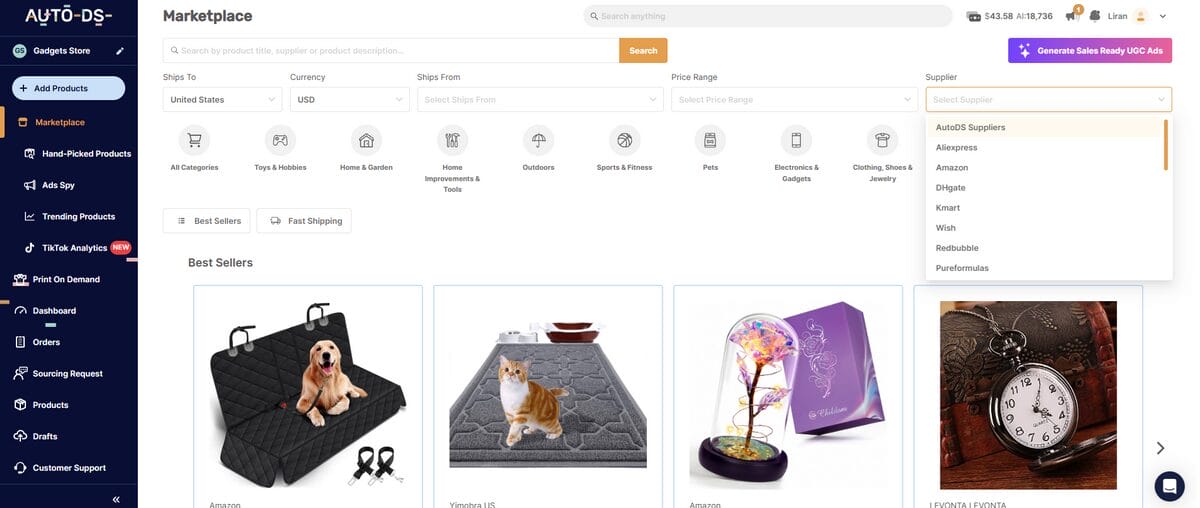
Inside AutoDS, sellers can monitor demand, analyze competitors, and discover winning items through built-in product research tools. This makes it much easier to capture real selling potential instead of relying purely on guesswork.
When researching, focus on:
- ✅️ High demand.
- ✅️ Strong profit margins.
- ✅️ Positive customer reviews.
- ✅️ Viral or trending potential.
- ✅️ Reliable product quality.
🔍 Research Tip: Use AutoDS Hand-Picked Products section to browse trending products already performing well online. Platforms like Amazon Best Sellers, Google Trends, and eBay Daily Deals can also help validate demand.
Step 4: Partner With Reliable Suppliers
A ghost commerce business is only as reliable as the suppliers behind it. Fast shipping, good communication, and consistent product quality matter a lot more than most people realize. One bad supplier can turn a winning product into a refund machine overnight.
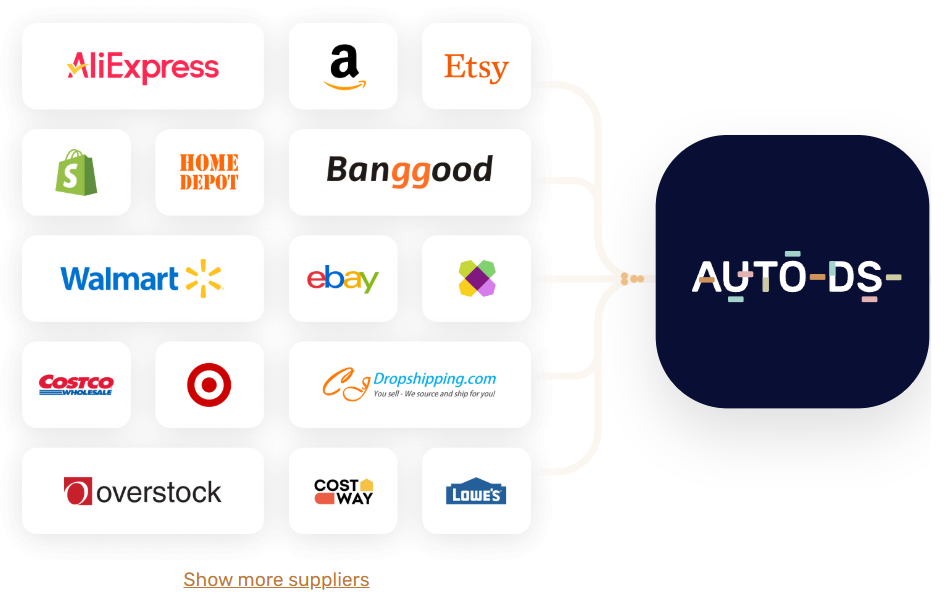
One advantage of using AutoDS is access to a large network of supported suppliers that integrate directly into your workflow. This makes sourcing, monitoring, and fulfillment much easier to manage without juggling multiple disconnected systems.
When evaluating suppliers, prioritize:
- ✅️ Fast, trackable shipping.
- ✅️ Consistent product quality.
- ✅️ Responsive communication.
- ✅️ Clear return policies.
And yes, ordering samples before scaling is still a very smart idea. Your future customer reviews will thank you.
Step 5: Import Products to Your Store
Once you’ve found products worth selling, it’s time to actually stock your store. You could upload products manually one by one, but that becomes painful fast.

With AutoDS, products can be bulk imported in just a few clicks while inventory and pricing stay synced automatically in the background. The platform also includes AI tools that help optimize product titles and descriptions so listings look cleaner and more conversion-friendly.
This kind of automation becomes especially useful when testing multiple products at once. Less manual work, fewer mistakes, and a much smoother workflow overall.
Step 6: Manage Your Dropshipping Orders
Getting sales is exciting. Managing dozens of orders manually? Slightly less exciting.
As your store grows, fulfillment can rapidly become one of the most time-consuming parts of the business. That’s why automation matters so much in ghost commerce.
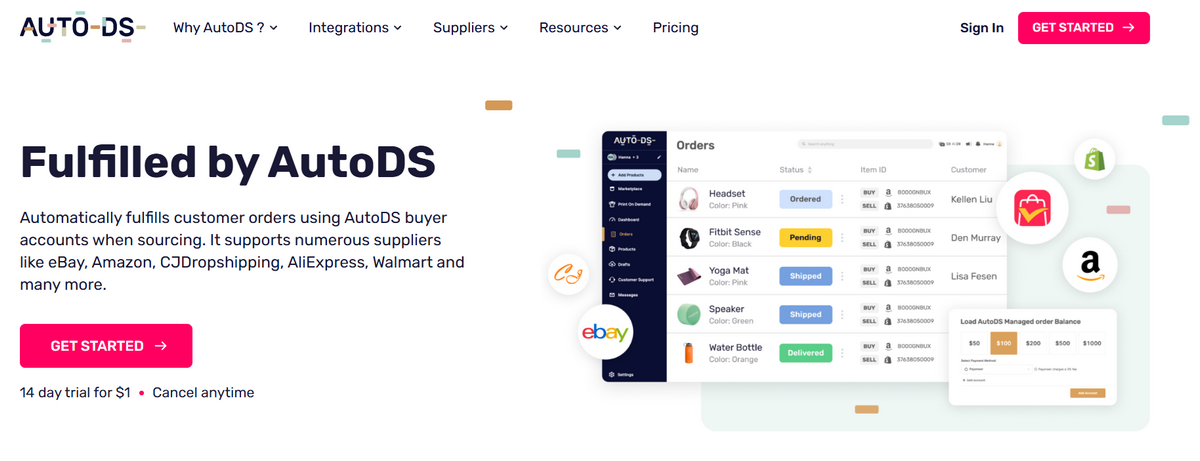
Features like Fulfilled by AutoDS help automate order processing, tracking updates, and fulfillment workflows directly through the platform. Instead of manually forwarding every order to suppliers, much of the process runs automatically.
The result is a workflow that feels far more scalable and a lot less chaotic once sales start picking up.
Step 7: Market Your Products

Now comes the part most people actually imagine when they hear “ghost commerce”: getting products in front of real people.
This doesn’t necessarily mean becoming an influencer or filming cinematic product commercials in your kitchen at 2 a.m. A lot of ghost commerce marketing revolves around simple but effective content: short-form videos, faceless product demos, niche pages, AI-generated creatives, influencer collaborations, paid ads, or SEO-driven traffic.
The important thing is testing consistently. Some products explode through TikTok videos. Others perform better through Pinterest, SEO, or paid ads. Ghost commerce is less about “one perfect strategy” and more about experimenting and doubling down on what actually converts.
Common Mistakes in Ghost Commerce
Ghost commerce might look simple from the outside, but like any online business model, there are a few common mistakes that can slow growth or kill momentum early on. The good news? Most of them are completely avoidable once you know what to look for.
Here are the top four, with clear, easy solutions to implement instead:
Copying Viral Content Without Adding Value
Yes: it’s tempting to grab a viral video, paste your link on it, and hope for sales. But platforms are smart, and so are users. Simply reposting without editing, adding commentary, or bringing something new to the table doesn’t really work.
👉 Try this instead: Add your own angle. Use text overlays, commentary, different hooks, voiceovers, or a new editing style to make the content feel original. Even small creative changes can help your posts stand out in crowded feeds.
Skipping Product Research
Just because an item looks cool doesn’t mean people actually want to buy it. Many beginners waste time and ad spend promoting products with low demand, weak profit margins, or unreliable suppliers. Product sourcing is kind of a science; it requires a bit of time and thought, so don’t overestimate it.
👉 Try this instead: Do the research. Compare how items perform on different platforms, check if they are trending on social media, and watch out for competitors. You can use AutoDS’s product research and ad spy tools to get ahead of the game.
Relying Solely on One Traffic Source
TikTok might be on fire right now, and posting on one marketplace might feel like enough. But here’s the thing: putting all your products in one single algorithm is risky. One shadowban, restriction, or trend shift, and your traffic can vanish overnight.
👉 Try this instead: Diversify. Repurpose your content on multiple social media channels, build email and SMS lists, and work with marketplaces as well. A multichannel approach gives your business more stability and reach.
Expecting Fast Results Overnight
Ghost commerce is often promoted online as an “easy money” shortcut, which creates unrealistic expectations. While the barrier to entry is lower than many traditional businesses, building consistent workflows, testing products, and optimizing content still takes time.
👉 Try this instead: Treat ghost commerce like a real business, not a lottery ticket. Focus on continuous improvement and scaling what actually works instead of chasing instant viral success. That’s where smart systems can make a huge difference by simplifying processes and helping your business grow more efficiently.
How AutoDS Helps Scale Ghost Commerce Businesses
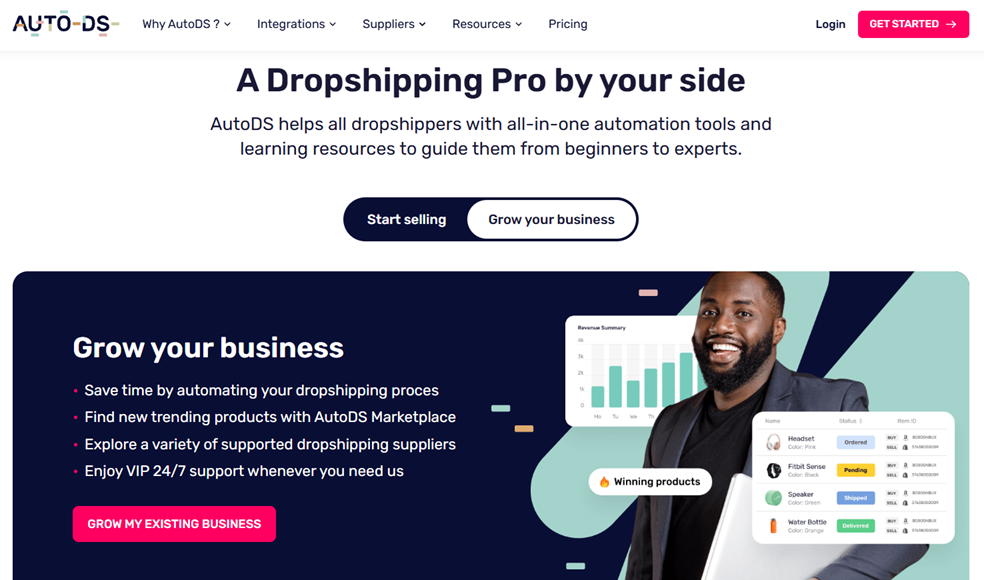
AutoDS helps ghost commerce stores scale by automating a huge part of the operational work that normally slows sellers down. And honestly, that matters a lot once your “simple side hustle” starts turning into dozens of orders, supplier messages, stock issues, and customer emails at midnight.
Instead of manually juggling everything, AutoDS centralizes many of the moving parts of running a dropshipping business. Things like fulfillment, inventory syncing, product imports, supplier management, and product optimization can all happen from one place.
Some of the biggest advantages include:
- Source products through built-in research tools, making it easier to spot trending items before they become oversaturated.
- Import products from multiple global suppliers, allowing ghost commerce sellers to test multiple niches and products much faster.
- Automate order fulfillment and tracking updates, so scaling doesn’t turn into hours of repetitive manual work every day.
The biggest benefit, though, is probably time. Less time spent handling repetitive tasks means more time improving strategy and growing your store instead of constantly babysitting it.
Frequently Asked Questions
What is ghost commerce, and how does it work?
Ghost commerce is a hidden or behind-the-scenes e-commerce model where businesses drive sales without managing inventory or operating a traditional storefront. It works by directing customers to third-party platforms or notifying manufacturers to fulfill orders once they are placed.
Is ghost commerce the same as dropshipping?
Ghost commerce is not exactly the same as dropshipping, although dropshipping is one of its most common models. Ghost commerce is a broader term that also includes affiliate marketing, print-on-demand, and other low-visibility selling methods. The main idea is generating sales without operating a traditional branded business structure.
Is ghost commerce profitable?
Ghost commerce can be highly profitable due to its low overhead costs and scalability. Without the need to manage inventory, physical storefronts, or fulfillment, businesses can focus on marketing and driving traffic to their sales channels.
How do I start in ghost commerce?
You can start ghost commerce by choosing a niche, finding reliable suppliers or affiliate programs, and creating content that drives traffic to your offers. Most beginners use platforms like TikTok, Instagram, or Shopify to promote products. Automation tools can also help simplify fulfillment and store management.
Can beginners start ghost commerce?
Beginners can start ghost commerce because the business model has a relatively low barrier to entry. You don’t need inventory, a warehouse, or advanced technical skills to begin. However, learning product research and marketing strategy is still essential for long-term success.
Do you need to show your face for ghost commerce?
You do not need to show your face to succeed with ghost commerce. Many sellers use product-only videos, AI-generated content, voiceovers, memes, or repurposed UGC instead of appearing on camera. The focus is usually on the product and the content strategy rather than personal branding.
How do ghost commerce businesses make money?
Ghost commerce businesses make money by earning margins or commissions on products sold through third-party fulfillment systems. Some use dropshipping markups, while others rely on affiliate payouts or creator commissions.
What platforms work best for ghost commerce?
Shopify, TikTok Shop, Amazon, eBay, and Etsy are some of the most popular options for ghost commerce because they support flexible selling models and integrate well with automation tools. The key is having platforms like AutoDS to manage sourcing, fulfillment, product imports, and automate store operations.
What products are best for ghost commerce?
The best products for ghost commerce are niche-focused, inexpensive, visually engaging, and easy to demonstrate. Trending gadgets, beauty items, home products, fitness accessories, and problem-solving products tend to perform especially well. Products with strong impulse-buy potential usually generate better results.
Is ghost commerce profitable in 2026?
Ghost commerce is still profitable in 2026, especially for sellers who combine automation with strong content marketing. The model aligns well with the current eCommerce landscape because it reduces upfront costs, simplifies operations, and allows faster product testing without holding inventory. Sellers who can adapt quickly and scale efficient systems continue to have a strong advantage.
Start Your Ghost Commerce Journey with AutoDS
Want to start selling online? Ghost commerce is a smart way to do it, especially for beginners looking for low-risk, high-potential opportunities. No inventory piles in your garage, no need to become a full-time influencer, and no massive upfront investment just to get started.
Among the different ghost commerce models, dropshipping stands out for its scalability and relatively low barrier to entry, especially when supported by the right tools. AutoDS automates key tasks like product imports, pricing, and fulfillment, giving you the actual time you need to build a successful online business.
👻 Want to see how it works in practice? You can try AutoDS for $1 and explore how ghost commerce works with automation, handling the heavy lifting.
Want to keep learning and growing? Check out our articles for more tips, tools, and insights: