

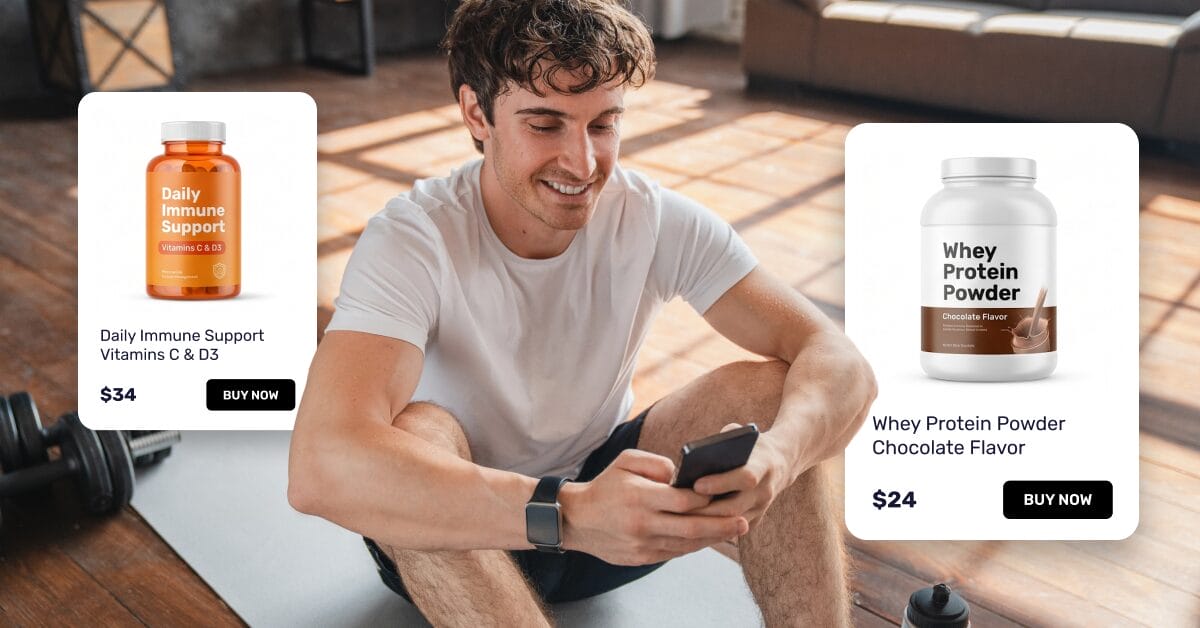
The global dietary supplement market is growing at an incredible pace (projected to reach $327 billion by 2030). And that means a huge opportunity for dropshippers who know how to work this niche the right way.
Unlike phone cases or home decor, supplements are ingested. That means labeling accuracy, manufacturing standards, and documentation aren’t optional extras. They’re the difference between a store that scales and one that gets shut down by a platform or a regulator.
Naturally, that means partnering with a supplier you can actually trust. That’s exactly why this guide breaks down the 10 best supplement dropshipping suppliers in 2026, how regular, white-label, and private-label sourcing actually differ, and what to verify before you commit to one.
The supplement market is projected to hit $327 billion by 2030, but success here depends far more on supplier quality than on product selection alone.
Regular, white-label, and private-label are three distinct models with different MOQs, branding control, and upfront investment — choosing the wrong one for your stage is a common early mistake.
A trustworthy supplier should be able to show GMP certification, a Certificate of Analysis (COA), and proper labeling support without hesitation.
Labeling accuracy and honest marketing claims are the difference between a store that scales and one that gets shut down by a platform or regulator.
AutoDS connects sellers to vetted global suppliers and automates sourcing, pricing, and fulfillment, making it easier to launch and scale a supplement store responsibly.
10 Best Supplement Dropshipping Suppliers in 2026
| Supplier | Model | MOQ | Geography | Best For |
|---|---|---|---|---|
| Nutribil | Private label | Low | UK | European sellers wanting private label |
| Ok Capsule | Private label | Varies | US | Personalized supplement packs |
| Supliful | White label | None | US | Fast launch, zero inventor risk |
| Makers Nutrition | Private label (manufacturer) | High | US | ORganic/clean-label certified runs |
| On Demand Fulfillment | Private label | None | US | No-MOQ private label with FDA-registered facilities |
| Synce | Regular/White Label | Varies | Global | Comparing multiple branded suppliers directly |
| DaVinci Labs | Private Label (Manufacturer) | Varies | US | Established, doctor-formulated brand credibility |
| CJdropshipping | Regular/White label | None | Global | Testing supplements alongside other niches |
| AutoDS Marketplace & Private Suppliers | Regular/private label | Varies | Global | All-in-one sourcing + label customization |
| Vox Nutrition | Private label | Low-Medium | US | Private label without high manufacturer MOQs |
1. AutoDS Marketplace & Private Suppliers
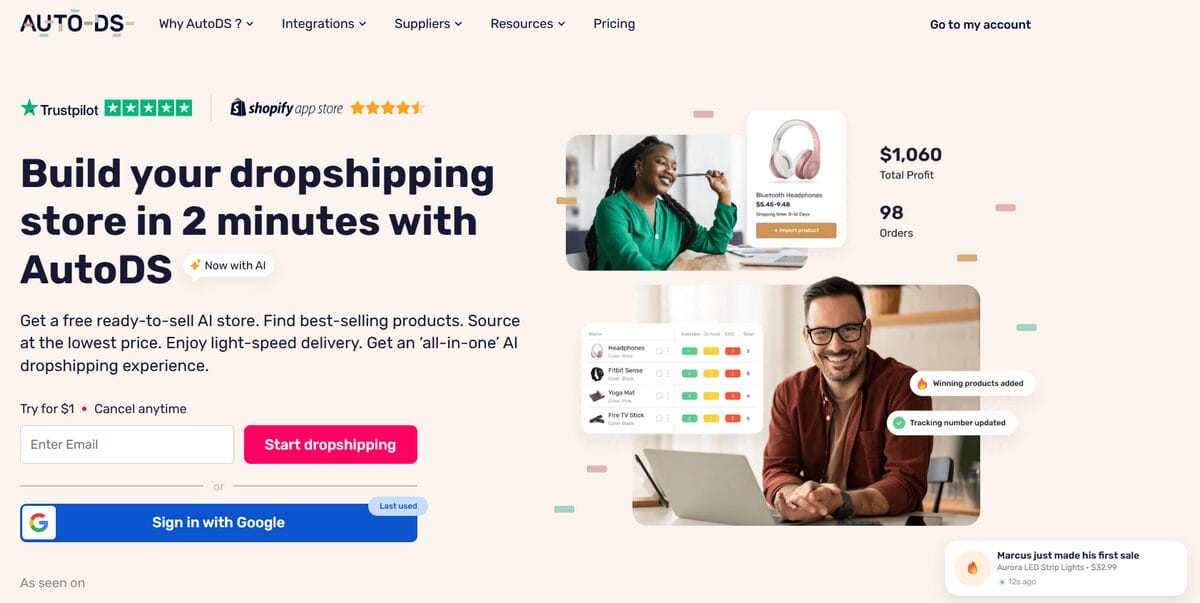
This is the most convenient starting point if you don’t want to juggle multiple platforms. Inside the AutoDS Marketplace, you can import ready-to-sell supplement listings the same way you would any other product, or connect with private suppliers that offer label customization for a more branded approach.
Either way, pricing and stock stay synced automatically, so you don’t have to manually check whether a formula went out of stock.
Best For: Sellers who want sourcing and label customization in one place, without stitching together separate tools.
Model: Regular / Private Label.
2. Supliful
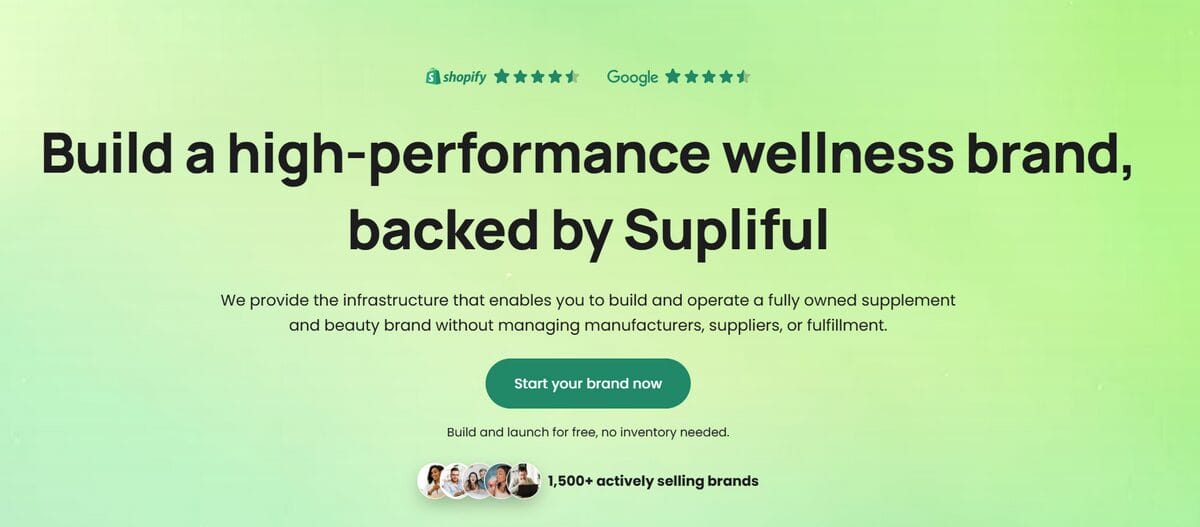
Supliful has become one of the go-to names for US-based supplement dropshipping, largely because it removes the biggest barrier to entry: inventory risk. There’s no minimum order quantity, the facilities are FDA-registered and GMP-compliant, and you get access to over 150 products you can slap your own branding on, each backed by a Certificate of Analysis. It also has a native Shopify app, so order sync isn’t something you have to build yourself.
Best For: First-time supplement sellers who want to launch fast without tying up cash in stock.
Model: White Label.
3. OK Capsule
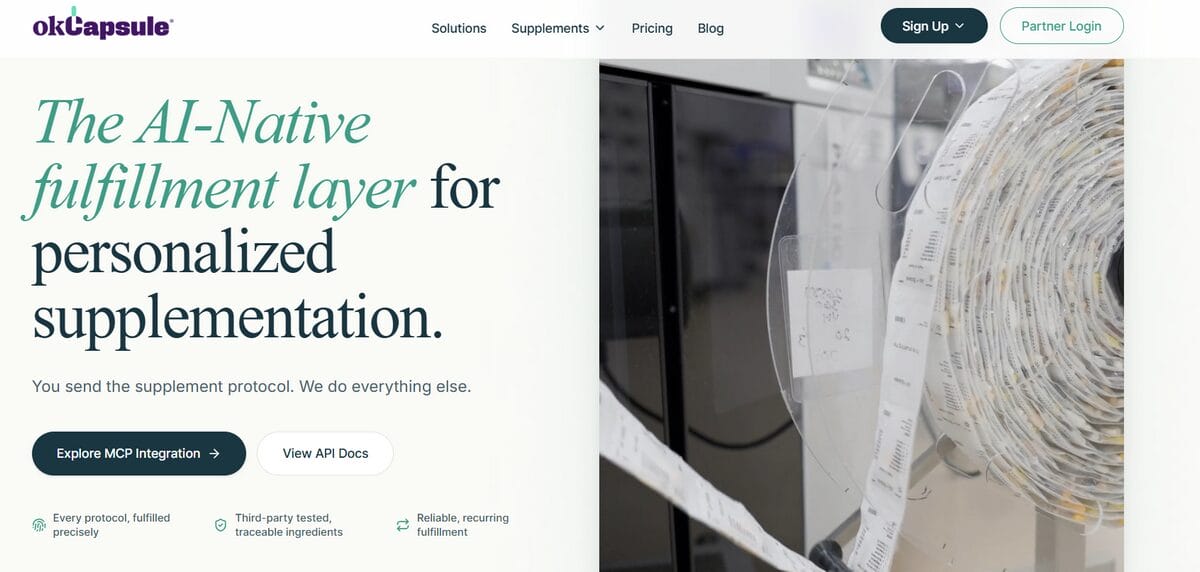
OK Capsule is built around personalization: think daily vitamin packs tailored to a customer’s specific needs, with their name printed right on the pack. It’s a different selling proposition entirely: instead of “buy this supplement,” you’re selling “buy your supplement routine.”
Best For: Brands built around personalized wellness rather than a single hero product.
Model: Private Label.
4. Nutribl
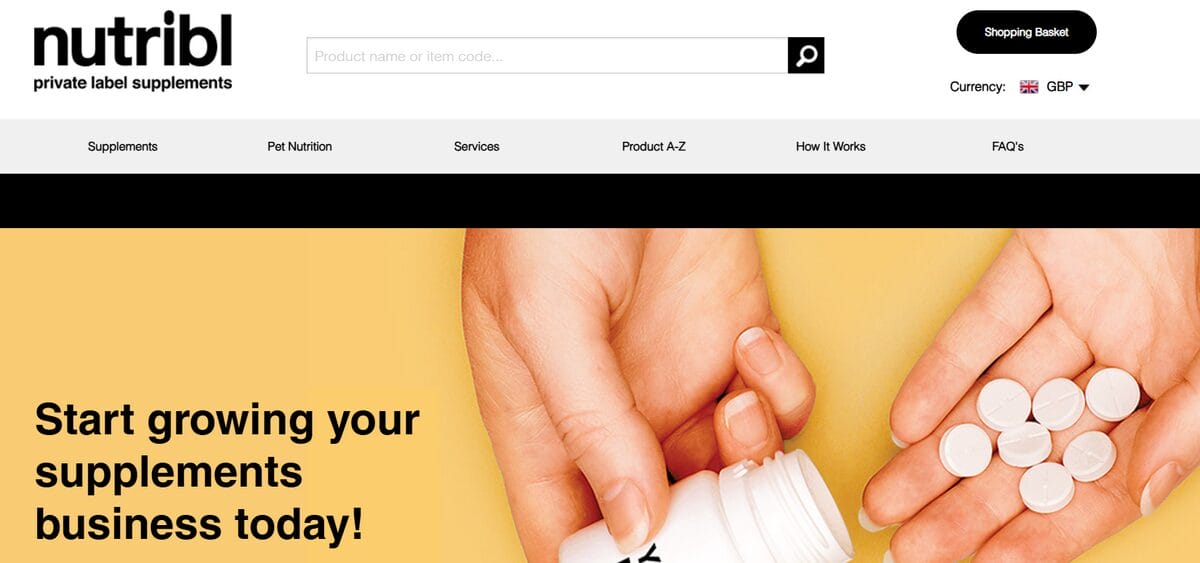
If your audience is in the UK or Europe, Nutribl solves a problem most US-based suppliers can’t: it’s GMP-certified and based in the UK, which means faster shipping and no cross-border headaches that come with sourcing supplements internationally. It’s also one of the few private-label suppliers in this space that keeps its minimum order quantities genuinely low.
Best For: Sellers targeting UK or European customers who still want their own brand on the product.
Model: Private Label.
5. CJdropshipping
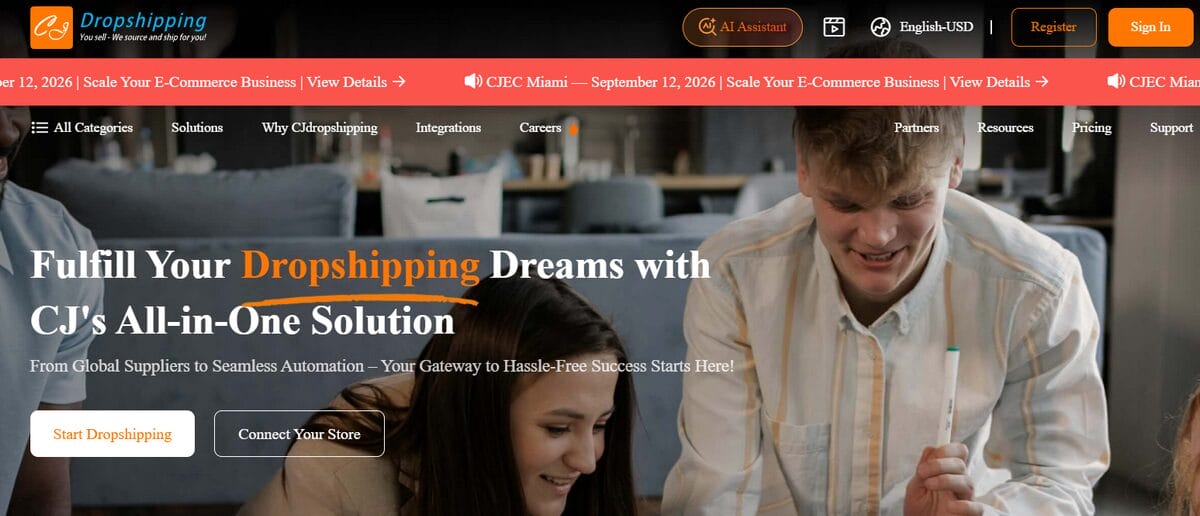
CJdropshipping isn’t a supplement-only platform, and that’s actually its strength if you’re not ready to fully commit to the niche. With no MOQ and warehouses spread globally, you can test supplements alongside other product categories, and it offers both ready-to-ship and private label options, depending on how far you want to take the branding.
Best For: Sellers who want to test supplements without betting the whole store on the niche.
Model: Regular / White Label.
6. Vox Nutrition
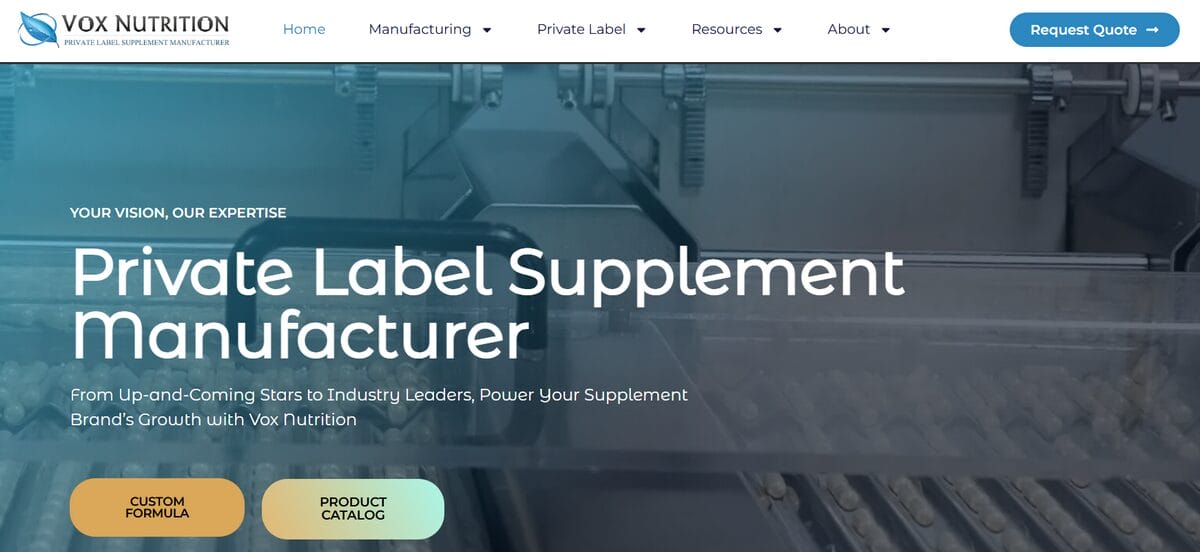
Vox Nutrition sits in a comfortable middle ground: it offers stock formulas for sellers who want to move fast, plus custom formulation support for those ready to build something more their own. The branding process is generally more flexible and accessible than what you’ll find with a full-scale manufacturer.
Best For: Sellers who want private label branding without the higher minimums that come with working directly with a manufacturer.
Model: Private Label.
7. Syncee
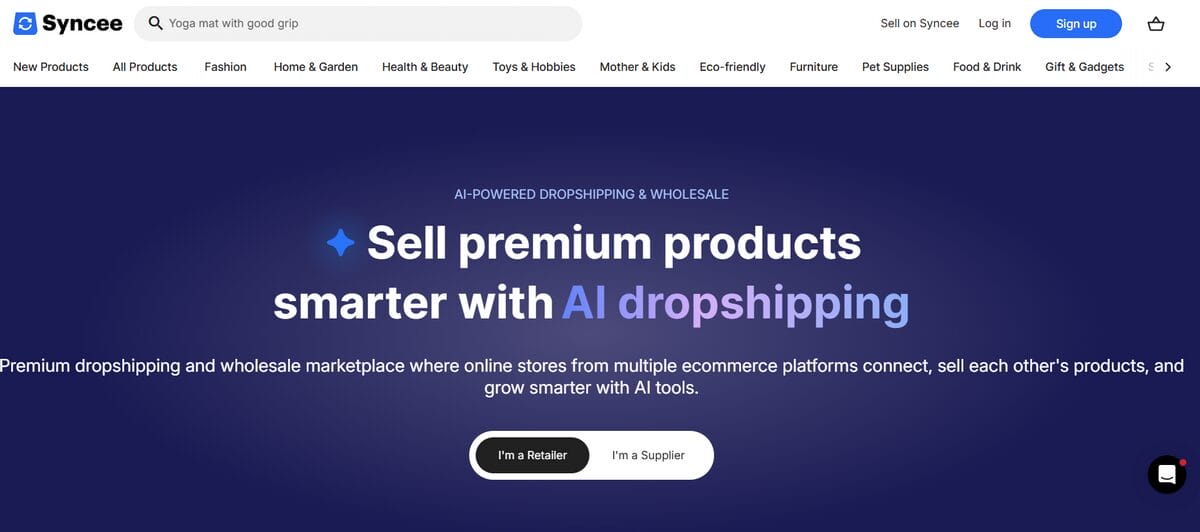
Syncee works less like a single supplier and more like a search engine for them; it’s a global marketplace where you can filter specifically for branded supplement suppliers by location, chat with them directly, and compare what each one actually offers before committing to anything.
Best For: Sellers who want to shop around and compare multiple branded suppliers side by side.
Model: Regular / White Label.
8. Makers Nutrition
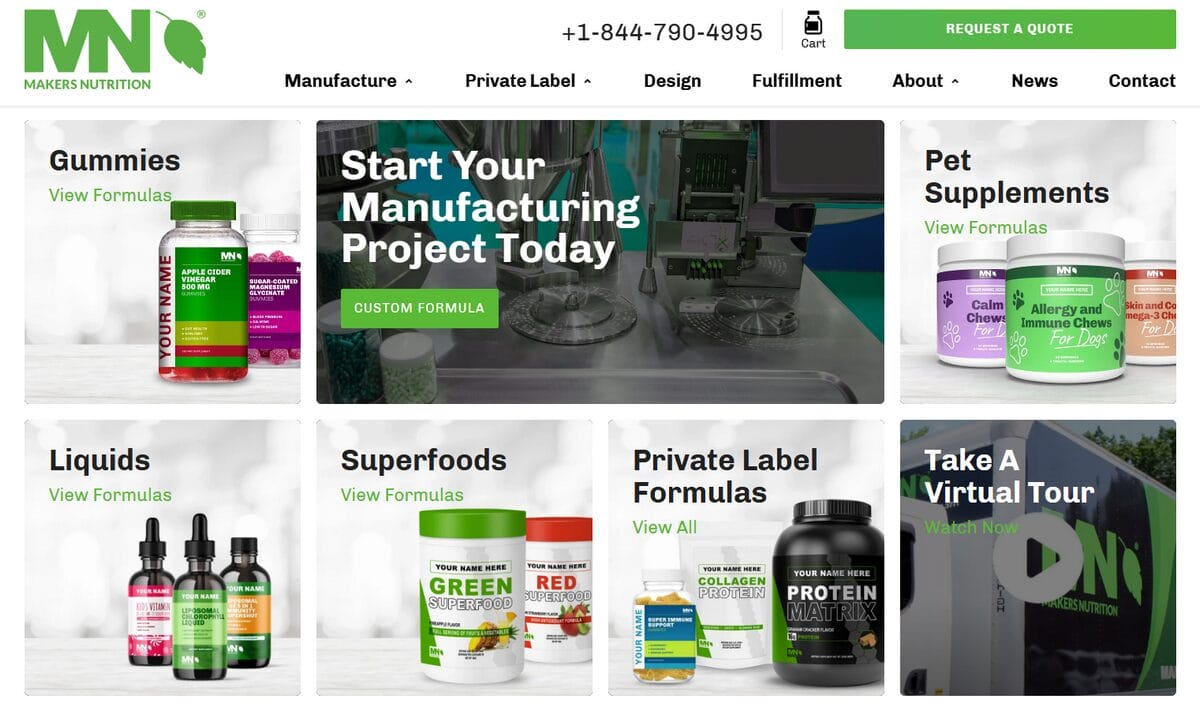
Makers Nutrition is a genuine manufacturer, not a dropshipping-first platform, and that distinction matters: you’ll be dealing with higher minimum order quantities and batch production instead of one-at-a-time fulfillment. What you get in exchange is the ability to run organic and clean-label certified products, which isn’t something most no-MOQ suppliers can offer.
Best For: Established sellers ready to invest in a clean-label or organic-certified product line.
Model: Private Label (Manufacturer).
9. On-Demand Fulfillment
This one lands right between Supliful’s simplicity and a full manufacturer’s depth: it’s US-based, has no MOQ, and operates through FDA-registered facilities under cGMP standards, so you get real private label branding without committing to a big upfront order.
Best For: Sellers who want private-label branding without a manufacturer’s minimum-order commitment.
Model: Private Label.
10. DaVinci Labs
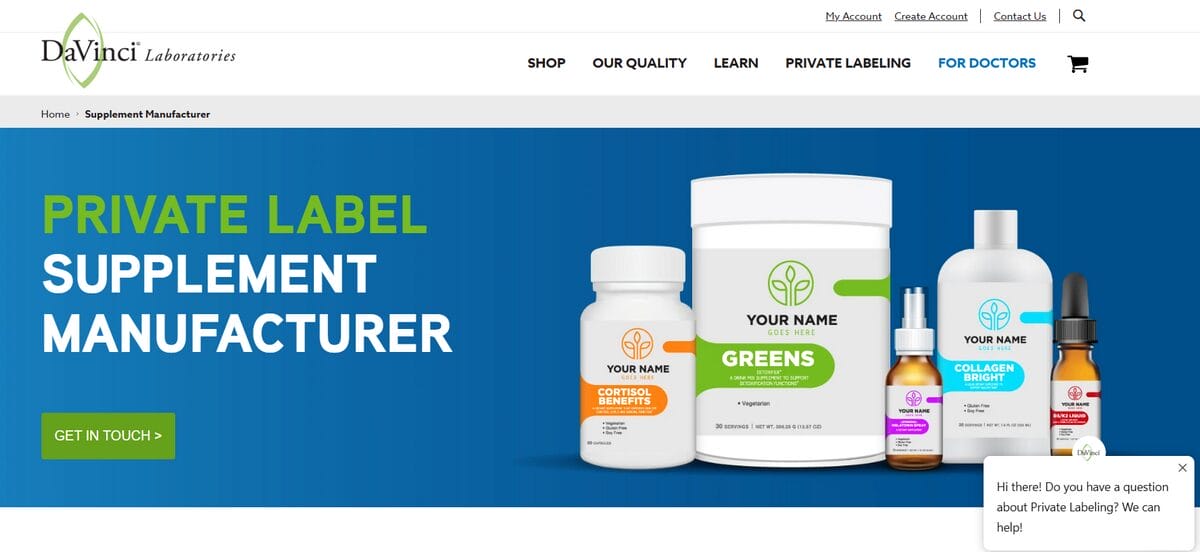
With over 50 years in the supplement industry, DaVinci Labs brings a pedigree most newer private-label suppliers can’t match. Their products are doctor-formulated and produced under CGMP compliance, and they offer a dedicated dropship service specifically for private-label supplements, a good option if brand credibility matters as much as flexibility does to you.
Best For: Sellers who want the added trust signal of a long-established, doctor-formulated manufacturer behind their private label brand.
Model: Private Label (Manufacturer).
Model: Private Label.
How to Choose a Supplement Dropshipping Supplier
You can trust the list we just went through, but it’s always worth understanding what requirements a supplier must meet, especially in a niche as specific as this one. Here’s what actually separates a supplier worth building a brand on from one that’ll leave you dealing with a customer complaint.
Manufacturing Standards
Ask directly whether the facility is GMP-certified and, if you’re selling in the US, FDA-registered. This is the baseline that separates a legitimate supplement manufacturer from someone repackaging whatever they can source cheaply. If a supplier can’t answer this clearly or point you to documentation, that’s your answer right there.
Ingredient Transparency
A trustworthy supplier can tell you exactly what’s in the product, where the raw ingredients come from, and provide a Certificate of Analysis (COA) confirming the product actually contains what the label says and at the potency it claims.
If getting a straight answer on ingredients feels like pulling teeth, imagine how that conversation goes when a customer asks you the same question.
Labeling Support
Supplement labeling isn’t just a design choice; it’s regulated. Look for suppliers that provide labeling templates already built to meet requirements like the FDA’s Supplement Facts panel, so you’re not left guessing what legally needs to be on the package.
MOQ & Pricing
Minimum order quantities vary wildly in this space, from zero (Supliful, On Demand Fulfillment) to genuinely high (Makers Nutrition and other true manufacturers). Match this to where you actually are: testing a new product with no proven demand yet is a very different bet than scaling something you already know sells.
Fulfillment & Geography
Where a supplier is based directly affects your shipping times, customs exposure, and how quickly you can resolve a problem if something goes wrong.
A US-based supplier serving US customers is a much smoother experience than routing everything through a warehouse on the other side of the world, especially with a product category where “it took three weeks to arrive” complaints hit harder than they would for, say, a phone case.
With AutoDS, you can connect with trusted suppliers from all over the world and try every feature with the $1 trial.
Consistency & Scalability
A supplier that nails your first order but can’t reliably repeat that quality at order 500 isn’t a real long-term partner. Ask about batch consistency, how they handle formula changes, and whether they can actually keep up if your best-selling product suddenly takes off.
Regular vs White Label vs Private Label Supplement Dropshipping
| Features | Regular | White Label | Private Label |
|---|---|---|---|
| Best for | Testing demand fast | Building a brand without inventory risk | Building a defensible, long-term brand |
| Branding | Supplier's brand | Your brand, existing formula | Your brand, custom formula |
| Time to Launch | Inmediate | Days to weeks | Weeks to months |
| MOQ | None | None to low | Low to high |
| Uprfont Investment | Minimal | Low | Moderate to high |
In a way, these three function as different types of businesses, with different levels of risk, branding control, and long-term payoff. Getting this straight before you pick a supplier will save you from choosing the wrong model for what you’re actually trying to build.
In short:
Regular Dropshipping
This is what comes to mind when we hear the word dropshipping: selling products you buy from a supplier, having the supplier ship them directly to the customer. There’s no minimum order quantity, no upfront investment in inventory, and almost no setup time, which makes it the fastest way to get a supplement store live.
Here, you have no control over the product itself, the packaging, or the formula, and neither does anyone else selling from that same supplier. The difference here comes down to your marketing, since the product a customer receives from your store is identical to what they’d get from ten other stores sourcing the exact same item.
White Label
White label sits in the middle ground between the two extremes. You’re still selling a product that’s already formulated and manufactured by someone else, so you’re not designing a formula from scratch, but you get to put your own branding, packaging, and label on it.
This is where suppliers like Supliful have built their entire business model: they hand you a catalog of ready-made products, and you choose which ones to brand as your own. It’s a good middle step for sellers who’ve validated demand through regular dropshipping and are ready to start building something that looks and feels like an actual brand.
Private Label
Private label is the deepest level of customization, treating the product itself as part of your brand rather than something you’re simply repackaging. Here, you work directly with a manufacturer to create a formula built specifically for you, sometimes with real input into ingredients, dosage, flavor, or positioning, which means you end up with something competitors genuinely can’t just source themselves.
The cost of that exclusivity is real, though: minimum order quantities are typically higher, lead times stretch from weeks into months, and you’ll usually need a bigger upfront investment before you ever make a sale. It also puts more compliance responsibility directly on your shoulders, since you’re involved in decisions about the formula itself, not just the label wrapped around someone else’s product. This model makes the most sense once you already know a niche works and you’re ready to invest in something that can actually scale into a recognizable brand over time.
Supplement Dropshipping Laws & Compliance
Supplements fall under a stricter regulatory category than most dropshipping niches, precisely because customers consume them. This section covers the essentials. For a deeper breakdown of vitamin-specific regulations, our vitamin supplements dropshipping guide goes into more detail.
US Requirements
In the US, dietary supplements fall under FDA oversight, though they’re regulated differently than drugs; manufacturers are responsible for ensuring safety before a product reaches the market, rather than needing pre-approval for every formula.
That said, the facility producing your product should still follow GMP (Good Manufacturing Practices), and ingredients should meet standards such as GRAS (Generally Recognized As Safe) or Novel Food Status, where applicable. This is exactly why the manufacturing standards we covered above aren’t optional paperwork.
Labels & Ingredients
US regulations require a Supplement Facts panel listing every ingredient and its amount, along with any known allergens. If you’re working with a white-label or private-label supplier, confirm upfront whether they handle this for you or it’s on you to get it right; getting it wrong is grounds for a platform to pull your listing.
Health & Marketing Claims
This is where most beginners get into trouble, usually without meaning to. You can describe how a supplement is generally used (for energy, for sleep support, for digestion), but you can’t claim it treats, cures, or prevents a disease unless that claim is backed by the kind of clinical evidence a drug would need.
“Supports immune health” and “cures your cold” are not the same category of statement, and treating them as interchangeable is how sellers end up with a warning letter instead of a sale.
International Requirements
If you’re selling outside your home market, don’t assume the rules travel with you. The EU, UK, Canada, and Australia all have their own labeling formats, permitted health claim lists, and ingredient restrictions; a claim that’s perfectly fine in the US can be flatly illegal in the EU. Always check with your supplier (or the relevant regulatory body) before expanding into a new region, rather than finding out after a shipment gets held at customs.
Marketplace & Advertising Rules
Beyond government regulation, the platform you sell on has its own rulebook. Amazon requires pre-approval to sell supplements at all, eBay actively monitors ingredient lists, and Meta and TikTok routinely reject or ban ads that make health claims their ad review teams can’t verify. Read your platform’s supplement-specific policy before you launch a campaign, not after your ad account gets flagged.
Best Supplements to Dropship in 2026
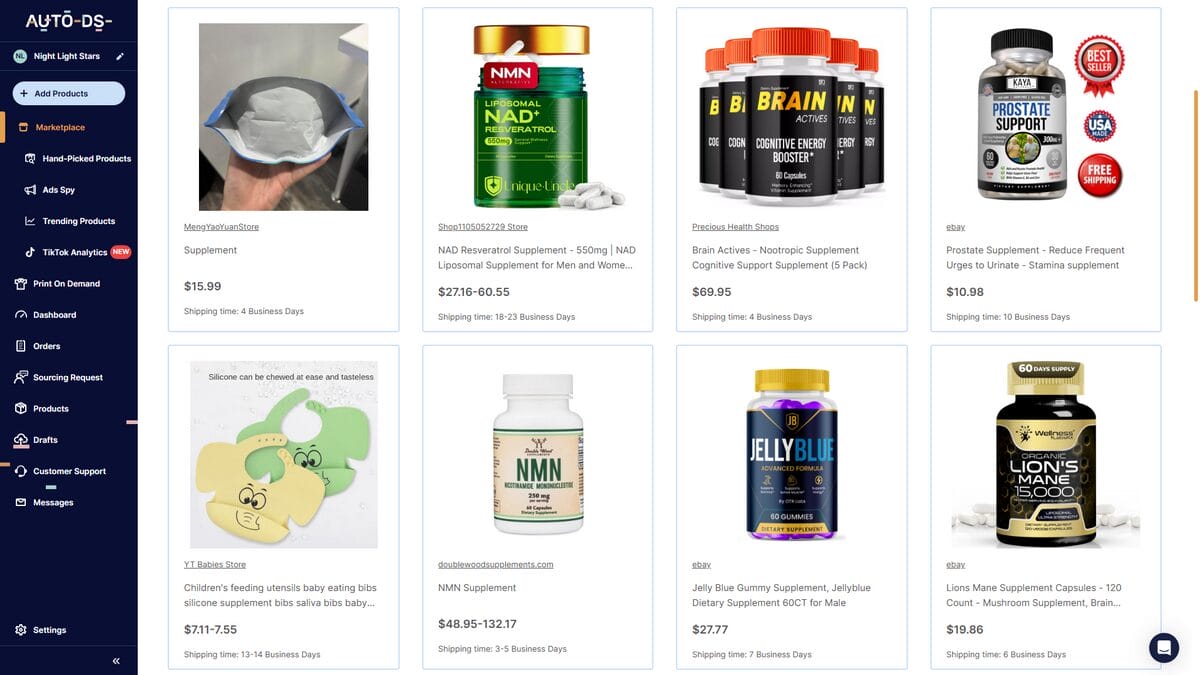
Here are 10 supplements worth adding to your store this year, chosen for real demand rather than hype that fades in a month.
1. Protein Powders
Still one of the most reliable sellers in the category. Whey, casein, and plant-based (pea, hemp, rice) formats continue to expand, appealing to a much broader audience than just gym-goers, including anyone looking for a convenient way to hit their daily protein intake.
2. Multivitamins
A steady, evergreen pick. They fill nutritional gaps for a broad range of customers and come in enough formats (tablets, gummies, capsules) that you can target different sub-audiences without needing a completely different product line.
3. Probiotics & Gut Health
Gut health has moved from a niche wellness topic to a mainstream conversation, and probiotics are the product riding that wave. Beyond capsules, look at prebiotic and fiber-based products too; they’re increasingly sold as a pair.
4. Pre-Workout Supplements
A dependable performance category with a built-in, habit-driven audience. Buyers already know what they’re looking for, which makes marketing more about positioning your specific blend than convincing someone they need the category at all.
5. Vitamin D
Demand here continues to climb alongside rising awareness of the deficiency, particularly in colder climates. It’s a low-friction product to sell because most customers already understand why they’d want it.
6. Magnesium (Glycinate)
One of the strongest breakout supplements of the last two years, largely driven by social content around sleep and stress. It’s become a go-to recommendation across wellness and fitness circles alike, which gives you a wide net of audiences to market to.
7. Creatine
No longer positioned as just a gym-bro product, creatine has broadened significantly into general fitness and even cognitive wellness conversations, pulling in an audience well beyond bodybuilders.
8. Mushroom & Adaptogen Blends
Reishi, lion’s mane, ashwagandha; functional mushrooms and adaptogens have built real staying power in the wellness space, appealing to customers looking for something outside the traditional vitamin aisle.
9. Collagen
A category that keeps growing thanks to its dual appeal: skin and beauty-focused buyers, and joint/mobility-focused buyers. That overlap gives you two distinct marketing angles to work with from a single product.
10. Matcha Powder
A finely ground green tea powder from Japan, whisked directly into water or milk rather than steeped and discarded. Its popularity in lattes, smoothies, and recipes keeps it relevant well beyond the supplement aisle, which helps it show up in food and lifestyle content, too.
How to Start Supplement Dropshipping
Once you’ve picked a supplier and know which products you’re targeting, it’s time to get to work. Here’s a quick rundown of the steps you need to follow. For the full breakdown, check out our complete guide to starting a supplements dropshipping business.
1. Research your products. We covered a few solid picks above, but any dropshipper worth their salt needs to know how to do proper product research. Use tools like Google Trends, check the best-seller sections on giants like Amazon, and if you really want an edge, dig into the AutoDS Marketplace and take advantage of features like Hand-Picked Products.
2. Choose your supplier model and find your ideal partner: Regular, white-label, or private-label, based on how much branding control and budget you’re working with. A good supplier offers solid shipping times, buyer-friendly return policies, and a wide range of stock and product variety, not to mention reasonable minimum order requirements.
3. Verify compliance before listing anything. GMP certification, COAs, and proper labeling aren’t optional in this niche.
4. Pick your selling channel (Shopify, eBay, Amazon). The right one depends on whether you want your own branded storefront (Shopify) or built-in marketplace traffic (Facebook Marketplace, eBay).
5. Import and optimize your listings. AutoDS lets you pull products in directly from your chosen supplier and generates optimized titles and descriptions with its AI tool, so you’re not writing every listing from scratch.

6. Set pricing rules. Use AutoDS’s automatic price optimization to stay competitive without manually re-checking supplier costs every week.
7. Market with education, not hype. Supplement buyers respond to clarity and trust more than to urgency, lean on ingredient transparency and real use cases rather than exaggerated claims.
8. Automate fulfillment. Whether through your own supplier accounts or Fulfilled by AutoDS, orders should route and ship without you having to touch each one manually.
9. Monitor stock and pricing continuously. AutoDS syncs this automatically, so you’re not caught selling something that’s already out of stock at the source.
10. Track what’s working and adjust. Use order and customer feedback data to phase out underperforming products and double down on what’s actually converting.
As you can see, having automation software like AutoDS built into your process makes dropshipping a whole lot easier across every stage of the journey.
Dropshippers worldwide have already streamlined their stores and achieved real scalability with AutoDS’s help. Join through the $1 trial and see for yourself!
Frequently Asked Questions
What are the best supplement dropshipping suppliers?
It depends on the model you want: Supliful and On Demand Fulfillment are strong no-MOQ white-label/private-label options; Nutribl is the go-to for UK/EU sellers; and AutoDS Marketplace works well if you want sourcing and supplier connections in one place. See the full comparison above for the rest.
Can you legally dropship supplements?
Yes, dropshipping supplements is legal, but it’s a regulated category. You’ll need to follow FDA (or your region’s equivalent) rules around manufacturing, labeling, and marketing claims — it’s not as simple as listing a generic product.
How do I start dropshipping supplements?
Pick a supplier model (regular, white-label, or private-label), verify their compliance documentation, choose a selling channel, and import your listings. We break down the full 10-step process above.
Do I need FDA approval to sell supplements online?
No, supplements don’t require pre-market FDA approval the way drugs do. But the facility manufacturing them should follow GMP standards, and you’re responsible for not making unproven health claims when marketing them.
What should I look for in a supplement supplier?
GMP certification, ingredient transparency backed by a Certificate of Analysis, proper labeling support, reasonable MOQs for your stage, and reliable fulfillment. We cover all six of these in detail above.
What is a Certificate of Analysis (COA)?
A COA is a document from a lab confirming a product actually contains what its label claims, at the potency stated. A supplier that can’t provide one on request is a red flag.
Do supplement dropshipping suppliers require an MOQ?
Some do, some don’t. Regular and white-label suppliers (like Supliful or On Demand Fulfillment) often have no MOQ, while true manufacturers (like Makers Nutrition) typically require higher minimums for custom formulas.
What is the difference between white-label and private-label supplements?
White-label means you’re branding an existing, already formulated product. Private label means the product is formulated specifically for your brand. Private label offers more differentiation but usually comes with higher MOQs and longer lead times.
Can I dropship supplements without inventory?
Yes, that’s the standard dropshipping model. Regular and white-label suppliers ship directly to your customer, so you never hold stock yourself.
Can I sell supplements from another country?
Yes, but check the target country’s labeling and health claim rules first. The EU, UK, Canada, and Australia all regulate supplements differently from the US, and a claim that’s fine in one market can be illegal in another.
What are the best supplements to dropship?
Protein powders, multivitamins, probiotics, magnesium, and creatine are currently strong sellers. See our full list of 10 above for the complete breakdown.
Can I dropship supplements on Shopify?
Yes, Shopify is one of the most popular channels for this niche because it gives you full control over branding, which matters if you’re going the white-label or private-label route.
Can I dropship supplements on Amazon?
Yes, but Amazon requires pre-approval to sell supplements, and its ingredient and labeling review is stricter than that of most other channels.
How can AutoDS help with supplement dropshipping?
AutoDS connects you with private and global suppliers, automates product imports and listing optimization, keeps pricing and stock in sync, and can fully automate order fulfillment, cutting down the manual work across nearly every step we covered above.
Find Supplement Products & Automate Your Store With AutoDS
To sum it up, supplement dropshipping presents a genuinely lucrative opportunity for entrepreneurs, but more than any other niche on this list, it rewards sellers who take supplier selection as seriously as they take their marketing. Get the products and the partner right, and the rest of the business becomes much easier to run.
AutoDS simplifies that process by connecting you to vetted suppliers and automating sourcing, pricing, and fulfillment from a single dashboard, so you can spend more time positioning and building trust with your audience, and less time chasing stock updates or double-checking supplier documentation by hand.
Ready to build your supplement store on a solid foundation? Try AutoDS for $1 and see how much easier sourcing, importing, and scaling actually get.
Want to keep learning about this niche? Check out these related guides: