You’ve found a product worth selling, worked out your price, and started picturing those first orders. Before you hit publish, though, check how your supplier fulfills orders. Under the eBay dropshipping policy, that detail can determine whether your setup follows the rules or puts your account at risk.
Yes, eBay allows dropshipping from wholesale suppliers. What it doesn’t allow is listing an item, then buying it from another retailer or marketplace to ship directly to your customer. If you’re exploring dropshipping, understanding that distinction early can save you a messy rethink later.
In this guide, I’ll explain what’s allowed in 2027, how to check your sourcing arrangements, and what to do if a listing or account gets restricted. I’ll also cover intellectual property risks and where AutoDS can help with the daily workload, because automation works best with compliant sourcing.
Wholesale dropshipping is allowed when you arrange sourcing before listing and meet eBay’s requirements.
Retail fulfillment after a sale is prohibited, including buying from Amazon or Walmart to ship directly to the buyer.
You remain responsible for accurate listings, promised delivery times, and resolving buyer issues.
Check product and content rights to reduce VeRO risks, and keep supplier agreements on file.
AutoDS helps manage daily tasks, but automation doesn’t replace compliant sourcing.
What Is eBay Dropshipping?
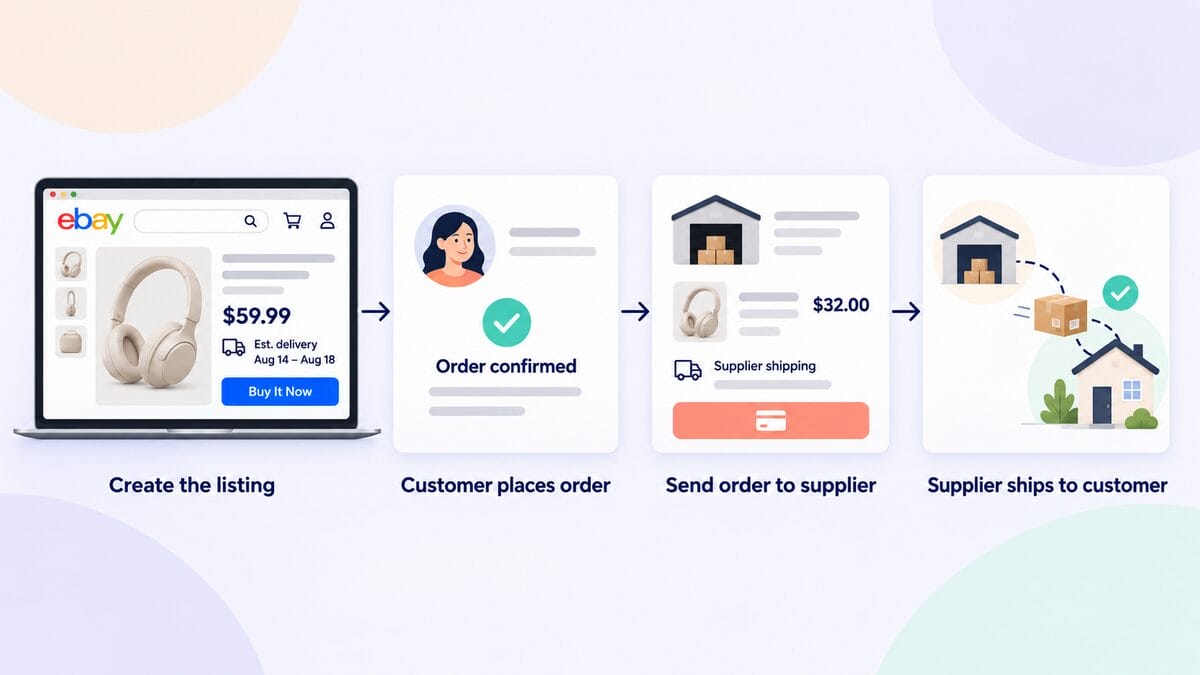
eBay dropshipping is a fulfillment model where you sell products on eBay, and your supplier ships them directly to your customers. You manage the listings and customer relationships without personally storing, packing, or shipping each item.
Here’s how a typical order works:
- You list a supplier’s product with your selling price, product details, and delivery estimate.
- A customer purchases it through your eBay listing.
- You pay the supplier and pass along the order details.
- The supplier ships the product directly to your customer.
Your profit is what’s left after all costs, including the product, shipping, eBay fees, and any other business expenses. For example, selling an item for $30 and paying your supplier $18 leaves a $12 difference before fees and other costs. That’s your starting point for the calculation, not your take-home profit.
The key thing to keep in mind: outsourcing shipping doesn’t outsource responsibility. Buyers purchased from you, so accurate listings, delivery issues, and returns are still yours to manage. The next step is making sure your sourcing arrangement fits eBay’s rules.
Retail/Marketplace Dropshipping vs. Wholesale Dropshipping
Both models involve a supplier shipping directly to your customer, but the sourcing relationship is different. With retail dropshipping, you buy through another store’s public checkout after receiving an order. With wholesale dropshipping, you arrange with a supplier to sell its products before listing them.
| What to compare | Retail/marketplace dropshipping | Wholesale dropshipping |
|---|---|---|
| How you source | Purchase from a retailer or marketplace after your eBay sale. | Establish a supplier agreement before listing specific products. |
| eBay policy status | This purchase-after-sale fulfillment model is prohibited. | Permitted when your arrangement and selling practices meet eBay’s requirements. |
| Pricing | Retail prices and promotions determine your costs. | Negotiated or supplier-set wholesale prices apply; minimum orders or fees may exist. |
| Stock and shipping | Availability and delivery options can change without notice. | You can agree on stock updates, handling times, and shipping services directly. |
| Packaging and returns | Retail branding, receipts, and return processes may complicate the buyer experience. | You can arrange seller identification, packing requirements, and returns with the supplier. |
The practical difference is how much you can agree upfront. A wholesale relationship gives you room to establish terms, but the label “wholesaler” alone doesn’t guarantee good prices, reliable delivery, or compliance. Check the actual agreement and fulfillment process before committing.
One useful distinction: buying retail inventory isn’t automatically prohibited. Purchasing products before listing them and arranging compliant fulfillment of stock you own is different from waiting for an eBay sale and then ordering through another retailer’s checkout.
eBay’s Official Dropshipping Policy
According to eBay’s official dropshipping policy, you can fulfill orders directly through a wholesale supplier. You can also use a third-party fulfillment service to ship inventory you already own. Your sourcing arrangement matters, so get it sorted before publishing your listings.
Here’s what that means for your store:
- Arrange wholesale sourcing before listing. Have an agreement with your wholesaler to list and sell the specific products you offer. A regular account with a retail website or marketplace doesn’t meet that requirement.
- Don’t purchase retail products after selling. Listing an item and then buying it from Amazon, Walmart, or another retailer or marketplace to ship directly to your buyer is prohibited.
- Meet the listing’s delivery window. You’re responsible for the item arriving safely within the timeframe stated in your listing. Set handling times and shipping options your supplier can realistically support.
- Follow the conditions for owned inventory. If a fulfillment partner ships stock you own, packing slips and invoices must identify you as the seller. Your contract must also restrict the partner’s use of eBay order information to fulfilling that specific order.
- Stay responsible for the buyer’s experience. Having a supplier handle shipping doesn’t remove your responsibility for resolving problems with the purchase.
Treat these rules as a checklist before your first listing. Confirm what you’re entitled to sell, who will ship it, and whether they can meet your delivery promises. A little clarity upfront beats untangling an unhappy buyer’s order later.
What Happens If You Violate the Policy
Violating the eBay dropshipping policy can affect your listings and your account. Possible consequences include warnings, listing removal, reduced search visibility, selling restrictions, or suspension. These aren’t necessarily steps in a fixed sequence, so don’t assume you’ll always receive a warning first.
Here’s what those actions can mean for your business:
- Listing removal: Affected products become unavailable for purchase, interrupting sales.
- Reduced visibility: Listings may be hidden or pushed down in search results, making them harder for buyers to find.
- Selling restrictions: eBay may limit your selling activity until you meet the requirements in its notice.
- Account suspension: Your ability to sell can be suspended, and reinstatement isn’t guaranteed.
There can also be costs beyond lost sales. You may still need to resolve outstanding orders, returns, and buyer claims. eBay’s dropshipping guidance also states that fees associated with listings or accounts subject to enforcement aren’t refunded or credited.
If you receive a notice, read the specific reason carefully. A sourcing violation, an intellectual property complaint, and a seller-performance issue require different fixes. Don’t simply relist the same product and hope for a different outcome; use the notice to identify what needs to change.
What Is VeRO and How to Avoid It
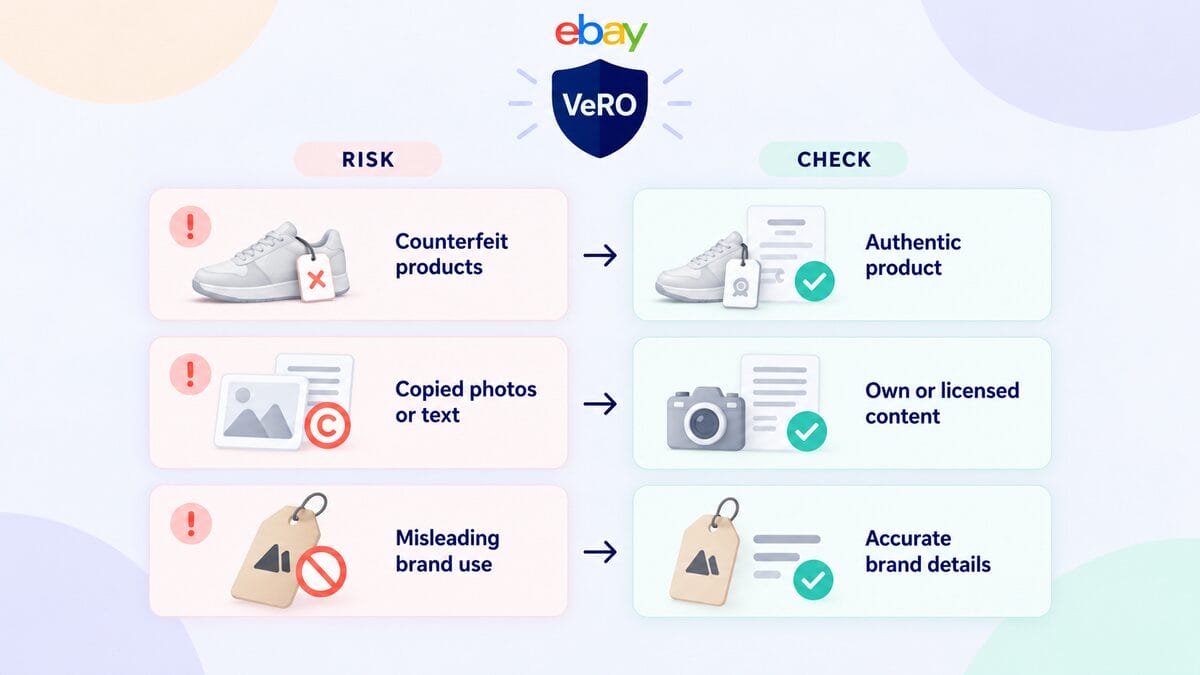
VeRO stands for Verified Rights Owner, eBay’s program that lets intellectual property owners and their authorized representatives report listings that may infringe their rights. For dropshippers, that means checking both the product you sell and the content you use to advertise it. A legitimate supplier relationship doesn’t automatically give you permission to copy a brand’s photography.
Common triggers include counterfeit products, unauthorized copyrighted content, and misleading use of trademarks. Think replica sneakers, product photos copied without permission, or a generic accessory presented as an official branded product. Using a logo to imply a partnership you don’t have can also create problems.
A Practical VeRO Checklist
Before publishing a listing, run through these checks:
- Check eBay’s VeRO participant profiles. Review the relevant brand’s guidance in the official directory. It’s a starting point, not a complete list of protected brands or prohibited products.
- Use brand names accurately. Don’t add unrelated brands to titles for extra traffic or imply authorization you don’t have. Accurately identifying a genuine branded item is different from claiming to be its authorized dealer.
- Watch for trademarked everyday words. For a generic fastening product, for example, “hook-and-loop fastener” avoids incorrectly describing it as VELCRO-brand merchandise.
- Audit supplier images and descriptions. Check for copied photography, watermarks, logos, and claims of official affiliation. Confirm permission to use the content, or replace it with your own.
- Verify authenticity and keep records. Save invoices and relevant permissions. If you can’t establish that a branded product is genuine, hold off on listing it.
AutoDS’s listing editor lets you review and revise imported content before publishing. Use that opportunity to replace questionable images and edit inaccurate brand references instead of carrying supplier content straight into your store. Editing a description or removing a watermark, however, doesn’t grant rights to the underlying content.
For more examples and guidance on handling a report, read the AutoDS VeRO guide. Make this review part of your product selection process, while it’s still easy to choose a different item.
How To Dropship on eBay Legally (Step-by-Step)
Putting the rules into practice starts with a supplier arrangement you can document. From there, your listings, order handling, and account management need to match what you’ve promised buyers. Here’s how I’d approach the setup.
Step 1: Choose a Compliant Supplier
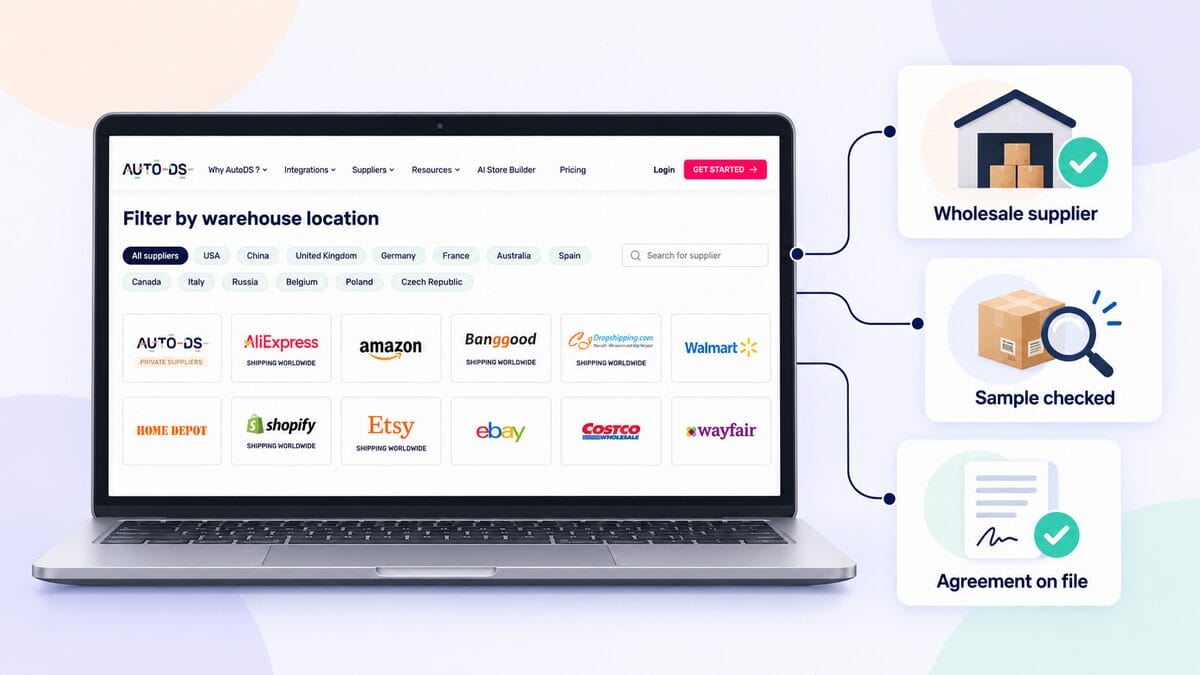
Look for a wholesaler or manufacturer that supports dropshipping and agrees to let you sell its products on eBay. Ask about eBay sales specifically, along with product availability, handling times, tracking, and returns. A supplier that works well for an independent store may not offer the arrangements you need for this marketplace.
Keep a signed supplier agreement on file, identifying the products you’re allowed to list and the fulfillment terms. Where relevant, request a Letter of Authorization confirming permission to sell particular branded products. These documents can help substantiate your sourcing if eBay requests evidence, but they don’t guarantee account approval or replace other requirements.
📦 Supplier’s Tip: Place a sample order first. Check the product, delivery time, tracking, and paperwork inside the package. A supplier’s sales pitch tells you what should happen; a sample shows you what actually happens.
Step 2: List Products Accurately
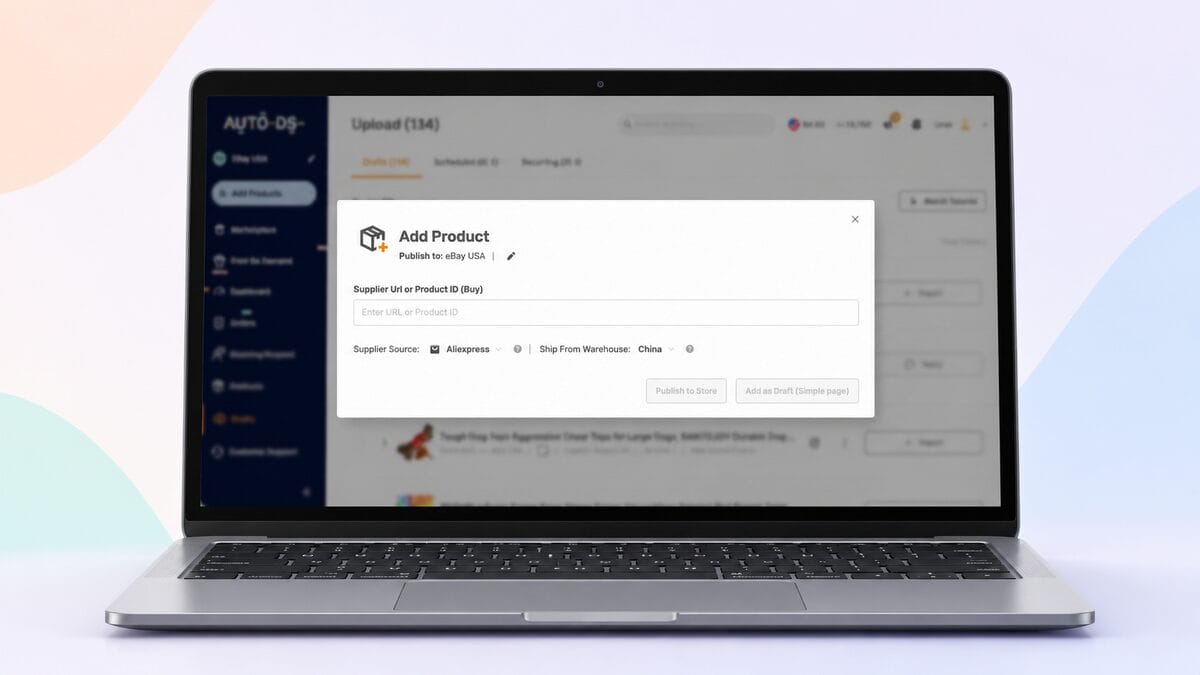
Build listings around details you can verify: specifications, condition, included accessories, item location, and realistic delivery estimates. Confirm that you have permission to use any supplier photos or descriptions, or create your own.
Before publishing, compare the listing with your supplier’s actual offer. Does the image show extras that aren’t included? Is the product shipping from the location you selected? Resolve those mismatches before buyers order. Editing tools can speed up the work, but you still need to review the result.
Step 3: Handle Orders and Returns Properly
Agree on how orders reach your supplier, when they’re dispatched, and how you receive tracking. Upload accurate tracking promptly and watch for stalled shipments so you can investigate before the buyer has to chase you.
Set up a workable return process, including the return address and who covers costs in different situations. Your supplier’s terms need to support your obligations under eBay’s rules and applicable law. You remain the buyer’s contact, even when the supplier handles the physical return.
Step 4: Monitor Your Seller Performance
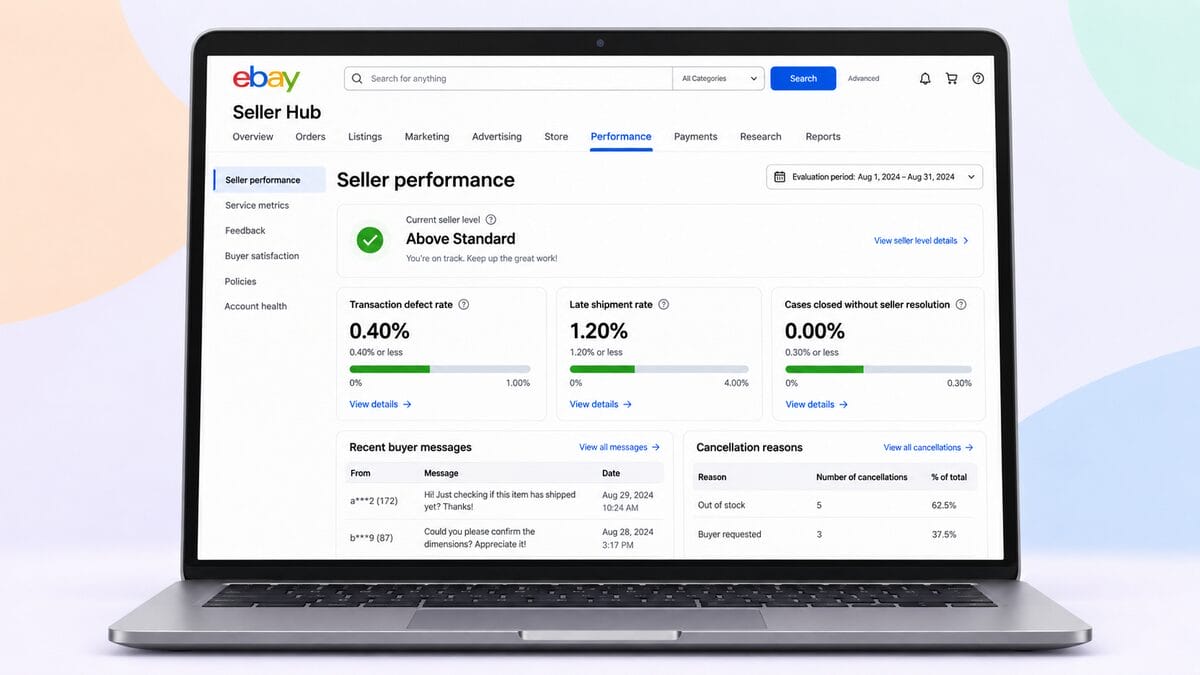
Check your performance in eBay’s Seller Hub regularly, paying attention to transaction defects, late shipments, and cases closed without seller resolution. Review buyer messages and cancellation reasons, too. They can reveal supplier problems before those problems become a pattern.
If an item repeatedly goes out of stock or arrives late, pause the listing and investigate. Adjusting your workflow early is much easier than continuing to accept orders you can’t reliably fulfill.
Best Practices To Stay Within eBay’s Policy
Once your store is running, keep checking the details that change. A supplier might switch warehouses, discontinue a product, or introduce a different shipping service. Those changes matter when your listings still promise the original arrangement.
- Make your seller identity clear. Arrange for customer-facing invoices and packing slips to identify your business or eBay store as the seller, rather than presenting the supplier as the seller. Agree on neutral or store-branded outer packaging where available. This doesn’t mean removing legitimate manufacturer branding from the product.
- Keep delivery promises realistic. Recheck handling times and shipping options during holidays, supplier changes, or busy periods. If fulfillment slows down, update affected listings before accepting more orders.
- Maintain accurate stock information. Use inventory monitoring where supported, and confirm how your supplier communicates shortages. Pause products with unreliable availability instead of repeatedly canceling orders.
- Keep sourcing records organized. Save supplier agreements, invoices, relevant authorizations, and order tracking together. Update those records when your supplier relationship or product range changes.
- Use automation with regular oversight. Review failed orders, stock discrepancies, and missing tracking updates. An automated workflow can reduce manual work, but it still needs someone to check exceptions.
I’d also review supplier changes before expanding into new products or destinations. Reliable domestic fulfillment doesn’t automatically mean the same supplier can meet your international delivery promises. Scale what you’ve verified, then test the next step.
How AutoDS Helps You Stay Compliant
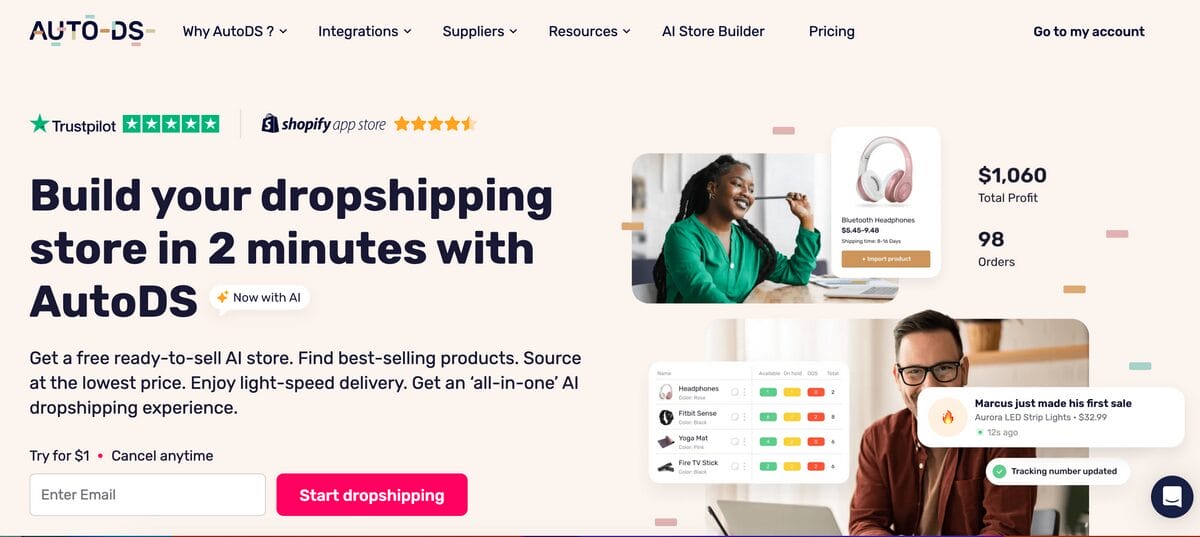
Keeping supplier information, listings, and orders aligned gets harder as your catalog grows. AutoDS’s eBay dropshipping tools bring those tasks into one platform, helping you reduce manual work and catch discrepancies before they turn into buyer complaints.
Here’s where the tools can support your daily workflow:
- The AutoDS VERO protection system: Protect your store from listing products with copyrighted, trademarked, or brand-restricted terms that could trigger eBay VERO violations and restrictions.
- Product importing and editing: Create listings more efficiently, then review product details, images, and descriptions before publishing.
- Stock and price monitoring: Update supported listings as supplier information changes, reducing the risk of selling unavailable products or overlooking a cost increase.
- Automated order processing: Reduce repetitive order-entry tasks for supported suppliers and fulfillment setups.
- Tracking updates: Help keep buyers informed as shipment information becomes available, with automation depending on your connection and supplier.
The foundation is still a compliant sourcing arrangement. A supplier being supported by AutoDS doesn’t automatically mean every way of sourcing from it meets eBay’s rules. You need to verify the agreement, product rights, and fulfillment terms before connecting that workflow.
💡 Pro Tip: Test before you scale. Start with a small product selection and check how stock changes, orders, and tracking move through your setup. Review exceptions regularly so you know when something needs your attention.
Use AutoDS to make a well-organized operation easier to manage. You stay in control of supplier selection, listing accuracy, and customer care, while automation handles more of the repetitive work.
Is eBay Dropshipping Worth It?
Yes, when your numbers work, and your supplier can reliably fulfill orders under eBay’s rules. In its Q2 2026 results, eBay reported $22.4 billion in gross merchandise volume and 136 million active buyers. That shows the marketplace’s scale, although it doesn’t tell you how much individual dropshippers earn.
The main attraction is access to existing shopping demand. Your listings can appear in front of people already searching for products, without requiring a paid ad for every visit. With an independent Shopify store, you build that audience through channels such as SEO, social content, partnerships, or advertising. Neither approach guarantees sales, and eBay’s selling fees and optional advertising still belong in your budget.
What Margins Can You Expect?
Wholesale pricing doesn’t guarantee healthy margins. There isn’t a reliable, universal benchmark for wholesale dropshipping specifically on eBay. For a broader context, Shopify cites margins of 20%–50% for retailers using vetted supplier networks such as Shopify Collective. That’s a different sourcing ecosystem, so don’t treat those figures as expected eBay earnings or take-home profit.
I’d assess each product using the money left after costs. In a hypothetical sale, a $40 selling price minus $26 for the product and shipping leaves $14. If marketplace fees, promotion, and an allowance for returns total another $8, you have $6 left before software, overhead, and taxes. Suddenly, a small supplier price increase matters quite a bit.
💰 Financial Tip: Stress-test your price before listing. Would the product still make money after a shipping surcharge or a discount to match competitors? If the margin only works when everything goes perfectly, keep looking.
eBay dropshipping is worth considering if you can combine compliant sourcing with competitive total costs. A good wholesale agreement can help you negotiate those costs and fulfillment terms, while AutoDS can reduce routine work through stock and price monitoring. But if the supplier’s price leaves almost nothing after expenses, more orders will mostly give you more work.
How to Reinstate a Suspended eBay Account
Start with the instructions in your suspension notice. eBay explains that reinstatement depends on the reason: you might need to pay an outstanding balance, correct listings, provide information, or wait for a temporary suspension to end. An appeal isn’t always the first or necessary step.
- Confirm the notice inside eBay. Sign in directly and check your Messages for a matching notification. Read the reason, any case reference, and the requirements or deadlines provided.
- Address the underlying issue. Complete the requested action, whether that means resolving a buyer’s problem, supplying tracking, verifying account details, or correcting your sourcing arrangements. If account restrictions prevent a required change, ask eBay support how to proceed.
- Gather the requested evidence. Depending on the issue, relevant records might include supplier invoices, signed agreements, delivery confirmations, or identity documents. Submit genuine, readable documents through the channel eBay specifies.
- Request a review when available. If the notice offers an appeal or you believe the decision is mistaken, explain your case clearly. Reference the notice, attach relevant evidence, and describe any corrections you’ve made. I’d keep it specific: “I removed the affected listings and changed suppliers” tells the reviewer more than “It won’t happen again.”
- Follow up through the designated channel. Respond to further requests and keep copies of your submissions. Follow any review timeframe eBay provides, and check your account status before resuming restricted activity.
Reinstatement isn’t guaranteed, particularly for serious or repeated violations. Your goal is to demonstrate that you’ve addressed the specific problem, with records that support your explanation.
For additional examples and preparation tips, read the full account reinstatement guide.
Frequently Asked Questions
Is dropshipping still allowed on eBay in 2027?
Yes. eBay permits dropshipping through wholesale suppliers when you have an agreement to sell their products before listing them. You can also arrange third-party fulfillment of the inventory you already own. Listing a product and then purchasing it from another retailer or marketplace to ship directly to your buyer is prohibited. Check the policy for the eBay site where you sell, since regional requirements can differ.
Can I use AutoDS for eBay dropshipping safely?
You can use AutoDS to help manage listings, monitor supplier stock and prices, and automate supported order workflows. However, using the software doesn’t guarantee compliance or protect an account from suspension. You still need an eligible sourcing arrangement, accurate listings, permission to use product content, and reliable fulfillment.
What happens if eBay flags my account for retail dropshipping?
Depending on the violation, eBay may remove listings, reduce their visibility, restrict selling activity, or suspend your account. Read the notice in your eBay Messages and follow its instructions. Correct the sourcing issue and provide any requested evidence before resuming affected activity; simply changing suppliers doesn’t automatically lift a restriction.
How do I avoid account suspension when dropshipping on eBay?
Reduce your risk by arranging compliant sourcing before listing, keeping supplier records, using accurate product information, and meeting the delivery timeframe shown to buyers. Monitor seller performance and resolve order problems promptly. These practices support a healthier account, but no supplier or automation tool can guarantee that you’ll never face restrictions.
Can I be sued for dropshipping on eBay?
Yes, a dropshipper can face a lawsuit, for example, over alleged trademark infringement involving counterfeit products or misleading branding. Using a supplier to fulfill orders doesn’t automatically shield you from a claim. A VeRO report or eBay policy violation isn’t itself a lawsuit, though. If you receive legal papers or a demand letter, consult a qualified lawyer in the relevant jurisdiction.
What items are not allowed to be sold on eBay?
Examples include counterfeit goods, stolen property, and prescription drugs. Other products are restricted rather than universally banned, meaning eligibility depends on the category, location, condition, or seller requirements. Check eBay’s prohibited and restricted items policies for your selling site before choosing a product. A supplier offering an item doesn’t mean you’re allowed to list it on eBay.
Conclusion
The eBay dropshipping policy leaves room to build a business, provided your sourcing fits the rules. Start with a documented wholesale agreement or inventory you already own, publish accurate listings, and make delivery promises your fulfillment setup can support. Check product authenticity and content permissions along the way, too.
My advice? Start small and verify the details before expanding your catalog. Test a supplier, calculate your costs, and follow a few orders from purchase through delivery. That gives you something useful to scale: a process you understand and buyers can rely on.
Once that foundation is ready, you can try AutoDS for $1 to explore tools for importing products, monitoring stock and prices, and managing supported order workflows. Give repetitive tasks less of your time, so you can focus on product decisions and customer care.
Ready to put the next pieces together? These guides can help you move from planning to selling:
- What Is eBay Dropshipping?
- eBay's Official Dropshipping Policy
- What Happens If You Violate The Policy
- What Is VeRO And How To Avoid It
- How To Dropship on eBay Legally
- Best Practices To Stay Within eBay's Policy
- How AutoDS Helps You Stay Compliant
- Is eBay Dropshipping Worth It?
- How To Reinstate A Suspended Account
- FAQ
- Conclusion