



Wondering how to find top-selling items on eBay? Well, here’s a trick: it’s all about finding real demand signals. No guesswork or viral product lists. Successful sellers analyze what’s already selling, how fast it’s moving, and whether there’s still room to compete.
The goal isn’t to spot random popular products, but to identify items with proven demand, manageable competition, and healthy margins.
In this guide, we’ll break down the best methods to find eBay’s best-selling products. We’ll show you how to use a mix of tools, competitor analysis, and external data sources. You’ll also get a step-by-step framework to implement in your strategy.
Plus, we’ll show you how automation tools speed everything up. For instance, AutoDS offers built-in research tools with real market data, and a direct integration with eBay to go from sourcing to fulfillment in just a few clicks.
Check real demand signals, not just rends. Look for consistent sales across multiple sellers, not one viral listing.
Best results come from a multi-source research approach. Combine eBay data, competitor analysis, and external signals like TikTok or Google Trends to validate ideas.
Speed matters. Using tools like AutoDS helps you move faster from research to scaling. This way, you can test more products and capitalize on opportunities before they fade.
Best Methods to Find Top Selling Items on eBay
If you’re just starting eBay dropshipping, good news: you don’t have to be Albert Einstein to find top-selling items.
That said, there are a few signs that show whether something will sell quickly (or not). For example, sales history, stable pricing, rising demand, and growing interest on social media.
To analyze that, there are systems, tools, and strategies that help you access real-time market data, some on a deeper level than others. Let’s break down some eBay product research methods.
Using AutoDS’s Product Research Tools
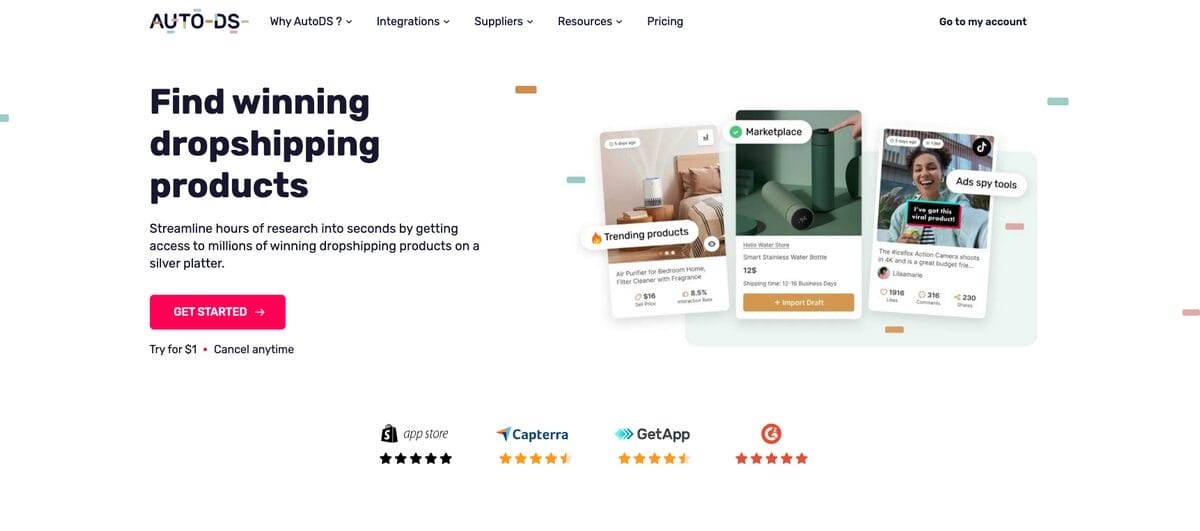
AutoDS is an all-in-one dropshipping platform that simplifies product research by bringing multiple data points together in one place. It lets you explore eBay trending products, analyze demand, explore TikTok trends, and assess saturation and engagement scores to pick the best products only.
It includes the following built-in research tools:
- Hand-picked products. This is a curated selection by AutoDS’s experts. You can find products by niche and access market data based on engagement and saturation, as well as potential profit, competitors, and social ads.
- Trending products. These are items selected exclusively for their current growing demand. It categorizes products based on a Product score that tells you how trending they are.
- Ad spy tools. These let you know how well products are performing on social media ads. This data is relevant because it shows what other sellers are actively selling and promoting, while also providing inspiration on how to market products.
- TikTok Analytics. This shows products currently selling on TikTok, with data such as sales trends in the last 7 days, units sold, order growth rate, and GMV.
These tools let you centralize your entire product research strategy in one place. No jumping between tabs and spreadsheets.
eBay Best Sellers and Trending sections
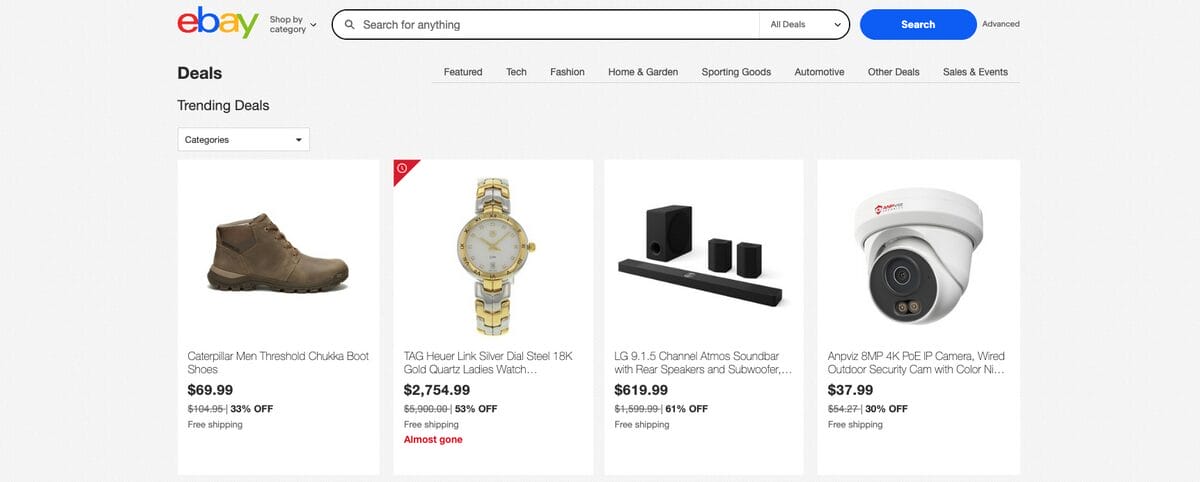
If you want to keep it simple, good news: eBay already tells you what’s selling. You just need to know where to look.
The “Trending” and “Best Selling” sections highlight products with strong recent performance. This is one of the fastest ways to identify high-demand niches. Focus on items that appear repeatedly or show consistent patterns over time.
eBay’s Product Research Tool (a.k.a Terapeak)
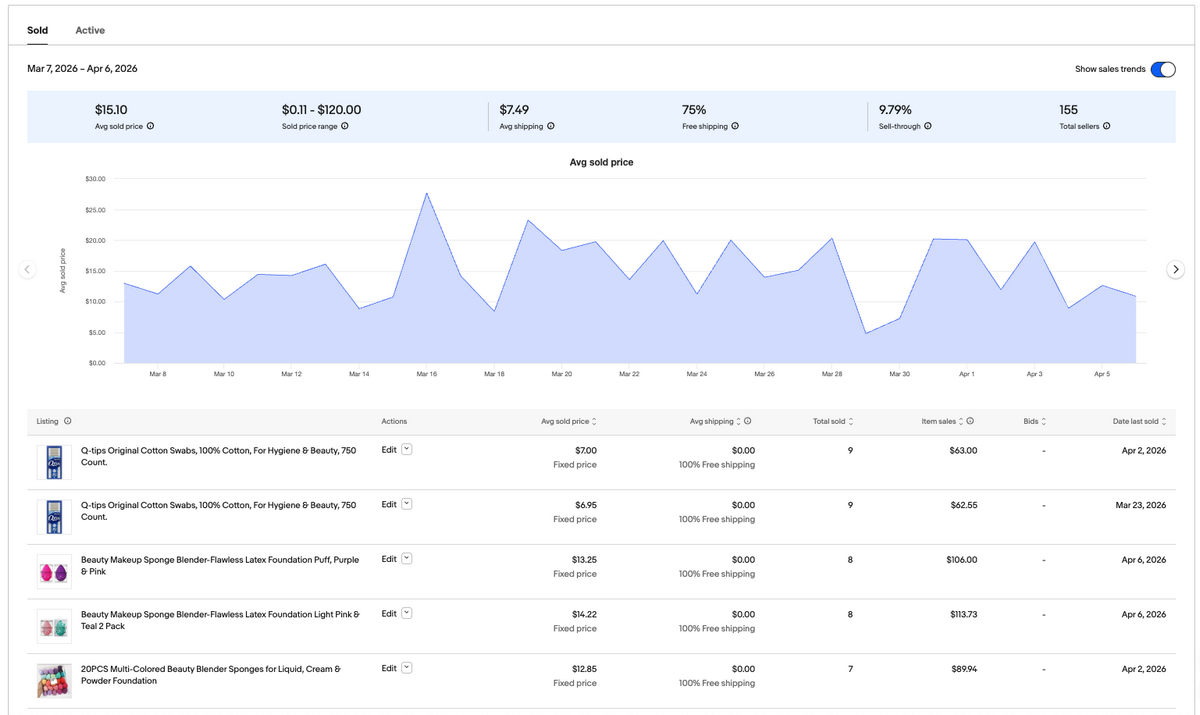
eBay’s Terapeak is one of the most reliable ways to validate demand. Formerly a separate service, it has been rebranded and integrated into eBay as a built-in tool (no longer a standalone platform).
It gives you access to real sales data, including sell-through rates, average prices, and total listings sold. This way, you see exactly how a product performs over time and whether it’s worth entering the market.
Manual Competitor Analysis
Of course, you can always do this process manually. It takes longer than relying on automated tools, but it can give you enough data to start building your catalog.
Start by looking at top-rated sellers in your niche and analyzing their listings. What products are they pushing? How many units have they sold? What pricing strategies are they using? Pay attention to patterns. If multiple sellers are selling similar items, that’s usually a strong demand signal.
External signals (TikTok, Google Trends, Amazon)
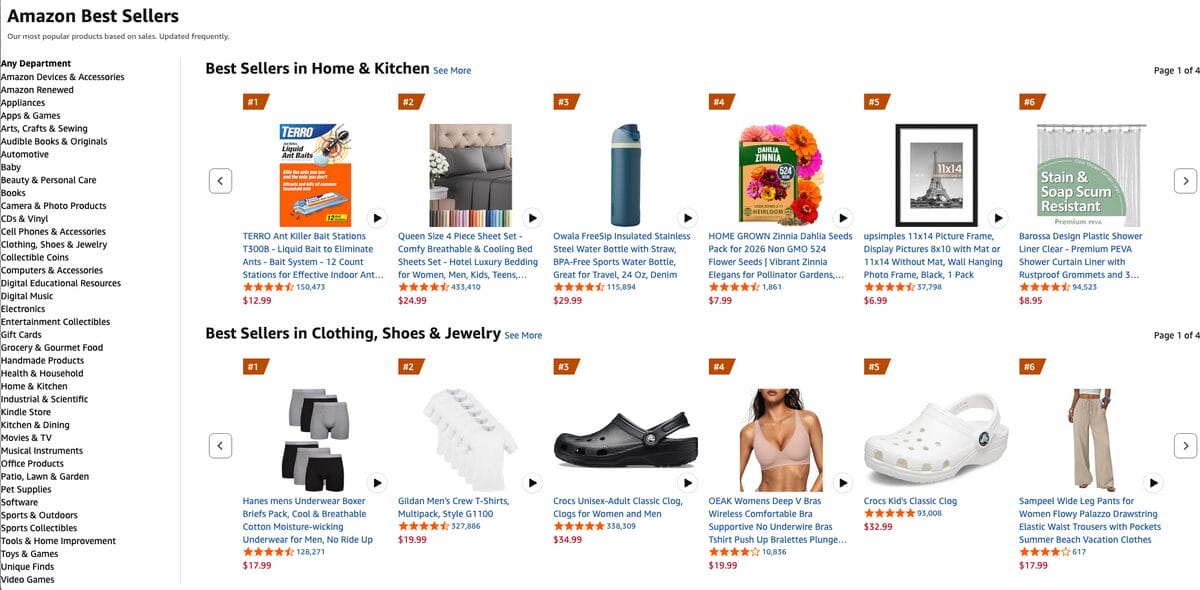
eBay doesn’t exist all on its own. Many winning products start selling on other platforms before they peak on eBay. For instance…
- TikTok can reveal viral products early based on social engagement.
- Google Trends shows search interest over time.
- Amazon Best Sellers highlight what’s happening at scale.
When you combine these external signals with eBay data, you get a much clearer picture of what’s actually worth selling, and what’s just hype.
Step-by-Step: How to Find Winning Products on eBay
Now that you know where to look, here’s a simple step-by-step on how to find top-selling items on eBay.
Step 1 – Start With Demand-Based Categories
Start off with categories that already show strong activity. Think electronics, home & kitchen, pet supplies, automotive, or beauty. Use eBay’s Best Sellers or Trending sections to spot where demand is concentrated.
You can also skip the manual research completely with automation tools. For instance, AutoDS lets you access real-time market data to start spotting popular products right away. This saves you from wasting time on products no one is actively buying.



Step 2 – Validate
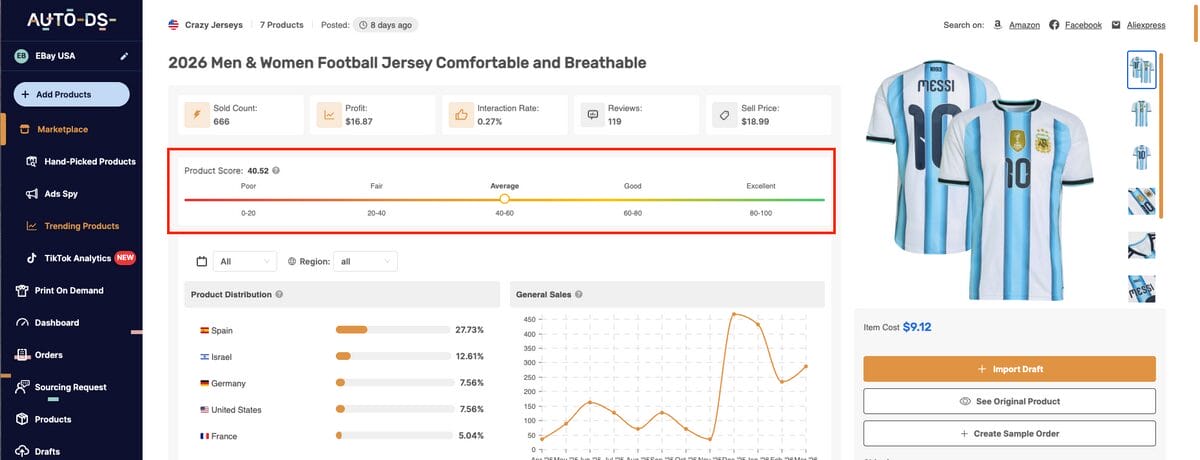
Once you spot a product idea, don’t jump in immediately. First, you need to validate it. Check how many units have been sold, how frequently listings are closing, and whether sales are consistent over time. You can do this manually through a spreadsheet, closely monitoring how listings perform day by day.
Tools like AutoDS or Terapeak make this step much easier by showing real performance data instead of relying on assumptions.
🔍 Research Tip: If you’re using AutoDS, check the Product score on the Trending Products hub and assess engagement on the TikTok Analytics dashboard.
Step 3 – Analyze Competition And Pricing
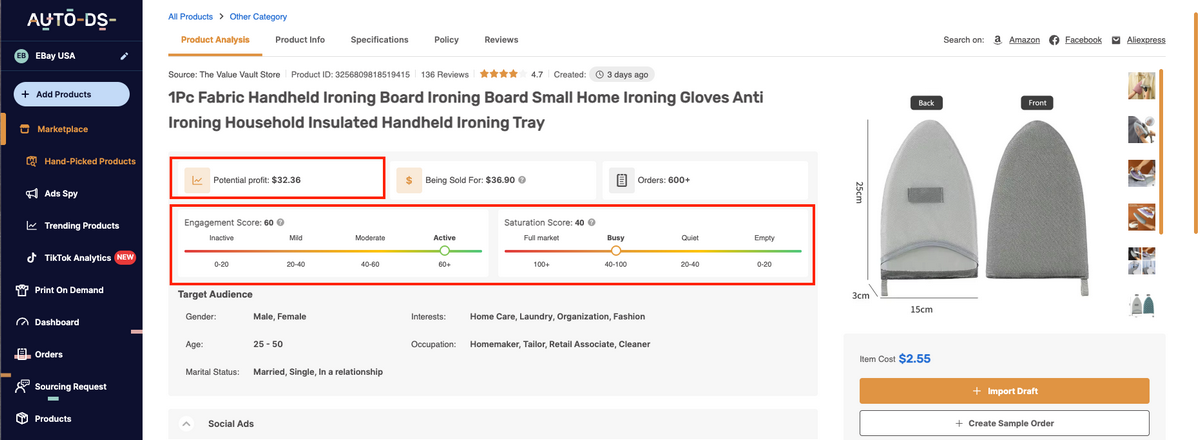
Next, look at other sellers. Are there hundreds of them offering the same item? Are prices stable, or is there a race to the bottom? Ideally, you want products with healthy demand but manageable competition, where you can still stand out through pricing, bundles, or listing quality.
🔍 Research Tip: AutoDS lets you assess this in the Hand-picked selection. You can see the engagement and saturation score for each product. In other words, this shows you how saturated the market is, whether there’s still space for you, and how much buyers are interested in it.
Step 4 – Check Shipping Times And Suppliers
A product might spark interest, but there are other factors to consider: How long will it take to arrive? And who’s going to supply it?
Long shipping times can kill conversions, and 84% of dropshippers say finding reliable suppliers is their biggest challenge. So, take your time here: make sure your supplier can deliver within a reasonable timeframe and maintain consistent stock levels. Also, compare suppliers, order a few samples from each, and make sure to have option B if something goes wrong with option A.
All in all, the goal is simple: to work with reliable eBay suppliers.
📦 Supplier’s Tip: Take your time to assess suppliers closely. Order samples and compare quality and shipping times. You can also use AutoDS’s supported suppliers and marketplace to access only vetted vendors.
Step 5 – Calculate Profit Margins
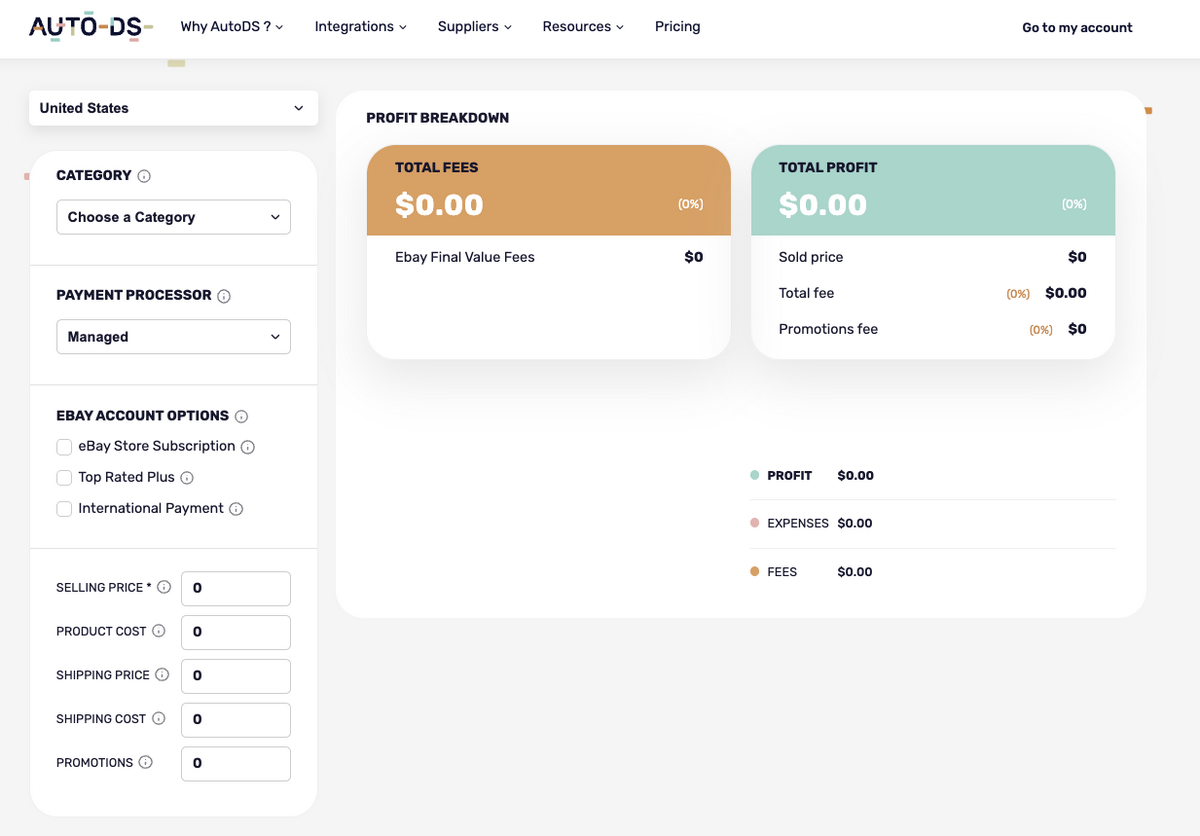
Finally, run the numbers. Factor in product costs, eBay fees, shipping, and any additional expenses. A product that sells well but leaves you with thin margins isn’t worth scaling. Look for items where you can maintain a healthy margin while staying competitive.
💰 Financial Tip: No need to do the math yourself. Use AutoDS’s eBay Fee Calculator and let automation handle it for you in minutes.
How to Validate If a Product Will Actually Sell
Finding a product is easy. Validating it is where most sellers fail. Before listing anything, you want clear signals that the product has real demand, manageable competition, and a reliable supply behind it.
Here are a few tricks to do it right:
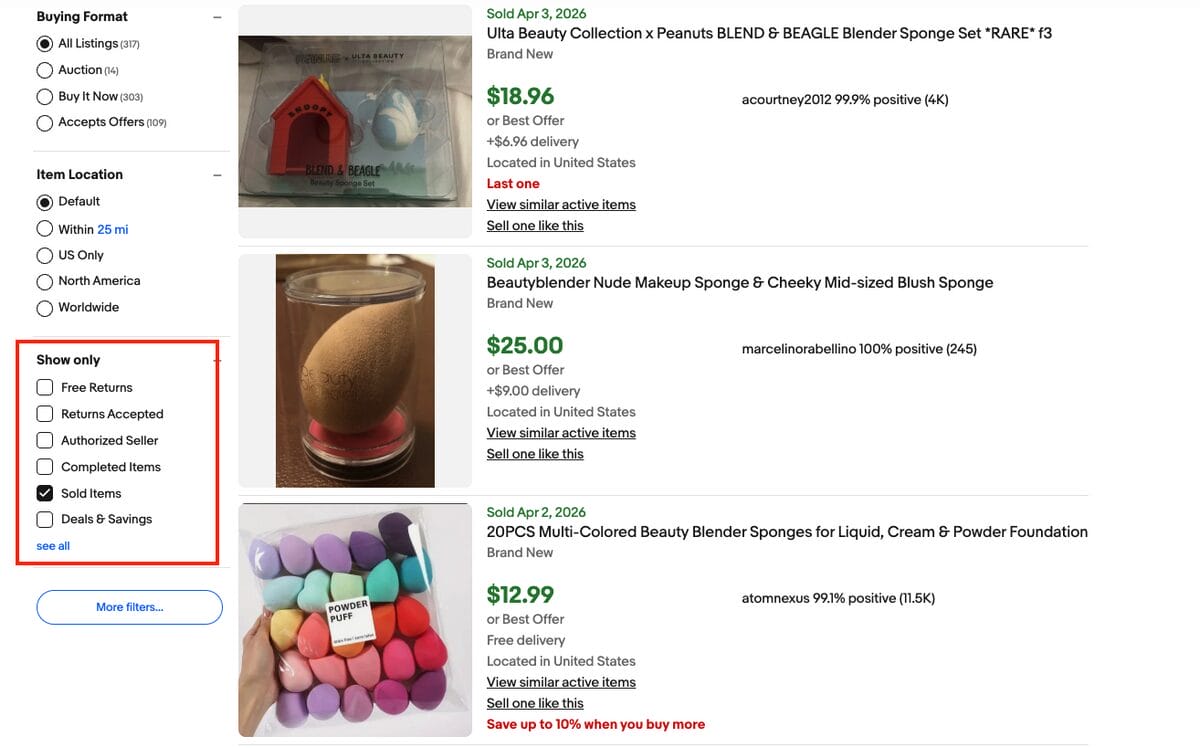
- Sales velocity indicators. This is the first thing to check. It tells you how fast the product is selling. Look at how many units have been sold recently and how often listings are converting. If you see consistent daily or weekly sales across multiple sellers, that’s a strong sign of real demand.
🔍 Research Tip: Use eBay’s “Sold items” filter and look for products with consistent recent sales across multiple sellers. Then, for each listing, check for the “Items sold” data. The more, the better, as it confirms real demand.
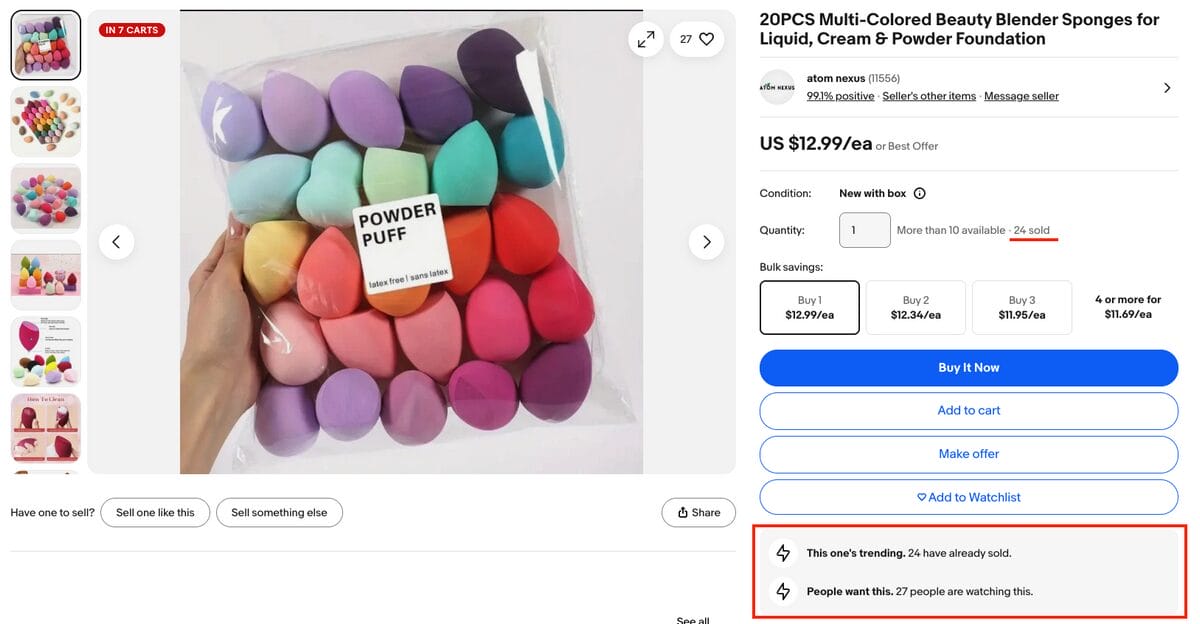
- Competition saturation signals. High demand doesn’t always mean opportunity. If there are hundreds of identical listings competing, it’s likely saturated. Watch for signals like aggressive undercutting, identical product images, and overcrowded search results. Ideally, you want demand that isn’t fully dominated yet.
- Pricing consistency. Stable pricing is a good sign. Are most sellers offering the product within a similar price range? Good. It usually means the market has found a balance and there’s still room for profit. On the other hand, if prices are constantly dropping, it’s not really worth it. It means competition will eat your margins.
- Supplier reliability check. Even if demand looks great, unreliable suppliers can ruin the opportunity. Make sure the product is consistently in stock, shipping times are reasonable, and order fulfillment is smooth. Trusted suppliers reduce delays, cancellations, and unhappy customers.
Best Product Categories That Sell on eBay (2026)
Wondering what sells best on ebay 2026? Well, the answer is not so straightforward. Some niches have steady, year-round demand. Others spike seasonally and cool off the rest of the year. And a few offer higher profit potential if you position them right. The key is knowing where each fits and using that to your advantage.
♻️ First, some of eBay best selling products belong to evergreen categories. These are the backbone of your eBay dropshipping strategy. Products in categories like electronics, home & kitchen, automotive, pet supplies, and beauty sell consistently all year round. Why? Simple: because they solve everyday problems. This translates into repeat demand and predictable sales.
🍂 Then, some products explode at specific times of the year. These are seasonal eBay opportunities. Think back-to-school supplies, holiday decorations, summer outdoor stuff, or winter accessories. These give you fast revenue if you time your campaigns right. The best strategy is to get in early before they peak.
📈 Lastly, there are high-margin products. These aren’t obvious, but they’re worth it. Two reasons why: less competition and, therefore, better margins. They’re usually in niches where branding, bundles, or perceived value play a big role. For example, specialized tools, hobby gear, or unique home upgrades.
The sweet spot? Products that combine demand, manageable competition, and healthy margins across these three categories. It’s not about choosing just one of these. The goal is to build a catalog that combines seasonal, high-margin, and evergreen products.
What to Avoid When Choosing Products
As we’ve already mentioned, finding the right eBay product is not about randomly picking whatever you like. There are methods and strategies that show you the way. Likewise, there are things to avoid, such as:
- Oversaturated products. If everyone is selling the exact item with the same images and titles, welcome to a price war. Oversaturated products usually lead to lower margins and constant undercutting. A good rule of thumb: if you can’t clearly differentiate your listing, it’s probably too crowded.
- Copyright / branded items. Selling branded or copyrighted products without authorization is risky. Platforms like eBay are strict about intellectual property, and violations can lead to listing removals or even account issues. Stick to generic or unbranded products (unless you’re working with approved suppliers) and avoid VeRO violations.
- Low-margin products. This comes down to one thing: why bother? If it doesn’t leave enough room for profit after factoring in product cost, fees, and shipping, it’s not worth the effort.
- Products with long shipping times. Customers don’t choose products that take 15-25 days to arrive. Long delivery times hurt conversions and lead to negative feedback. Always prioritize suppliers that offer reliable and fast shipping to keep your store competitive.
Common Product Research Mistakes
Mistakes can happen. But if you know what to look out for ahead of time, it’s easy to avoid them.
Let’s start with the most common one: relying on trends. You see a fidget spinner going viral on TikTok, and puff: added to catalog. But here’s the thing: trends are useful, but not enough. A product going viral doesn’t mean it will sell. Trends are a starting point, but then you need to check real demand and sales data.
Another common mistake? Ignoring competition. Strong demand is good, but if everyone and your grandma are selling it, it becomes much harder to stand out. Ignoring competition = pricing wars and low margins.
Same with copying listings without validation. It’s tempting to copy and paste what’s already working, but it can backfire. Just because a listing looks successful doesn’t mean it still is. Always check recent sales, pricing trends, and supplier costs before replicating.
Lastly, not considering fulfillment. Long shipping times, unreliable suppliers, or stock issues can lead to issues. And, honestly? No product is worth the headache. Always think beyond the listing.
How AutoDS Helps You Find Top-Selling eBay Products
As we’ve covered, finding winning products manually is possible. But it’s slow, fragmented, and easy to get wrong. AutoDS simplifies the entire process by turning product research into a faster, data-driven workflow instead of a guessing game.
First, it gives you product research tools and data insights in one place. You get access to curated items, trending products, an exclusive marketplace, and ad spy tools. This way, you don’t need to jump between eBay, Google Trends, and social platforms. Instead, you can just quickly spot products with real traction and validate ideas using performance signals.
Moreover, AutoDS connects you with multiple global suppliers and private vendors. This lets you find reliable options with competitive pricing and faster shipping, all vetted by AutoDS.
But here’s where the magic happens. Once you’ve found your items, AutoDS integrates directly with eBay to handle everything that comes afterward, from sourcing all the way to fulfillment.
You get automated product importing to add items in a single click, whether via the bulk importer or the one-click Chrome extension. You don’t have to manually copy and paste every single detail. Everything is synced automatically.

The biggest perk of all of this is speed. What would take hours can be done in minutes. You get to test more products, react faster to demand, and scale what works without getting stuck in manual work.
How to Turn a Winning Product Into a Scalable Listing
Finding a winning product is only half the job. The real results come from how you present it. That’s where the magic of a good listing happens. Here are a few tricks to optimize your eBay listings:
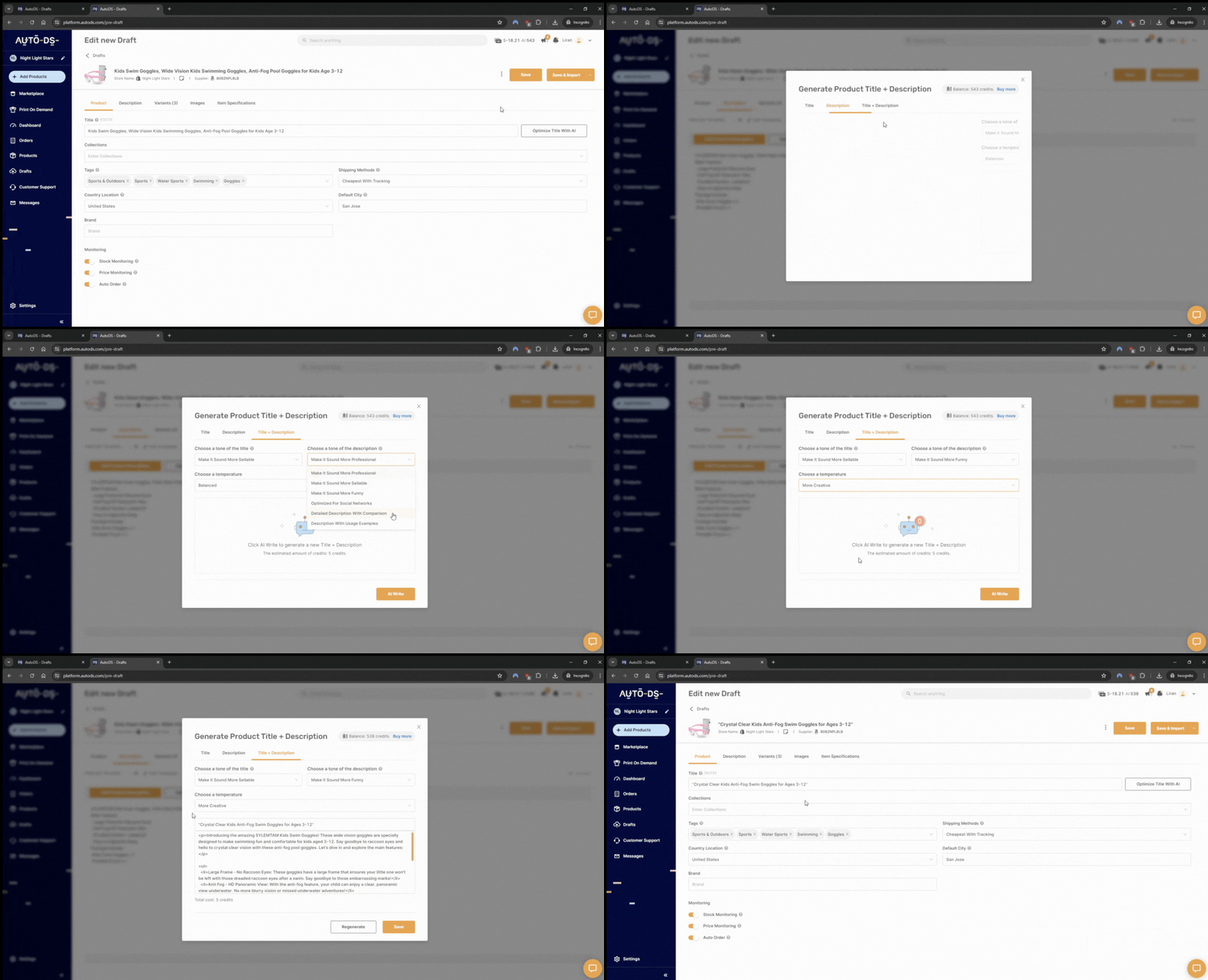
- Optimize titles and descriptions. Your title gets the click, your description sells the product. Use clear, keyword-rich copies that match what buyers are actually searching for. No fluff, just relevant terms. In the description, highlight key benefits (not just features), and include relevant specs (like size, materials, and shipping details).
📢 Marketing Tip: No copywriting skills? No problem. You can use AutoDS’s AI Product Title and Description Generator to instantly create optimized, keyword-friendly listings designed to convert.
- Use clear images. Keep visuals clean and high-quality, showing the product in use. Bonus points for showing multiple angles!
- Plan your pricing strategy. It’s not about being the cheapest. Check the average price range and position yourself competitively while still keeping a healthy margin. And don’t be afraid to test small tweaks. Sometimes, even a $1–$2 difference can make an impact on conversions without cutting into your profits.
- Remove friction and test the flow. The goal is to quickly lead buyers to the “Buy Now” button. Make sure everything in the listing takes them that way. Then, test the checkout flow to avoid abandoned carts and payment issues.
- Scale your winning listings. Once a product proves it sells, don’t stop at one listing. You can scale by creating variations (with different titles, images, bundles, or targeting). This increases your visibility on eBay and helps you capture more traffic.
Frequently Asked Questions
How do I find top selling items on eBay in 2026?
To find top-selling items on eBay in 2026, focus on real demand, not hype. Use eBay’s “Sold Items” filter, Best Seller sections, Terapeak to analyze what’s selling, and tools like AutoDS to centralize the entire research process in one single place. Then, validate with competitor analysis and external signals.
What sells the most on eBay right now?
What sells the most on eBay right now are evergreen categories. These include electronics, home & kitchen, automotive, pet supplies, and beauty. These products solve everyday needs, so they generate steady demand year-round.
Is Terapeak still the best tool for eBay product research?
While Terapeak has been rebranded as eBay’s built-in research tool, it’s still one of the most reliable sources for real eBay data, especially for sales volume and pricing trends. That said, it works best when combined with other methods or tools like AutoDS to speed up research and execution.
How do I know if a product is oversaturated on eBay?
To know if a product is oversaturated on eBay, look at the number of similar listings and pricing patterns. If you see hundreds of identical listings, heavy price undercutting, and no clear way to differentiate, it’s likely oversaturated.
Can I use TikTok trends to find eBay products?
Yes, you can use TikTok trends to find eBay products, but don’t rely on them alone. TikTok is great for spotting early trends, but you should always validate demand on eBay before listing. Not every viral product translates into consistent sales.
What is a good profit margin for eBay dropshipping?
A good profit margin for eBay dropshipping is around 15% – 30% after fees, product cost, and shipping. This gives you enough room to stay competitive while still making the business worth scaling.
How many products should I test at the beginning?
You should start testing 5-10 products. This gives you enough data to see what works. Once you identify winners, you can double down and scale those.
Can I automate product research for eBay?
Yes, you can absolutely (and should) automate product research for eBay. Tools like AutoDS help automate parts of the research process by surfacing trending products, providing data insights, and letting you quickly import listings. It doesn’t replace strategy, but it makes execution much faster and more efficient.
Find Top Selling Items On eBay With AutoDS
Finding top-selling items on eBay is pretty simple if you know where to look. And that comes down to three things: look for real demand, validate, and test. When you combine eBay’s own data with competitor insights and external signals, you get the full picture of what can actually sell.
AutoDS speeds up the entire product research process, from finding trending items to validating, testing, and creating optimized listings.
With built-in research tools and automation for each step of the workflow, it turns manual tasks into just a few clicks, all from one dashboard. If you want to simplify the process and scale smarter, you can try AutoDS for just $1.
In the meantime, here are a few more reads you might find helpful for your eBay strategy:
- Best Methods To Find Winning Items
- How To Find Winning Products On eBay
- How To Validate Products
- Best Product Categories That Sell In 2026
- What To Avoid When Choosing Products
- Common Product Research Mistakes
- How AutoDS Helps You Find Products
- How To Turn A Product Into A Scalable Listing
- FAQ
- Conclusion