


Amazon, eBay, or Shopify: which is best for dropshipping in 2026? The answer depends on how you want to sell, scale, and grow your business.
In this guide, I’ll break down how Amazon vs eBay vs Shopify compare across key factors like fees, policies, ease of use, and profit potential. By the end, you’ll have a clear framework to choose the right platform based on your goals.
That said, no matter which one you choose, automation is what makes the real difference. AutoDS supports Amazon, eBay, and Shopify dropshippers, allowing you to automate your business across multiple channels.
Amazon, eBay, and Shopify represent three different dropshipping models, and their key differences shape the type of strategy you build for your business.
Amazon offers high-intent traffic and strong conversion potential, but comes with strict performance standards and tighter operational requirements.
eBay provides an accessible entry point with lower barriers, making it ideal for testing products and exploring multiple regional markets.
Shopify delivers full control over branding and customer experience, but requires sellers to generate their own traffic through marketing efforts.
Managing operations across these platforms becomes significantly more efficient when centralized, especially when scaling beyond a single channel.
AutoDS connects Amazon, eBay, and Shopify into one workflow, helping sellers streamline sourcing, fulfillment, and day-to-day operations across multiple stores. 👇
Amazon vs eBay vs Shopify: Key Differences at a Glance
At a high level, Amazon, eBay, and Shopify represent three very different approaches to running a dropshipping business. Their key differences come down to the type of platform they are and how they’re structured as eCommerce environments. Beyond specific factors like pricing, policies, or fees, it’s important to first understand this fundamental distinction:
- Amazon is a high-intent marketplace where buyers are ready to purchase. You’re selling within an established ecosystem, which means instant access to massive traffic.
- eBay is a more flexible marketplace, often seen as beginner-friendly. It allows for easier entry, faster listings, and fewer upfront barriers.
- Shopify, on the other hand, isn’t a marketplace. It’s your own store. That means full control over branding, pricing, and customer experience.
So if you zoom out, Amazon gives you traffic, eBay gives you flexibility, and Shopify gives you control. And now comes the real question: which one do you actually need?
Platform Overview
Amazon Dropshipping Overview
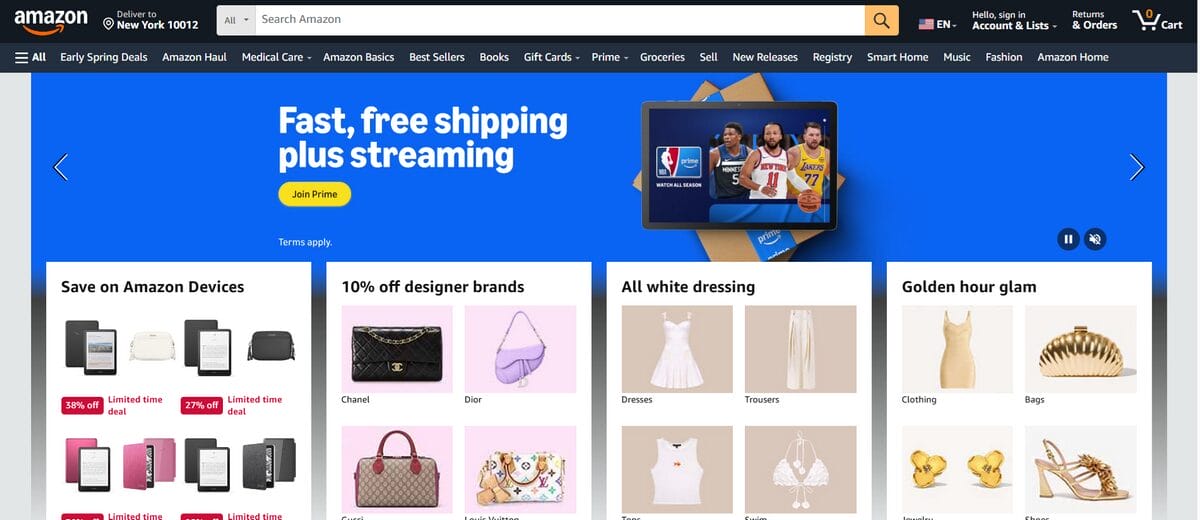
Amazon has over 310 million active users worldwide, making it one of the largest eCommerce platforms globally. On top of that, it has built a strong reputation for trust and reliability. Buyers feel confident purchasing, which naturally increases conversion potential. So, you’re listing items in a marketplace where millions of buyers are actively searching with the intent to purchase.
That built-in traffic is what makes dropshipping on Amazon so attractive. You don’t need to invest heavily in ads or branding to begin. With the right product and competitive pricing, you can start seeing traction relatively fast.
That said, Amazon operates under certain policies and high-performance standards. As a dropshipper, you’re responsible for ensuring fast shipping, accurate tracking, and a consistent customer experience, even if you’re relying on third-party suppliers.
In simple terms, while Amazon gives you access to scale, it also demands operational precision to sustain it. Running your business in a structured, organized, and compliant way is key to keeping your account healthy and moving. If you can manage that balance, Amazon becomes a powerful channel for high-volume sales driven by pure buyer intent.
eBay Dropshipping Overview
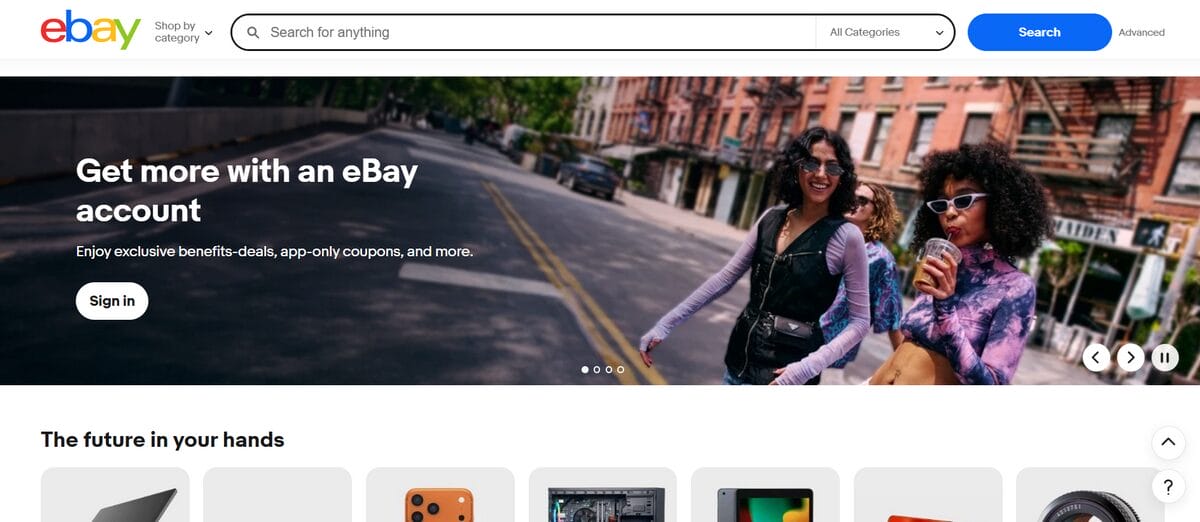
eBay is often seen as one of the most accessible ways to get started in eCommerce. According to Statista’s 2025 data, eBay counts around 133–134 million active buyers, offering a large and diverse marketplace where you can list products quickly and start testing without major upfront investment. Another key benefit is global reach. eBay allows you to sell across multiple regional marketplaces (from the US and UK to Germany, France, and beyond), giving you the opportunity to tap into different audiences and expand your sales potential internationally.
One of the biggest advantages of dropshipping on eBay is flexibility. Compared to Amazon, the platform has fewer barriers to entry and simpler listing processes. This makes it ideal if you want to experiment with different products, strategies, or niches without overcommitting early on.
That flexibility, however, comes with some tradeoffs. Buyer intent on eBay is not that predictable. Users are often browsing, comparing deals, or looking for auctions rather than being ready to buy instantly. As a result, competition tends to revolve heavily around pricing.
eBay gives you room to move fast and test ideas. But turning that into stable, scalable performance requires smart product selection and careful pricing.
Shopify Dropshipping Overview

Shopify dropshipping takes a completely different approach. Instead of selling within a marketplace, you’re building your own online store from the ground up. In fact, Shopify powers over 7 million ecommerce sites worldwide, making it one of the most widely used platforms for independent online stores.
That level of control is what sets Shopify apart. You’re not competing on a shared product page, and you’re not tied to marketplace rules in the same way. You can design your store, define your margins, and craft a branded experience that builds long-term customer value.
Since there’s no built-in traffic, you’re responsible for bringing customers in through paid ads, content, SEO, or social media. This means results can take longer at the beginning, and performance depends heavily on how effectively you attract and convert visitors.
With the right systems in place, you can turn your Shopify store into a recognizable brand, build customer loyalty, and scale beyond one-off transactions.
Amazon vs eBay vs Shopify: Fees Comparison

When it comes to fees, Amazon, eBay, and Shopify follow very different pricing models. At a high level, each platform has its own fee philosophy:
- Amazon follows a marketplace-heavy model, with per-sale referral fees (typically 8%–15%, depending on category and price tier), plus optional FBA logistics costs and a monthly subscription.
- eBay uses a transaction-based structure, with no required monthly plan to get started. You can list up to a certain number of items for free (250), and most sellers pay around 12.9% + $0.30 per order when a sale is made, along with optional store subscriptions.
- Shopify operates on a fixed subscription model, where you pay a monthly fee (starting around $29 – $39/month), plus payment processing fees. If you use Shopify Payments, this typically ranges around 2.9% + $0.30 per transaction on the basic plan in many categories, with optional promoted‑listing and store fees. There are no marketplace commissions, but you may also factor in small extras like a domain (around $10–$15/year).
To put this into perspective, here’s how fees might look on a simple $30 sale:
- Amazon: A 15% referral fee would be $4.50 per sale (not including fulfillment, storage, or advertising costs).
- eBay: A 12.9% fee plus $0.30 would come out to about $4.17 per sale.
- Shopify (Basic plan): A 2.9% fee plus $0.30 would total about $1.17 per sale.
What this shows is simple: Shopify’s fees typically land around 3–4% of revenue, while Amazon and eBay often take 12–20% per sale, even before factoring in shipping, ads, or additional operational costs.
So what does this mean in practice?
👉 If you prefer low upfront commitment and pay-as-you-sell, Amazon and eBay are easier entry points.
👉 If you want lower fees and more control over margins, Shopify has a clear advantage.
💰 Financial Tip: Not sure how much eBay will actually take? Use the AutoDS eBay Fees Calculator to break down your real profit before you list.
Amazon vs eBay vs Shopify: Policies & Restrictions

First of all, dropshipping is allowed on Amazon, eBay, and Shopify. But each platform enforces it under very different rules. Policies and restrictions directly impact your risk level and long-term stability, so it’s key to understand them:
Amazon’s dropshipping policies are the most rules-heavy environment. It has strict requirements (you must be the seller of record), along with tight control over product categories and performance metrics. Some categories require approval, while others (like certain supplements, branded goods, or regulated products) are restricted or banned altogether. On top of that, Amazon closely monitors account health: late shipments, tracking issues, or negative feedback can quickly lead to listing removals or even account suspension. It’s a high-reward system, but only if you operate with precision.
eBay sits in the middle, offering more flexibility, especially for beginners. But ot does have sourcing rules. For example, under eBay dropshipping policies, retail-to-retail arbitrage is not allowed. Product restrictions also apply across categories like weapons, drugs, or certain digital goods, and these rules are updated frequently. Of course, performance still matters, and late shipping or poor tracking can affect your visibility and account status. In general, eBay is more forgiving than Amazon, but still requires careful supplier management.
Shopify is the most open and flexible of the three. There are no platform-level restrictions on dropshipping itself, and you’re free to use suppliers, apps, or fulfillment methods as you choose. Shopify also doesn’t impose listing limits or category gating. However, that freedom comes with a different kind of responsibility: compliance shifts to external factors like payment processors, local laws, and third-party tools.
So what’s the real takeaway?
- If you want clear rules and a structured system, Amazon provides it.
- If you prefer freedom with some guardrails, eBay delivers a balanced middle ground.
- If you want full control and independence, Shopify gives you freedom, but requires you to manage compliance on your own.
Amazon vs eBay vs Shopify: Audience & Traffic

Some platforms bring traffic to you, others require you to generate it yourself. One of the biggest differences between Amazon, eBay, and Shopify comes down to how you get customers.
Amazon is built around high-intent traffic. Shoppers come to Amazon with a clear goal: to search, compare, and buy. The volume is enormous, with estimates indicating that Amazon attracts over 1 billion monthly visits globally. This demand translates into real performance: average conversion rates can reach around 9–10% according to industry benchmarks. The upside is clear: fast potential sales. The tradeoff? You’re competing directly with other sellers on the same listings, often on price.
eBay has a more mixed-intent audience. Users on eBay are often browsing, looking for deals, or exploring auctions. The platform still operates at a significant scale. As of 2026, Statista‑tracked data and major eCommerce‑analytics providers indicate that eBay has about 133–134 million active buyers worldwide, with third‑party traffic analytics platforms reporting roughly 700 million monthly visits. This creates opportunities for product testing and deal-driven sales, but also means conversion rates are less predictable compared to Amazon.
Shopify, in contrast, has no built-in audience. What it does have is a massive distributed customer base. According to Shopify itself, over 875 million unique shoppers purchased from Shopify stores in 2024 alone, showing the scale of its ecosystem. However, this audience is highly fragmented across individual brands. That means you need to generate your own traffic through ads, SEO, social media, or content. As a result, conversion rates tend to be lower, around 1.4% on average (based on benchmarks from Littledata and industry analyses like Uptek). The upside? Full control over your audience and brand experience.
So, what does this mean for your strategy?
- If you want instant access to ready-to-buy customers, Amazon leads.
- If you’re comfortable with testing and varied buyer intent, eBay offers the best deal.
- If you want to build and own your audience long-term, Shopify is the way to go.
Amazon vs eBay vs Shopify: Ease of Getting Started

Getting started with dropshipping can feel very different depending on the platform you choose. Setup time, requirements, and learning curve all play a role in how quickly you can launch your first product.
Amazon comes with a more structured onboarding process. You’ll need to create a seller account, choose a plan, and comply with platform requirements before listing products. While the interface is relatively intuitive, approval processes, category restrictions, and performance expectations can take their time. It’s not the hardest platform to use, but it does require attention to detail from day one.
eBay is generally the fastest and most beginner-friendly option. You can create an account, list products quickly, and start selling with minimal upfront requirements. There are fewer barriers to entry compared to Amazon, and the learning curve is smoother. That makes eBay a great option if your goal is to test products and get your first sales without overcomplicating the setup.
Shopify requires a different kind of setup. Since you’re building your own store, you’ll need to handle everything from design and product pages to payments and shipping settings. This takes more initial effort, but modern tools and templates make the process much more accessible than it used to be. Once your store is live, you have full control over how everything works.
🆕 Beginner’s Tip: Want to skip the setup phase? With the AI Shopify store builder, AutoDS lets you launch a fully built Shopify store with products and optimized pages in under 2 minutes.
So what does this mean in practice?
- If you want the fastest way to launch and test products, eBay is the easiest entry point.
- If you’re okay with a structured setup, Amazon is manageable.
- If you’re willing to invest time up front for full control, Shopify is worth it.
Amazon vs eBay vs Shopify: Scalability Potential

Starting is one thing, scaling is another. Each platform offers different paths to expansion, and the way you scale will depend heavily on how much control, automation, and flexibility you have.
Amazon is built for high-volume scaling. With built-in traffic and strong buyer intent, you can increase sales quickly by optimizing listings, pricing competitively, and expanding your product catalog. However, scaling on Amazon often means operating within tight constraints. Your progress is tied to marketplace rules, competition, and account health metrics. You can grow fast, but you don’t fully control the environment.
eBay allows for steady scaling. You can gradually increase listings, test new products, and expand into different markets without heavy upfront investment. That said, results can be less predictable, and scaling to very high volumes often requires strong operational control to manage pricing, suppliers, and order fulfillment efficiently.
Shopify offers the highest ceiling for long-term growth. Since you own your store, your scalability isn’t limited by marketplace rules or shared listings. You can build a brand, increase average order value, and create repeat customers over time. The tradeoff is that scaling depends on your ability to drive traffic and optimize conversions. But once those pieces are in place, performance becomes much more controllable and sustainable.
So what does this mean in practice?
- If your goal is fast, volume-driven growth, Amazon is the strongest engine.
- If you want flexible scaling with room to test and adapt, eBay is a solid option.
- If you’re focused on building a long-term, scalable brand, Shopify offers the most potential.
Amazon vs eBay vs Shopify: Automation & Tools

Amazon offers some built-in tools, but automation is often limited and controlled. Through Seller Central, you get access to order management, reports, and performance dashboards. But it’s not a full automation suite. Services like FBA can handle fulfillment, yet you’ll still need external tools for things like repricing, profit tracking, and customer support.
eBay is more automation-friendly. It includes native listing tools, promoted listings, and basic management features, but its ecosystem is lighter compared to Amazon. That said, this flexibility makes it easier to connect third-party tools and automate tasks like product imports, price monitoring, and order handling.
Shopify provides the most open ecosystem for automation. Beyond its app marketplace, tools like Shopify Flow allow you to create automated workflows for inventory, discounts, and customer actions. Built-in features like SEO settings, checkout optimization, and analytics also help streamline operations and centralize key processes within your store.
So what does this mean in practice?
All three platforms offer some level of built-in automation, but none of them cover the entire workflow end-to-end. If you’re aiming for full automation and operational control, your best choice is to rely on additional tools to automate and connect your operations across channels.
Amazon vs eBay vs Shopify: Profit Margins

Profit margins in dropshipping can vary significantly depending on the platform you choose. Fees, competition, and pricing control all play a direct role in how much you actually keep from each sale.
Amazon tends to have tighter margins. Between referral fees, fulfillment costs (if you use FBA), and intense price competition on shared listings, your room for markup is limited. On top of that, competing for the Buy Box often pushes prices down. According to recent comparative studies and marketplace benchmarks, many sellers operate with profit margins in the 10% to 20% range. For example, on a $30 product, after fees and basic costs, you might keep $3 to $6 per sale. The advantage is volume, but margins per product are usually lower.
eBay offers moderate margins with more room to adjust. Fees are still significant, but generally slightly lower than Amazon’s, and you have more control over your listings. However, since many buyers are price-sensitive and deal-driven, competition can still compress margins. Based on industry benchmarks and seller reports, margins typically fall between 15% and 25%. That means a $30 sale could generate around $4.50 to $7.50 in profit, depending on your sourcing and pricing strategy.
Shopify provides the highest margin potential. Since there are no marketplace commissions, your main costs are subscription fees, payment processing, and marketing. This gives you full control over pricing and positioning, allowing for higher markups. Industry analyses suggest margins can range from 20% up to 40% or more, though they vary significantly based on ad spend. On a $30 product, you might keep $6 to $12 per sale before advertising, and less once paid acquisition is factored in.
That said, margins don’t exist in a vacuum. Lower fees don’t automatically mean higher profit if you’re spending heavily on ads, and higher fees don’t necessarily hurt if you’re selling at scale.
So what does this mean in practice?
- If you prioritize volume over margin per sale, Amazon is a strong fit.
- If you want balanced margins with adaptability, eBay sits in the middle.
- If your goal is to maximize profit per product, Shopify offers the most control.
Pros and Cons of Each Platform
Looking at the full picture, each platform stands out in different areas as a sales channel, while also presenting certain drawbacks:
Amazon Pros and Cons
✅ Pros:
- Massive marketplace with multiple product categories
- Access to free high-intent traffic and strong buyer trust
- Strong credibility that increases conversion rates
- Potential for fast, high-volume sales
- Built-in logistics options like fulfillment services
⛔ Cons:
- Diverse fees that reduce profit margins
- Strict policies and performance requirements
- Limited control over branding and customer relationships
eBay Pros and Cons
✅ Pros:
- Large audience and free organic traffic
- Easy to get started with low upfront commitment
- Greater pricing control and listing freedom
- Strong for product testing and niche markets
⛔ Cons:
- More price-sensitive audience, which can affect margins
- Less predictable buyer intent compared to Amazon
- Scaling to high volumes requires strong operational management
Shopify Pros and Cons
✅ Pros:
- Full control over branding, pricing, and customer experience
- Highest profit margin potential
- Strong foundation for long-term brand building
- Full ownership of customer data and relationships
⛔ Cons:
- No built-in traffic; you must generate your own audience
- Requires more setup and upfront effort
- Profitability depends heavily on marketing performance
Amazon vs eBay vs Shopify: Side-by-Side Comparison Table
| Aspect | Amazon | eBay | Shopify |
|---|---|---|---|
| Model | High-intent marketplace | Flexible marketplace | Independent online store |
| Traffic | Built-in, high volume | Marketplace-driven | Self-generated |
| Fees | High per-sale fees | Medium transaction fees | Low % + fixed costs |
| Ease of start | Medium | Easy | Medium |
| Competition | High (same listings) | High (price-based) | Varies by niche |
| Scaling-style | Volume-based scaling | Product testing & expansion | Brand-led scaling |
| Profit margins | Medium | Medium | High potential |
| Operational control | Regulated by rules | Moderate flexibility | Full control |
| Best for | Fast sales | Beginners | Brand building |
Which Platform Is Best for You?
If there’s one clear takeaway from this comparison, it’s that there’s no single “best” platform for every dropshipping business. The right decision depends on your goals, your experience level, and how you approach your strategy. Here’s how to choose based on what you’re looking for:
Best for Beginners
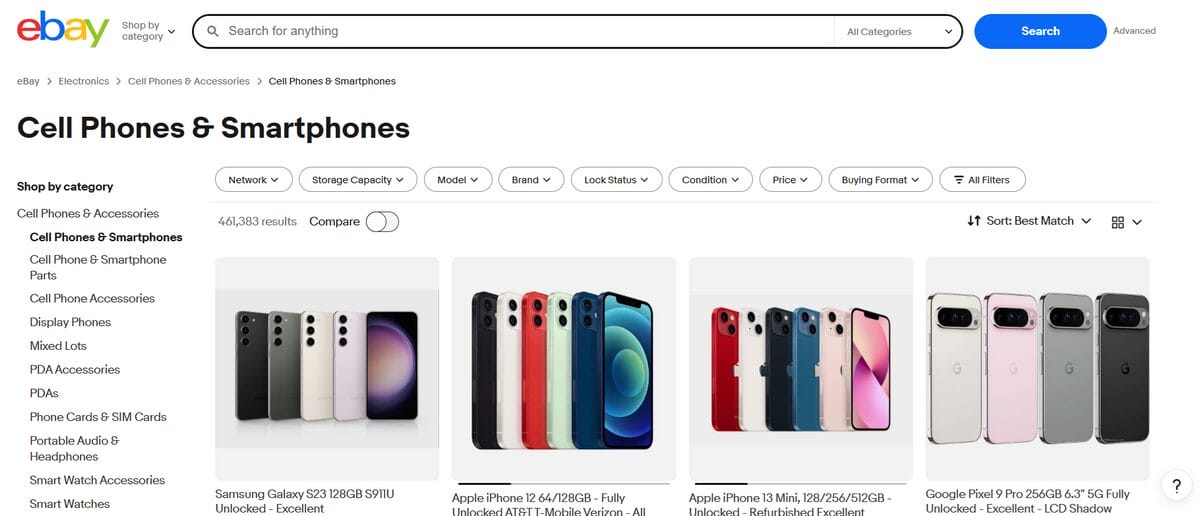
If you’re just starting out, eBay is often the easiest entry point. It has a low barrier to entry, a simple listing process, and no upfront subscription required. You can start testing products quickly without needing to build a store or invest heavily in ads.
Compared to Amazon, which involves several policies and account requirements, and Shopify, which requires building and setting up your own store, eBay offers the fastest and most accessible way to get started.
👉 Best choice for beginners: eBay.
Best for Fast Sales
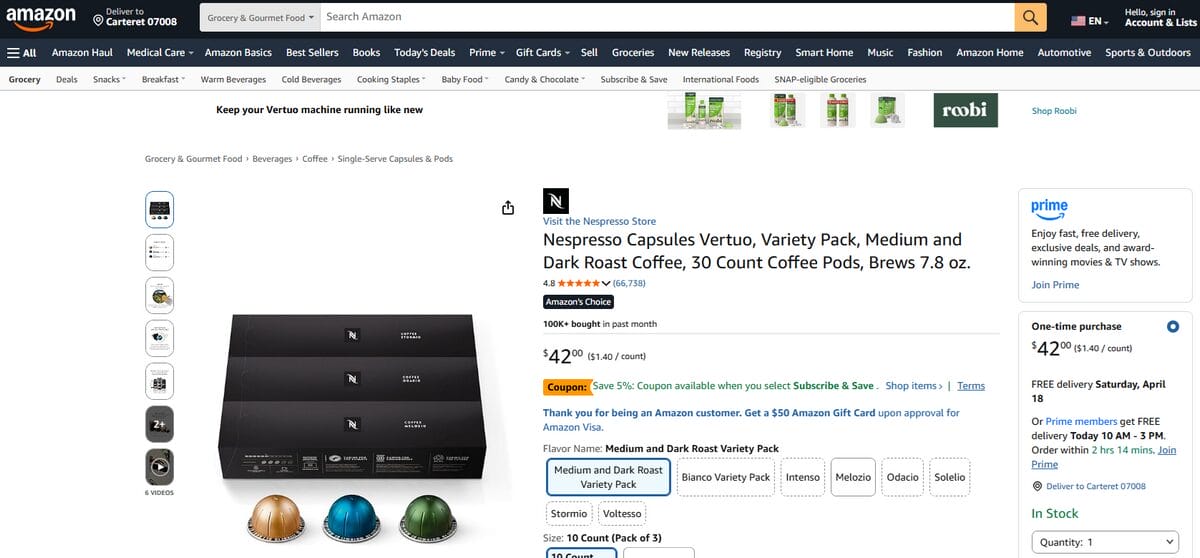
If your goal is to generate sales as quickly as possible, Amazon stands out. With high-intent traffic and strong buyer trust, you’re tapping into an audience that’s already ready to buy. That makes it ideal for faster traction, especially with the right product and pricing.
Compared to eBay, where buyer intent is more variable, and Shopify, where you need to generate your own traffic, Amazon delivers a more direct path to consistent sales volume.
👉 Best choice for fast sales: Amazon.
Best for Long-Term Branding
If you want to build a real brand and create long-term customer value, Shopify is the best option. You control your store, your messaging, and your customer relationships. This allows you to grow beyond one-off sales and focus on retention.
This level of ownership isn’t available on Amazon or eBay, where branding opportunities are more limited and customer relationships are largely controlled by the platform.
👉 Best choice for branding: Shopify.
Best for Automation & Scaling
If your focus is on efficiency and expanding across multiple products or channels, all three platforms can work, but only if supported by the right setup. Compared to relying on a single platform’s native tools (whether it’s Amazon, eBay, or Shopify), scaling efficiently typically involves connecting external solutions that help streamline operations across channels.
👉 Best approach for scaling: combine the platforms with automation tools.
How AutoDS Supports Amazon, eBay, and Shopify Sellers
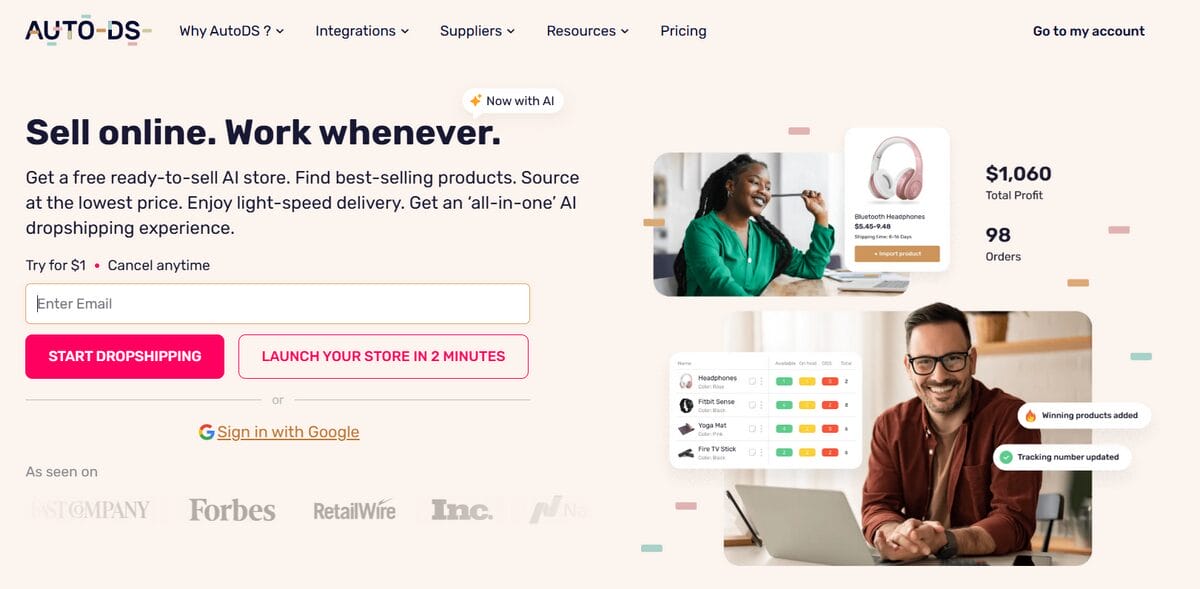
At some point, every dropshipping business hits the same wall: too many moving parts, not enough time. And here’s the catch: no matter which platform you choose, that challenge doesn’t go away. Each one offers tools, yes, but none are built to run your entire operation seamlessly.
Tools like AutoDS are built exactly for this stage. Designed as an all-in-one solution, AutoDS connects with Amazon, eBay, and Shopify, turning scattered tasks into a system that actually works together. So instead of adapting your workflow to each platform, you make the platforms adapt to you. Here’s how that plays out:
- Selling on Amazon? Consistency is everything, but keeping up manually is a risk. With automated price and stock updates, synced supplier data, and accurate tracking, AutoDS lets you reduce errors and keep your account in good standing without constant oversight.
- Running an eBay store? Speed wins. The faster you test, list, and fulfill, the better your chances of scaling. AutoDS lets you move quickly, experiment more, and expand without multiplying your workload.
- Building on Shopify? You get full control, but also full responsibility. By handling sourcing, fulfillment, and updates in the back, automation frees you up to focus on what actually drives growth: marketing, branding, and customer experience.
Across your entire operation, everything connects into one streamlined flow:
- Products sourced and updated in real time.
- Prices and stock adjusted automatically.
- Orders processed and tracked from one place.
And this isn’t just theory. Take Shu Vang, for example. Starting from zero, he used AutoDS to launch and grow his dropshipping business on eBay, hitting $3,000 in sales in just two weeks by leaning on automation instead of manual work.
So while each platform gives you a different starting point (traffic, accessibility, or control), the real advantage comes from how you run your business as a whole. That’s exactly where AutoDS makes the difference.
Can You Use Multiple Platforms Together?
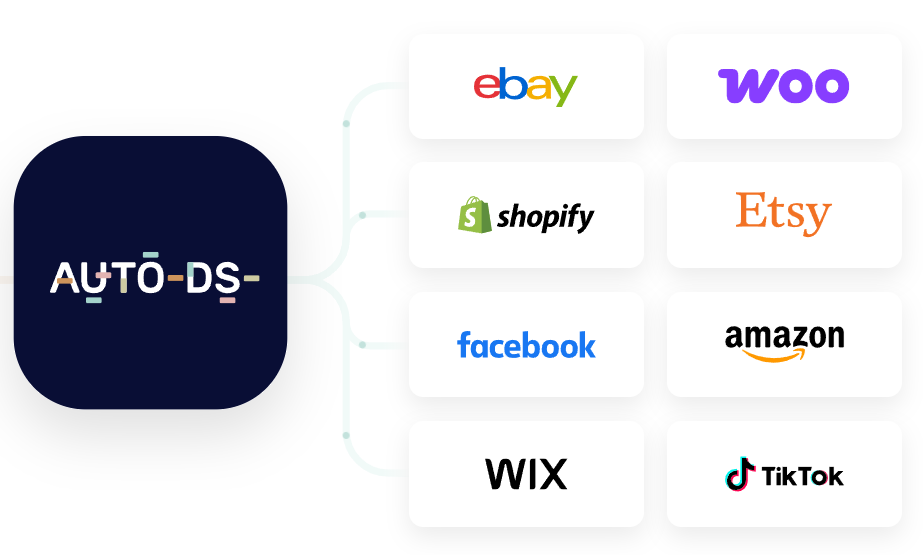
The answer is yes: with AutoDS, you can use multiple platforms together for dropshipping.
Relying on a single marketplace can work, especially in the beginning. But as your business gets bigger, expanding across different channels becomes a powerful way to increase reach, diversify risk, and unlock new revenue streams.
Think about it:
- On Amazon, you tap into high-intent buyers ready to purchase.
- On eBay, you gain space to try products and explore different markets.
- On Shopify, you build your brand and create long-term customer value.
Each platform plays a different role. The real opportunity comes from combining them. But handling multiple stores manually? That’s where things get messy, fast. More listings, more orders, more suppliers… and exponentially more room for error.
That’s why AutoDS is a game-changer. Instead of treating each platform as a separate operation, AutoDS lets you run them as one connected setup. You can manage products, monitor prices and stock levels, and automate orders across several channels, all from a single dashboard.
So rather than juggling platforms, you’re orchestrating them. The outcome?
- More exposure without duplicating effort.
- More revenue streams without added complexity.
- More control without sacrificing speed.
In other words, you’re no longer choosing between Amazon, eBay, or Shopify. You’re using all of them, strategically.



How Top Sellers Manage Multiple Dropshipping Platforms
Running Amazon, eBay, and Shopify together requires a centralized approach to product data, orders, and fulfillment. AutoDS helps sellers stay organized while expanding across multiple channels from a single place.
“This dashboard shows you everything you need to be successful with the product that you’re selling. You can actually connect more than just a Shopify store; you can connect eBay, Facebook, Wix, and so much more.” – AC Hampton, ecom expert.
Common Mistakes When Choosing a Dropshipping Platform
After everything we’ve covered so far, one thing becomes clear: there’s no single “right” platform, only the one that fits your strategy. Ultimately, the real difference comes from how you evaluate each option and how well it aligns with your goals, your workflow, and the way you plan to grow.
With that in mind, here are some of the most common mistakes to avoid:
Choosing based only on fees
It’s easy to look at costs and assume the cheapest option is the best one. But focusing only on fees can be misleading. A platform with lower fees, like Shopify, may require upfront investment in ads. Meanwhile, marketplaces like Amazon or eBay bring built-in traffic but take a higher cut per sale.
➡️ What matters isn’t just cost; it’s profitability within your game plan.
Ignoring platform rules and restrictions
Not all platforms play by the same rules, and overlooking that can lead to serious issues. For example, Amazon has strict performance standards, while eBay enforces specific sourcing rules. Even Shopify, while more open, still depends on payment processors and legal compliance.
➡️ Understanding the rules upfront helps you avoid penalties, suspensions, or unexpected limitations.
Not thinking about long-term goals
What works today might not work tomorrow. Many sellers choose a platform based on short-term convenience, without considering how it fits their long-term vision. Are you aiming for quick wins? Building a brand? Scaling across channels?
➡️ Your platform should match not just where you are, but where you want to go.
Trying to do everything manually
This is one of the most common and costly mistakes. Many beginners try to manage everything themselves at first. While that might work early on, it quickly becomes unsustainable as orders increase.
➡️ Growth requires leverage, and that means incorporating automation and smarter workflows.
Thinking in terms of one platform only
Many sellers approach dropshipping as if they have to choose one platform and stick with it forever. But in reality, that mindset can limit your growth. Each eCommerce landscape serves a different purpose. What works for testing products today might not be the best fit for scaling or building a brand tomorrow. Staying in just one place can mean missing opportunities that exist elsewhere.
➡️ Evolve and diversify your sales strategy and expand when it makes sense, with tools like AutoDS making multi-channel selling easier to handle.
Frequently Asked Questions
Which is better for dropshipping: Amazon, eBay, or Shopify?
The best platform for dropshipping depends on your goals. Amazon is ideal for fast sales, eBay for easy entry and testing, and Shopify for building a long-term brand. The choice comes down to the business approach that you have for your store.
Is Shopify better than Amazon for dropshipping?
Shopify can be better than Amazon if your focus is branding and long-term growth. However, Amazon offers faster access to ready-to-buy customers, which makes it more effective for generating quick sales early on.
Is eBay a good platform for beginners in 2026?
eBay remains a good platform for beginners in 2026 thanks to its low barrier to entry and simple setup. You can start listing products quickly without needing a store or upfront investment, making it ideal for testing and learning.
Which platform has the lowest fees?
Shopify typically has the lowest per-sale costs, especially when using Shopify Payments. In contrast, Amazon and eBay charge higher transaction-based fees, though they provide built-in traffic in return.
Can you dropship on all three platforms at the same time?
Yes, you can dropship on Amazon, eBay, and Shopify simultaneously. Many sellers adopt a multi-channel approach to reach different audiences and diversify their revenue. With tools like AutoDS, managing multiple platforms becomes significantly easier by centralizing and automating your operations.
Which platform is best for scaling a dropshipping business?
The best platform for scaling depends on your strategy. Amazon supports high-volume sales, eBay allows rapid product expansion, and Shopify offers full control for long-term growth. Scaling often involves combining more than one.
Do I need automation tools for dropshipping on these platforms?
Automation tools become essential for dropshipping on these platforms as your business expands. Managing listings, orders, and inventory manually quickly becomes inefficient, while automation tools like AutoDS help you maintain accuracy and scale without increasing workload.
How do I choose the right platform for my business?
Choosing the right platform starts with your objectives. If you want fast sales, go with a marketplace; if you want control and branding, choose Shopify. Your ideal platform should align with your growth strategy.
Start Dropshipping on the Right Platform with AutoDS
By now, you’ve seen how Amazon, eBay, and Shopify each open a different path in dropshipping:
- Amazon brings built-in demand and fast-moving sales.
- eBay gives you room to test and expand.
- Shopify puts you in full control to shape a brand.
Different roles, different strengths, but what matters is how you put them to work.
That’s where AutoDS becomes part of the equation. By connecting seamlessly with all three platforms, AutoDS turns day-to-day operations into a streamlined flow. From sourcing and pricing to fulfillment and tracking, it makes it easier to run and coordinate multiple channels from one place.
At the end of the day, the platform you choose matters less than the setup you build around it. That’s what ultimately defines your consistency, your efficiency, and your potential to succeed.
🚀 Now it’s your move. Pick your platform, set your direction, and let AutoDS handle the heavy lifting. You can start your $1 trial and see how scaling across platforms becomes more structured and controlled.
- Key Differences At A Glance
- Platform Overview
- Fees Comparison
- Policies & Restrictions
- Audience & Traffic
- Ease Of Getting Started
- Scalability Potential
- Automation & Tools
- Profit Margins
- Pros & Cons Of Each Platform
- Side-By-Side Comparison Table
- Which Platform Is Best For You?
- How AutoDS Supports Online Sellers
- Can You Use Multiple Platforms?
- Common Mistakes When Choosing A Platform
- FAQ
- Conclusion