


Looking to dropship from AutoDS to Amazon? That’s a great setup. On one hand, you have Amazon, one of the largest e-commerce marketplaces in the world. On the other hand, AutoDS offers an exclusive marketplace of winning products and provides full automation at every step.
Together, they create a powerful workflow that lets sellers source items easily on AutoDS, list them on Amazon, and manage orders much more efficiently.
In this guide, we’ll explain how the AutoDS to Amazon dropshipping workflow works. We’ll cover in depth how to connect both platforms step by step. Plus, we’ll provide tips on how to choose products that fit Amazon’s policies, automate each step of the process, and avoid common mistakes.
AutoDS and Amazon play complementary roles in a dropshipping workflow. Amazon acts as your storefront where customers discover products, while AutoDS supports the backend with product sourcing, listing imports, and automation tools.
Compliance with Amazon’s dropshipping rules is essential. Sellers must remain the seller of record, avoid restricted products, and keep strong seller metrics like valid tracking, low defect rates, and reliable fulfillment.
Automations help keep operations consistent and scalable. With features like price and stock monitoring, automated fulfillment, and product research tools, AutoDS centralizes your entire operation.
Understanding AutoDS as a Product Source

In the AutoDS to Amazon setup, AutoDS takes care of the product sourcing part of the process. In short, it acts as a centralized sourcing hub where sellers can discover, import, and manage products from multiple places in one single dashboard. It’s basically where you’ll find your products to list on Amazon later. But let’s go a little bit deeper.
On one hand, AutoDS offers its own built-in marketplace with vetted private suppliers. These vendors are optimized for dropshipping. That translates to better reliability, faster processing, and products across multiple niches. For sellers, this creates a curated sourcing environment where you can quickly find items that are already suited for online stores.
On the other hand, AutoDS also helps you identify what’s worth selling in the first place. The platform includes built-in product research tools like a Trending Products Hub and a curated, hand-picked product selection. Instead of spending hours digging through endless catalogs, AutoDS lets you quickly discover items gaining hype based on real-time market data.
Finally, AutoDS also connects sellers to 25+ global suppliers, including eBay, AliExpress, Walmart, Shein, and more. This allows dropshippers to source products from multiple reliable retailers while managing everything through a single automation platform.
Get started now. AutoDS to Amazon, fully automated 👉 Try AutoDS for just $1 today!
Now, let’s go back to you: you have an Amazon store (or are planning to get one), right? In this scenario, AutoDS becomes the place where you find and manage the products you want to sell. Next, let’s see what happens with Amazon.
Understanding Amazon as a Sales Channel

If AutoDS is where you source and manage products, then Amazon is where you sell them. As one of the largest e-commerce marketplaces in the world, Amazon attracts hundreds of millions of active shoppers on a daily basis. This means sellers get instant exposure without having to build their own audience from scratch.
And not only that: shoppers already trust the platform and search for products here. Moreover, they come to the platform with buying intent. People don’t visit Amazon to browse around. They visit it because they’re looking for something specific. This way, dropshippers can tap directly into a demand that already exists.
Of course, selling on Amazon also comes with rules, performance expectations, and competition.
First, it has some of the strictest policies out there regarding product categories, supplier requirements, and product authenticity. Second, Amazon monitors seller metrics such as order defect rates, shipping times, and customer satisfaction. And third, its popularity also comes with hundreds of listings competing with yours (we’ll zoom in on all of this later in the article).
That’s why running a compliant, smooth operation is so important. It helps you improve your seller metrics, power up your listings’ reach, and stand out from the crowd.
Why AutoDS to Amazon Can Work

As we mentioned above, Amazon dropshipping comes with a few challenges: strict compliance policies, ambitious seller performance metrics, and lots of competition.
And that’s exactly what takes us back to AutoDS. On one side, Amazon acts as your storefront. This is where customers find your listings and place orders. Then, AutoDS runs the system behind the scenes, helping you source products, import listings, and manage tasks from one place.
But the most important part is that AutoDS helps you stay compliant with the Amazon dropshipping policy by…
- Guaranteeing a consistent workflow (no delays, no complications).
- Offering only Amazon-friendly products.
- Connecting sellers to suppliers that comply with the seller-of-record rule.
As a result, your seller metrics stay healthy, your products don’t break any rules, and your store operates in line with Amazon’s policies.
In short, the AutoDS to Amazon setup gives you the best of both worlds. Amazon provides a massive customer base, while AutoDS supports the operational side that keeps your store running efficiently.
How AutoDS Connects to Amazon

So, how to use AutoDS with Amazon? For starters, the first step is connecting them. This process is pretty simple.
To connect AutoDS to Amazon, you just need:
- An AutoDS account (which you can get for just $1 if it’s your first time).
- An Amazon seller account.
With that, just log in to AutoDS and head to Add Store on the top left menu. Choose Amazon and follow the prompts until the system takes you to the Amazon Seller Central. Then, just grant permissions to allow the connection to happen. All in all, the AutoDS to Amazon integration makes it easy and quick to get through. It only takes a minute!
Choose Products That Fit Amazon’s Rules
Once you’re in and everything is connected, the fun begins! This is where you start exploring products across AutoDS’s built-in research features. Luckily, everything you find in here complies with dropshipping policies, especially with Amazon’s rules.
You have a few options to source and find trending products with AutoDS:
- AutoDS’s marketplace. This is an exclusive area of vetted private suppliers. You’ll find thousands of items across different niches, plus filters like shipping location, supplier, price range, currency, and fast shipping to fit your market strategy.

- Hand-picked products. This is a special selection by AutoDS’s experts. Again, everything is organized in niches, and you can filter by number of orders, profit range, shipping location, and item cost range. A tip? Filter by “This week’s products” to see the ones gaining traction in the last few days. Then, for each product, you can see engagement and saturation scores, global distribution, and more.

- Trending products. This hub only shows items based on current demand. Each product gets a score from 0 to 100 that highlights how well a product is doing in terms of engagement and performance. It basically tells you if it’s going viral, slowing down, or staying the same.

- Ad Spy tool. This is more about finding how competitor ads are performing across Instagram, TikTok, and Facebook. But ads also indicate which products are getting hype on social media, so they can also help you find winning products.

Import and Optimize Your Listings with AutoDS

The next step is importing your products directly into your store. Because you’re already using AutoDS as a supplier and sourcing products directly from its dashboard, you only need to click Import Draft. Once you do that, the system automatically pulls all the product information, including images and variations. Then, you’ll find the draft in your Product dashboard.
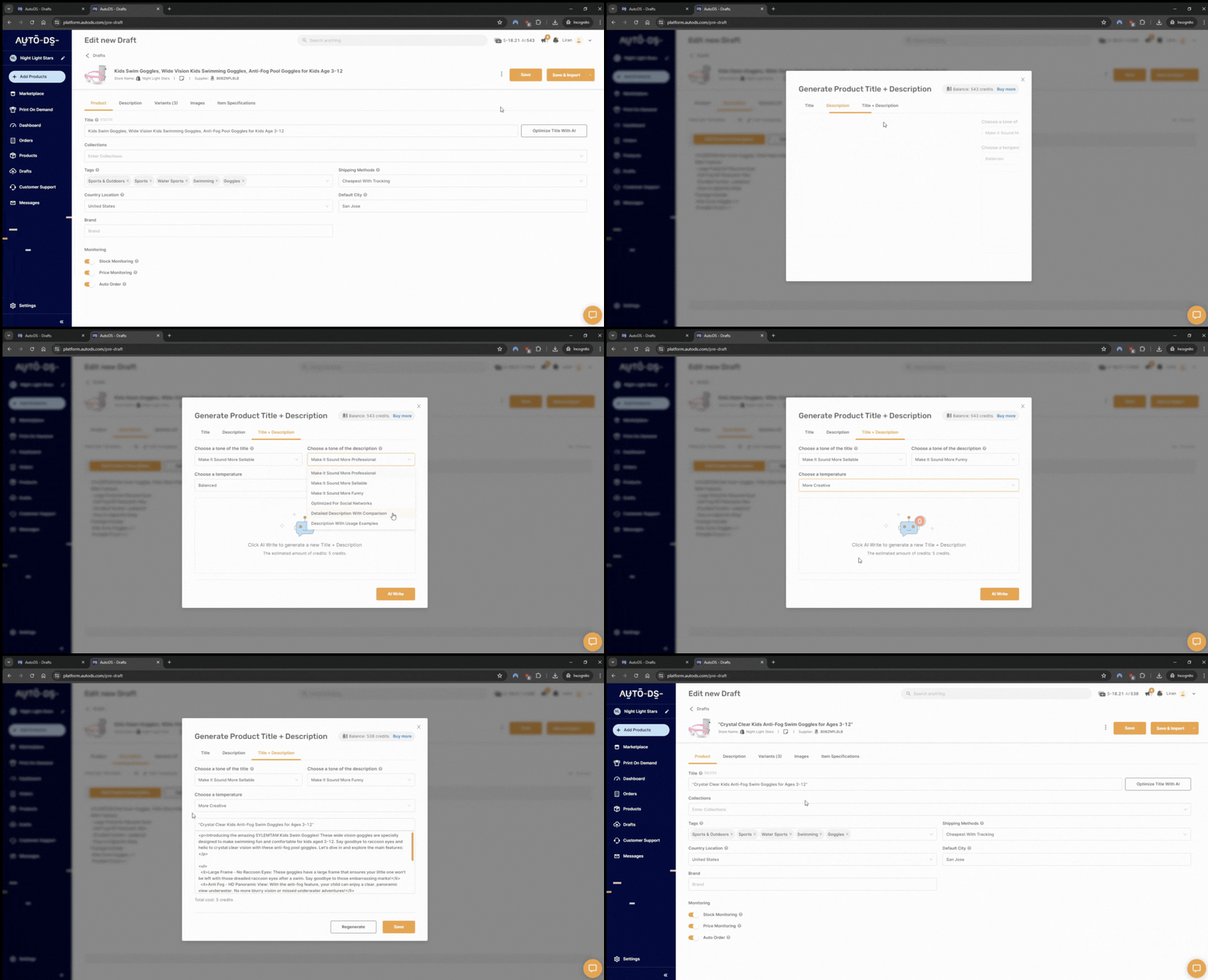
From there, it’s time to optimize your listings before publishing them. When you import your products, they automatically come with titles and descriptions from the original supplier. But there’s usually lots of room for improvement.
The goal is to polish them into compelling, converting, and SEO-friendly content. But no worries: you don’t necessarily need copywriting skills.
AutoDS’s AI Product title & description generator helps you quickly create clear, optimized titles and descriptions based on the product’s key features. This way, you’re not writing everything from scratch. The system already gives you high-converting listing content.
Set Pricing and Automation Rules
Your listings are imported, optimized, and ready to go live. But before that, one more thing: setting pricing and enabling all automation features so the listing runs on its own.
This is where AutoDS becomes more than just a supplier and turns into your store’s control tower. Its automation features let you keep your operations running on autopilot so you don’t have to regularly update listings.
First, AutoDS’s price and stock monitoring feature tracks supplier inventory levels and price changes. The system checks for updates every 60 minutes and then automatically updates your store. If a product goes out of stock, the system can pause the listing to help prevent overselling. And if a supplier raises the price, your listing can update accordingly based on your pricing rules.

Second, it lets you set pricing rules to automatically update your prices based on your own customization. For example, you might apply a fixed markup, a percentage-based margin, or a minimum profit rule. This lets you stay profitable even when supplier prices change.
Together, automatic pricing optimization and price and stock monitoring help you stay hands-off from your workflow. You don’t have to update your listings constantly or calculate margins manually. AutoDS just handles the whole thing for you automatically.
Manage Orders, Tracking, and Returns

Welcome to your favorite part: getting orders! But your job doesn’t stop when the customer clicks “Buy”. Now you have to process that order, update tracking information, and handle potential returns. You can do this manually, but it’s just time-consuming and too prone to errors, especially as your store grows.
Instead, AutoDS automates every step. When a customer places an order on Amazon, AutoDS can automatically process it with your selected supplier within (or outside) the AutoDS marketplace. The system fills in the order details, completes the purchase, and keeps everything recorded in your dashboard so you can track the entire workflow.
AutoDS also keeps tracking information updated. Once the supplier ships the order and provides tracking number updates. The platform basically syncs the number from your supplier to your store to send out automated updates. This keeps it transparent and supports strong seller performance metrics on Amazon.
Finally, AutoDS automatically manages returns and refunds when they happen, making the entire fulfillment process much easier from start to finish.



What to Watch Out for When Selling on Amazon with AutoDS
There’s no specific warning about selling on Amazon with AutoDS. Just keep in mind the general best practices that apply to any Amazon seller, such as:
- Following Amazon’s dropshipping policy.
- Maintaining strong seller metrics.
- Choosing items and suppliers that align with Amazon’s product requirements.
- Enabling automation to make sure everything stays updated on AutoDS’s side.
As long as you operate within those guidelines, using AutoDS as your sourcing and automation platform can fit naturally into a compliant Amazon workflow. We’ll zoom in on this in the next section.
Amazon Policy and Seller Metric Requirements
While the AutoDS to Amazon setup is fully automated and data-driven, it’s still important to understand the responsibilities that come with selling on Amazon and that impact your seller metrics.
It all comes down to the Amazon dropshipping policy. Amazon allows dropshipping, but (like we’ve already mentioned) it has a few general rules to keep in mind:
- You’re the seller of record. Sounds scary, but it’s actually pretty simple. Being the seller of record means your store must appear as the seller on invoices, packing slips, and customer communications. In other words, customers should see your brand (not the supplier’s) when they receive the product.
- Product compatibility with Amazon’s rules. While you can sell many things on Amazon, you can’t sell anything. There are categories that are restricted, others require special permissions, and others are completely banned. For example, medical devices, weapons, hazardous materials, alcohol, and tobacco are completely banned. Just stay away from them.
- Seller performance. Amazon rates sellers based on specific metrics that show how reliable they are. These include things like order defect rate, late shipment rate, valid tracking rate, and cancellation rate. If these metrics fall below Amazon’s standards, your account could face restrictions.
Now, here’s the good news: while it’s up to you to comply with all of this, AutoDS makes that process pretty easy, offering dropshipping-friendly products and private suppliers and providing automation that keeps up with Amazon’s expected seller performance.
Branding, Invoices, and Supplier Fit
We’ve already mentioned this before, but let’s zoom in on the “seller of record” elephant in the room nobody likes to talk about.
Of course, a big, important aspect of selling on Amazon is complying with its dropshipping policy. This states that dropshipping is allowed as long as you remain the seller of record. This means customers should only see your store as the seller, not the supplier that fulfills the order.
For instance, packages should not include third-party branding, promotional inserts, or supplier invoices that reveal where the product actually came from. If customers receive packaging that clearly shows another retailer or marketplace as the seller, you’re breaking Amazon’s dropshipping policy and, therefore, creating problems for your account.
That’s why choosing the right suppliers matters so much. When sourcing products, you want suppliers that support neutral or unbranded fulfillment. This keeps the customer experience consistent and ensures that the transaction appears to come directly from your store.
Margins, Fees, and Competition

Another thing to keep in mind when selling from AutoDS to Amazon is profitability. Amazon offers massive traffic and built-in buyer trust, but that exposure comes with higher costs. To run a profitable store, you need to understand how margins, marketplace fees, and competition all interact.
First, there are Amazon seller fees. Most sellers pay a referral fee on each sale, which typically ranges between 8% and 15% depending on the product category. Then, you have two subscription plans:
- Individual: Here, you don’t pay a fixed fee. Instead, you pay $0.99 per item sold. This plan makes sense for sellers selling fewer than 40 items a month.
- Professional: This is $39.99/month, which is why, after selling 40 items, it makes more sense to opt for this one.
Then there’s competition. Think your listing is unique? Well, think again. There are probably dozens of similar ones. This often creates pressure on prices, especially in popular categories. If your margins are too thin from the start, even small price changes can reduce your profit.
The key is to craft a pricing strategy that keeps everything in consideration before listing a product. Plus, it’s always good to enable automation rules to make sure your profits stay intact.
Look at the supplier price, Amazon’s fees, and the average selling price on the platform. If there’s enough room for profit while remaining competitive, the product may be worth testing. If not, it’s better to move on and find a better opportunity.
How AutoDS Supports the Workflow Without Replacing Compliance
One thing worth clarifying is this: while AutoDS helps you stay compliant, it’s not a magic wand that gets you out of trouble. AutoDS helps you run your operations, but the responsibility is still yours. At the end of the day, you’re the one who should know, understand, and follow the rules.
Now, how exactly does AutoDS support Amazon’s compliance? Let’s break it down.
- As a supplier, it follows Amazon’s rules. You won’t find prohibited items in the AutoDS Marketplace. Everything is already vetted for compliance and, specifically, for dropshipping workflows. This means that most of the products you’ll find are profitable, lightweight, and dropshipping-friendly.
- As an automation platform, it improves your seller metrics. AutoDS provides full automation at every step of the workflow to avoid delays, stock issues, and manual errors that could affect your performance metrics. Features like automatic order fulfillment, price and stock monitoring, and tracking updates help keep your operations consistent and reliable.
All of this makes the AutoDS Amazon dropshipping automation a perfect setup. AutoDS is basically the engine that keeps everything running, from sourcing to fulfillment. All in all, it helps you run a more consistent business.
That said, you’re the one making decisions. You choose which suppliers to work with, which products to sell, and how to follow Amazon’s policies. Automation supports these processes, but it doesn’t guarantee compliance by itself.
Should You Use AutoDS to Amazon?
So, the ultimate question: is the AutoDS to Amazon setup worth it? Absolutely, especially if you want an organized and compliant way to handle sourcing and operations.
The best thing about it is that you don’t have to juggle multiple supplier sites, spreadsheets, marketplaces, and manual fulfillment steps. Instead, AutoDS centralizes everything, from product discovery to fulfillment, acting as your supplier and your operational layer.
This AutoDS Amazon automation approach tends to work best for beginners and intermediate sellers who want to operate more efficiently. The result? Less work, fewer repetitive tasks, and more automation. Together with Amazon, they create a powerful workflow that’s easier to manage and scale over time.
That said, it’s important to remember that automation is a support system, not a shortcut, and definitely not “quick money”. Success still depends on choosing compliant products, understanding Amazon’s policies, and maintaining strong seller metrics over time.
Can You Make Money Selling from AutoDS to Amazon?
It’s totally possible to make money selling from AutoDS to Amazon. Think about it: you have Amazon’s global built-in audience, combined with AutoDS’s massive marketplace, built-in research tools, and powerful automation. It’s like Batman and Robin for dropshipping.
But like any e-commerce model, it depends on how you run the business. The key is finding the right balance between product cost, Amazon fees, and market price.
Because Amazon is so competitive, sellers who make it typically factor in all hidden fees in their final pricing strategy while still being attractive to buyers. This is where smart product research and careful pricing become critical.
AutoDS supports this process by making it easiest to discover products, test new listings, automate pricing rules, and manage operations more efficiently.
Frequently Asked Questions
How do I connect AutoDS to Amazon?
To connect AutoDS to Amazon, first create your AutoDS account for just $1 and log in to your dashboard. Then go to Add Store, select Amazon as your selling channel, and follow the connection process through Amazon Seller Central. Once connected, AutoDS can sync listings, monitor stock and prices, and help manage orders from one place.
Can I use AutoDS to sell on Amazon without inventory?
Yes, you can absolutely sell on Amazon with AutoDS without inventory. You just source products from suppliers connected to the AutoDS marketplace, list them on Amazon, and the supplier ships the item to the customer after the sale.
Is AutoDS to Amazon allowed under Amazon’s dropshipping rules?
Yes, AutoDS to Amazon is allowed under Amazon’s dropshipping policy. The key requirement is that you remain the seller of record, meaning your store must appear as the seller on invoices, packaging, and customer communications.
What products should I avoid when selling on Amazon with AutoDS?
When selling on Amazon with AutoDS, avoid restricted or regulated categories such as alcohol, tobacco, weapons, hazardous materials, and certain medical products. It’s also best to avoid items from suppliers that include their own branding or invoices in the package, as this can break Amazon’s rules.
Does AutoDS handle Amazon order fulfillment automatically?
Yes, AutoDS handles Amazon order fulfillment automatically by sending order details to the supplier once a customer purchases a product. It can also update tracking information and monitor order status, helping sellers manage fulfillment more efficiently.
Do I need an Amazon Professional Seller account to use AutoDS?
No, you don’t necessarily need an Amazon Professional seller account to use AutoDS. However, most sellers choose this because it allows unlimited listings and provides access to more selling features.
How do I keep tracking and delivery metrics healthy on Amazon?
To keep tracking and delivery metrics healthy on Amazon, use reliable suppliers, ensure tracking numbers are uploaded quickly, and avoid listing products that frequently go out of stock. Automation tools like AutoDS can help by monitoring stock levels, syncing tracking information, and reducing delays in order processing.
Is AutoDS to Amazon good for beginners?
Yes, AutoDS to Amazon is good for beginners, especially those who already understand basic dropshipping concepts. AutoDS simplifies product sourcing, listing management, and fulfillment, making it easier to run an organized Amazon store without handling everything manually.
Start Dropshipping from AutoDS to Amazon Today
Selling from AutoDS to Amazon can be a powerful way to combine efficient product sourcing with one of the world’s largest marketplaces. With the right products, healthy margins, and a solid understanding of Amazon’s policies, this setup can help you build a scalable dropshipping business.
Specifically, AutoDS integrates directly with Amazon to centralize product sourcing, automate dropshipping workflows, and fulfill orders in one single place. This simplifies the overall operational side of selling on Amazon.
Power up your Amazon store with AutoDS sourcing capabilities 👉 Try AutoDS today for just $1
In the meantime, you can continue learning dropshipping practices and tips with these articles:
- AutoDS As A Product Source
- Amazon As A Sales Channel
- Why AutoDS To Amazon Can Work
- How AutoDS Connects To Amazon
- Choose Products That Fit Amazon’s Rules
- Import & Optimize Your Listings
- Set Pricing And Automation Rules
- Manage Orders, Tracking, And Returns
- Things To Keep In Mind
- Amazon Selling Policy & Seller Metrics
- Branding, Invoices, And Supplier Fit
- Margins, Fees, And Competition
- How AutoDS Supports The Workflow
- Should You Use AutoDS To Amazon?
- Is It Worth It?
- FAQ
- Conclusion