


Finding a Walmart deal is easy. Figuring out whether you can turn it into a profitable sale takes a little more homework. Walmart dropshipping starts with that gap: you list a product in your store, then purchase it from Walmart to ship directly to your customer when an order comes in.
The appeal is straightforward: you don’t buy inventory upfront or pack orders yourself. But the details determine whether it works. Your selling channel’s rules, Walmart’s purchasing terms, changing prices, and delivery options all matter. A product that looks profitable at first glance can leave very little room after shipping, fees, and returns.
In this guide, I’ll walk you through how to evaluate and manage Walmart dropshipping in 2026, from researching products and choosing a selling channel to handling fulfillment and using AutoDS to automate supported tasks. You’ll learn what to check before listing your first item and what needs to hold up before you scale.
Check the rules: Walmart sourcing differs from selling on Walmart.
Calculate all costs: A retail discount doesn’t guarantee profit.
Test products first: Verify quality, stock, and delivery.
Own the customer experience: Manage tracking, questions, and returns.
Automate supported tasks: AutoDS helps with monitoring and fulfillment.
What Is Walmart Dropshipping?
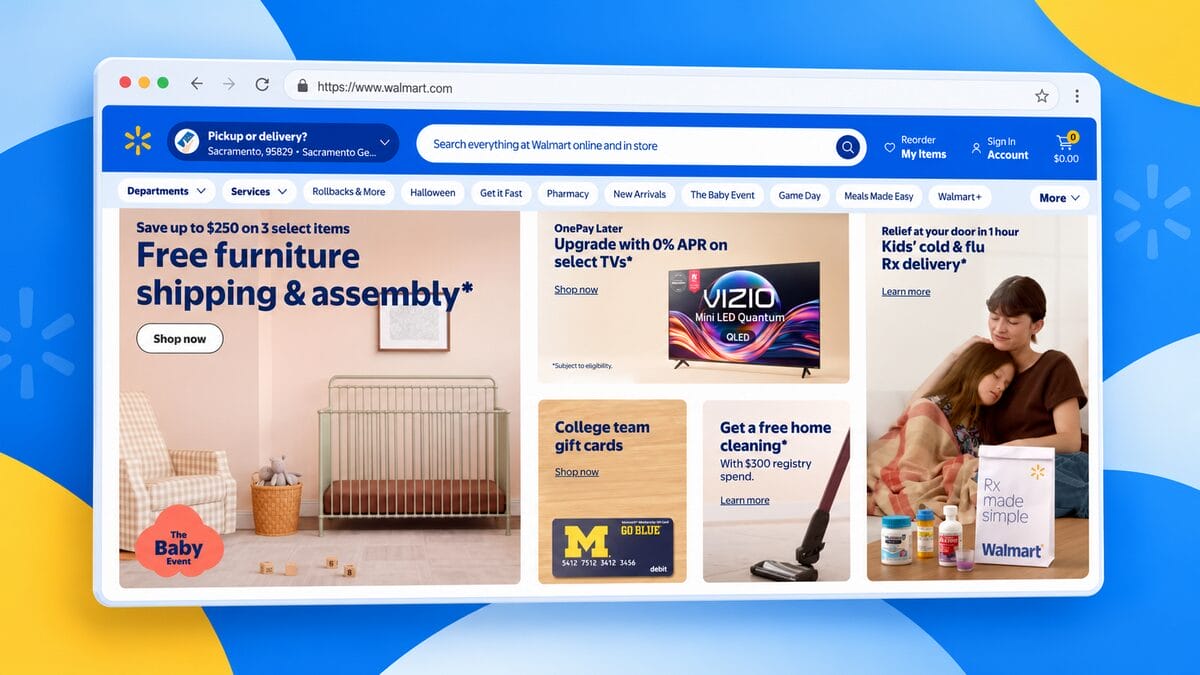
Walmart dropshipping means sourcing products from Walmart and having them shipped directly to customers who purchase through your store. You manage the listing, selling price, and customer relationship, while Walmart or the third-party seller fulfilling the purchase handles the shipment. You don’t hold the inventory yourself.
A hypothetical example: you list a desk organizer for $30, and it costs $18 on Walmart when your customer orders. You purchase it and enter the customer’s delivery address. The $12 difference isn’t your profit yet: shipping, applicable taxes, payment fees, advertising, and other expenses still need to come out of it.
Before going further, I want to untangle a common source of confusion. “From Walmart” and “on Walmart” describe different setups:
- Dropshipping from Walmart: You source products from Walmart’s retail website to fulfill orders placed in another store.
- Dropshipping on Walmart Marketplace: You sell on Walmart.com as an approved marketplace seller and use a supplier to fulfill orders under Walmart’s seller requirements.
- Walmart Drop Ship Vendor (DSV): You supply products to Walmart through a separate supplier arrangement and ship orders directly to its customers.
This guide focuses on sourcing from Walmart’s retail website. That means purchasing as a retail customer; it doesn’t create an authorized supplier partnership with Walmart.
Does Walmart Allow Dropshipping From Its Website?
Don’t assume retail availability means supplier permission. Walmart’s Terms of Use reserve its right to prohibit sales to resellers and limit purchase quantities. That makes retail sourcing vulnerable to restrictions and canceled orders, even when a product is available to buy.
Your selling channel has its own rules, too. For example, eBay’s dropshipping policy prohibits listing an item and then buying it from another retailer or marketplace to ship directly to the customer. Using software to process that order doesn’t change the policy.
My advice is to check both sides before listing: whether your source supports your intended purchasing arrangement and whether your selling channel permits that fulfillment method. A dedicated dropshipping supplier with an explicit agreement can give you a clearer foundation for building your store.
🆕 Beginner’s Tip: Separate technical capability from permission. Being able to import a product or automate an order doesn’t mean Walmart or your selling channel has approved the arrangement.
How To Start Dropshipping From Walmart
Before filling your store or spending money on ads, check your sourcing arrangement, your selling channel’s rules, and your potential margins. Here’s how I’d approach it.
1. Walmart Product Research
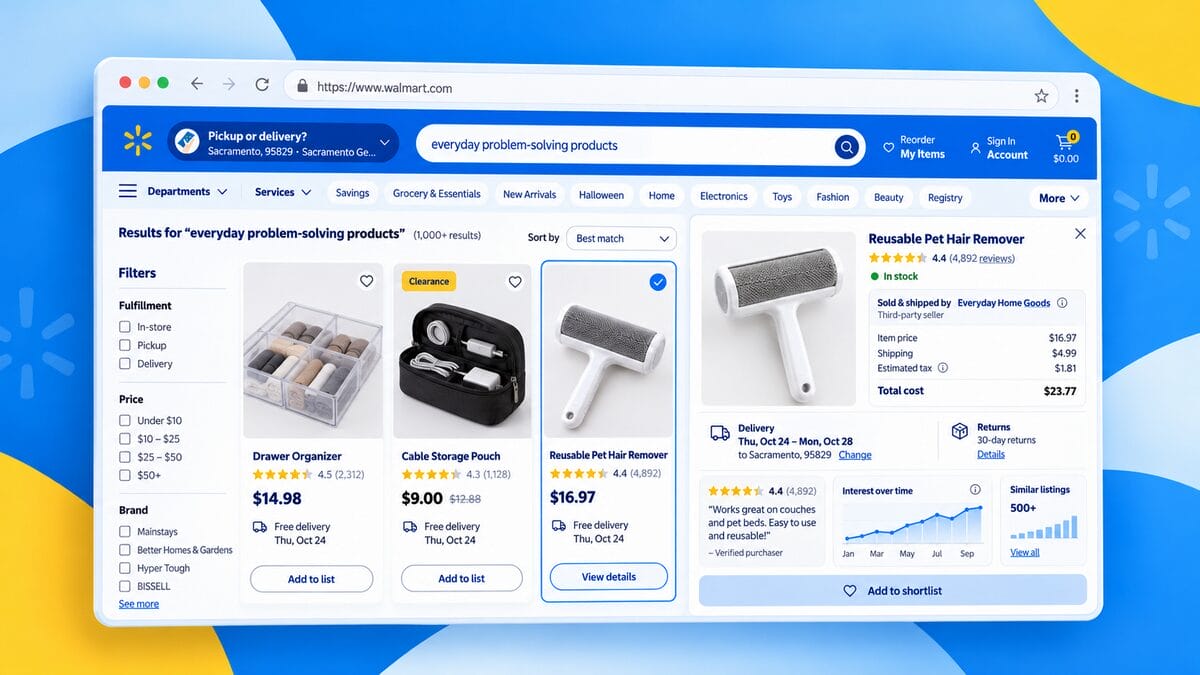
A good deal isn’t automatically a good product. That clearance find might look tempting, but will someone buy it at your price? And can you still source it next week? Treat discounts as a starting point for research.
I’d look for products with an easy-to-explain purpose, like drawer organizers, cable storage pouches, or reusable pet-hair removers. These are ideas to investigate, not guaranteed bestsellers. Think everyday problems: a messy kitchen drawer or a couch that’s apparently become your dog’s second coat.
Before adding anything to your shortlist, check these five things:
- Who sells and ships it: A Walmart.com listing may come from a third-party seller.
- The full purchase cost: Include shipping and applicable taxes for the exact variant.
- Delivery and returns: Check the destination-specific estimate and the item’s return conditions.
- Reviews and availability: Look for recurring quality complaints and recheck stock over time.
- Demand elsewhere: Use Google Trends, competing stores, and social content to explore interest and seasonality.
Check Whether the Numbers Work
The price difference isn’t your profit. Say you sell an item for $30, pay $16 for the product, $4 for shipping, $1.20 for payment processing, and $5 to acquire the customer. That leaves just $3.80 before applicable purchase taxes, returns, software, and other expenses.
Give yourself some breathing room. If a small price increase wipes out your earnings, I’d keep looking. You want a product that can handle an occasional hiccup.
Know What to Skip
Some products bring extra homework. For your first shortlist, I’d avoid:
- Safety or authenticity concerns: Recalled items, suspected counterfeits, or products with requirements you can’t verify.
- Regulated or sensitive goods: Age-restricted products, perishables, and temperature-sensitive items.
- Complicated fulfillment: Bulky, fragile, or warranty-heavy products that could make returns expensive.
- Unreliable availability: Clearance finds that disappear before you can build consistent sales.
These aren’t all universally prohibited categories; some are simply harder to manage. Check the rules for each product and channel, then order a sample to assess quality, packaging, and delivery yourself.
🔍 Research Tip: Track your shortlist for several days. Save the seller, cost, stock status, and delivery estimate. I’d rather discover an unreliable listing in a spreadsheet than through an unhappy customer’s email.
2. Select A Selling Channel
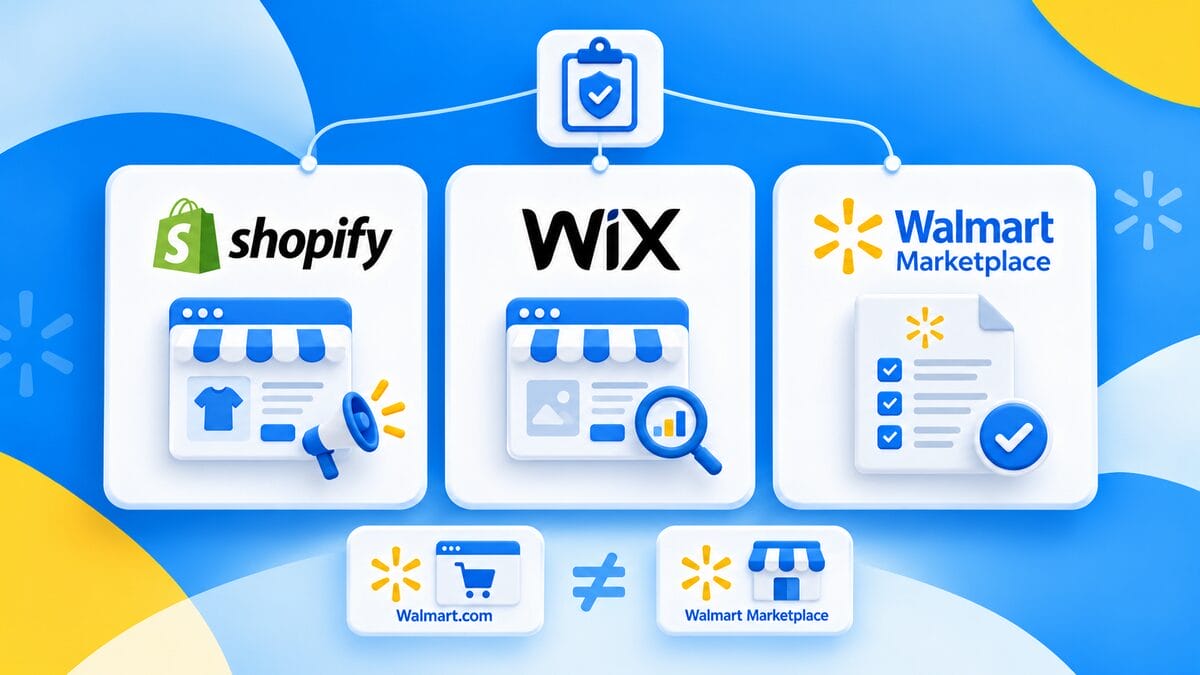
Your selling channel shapes how you operate, from attracting customers to handling orders. Before choosing one, check whether its policies allow your sourcing and fulfillment arrangement. A platform’s popularity (or compatibility with an automation tool) doesn’t settle that question.
For a store you can customize, Shopify and Wix are options to explore. You can build your own storefront, organize product collections, and explain shipping and returns clearly. The trade-off? You’re responsible for bringing in visitors through content, ads, search, or other marketing. Opening the store is the easy part; giving people a reason to shop takes work.
Also, selling on Walmart Marketplace is separate from sourcing products on Walmart.com. Becoming a Marketplace seller means applying to sell there and meeting its seller requirements; it isn’t a necessary step for opening your own store.
My advice? Choose one channel to learn first. If you’re considering dropshipping from Walmart to Shopify, start with a focused catalog and clear delivery expectations. Just remember that owning your storefront doesn’t remove Walmart’s restrictions on retail purchasing for resale.
3. Import Walmart Products
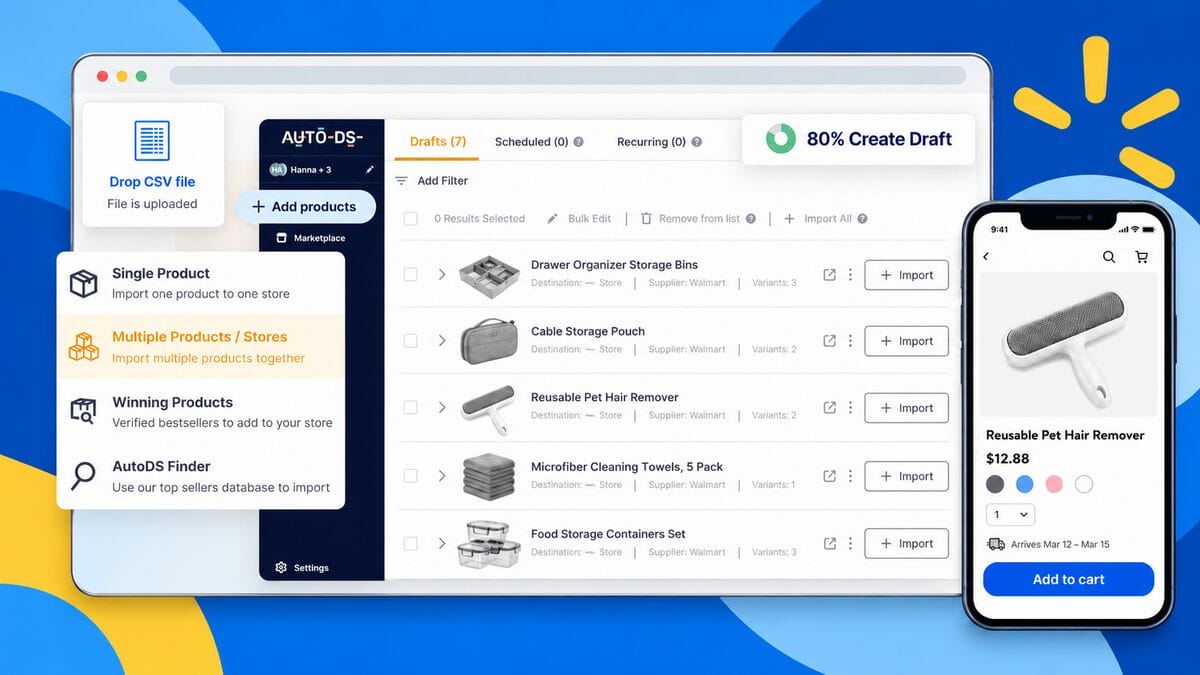
Treat every import as a draft. Once you’ve checked that your sourcing and selling arrangements are permitted, prepare your selected products for your store. You can enter the details manually or use AutoDS’s product importer for supported workflows, then review everything before publishing.
Make the listing useful to your customer. A supplier title might read like someone emptied a keyword drawer onto the page. Your version should explain what the product is, what it helps with, and what the buyer receives.
Here’s my quick pre-publish checklist:
- Simplify the title: Include the product name and its most relevant feature.
- Write a clear description: Explain the benefits, dimensions, materials, and package contents without adding unsupported claims.
- Check every variant: Match colors, sizes, quantities, and prices to the exact item you’ll order.
- Use images you have the right to: Your own sample photos are a useful option. Importing an image doesn’t grant permission to reuse it.
- Set your price and delivery expectations: Include your costs and use shipping estimates you can reasonably meet.
Preview the listing on your phone, too. Can you quickly understand the product, choose the right variant, and find delivery information? If you have to hunt for those details, your customer probably will as well.
4. Market Your Store
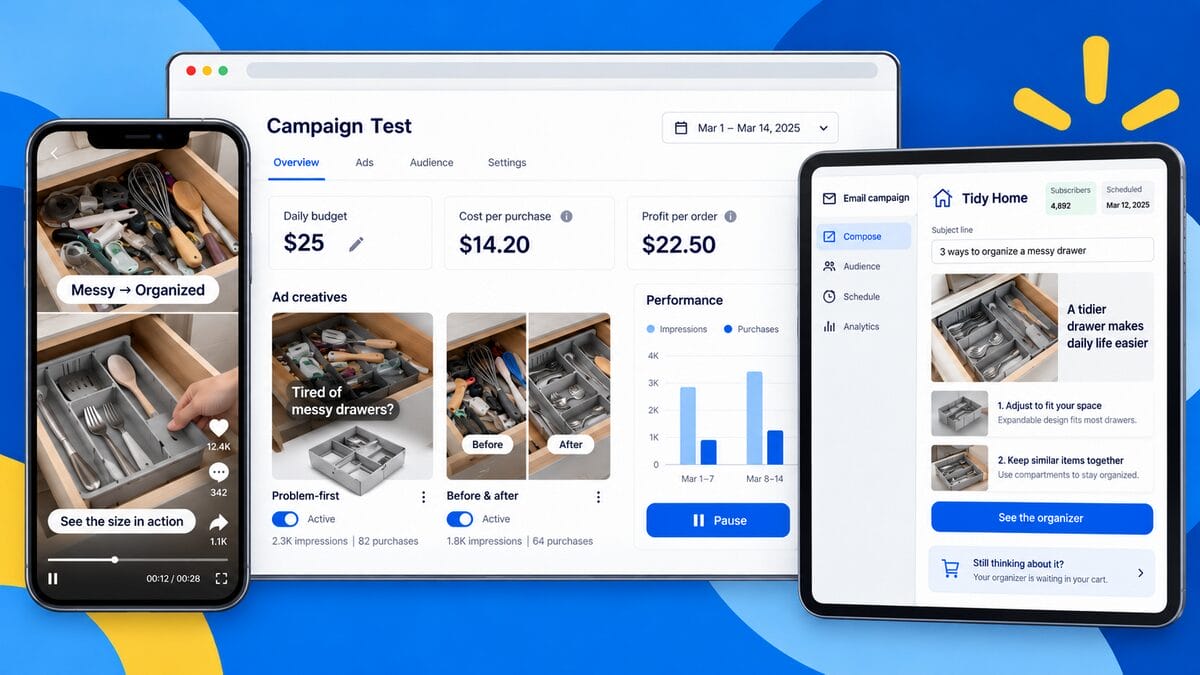
Give people a reason to choose you. Customers may find the same product at Walmart, so your store needs to offer something useful: a clear demonstration, helpful product information, or a collection built around a specific need. Simply raising the price and hoping nobody notices isn’t much of a strategy.
I’d start with one product and one main channel. That makes it easier to learn which message gets attention without juggling TikTok, Instagram, email, and an existential crisis before lunch.
- Create short demonstrations: Show the problem, the product in action, and the result. A drawer organizer makes more sense in a messy-to-tidy video than sitting against a white background.
- Answer purchase questions: Turn your sample into photos and clips that show size, capacity, and everyday use.
- Test paid ads with a budget cap: Try a few creative angles, then compare the cost of acquiring a customer with what each order actually leaves you.
- Follow up with subscribers: With their consent, send useful tips, relevant product suggestions, or cart reminders.
Measure sales alongside attention. Views and clicks help you understand interest, but they don’t tell you whether your marketing is profitable. If ads bring orders that lose money, revisit the offer, creative, or product before increasing your budget.
📢 Marketing Tip: Film several angles with one sample. Try a problem-and-solution clip, a quick tutorial, and an honest close-up review. You’ll have different messages to test without buying more products.
5. Fulfill Customer Orders
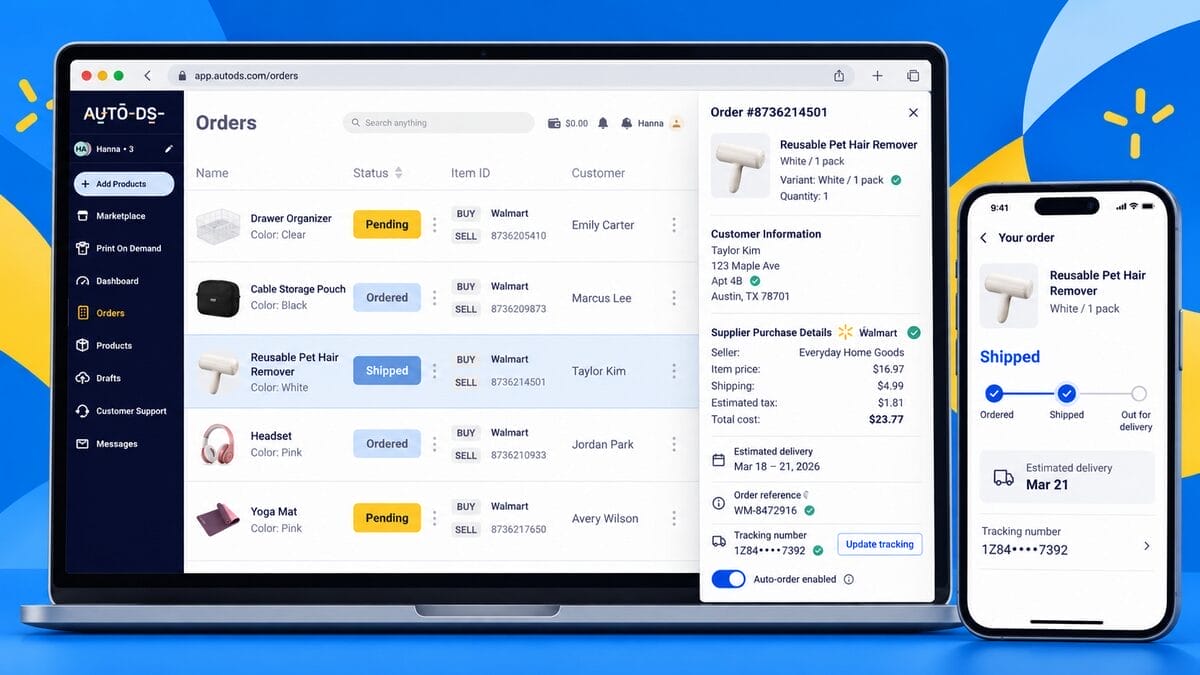
A sale starts the delivery promise. Once an order arrives, check that the exact product is still available, the cost hasn’t changed, and the estimated arrival fits what you told your customer. Those checks matter whether you process orders manually or use automation.
For a permitted sourcing arrangement, keep your fulfillment routine simple:
- Review the order: Confirm the variant, quantity, and delivery address—including that easy-to-miss apartment number.
- Verify the purchase details: Recheck the seller, total cost, and delivery estimate before paying.
- Save the order reference: Keep the supplier purchase linked to the correct customer order.
- Share accurate tracking: Update your customer when shipment information becomes available and watch for delays.
Don’t quietly substitute an unavailable item. If the selected size or color sells out, contact your customer with clear options, such as an agreed replacement or a refund. Getting a blue storage bin when you ordered beige isn’t a surprise upgrade.
Customer service stays with you. If an order arrives damaged or needs returning, coordinate the next steps with the supplier and keep your customer informed. I’d always send a quick, useful update before they have to ask where their package is.
6. Scale Your Store
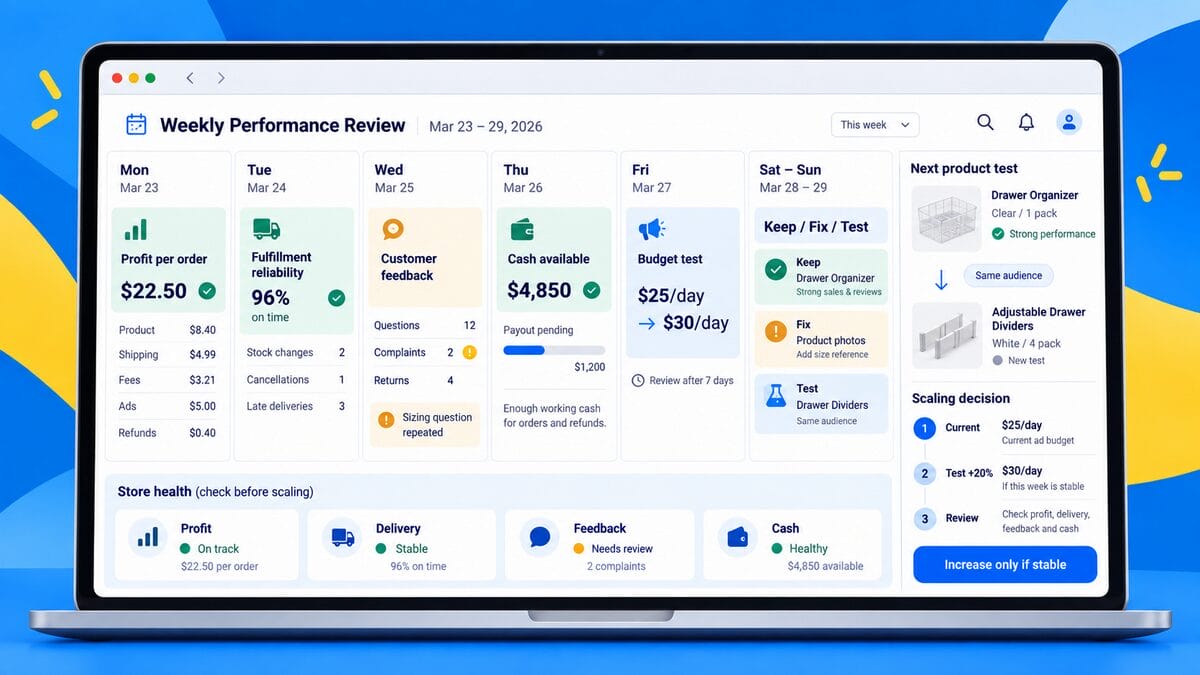
Scale what’s working consistently. A few good sales are encouraging, but I’d check whether those orders arrived on time, customers were happy, and there was money left after expenses before increasing ad spend.
Start with a quick weekly performance check:
- Profit per order: Account for product costs, shipping, fees, ads, and refunds.
- Fulfillment reliability: Watch for stock changes, cancellations, and late deliveries.
- Customer feedback: Notice which products generate repeat questions, complaints, or returns.
- Cash availability: Keep enough money available to pay for orders and handle refunds while payouts are pending.
Expand around your strongest products. If a drawer organizer sells consistently, a related storage accessory could be worth testing. You’ll have a clearer audience and a more cohesive store than if you suddenly add basketball hoops to the mix.
Increase spending in manageable steps. Test a higher budget, check whether customer acquisition costs and fulfillment remain workable, then decide whether to increase it again. More orders should improve your business, not just multiply your notifications.
As volume grows, reassess your supplier arrangement. Retail prices and availability can be difficult to plan around. I’d explore suppliers that explicitly support dropshipping and can offer clearer terms for ongoing orders before making bigger commitments.
The Advantages & Disadvantages Of Walmart Dropshipping
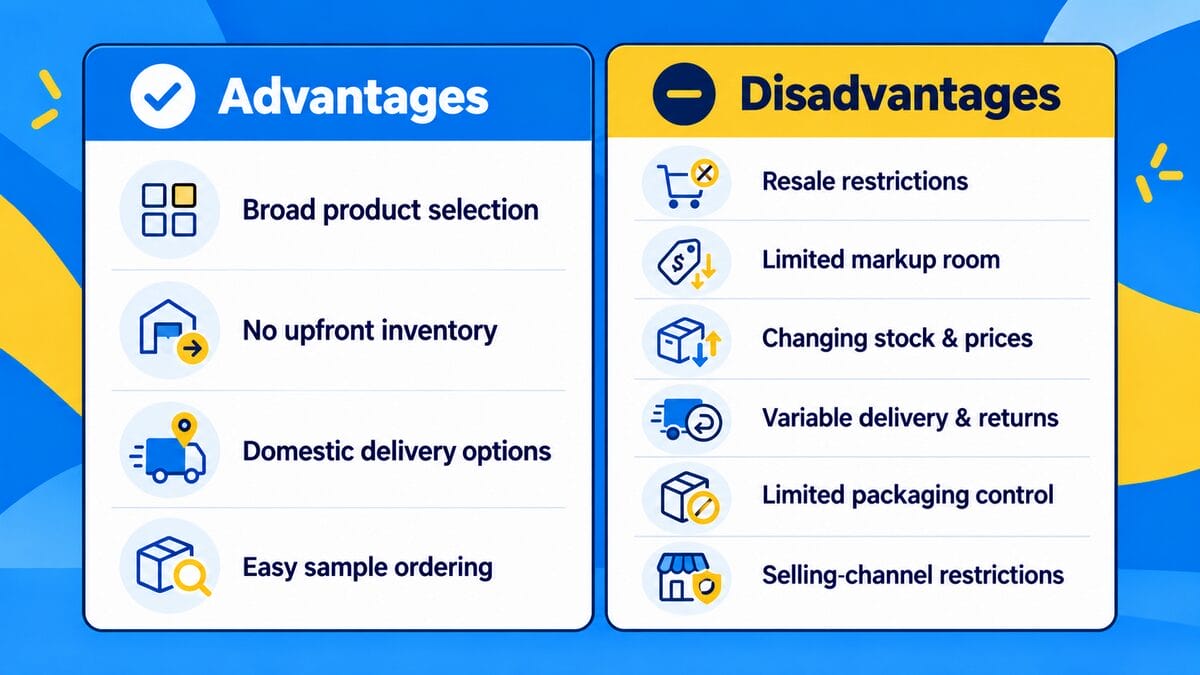
Walmart’s appeal is easy to understand: a broad catalog, visible retail prices, and the convenience of ordering online. But sourcing from a retailer also means working with conditions you don’t control. Here’s how I’d weigh the trade-offs.
Advantages
- Plenty of products to research: You can explore different niches and compare features, prices, and customer feedback.
- No inventory purchased upfront: In the retail dropshipping workflow, you purchase after receiving an order, although you still need funds to cover fulfillment.
- Potentially convenient domestic delivery: Eligible items may offer useful delivery options, depending on the seller, product, and customer’s address.
- Easy sample ordering: You can purchase individual items to inspect quality and create original product content before committing to a listing.
Disadvantages
- Restrictions on resale purchases: Walmart reserves the right to prohibit sales to resellers and limit quantities under its Terms of Use.
- Limited room for markup: You’re buying at retail prices, and customers can compare your offer with Walmart’s.
- Changing stock and prices: Your margin (or ability to fulfill an order) can change after you publish a listing.
- Inconsistent fulfillment conditions: Different sellers can have different delivery estimates and return conditions.
- Limited packaging control: Don’t assume orders will arrive with your branding or without retailer information.
- Channel restrictions: Some platforms prohibit buying from another retailer to fulfill customer orders, so your choice of channel matters.
My take: evaluate the whole arrangement. An attractive product price only helps if purchasing, delivery, customer service, and margins hold up together. I’d give those factors more weight than a tempting clearance discount.
Walmart Shipping & Return Policies
Check the policy for the exact item. Shipping and returns can differ depending on who sells and fulfills the order. That little “sold and shipped by” detail deserves your attention before you promise anything to a customer.
Shipping: Check the Address and Delivery Method
Use the customer’s ZIP code to check available delivery options, estimated arrival, and charges. Shipping by a parcel carrier and local delivery from a store are different services, so don’t assume their fees or availability match.
Before placing an order, confirm three things:
- Arrival estimate: Does it fit the delivery window advertised in your store?
- Total shipping cost: Will the order still leave you a workable margin?
- Fulfillment method: Will the service provide the tracking information your channel requires?
Avoid storewide next-day delivery promises. An item that arrives tomorrow at your address may take longer elsewhere. I’d leave room for order processing instead of turning the fastest estimate into a guarantee.
Returns: Know Which Window Applies
Most Walmart purchases have a 90-day return window, with exceptions. Items sold and shipped by Marketplace sellers generally have a 30-day window. Check the item’s eligibility and the deadline shown in your purchase history under Walmart’s return policy.
Your customer’s purchase is with your store. Walmart states that purchases from resellers aren’t eligible for direct returns to Walmart. You’ll need to handle your customer’s request and separately arrange any eligible supplier return through the original order. Don’t simply send them to their nearest Walmart.
Make your return instructions easy to follow: how to contact you, what information to provide, and when to expect the next update. I’d confirm the return method and address before asking anyone to ship a package—return-to-sender shouldn’t become a group project.
Walmart Tracking Conversions With Qtrack
Keeping customers updated starts with tracking they can follow. AutoDS includes a Qtrack conversion option for Walmart US, allowing you to convert shipment tracking numbers into Qtrack references for checking delivery progress.
To find it, open Settings → Supplier Settings, select your store and Walmart US, then go to Orders → Tracking Conversion. If Qtrack is available for your setup, you’ll see the option to convert tracking numbers there.

Although our Qtrack tracking guide focuses on Amazon, the option also appears in Walmart US supplier settings, as shown above. The guide explains how to look up Qtrack delivery events through 17TRACK.
Before enabling conversion, check your selling channel’s tracking requirements and whether your existing carrier tracking already meets them. The goal is to give customers useful shipment updates and keep accurate delivery records.
Reliable Supplier: Key Factors
A supplier’s value shows after checkout. Finding an attractive price is one thing; getting the right item delivered and resolving a damaged order is where reliability matters. I’d judge a potential supplier by the experience they can consistently deliver.
Whether you’re evaluating a seller on Walmart.com or exploring a dedicated dropshipping supplier, look for these essentials:
- A clear sourcing agreement: Confirm that the supplier supports your intended resale and fulfillment arrangement.
- Consistent stock and pricing: Look for availability you can plan around and enough margin to absorb occasional changes.
- Dependable shipping: Test delivery to your target market and check that tracking accurately reflects the shipment.
- Product quality: Order samples and compare what arrives with the listing’s photos and specifications.
- Responsive support: Ask a specific question before committing. A useful answer tells you more than a generic “dear valued customer.”
- Workable returns: Know who handles requests, where items go, and which costs fall on you.
Evaluate the individual seller, even when you find them on a familiar website. Save their details and recheck them before purchasing; switching sellers can also change the delivery experience and return conditions.
If your current source struggles as orders grow, compare suppliers before increasing your commitments. Our guide to fast dropshipping suppliers gives you options to investigate. I’d prioritize a supplier that supports your business model and delivers consistently over one that’s occasionally a dollar cheaper.
Automate Your Walmart Dropshipping Business With AutoDS
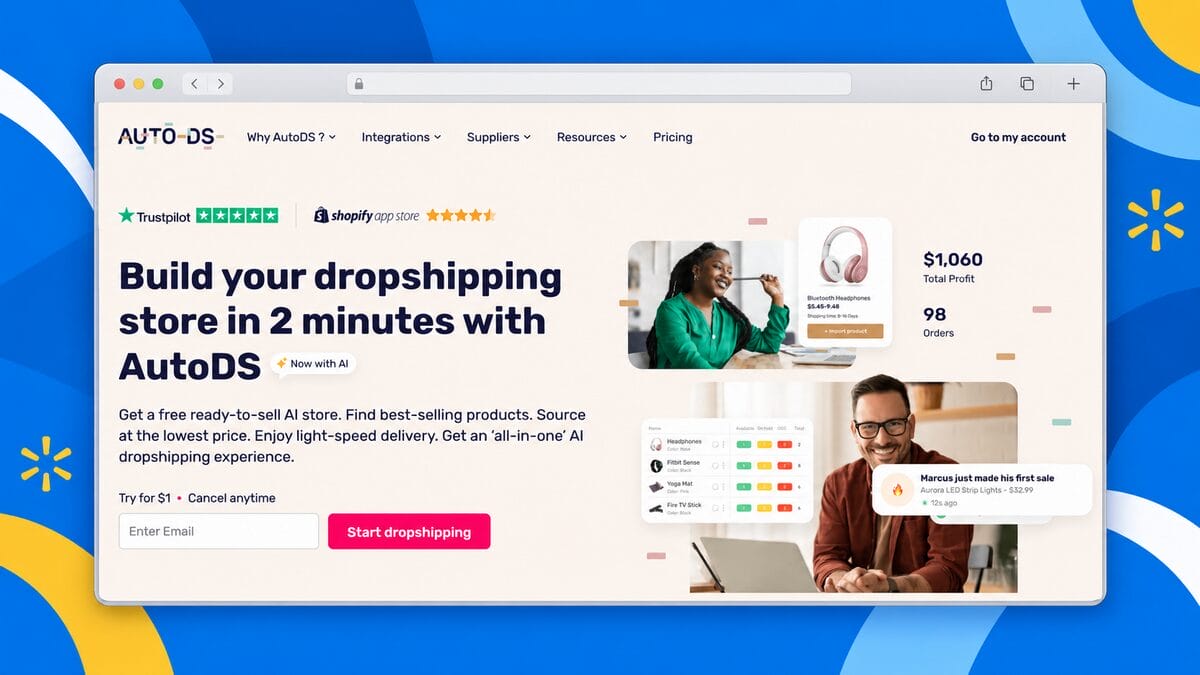
Repetitive tasks add up quickly. Checking prices, updating listings, and copying order details might feel manageable with a handful of products. As your catalog grows, AutoDS brings those everyday tasks into one platform, giving you more time for product decisions and customers.
Start with price and stock monitoring. Once enabled, AutoDS checks supplier listings through scheduled scans and updates your connected store according to your settings. That helps reduce manual checking, although changes can happen between scans. Set your preferences carefully using the monitoring guide.
Order fulfillment can be automated, too. Walmart US is supported through Fulfilled by AutoDS, which uses managed purchasing accounts to process eligible orders. Tracking is retrieved when available and synced to supported channels, so you spend less time moving information between tabs.
I’d set up automation in stages: review your imported listings, enable monitoring, then configure fulfillment after checking the service requirements, fees, and funding. Follow a small batch of orders through delivery before expanding. It’s easier to catch a setting that needs adjusting with five orders than fifty.
You still make the business decisions. AutoDS can handle supported repetitive work, while you manage margins, customer promises, and compliance with supplier and channel policies. That’s where automation earns its place: giving you more room to run the store.
Frequently Asked Questions
Am I allowed to dropship products from Walmart?
You shouldn’t assume Walmart authorizes retail dropshipping. Its Terms of Use reserve the right to prohibit sales to resellers and limit quantities. You also need to check your selling channel’s rules. Being able to place an order or import a product doesn’t establish permission.
What selling channels are supported with Walmart dropshipping?
Technical support depends on your software, selling channel, and fulfillment method. Shopify and Wix are storefront options to evaluate, but an integration doesn’t override Walmart’s purchasing restrictions. eBay explicitly prohibits buying from another retailer after a sale to ship directly to your customer.
What are the best products to source from Walmart?
I’d research compact, durable products with a clear everyday purpose, such as drawer organizers, cable storage accessories, and simple cleaning tools. These are starting points, not guaranteed winners. Prioritize consistent availability, manageable returns, and enough margin after shipping, fees, and marketing.
How much does it cost to return a dropshipping product to Walmart?
Eligible Walmart purchases may qualify for free returns, but check the specific item and return method before promising that to your customer. Walmart’s return policy distinguishes direct purchases from purchases through resellers. You handle your customer’s refund separately from any eligible return on your original Walmart order.
Is dropshipping from Walmart legal?
Dropshipping is a fulfillment model, and reselling a genuine retail product is not automatically illegal. However, your obligations depend on the product, jurisdiction, and how you market and sell it. Legal resale and permission under Walmart’s terms are separate questions; you need to address both.
Does Walmart have an official dropshipping program?
Walmart has a Drop Ship Vendor program, where approved suppliers ship Walmart customer orders directly. That is different from buying products on Walmart.com to fulfill sales from your own store. Joining DSV means becoming a supplier to Walmart, not signing up to use its retail catalog as your supplier.
How much does it cost to start dropshipping with Walmart?
There’s no single startup price. Budget for your storefront, domain, samples, optional software, marketing, and money to pay for orders before payouts arrive. For example, ten orders costing $25 each require $250 in purchasing funds alone. That’s an illustration, not a recommended total budget; you’ll also need room for refunds and other expenses.
What is Walmart’s policy on using Walmart.com to fulfill orders from other marketplaces, like eBay or Amazon?
Walmart reserves the right to prohibit purchases by resellers, regardless of where they sell. Separately, eBay prohibits retail dropshipping, while Amazon requires a supplier agreement identifying you as the seller of record, appropriate packaging and paperwork, and responsibility for returns. An ordinary Walmart retail order doesn’t establish that arrangement.
Can you use Walmart as a supplier for your Shopify store?
It’s technically possible to purchase a Walmart item for delivery to a Shopify customer, but that doesn’t make Walmart an authorized dropshipping partner. Its resale restrictions still apply, and you remain responsible for delivery, refunds, and customer service. I’d confirm a suitable sourcing arrangement before building a catalog around it.
What are the risks of dropshipping from Walmart?
The main risks include purchasing restrictions, canceled orders, changing prices, stock shortages, delivery delays, and limited packaging control. Buying at retail prices can also leave thin margins. Your customer expects you to solve problems, even when the issue starts with the supplier.
How do you find profitable products to dropship from Walmart?
Start with a product that solves a clear problem, then compare demand signals, competing offers, and recent customer feedback. Calculate what remains after the product, shipping, taxes, fees, advertising, and expected returns. Recheck price and availability over time, and order a sample before investing in promotion.
What are the best alternatives to Walmart for dropshipping suppliers?
I’d compare CJdropshipping, suppliers in the AutoDS Private Suppliers program, and domestic wholesalers that explicitly offer dropshipping. The best fit depends on your niche, destination, margins, and channel requirements. Ask about delivery, packaging, returns, and resale permissions before committing.
Conclusion
Walmart dropshipping takes more than finding deals. You need a permitted sourcing arrangement, products with workable margins, and delivery promises you can keep. My advice is to start with a small shortlist, test the customer experience yourself, and let the results guide your next move.
Build a routine you can grow with. Once your setup checks out, you can start your AutoDS trial for $1 to explore product importing, monitoring, and supported fulfillment tools. Let automation take care of repetitive tasks while you focus on choosing better products and looking after your customers.
Keep exploring your options with these guides: