


Generative AI—artificial intelligence capable of creating content like text, images, and product descriptions from learned patterns—is no longer an experiment reserved for tech giants. In 2026, it’s actively reshaping how online stores operate, and the gap between sellers who embrace it and those who don’t is widening fast.
The good news? You don’t need to be a developer or run a massive operation to benefit from it. Platforms like AutoDS already put powerful AI tools into the hands of solo sellers and small teams, making tasks like writing item listings, researching winning products, and building entire storefronts dramatically more efficient.
In this guide, I’ll walk you through the most impactful ways generative AI is being used in e-commerce today and show you exactly where to start, even if you have zero technical background.
Generative AI in e-commerce is already writing product descriptions, personalizing shopping experiences, and answering customer questions for online sellers of all sizes.
The highest-impact use cases for most stores are AI-powered product listings and automated customer support, where the time savings are immediate and measurable.
AI-driven personalization is one of the biggest growth levers available right now, with recommendation engines directly shaping what customers see, click, and buy.
You don’t need to do everything at once. Starting with a single use case, like product descriptions, and building from there is the smartest path to adoption.
AutoDS makes it easier to put generative AI to work across your entire online business, from product research to listing creation. 👇
What Is Generative AI & Why It Matters for E-commerce

Generative AI is a type of artificial intelligence capable of crafting entirely new content instead of simply analyzing existing data. That includes product descriptions, marketing copy, customer support replies, emails, and even product images. Most of these tools are powered by large language models (LLM), the same technology behind ChatGPT and similar AI platforms.
That’s what separates generative AI from the traditional AI tools e-commerce sellers have used for years. Older systems mainly focused on classification and prediction, things like sorting products into categories or forecasting sales trends. Generative AI goes a step further by actually producing original output. If you’re starting a dropshipping business, for example, this is the kind of technology that lets you produce work that previously required an entire team.
The timing matters, too. These models became commercially viable for everyday business use in 2023 and 2024, and adoption has accelerated rapidly ever since. Today, 88% of organizations today already use AI in at least one business function. What once took hours, like writing dozens of unique product descriptions manually, can now happen in just a couple of minutes with the right tools.
For dropshippers specifically, that changes the playing field completely. You no longer need a full content team or advanced technical skills to run a competitive store. For instance, AutoDS already integrates generative AI into workflows like research, listing creation, and store setup, making AI tools for dropshipping far more accessible for anyone starting out.
At this point, understanding generative AI isn’t optional anymore. It’s quickly becoming part of how modern online stores operate, optimize, and compete.
Top Use Cases of Generative AI in E-commerce
So, how are online sellers actually using generative AI? Here are the use cases that are making the biggest difference right now, ranked by how beginner-friendly they are and how quickly you’ll see results.
AI-Powered Product Descriptions & Listings
Writing product descriptions is one of the most time-consuming tasks for any online seller, and it’s also where generative AI delivers some of the fastest results. AI tools can take basic product data, like features, dimensions, or supplier specs, and instantly generate optimized titles and descriptions for search visibility and conversions.
The real advantage is speed at scale. Instead of spending days writing individual listings manually, you can produce content for hundreds of items in just a few minutes. And that matters because every platform, whether it’s Shopify, eBay, Amazon, or Etsy, comes with different formatting styles, character limits, and listing requirements. AI helps adapt those listings automatically without forcing you to rewrite everything from scratch.
For most dropshippers, this is also the smartest place to start using AI because the impact is immediate and easy to measure. If product listings are slowing down your workflow, AI-generated descriptions are usually the fastest way to save time without sacrificing quality.
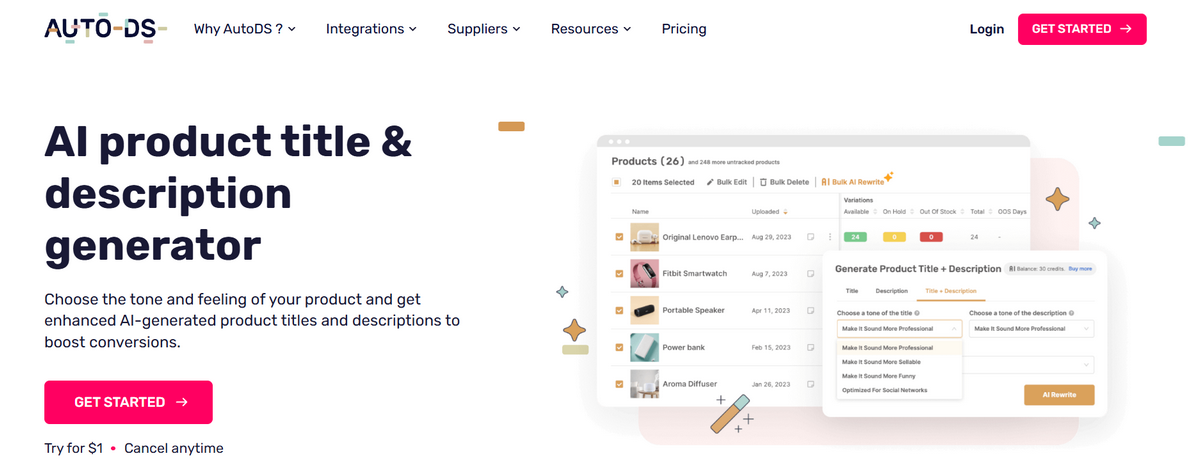
🔧 Recommended tool: The AutoDS AI Product Title and Description Generator creates optimized listings directly inside the platform, helping sellers streamline product imports without constantly switching between different tools.
Personalized Shopping Experiences
Beyond content, generative AI is also transforming how stores connect their products with the right buyers. AI-driven personalization tools analyze browsing behavior, purchase history, and shoppers preferences to recommend items uniquely suited to each visitor.
And this goes way beyond the old-school “customers also bought” section. Modern AI can generate personalized email campaigns, dynamic landing pages, tailored product bundles, and even customized recommendations in real time. The impact is substantial: shoppers are far more likely to engage with listings that actually match their interests instead of generic bestsellers shown to everyone.
The best part? Small stores benefit form this too. You don’t need a massive product catalog to start using personalization effectively. Even basic AI-powered recommendation tools can help returning visitors discover products they’re more likely to buy, making it one of the most accessible ways to improve the customer experience.
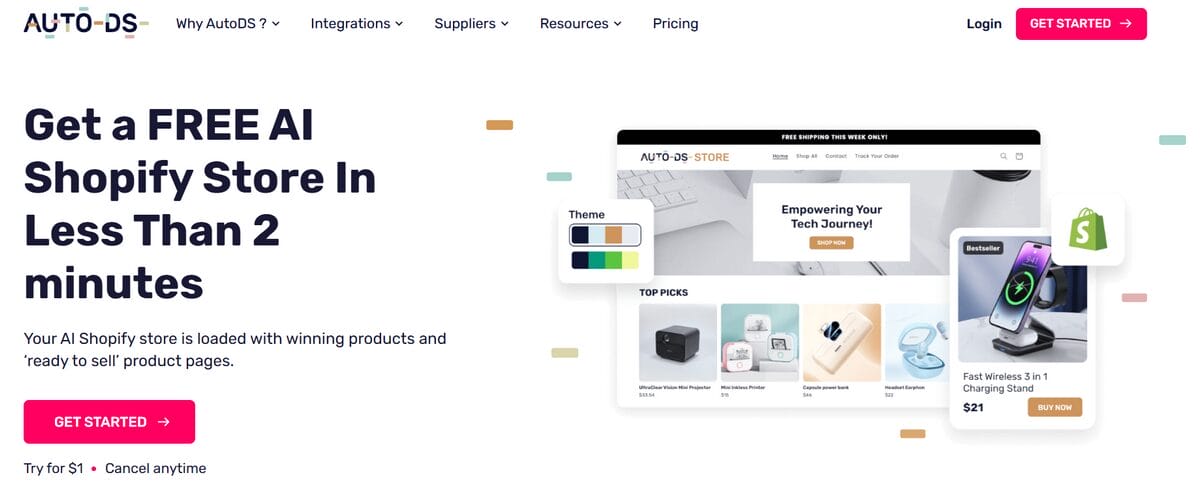
🔧 Recommended tool: Personalization works much better when your storefront already feels aligned around a clear niche and catalog. The AutoDS AI Shopify Store Builder helps simplify that process by automatically generating a niche-focused Shopify store with 10 curated winning products already tailored to that category, making it easier to create a more consistent shopping experience from the beginning.
AI Chatbots & Customer Support
Handling customer questions 24/7 is one of the biggest challenges for independent sellers and small e-commerce teams, and it’s an area where AI chatbots have rapidly matured. Today’s AI-powered chatbots go far beyond scripted responses. They understand context, handle common questions, track orders, process returns, and even recommend products naturally during a conversation.
Adoption is widespread, with the majority of retailers already piloting or deploying generative AI for customer service workflows. The technology has evolved from rigid decision trees to intelligent assistants that grasp nuance and adapt to each customer’s situation.
🆕 Beginner’s Tip: Want to squeeze even more out of AI for your business? Take a look at these ChatGPT hacks for dropshipping and start optimizing your workflow.
For dropshippers, the impact is especially noticeable. Imagine waking up to 20 overnight messages asking about shipping updates, return policies, or delivery times. Instead of answering each one manually before your morning coffee, AI chatbots can handle most of those repetitive conversations automatically while still keeping responses fast and personalized.
That doesn’t mean human support disappears. It simply means sellers spend less time answering the same questions over and over again, and more time focusing on real customer experience.
Dynamic Pricing & Competitive Intelligence
Pricing is another area where AI gives sellers a meaningful edge, especially those in competitive markets. AI-powered dynamic pricing tools monitor competitor prices, demand signals, and inventory levels to adjust your prices automatically in real time.
And no, this isn’t just about constantly being the cheapest option. Modern pricing AI focuses on profitability as much as competitiveness. It can identify when shoppers are more price-sensitive, react to seasonal demand shifts, and adjust prices strategically without forcing sellers to monitor marketplaces manually all day long.
Imagine selling the same trending product across Shopify, Amazon, and eBay while competitors constantly update their prices. Manually tracking every fluctuation quickly becomes exhausting. AI repricing tools handle those adjustments automatically, helping sellers stay competitive without sacrificing margins every time another store drops prices by a few dollars.
That’s also why large retailers like Walmart already use AI-driven pricing systems across massive product catalogs. The difference today is that smaller entrepreneurs can now access similar technology without enterprise-level infrastructure. Once listings and product workflows are optimized, pricing automation often becomes one of the next biggest time-saving upgrades for growing stores.
AI-Powered Search & Product Discovery
The way people search for products online is changing fast. Instead of relying on short keyword searches like “waterproof jacket,” shoppers now use more natural, conversational queries such as “lightweight waterproof jacket for hiking under $50.” AI-powered search understands intent, context, and preferences much more effectively than traditional keyword matching systems.
For store owners, this means better product discoverability without manually tagging every item. In practice, that means fewer dead-end searches and more chances for shoppers to actually find relevant goods.
This becomes especially useful for dropshippers managing large catalogs from multiple suppliers. Product data often arrives inconsistent, incomplete, or poorly formatted, which makes traditional search systems struggle. AI helps clean, organize, and contextualize that information so products surface more naturally when customers search.
💡 Pro Tip: AI-powered search is also changing how products appear inside tools like ChatGPT. If you want your products to become more discoverable in conversational AI results, this guide breaks down how that optimization works.
Visual AI & Product Imagery
Product photography has traditionally been one of the biggest expenses for online sellers, but generative AI is quickly changing that equation. Today, AI tools can craft lifestyle product photos from simple prompts, generate multiple background variations, and improve image quality automatically.
The technology is also becoming far more interactive. Virtual try-on experiences are growing across fashion and accessories, while AI-powered editing tools can instantly remove backgrounds, resize images, and adapt visuals for different marketplaces or social platforms. In practical terms, that means turning basic material into polished product assets in a matter of minutes.
For online sellers, this solves a major problem. Supplier images are often low quality or overly generic, which makes stores feel less trustworthy. AI helps create cleaner, more branded visuals without needing a professional design team or large production budget. And in a space where first impressions heavily influence conversions, stronger visuals can make a surprisingly big difference.

🔧 Recommended tool: Create UGC takes visual AI a step further by generating UGC-style product videos with AI avatars, optimized scripts, and customizable formats for social media. Instead of spending heavily on creators or production, sellers can produce fast, scalable promotional content designed to feel native to modern social commerce.
How to Get Started With AI in Your E-commerce Store
Understanding AI use cases is one thing. Actually implementing them inside your store is where many sellers get stuck. The good thing is that you don’t need coding skills, a data science background, or a large budget to get started. In most cases, the smartest approach is starting small, testing what works, and building from there. Here’s a quick breakdown:
Pick One High-Impact Use Case
The easiest way to start with AI is by focusing on a single workflow that already takes too much time manually. For most online sellers, product descriptions and listings are usually the best entry point because the results are immediate, visible, and easy to measure.
Instead of spending hours writing and formatting listings one by one, AI can generate optimized content in a few clicks That not only saves time, but also helps maintain consistency across your store and marketplaces.
More importantly, it lets beginners experiment faster. You can publish more products, test different styles of listings, and identify what performs best without turning content creation into a choke point.
Choose a Platform With AI Built In
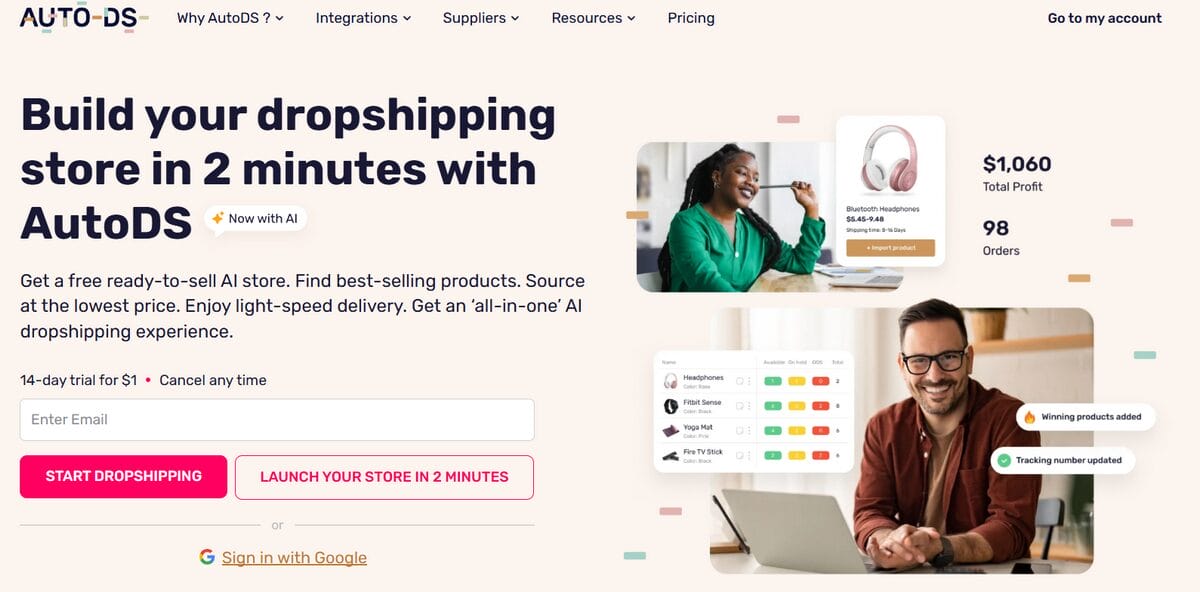
In practice, constantly switching between apps usually creates more friction than efficiency. That’s why integrated platforms tend to work much better, especially during the early stages.
AutoDS, for example, combines several AI-powered features inside one system, including:
⭐ AutoDS Products Hub: AutoDS uses AI-powered research to help sellers identify trending and high-potential products faster.
⭐ AI Product Title & Description Generator: AutoDS automatically creates optimized product listings designed for marketplaces and SEO visibility.
⭐ AI Shopify Store Builder: AutoDS generates a ready-to-launch niche store with products, structure, and layouts already adapted to a specific market.
⭐ Automated price syncing & inventory updates: AutoDS keeps pricing and stock levels updated in real time to reduce manual monitoring and avoid selling unavailable items.
Having these systems connected in one place reduces repetitive work, simplifies store management, and creates a much smoother path from setup to first sales.



Start Small & Measure Your Results
AI works best when treated as an optimization tool, not as a shortcut that magically fixes everything overnight. A smarter approach is testing AI-generated workflows alongside manual ones and comparing the actual results.
For example, you can run AI-generated product listings for a few weeks and track metrics like click-through rates, conversions, engagement, or time saved. That real-world feedback helps you understand where AI is genuinely improving performance.
It also builds confidence gradually. Instead of overhauling your entire store at once, you learn which operations benefit most from automation and where human input still matters more.
Expand to the Next Use Case
Once one workflow feels stable, expanding becomes much easier. After automating listings, many sellers move into AI-powered product research, automated repricing, customer support tools, or personalized recommendations.
What makes AI especially powerful in e-commerce is how these processes start working together over time. Product research informs listings, listings improve discoverability, and automation helps stores handle more orders without multiplying workload.
That’s usually when sellers begin noticing the real operational difference: not just saving time, but building a store that becomes significantly easier to manage as it grows.
Don’t Build — Buy
Building custom AI workflows often requires technical maintenance, additional costs, and far more complexity than most stores actually need. Integrated platforms remove that friction and make adoption much more realistic for smaller teams or solo sellers.
At the end of the day, the goal isn’t becoming an AI engineer. It’s using automation strategically to simplify operations, make better decisions faster, and free up time for the parts of the business that still require creativity and human judgment.
Frequently Asked Questions
What is an example of generative AI in e-commerce?
One of the clearest examples of generative AI in e-commerce is the AI product description generator, which turns basic product details into unique, SEO-optimized listings ready for any marketplace. Other common examples include AI chatbots, personalized email campaigns, and AI-generated product images. These tools handle tasks that would otherwise require a dedicated team.
How much does it cost to use AI in e-commerce?
The cost of using AI in e-commerce depends on the tools and features involved. Many platforms already include basic AI features in their plans, while more advanced tools for listings, pricing, or customer support can range from $20 to $200 per month. Some platforms, like AutoDS, also include AI features directly inside their ecommerce workflows.
Can small e-commerce stores use generative AI?
Absolutely. AI tools are not longer limited to large retailers with big budgets. Platforms like AutoDS make AI-powered listing creation, product research, and order automation accessible to solo sellers and beginners with no technical skills. Most sellers start with one simple workflow and expand from there.
Will AI replace human workers in e-commerce?
AI helps automate repetitive ecommerce tasks, like writing product descriptions or adjusting prices, but it doesn’t replace human decision-making completely. Sellers still handle branding, strategy, creative direction, and customer relationships. Think of AI as a team member that reduces manual workload and saves time, so you can focus on the strategical decisions.
What is agentic AI in e-commerce?
Agentic AI in e-commerce refers to AI systems capable of making decisions and completing actions independently. That can include comparing products, browsing stores, or even making purchases on behalf of users. While still evolving, this technology could significantly reshape how products are discovered and sold online.
Start Your Dropshipping Journey With AutoDS
Generative AI in e-commerce has quickly gone from a futuristic concept to a part of everyday life for online sellers. Tasks that once demanded hours of manual effort, like writing product pages, researching trends, or managing store operations, can now be handled faster and far more efficiently.
That shift also lowers the barrier for beginners. Running a competitive store no longer requires a big team or pro tech knowledge. What matters now is knowing how to use AI strategically and let it take care of the time-consuming tasks.
AutoDS brings those capabilities together in one platform, combining AI-powered product research, content generation, and store setup into a smoother workflow. So instead of spending your day buried in admin work, you can focus on testing, refining your strategy, and moving your store forward.
🤖 Ready to put generative AI to work in your store? You can start exploring AI-built in tools with AutoDS through its $1 trial and see firsthand how much faster your e-commerce workflow can run.
Want more tools, tips, and tactics about AI dropshipping? Keep learning with the next guides: