


You can start an AI dropshipping business with almost no upfront cost, and once it’s set up, automation can handle most of the heavy lifting.
Compared to launching a traditional business from scratch, dropshipping offers several major advantages. You don’t need to manage inventory or run a physical store, which cuts down a big portion of your initial costs. And when you layer AI into specific parts of the process, you can operate more efficiently and protect your profit margins from day one.
Tools like AutoDS bring these capabilities into one place, offering AI-powered features for building your store, selecting products, monitoring prices, and more.
Follow along with this guide to see how much you can actually get out of AI dropshipping.
You can start AI dropshipping for free, but automation is what makes it scalable and sustainable.
The most important early decisions are your product, supplier, and selling channel.
Tools like AutoDS help you automate product research, pricing, and order fulfillment from a single platform.
Organic traffic is the best way to get your first sales without ad spend.
Most beginner mistakes come from poor setup, test your store, pricing, and fulfillment before going live.
Scaling comes after consistency: focus on one channel, one niche, and what’s already working.
How To Start AI Dropshipping for Free: Step-by-Step
Step 1: Understand The Basics
AI dropshipping is simply traditional dropshipping with automation handling most of the repetitive work. Instead of manually researching products, updating prices, and placing orders, AI tools streamline these tasks so you can move faster and make fewer mistakes.
In practice, this means things like:
- Spotting trending products earlier
- Generating product descriptions and ad copy
- Automatically monitoring stock and price changes from your suppliers.
- Automatic product importing.
The core model stays the same: no inventory, no upfront product cost, and suppliers ship directly to your customers, but the way you run it becomes much more efficient.
This matters most at the beginning. Many new sellers don’t fail because of bad ideas, but because of small operational mistakes like selling out-of-stock items or mispricing products.
Automation helps reduce those risks from day one. AI handles execution, so you can focus on choosing products and making decisions.
🚀 AutoDS is the perfect bridge to a more efficient and scalable dropshipping business! You can test its features for just $1.
Step 2: Figure Out Your Starting Budget (Free vs. Paid)
You can start dropshipping for free, but only up to a point. The real difference comes down to how much of the process you’re willing to handle manually.
Here’s what that actually looks like:
- Fully free (manual setup): Platforms like eBay let you list products without a monthly fee. You can research products yourself and place orders manually. It works, but it’s slow and hard to scale once orders start coming in.
- Free trials (best starting point): Shopify, TikTok Shop, and WooCommerce offer trial periods, so you can build a full store without paying upfront. This is the easiest way to get started without committing right away.
- Low-cost automation ($1 trial): Tools like AutoDS offer a $1 trial that adds automation to your workflow, including product research, price and stock monitoring, and order fulfillment. This is where dropshipping starts to feel manageable instead of manual.
In short, you can launch without upfront costs, but running everything manually quickly becomes a bottleneck. The moment you start getting orders, things like updating prices or checking stock by hand can lead to mistakes.
That’s why most beginners start with free trials, then add automation before their first real orders come in.
💰 Financial Tip: Avoid paid ads at this stage; organic traffic is enough to test your first products without increasing your risk.
Step 3: Choose Your Selling Channel
Your selling channel determines how you get traffic, how much control you have over your store, and how quickly you can start selling. This isn’t about choosing the “best” platform; it’s about choosing the one that fits how you want to start.
At a high level, there are two main categories: marketplaces and customizable eCommerce platforms.
- With marketplaces like eBay or Facebook Marketplace, the biggest advantage is built-in traffic. These are well-established platforms with massive audiences, so you’re plugging into existing demand from day one.
- With customizable eCommerce platforms, traffic depends entirely on your marketing efforts. But in exchange, you get full control over your store, which allows you to build a stronger brand that can grow over time.
Here’s a quick checklist to help you decide:
- If you want the easiest entry: eBay
No monthly fee, built-in traffic, and a fast setup. It’s ideal for quickly testing products, but you’ll have limited control over branding and pricing. AutoDS integrates directly with eBay, so automation works from day one. - If you want to build a brand: Shopify
You get full control over your store design and customer experience. It requires a subscription after the trial, but it’s the best option if you’re thinking long-term.
💡 Pro Tip: With AutoDS, you can launch a ready-to-sell Shopify store in under a minute using the AI Shopify Store Builder, no coding or design skills needed.
- If you want to grow through content: TikTok Shop
Great for products that perform well in short-form videos. Discovery happens directly in the feed, making it a strong organic channel.
Step 4: Find Winning Products With AI Research Tools
A big part of your success in AI dropshipping depends on the products you choose. It’s not about picking items at random, but about identifying the characteristics that turn them into winning products: demand, competition, and profit margin. Instead of guessing, AI tools let you validate those factors using real data.
With tools like AutoDS, you can spot products that are already selling across major platforms, track trends in real time, and avoid wasting time on items with no traction.
🔎 Research Tip: Use the AutoDS hand-picked products hub to access a curated and regularly updated list of winning products. Combine it with Google Trends to analyze demand even more deeply.
When evaluating a product, keep it simple:
- Is demand growing or already declining?
- Can you keep a margin of at least 20–30% after fees?
- Are there multiple suppliers available?
- Can it ship reliably without long delays or high return risk?
Avoid products that are highly seasonal unless you plan to rotate your catalog, and be careful with fragile or complex items (like glass or advanced electronics) early on, they tend to create more problems than profit.
Step 5: Choose a Dropshipping Supplier
Without exaggeration, your supplier is what defines your customer experience. Shipping times, product quality, and stock reliability all depend on it, and those factors directly impact your reviews, refunds, and ability to scale.
In the same way, a bad supplier can lead your store to collapse: late deliveries, out-of-stock items, or inconsistent quality. That’s why choosing the right supplier early on matters more than most people expect.
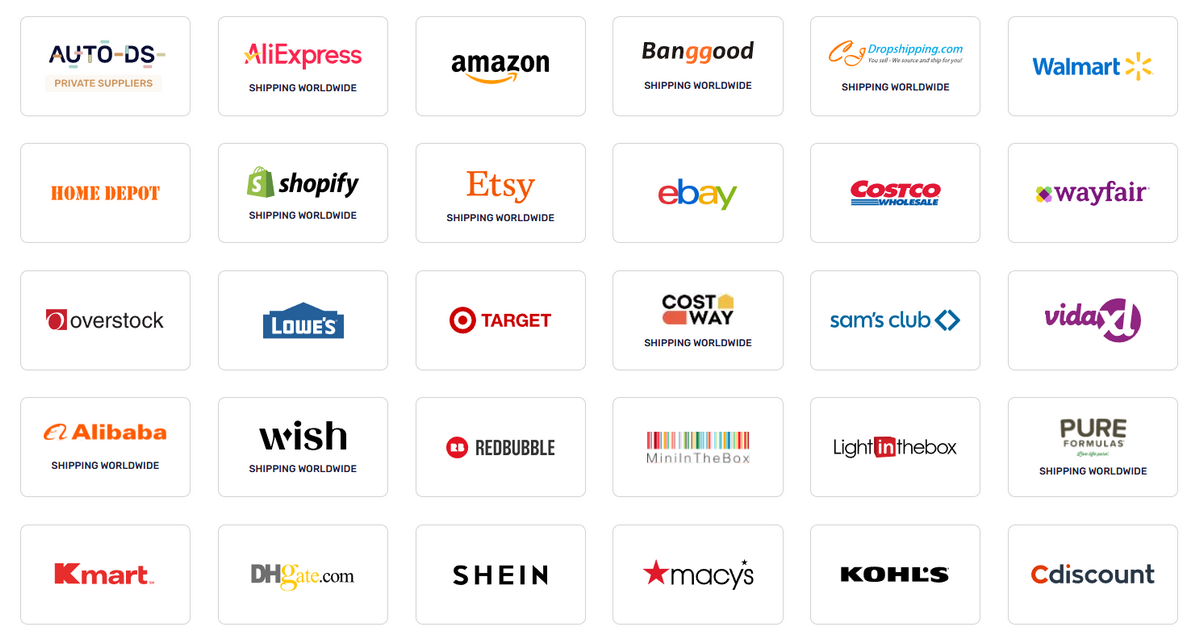
The best approach is to work with suppliers already integrated into your workflow. With AutoDS, you can connect to a network of vetted suppliers like AliExpress, Amazon, Walmart, and private warehouse options, all monitored in real time for price and stock changes.
When evaluating a supplier, focus on what actually affects your day-to-day operations:
- Shipping speed: Faster delivery improves conversion rates and reduces complaints.
- Stock reliability: Frequent stock issues lead to overselling and cancellations.
- Price stability: Sudden price changes can eat into your margins if they go untracked.
- Return handling: A clear return process saves time when issues come up.
Using AutoDS-integrated suppliers means these factors are automatically monitored in the background, so you don’t have to constantly check supplier pages or manually update listings.
Step 6: Build Your Store With AI
You can always build your store manually, but this would require either web design and coding skills or hiring professionals to handle it.
The truth is, when we’re starting out in dropshipping, it’s better to focus on efficiency rather than perfection, saving both time and budget. At this stage, it’s best to quickly clear the hurdles that might otherwise lead to frustration.
AI store builders simplify this process by handling the structure for you, from layout to product pages, so you can focus on what actually drives sales.
As we mentioned before, with AutoDS, you can generate a ready-to-sell Shopify store in minutes using the AI Store Builder. Once your store is live, focus on the essentials:
- Payment setup: Make sure you can accept payments (Shopify Payments, PayPal, or Stripe).
- Shipping settings: Align delivery times with your suppliers to avoid confusion.
- Return policy: Keep it clear and easy to find; customers check this before buying.
- Domain: A custom domain adds immediate trust and professionalism.
But take note! Speed doesn’t mean being careless. Your page must inspire trust in potential buyers and ensure the shopping experience is as smooth and simple as possible for anyone browsing your site.
That’s why it’s not about picking a random AI store builder at terminal speed; it’s about choosing a trusted one, like AutoDS.
Step 7: Import Products & Set Up Automation
This is where your store becomes operational. Importing products is the easy part; setting up automation lets you run the business without constant manual work.
With AutoDS, you can import products in seconds by using a supplier link. This creates your product listing with images, titles, and descriptions already in place, ready for adjustment.

Once your products are in your store, focus on setting up the core automation:
- Pricing automation: Set your profit margins (e.g., 20–30%) and let the system adjust your prices automatically as supplier costs change.
- Stock monitoring: Your listings automatically update when a product goes out of stock, helping you avoid overselling.
- Order automation: When a customer places an order, it’s automatically sent to the supplier, no manual checkout required.
- Tracking updates: Tracking numbers are synced and sent to your customers without extra steps.
Step 8: Market Your Products for Free
At this stage, your focus is simple: get traffic without increasing your risk. That’s why organic marketing is the best starting point for beginners.
Short-form content is currently the highest-leverage channel. Platforms like TikTok and Instagram Reels allow you to reach potential customers without ad spend, if your product and content connect.
You don’t need high-quality production. What works is clarity and consistency:
- Product demos: Show the product solving a real problem.
- Unboxing videos: Highlight first impressions and key features.
- Simple use cases: Show how the product fits into everyday life.
User-generated style content (UGC) tends to perform better than polished ads because it feels more authentic and less promotional.
Step 9: Fulfill Orders With Automation
Once your store starts getting orders, fulfillment becomes your main operational priority. This is where automation stops being optional and becomes essential.
In a manual setup, every order requires you to visit the supplier, place it yourself, and track it manually. That might work for a few sales, but it becomes unsustainable.
With AutoDS, fulfillment is handled automatically. When a customer places an order, it’s sent to the supplier, processed, and shipped without manual input. Tracking details are synced back to your store and shared with the customer.



At this point, your role shifts from processing orders to managing exceptions.
Here’s what you still need to monitor:
- Failed or pending orders: Usually caused by supplier issues or payment errors.
- Customer inquiries: Especially “Where is my order?”, which you can answer quickly using tracking data.
- Returns and refunds: Handle these early to avoid disputes and negative reviews.
Step 10: Handle Customer Service & Scale
Fast, clear customer service is what separates stores that earn repeat buyers from those that get negative reviews. Most customer questions fall into a small number of categories: where’s my order, how do I return this, and does this product do X? Template responses for each scenario save time and ensure consistent answers.
Good customer service directly impacts your reviews, dispute rates, and long-term performance on platforms like eBay, Shopify, or TikTok Shop.
Tips for Starting AI Dropshipping for Free (& Mistakes To Avoid)
Starting for free is possible, but most beginners lose time and money by repeating avoidable mistakes. These are the ones worth getting right from the beginning.
✅ Don’t confuse “free to start” with “free to run.”
Free trials and $1 plans help you get started, but they’re not permanent. Plan for basic monthly costs early so you’re not forced to stop once trials expire.
✅ Validate products before building your store around them.
Spending hours on listings for products that don’t sell is one of the most common mistakes. Use real data (not assumptions) to confirm demand before investing time.
✅ Set up pricing automation before your first sale.
If supplier prices change and you haven’t automated your pricing, you can lose money on your very first orders. This is one of the fastest ways beginners burn their margins.
✅ Don’t launch without a clear return policy.
Customers check this before buying. A missing or vague policy leads to disputes, refunds, and lost trust.
✅ Focus on one niche at the beginning.
Trying to sell everything makes your marketing inconsistent and harder to scale. It’s easier to grow when your products speak to the same audience.
✅ Test your full order flow before driving traffic.
Place a test order and go through the entire process. Make sure everything works, from checkout to fulfillment and tracking. Fixing errors now is much easier than dealing with real customers later.
✅ Use data, not assumptions, to pick products.
This product trend is not a data point. Use real metrics. AutoDS product research shows actual sales velocity across platforms. The global dropshipping market is projected to reach $343 billion in 2026, but that growth isn’t evenly distributed. Research your specific category before committing.
✅ Respond to customers within 24 hours.
Slow responses lead to disputes and negative reviews, especially on marketplaces. Quick replies protect your reputation and keep your account in good standing.
Avoiding these mistakes early will save you more time and money than any tool or strategy.
Frequently Asked Questions
Is AI Dropshipping Actually Free?
Starting an AI dropshipping business is genuinely free in the sense that you don’t need to buy inventory or pay for a warehouse, but platform subscriptions and automation tools do cost money.
Do I Need a Business License To Start?
Most beginners can start dropshipping without a business license, though requirements vary by country and state. In the US, a sole proprietorship requires no formal registration, but a separate business bank account and an understanding of your tax obligations are worth setting up from the start.
What’s the Difference Between AI Dropshipping & Regular Dropshipping?
Regular dropshipping requires manual product research, listing creation, order placement, and price monitoring. AI dropshipping automates those processes, identifies trending products, generates copy, monitors pricing changes, and places orders without manual input at each step.
Which Platform Is Best for Free AI Dropshipping?
eBay is the easiest free entry point, with no monthly fee, built-in traffic, and direct AutoDS integration. Shopify offers greater control and branding flexibility, but requires a subscription after the free trial period.
How Long Does It Take To Make the First Sale?
With organic marketing on TikTok or Instagram Reels and a well-researched product, some sellers make their first sale within a week. Most beginners see their first sale within 30–60 days.
Can I Use AutoDS for Free?
AutoDS offers a $1 trial that gives you full access to the platform’s features, including AI product research, automated price and stock monitoring, and order fulfillment. After the trial, a paid plan is required.
Start Your Dropshipping Journey With AutoDS
Starting AI dropshipping doesn’t require a big budget, but it does require a clear process. Choosing the right products, working with reliable suppliers, and setting up automation early are what make the difference between a store that runs and one that breaks under pressure.
The advantage of AI is that it simplifies execution. Instead of managing every detail manually, you can focus on decisions that actually move your store forward.
AutoDS brings that entire workflow into one place, from product research to order fulfillment, so you can build and run your store without juggling multiple tools.
Start simple. Launch your first store. Test your first product. Then improve as you go.
🚀 Many entrepreneurs are already leveraging AI Dropshipping with AutoDS. Launch your store today with the $1 tutorial!
To dive deeper into dropshipping and e-commerce, we recommend reading the following articles: