


Dropshipping.com is no longer active. Once positioned as a go-to hub for dropshipping education, it’s now outdated: it was built for learning, not for running the operational side of a store.
Today, that’s not enough to start dropshipping. To compete, you need smart tools designed for execution. That’s where AutoDS stands out. AutoDS goes beyond anything Dropshipping.com ever offered, helping sellers automate everything from product research to order fulfillment.
In this guide, we’ll break down the best Dropshipping.com alternatives and show you why AutoDS is the most complete solution for building a scalable store.
Dropshipping.com is no longer active, and it was never built to handle store operations, making modern, execution-focused alternatives essential.
AutoDS surpasses Dropshipping.com with end-to-end automation (covering product research, supplier sourcing, and order fulfillment), while also providing educational resources to help sellers scale.
Other tools (DSers, Spocket, CJDropshipping, Zendrop, SaleHoo) solve specific needs, but don’t cover the full workflow.
AutoDS stands out as the most complete alternative, giving you everything you need to run and scale a dropshipping business from a single dashboard. 👇
The 6 Best Dropshipping.com Alternatives
Dropshipping.com missed the mark in a key area for today’s sellers: operations. It focused on education, but when it came to actually running a store, things like automation, supplier integration, and real-time inventory management were missing. That’s the gap it left behind.
In a market projected to reach $543.53 billion in 2026, that kind of setup doesn’t last long. Sooner or later, you hit bottlenecks: missed stock updates, delayed orders, and pricing errors. And once that happens, scaling becomes an actual challenge.
To stay efficient and competitive, you need platforms built to automate and streamline the entire process. That’s why the tools below matter. These platforms will do more than just offer advice; they will help you manage your business in real conditions.
1. AutoDS
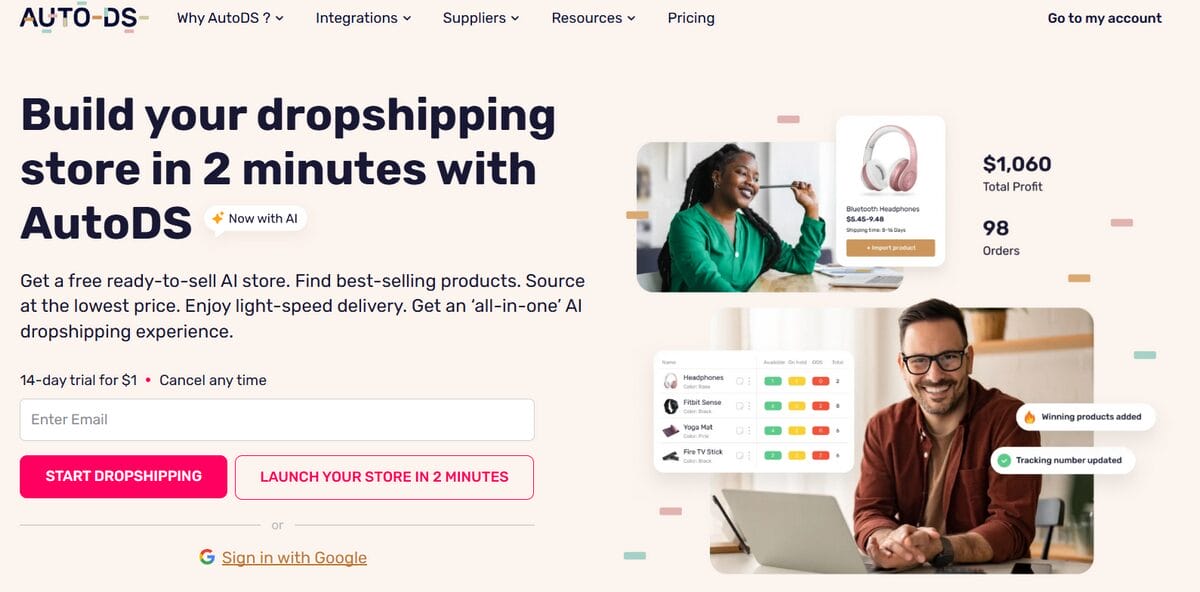
AutoDS is a full-stack dropshipping automation platform built to handle your entire operation from one place. Used by over 1.8 million sellers, it combines product research, importing, pricing, inventory monitoring, order fulfillment, and multi-store management into a single dashboard.
What makes AutoDS stand out is how each part of the operation connects into one streamlined flow:
- Fulfilled by AutoDS: Automates order processing end-to-end. When a customer buys, the order is placed with the supplier and tracked without manual input.
- Multi-channel support: Brings platforms like Shopify, eBay, Amazon, TikTok Shop, Facebook Marketplace, Wix, and WooCommerce into one system, making it easier to manage and scale.
- AutoDS Marketplace: Gives access to a massive product catalog of over 800 million products sourced from the US, EU, and global suppliers, covering a wide range of niches.
- Smart product research tools: Includes features like trending products and ad spy tools to help identify items with real demand and proven traction.
- AI-powered tools: Support store creation and listing optimization, including features that allow sellers to launch with pre-loaded products and reduce setup time.
- Beginner resources: Provide ongoing guidance through courses, blog content, and tutorials, helping sellers build confidence as they grow.
🆕 Beginner’s Tip: Check out AutoDS’s YouTube channel! You’ll find hands-on tutorials, tips, and insights tailored for dropshippers at every stage.
Pros & Cons of AutoDS
✅ Pros:
- All-in-one platform covering sourcing, automation, and fulfillment.
- Strong automation that minimizes manual work.
- Broad supplier access and fast product importing.
- Multi-channel management from a single dashboard.
- 24/7 customer support with onboarding resources for ongoing growth.
⛔ Cons:
- AutoDS advanced automation features may require a short learning curve, though built-in resources help smooth the process.
👉 Best use case as a Dropshipping.com alternative: AutoDS replaces both the educational gap and operational limitations with a complete, automation-first system built to scale.
2. DSers
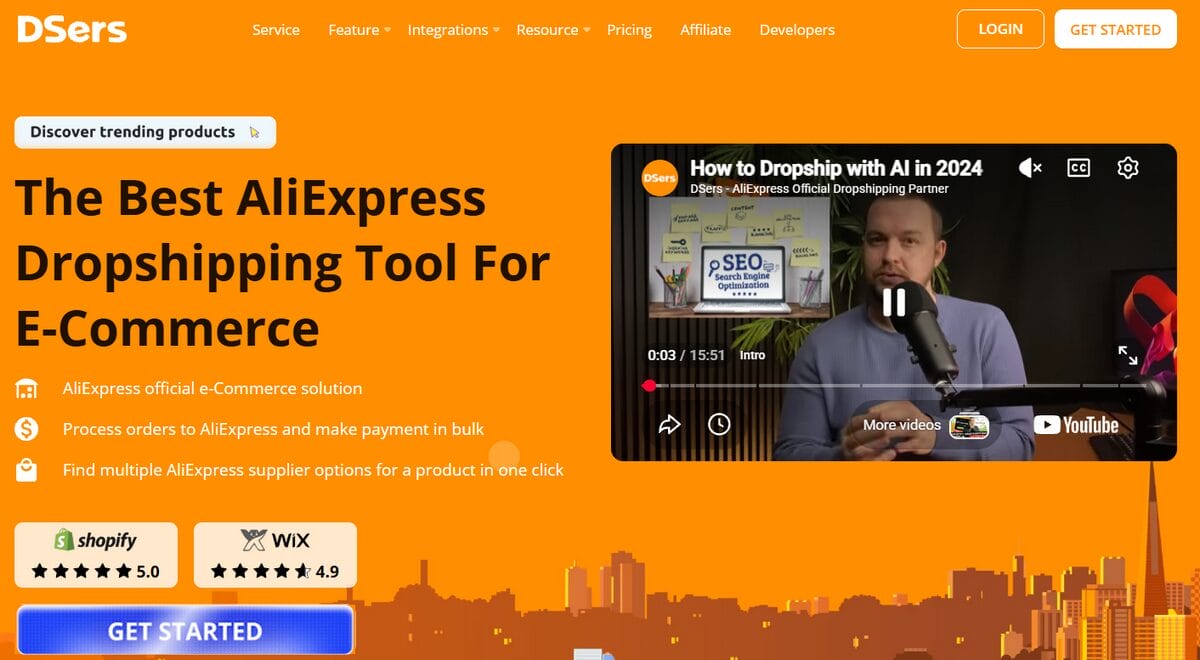
DSers is a lightweight dropshipping tool built around AliExpress, focused primarily on bulk order processing. As AliExpress’s official partner app, it’s often used by beginners looking to test products with minimal upfront cost.
However, what defines DSers is its narrow scope. It relies mostly on AliExpress for sourcing and offers only partial automation for many platforms, meaning some operational tasks still require manual input as you grow.
Pros & Cons of DSers
✅ Pros:
- Free tier covers basic AliExpress dropshipping.
- Strong AliExpress integration with official partner status.
- Bulk ordering saves time for sellers with high order volume.
⛔ Cons:
- DSers remains primarly focused on AliExpress suppliers, limiting sourcing flexibility..
- DSers offers partial automation, with fulfillment and payment flows still requiring manual involvement in many cases.
- DSers supports multiple selling channels, but automation depth varies significantly across platform.
- DSers’ free and lower-tier plans can become restrictive as stores grow, while moving into more scalable plans requires a considerably larger pricing jump.
👉 Best use case as a Dropshipping.com alternative: DSers works for testing AliExpress-based products on a zero budget, but lacks the automation needed to scale.
3. Spocket
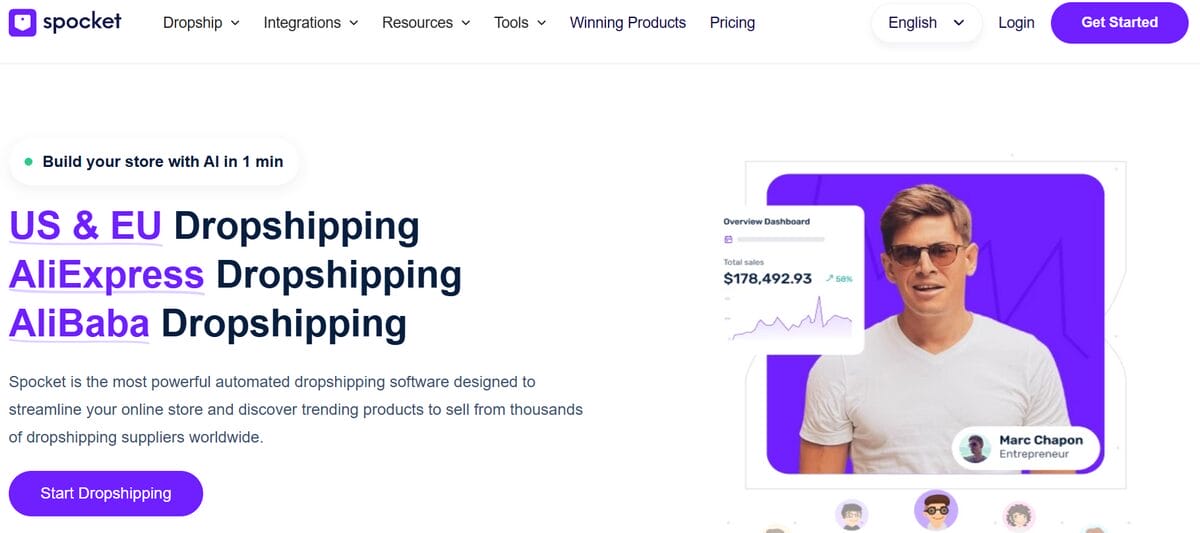
Spocket is a dropshipping platform centered around US and EU suppliers. It’s built for sellers who prioritize fast shipping times (2–5 days) and a more localized customer experience, through features like branded invoicing and product sampling.
That said, it comes with trade-offs. Spocket prioritizes curated US/EU supplier access over broader multi-channel flexibility, which narrows sourcing variety compared to more expansive platforms. And while it includes operational features like inventory sync, the automation remains more partial than fully hands-free, so sellers still need to stay involved in day-to-day operations.
Pros & Cons of Spocket
✅ Pros:
- Fast domestic shipping for US/EU shoppers.
- Branded invoicing improves customer experience.
⛔ Cons:
- Spocket’s supplier network is limited outside the US and EU.
- Spocket offers a narrower product catalog compared to broader platforms.
- Spocket lacks advanced automation, requiring manual handling on some operations.
- Spocket’s pricing is relatively high for its entry-level features.
👉 Best use case as a Dropshipping.com alternative: Spocket improves shipping speed for US/EU stores, but doesn’t replace the need for advanced automation.
4. CJDropshipping
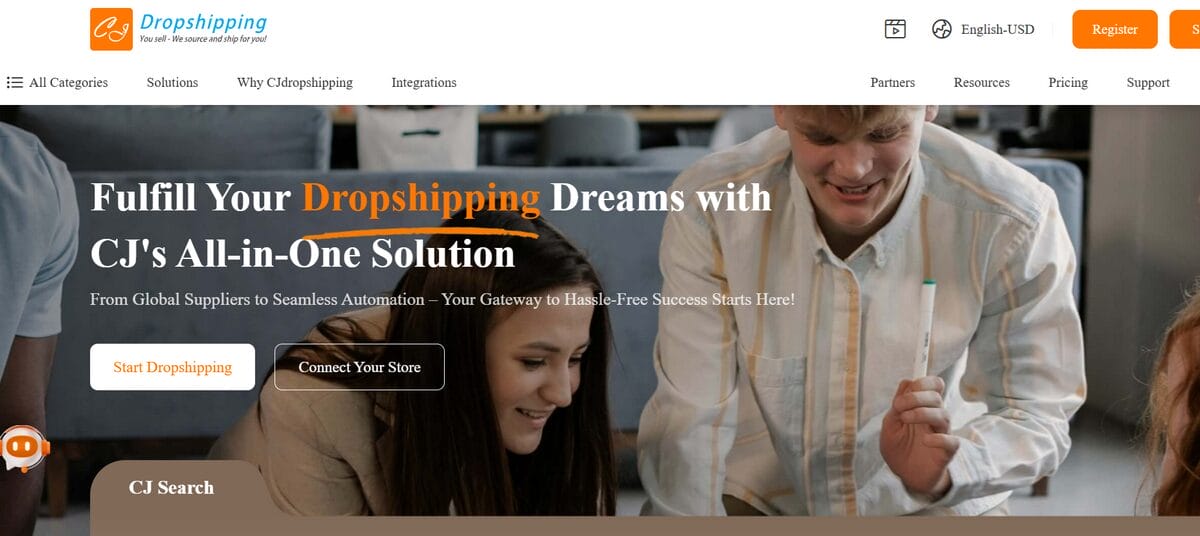
CJDropshipping is a sourcing and fulfillment platform designed for sellers who want more control over branding. It offers global warehouses across the US, EU, and Asia, custom product sourcing, and private labeling options.
Nonetheless, this flexibility requires more involvement. Product quality can vary, communication with agents may slow down at scale, and there’s little automation for pricing or inventory, meaning much of the operation still needs to be managed manually.
Pros & Cons of CJDropshipping
✅ Pros:
- Global warehouse network reduces shipping times for international customers.
- Custom packaging and private labeling available at scale.
- Free to join with no monthly fee.
⛔ Cons:
- CJDropshipping may have inconsistent product quality across suppliers.
- CJDropshipping can involve slower communication with agents, especially at scale.
- CJDropshipping lacks built-in automation for pricing and inventory.
- CJDropshipping requires ongoing manual management for scaling operations.
👉 Best use case as a Dropshipping.com alternative: CJDropshipping supports brand-building with custom packaging, but requires a more hands-on approach.
5. Zendrop
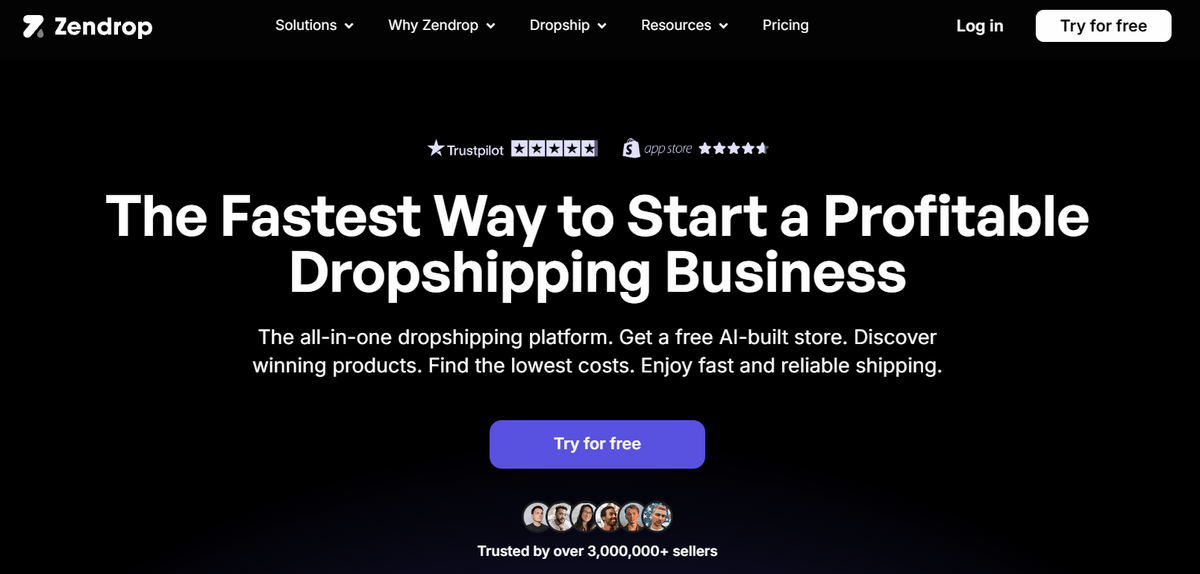
Zendrop is a dropshipping platform focused on simplifying fulfillment for Shopify-first sellers, while also supporting integrations with TikTok Shop US, Wix, and ClickFunnels. It offers 5 to 8 day US shipping along with features like custom branding and subscription boxes to increase customer lifetime value.
While it simplifies fulfillment, its scope is relatively narrow. Its ecosystem is designed around a smaller set of sales channels compared to broader multi-platform system. Adiotionally, it locks many advanced features behind higher-tier plans, which can limit your flexibility as you scale.
Pros & Cons of Zendrop
✅ Pros:
- Fast US shipping for domestic customers.
- Custom branding and packaging inserts.
- Subscription box feature for recurring revenue.
⛔ Cons:
- Zendrop offers a smaller product catalog than platforms with wide supplier networks like AutoDS.
- Zendrop locks advanced features behind higher-tier plans.
- Zendrop has limited scalability across multiple sales channels.
👉 Best use case as a Dropshipping.com alternative: Zendrop offers reliable US fulfillment, but remains limited in scope and scalability.
6. SaleHoo
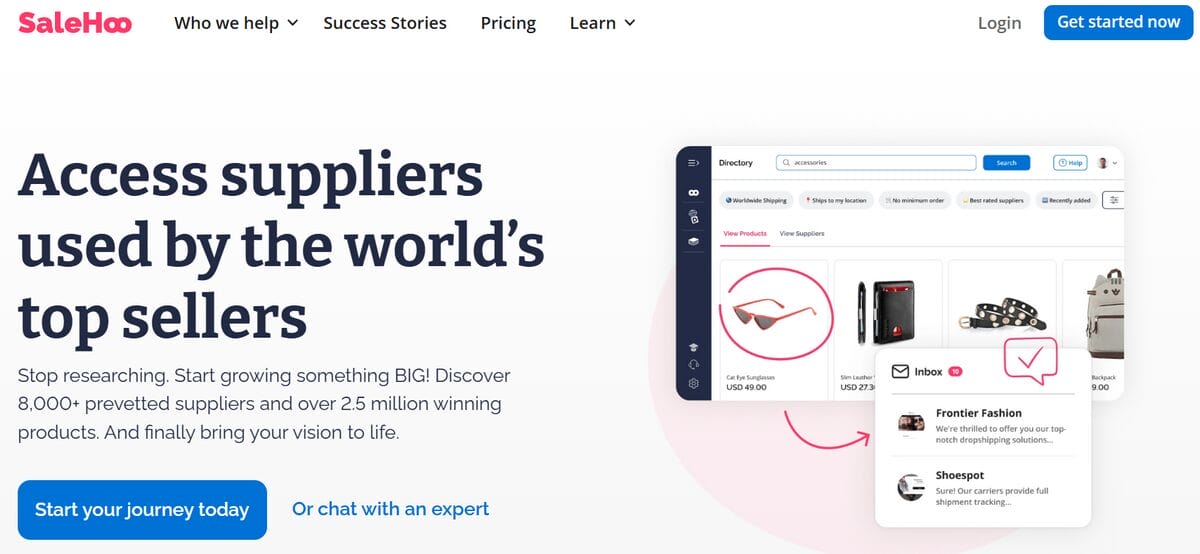
SaleHoo is a vetted supplier directory designed to help sellers find reliable wholesale and dropshipping partners, with over 8,000 options available. Its strength lies in reducing risk through pre-screened suppliers and offering market research tools to identify trending products and niches.
SaleHoo also provides certain operational features through SaleHoo Dropship, including one-click product importing, pricing sync, and order fulfillment within Shopify. However, those automation capabilities remain limited to Shopify stores, while integrations with platforms like eBay, Amazon, WooCommerce, or Wix depend largely on individual suppliers and require manual or third-party setup.
Pros & Cons of SaleHoo
✅ Pros:
- Pre-vetted suppliers for legitimacy.
- Affordable pricing.
- Shopify integration with basic automation features.
- Market research lab helps identify demand trends.
⛔ Cons:
- SaleHoo’s automation features are limited primarily to Shopify.
- SaleHoo lacks the broader multi-channel automation offered by platforms like AutoDS.
- SaleHoo relies on supplier-dependent or manual integrations outside Shopify.
- SaleHoo offers a low-cost starting point, but its integration capacity remains narrow across plans.
👉 Best use case as a Dropshipping.com alternative: SaleHoo works well for Shopify sellers who prioritize vetted suppliers and lightweight automation, but remains limited for multi-platform scaling and full operational management.
AutoDS vs. Dropshipping.com Alternatives: Comparison Table
Now that each platform has been broken down individually, the differences become much clearer when you place them side by side. What truly separates these tools is how completely they handle the actual work of running a store. In that context, AutoDS consistently leads across automation depth, supplier coverage, and multi-platform scalability.
Feature | AutoDS | DSers | Spocket | CJDropshipping | Zendrop | SaleHoo |
Automation Level | 🟢 Full automation | 🟡 Partial | 🟡 Partial | 🟡 Partial | 🟡 Partial | 🟡 Partial |
Supplier Network | 25+ global sources + Private suppliers | AliExpress-focused | US/EU curated | Global warehouses | US-focused | Vetted supplier directory |
AI Product Research | ✅ Yes | ✅ Yes | Basic | Basic | Basic | ✅ Yes |
Price & Stock Monitoring | ✅ Automated | Semi-Automated | ✅ Automated | Mostly hands-on | Partial | Partial |
Order Fulfillment | ✅ Fully automated | Semi-manual | Semi-manual | Semi-manual | Shopify auto-fulfillment | Shopify auto-fulfillment / Directory manual |
Platform Integrations | Shopify, eBay, Amazon, TikTok Shop, FB Marketplace, Wix, WooCommerce, Etsy | Shopify, WooCommerce, Wix, TikTok Shop, eBay, Amazon | Shopify, WooCommerce, Wix, eBay, Amazon, AliExpress, BigCommerce, Squarespace, Ecwid | Shopify, WooCommerce, Temu, TikTok Shop, Mercado Libre, Shein, eBay, AliExpress | Shopify, TikTok Shop US, ClickFunnels, Wix. | Shopify, Amazon, eBay, WooCommerce, Wix |
Automation & Workflow
AutoDS automates the full dropshipping cycle: importing products, monitoring price and stock changes, adjusting your listings in real time, routing orders to suppliers, and tracking fulfillment from one system. The result is a store that keeps running with far less manual involvement, reducing operational mistakes and freeing up time otherwise spent handling repetitive tasks.
By comparison, DSers streamlines bulk ordering mainly within AliExpress, but its automation depth still varies depending on the selling channel. Spocket and Zendrop simplify parts of the order and shipping flow, though both remain more delivery-focused than fully connected operational systems. Meanwhile, CJDropshipping requires more manual coordination across sourcing and logistics, and SaleHoo keeps most of its automation capabilities tied to Shopify-centered setups.
The difference is really about scope. While the other tools support isolated steps of the process, AutoDS integrates the entire workflow into a single automated process that removes day-to-day operational load.
Supplier & Marketplace Support
AutoDS integrates with 25+ global curated suppliers, plus a wide network of private sources, unlocking access to tens to hundreds of millions of products across categories. This level of coverage goes far beyond what tools like DSers, Spocket, or Zendrop offer, as they rely on a much narrower, curated supplier network.
CJDropshipping expands globally through its warehouse network, but with less consistency across its catalog. SaleHoo, meanwhile, provides access to thousands of vetted suppliers, but integrations outside Shopify often rely on manual setup or supplier-specific compatibility, creating a less centralized and scalable experience.
In contrast, AutoDS stands apart by offering large-scale supplier access while also integrating those sources directly into your automated, multi-channel system.
Ease of Use & UI
AutoDS brings onboarding, product importing, and automation setup into a guided, all-in-one experience designed to simplify both launch and scale. Its AI-powered features support store creation and listing optimization, cutting down setup time compared to the more manual processes required by platforms like DSers or CJDropshipping.
While DSers keeps things simple within AliExpress order management, it quickly reaches its limits as soon as operations expand. Spocket and Zendrop offer clean, easy-to-use interfaces, but within narrower systems.
SaleHoo also includes beginner resources and learning content, but much of its offer remains tied to paid plans with limited course access. AutoDS takes a broader approach to education. Beyond the interface itself, AutoDS provides free courses, a dropshipping blog, and a YouTube channel, extending far beyond SaleHoo and what platforms like Dropshipping.com originally offered.
In summary, AutoDS combines usability with depth for beginners and experienced sellers alike, something none of the other alternatives fully match on their own.



Pricing & Value
AutoDS operates on a transparent, tiered pricing model starting at $19.90/month (billed annually), designed to grow alongside your business rather than limit it. Instead of splitting essential features across disconnected upgrades, AutoDS brings automation, sourcing, fulfillment, and multi-channel capabilities into a scalable model.
DSers offers a free plan, but it’s automation depth and advanced capabilities become increasingly tier-dependent as operations grow. Spocket and Zendrop start around $39-$49/month, often placing key features behind higher tiers, while CJDropshipping’s pay-per-order model can become unpredictable as volume increases. SaleHoo keeps pricing low with a yearly or lifetime fee, yet still remains largely Shopify-centered, with store and integration flexibility becoming restrictive as you scale. AutoDS, in comparison, consolidates cost and capability, reducing the need to stack multiple subscriptions while unlocking more functionality from day one.
That value shows up quickly in real use. Shu Vang, an AutoDS user, generated over $3,000 in his first two weeks of dropshipping on eBay after landing his first sale in just three days. By streamlining repetitive tasks like order processing, he focused on product research and listing optimization, turning saved time into measurable revenue. For sellers who want the most automation per dollar spent, AutoDS delivers more functional value across a broader set of use cases.
💰 Financial Tip: Curious how this plays out in practice? Learn everything about Shu Vang’s case in this article about his dropshipping journey. His strategy offers a practical reference point for turning time saved into revenue.
Which Tool Is Better for Beginner Dropshippers?
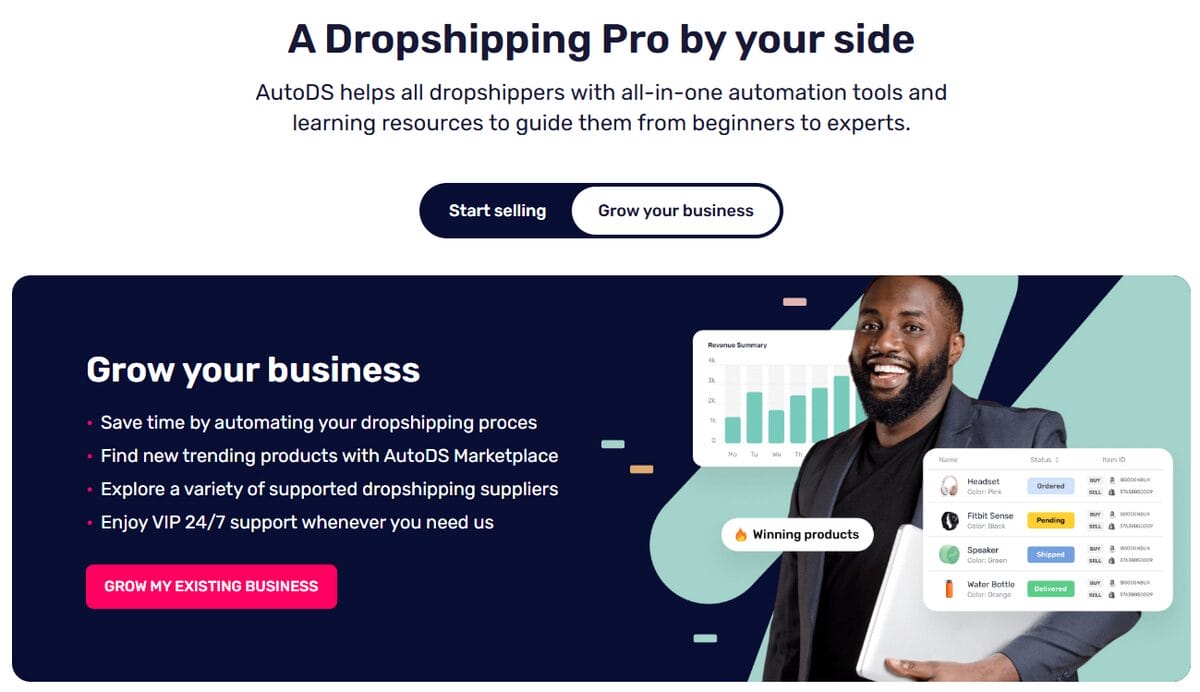
For beginners, the answer is clear: AutoDS is the strongest choice for dropshippers who want a complete system rather than a collection of single-purpose tools. Here’s what makes it stand out from the rest:
- Multi-channel support: AutoDS enables sellers to manage multiple sales channels from a single place, avoiding fragmented procedures.
- Hands-free fulfillment: Fulfilled by AutoDS automates the entire order process, minimizing manual work and reducing the risk of operational errors.
- Wide supplier network: A broad range of products from multiple suppliers is easily accessible, supported by built-in search tools and one-click importing that simplify sourcing.
- AI-powered setup and optimization: Tools like the AI Store Builder and AI title/description generator reduce the learning curve, helping starters launch and optimize their listings faster.
- Learning resources: Courses, blog content, and video tutorials provide ongoing guidance, supporting dropshippers beyond the initial setup phase.
Other platforms in this list can still be useful, but mainly for specific use cases:
- DSers: Works for testing AliExpress products on a zero budget, but lacks scalability.
- Spocket: Good for fast US/EU shipping, but limited in automation and product range.
- CJDropshipping / Zendrop: Useful for branding or US fulfillment, but both require more manual management.
- SaleHoo: Helps you find vetted suppliers, but it’s not built for scaling automation outside Shopify.
If the goal is to build something sustainable rather than test isolated workflows, AutoDS brings the core pieces together in one place, removing the complexity that typically holds beginners back.
Getting Started With AutoDS
Starting with AutoDS is simpler than most beginners expect and only takes a couple of minutes. More importantly, it’s structured to get you from “just exploring” to a fully automated store without feeling overwhelmed. Here’s what that actually looks like step by step:
Step 1: Create Your Account
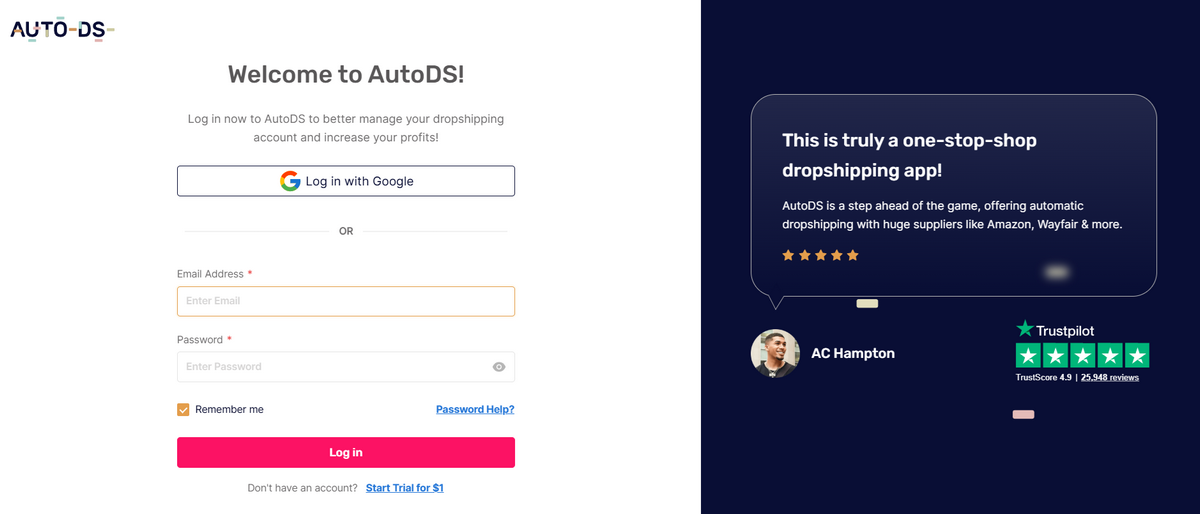
Begin by signing up on AutoDS. If you don’t have an account yet, you can access the platform with a $1 trial, which gives you a low-risk way to explore how everything works before committing.
Once you log in, you’ll land on your main dashboard. This is your control center. From here, you can manage products, monitor orders, track performance, and automate workflows without switching platforms.
Step 2: Connect Your Store
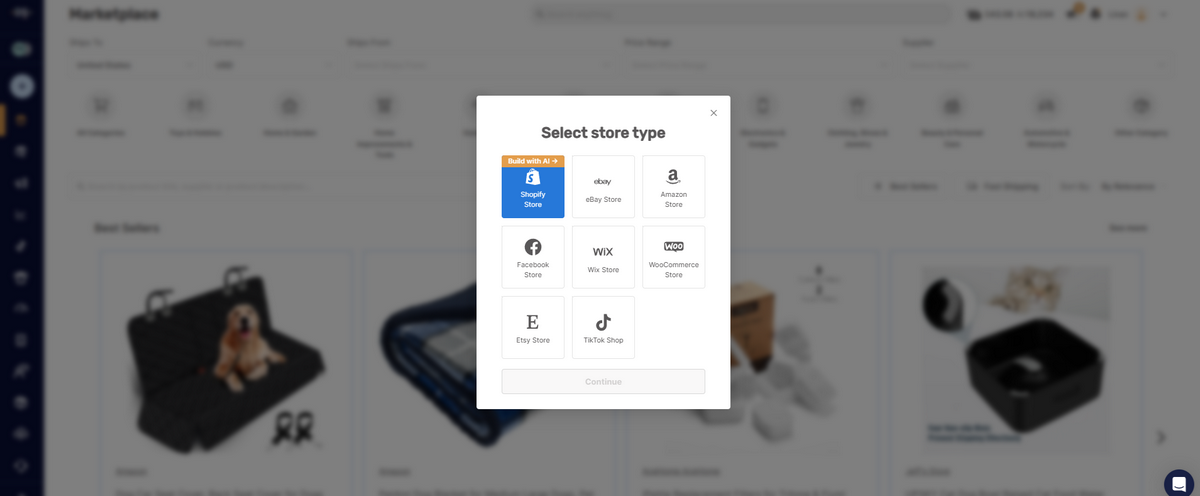
Now, you’ll be asked to choose your main selling channel: Shopify, eBay, WooCommerce, or another option. Pick the one you want to start with. You can add more channels later if you want.
🆕 Beginner’s Tip: No store yet? Skip the blank page. The AI Shopify Store Builder lets you launch a ready-to-sell store with products already added, perfect if you want to avoid the slow, manual setup that most beginners get stuck in.
Step 3: Browse the Product Marketplace
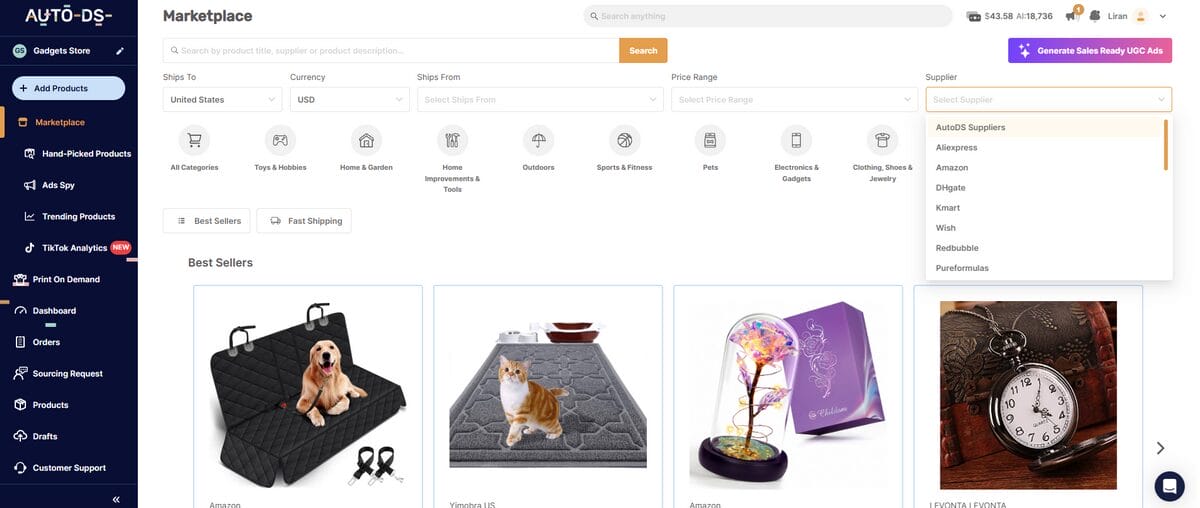
Now comes the fun part: finding products.
Inside the AutoDS marketplace, you can explore millions of items across different niches. Let’s say you’re testing a pet store: you can filter by supplier, shipping location, or price range to quickly narrow down your options.
Beyond basic browsing, the built-in research tools help you identify winning dropshipping products with high demand. You can also check trending items or explore hand-picked selections curated to highlight goods already gaining traction, making it easier to spot opportunities without starting from scratch.
Step 4: Import Products & Set Automation Rules

Found a product you like? Here’s what importing actually looks like:
1️⃣ Click on “Add Products”.
2️⃣ Paste the URL of the product.
3️⃣ Review the draft (title, images, description, price) and make quick edits if needed.
4️⃣ Push it live to your store.
That’s it: your product is now listed.
From there, you can set automation rules. For example: define your pricing strategy, set minimum and maximum price limits, and choose what happens when a supplier runs out of stock. AutoDS can automatically pause the product or update pricing in real time, so you’re not constantly checking things manually.
Step 5: Launch & Monitor
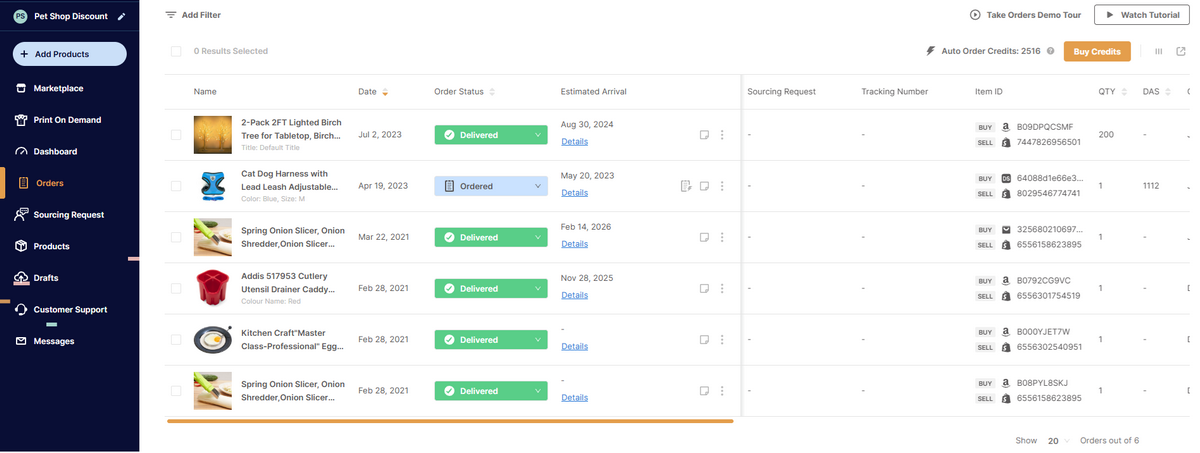
Once your products are live and automation is set, your store is up and running.
From here, AutoDS handles the heavy lifting: monitoring stock, adjusting prices, and even fulfilling orders through Fulfilled by AutoDS. Your role shifts from “doing everything” to overseeing and optimizing.
At the beginning, you’ll want to check your dashboard regularly just to see how things behave. But as you gain confidence, you’ll notice something important: the system keeps running, even when you’re not actively managing it.
Frequently Asked Questions
What happened to Dropshipping.com?
Dropshipping.com was an educational platform that sold high-ticket dropshipping courses, not a store management tool. The domain is now inactive, and the platform no longer operates.
Is dropshipping still worth it in 2026?
Dropshipping is still worth it in 2026 due to its continued market growth and strong adoption among online retailers. The industry is valued at over $500 billion and growing steadily, reflecting ongoing demand. Sellers who leverage automation tools like AutoDS gain a clear advantage over those managing operations manually.
What is the best free dropshipping tool?
The best free dropshipping tool depends on whether you want a basic or complete solution. AutoDS provides a full-feature trial for $1 to test its complete system, while platforms like DSers offer a free tier with limited functionality. This makes AutoDS a stronger option for evaluating an all-in-one platform.
Can you fully automate a dropshipping business?
Yes! You can automate most of a dropshipping business using end-to-end platforms like AutoDS, especially on the operational side. Tasks like product imports, pricing, stock updates, and order fulfillment can run automatically. Marketing and customer service still require human input, but automation frees up time to focus on these higher-impact activities.
Which dropshipping platform works with Shopify?
Several dropshipping platforms work with Shopify, including all the tools in this comparison. However, AutoDS goes beyond Shopify by supporting additional sales channels like eBay, Amazon, and TikTok Shop. This makes it a more flexible option if you plan to scale across multiple platforms.
Final Verdict: Start Your Dropshipping Journey With AutoDS
Dropshipping.com is no longer relevant for running a store, and the alternatives make that clear. Tools like DSers, Spocket, CJDropshipping, Zendrop, and SaleHoo each solve specific needs, but none cover the full operational workflow required to build and scale.
AutoDS delivers a complete and beginner-friendly solution that replaces and surpasses Dropshipping.com. It provides powerful automation across key operational areas and offers a wide variety of educational resources. Whether you’re just getting started or already selling, the difference with other alternatives shows quickly:
- Beginners can launch faster without getting stuck in setup.
- Experienced sellers can replace scattered tools with a centralized system.
For anyone serious about building a sustainable dropshipping business, the choice is straightforward: AutoDS gives you the infrastructure to grow without friction.
🏆 One platform, full control, zero operational chaos. You can try AutoDS for $1 and move beyond Dropshipping.com with a truly comprehensive solution.
If you found this article useful, you’ll love the next ones: