



Dropshipping opens the door wide open to anyone interested in entering the eCommerce industry to earn additional income. But it’s up to you to make the right moves toward a successful online business, and I’m here to help you get there faster. This starts by choosing the right online selling platform.
Shopify and eBay are two of the most popular platforms to start an online selling business. However, I still need to walk you through the differences between eBay vs. Shopify dropshipping, because knowing this helps you make the right call for your specific goals. So, let’s get to it!
eBay gives you instant access to millions of active buyers with zero setup cost.
Shopify hands you full control over branding, but you have to build your own traffic.
eBay’s fees are per sale; Shopify’s are a mix of subscription plus processing.
AutoDS automates Shopify and eBay from one dashboard.
You don’t have to pick just one; many sellers run both simultaneously.
eBay VS Shopify: Key Differences at a Glance
| Features | eBay | Shopify |
|---|---|---|
| Platform type | Online marketplace | Customizable e-commerce store |
| Audience | Built-in, millions of active buyers | Self-built |
| Ease of use | Beginner-friendly | Beginner to advanced |
| Starting price | Free (Store subscriptions from $4.95/mo annual) | $39/mo, or $29/mo billed annually |
| Core fees | Final value fee of roughly 10–15% per sale | Monthly subscription + 2.4–2.9% payment processing (varies by plan) |
| Customization | Limited (shop banner/profile only) | Extensive (themes, apps, full branding) |
| Best for | Fast testing, low upfront investment | Long-term brand building, scaling |
Dropshipping is a low-cost, low-risk business model that allows you to sell products without holding inventory. Instead of the traditional retail model, you work with suppliers who source and ship products directly to customers. Meanwhile, you sell and promote the products, and you only pay your suppliers after getting paid by your customers. With dropshipping, you never have to worry about surplus stock and unsold items.
What Is eBay Dropshipping?
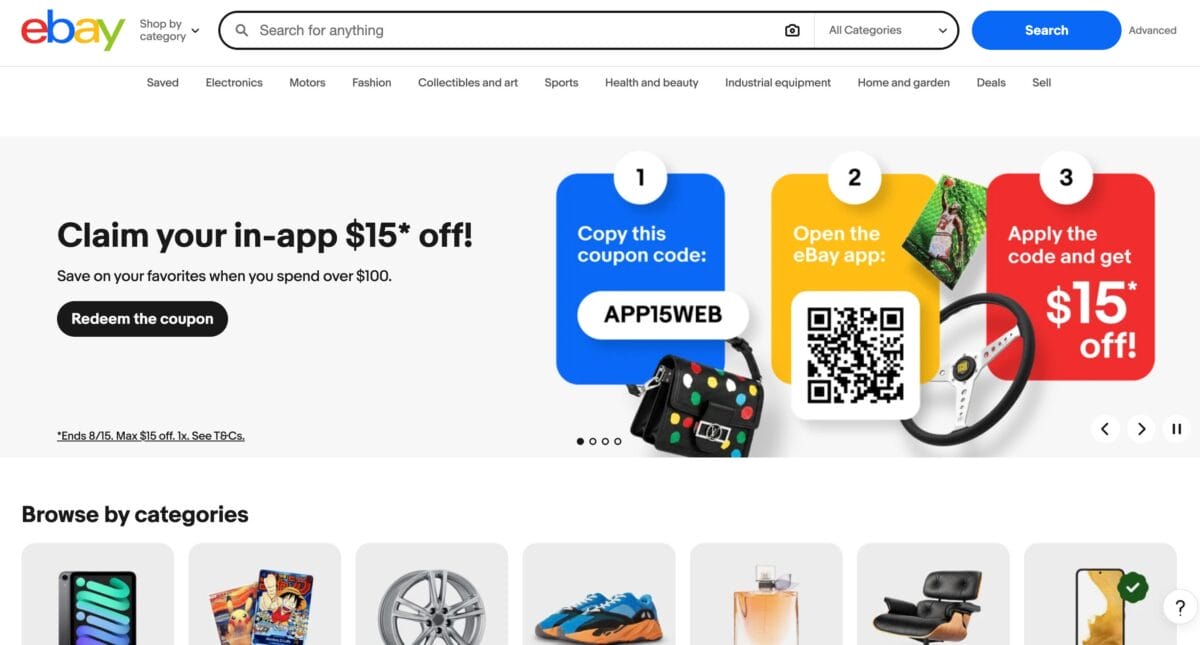
Now, eBay is an online selling platform and is considered one of the pioneers in eCommerce. As a marketplace, it connects buyers and sellers to a world of possibilities with bustling online traffic and millions of products on one website.
For dropshippers, it offers tons of organic traffic you can leverage to access an already existing market of potential buyers. All that’s left for you to do is set up your store and list the products you want to sell. eBay dropshipping lets you easily set up a store, list products, and start making money.
🆕 Beginner’s Tip: eBay gives you 250 free listings a month even without a Store subscription, so you can test the waters before committing to a monthly fee.
What Is Shopify Dropshipping?

Shopify, like eBay, is a selling channel, but instead of being a marketplace, it’s a customizable hosting platform. It acts as a SaaS (Software as a Service) tool and empowers you to showcase your products and your brand. You get to create, set up, and design a store website with elements that make you stand out from the competition.
Moreover, Shopify helps you establish your online storefront as an all-in-one platform. You can easily list products, process orders, manage payments, and handle multiple customers simultaneously. Therefore, by dropshipping on Shopify, you can build a real trade name while selling products without holding inventory.
eBay Vs. Shopify Dropshipping: Pros & Cons
Now that you know what eBay and Shopify are, it’s time to get into the advantages and disadvantages of each platform.
✅ eBay Dropshipping Pros
Let’s look at some of the benefits of using eBay as your selling channel of choice:
- Free organic traffic
- Low-cost start-up
- eBay buyer & seller protection
- Easily spy on the competition
- Easy to get started on eBay
- Internal marketing methods to scale your store
- Dropshipping automation integration
As a marketplace, eBay’s organic traffic means you no longer have to worry about marketing your dropshipping store immediately. The platform gives you access to millions of buyers as soon as you set up shop. Not to mention, you don’t need a lot of capital to launch your store on eBay.
And, since eBay is a marketplace with multiple sellers, you can easily see which products are trending and what’s working for your competitors. You can observe the market and adapt to remain competitive and relevant to consumers. Plus, with eBay’s buyer & seller protection, each transaction is insured for you and your customers.
There are many ways to scale your business on eBay with internal marketing methods (e.g., eBay PPC) to target customers more effectively. eBay also integrates with automation tools like AutoDS to help optimize your dropshipping store. AutoDS helps with price monitoring, inventory management, order fulfillment, and more, so you have less to worry about while running your business.
❌ eBay Dropshipping Cons
Now, let’s break down the cons of eBay dropshipping:
- Selling limits
- Limited customization options
- Competition
eBay has selling limits, meaning you can only sell up to a certain number of products before insertion fees kick in. However, there are ways to make eBay’s selling limits work for your business goals once you understand how to use them.
It’s also harder to stand out on the platform because it has limited customizability and intense competition. That’s why you should aim to scale by providing excellent customer service and optimizing your marketing strategies.
Tools like AutoDS’ Product Research Marketplace help you determine trending dropshipping products to maximize sales in no time. You can focus on offering your audience the most in-demand items to stay top-of-mind.
✅ Shopify Dropshipping Pros
Shopify offers various benefits for your online business. Let’s look at the pros of dropshipping on Shopify:
- Lots of customizable themes
- Easy to start dropshipping on Shopify
- No selling limits
- Built-in blogging feature
- Shopify app store
- Dropshipping automation integration
Shopify offers a lot of customization options that help you stand out from competitors and appeal to your target audience. It allows you to build your brand and solidify your niche.
It’s also beginner-friendly, so getting started on the platform is easy. Shopify even has a built-in blogging feature you can use to attract customers to your page. Plus, it has no selling limits, so you can showcase as many products as possible, potentially increasing profits.
Like eBay, Shopify also has dropshipping automation integration, meaning you can use AutoDS to automate your selling and optimize your business for dropshipping. This makes it significantly easier to set up and manage your shop for maximum profit.
💡 Pro Tip: Not sure whether you’re ready for Shopify’s learning curve? Start with the AutoDS AI Store Builder and get a fully-built, branded store in about two minutes.
❌ Shopify Dropshipping Cons
You’ve gotten to know the pros, now let’s run through some Shopify dropshipping cons:
- No organic traffic
- Transaction fees
Since you’re establishing your own site, you’re also the one responsible for generating traffic on it. There’s no existing customer pool already on the platform that you can leverage. Thus, you must invest in effective marketing to attract customers and create traction for your online store.
Shopify also has transaction fees that cover maintenance and the cost of having third-party payment providers for your customers. Each selling channel has fees — it’s inevitable. But you can still protect your profit margin by using AutoDS’ price optimization tool.
eBay Vs. Shopify Dropshipping: Key Differences
So, what are the key differences between eBay vs. Shopify dropshipping, and how do you know which one to use to launch your online business? Let’s compare.
Ease of use
Both eBay and Shopify are great for beginners. With Shopify, you can use existing templates and easily drag and drop elements, create product pages, and more, according to how you see fit. eBay is even simpler because all you need to do is list products in the marketplace.
Platform fees
Both platforms have varying fee structures depending on your needs. Here’s how eBay’s Store subscriptions break down:
- Starter Store – $7.95/mo, or $4.95/mo billed annually
- Basic Store – $27.95/mo, or $21.95/mo billed annually
- Premium Store – $74.95/mo, or $59.95/mo billed annually
- Anchor Store – $349.95/mo, or $299.95/mo billed annually
- Enterprise Store – $2,999.95/mo (annual billing only)
With eBay’s Starter Store plan, you can have up to 250 zero-insertion-fee listings, ideal if you only have a handful of products up for sale. The Basic plan could work well if you’re just starting out but looking to grow: for $27.95 per month, you get up to 1,000 free fixed-price listings.
eBay’s Premium plan comes with 10,000 free fixed-price listings, plus a better final value fee discount. The Anchor plan is for high-volume sellers with up to 25,000 free listings and dedicated support, and the Enterprise plan tops out at 100,000 free listings. On top of the subscription, eBay charges a final value fee of roughly 10–15% per sale depending on category, though Store subscribers get a small additional discount on that rate.
On the other hand, here’s Shopify’s current lineup:
- Shopify Starter – $5/mo (social/DM selling only, no full storefront)
- Shopify Basic – $39/mo, or $29/mo billed annually
- Shopify Grow – $105/mo, or $79/mo billed annually
- Shopify Advanced – $399/mo, or $299/mo billed annually
- Shopify Plus – starting at $2,300/mo (multi-year term)
Shopify’s Basic plan is the entry point for a full online store: unlimited product listings, standard reporting, and Shopify Payments processing starting around 2.9% + $0.30 per transaction (higher if you use a third-party gateway instead). It doesn’t currently include staff accounts, so if you need to add team members, you’ll want the Grow plan, which adds professional reporting, multiple staff accounts, and a lower 2.7% processing rate.
Shopify Advanced drops the processing rate further (around 2.4–2.5%) and adds deeper reporting and shipping discounts, while Shopify Plus is built for large-scale, high-volume brands with custom checkout and B2B features. Except for the Starter plan, all Shopify tiers support dropshipping automation, so you can use tools like AutoDS to optimize and scale your store.
💰 Financial Tip: Before committing to any tier on either platform, run your expected monthly listing volume and average order value through the numbers. eBay’s Store subscriptions only pay for themselves once you’re consistently listing several hundred items a month; Shopify’s plan upgrades mostly pay for themselves through the lower processing rate at higher sales volume.
At the time of writing, Shopify offers a free trial with the first 3 months for $1 per month on select plans. Please note that Shopify promotions are subject to change.
Free Organic Traffic
eBay has existing organic traffic you can leverage for your business. Since Shopify is only a hosting platform, it doesn’t offer the same traction for its users out of the box.
Branding & Design Flexibility
Shopify has far more customization options for your store, which gives you better branding capabilities. eBay’s limited customizability pushes you to focus on other areas, like customer service and marketing, to attract loyal customers.
Shopify’s .store domain feature, available via store settings, lets you improve your brand image. The first year is typically free, with future renewal fees handled by a third-party registrar.
Tracking Customer Analytics
Both Shopify and eBay offer analytics you can use to keep track of your business. With AutoDS integration, you can easily track sales, manage inventory, and monitor pricing across both platforms for greater insight.
Additional Apps
Shopify has an existing app store you can use, while eBay doesn’t. Shopify’s app store offers an ecosystem of apps you can add to optimize your store, including AutoDS. This empowers you to improve, automate, and scale your business continually.
What The Numbers Actually Look Like
Generic comparisons tend to stop at “eBay has fees, Shopify has fees,” which doesn’t really help you decide anything. So here’s a rough real-world breakdown of how the math plays out for a seller moving $10,000/month in sales, selling a mix of home goods averaging $35 per order:
- On eBay (Basic Store, ~13% average final value fee): you’d pay roughly $21.95 in subscription fees plus ~$1,300 in final value fees, landing around $1,322/month in platform costs.
- On Shopify (Basic plan, 2.9% + $0.30 per transaction, ~286 orders): you’d pay $39 in subscription fees plus roughly $375 in processing fees (2.9% of $10,000 plus $0.30 × 286 orders), landing around $414/month.
The gap is significant, and it’s exactly why so many established sellers eventually migrate off eBay’s per-sale fee model once volume climbs. The tradeoff is that you’re paying for that lower cost with the traffic-building work Shopify doesn’t hand you for free. At low volume, eBay’s zero-commitment structure often wins; at higher volume, Shopify’s flat-fee model usually pulls ahead. Run your own numbers against your average order value and expected volume before deciding — the eBay fee calculator linked above makes this quick.
Which Is Best For Dropshipping – eBay Or Shopify?
eBay and Shopify are popular online selling platforms for a reason: they work! However, one might be better than the other, depending on your dropshipping business needs. It all comes down to which platform better suits your goals.
eBay is more convenient if you simply want to focus on selling products. It’s easy to use and low maintenance compared to running a whole website. Conversely, Shopify is an excellent choice if you’re looking to grow your business long-term and cultivate a brand.
Either way, you can integrate dropshipping into your online shop — or shops — at any point. And with AutoDS, you can make it happen easily, automating not just one but multiple stores on various selling channels while monitoring everything from one platform.
If you’re weighing other platforms too, it’s worth checking how WooCommerce compares to Shopify, how Shopify stacks up against Amazon, and how Shopify compares to Etsy if crafts and handmade goods are more your speed.
Integrate Your Dropshipping Business With AutoDS For Ultimate Success
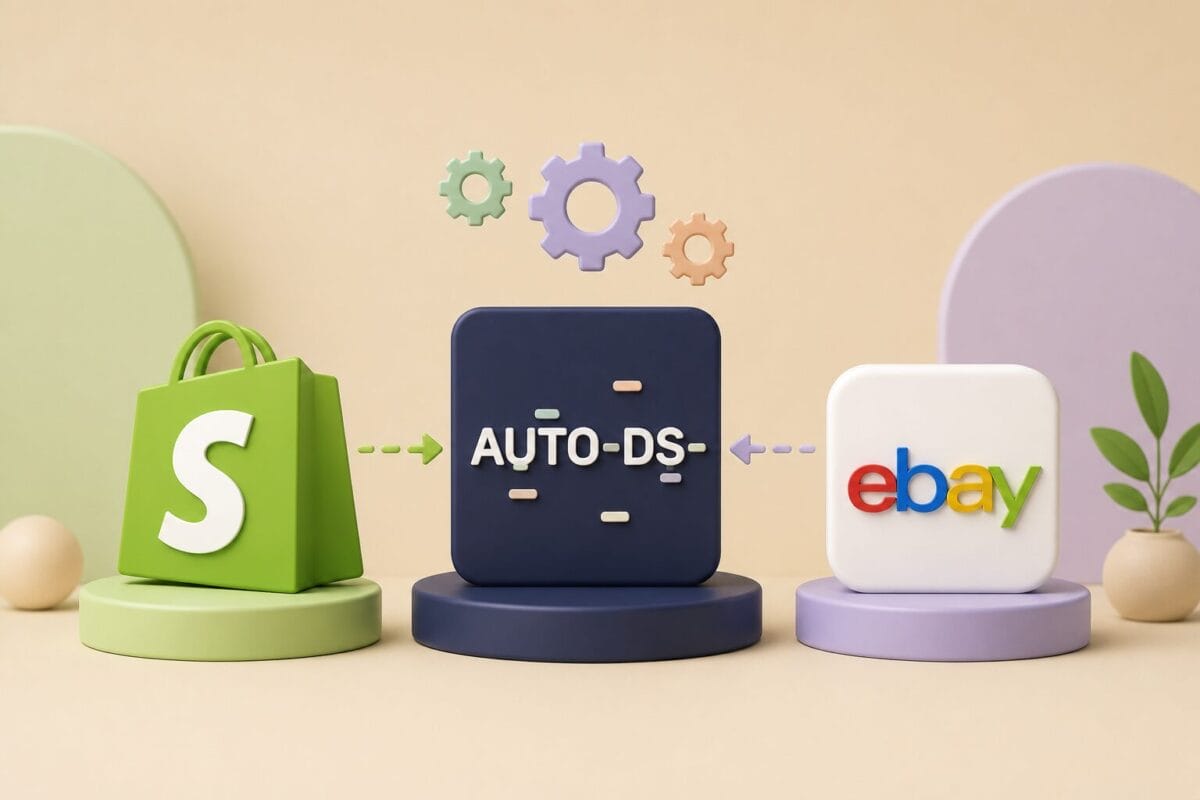
Whether you choose eBay or Shopify, AutoDS is here to help you achieve ultimate success for your dropshipping business. Better yet, why not launch on both platforms?
Get started on one platform first, be it eBay or Shopify. Once you’ve got that down, what’s stopping you from expanding to another platform to maximize your reach and revenue? AutoDS makes this more than possible with easy inventory management and other automation tools to help you keep scaling.
📢 Marketing Tip: Running both platforms at once? Use AutoDS’ unified dashboard to keep pricing consistent across eBay and Shopify so you’re not accidentally undercutting yourself on one channel.
Automation is key. With dropshipping automation tools like AutoDS, you can spend less time working in your business while earning more. Here are the features AutoDS offers:
- Product Imports
- Complete Order Fulfillment
- Advanced Winning Products Hub
- Price & Stock Monitoring
- Automatic Price Optimization
- Easy Inventory Management
- and more!
Frequently Asked Questions
eBay VS Shopify Dropshipping: What’s Better?
Both eBay and Shopify are good options for dropshipping, depending on your needs and preferences. eBay has a large customer base and a user-friendly platform, while Shopify provides more flexibility and control over your online store. Ultimately, the best choice will depend on your specific business goals and requirements.
Is Dropshipping On eBay Allowed?
Yes, dropshipping on eBay is allowed as long as you adhere to eBay’s dropshipping policies. These policies include ensuring that items are delivered on time, meeting customer expectations, and providing accurate information about the item and the seller. It’s important to review and follow these policies to avoid penalties or account suspensions.
Is Shopify Dropshipping Worth It?
Yes, Shopify dropshipping is definitely worth it. Combined with the dropshipping business model, Shopify as a selling channel lets you easily brand and scale your store to attain solid profits.
Is eBay or Shopify better for beginners?
Both are beginner-friendly, but in different ways. eBay is simpler to start because there’s no store to design or build — you just list a product and it’s discoverable by existing marketplace traffic. Shopify has a slightly steeper learning curve since you’re building an actual storefront, but tools like the AutoDS AI Store Builder shrink that curve down to a few minutes.
Can you dropship on eBay and Shopify at the same time?
Yes, and many sellers do exactly this. Running both lets you test products quickly on eBay’s built-in traffic while building a branded, higher-margin store on Shopify at the same time. AutoDS supports both platforms from a single dashboard, so managing dual listings, pricing, and fulfillment doesn’t double your workload.
Which has lower fees for dropshipping?
It depends on your sales volume. At lower monthly sales, eBay’s zero-subscription-required structure tends to cost less overall. As your volume grows, Shopify’s flat monthly fee plus lower processing rate usually works out cheaper than eBay’s percentage-based final value fees, since eBay’s per-sale cut doesn’t shrink much even as you scale.
Conclusion
Well done! You’ve learned the differences and similarities, the pros and cons of eBay vs. Shopify dropshipping. Now you can make a more informed decision on where to launch your online dropshipping business.
Need more help making the right moves in your dropshipping journey? I’ve got you covered, and if you’re ready to put either platform on autopilot, you can start your AutoDS trial for $1 and see the difference automation makes from day one. In the meantime, here are a few more reads worth your time: