



Amazon continues to dominate eCommerce, with millions of buyers searching for products every single day. For online sellers, that always means a huge opportunity, especially when it comes to dropshipping on Amazon. But success doesn’t come from listing random products—it comes from identifying the best things to sell on Amazon based on demand, competition, and profitability.
In this guide, we’ll explore:
- High-potential product ideas
- How to evaluate them using Amazon-specific criteria
- How to validate winning products before launching them
You’ll also see how AutoDS helps dropshippers navigate with smart product research and automated fulfillment.
The best things to sell on Amazon combine steady demand, manageable competition, and healthy profit margins after fees and shipping costs.
High-performing niches like skincare, pet supplies, gaming accessories, and home decor stand out for their visual appeal, problem-solving nature, and consistent demand.
Product selection on Amazon should always consider key factors like BSR, review levels, pricing stability, and differentiation potential.
Validating products before launching is essential, using real data such as sales rank, review velocity, and pricing gaps to confirm demand and profitability.
Evergreen products provide long-term stability, while trending products offer short-term growth opportunities, and the best strategy often combines both.
AutoDS simplifies Amazon product research and validation by centralizing data insights, supplier sourcing, and automation to help dropshippers maintain stellar seller metrics. 👇
Best Things to Sell on Amazon
Amazon offers millions of products across every imaginable category, but not all of them are equally profitable for sellers. The best things to sell on Amazon usually share a few common traits: steady demand, reasonable competition, and strong profit margins.
Below, we’ll explore some of the best-selling Amazon niches with example products that consistently perform well.
Skincare
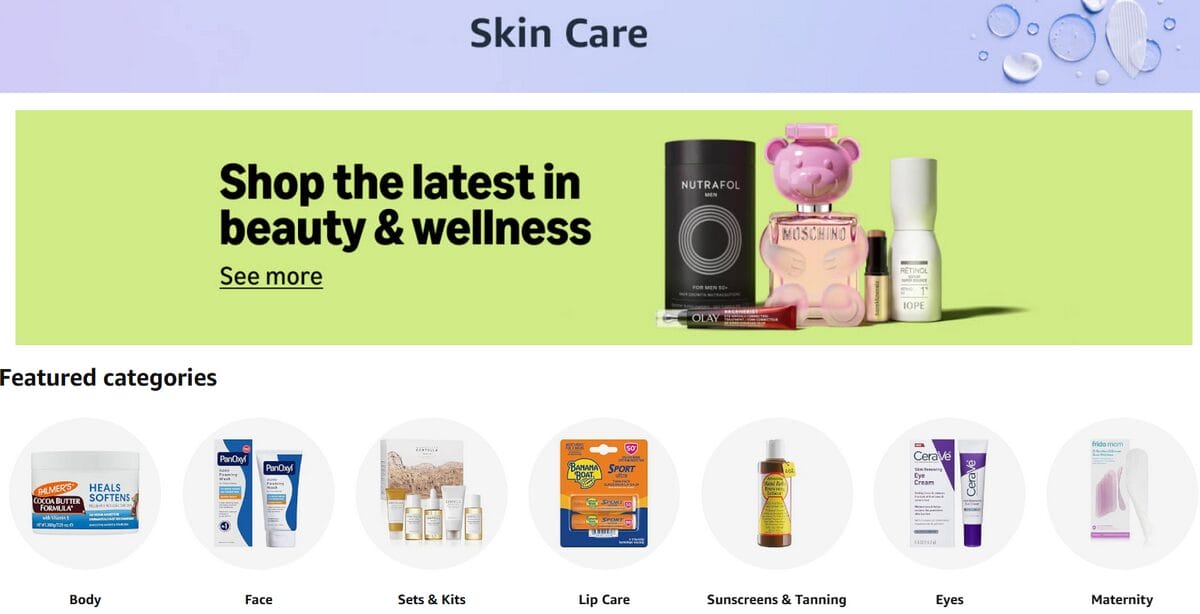
The skincare industry keeps booming as consumers invest more in self-care, anti-aging routines, and at-home beauty treatments. On Amazon, skincare accessories perform particularly well because they’re compact, visually appealing, and perfect for tutorials, before-and-after demos, or influencer reviews, exactly the kind of content that drives product discovery today.
Some of the best skincare products to sell on Amazon include:
- Face cleansing brushes: These tools upgrade a basic skincare routine by offering deeper cleansing than traditional washing. Because the results are easy to visualize, they perform especially well in tutorial-style content and product demos.
- LED facial masks: With their futuristic look and spa-like appeal, these products immediately grab attention. Their higher perceived value also gives sellers room for stronger profit margins compared to simpler beauty tools.
- Ice rollers for face: A favorite among skincare enthusiasts looking to reduce puffiness and soothe tired skin. Thanks to TikTok routines and influencer recommendations, they combine viral visibility with steady everyday demand.
Many sellers also increase revenue by creating skincare bundles, pairing rollers, cleansing brushes, and facial devices into ready-made beauty kits that feel both practical and giftable.
💫 Why these products sell on Amazon: Small, lightweight items with strong visual appeal, recurring demand, and high bundling potential
Pet Supplies
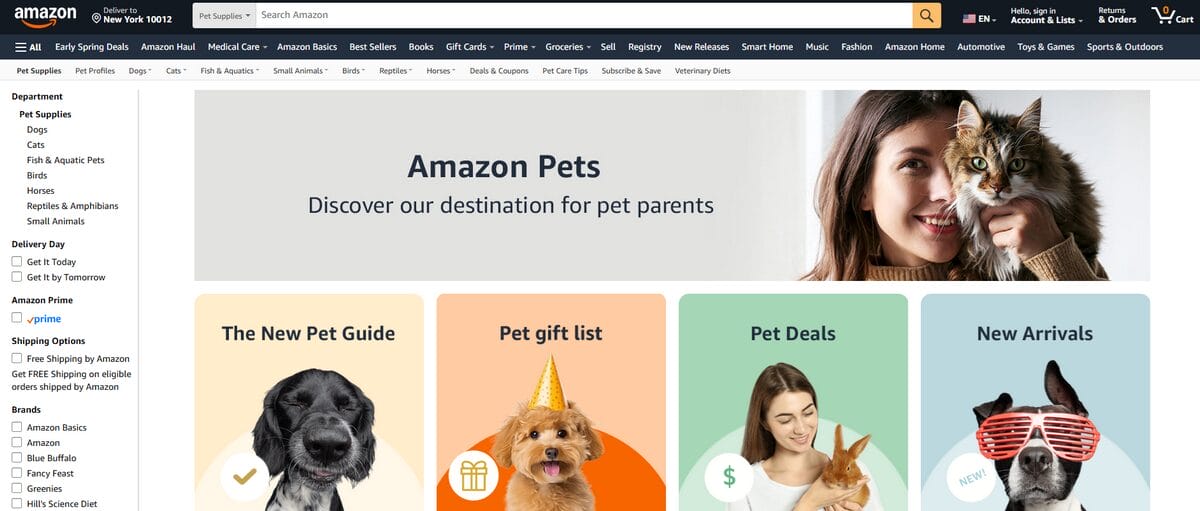
Few niches are as consistently profitable as dropshipping pet products. Pet owners are highly engaged buyers who actively look for ways to improve their pets’ comfort, health, and happiness. On Amazon, this often translates into impulse-friendly purchases, especially when the items solve everyday pet problems or create fun moments owners love to share online.
Some of the best pet supplies to sell on Amazon include:
- Automatic pet feeders: A practical solution for busy pet owners who want to keep feeding schedules consistent. Their smart features and convenience make them feel like a premium upgrade, which supports higher perceived value.
- Pet grooming gloves: Designed to remove loose fur while petting, these gloves turn grooming into a stress-free experience. Because the benefit is instantly visible, they’re particularly effective in short demo videos and product listings.
- Interactive pet toys: Motion toys, puzzle feeders, and enrichment toys keep pets mentally stimulated. These products often perform well in ads because playful pet reactions naturally capture attention.
Another advantage of this niche is its content potential. Pet videos dominate social media, and sellers can easily leverage this behavior to create engaging product demonstrations that feel entertaining rather than promotional.
💫 Why these products sell on Amazon: Emotion-driven purchases, viral marketing potential, and repeat demand from highly engaged pet owners.
Gaming Accessories
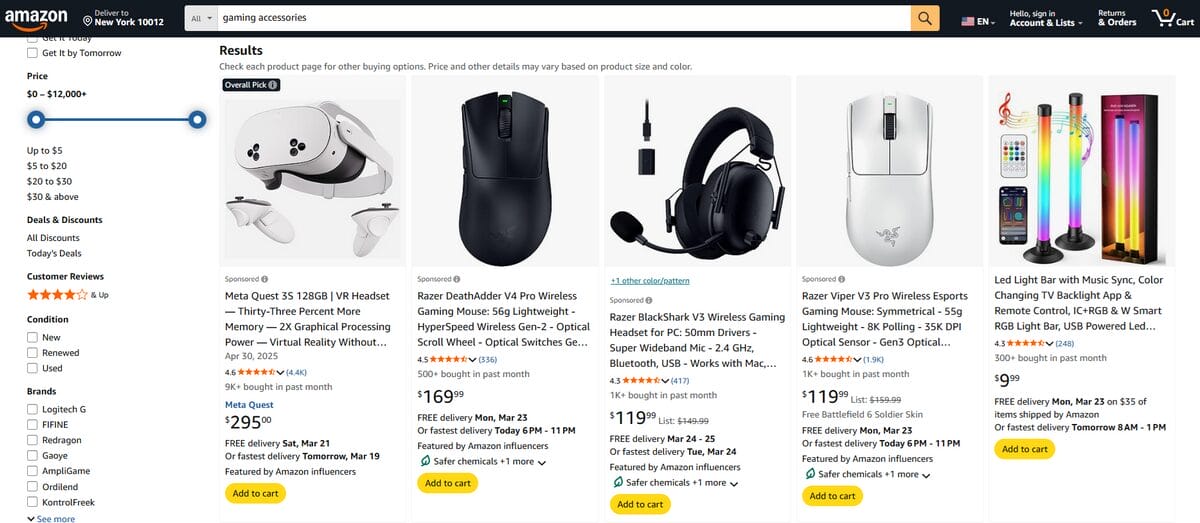
Gaming is one of the largest entertainment industries in the world, and gamers are constantly upgrading their setups. From casual players to competitive streamers, many users actively look for accessories that improve comfort, performance, or the overall gaming experience. On Amazon, this translates into steady demand for affordable gear upgrades.
Some of the best gaming accessories to sell on Amazon include:
- RGB gaming mouse pads: A simple accessory that instantly upgrades the look of a gaming setup. The colorful lighting and large surface area make them visually appealing in product images, which helps listings stand out.
- Controller charging docks: A practical solution for console players who want to keep their controllers organized and fully charged. Their everyday utility makes them a reliable evergreen product in the gaming niche.
- Headset stands with RGB lighting: Gamers love accessories that keep their desks tidy while adding style to their setup. These stands combine organization and aesthetics, making them easy to promote as setup upgrades.
Another great benefit of this niche is the culture of personalization. Gamers frequently customize their desks with lighting, stands, and accessories, which creates opportunities for sellers to position products as part of a larger setup ecosystem.
💫 Why these products sell on Amazon: Evergreen demand driven by setup upgrades, strong visual appeal, and a community that constantly personalizes gear.
Home Decor
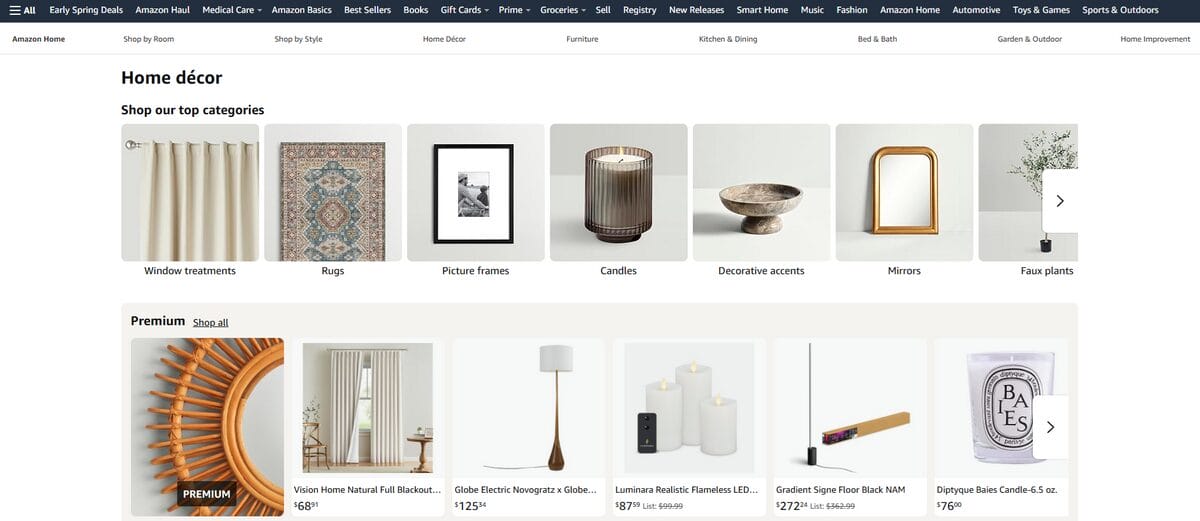
Home decor remains one of the most popular categories on Amazon, especially as more people look for affordable ways to personalize their living spaces. Small decorative items perform particularly well because they allow buyers to refresh a room without committing to expensive furniture or major redesigns.
Some of the best home decor products to sell on Amazon include:
- LED strip lights: A favorite for bedrooms, gaming setups, and entertainment areas. Their colorful lighting effects make them extremely photogenic, which helps listings perform well in both product images and video demos.
- Minimalist wall shelves: Practical and decorative at the same time, these shelves help people display plants, books, or collectibles. Their simple design appeals to diverse interior styles, from modern to Scandinavian.
- Decorative throw pillow covers: A simple way for buyers to update their home’s look without replacing entire cushions. Because they come in endless patterns and colors, sellers can offer several variations within the same listing.
One of the biggest advantages of home decor products is their giftability. Many shoppers browse Amazon looking for small decorative items as housewarming gifts, seasonal updates, or aesthetic upgrades for their space.
💫 Why these products sell on Amazon: Visual appeal, impulse-friendly pricing, and strong demand for affordable home upgrades.
💡 Pro Tip: Before listing a home decor product, browse Amazon’s Gift Ideas section to spot patterns. If similar items appear consistently, it’s a strong indicator of demand, giftability, and impulse-buy behavior.
Baby Products
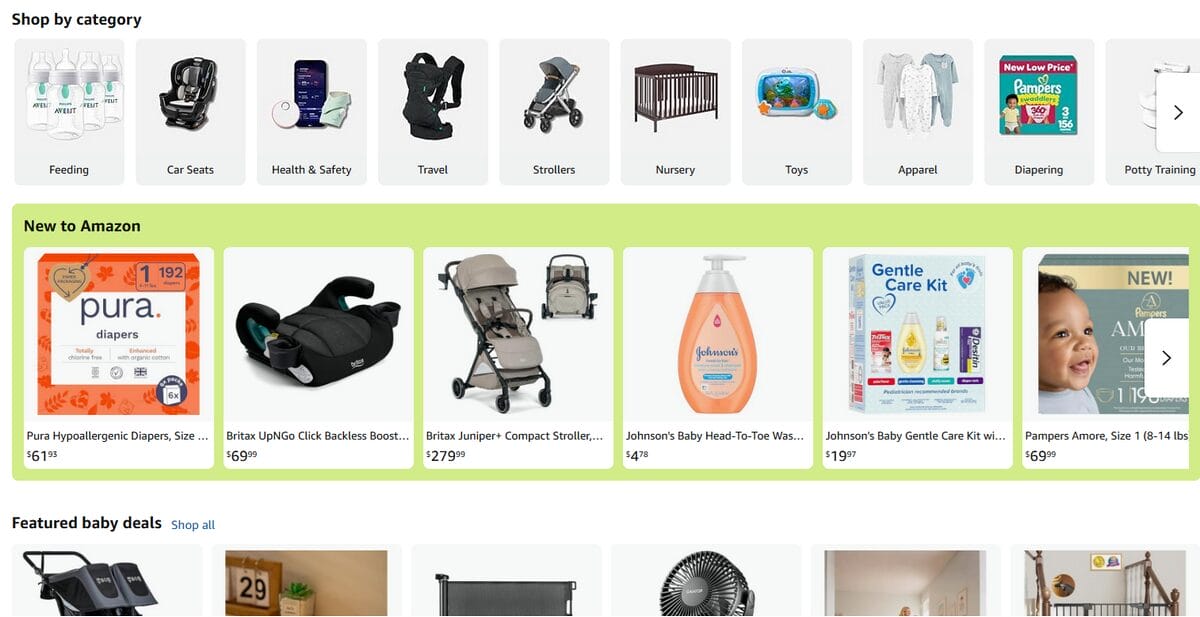
Baby products are one of the most resilient categories in eCommerce. Parents are constantly searching for items that make daily routines easier. Because many of these purchases are driven by convenience and safety, shoppers often turn to Amazon to quickly compare options and read reviews.
Some of the best baby products to sell on Amazon include:
- Portable bottle warmers: A convenient solution for parents who need to warm milk while traveling or during outings. Their practicality and compact design make them appealing for busy families on the go.
- Baby stroller organizers: These attach easily to strollers and provide extra storage for bottles, wipes, phones, and small essentials. It’s a simple upgrade that improves everyday convenience for parents.
- Silicone feeding sets: Plates, bowls, and utensils made from food-grade silicone are popular because they’re durable and safe. Their colorful designs also photograph well in product listings.
Another potential of this niche is that parents often buy various items at once when preparing for a new baby. That makes complementary products particularly effective within the same storefront or listing variations.
💫 Why these products sell on Amazon: Problem-solving items with strong trust-driven demand and consistent purchasing from new parents.
Travel Accessories
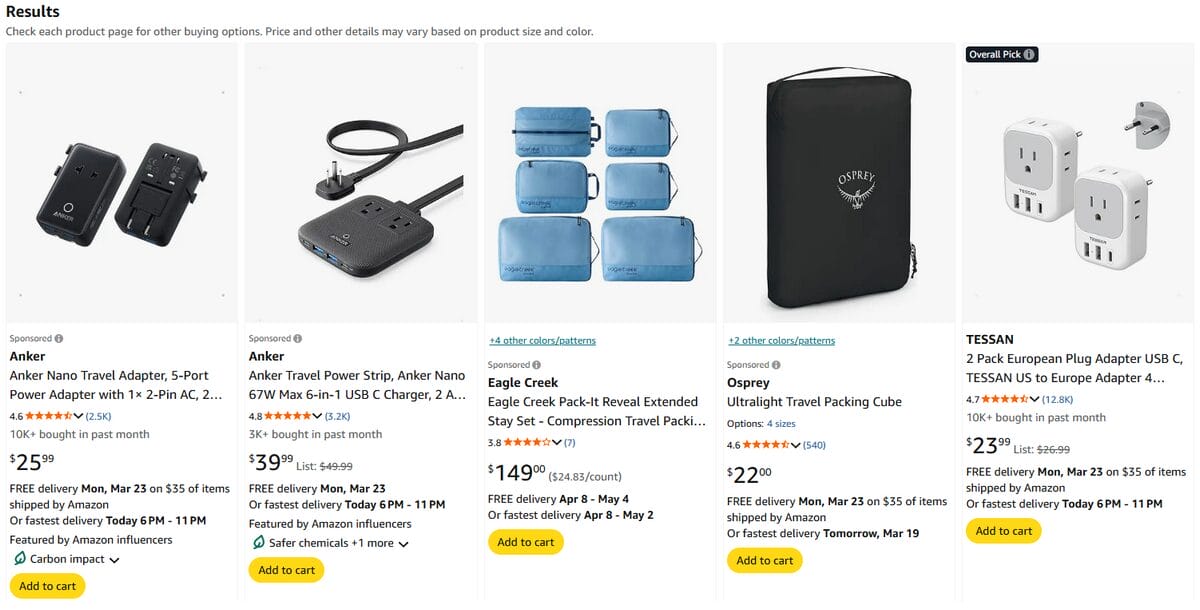
Travel accessories are a classic Amazon category because they solve small (but very real) problems travelers face on the go. From keeping devices charged to staying organized inside luggage, these products appeal to anyone preparing for a trip. And since many purchases happen shortly before departure, convenience often matters more than price.
Some of the best travel accessories to sell on Amazon include:
- Compression packing cubes: These organizers help travelers maximize luggage space while keeping clothes neatly separated. Their before-and-after packing demos make them especially effective in product videos.
- Universal travel adapters: A must-have for international travelers who need to charge devices across different plug types. Their practicality and broad compatibility make them a reliable evergreen product.
- Travel neck pillows: Designed to improve comfort during long flights or road trips, these pillows appeal to frequent travelers and occasional vacationers alike.
This niche also benefits from clear use-case marketing. Showing products in real travel scenarios (airports, airplanes, or packed suitcases) helps shoppers instantly understand their value.
💫 Why these products sell on Amazon: Travel-driven demand, strong problem-solving appeal, and easy demonstration in real-life scenarios.
📢 Marketing Tip: In the travel niche, showing beats telling. If you don’t want to film content yourself, you can use tools like CreateUGC to quickly generate UGC-style videos that showcase your product. It’s a simple way to make your listings more convincing, without overcomplicating the process.
Fitness
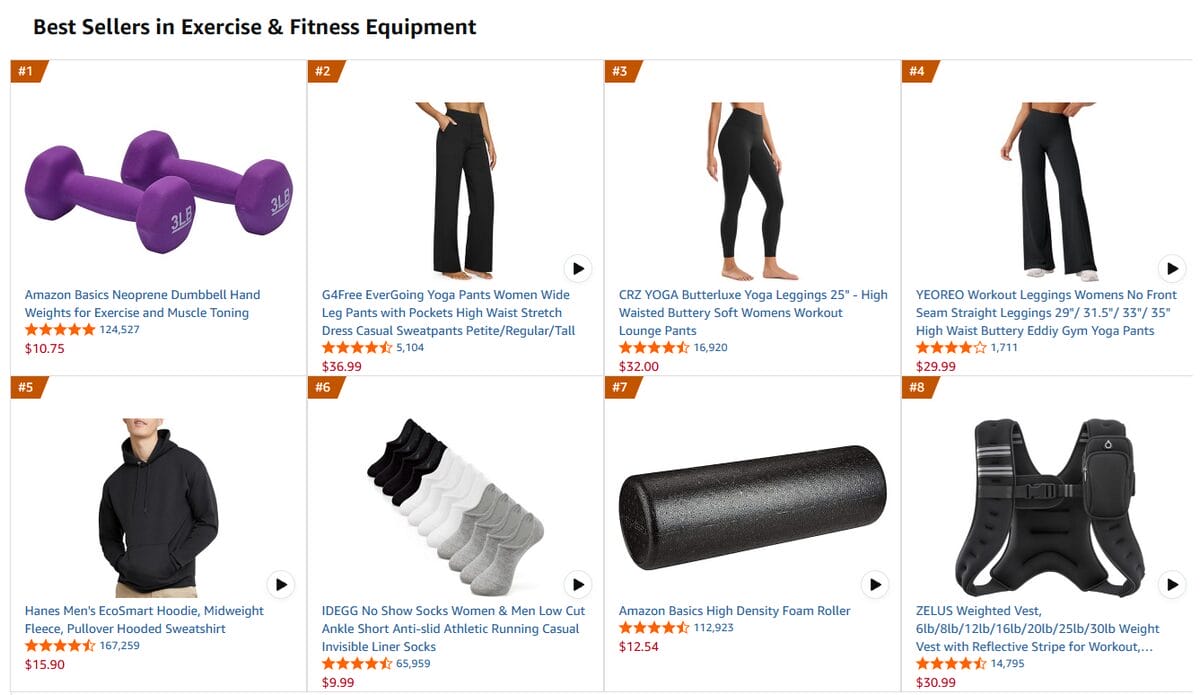
Fitness products continue to thrive on Amazon as more people invest in home workouts. Instead of large gym machines, many shoppers look for compact equipment that fits easily into small spaces while still delivering effective workouts.
Some of the best fitness products to sell on Amazon include:
- Resistance band sets: Lightweight, versatile, and suitable for strength training, mobility, or rehabilitation exercises. Their portability makes them ideal for home workouts and travel-friendly fitness routines.
- Ab roller wheels: A simple but highly effective core-training tool. Because the movement is easy to show, these products perform well in video listings and fitness tutorials.
- Massage guns: Popular among athletes and everyday users looking for muscle recovery solutions. Their perceived value is high, and many buyers are willing to pay more for devices that promise faster recovery.
Many products in this niche naturally fit into workout bundles or training routines. Sellers can position items as part of a complete home gym setup, which increases average order value.
💫 Why these products sell on Amazon: Evergreen fitness demand, highly demonstrable items, and strong interest in home workout gear.
Cellphone Accessories
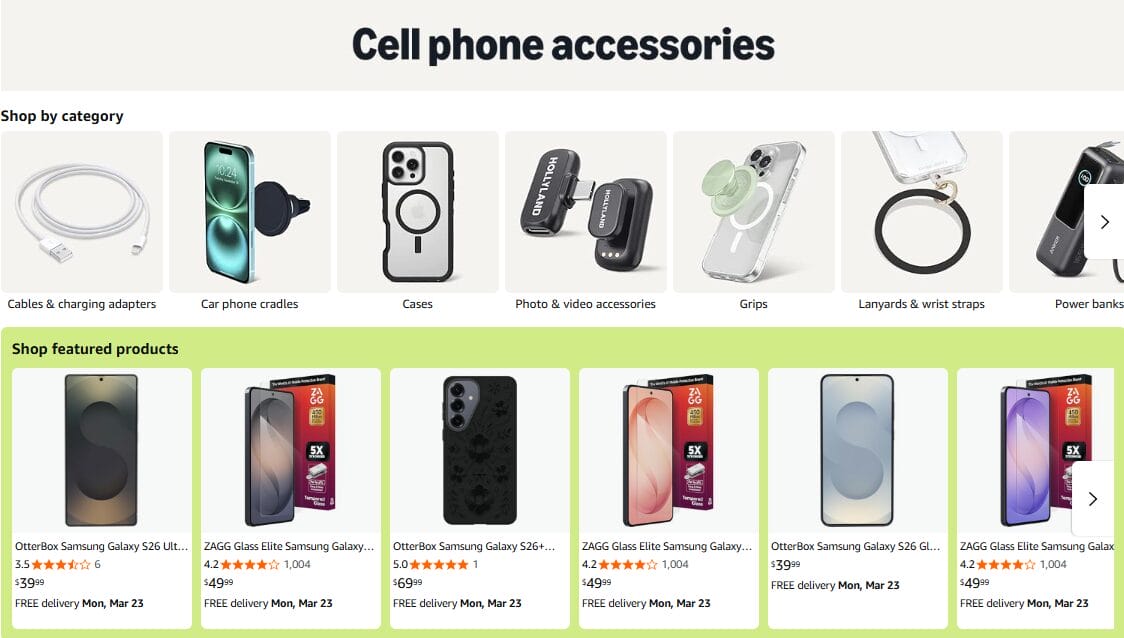
Smartphones may last for years, but their accessories change constantly. That’s exactly what makes this niche so strong on Amazon. From protection to convenience and customization, shoppers regularly buy small add-ons that improve how they use their devices every day.
Some of the best cellphone accessories to sell on Amazon include:
- Magnetic phone mounts for cars: A simple solution for hands-free navigation and calls while driving. Their compact size and clear use case make them easy to market in short videos.
- Fast wireless charging pads: As more phones support wireless charging, these devices continue gaining traction. Their sleek design and practical functionality make them a popular desk or nightstand accessory.
- Protective phone cases: One of the most consistently purchased smartphone accessories. With countless styles, colors, and designs available, sellers can easily target different aesthetics and audiences.
As smartphone users frequently upgrade devices or replace worn accessories, this category benefits from continuous repeat demand. Products are typically lightweight, inexpensive to ship, and simple to showcase in lifestyle images or quick product demos.
💫 Why these products sell on Amazon: Massive smartphone user base, repeat purchases, and compact accessories that are specially potent to market visually.
Office Supplies
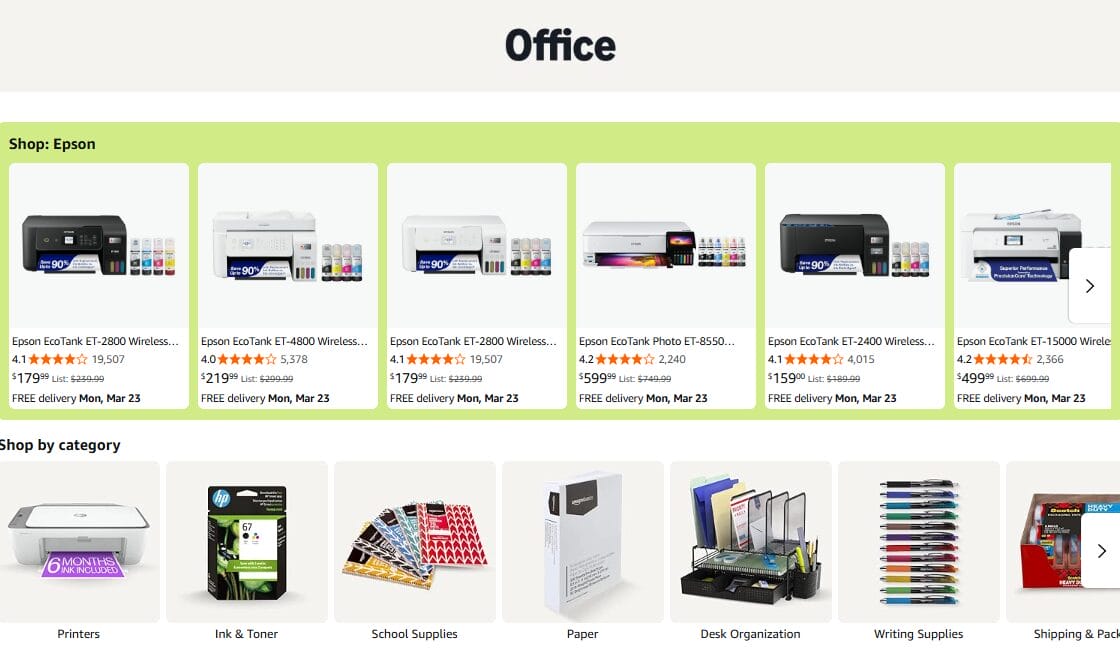
As remote work and hybrid offices become the norm, office supplies continue to sell consistently on Amazon. Many buyers look for simple tools that help them stay organized, productive, and comfortable while working from home or at their desks.
Some of the best office supplies to sell on Amazon include:
- Desk organizers: Practical accessories that help users keep stationery, cables, and small gadgets tidy. Their aesthetic appeal also makes them popular in minimalist or productivity-focused desk setups.
- Ergonomic mouse pads with wrist support: Designed to improve comfort during long work sessions, these products appeal to remote workers, gamers, and office employees alike.
- Weekly desk planners: A simple but effective productivity tool that helps users organize tasks and schedules. These products often attract buyers who enjoy planning routines or aesthetic desk setups.
What makes this niche attractive for sellers is its evergreen demand. Office tools are inexpensive and easy to ship, while their visual appeal makes them perfect for lifestyle images showing clean and productive workspaces.
💫 Why these products sell on Amazon: Steady demand from remote workers, practical everyday use, and lightweight items.
Car Accesories
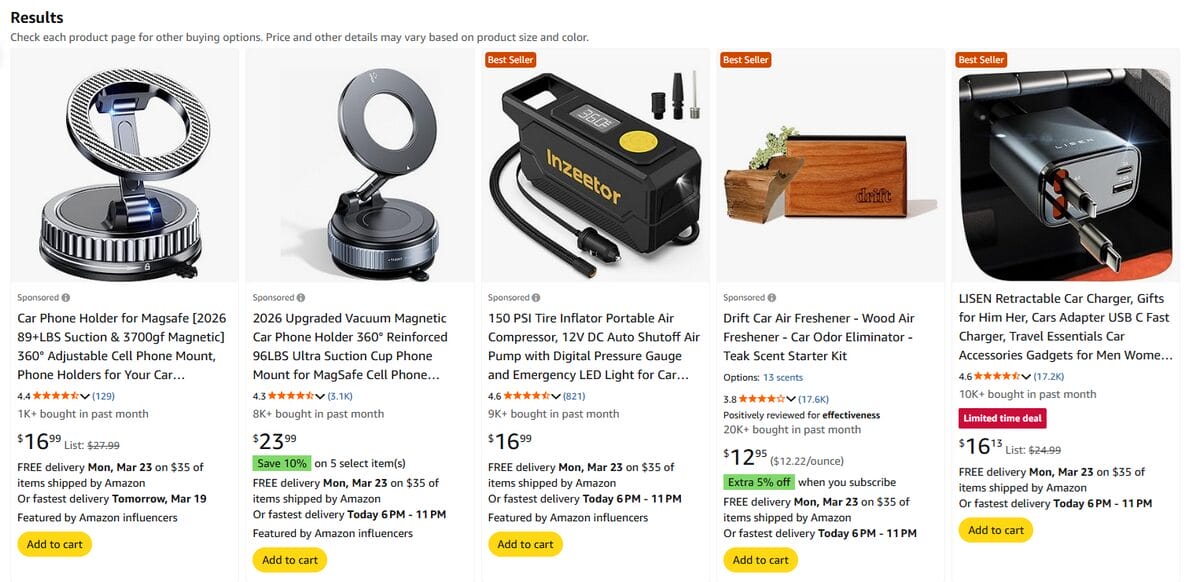
Car accessories remain one of the most reliable categories on Amazon because almost every driver looks for small upgrades that make driving more convenient, comfortable, or organized. Instead of expensive vehicle modifications, many buyers prefer affordable accessories that instantly improve their daily commute.
Some of the best car accessories to sell on Amazon include:
- Car phone holders: Essential for hands-free navigation and safer driving. Their practicality and compatibility with most vehicles make them a consistent bestseller.
- Seat gap fillers: A simple yet clever product that prevents phones, keys, or coins from falling between car seats. These types of problem-solving accessories often perform well because buyers instantly recognize the need.
- LED interior car lights: Decorative lighting kits that allow drivers to customize the look of their vehicle interior. Their colorful effects make them visually appealing and highly marketable in product videos.
One big advantage of this niche is that many products are affordable upgrades that drivers can install themselves in seconds. That simplicity makes them really easy to promote through quick demonstrations.
💫 Why these products sell on Amazon: Massive driver market, practical problem-solving products, and affordable upgrades that encourage impulse purchases.
How to Choose Products to Sell on Amazon
Finding the best things to sell on Amazon is about evaluating products based on how the marketplace actually works. Unlike other platforms, Amazon is driven by search intent, competition within listings, and strict operational factors.
To increase your chances of success, focus on these key criteria when selecting products:
Demand
On Amazon, demand is everything. If people aren’t actively searching for a product, it won’t sell, no matter how good it is.
Look for products that:
- Have consistent search volume over time.
- Appear frequently in Amazon search results and categories.
- Show strong engagement (reviews, ratings, Best Seller badges).
Competition
High demand is great, but too much competition can make it difficult to stand out.
Evaluate:
- The number of sellers offering similar products.
- The quality of top listings (images, reviews, branding).
- Whether you can differentiate your offer (bundles, variations, positioning).
Amazon Fees & Profit Margins
Amazon offers a massive reach, but that comes at a cost. Fees can quickly eat into your margins if you don’t factor them in from the start, which is why understanding the cost structure is essential before choosing a product.
Consider:
- Referral fees: A percentage of each sale (usually around 8%–15%, depending on the category).
- Fulfillment costs: If you use FBA, this includes picking, packing, and shipping. With dropshipping, it depends on your supplier and shipping method. Which one is better? Learn in our Amazon FBA vs. Dropshipping guide.
- Additional costs: Returns, refunds, and occasional advertising spend can also impact your final profit.
So, a product that looks profitable at first glance may end up generating very slim outcomes. That’s why experienced sellers always calculate their real profit after all fees, not just the difference between cost and selling price.
🆕 Beginner’s Tip: As a rule of thumb, aim for products with enough margin to comfortably absorb fees while still leaving room for profit and potential ad spend.
Return Risk & Product Complexity
Some products sell well, but also get returned frequently, which can hurt your profits and account health.
Avoid or carefully evaluate:
- Fragile items (easy to break during shipping).
- Complex products that may confuse users.
- Items with sizing issues (common in apparel).
Shipping Practicality
Logistics matter more than most beginners expect. Heavy, bulky, or fragile products can increase costs and create fulfillment challenges.
Look for goods that are:
- Lightweight and compact.
- Durable (low risk of damage).
- Simple to store and ship.
Product Differentiation Potential
On Amazon, you’re often competing on the same listing, or against very similar products. That’s why differentiation is key.
Think about:
- Bundling complementary items.
- Offering variations (colors, sizes, styles).
- Improving branding, images, or product positioning.
By combining these criteria, you move from random product selection to data-driven decision-making. Instead of chasing trends blindly, you’ll be able to identify products that are not only popular but also profitable and sustainable on Amazon.
What Makes a Product Good for Amazon
Once you understand what to evaluate, the next step is identifying what a strong Amazon product actually looks like in practice. In other words, what characteristics tend to show up again and again in items that consistently sell well?
Successful products on Amazon usually check several of the following boxes:
✅️ High Demand & Consistent Search Volume: Consistency matters far more than short-lived spikes when building a sustainable store. A strong product is searched consistently over time. On Amazon, that means buyers are actively looking for it, not just stumbling upon it. As we mentioned earlier, winning products typically:
- Appear frequently in search results.
- Gradually accumulate reviews and sales.
A quick tip: use keyword tools to confirm stable, ongoing search demand, not just temporary hype.
✅️ Low-to-Moderate Competition: The ideal product sits in that sweet spot where demand exists, but the space isn’t completely dominated by established sellers. Strong opportunities often:
- Compete in micro-niches with room for new listings.
- Allow differentiation through bundles or positioning.
- Don’t require going head-to-head with major brands.
If most top listings have under 500 reviews, you may have a realistic entry point.
✅️ Healthy Profit Margins After Amazon Fees: A good product is profitable once all costs are factored in. Your selling price should comfortably cover Amazon fees, shipping, and supplier costs while still leaving a solid margin. Aim for:
- At least 25% profit margin after all expenses.
- Enough flexibility to run discounts or ads if needed.
- Strong perceived value relative to cost.
✅️ Reliable Supplier Availability & Fast Shipping Options: Even the best product idea can fail without reliable sourcing. Working with Amazon dropshipping suppliers that offer consistent stock and fast delivery are essential for maintaining good seller performance. Strong items usually:
- Are easy to source from multiple suppliers.
- Have stable pricing and availability.
- Can be shipped quickly and reliably.
It’s just math: Faster shipping + consistent stock = happier customers (and far fewer headaches).
✅️ Low Return Rate & Minimal Complexity: Simple and intuitive products tend to win on Amazon. And one big reason is returns. The fewer issues customers face, the more stable (and profitable) your business becomes. The best candidates are:
- Easy to use without instructions.
- Durable and low-risk during shipping.
- Free from sizing or compatibility confusion.
Fewer returns mean higher margins, better reviews, and a more stable business overall.
Amazon-Specific Considerations
Beyond product fundamentals, Amazon has its own internal signals, and understanding them is what separates random product selection from strategic product positioning. These are the small details that smart dropshippers pay attention to:
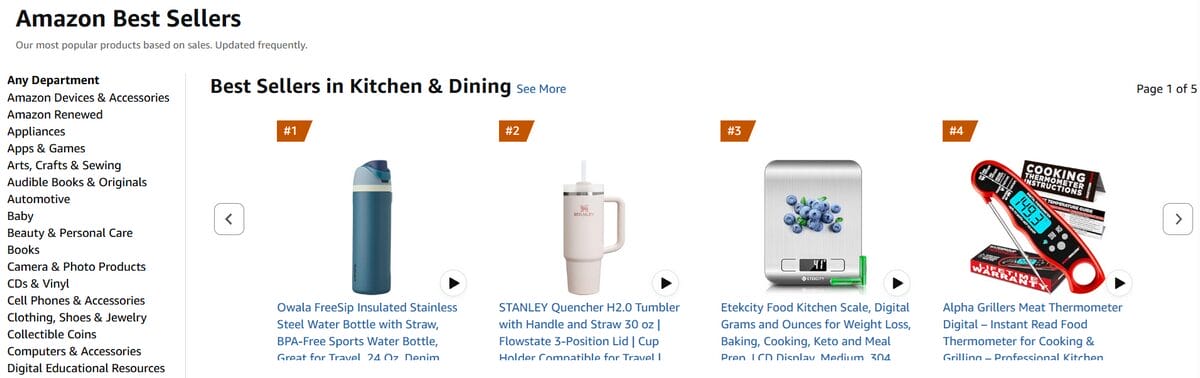
ℹ️ BSR (Best Sellers Rank): BSR shows how well a product is currently selling within its category. The lower the number, the higher the sales. A sweet spot often appears when top products aren’t ultra-low BSR, signaling demand without extreme saturation.
ℹ️ Review Thresholds: Reviews are one of the biggest trust signals on Amazon, and they directly impact conversion rates. If every top competitor has thousands of reviews, breaking in becomes significantly harder. Look for niches where a few hundred strong reviews can make you competitive.
ℹ️ Pricing Stability: Amazon’s algorithm favors consistency. Frequent or aggressive price changes can hurt your visibility and ranking. Strong products usually:
- Maintain relatively stable pricing.
- Compete within a clear price range.
- Avoid constant undercutting wars.
Think long-term positioning, not short-term price drops.
ℹ️ Compliance & Restrictions: Not every product is fair game on Amazon. Some categories are restricted, while others require certifications or special approval. Be cautious with:
- Hazmat or hazardous materials.
- Gated categories (like fine jewelry or certain electronics).
- Products with safety or compliance requirements.
Always check Amazon’s policies before listing. Getting this wrong isn’t just inconvenient; it can shut your store down.
How to Validate Product Ideas for Amazon

Finding the best things to sell on Amazon is only half the game. The real edge comes from validating your ideas with actual marketplace data before you invest time, money, or effort into listing them.
Instead of guessing, use this simple validation framework to quickly identify whether a product is worth testing:
1️⃣ Check BSR to Confirm Real Sales
Start with the Best Sellers Rank (BSR). This is your fastest way to gauge if a product is actually selling. Here’s how to read it:
- 1,000–5,000 BSR: High daily sales (very competitive)
- 5,000–15,000 BSR: Strong demand with room to enter
- 15,000+ BSR: Lower demand or slower sales
If multiple listings in a niche sit between 5K–15K BSR, you’ve likely found a healthy demand zone without extreme saturation. You can also use category benchmarks to refine your analysis:
- Health & Household: under 5,000 → strong daily sales.
- Home & Kitchen: under 10,000 → stable demand.
- Pet Supplies / Automotive: under 15,000 → solid micro-niche potential.
2️⃣ Analyze Reviews
Reviews tell you two things at once: competition level and current demand. Focus on:
- Review volume: Are top listings under 500 reviews? That’s a green light for new sellers.
- Review velocity: Are products getting consistent new reviews each month? That signals active demand.
A niche where products are still gaining reviews steadily (but aren’t dominated by thousands of them) is often a strong entry point.
3️⃣ Look for Pricing Gaps (Your Profit Window)
This is where many product ideas fall apart, or prove themselves. Compare the supplier cost (including shipping) and the average selling price on Amazon. To make this concrete, you can use the Amazon FBA Revenue Calculator or a simple custom spreadsheet to map out all costs
You are looking for:
- A clear price gap (ideally 30%+) before fees
- Enough margin to absorb Amazon fees (8–15%), ads, and still profit
If the margin is too tight on paper, it will be even tighter in practice.
4️⃣ Spot Bestseller Patterns
Don’t just analyze one product; look at the pattern across top listings. Ask yourself: Are several sellers offering similar versions of the product? Do they share common features, positioning, or bundles? Are certain styles or variations repeating?
Patterns equal validation. If several listings are winning with similar setups, the demand is proven; you just need to position better.
5️⃣ Evaluate Product Saturation
Not all competition is bad, but saturation is. Run a quick saturation check:
- Are search results dominated by big brands? If the top listings are owned by well-known companies (think Rubbermaid in storage or Samsung in electronics), you are entering a brand-loyal battleground. Look for niches dominated by Generic or Private Label sellers.
- Is differentiation nearly impossible? A healthy niche has competition, but not domination. You should be able to imagine how your product could stand out.
- Do top listings have thousands of reviews across the board? Do the top competitors have bad listing quality? Poor competition signals a huge opportunity. If the top listings look flawless, your barrier to entry is higher.
💡 Pro Tip: Watch out for Amazon itself. When a niche gets profitable, Amazon often steps in with its own Amazon Basics product. If that listing is already ranking high, you’re not just competing with sellers—you’re competing with the platform.
6️⃣ Run a Small-Scale Test
Once a product passes your initial validation, resist the urge to go all in. Instead, treat this phase as a controlled experiment.
A smart way to approach it is by launching a small batch of 5–10 products within a micro-niche. This allows you to compare performance without spreading your budget too thin and, more importantly, to spot patterns faster.
From there, your focus should shift to building listings that can actually compete. On Amazon, visibility and conversion go hand in hand. That means:
- Using high-intent keywords naturally in your title and bullet points.
- Uploading clean, high-quality images, including at least one lifestyle shot that shows the product in use.
- Writing benefit-driven bullets that clearly answer the question: “Why should I buy this?”
7️⃣ Read the Data
Once your listings are live, run a small PPC campaign to generate initial traffic. You’re not trying to scale yet; you’re trying to learn. And this is where things get interesting: the data starts talking. At this stage, shift your mindset: you’re not just a seller, you’re an analyst. Take a look at:
- Conversion rate (CR): This tells you how many visitors actually become buyers. On Amazon, a solid benchmark is around 10% or higher. If you’re sitting below 5%, it’s usually a sign that something isn’t clicking.
- Sales consistency. Are orders coming in steadily, or do you see random spikes with no follow-up? This is one of the clearest indicators of real, sustained demand.
- Profit margins: Evaluate them with complete honesty. After factoring in Amazon fees, ad spend, and product costs, are you actually making money?
8️⃣ Scale What Works
Once you’ve identified a product that’s generating consistent sales, converting well, and leaving you with healthy margins, you can start thinking about scaling. The first move is usually expanding within the same listing. Do it by:
- Adding variations like colors or sizes helps you capture more search intent and makes your offer more competitive without starting from scratch.
- Introducing bundles and airing complementary products (like a yoga mat with resistance bands) boosts revenue. It also improves perceived value, which can positively impact conversions.
But the real long-term play goes beyond a single product. If something works, it’s often a sign that the niche itself has potential. That’s your cue to scale with related items, creating a more cohesive catalog that positions you as a specialized seller rather than a one-product store.
Over time, this approach compounds. More products in the same niche lead to stronger brand signals, better keyword coverage, and higher overall visibility. At the end of the day, the goal is to build a store that grows on top of proven demand.



Evergreen Products vs Trending Products on Amazon

Not all winning products behave the same way. Some generate steady, predictable sales year-round, while others explode in popularity and disappear just as fast. Understanding the difference between evergreen and trending products can help you choose the right strategy based on your goals, budget, and risk tolerance.
Evergreen products are built on consistent, ongoing demand. These are items people need regardless of trends, seasons, or viral moments. Think skincare basics, pet essentials, or everyday tech accessories. Their biggest advantage is stability: demand is easier to predict, pricing tends to fluctuate less, and you can build a more reliable, long-term operation around them. In many ways, they’re the backbone of sustainable Amazon stores.
However, that same consistency attracts competition. Because everyone knows these products sell, you’ll often face crowded listings and established sellers. Winning here usually comes down to positioning: bundles, branding, or small differentiators that make your offer feel like the better choice, even in a saturated space.
Trending products, on the other hand, are driven by momentum. They surge due to social media, seasonality, or emerging consumer behaviors, creating short windows of high demand. When you catch them early, the upside can be significant: faster sales velocity, lower initial competition, and the chance to scale before the market catches up.
But that speed cuts both ways. Trends can fade as quickly as they rise, which makes demand less predictable and increases the risk of investing in products that quickly lose traction. Pricing can also become volatile, especially as more sellers jump in and compete aggressively.
So, which one should you choose? It depends on your strategy. If you’re aiming for steady growth and long-term stability, evergreen products are your safest bet. If you’re comfortable moving fast and adapting quickly, trending products can unlock quicker wins.
In practice, the strongest stores don’t rely on just one approach. They combine both: using evergreen products as a stable foundation, while selectively testing trends to capture upside when opportunities appear.
Common Mistakes When Choosing Products to Sell on Amazon

By now, you know what to look for in a winning product, but just as important is knowing what to avoid. Even with the right validation process, many sellers fail for the same reason: they fall into predictable product selection traps.
Let’s break down the most common mistakes and how to avoid them, so you can save yourself time, money, and a lot of frustration:
Picking Over-Saturated Categories
It’s tempting to go after products you know are selling. But if a keyword throws back hundreds of thousands of results and the first pages are dominated by established brands with thousands of reviews, you’re entering a locked door.
✅ Solution: Shift your thinking from “big niche” to micro niches. Instead of broad categories like fitness gear or kitchen tools, look for angles like “compact resistance bands for travel workouts” or “spill-proof containers for meal prep on the go.” Specificity is what creates space.
Ignoring Amazon Fees
This is where many “profitable” ideas quietly fall apart. You calculate supplier cost and selling price, but forget that Amazon takes a cut in between. With referral fees typically ranging from 8% to 15%+, a product with a 20% margin on paper can quickly become borderline.
✅ Solution: Work backward, not forward. Use the Amazon FBA Revenue Calculator (or a detailed spreadsheet) to:
- Start from a competitive market price
- Subtract Amazon fees
- Subtract your target profit
What’s left defines your maximum viable cost. If your supplier doesn’t fit within that window, the product doesn’t work.
Choosing Fragile or High-Complaint Products
Some products fail because of what happens after the sale. Items that are fragile, complex, or prone to confusion tend to generate returns, negative reviews, and performance issues. And on Amazon, that directly impacts your account health.
✅ Solution: Reduce friction wherever possible. Prioritize products that are:
- Durable (low risk during shipping)
- Simple to use (no instructions needed)
- Standardized (no sizing or compatibility confusion)
Fewer variables mean fewer problems.
Ignoring IP & Trademark Restrictions
This is one of the fastest ways to run into serious trouble. Amazon is increasingly strict with intellectual property, and even unintentional violations can lead to listing removals or account warnings.
✅ Solution: Treat this like due diligence, not an afterthought:
- Avoid using trademarked terms in titles or listings.
- Be cautious with products that mimic branded designs or unique features.
- Double-check images and branding rights.
If something feels “too close” to a known product, it usually is. Play it safe and stick to generic, utility-driven items.
Chasing Trends Without Supplier Validation
Trends can move fast, but supply chains don’t always keep up. The biggest mistake here is scaling too quickly without confirming that your supplier can handle demand consistently. When that breaks, you’re left dealing with delays, defects, and rising order defect rates.
✅ Solution: Test trends, but validate the backend:
- Work with reliable or pre-vetted suppliers.
- Check if demand is sustained (not just a spike) using tools like Google Trends.
- Avoid committing to volume until performance is stable.
Speed matters. But stability is what keeps you in the game.
Underestimating Shipping Times
Shipping is a ranking factor. Amazon tracks metrics like On-Time Delivery Rate (OTDR) and Late Shipment Rate (LSR), and poor performance here can limit your visibility (or worse). Relying on ultra-cheap suppliers with 3–6 week delivery windows usually backfires.
✅ Solution: Choose suppliers with fast, consistent fulfillment and aim to stay within safe performance thresholds:
- Late Shipment Rate under 4%.
- On-Time Delivery Rate ideally above 95%.
How AutoDS Helps You Find Products to Sell on Amazon
Finding winning products on Amazon is all about reading the right signals. nd as you’ve seen throughout this guide, that means validating demand, checking competition, calculating margins, and making sure your supplier can actually deliver.
That’s exactly where AutoDS comes in. Instead of jumping between and guesswork, AutoDS centralizes the entire product research process so you can move faster and make smarter decisions.
At its core, AutoDS helps you discover and validate products using real-time marketplace insights. You’re not just browsing ideas, you’re identifying products that already show demand (through sales patterns like BSR), viable pricing gaps, and reliable sourcing options. In other words, it helps you connect all the dots we’ve covered, without the manual work.
Here’s how it does that:
- Product Research Tool: A data-driven discovery engine that surfaces trending and high-demand products, helping you identify opportunities with proven sales activity instead of relying on intuition
- Hand-Picked Products Hub: A curated selection of pre-vetted products, already aligned with market demand and optimized for faster testing, ideal when you want to skip the initial filtering phase
- AutoDS Ads Spy Tools: A visibility layer into competitor activity, showing which products and ads are actively being promoted, often a strong signal of traction and ongoing demand
- Supplier Optimization: Integrated sourcing insights that connect products with multiple reliable suppliers, including key factors like stock stability and shipping speed (critical for Amazon performance metrics)
- Price & Profit Insights: Built-in margin visibility that factors in costs and pricing dynamics, helping you quickly assess whether a product can remain profitable after Amazon fees and ad spend
👉 Want to test it out? AutoDS offers a $1 trial, so you can explore product research features and automation tools in a real workflow, without overcommitting.
Beyond discovery, AutoDS also helps you move from research to execution without friction. Once you find a product, you can import it, optimize the listing, monitor stock and pricing, and start testing. Yes, all within the same workflow. No extra tools, no messy handoffs.
In other words, AutoDS helps you build a repeatable research system around what actually works. And on Amazon, that’s what separates random wins from scalable growth.
Frequently Asked Questions
What are the best dropshipping products to sell on Amazon?
The best dropshipping products on Amazon are those with consistent demand, manageable competition, and solid margins after fees. The AutoDS Product Research tool can help dropshippers spot winning products for Amazon in seconds.
Which Amazon categories are most profitable for dropshipping?
The most profitable Amazon categories are those that combine high demand with low sourcing costs, allowing margins of 25% or more. Niches like cosmetics, pet supplies, and baby products often stand out because they support strong pricing and repeat demand.
How do I find winning Amazon products?
Finding winning Amazon products means relying on data. Look for items with consistent search demand, healthy BSR ranges, and clear pricing gaps, using product research tools like AutoDS to speed up the process.
How do I check if a product is too competitive on Amazon?
A product is too competitive on Amazon when top listings are dominated by high-review sellers and strong brands. If most competitors exceed 1,000 reviews, it’s hard to break in. Look instead for niches under 500 reviews.
What is a good BSR for dropshipping products?
A good BSR for dropshipping products on Amazon typically falls between 1,000 and 15,000 in the main category. This range signals consistent sales without the extreme competition of top-ranked listings.
What products should you avoid selling on Amazon?
The products you should avoid on Amazon are those with high risk or low control. This includes saturated items, fragile or high-return products, and anything involving IP or compliance issues like trademarks or restricted categories.
Is dropshipping on Amazon profitable in 2026?
Yes, dropshipping on Amazon in 2026 is still profitable, but it’s more data-driven and competitive than ever. Success depends on niche selection, fast shipping, and using automation tools like AutoDS to stay efficient and scalable.
How do I find suppliers for Amazon dropshipping?
Finding suppliers for Amazon dropshipping means prioritizing speed and reliability. Look for partners with fast shipping (ideally under 15 days) and consistent stock. Platforms like AutoDS help connect you with pre-vetted options.
Can I dropship on Amazon without holding inventory?
Absolutely! Dropshipping on Amazon means you can sell products without holding inventory. When you receive an order, your supplier ships directly to the customer, reducing upfront costs and operational risk.
How does AutoDS help find and manage Amazon products?
When sourcing from AutoDS to Amazon, you get the benefits of product research with automation. AutoDS identifies winning products through data insights and handles operations like sourcing, pricing updates, stock monitoring, and order fulfillment.
How many products should beginners start with?
Beginners should start with a small batch of 5–10 products within a micro-niche. This makes it easier to test performance, optimize listings, and scale based on real data.
What is the easiest niche for new Amazon sellers?
The easiest niches for new Amazon sellers are those that are evergreen, simple, and low-risk. Examples include categories like home organization or pet accessories, products with steady demand and fewer returns.
Start Selling On Amazon With AutoDS
In 2026, the Amazon game is about being the most informed seller in a crowded marketplace: reading BSR like a pro, respecting Amazon’s performance metrics, and obsessing over shipping times, margins, and customer experience. Finding the best things to sell on Amazon is about reading signals early and acting on them with precision.
That’s where AutoDS steps in and connects the dots. From product research and validation to price and stock monitoring and automated fulfillment, it allows you to operate with the kind of speed and accuracy that Amazon demands. The result? Instead of reacting late to changes in pricing, availability, or demand, you stay one step ahead, consistently.
So your next step is to pick a niche, validate a handful of smart products, and let tools like AutoDS handle the heavy lifting while you build a store that actually lasts.
🕵️ Ready to master Amazon product research? Start your AutoDS journey today for just $1 and turn your next product idea into a data-backed Amazon opportunity.
Want to go a bit deeper? These guides are a great next step: