


Thinking about dropshipping on Etsy? Here’s the first thing you should know: Etsy’s Seller Policy prohibits dropshipping and reselling, with only a few exceptions. What you can sell are products you’ve made, designed, handpicked, or sourced according to Etsy’s Creativity Standards.
In plain English: sourcing ready-made goods from AliExpress or Amazon and listing them on Etsy will get your shop suspended. While it’s a bit limiting, it still leaves room for two hands-off models: items produced and shipped by a disclosed production partner from your own designs, and items personalized with your buyer’s text or image.
In this guide, I’ll show you exactly how to take advantage of that. I’ll break down what Etsy actually allows, what can put your shop at risk, and how to build a more hands-off Etsy business without breaking the platform’s rules.
Last updated: September 2026. This guide reflects Etsy’s Seller Policy effective July 9, 2026, and its current Creativity Standards.
Traditional dropshipping and reselling aren’t allowed on Etsy, except for specific permitted categories such as qualifying craft supplies.
Etsy products must be made, designed, handpicked, or sourced by the seller according to the platform’s Creativity Standards.
Print-on-demand and buyer-personalized products can support a hands-off model, as long as they meet Etsy’s requirements and any production partners are properly disclosed.
Compliance goes beyond the product itself: sellers also need to follow Etsy’s rules around listing images, AI disclosure, production partners, intellectual property, and DDP shipping for US-bound international orders.
Automation can handle much of the operational work. AutoDS integrates with Etsy to help manage listings, print-on-demand products, prices, stock, and orders while you focus on the creative contribution Etsy expects.
Does Etsy Allow Dropshipping?
No, Etsy does not allow traditional dropshipping or reselling. But it’s not all bad news, because there are specific exceptions that can still work with a hands-off fulfillment model.
Here’s the thing: Etsy isn’t a marketplace where you can simply find a trending product somewhere else, add a markup, and resell it. In fact, there’s not even an Etsy dropshipping policy at all.
What you’ll find instead is the Etsy Seller Policy (effective July 9, 2026), which requires everything on the marketplace to be made, designed, handpicked, or sourced by the seller (in this case, you).
This is important because Etsy can even remove listings that don’t meet its rules, and may suspend or terminate accounts for policy violations.
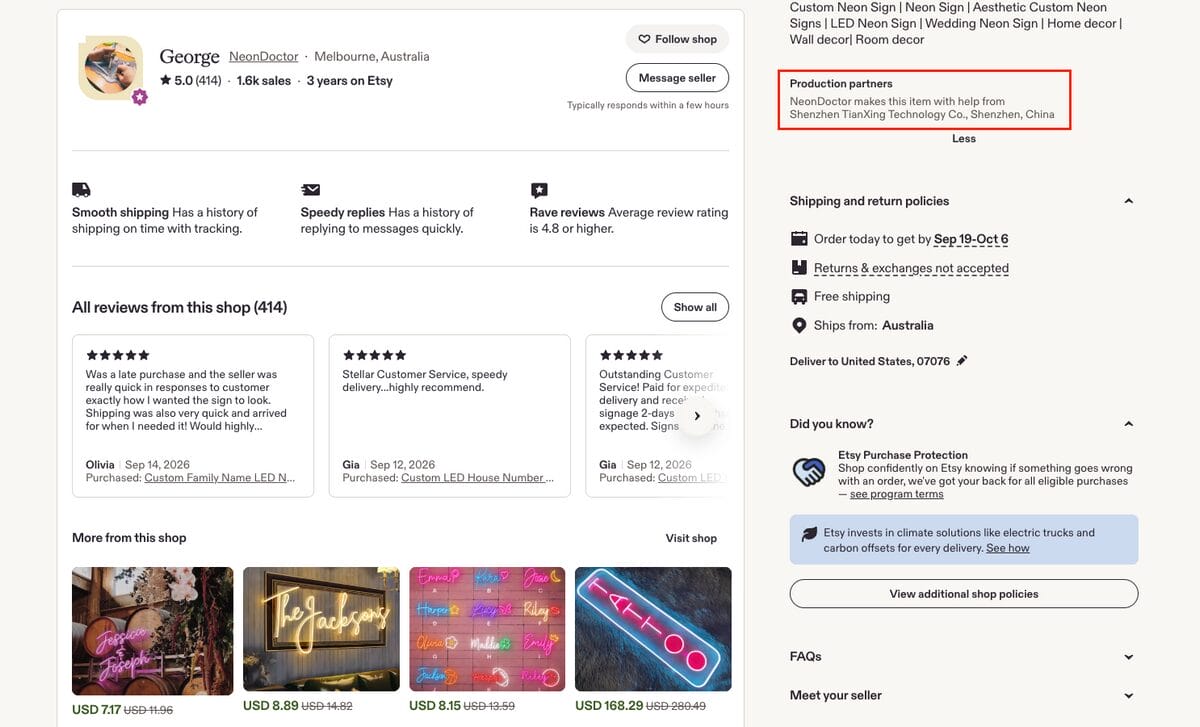
Now, here’s where it gets interesting: having someone else handle production and fulfillment doesn’t necessarily count as dropshipping in Etsy’s eyes. For example, you can create an original design and have a partner manufacture and ship the finished product to your customer.
The catch? You need to disclose that production partner in the relevant listings and accurately explain how, where, and by whom the product is made.
So, can you dropship on Etsy? Only in very specific cases. The real question isn’t whether someone else can ship your orders, it’s what exactly you’re selling. And that’s where Etsy’s Creativity Standards come in.
💡 Pro Tip: Mostly, think about why you want to sell on Etsy. The platform is built around creativity, uniqueness, and authenticity, and its rules protect that. You should bring some genuine creative value to what you sell. If that’s not the business you have in mind, a marketplace like Amazon or eBay may simply be a better fit.
What Etsy Actually Allows: The Four Creativity Standards
Etsy organizes eligible products into four Creativity Standards: items made, designed, handpicked, or sourced by the seller. Understanding which category your product belongs to (and why it qualifies) is probably the easiest way to tell whether your business model actually works on Etsy.
| Creativity Standard | What qualifies | What doesn’t qualify |
|---|---|---|
| Made by a seller | Handmade, hand-altered, or personally produced items | Commercial items with little or no creative alteration |
| Designed by a seller | Original designs, digital downloads, or designs made by a disclosed production partner | Resold or copied designs and AI prompt bundles |
| Handpicked by a seller | Vintage items, select natural items, and curated gift baskets | New items sold as vintage, resold natural items, generic gift boxes |
| Sourced by a seller | Craft supplies, qualifying party supplies, and buyer-personalized products | Ready-to-use blanks and generic commercial goods |
These categories also affect which product images you can use. “Made by” and “handpicked” listings require original photos or videos of the finished product.
“Sourced by” listings may use manufacturer or distributor images, subject to Etsy’s intellectual property rules. For personalized listings, your first image needs to show a finished customized item, rather than a blank product or a generic “your text here” mockup.
Now, let’s break each standard down.
Made By A Seller
“Made by” means you’re genuinely involved in physically creating the product, rather than simply assembling or slightly modifying something manufactured elsewhere. Think handmade jewelry, components you assemble into an original finished item, or something you manufacture yourself using your own design and equipment.
Just be careful: putting together a ready-to-assemble product according to its instructions (IKEA-style) doesn’t suddenly make you its creator.
Designed By A Seller
You don’t necessarily need to manufacture a product yourself if the design is yours. This is where print-on-demand enters the scene. You could, for example, create an original illustration and work with a disclosed Etsy production partner that prints it on a product and ships the finished order.
Original digital downloads also belong here. Etsy even permits AI-generated creations based on your own prompts (as long as you are transparent about it). What matters is that the creative contribution comes from you, not something you found online and decided to resell.
Handpicked By A Seller
Etsy also makes room for products you didn’t create, but personally selected based on your own curation. Of course, this is allowed under specific circumstances. Vintage is the big one: an item must be at least 20 years old, and Etsy may ask you to provide information about its age, source, designer, or materials.
The category can also include unique natural items you found or cultivated and themed gift baskets you personally curated and assembled.
And let’s be honest here: Calling a newly manufactured product “vintage-inspired” doesn’t make it vintage. Nice try.
Sourced By A Seller
“Sourced by” is the most relevant category to resellers and dropshippers, but its scope is much narrower than it sounds.
Etsy allows products related to creativity, including qualifying craft supplies, materials, tools, craft kits, and blanks that require further crafting. Certain event decorations and products personalized with the buyer’s own text or image can qualify, too.
Now, let’s not try to outsmart Etsy: a blank tumbler intended for someone to decorate may qualify as a craft supply, but a ready-to-use off-white t-shirt does not automatically qualify simply because somebody could customize it.
The takeaway is simple: Etsy cares about your creative role in the product, not just who packs the box and ships it. There’s a fine line between compliant hands-off fulfillment and traditional dropshipping, but it’s an important one.
The Two Compliant Hands-Off Models
So, how to dropship on Etsy compliantly, exactly? Good news: if you want to sell on Etsy without making and shipping every order yourself, there are two main compliant options:
- Selling your own designs through a production partner.
- Selling buyer-personalized products fulfilled by your Etsy dropshipping supplier or production partner.
In practice, both can look like dropshipping in operational terms: you receive an order, someone else produces the item, and they ship it directly to your customer. The difference is that you still need to provide the creative input that makes the product a right fit for Etsy.
Here’s how each one works.
1. Your Designs, Produced By A Production Partner
You can create an original design and have a disclosed production partner manufacture and ship the finished product for you. This falls under Etsy’s Designed by a seller Creativity Standard and is the model behind most compliant print-on-demand (POD) businesses on Etsy.
For example, say you create an illustration and want to sell it on t-shirts. You create the artwork and listing, while your production partner prints the design when an order comes in, packages the product, and ships it directly to the buyer.
Operationally, this model looks like this:
- You create the design.
- List the product on Etsy—don’t forget to disclose your production partner.
- Your customer places an order on your Etsy shop.
- Your production partner makes it and ships it straight to your customer.
💡 Pro Tip: For bespoke or highly customized orders where the final price couldn’t be determined upfront, Etsy requires sellers to use its Create Custom Order feature to collect additional payment after checkout.
2. Buyer-Personalized Products Via A Production Partner
Etsy also allows you to offer products customized with a buyer’s unique text or image and have a production partner create and ship them. These products fall under Etsy’s Sourced by a seller standard.
Think personalized neon signs, a necklace featuring someone’s initials, or event decorations customized with a name and date. In this case, the buyer’s unique personalization is what allows the product to qualify under Etsy’s Sourced by a seller standard.
In this case, the workflow works a bit differently:
- You create the listing.
- Your customer submits their personalization request.
- You forward order details to your disclosed production partner.
- Your partner customizes the item and then ships it to the customer.
💡 Pro Tip: To keep it compliant, remember that Etsy requires the first listing image to show a finished, customized product, rather than a blank item or a generic “your text here” placeholder.
So, yes, you can outsource much of the production and fulfillment. The one thing you can’t outsource is your creativity. That part is kind of the whole point of Etsy.
What Gets Etsy Shops Suspended?
Etsy can remove listings or suspend shops that violate its Seller Policy or Creativity Standards, so knowing what not to do is just as important as knowing what you can sell. Most problems come down to misrepresenting what you’re selling, how it was created, or who was involved.
Here are some of the biggest risks to avoid:
- Reselling ready-made goods: listing a mass-produced product from AliExpress, Amazon, or another marketplace as your own doesn’t meet Etsy’s Creativity Standards, except for specific categories.
- Undisclosed production partners: If another company physically produces an item based on your original design or a buyer’s personalization, you need to disclose that production partner in the relevant listing.
- Using supplier photos: For products you make or hand-pick, Etsy requires your own photos or videos of the finished item. Image requirements differ for qualifying sourced products, so don’t assume a supplier photo is always ok.
- Undisclosed AI-generated designs: Etsy allows seller-prompted AI creations, but you must disclose the use of AI in the listing description.
- Intellectual property infringement: Using copyrighted artwork, characters, logos, trademarks, or designs without permission can lead to listing removal and put your account at risk.
- Using DDU shipping for US orders: Under Etsy’s Seller Policy, orders shipped to the US must use Delivery Duty Paid (DDP) shipping, meaning duties and import fees are covered before delivery. DDU, which can leave those charges out for the buyer to pay when the package arrives, is not allowed.
- Service-level failures: Repeated problems with shipping, tracking, customer service, cases, or fulfilling orders as promised can also jeopardize your shop.
The good news? Most of these risks are avoidable when you build compliance into your store from day one, rather than trying to hack the system and fix things after Etsy comes knocking.
US Shipping: The DDP Requirement
Here’s one of the latest updates on the Etsy policy you won’t find in many other places. As of July 9, 2026, Etsy requires orders shipped to buyers in the United States from another country to use a Delivery Duty Paid (DDP) shipping method.
In other words, customs duties, tariffs, and other applicable import fees must be paid before the package reaches your customer.
This is an important change for Etsy sellers using overseas production partners. With DDP, those costs are handled upfront, so your customer shouldn’t receive an unexpected customs bill when their order arrives. Delivery Duty Unpaid (DDU) shipping does the opposite: import charges can be left for the buyer to pay upon delivery, which Etsy no longer allows for US-bound orders.
Why is this relevant? Well, because this directly affects your margins. In fact, according to Etsy’s Seller Policy, Etsy may require sellers to refund buyers for tariffs or fees charged after purchase if the order wasn’t shipped DDP.
So, if your production partner ships internationally to US customers, check that they support DDP before working with them and account for those costs when setting your prices. A supplier that looks cheaper upfront may not actually be cheaper once duties enter the equation.
6 Compliant Product Categories That Sell on Etsy
One of the most fun parts of this guide: choosing your products! Of course, these items fit naturally within the platform’s Creativity Standards, including original designs, personalized products, and genuine craft supplies.
Here are some of the best-selling products on Etsy you can include in your catalog.
1. Personalized Neon Signs
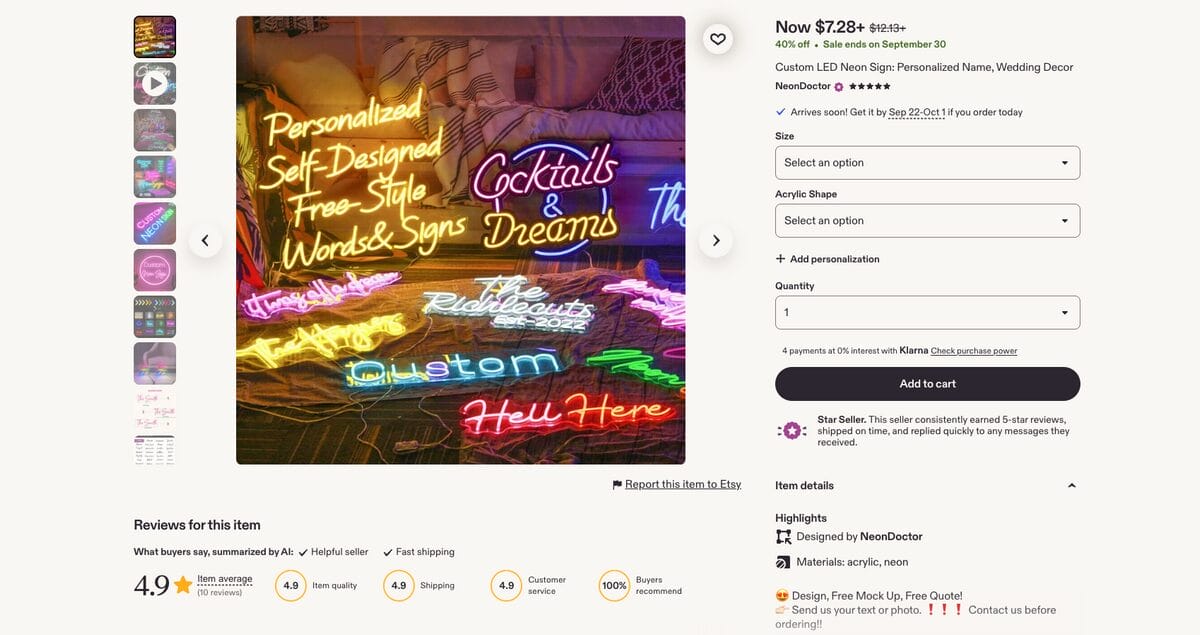
This is a classic one, and it fits perfectly in the “Sourced by a seller” creativity standard. Personalized neon signs may qualify if they’re made with the buyer’s unique text and produced by a disclosed production partner.
Names, phrases, wedding dates, business logos, and custom designs all give buyers a reason to choose your listing over a ready-made one. Your partner can handle production and shipping, while you manage the design options, personalization, and customer experience.
2. Custom-Printed Apparel
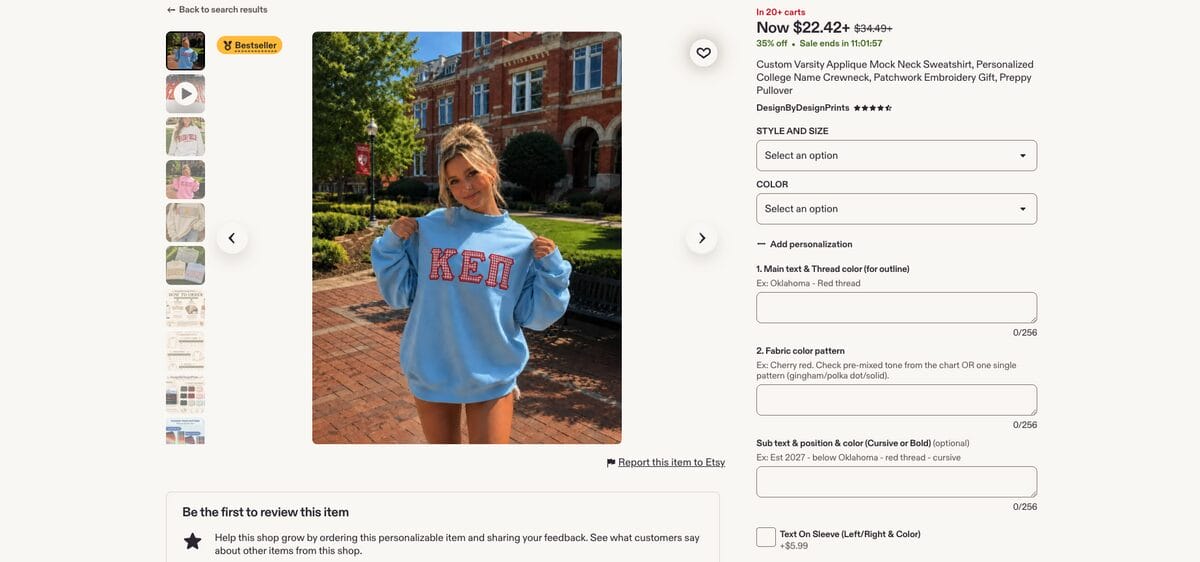
T-shirts, hoodies, hats, and other apparel can qualify when they feature your original design and are printed by a disclosed production partner. It fits the “Designed by a seller” creativity standard perfectly, while you get to tap into the fashion niche.
This is classic print-on-demand territory. The important part is that the design is truly yours. Buying a blank or ready-made hat and simply reselling it on Etsy does not qualify.
3. Name And Initial Jewelry
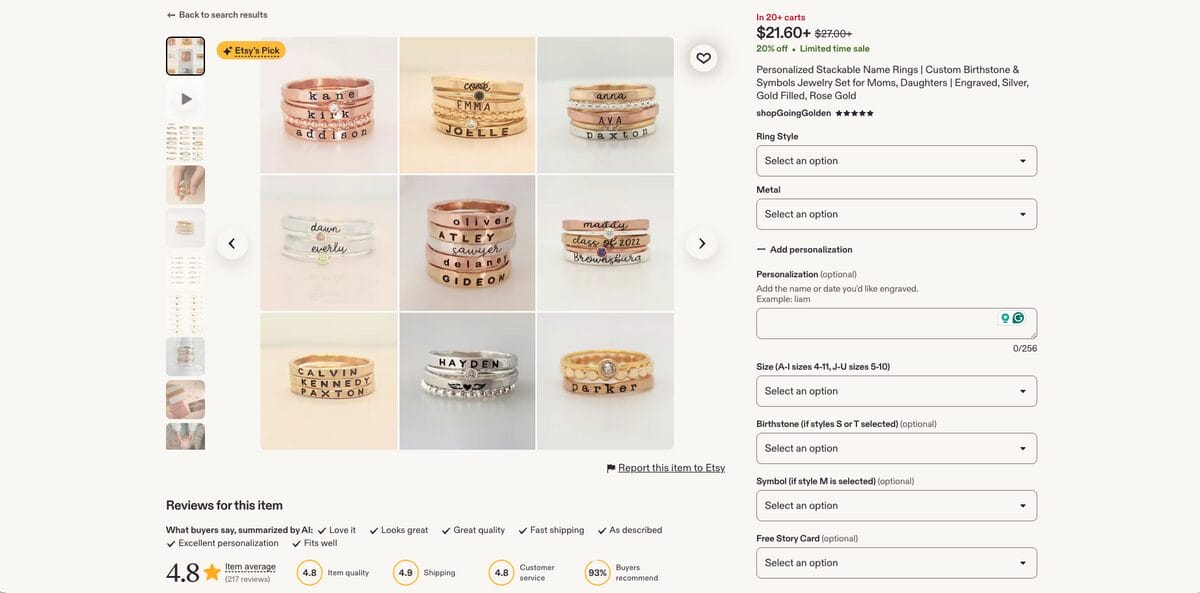
Next, a perfect example of the “Made by or Sourced by a seller” creativity standard: Jewelry! This niche can qualify when you hand-assemble it yourself or when a disclosed production partner personalizes it using information provided by the buyer.
Jewelry dropshipping on Etsy includes initial necklaces, engraved bracelets, name rings, or pieces featuring meaningful dates. What makes the sourced model compliant in this case is personalization, not simply choosing jewelry from a supplier’s catalog.
4. Original Wall Art And Printables
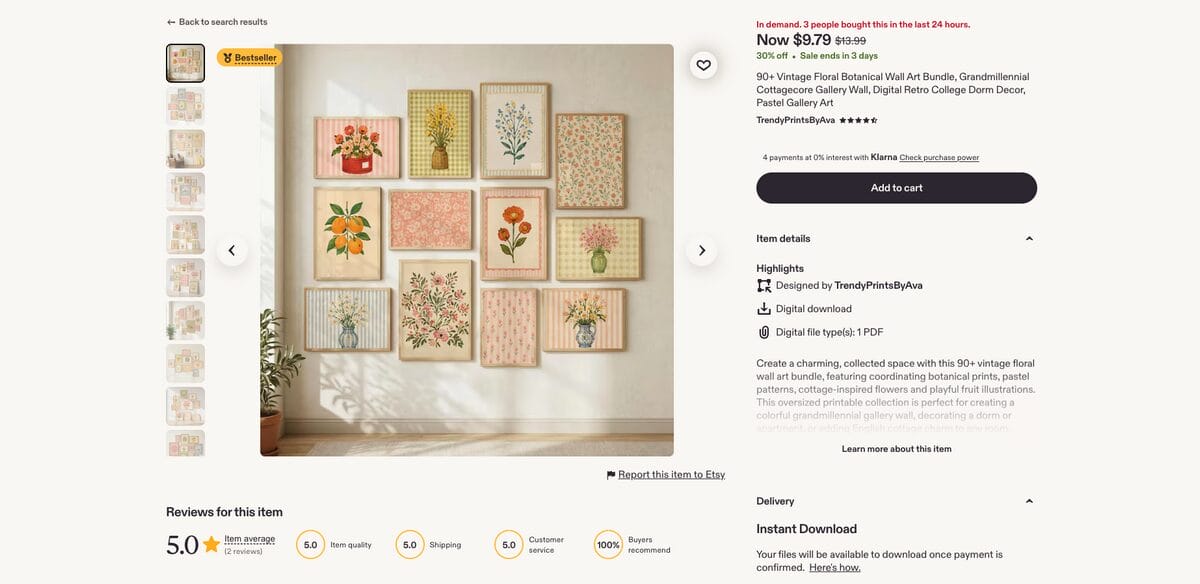
A classic “Designed by a seller” product that complies with Etsy’s Creativity Standards. This one is perfect for artists, illustrators, designers, or sellers who simply enjoy playing around with design tools. Think Van Gogh and Picasso, but with Canva Pro and an undo button. Fun!
Your original artwork can be sold as a physical product (a disclosed partner prints and ships it for you), or as a digital download (no fulfillment at all). What doesn’t work is sourcing an existing print and relisting it as your own.
5. Craft Kits And Craft Blanks
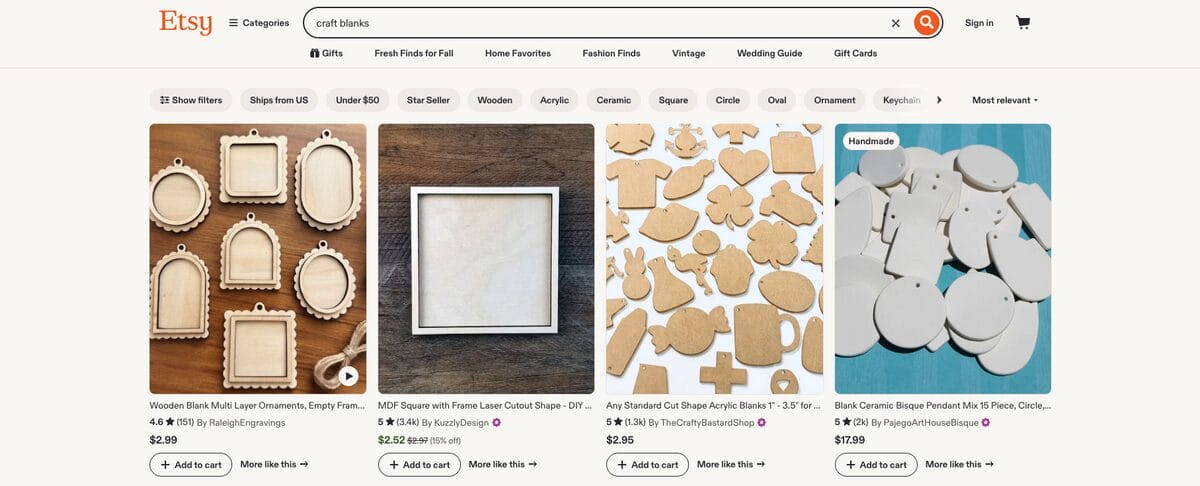
Of all the Etsy-compliant options, this one works most like classic dropshipping. Genuine craft supplies are particularly interesting because they’re one of Etsy’s explicit exceptions where straightforward reselling is allowed under the “Sourced by a seller” creativity standard.
That can include tools, materials, components, craft kits, and qualifying blanks intended for further crafting. The key is creative purpose: the product should enable the buyer to make something rather than simply being a finished commercial product that they can use as-is.
6. Personalized Party Decor
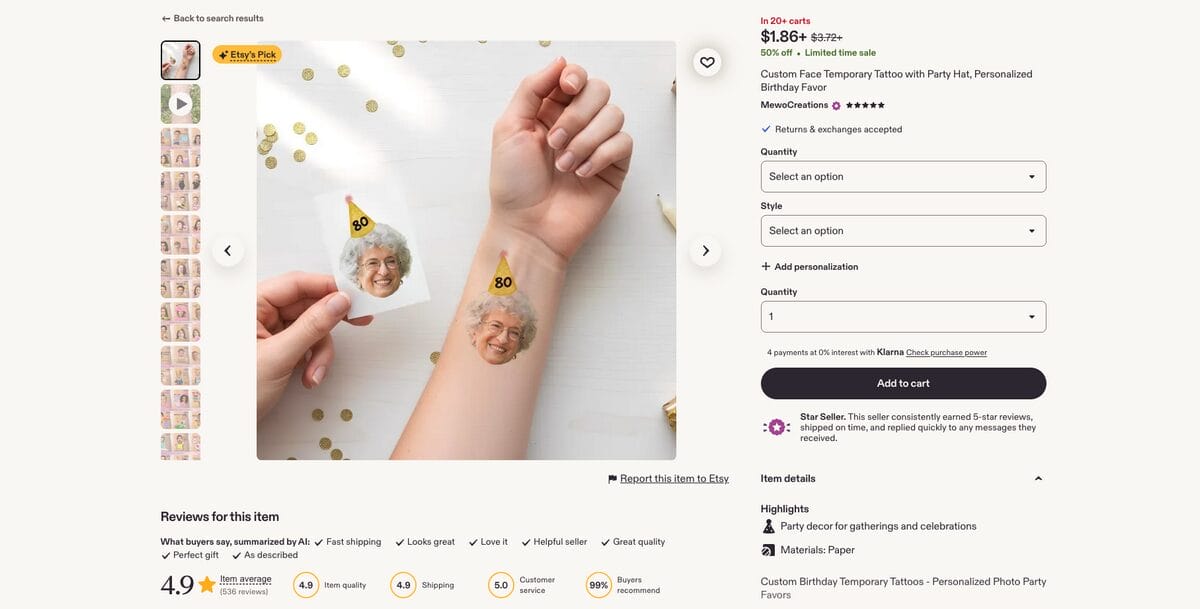
Another “Sourced by a seller” creative standard. Custom banners, balloons, signs, and other event-specific decorations can qualify, including products personalized with the buyer’s details and made by a disclosed production partner.
Just pay attention to this tiny difference: A custom “Happy 30th, Sarah!” banner? Totally works. Generic seasonal decorations you bought wholesale and relisted? Not so much.
What Doesn’t Qualify?
Now that you have six product categories to explore, it’s just as important to know which products to stay away from completely. These include:
- Ready-to-use blank t-shirts and tumblers.
- Generic homeware such as LED makeup mirrors, AliExpress gadgets, phone accessories, kitchen organizers, storage products, generic lamps, or mass-produced home decor.
- Faux-vintage items under 20 years old.
- Single-brand gift boxes.
How to Set Up a Compliant Etsy Shop With AutoDS
Once you have a product that fits Etsy’s Creativity Standards, it’s finally time to get things going and set up your Etsy shop.
AutoDS integrates with Etsy to automate the operational side of your business, from managing listings and prices to processing orders. It also offers POD features, so you can provide a compliant catalog of items designed by you.
Here’s how to start dropshipping on Etsy with AutoDS.
1. Create Your Etsy Shop
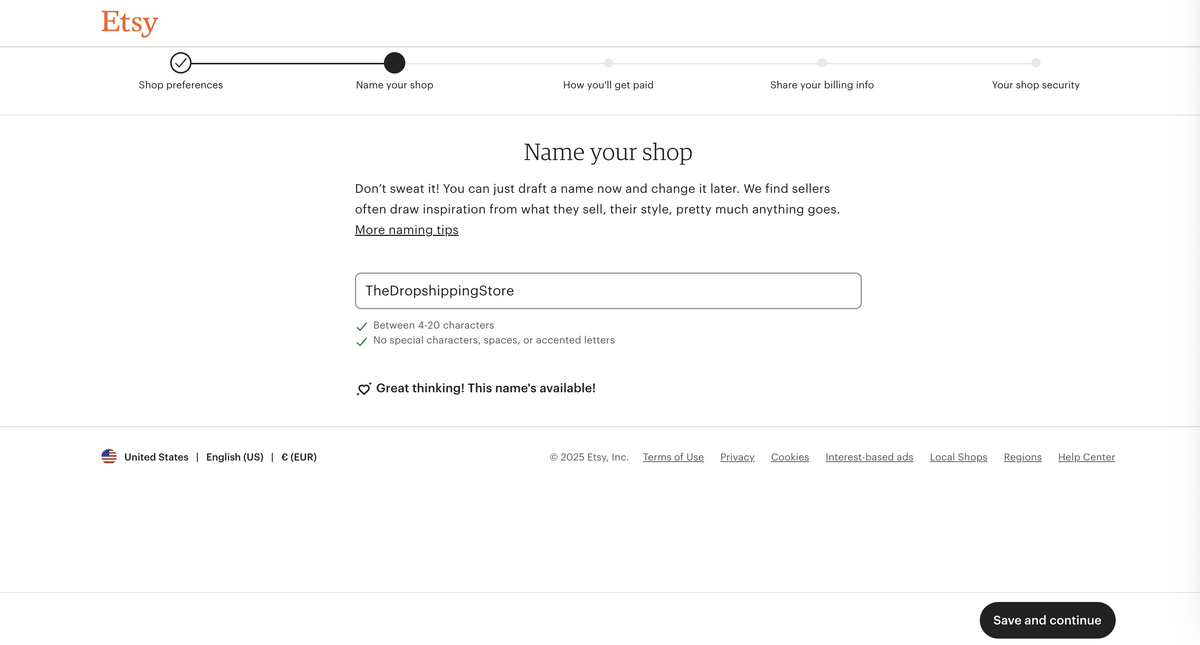
First things first: you need an Etsy shop. Head to Etsy, create your account from “Sell on Etsy” on the top right menu, and start setting up your storefront. Etsy will walk you through your shop preferences, language, and currency, bank and tax details, billing information, and account security before you can start selling.
Need a little help getting started? Follow our Etsy store setup guide to get everything up and running in six simple steps 😉.
2. Connect Your Etsy Shop to AutoDS
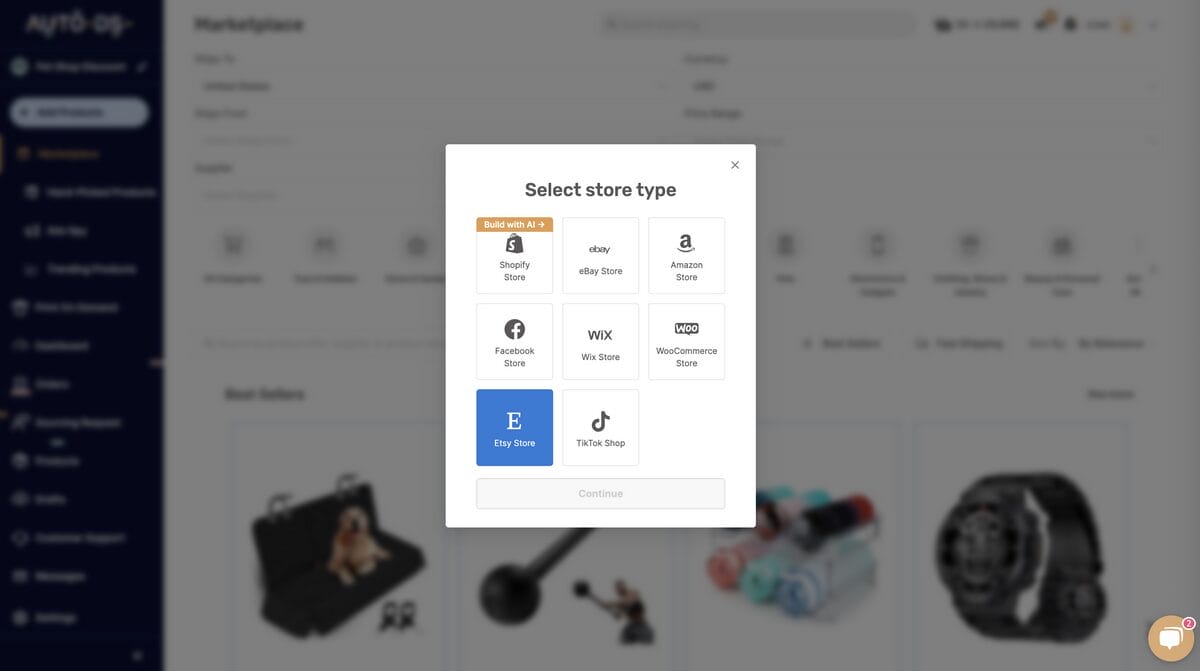
Time to connect your Etsy shop to AutoDS. Again, this only takes a few minutes, and it’s very straightforward:
- If you don’t already have one, create your AutoDS account—$1 trial available to explore the integration before committing!
- Head to “Add Store” on the top left menu, and pick Etsy.
- You’ll be redirected to Etsy to authorize the connection. Make sure to grant all the required permissions.
That’s it!
3. Create a Compliant Listing
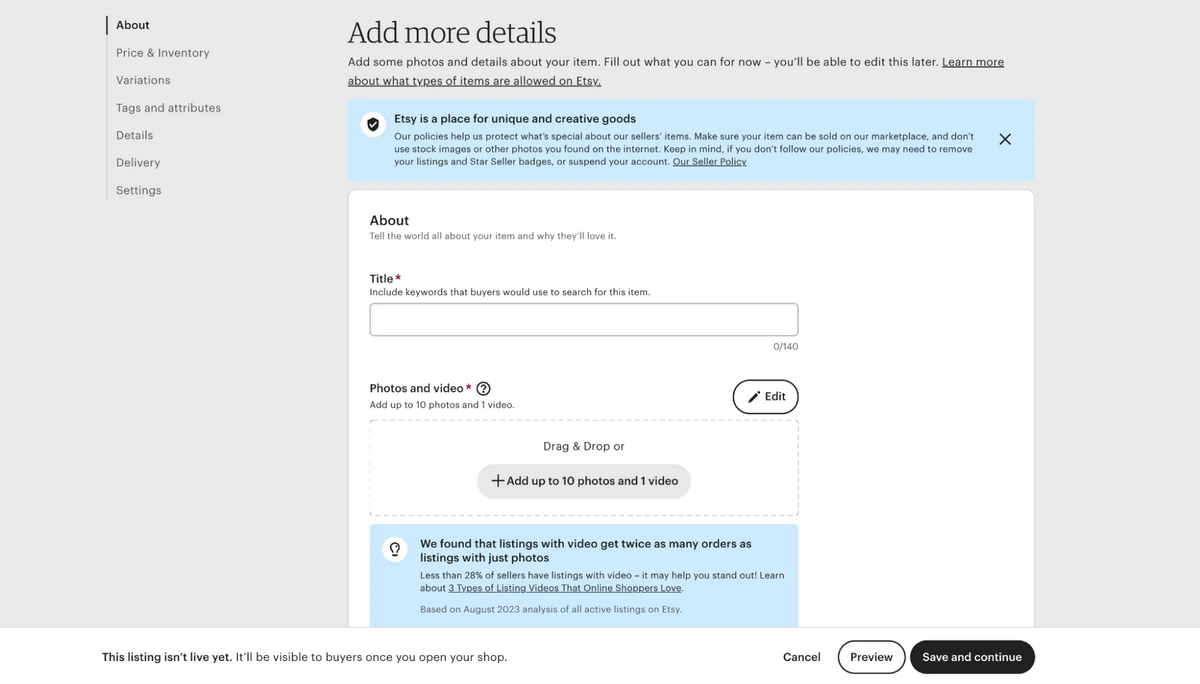
Next, set up your first Etsy listing with the product’s correct Creativity Standard in mind. If a production partner makes the physical product, remember to disclose that partner in the relevant Etsy listing and accurately explain your role in creating or designing the item.
If you’re going the POD route, AutoDS has its own print-on-demand feature built into the platform.
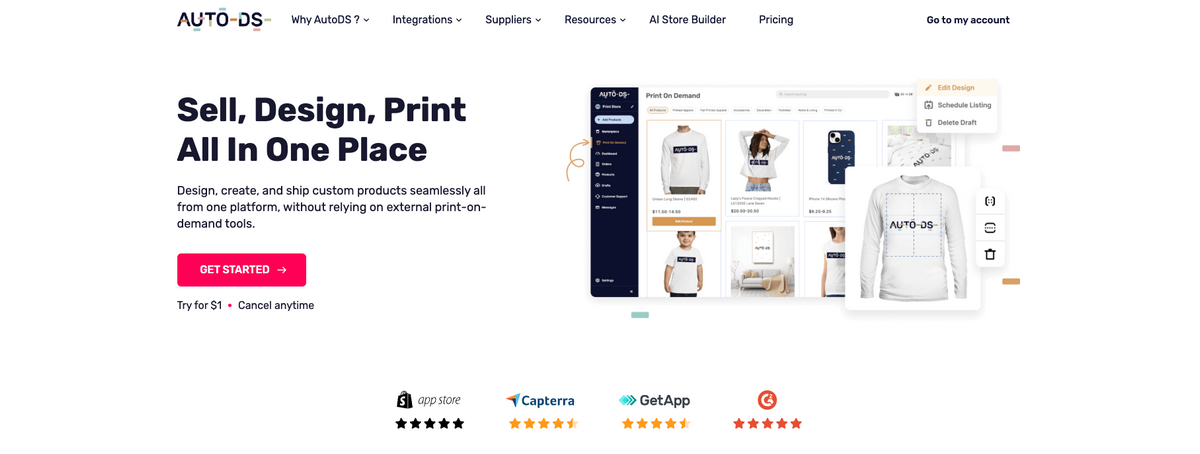
You can choose from products like apparel, accessories, footwear, and home decor, upload your original artwork, customize its placement, preview the finished product, and then import it to your store.
This is also where Etsy’s image requirements matter. For example, personalized commercial items should lead with an image of the finished customized product, not a blank item with placeholder text.
💡Pro Tip: When adding products to Etsy, don’t treat automatic importing as a copy-and-publish shortcut. Review each listing before it goes live to make sure the images, product information, creative contribution, and production-partner disclosures meet Etsy’s requirements.
4. Set Your Price And Stock Rules
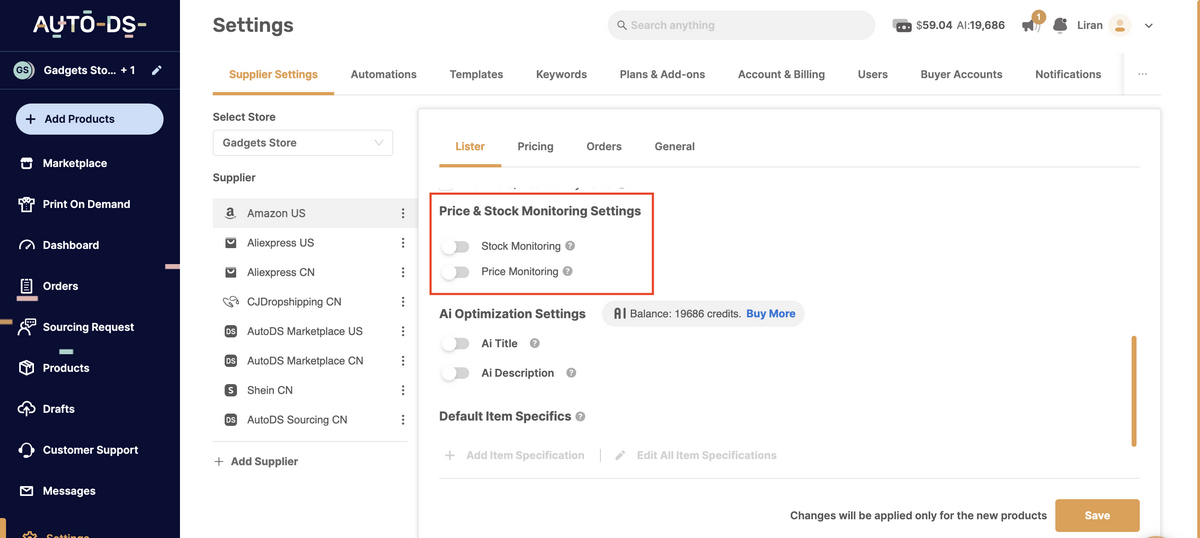
Once your products are set up, automation can take over some of the repetitive work. With AutoDS, you can establish pricing rules that account for your costs and desired margins. Remember to factor in Etsy’s fees, production costs, shipping, and if you fulfill US orders internationally, any costs associated with DDP shipping.
You can also use price and stock monitoring for supported suppliers to keep your listings aligned with changes on the fulfillment side.
5. Automate Order Handling

Once an order comes in, AutoDS can help automate order processing and reduce repetitive work in fulfillment.
If you’re using AutoDS Print on Demand, the POD feature works with Fulfilled by AutoDS to automate fulfillment of products featuring your original designs. The product is made after the customer orders and shipped without you needing to hold inventory.
And if you’re working with another AutoDS-supported supplier, AutoDS can automate fulfillment for eligible orders, too. Just remember that automation doesn’t determine Etsy compliance: the product itself still needs to meet the applicable Creativity Standard, along with any production-partner requirements that apply to your setup.
Your production partner then manufactures or personalizes the product and ships it directly to your customer, depending on your setup.
So, what’s your role in this workflow? Staying compliant. With automation, the result is a much more hands-off workflow, but always keep this in mind: AutoDS automates the operations, not the creative contribution Etsy expects from you.
Etsy Fees and Margin Reality
Before pricing a product, you need to understand Etsy’s fees and what the platform will take from each sale. And honestly? Selling on Etsy comes with more fees than you’d think. This matters because your real profit margin depends on much more than the difference between your selling price and production cost.
According to the current Etsy Fees & Payments Policy, the main costs to consider are:
- Listing fee: $0.20 USD per listing. Listings expire after four months, with another $0.20 charged when a listing renews.
- Transaction fee: 6.5% of the total order amount, including shipping and gift wrapping, when charged to the customer.
- Payment processing: Etsy Payments charges an additional percentage plus a fixed fee, with the exact rate depending on the country where your bank account is located.
- Other potential costs: Currency conversion can add 2.5% when required, while Offsite Ads can add 12% or 15% to attributed orders. Some countries also have regulatory operating fees.
There may also be a one-time shop setup fee when you open your Etsy store. Unlike the fees above, this isn’t a recurring charge: it only happens once during the shop creation process. The amount varies by location and is displayed during the setup process.
Also, for a hands-off fulfillment model, you still need to account for production, shipping, DDP-related costs for US-bound international orders, returns, and your automation tools.
💰 Financial Tip: Don’t price a product based on production costs alone. Work backward from the profit margin you want and make room for every cost that sits between the sale and what actually lands in your pocket.
Frequently Asked Questions
Does Etsy Allow Dropshipping?
Etsy does not allow traditional dropshipping or reselling, except in specific permitted cases such as qualifying craft supplies. However, you can use a hands-off fulfillment model when selling your own designs through a disclosed production partner or offering buyer-personalized products. Your products still need to meet Etsy’s Creativity Standards.
Is Print on Demand Allowed on Etsy?
Yes, print on demand is allowed on Etsy when you’re selling your own original designs and disclose the company producing the physical product as a production partner. Simply choosing an existing design or ready-made product from a POD catalog and reselling it isn’t enough—the creative contribution needs to come from you.
Can I Dropship From AliExpress to Etsy?
No, you can’t dropship from AliExpress to Etsy in the traditional sense. You can’t take a ready-made product from AliExpress, list it on Etsy, and have the supplier ship it to your customer. That’s reselling and generally violates Etsy’s rules. Products sourced from third parties are only permitted when they meet specific Creativity Standards, such as qualifying craft supplies.
What Is a Production Partner, and Do I Have to Disclose It?
A production partner is a person or company that physically produces an item based on your original design or a buyer’s personalization. If you use one, Etsy requires you to disclose the production partner in the relevant listings and accurately describe your role in creating the product.
Can I Use My Supplier’s Product Photos?
It depends on the Creativity Standards category. Items that are “Made by” or “Handpicked by” you generally require your own photos or video of the finished product, while qualifying “Sourced by” items may use manufacturer or distributor images, subject to Etsy’s intellectual property rules. For personalized products, the first image must show a finished customized item rather than a blank or placeholder.
Do I Need to Disclose AI-Generated Designs?
Yes, you need to disclose AI-generated designs. Etsy allows seller-prompted AI creations, but the use of AI must be disclosed in the listing description. The creation also needs to be based on your own prompts; Etsy’s Creativity Standards specifically exclude AI prompt bundles from qualifying products.
What Is the DDP Rule for US Orders?
Under Etsy’s Seller Policy, effective July 9, 2026, orders shipped to US buyers from another country must use Delivery Duty Paid (DDP) shipping. This means applicable tariffs and import fees are handled before delivery rather than being left for the buyer to pay when the package arrives.
Will My Shop Get Suspended?
Etsy can remove listings or suspend or terminate accounts that violate its policies. Risks include reselling prohibited ready-made goods, failing to disclose production partners or AI use, violating intellectual property rules, using non-compliant images, shipping US-bound international orders without DDP, or repeatedly failing to meet Etsy’s service standards.
Start Dropshipping on Etsy With AutoDS
Etsy dropshipping isn’t traditional dropshipping with a prettier storefront. The opportunity comes from building a business that fits Etsy’s focus on creativity and authenticity, whether through your own designs, personalized products, or other items that meet its Creativity Standards. Get that right, and you’re on the right track.
And while you focus on creating a unique catalog, automation can take care of much of the repetitive work behind the scenes. AutoDS integrates with Etsy to create print-on-demand products, monitor price and stock, and automate fulfillment, making your store much easier to manage as you grow. Start your $1 trial now and check it out.
Want to dig a little deeper into Etsy dropshipping? Here are other reads you might like: