


Most people who Google “how to become an Amazon seller” already know they want in. What usually stops them is the sheer number of steps, options, and conflicting advice. FBA or dropshipping? Individual or Professional plan? Which products? It gets overwhelming fast. This guide cuts through the noise. By the end, you’ll know exactly what to do, in what order, and which tools make the whole thing less of a grind.
AutoDS is built to handle the repetitive side of running an Amazon store (product research, listing management, price monitoring, order fulfillment) so you can focus on the decisions that actually move the needle.
Two selling plans: Individual ($0.99 per item sold) or Professional ($39.99/month). Choose based on expected monthly volume.
Pick your fulfillment method before listing anything — FBA (Fulfillment by Amazon), FBM (Fulfilled by Merchant), and dropshipping each have different costs and requirements.
Use product research tools to validate demand instead of guessing.
AutoDS automates sourcing, listing creation, price adjustments, and order fulfillment from one dashboard.
Start with 5 to 10 products, see what sells, then scale from there.
How to Become an Amazon Seller: Step-by-Step
These steps build on each other. Follow them in order, and you’ll avoid most of the mistakes new sellers make in the first few weeks.
1️⃣ Decide what to sell and validate demand
Before you touch Seller Central, you need to know what you’re actually selling and confirm real people are buying it. This sounds obvious, but it’s where most beginners skip ahead and pay for it later.
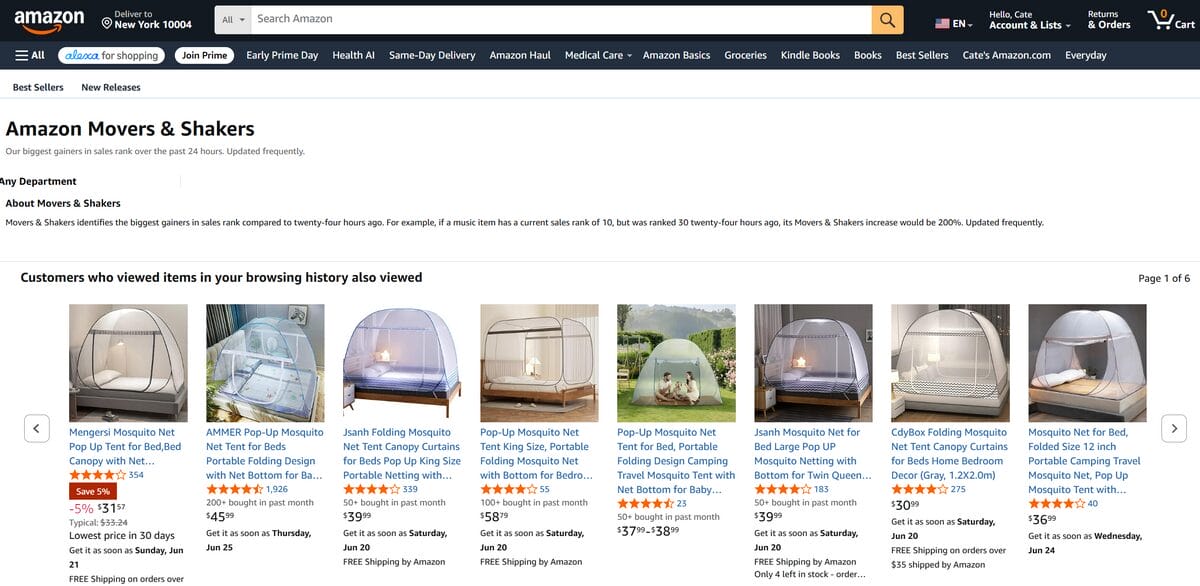
Browse Amazon’s Best Sellers and Movers & Shakers pages to spot what’s moving. Products priced between $15 and $50 tend to hit the sweet spot: healthy margins after Amazon’s referral fees (8–15% depending on category), without competing against brands with massive ad budgets. Items with 50 to 300 reviews are often worth a look: enough demand to be real, not so much competition that you’re invisible.
There are a few ways to sell on Amazon:
- Private label means building your own branded product.
- Wholesale is buying in bulk from manufacturers.
- Retail arbitrage is reselling discounted items from other stores.
- Dropshipping means a supplier ships directly to your customer — you never hold inventory. For beginners, dropshipping or retail arbitrage requires the least upfront money. Don’t commit to a product until the numbers make sense.
2️⃣ Set up AutoDS and your research tools
Once you have a product direction, set up AutoDS before you list anything. Manual research works for five products. It breaks completely when you’re comparing hundreds of items across multiple suppliers.
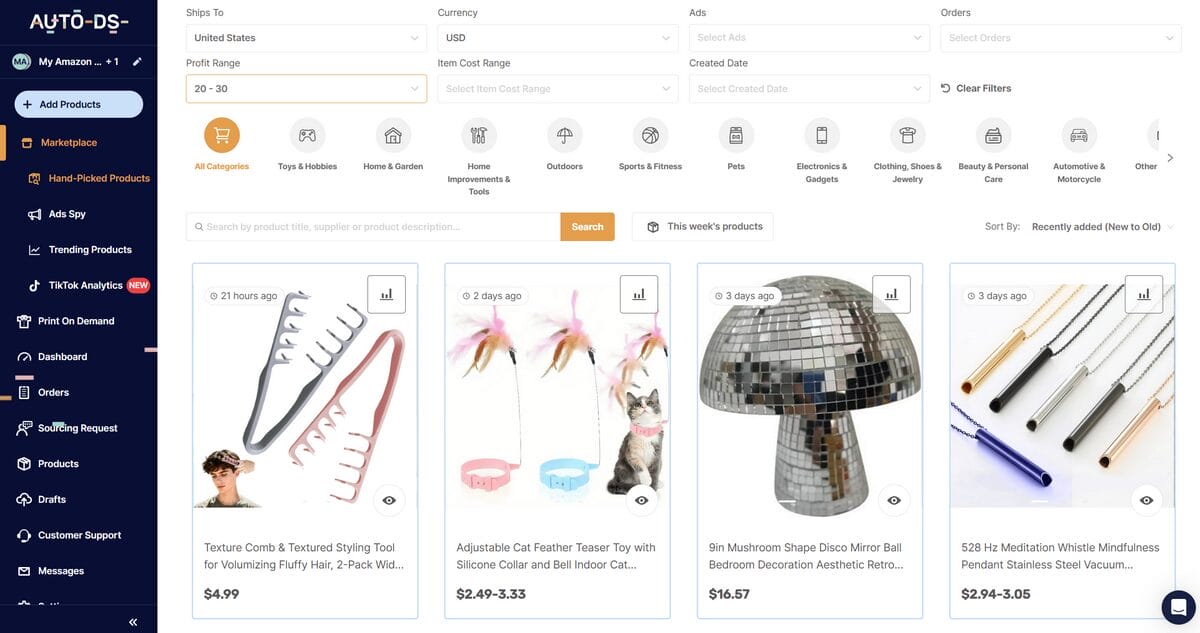
AutoDS connects to Amazon and lets you browse trending products across 25+ suppliers, filtered by price, shipping time, and supplier rating. The Hand-Picked Products Hub gives you curated product opportunities without starting from scratch every time.
I’ve seen sellers spend weeks manually researching products, only to pick something that had already peaked. Using a tool like AutoDS significantly reduces that risk. Data beats instinct, especially when you’re just starting out.
💡 Pro Tip: Before committing to a product, check its sales history on Amazon, not just current rankings. A product that’s been consistently in the top 1,000 for six months is a much safer bet than one that spiked last week.
3️⃣ Create your Amazon seller account
Head to sell.amazon.com and sign up. You’ll pick between two plans: Individual ($0.99 per item sold) if you’re testing the waters with fewer than 40 sales a month, or Professional ($39.99/month) if you’re serious about volume. It unlocks advertising tools, bulk listing, and Buy Box eligibility (the default “Add to Cart” button most shoppers click).
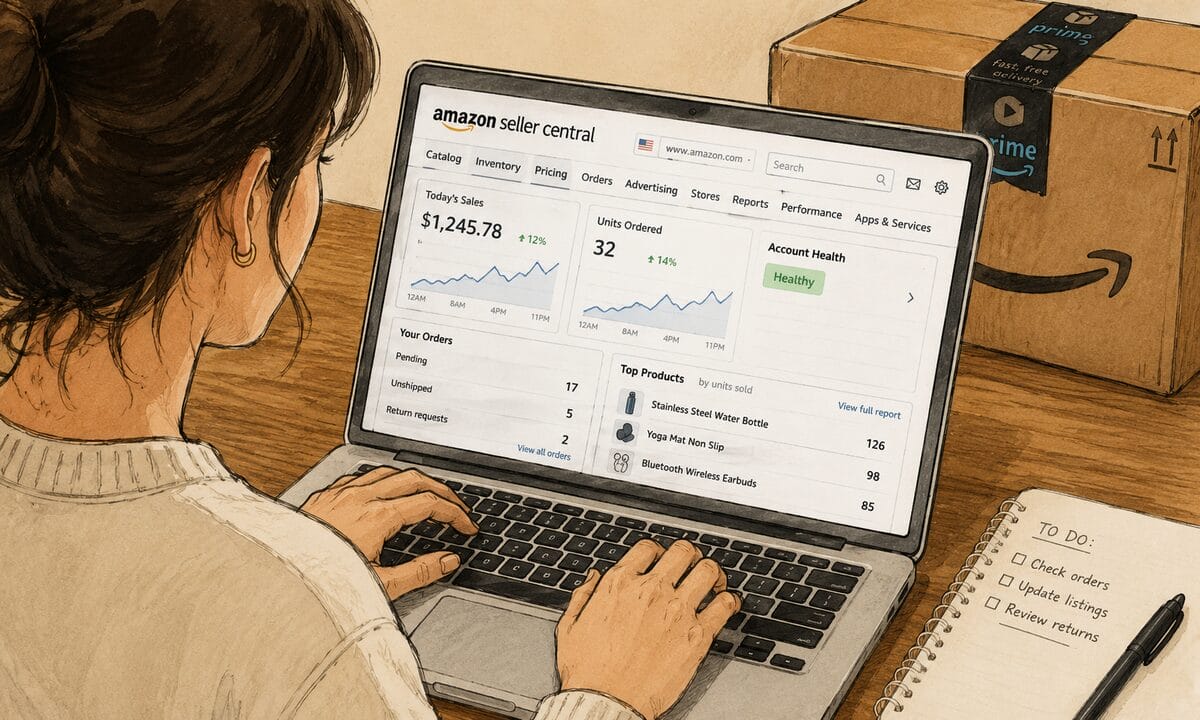
You’ll need a government-issued ID, bank account, credit card, and tax info. In the US, that means a Social Security Number or an EIN (Employer Identification Number), a free business tax ID you can get from the IRS. The whole thing is managed through Seller Central, Amazon’s seller dashboard. Each product gets a unique ASIN (Amazon Standard Identification Number) that you’ll see everywhere once you’re in.
Verification takes one to three business days. Use that time to prep your first listings.
4️⃣ Choose your fulfillment method
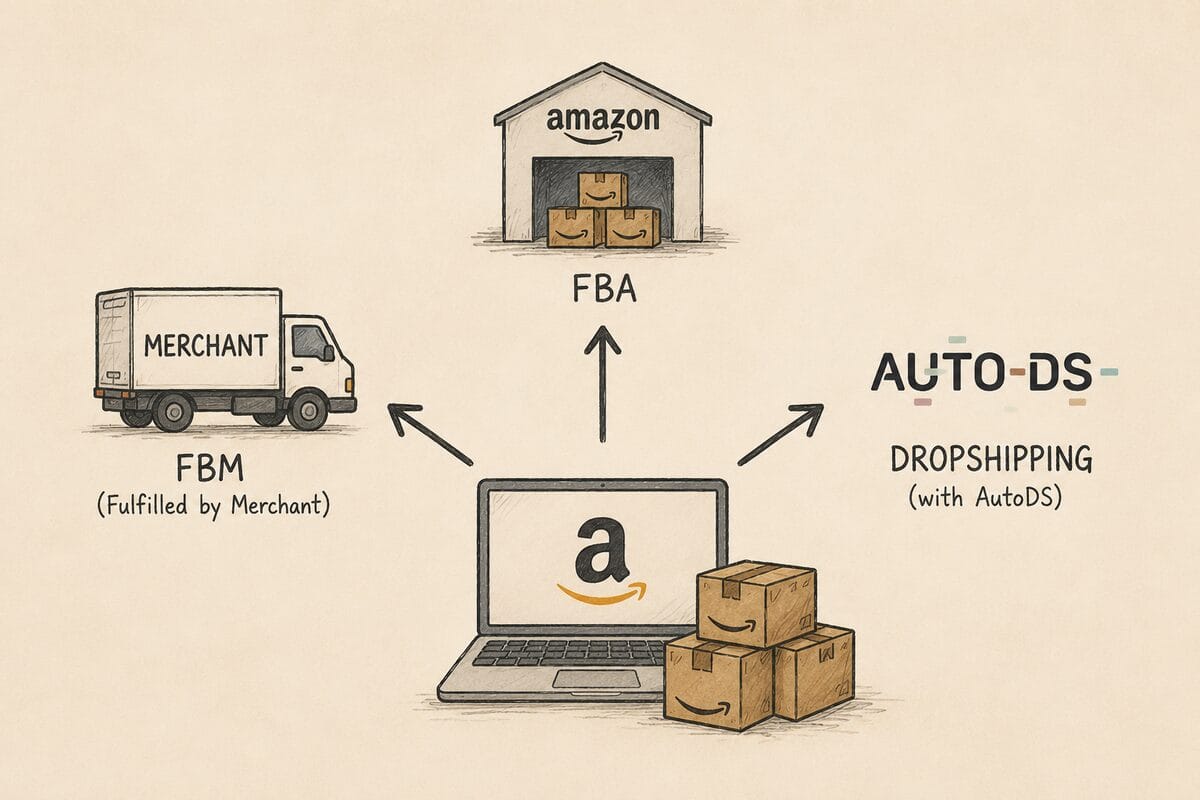
This is the decision that shapes everything else: your costs, your workload, and how much automation can actually help you.
- FBA (Fulfillment by Amazon) means you ship inventory to Amazon’s warehouses and they handle the rest: storage, packing, shipping, returns. Your listings get Prime eligibility, which lifts conversions. The catch is storage fees, per-unit costs, and the upfront capital to buy inventory.
- FBM (Fulfilled by Merchant) means you store and ship products yourself. More control, no Amazon storage fees, but you’re running your own logistics, and Prime is off the table by default.
- Dropshipping is the lowest-barrier entry: a supplier ships directly to your customer, and you only pay for the product after someone buys. Amazon allows it, but you have to follow their rules: you must be the seller of record, no third-party branding on the package, and customer service is your responsibility. AutoDS Automated Orders handles the whole post-sale workflow: it sends the order to your supplier, grabs the tracking number, and updates Amazon automatically.
5️⃣ List your first products

A listing is your storefront. A bad listing loses sales even when the dropshipping product is great. A good one converts browsers into buyers.
Each listing needs a keyword-rich title, five benefit-focused bullet points, a description, and images. Amazon requires a white background for the main image. Lifestyle photos of the product in use consistently improve conversions.
You can list manually through Seller Central or use the AutoDS Product Importer to pull product details straight from your supplier. Start with 5 to 10 products, not a hundred. A smaller catalog lets you learn the platform, see what converts, and improve before scaling.
6️⃣ Market your products and get your first sales
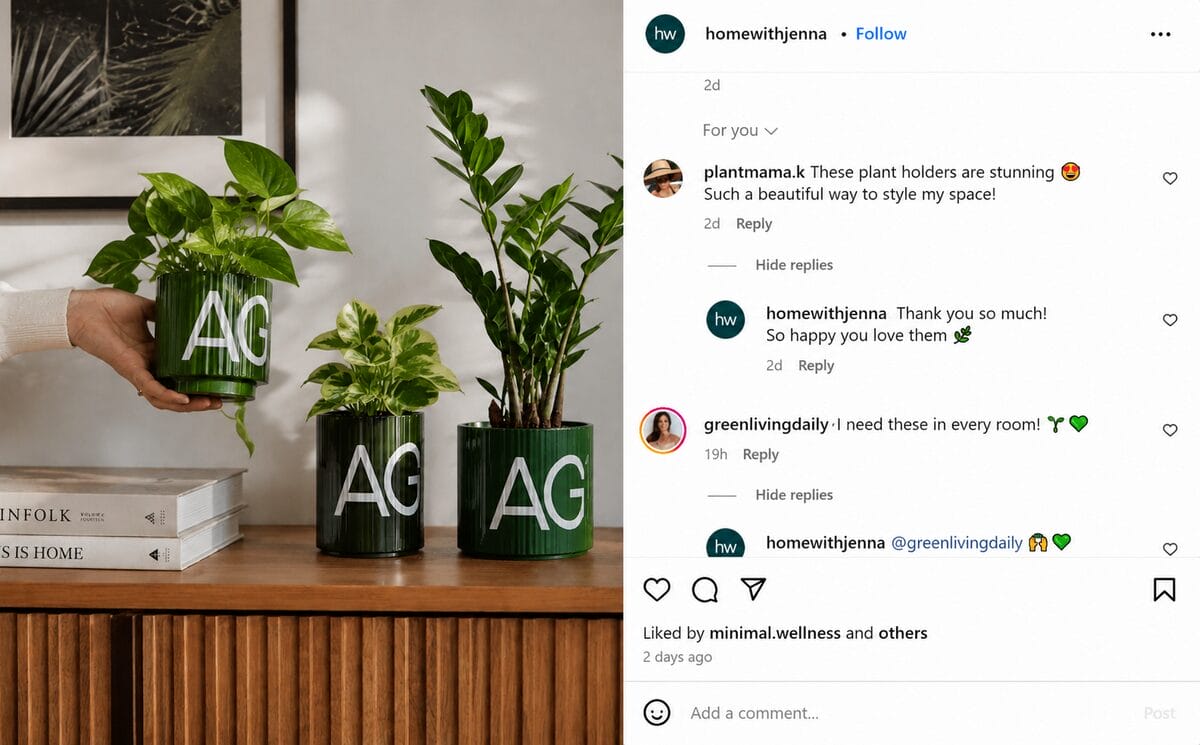
The first 30 days are critical, as Amazon’s algorithm monitors your sales velocity to determine your listing’s visibility, meaning early momentum compounds quickly. To build this traction, begin by leveraging organic traffic through social media platforms like TikTok, Instagram, and Pinterest, which can give your products a meaningful boost outside the Amazon ecosystem.
Once you have established that initial interest, you should focus on paid advertising to sustain growth.
Start with Amazon PPC (Pay-Per-Click) using Sponsored Products on automatic targeting, with a budget of $5 to $10 per day. Since you only pay when someone clicks, this is a cost-effective way to drive traffic.
Additionally, automatic campaigns allow Amazon to match your products to relevant search terms, providing data that you can use to build more targeted manual campaigns later.
Finally, ensure you fill in your backend keywords in Seller Central, as this helps the algorithm fully understand what you are selling and further optimizes your visibility.
7️⃣ Keep your store healthy and scale what works
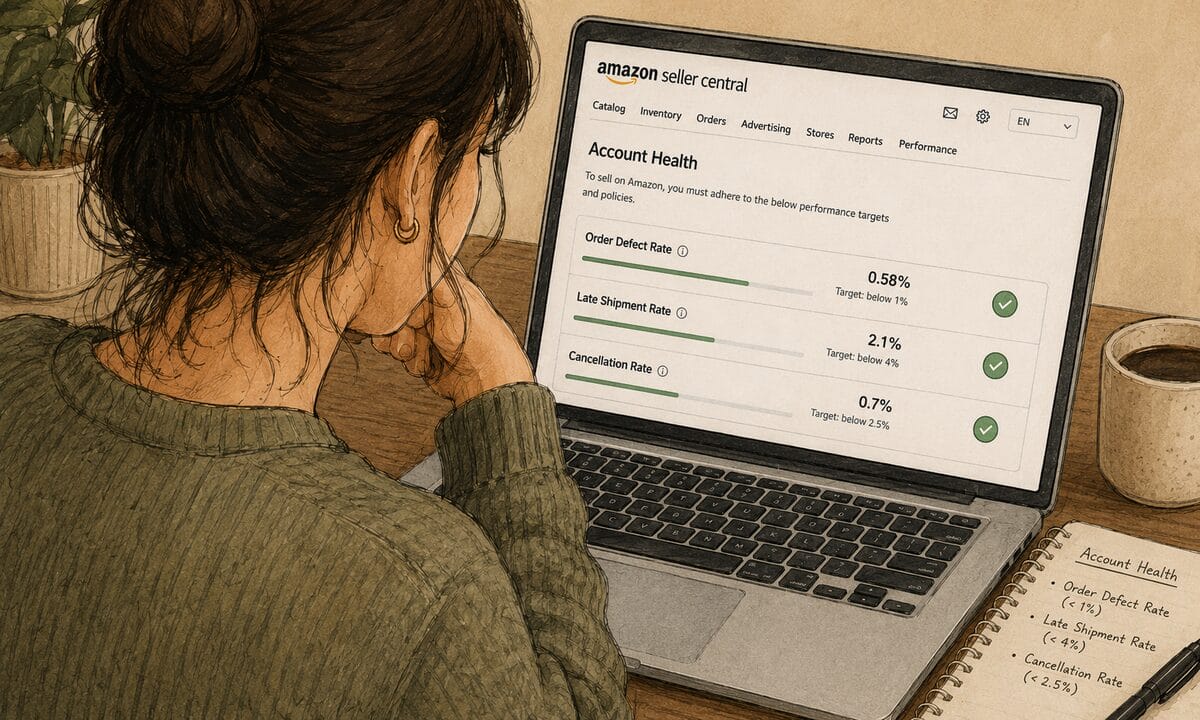
Once orders are flowing, your job shifts from builder to operator. The sellers who last are the ones who treat account health like a weekly habit, not an emergency measure. Check your Order Defect Rate (below 1%), Late Shipment Rate (below 4%), and Cancellation Rate (below 2.5%) at least once a week. Cross any of those, and Amazon can suspend your account with very little warning. Reply to customer messages within 24 hours and resolve issues before they turn into formal complaints.
Beyond metrics, this is also when you start making data-driven decisions: which of your 5–10 test products are actually converting? Which ones have thin margins after fees? Double down on what’s working, drop what isn’t, and use AutoDS price and stock monitoring to make sure your listings stay accurate as supplier prices change.


Tips for New Amazon Sellers
These aren’t generic best practices. They’re the specific things that separate sellers who make it past the first few months from those who quietly quit.
☑️ Start small, then expand
Testing 5 to 10 products limits your risk and teaches you more than any guide can. You’ll see real data on what your actual customers buy, at what price, with what conversion rate. Use that to decide what to scale, not gut feeling.
☑️ Understand Amazon’s fee structure before you list
Referral fees run 8–15%, FBA adds per-unit and storage fees, and shipping costs vary by weight. Run the numbers before you commit to a product. A $20 item can look profitable until you factor everything in and realize you’re making $0.80 per sale.
☑️ Keep your account health metrics clean
Check your Order Defect Rate, Late Shipment Rate, and Cancellation Rate at least once a week. Account suspensions happen fast, and reinstatement can take weeks. The easiest way to stay healthy is to ship on time and respond to customers quickly. Not exciting advice, but it works.
☑️ Diversify your fulfillment
You don’t have to pick one model forever. A lot of sellers use FBA for proven top sellers (for Prime eligibility) and dropshipping for testing new products (to avoid inventory risk). That hybrid keeps your costs manageable while you figure out what actually sells.
☑️ Invest in product photography
Listings with strong images consistently convert better, not marginally, noticeably. White background for the main image, lifestyle shots for context. If you’re dropshipping on Amazon, check whether your supplier provides high-resolution images you can use.
Frequently Asked Questions
How much does it cost to become an Amazon seller?
The Individual plan charges $0.99 per item sold — fine if you’re selling fewer than 40 items a month. The Professional plan is $39.99/month flat, which makes more sense once volume picks up. On top of that, expect referral fees of 8–15% per sale, depending on category.
Can I sell on Amazon without holding inventory?
Yes. Dropshipping and Print on Demand (POD) both let you sell without touching stock. With dropshipping, your supplier ships directly to your customer while you handle the listing and customer service. AutoDS automates the entire workflow (product imports, price and stock monitoring, order fulfillment) from one dashboard.
Is becoming an Amazon seller worth it in 2026?
The opportunity is real. Amazon is still the largest e-commerce marketplace, third-party sellers account for the majority of units sold, and demand keeps growing across most categories. Results depend on product selection, pricing, and how efficiently you run operations. Sellers who automate the repetitive stuff have a real advantage.
How long does it take to get your first sale on Amazon?
It varies. Products in high-demand categories with competitive pricing can sell within days. Others take weeks. Running PPC ads in your first week usually speeds things up. Early sales signal to Amazon’s algorithm that your listing is worth showing to more people.
What products sell best on Amazon for beginners?
Products priced $15–$50 with steady demand and moderate competition are the sweet spot for new sellers. Home and kitchen, pet supplies, and health and personal care are consistently accessible categories. Use a research tool to validate demand signals before locking in a supplier.
Start Your Dropshipping Journey With AutoDS
Becoming an Amazon seller isn’t complicated. It’s just a lot of moving pieces that need to happen in the right order. You’ve now got the full picture: how to validate a product, set up your account, choose a fulfillment method, build listings that convert, drive early traffic, and keep your store healthy in the long term.
The part that trips most people up is staying on top of everything once sales start coming in. Prices change, stock runs out, and orders need to be processed.
If you’re doing all of that manually, it stops being a business and starts being a second job. That’s the problem AutoDS is built to solve. If you’re ready to start, or you’ve been sitting on the idea for a while, try AutoDS for $1 and see how much of the operational work you can hand off from day one.
And if you want to keep building on what you’ve learned here, these are worth reading next: