


Amazon dropshipping is still profitable in 2026, but it does not work the same way it did a few years ago. The “upload random products and hope something sticks” strategy? Yeah, Amazon sellers have collectively learned that lesson the hard way.
Today, profitable dropshipping stores are built around smarter product selection, reliable suppliers, fast shipping, and automation. Competition is tougher. Advertising costs are higher, customers expect Prime-level delivery speeds, and manual workflows can quickly become a mess as orders grow. That’s why many sellers now rely on automation tools like AutoDS to handle inventory syncing, price monitoring, product imports, and fulfillment more efficiently.
The good news? Sellers who focus on efficiency instead of shortcuts can still build profitable Amazon dropshipping businesses in 2026 without buying inventory upfront.
Amazon dropshipping is still profitable in 2026, but success now depends more on operational efficiency, supplier quality, and automation than quick-win product hunting.
Profit margins can disappear fast once Amazon fees, shipping, returns, and ads enter the equation, which is why product selection and pricing strategy matter so much.
Fast shipping and reliable suppliers are now critical for maintaining strong conversions, healthy seller metrics, and long-term profitability on Amazon.
Automation tools like AutoDS help sellers scale more efficiently by simplifying inventory syncing, price monitoring, fulfillment, and supplier management.
Is Amazon Dropshipping Actually Profitable in 2026?

Yes. Amazon dropshipping is still profitable, but sellers who achieve consistent results focus on reliable suppliers, healthier margins, faster shipping, and products with steady demand.
One of Amazon’s biggest advantages is still buyer intent. People usually open Amazon because they already want to buy something, which gives good listings a much higher chance of converting compared to platforms where users are mostly scrolling for entertainment. A well-positioned product can still generate strong sales without needing a massive audience beforehand.
That said, profitability depends heavily on efficiency. Amazon fees, returns, supplier delays, and PPC costs can quickly shrink margins if operations are disorganized. That’s why many sellers now use automation tools like AutoDS. In 2026, automation is no longer just a “nice extra”; it’s part of running a profitable Amazon store.
Why Sellers Still Choose Amazon
Amazon still gives sellers something that is very hard to replicate on their own: built-in traffic. Millions of people already trust the platform and search there every day with the intention to buy, which removes one of the biggest challenges in e-commerce: getting customers to trust your store in the first place.
It also tends to feel more stable than trend-heavy platforms. A viral TikTok product might explode for two weeks and then disappear overnight, but Amazon performs especially well for products people consistently search for, like home gadgets, pet accessories, and office supplies.
And once a product starts working, scaling is relatively straightforward. Sellers can expand into new categories, test larger catalogs, or even sell across multiple marketplaces.
What Affects Profitability?
Several factors directly impact how profitable an Amazon dropshipping store becomes:
- 💰 Product margins: In Amazon dropshipping, margins can disappear fast. A product may look profitable at first, but once you subtract fees, shipping, ads, and returns, the numbers can get very tight.
- 💰 Shipping costs: Fast shipping is no longer optional. Long shipping times can hurt both conversions and seller metrics. That’s why many dropshippers now prioritize suppliers with domestic warehouses or faster fulfillment options.
- 💰 Amazon fees: Amazon charges referral fees that usually range from 8% to 15%, depending on the category. Additional costs like refunds, subscriptions, and advertising can also stack up quickly if sellers are not careful with their pricing strategy.
- 💰 Refunds and returns: Returns are simply part of selling on Amazon. In fact, multiple ecommerce reports estimate online return rates around 19–20% on average, with some categories like apparel going much higher. Categories with sizing issues, fragile products, or misleading listings tend to see even higher return rates, which can quietly chip away at profits over time.
- 💰 Advertising costs: Amazon PPC has become much more competitive in recent years. Ads are often necessary to gain visibility, especially in crowded niches, but poorly optimized campaigns can eat through margins surprisingly fast.
- 💰 Automation efficiency: Manual work becomes harder to manage as stores grow. Inventory mismatches, supplier price changes, and delayed fulfillment can quickly create expensive mistakes.
Realistic Profit Expectations
Amazon dropshipping can absolutely become a meaningful income source, but it usually does not look like the “made $50,000 my first month” screenshots floating around social media.
Most beginners spend their first few months learning how Amazon actually works: testing products, dealing with suppliers, optimizing listings, and understanding fees. Early profits are often modest (sometimes a few hundred dollars per month) while sellers figure out what sells and what does not.
Once profitable products start appearing, things can scale surprisingly fast. Many intermediate sellers eventually reach monthly profits somewhere between $1,000 and $5,000 by expanding their catalogs, improving listings, and automating repetitive tasks. Larger stores managing hundreds of listings can go much higher, but usually only after building efficient systems behind the scenes.
A big part of the process is testing. Most sellers do not find a winning product immediately, and honestly, that is normal. Amazon dropshipping is often about testing multiple products, learning from data, and gradually doubling down on those that consistently deliver stable sales and healthy margins.
How Much Money Do You Need to Start?

One of the reasons Amazon dropshipping still attracts so many beginners is that you do not need a massive budget to get started. Unlike traditional retail, there is no need to buy inventory in bulk or fill your garage with boxes like you are preparing for a very niche apocalypse movie.
Most sellers can realistically start with a few hundred dollars. Your initial costs will usually include things like:
- Amazon seller account fees
- Product research tools
- Automation software
- A small advertising budget
- Supplier order costs before Amazon releases payouts
A comfortable starting range for many beginners is $300–$1,000, especially if you want enough room to test products properly rather than putting all your hopes into one listing.
The biggest surprise for many new sellers is cash flow. Amazon does not always release payouts immediately, while suppliers usually expect payment up front. Once orders start growing, managing that timing becomes just as important as finding winning products.
💡 Pro Tip: Many successful sellers focus on products priced between $20 and $60 because they often balance healthy margins with easier buying decisions for customers.
How to Start Amazon Dropshipping Profitably
Now, let’s get into the actual process.
1️⃣ Create an Amazon Seller Account
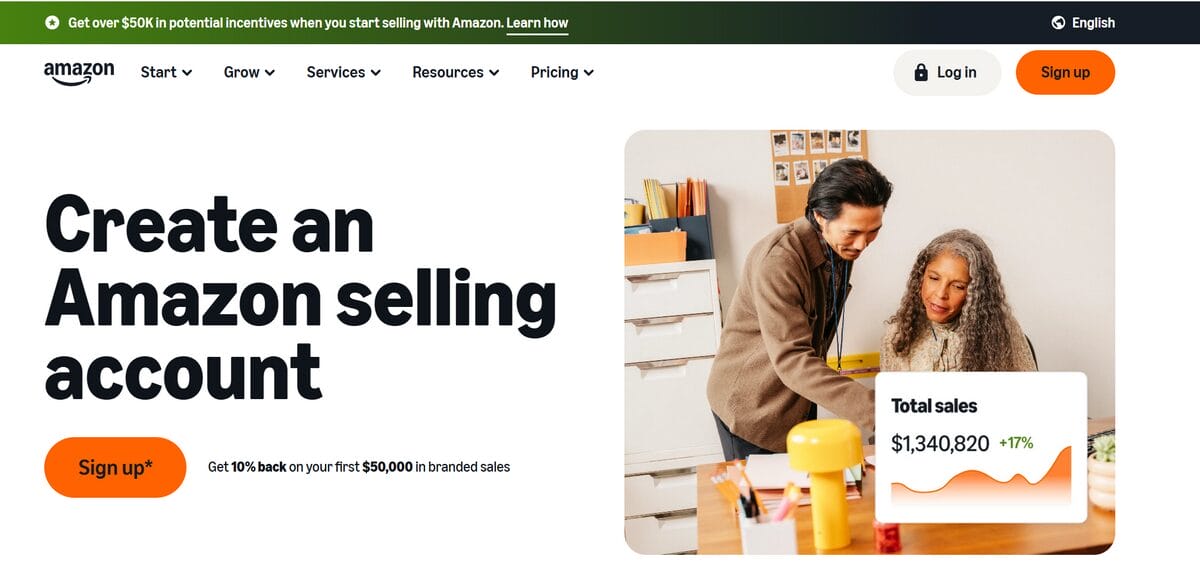
First things first: you’ll need an Amazon Seller Central account. Most dropshippers go with the Professional plan because it gives you access to more selling tools and makes scaling easier once products start gaining traction.
Amazon will ask for the usual setup information, including:
- Business details
- Tax information
- ID verification
- Banking details
This is also the moment to get familiar with Amazon’s dropshipping policy. Amazon does allow dropshipping, but sellers must remain the seller of record and avoid sending packages with third-party branding or invoices. It sounds technical, but it is basically Amazon saying: “If the customer bought from you, the experience should feel like it came from you.”
2️⃣ Choose a Profitable Niche
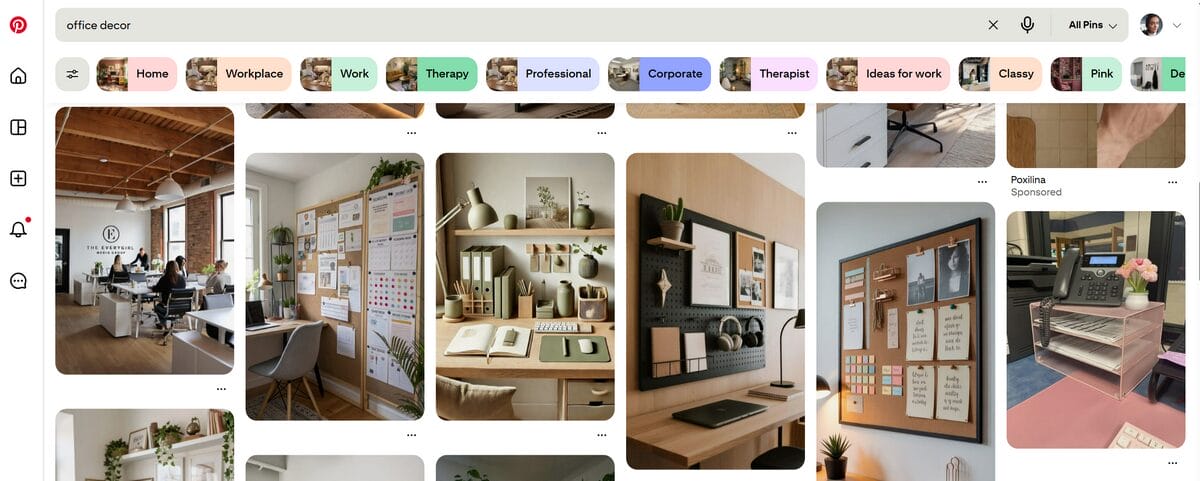
Many beginners try to sell everything at once. That usually turns into a chaotic catalog full of random products competing on razor-thin margins.
Instead, focus on Amazon niches with steady demand and products people actively search for year-round. Categories like:
- Pet products
- Kitchen gadgets
- Home improvement
- Fitness accessories
- Office products
- Automotive tools
tend to perform well because they solve everyday problems.
💡 Pro Tip: If multiple Amazon sellers are using the exact same product photos, that is often a sign the niche is getting crowded. Products with slightly differentiated branding or bundles usually hold margins longer.
3️⃣ Find Winning Products
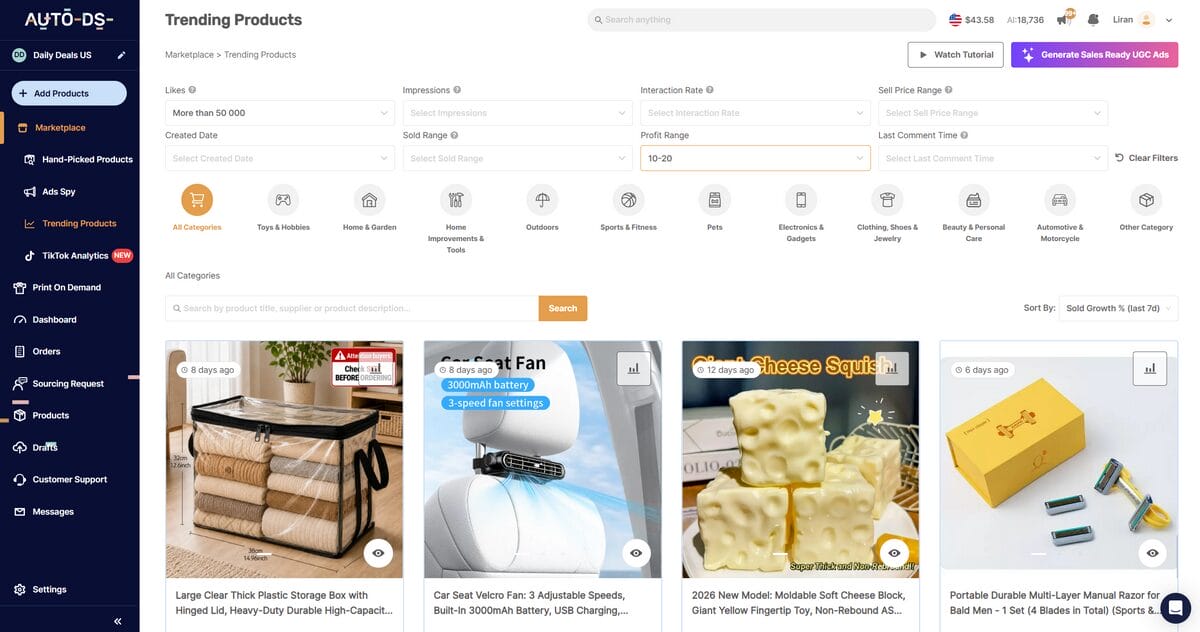
This is where the real game starts. A good product is not just “cheap and trending.” It usually checks several boxes at once:
- Consistent demand
- Healthy margins
- Reliable supplier availability
- Manageable competition
A lot of sellers use the AutoDS product research tools to spot both trending and evergreen products faster. Looking at reviews, demand trends, and competitor pricing helps filter out products that look exciting on TikTok but become a refund festival on Amazon.
And honestly, not every winning product needs to go viral. Some of the most reliable Amazon products are surprisingly boring, but they sell consistently month after month.
4️⃣ Connect Suppliers
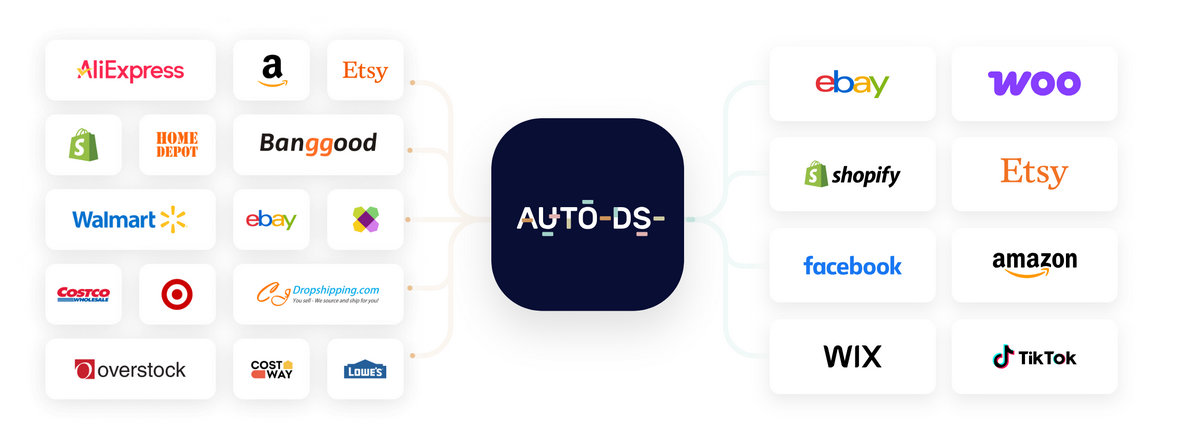
Your dropshipping supplier can quietly make or break the entire business. Slow shipping, poor packaging, and inventory issues usually turn into negative reviews and refund requests pretty fast.
Some of the most common suppliers for Amazon dropshipping include:
- Walmart
- AliExpress
- Costco
- Home Depot
- CJdropshipping
- AutoDS private suppliers
5️⃣ Import Products with AutoDS

Uploading products manually sounds manageable at first… until you are editing titles, descriptions, images, and prices for the fiftieth listing of the week and questioning your life choices.
AutoDS simplifies the process with one-click product import, making it much faster to build and test a larger catalog. Instead of manually copying product information, sellers can import listings more efficiently and manage everything from one dashboard.
Once stores start growing, centralized product management becomes a huge time-saver.
6️⃣ Automate Pricing & Inventory
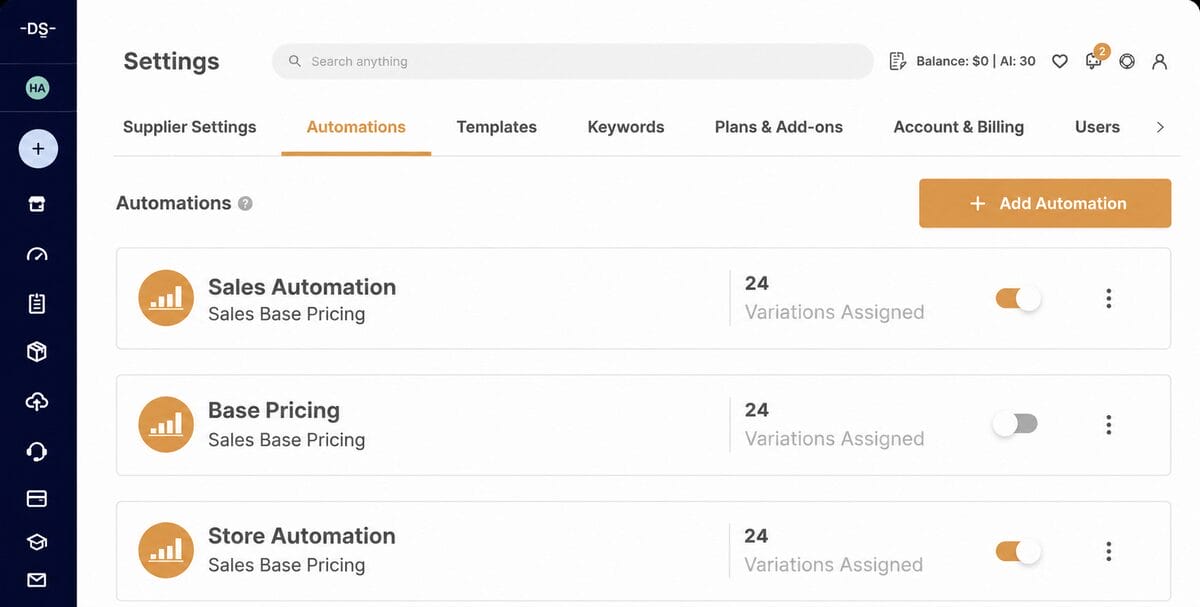
One of the hardest parts of Amazon dropshipping is that supplier prices and inventory levels constantly change. A product that was in stock this morning can be out of stock by the afternoon, and manually tracking all those updates becomes almost impossible as catalogs grow.
AutoDS helps automate inventory syncing and price monitoring to reduce out-of-stock issues, pricing mismatches, overselling risks, and constant manual updates. Fewer operational mistakes usually mean fewer cancellations, fewer angry customers, and healthier profit margins over time.
7️⃣ Optimize Listings

Even solid products struggle if the listing looks weak. On Amazon, small improvements can make a surprisingly big difference in clicks and conversions.
Good listings usually include:
- Clear, keyword-friendly titles
- High-quality product images
- Competitive pricing
- Strong descriptions
- Bullet points that actually explain the product properly
A better listing not only helps conversions but can also improve ad performance and reduce wasted PPC spend.
🆕 Beginner’s Tip: Your first listings will probably not be perfect, and that is normal. Successful sellers improve their listings gradually based on clicks, conversions, reviews, and customer questions.
8️⃣ Scale Winning Products
Once you find products that consistently sell, the next step is to scale carefully, rather than trying to double your catalog overnight like you are assembling the Avengers of kitchen gadgets.
Most successful sellers scale gradually by:
- Expanding into related products
- Improving listings
- Testing new niches
- Increasing automation
The bigger the store gets, the more important operational systems become. More sales also mean more customer service, supplier coordination, and inventory management, which is exactly why automation tools like AutoDS become increasingly valuable as stores grow.
Best Suppliers for Amazon Dropshipping
Choosing the right supplier affects almost everything in Amazon dropshipping: shipping speed, refund rates, automation potential, customer reviews, and ultimately profitability.
Here are some of the most popular suppliers Amazon dropshippers use in 2026, especially for sellers focused on faster operations and automation compatibility.
AutoDS Private Suppliers
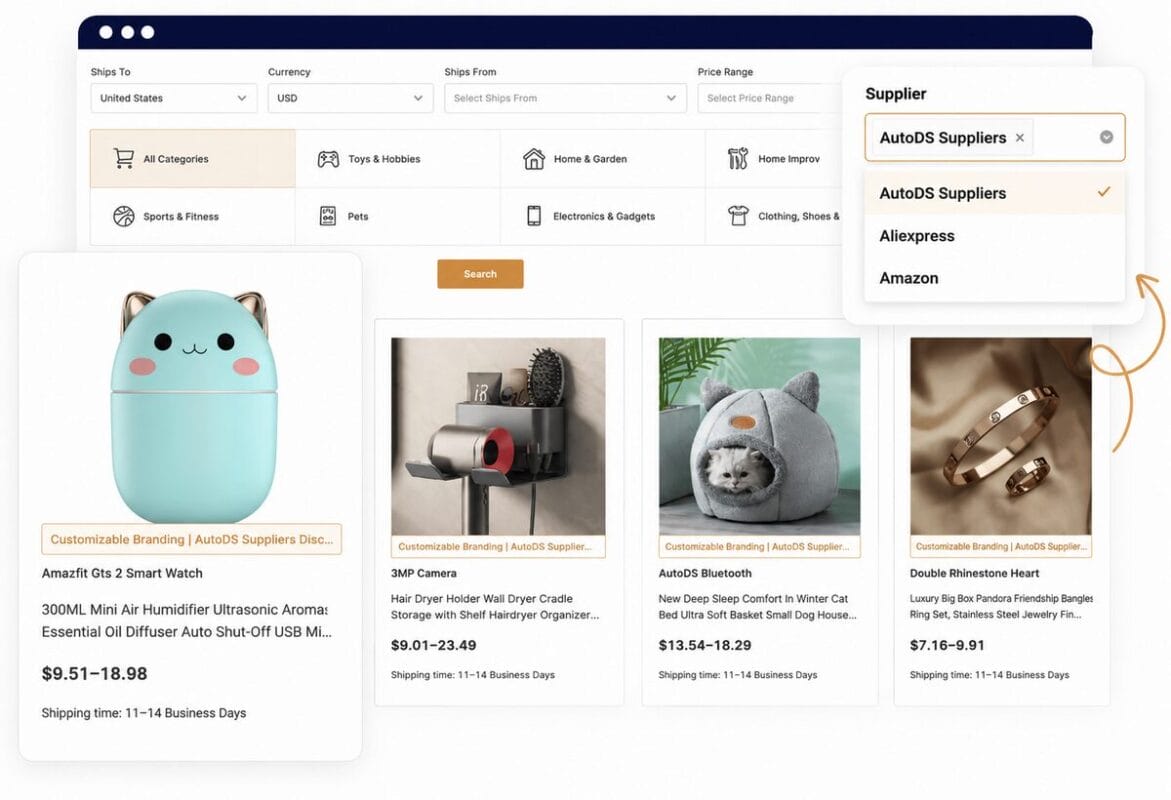
AutoDS Private Suppliers are built specifically for dropshippers looking for faster fulfillment and more stable operations. Unlike traditional retail suppliers, many of these suppliers are optimized for e-commerce automation and offer features such as faster processing times, more reliable inventory syncing, and greater product consistency.
One major advantage of sourcing from AutoDS to Amazon is shipping speed. Many AutoDS private suppliers include U.S.-based warehouses, which helps sellers offer much faster delivery compared to classic overseas sourcing methods. Faster shipping tends to improve both conversions and customer satisfaction on Amazon.
Obviously, AutoDS Private Suppliers also integrate directly into the AutoDS automation ecosystem, making inventory syncing, price monitoring, fulfillment, and tracking updates much smoother to manage at scale.
- Shipping speed: Fast domestic and international options available
- Automation compatibility: Excellent
- AutoDS-supported: Yes
Walmart
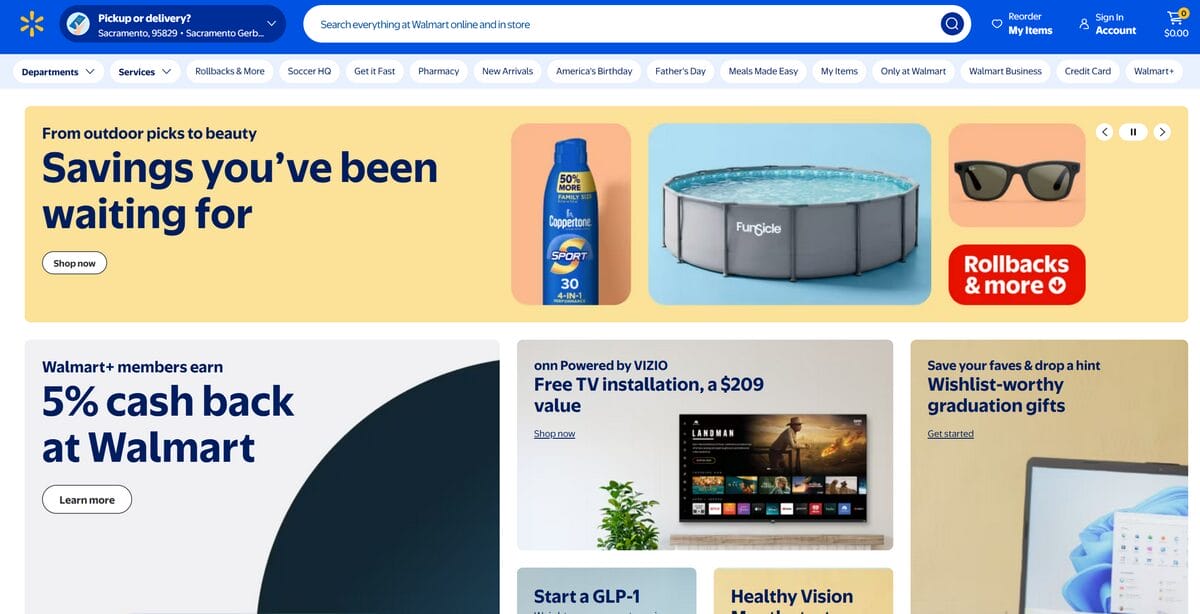
Walmart remains one of the most widely used suppliers for Amazon dropshipping because of its huge product catalog and relatively fast U.S. shipping. Many sellers use Walmart to source everyday products like home items, kitchen accessories, pet products, and office gadgets.
The biggest advantage is delivery speed. Since Walmart has strong domestic logistics, many products can arrive much faster than those from overseas suppliers. That said, stock levels and pricing can change frequently, which is why automation becomes especially important here.
- Shipping speed: Fast U.S. shipping
- Automation compatibility: Strong
- AutoDS-supported: Yes
AliExpress
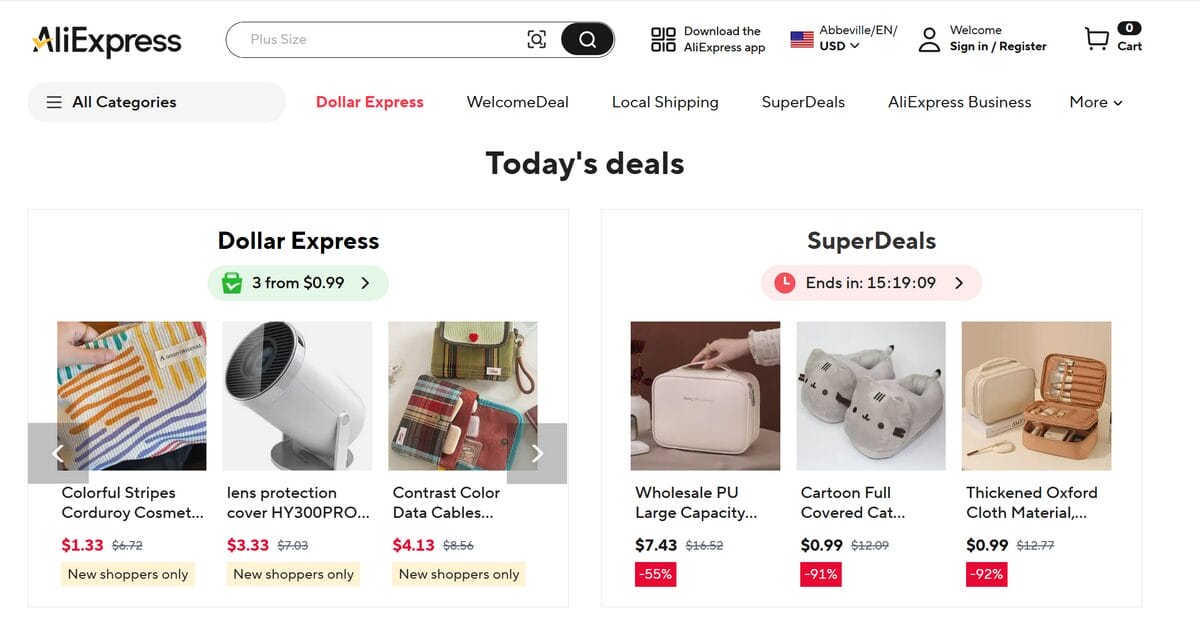
AliExpress is still one of the largest supplier marketplaces in dropshipping, especially for lower-cost products and a broad product variety. It remains popular for testing products because sellers can access massive catalogs without upfront inventory purchases.
The trade-off of AliExpress to Amazon dropshipping is the shipping time. While some suppliers now offer local warehouses and faster delivery options, AliExpress shipping can still be slower than domestic suppliers if sellers are not careful with sourcing.
- Shipping speed: Moderate to slow, depending on supplier location
- Automation compatibility: Excellent
- AutoDS-supported: Yes
CJDropshipping
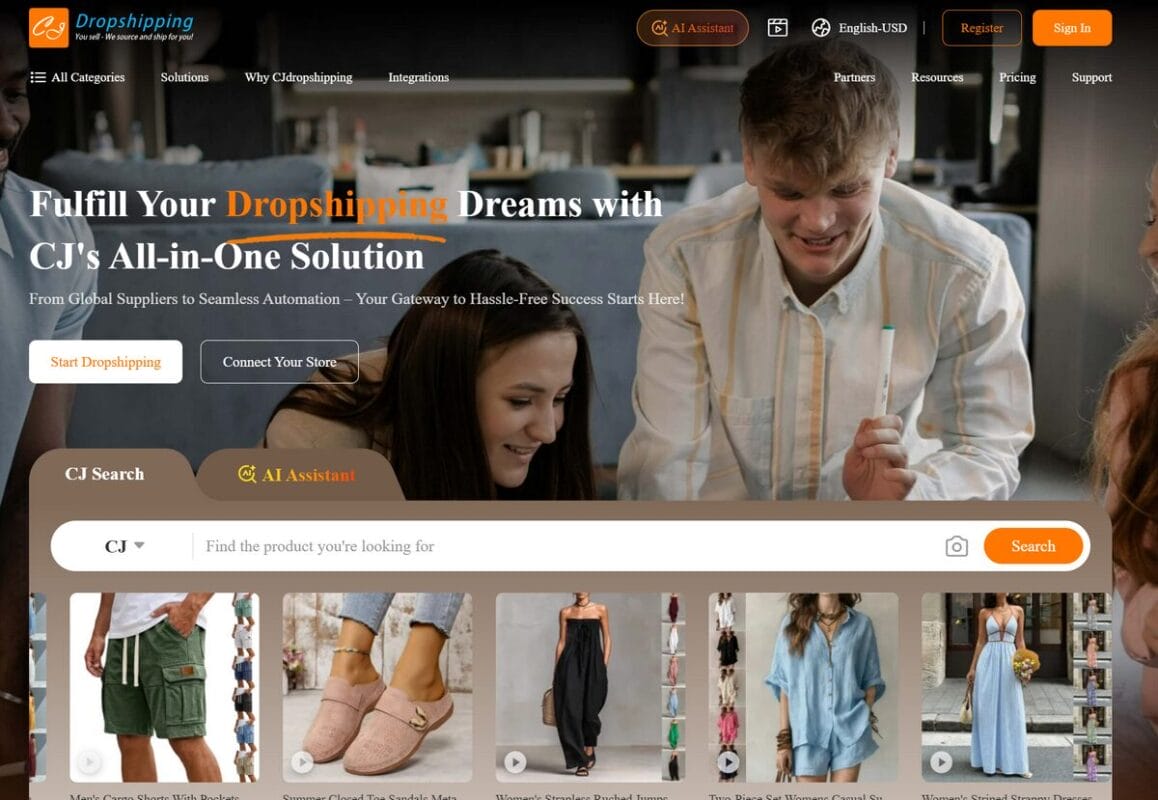
CJDropshipping has become increasingly popular among Amazon sellers looking for a middle ground between AliExpress pricing and faster fulfillment. The platform offers global warehouses, product sourcing services, and branded packaging options, giving sellers more flexibility as their stores grow.
Compared to traditional AliExpress sourcing, CJDropshipping often provides better shipping consistency and more control over fulfillment. It is especially useful for sellers who eventually want to transition toward stronger branding or multi-platform selling.
- Shipping speed: Faster than many traditional overseas suppliers
- Automation compatibility: Strong
- AutoDS-supported: Yes
Costco
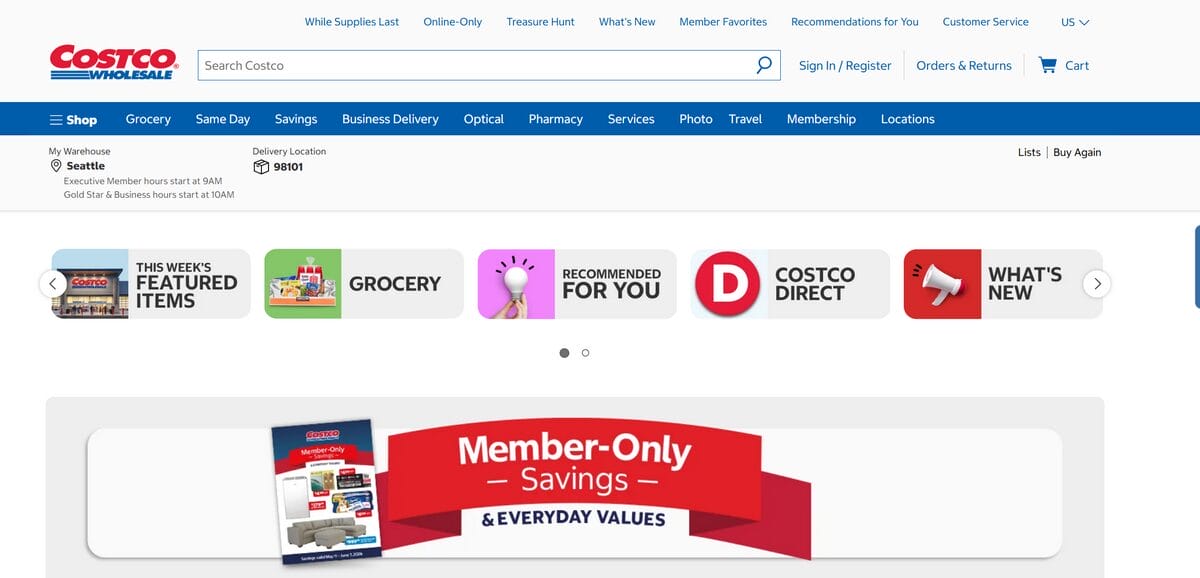
Costco is less automation-focused than the other suppliers on this list, but some Amazon sellers still use it for household items, bulk products, and branded goods. The platform can offer competitive pricing on certain categories, especially products with stable demand.
However, Costco is not specifically designed for dropshipping workflows, which means automation and inventory management may feel less seamless compared to suppliers built with e-commerce sellers in mind.
Because of that, Costco tends to work better for smaller catalogs or selective product sourcing rather than large-scale automated operations.
- Shipping speed: Fast U.S. shipping on many items
- Automation compatibility: More limited
- AutoDS-supported: No
Common Reasons Amazon Dropshippers Fail
❌ Ignoring Amazon’s dropshipping policy
Amazon allows dropshipping, but it has rules, and ignoring them can get sellers into trouble. Things like shipping products with supplier invoices, third-party branding, or unclear seller information can put an account at risk.
❌ Thin margins
A product can look profitable until all the extra costs start showing up. Amazon fees, shipping, refunds, and PPC ads can eat through margins very quickly, especially in ultra-competitive categories where everyone keeps lowering prices to stay visible.
❌ Poor supplier choice
A bad supplier usually creates problems everywhere else. Slow shipping, inconsistent inventory, or poor product quality often lead to complaints, refunds, and negative reviews that hurt both profits and account health.
❌ No automation
Managing everything manually might work with five products. It becomes chaos with fifty. Sellers who constantly update inventory and prices by hand often run into overselling issues, delayed fulfillment, and operational mistakes that could have been automated.
❌ Weak listings
Sometimes the product is not the problem. The listing is. Low-quality images, confusing titles, and vague descriptions can seriously hurt conversions, even if the product itself is solid.
❌ Oversaturated products
Some products become so overcrowded that competing turns into a race to the bottom. When dozens of sellers offer nearly identical listings, profits usually shrink quickly unless there is some differentiation, branding, or operational advantage.
How AutoDS Helps Make Amazon Dropshipping More Profitable
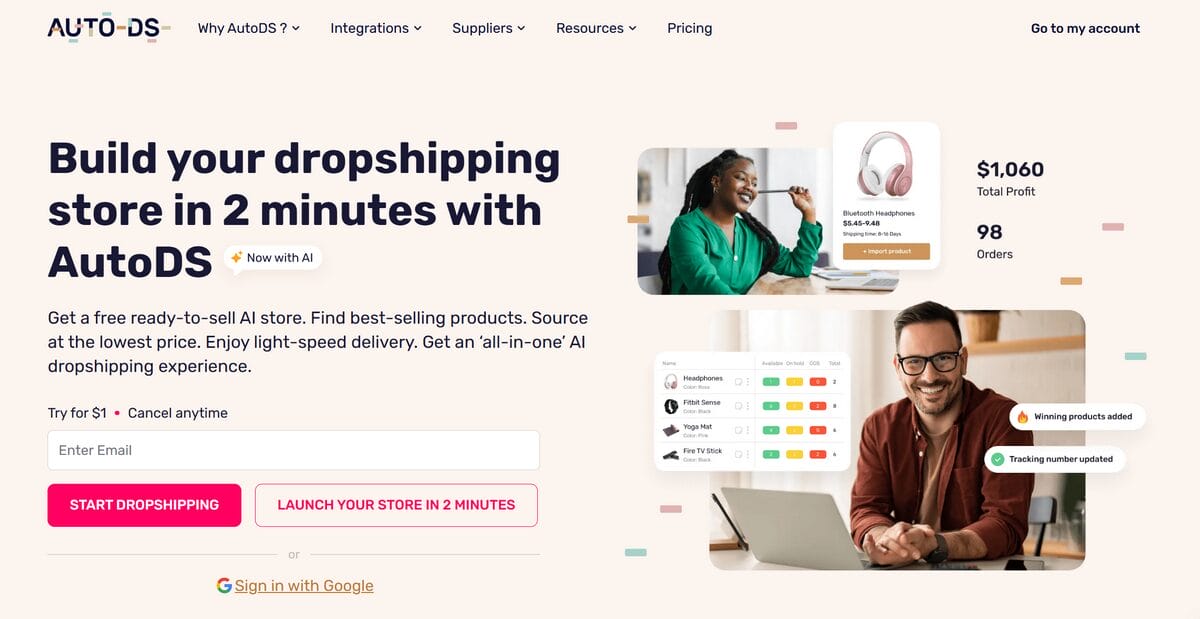
One of the biggest mindset shifts in Amazon dropshipping happens when sellers realize the business is not only about finding winning products. It is also about managing operations without everything catching fire the moment sales start increasing.
A lot of beginners start manually because it feels cheaper at first. And it totally works with a handful of products. But once listings grow, manual management becomes exhausting (I should know). One supplier price change or out-of-stock product can suddenly turn into cancellations, refunds, or unhappy customers.
This is where automation platforms like AutoDS start making a real difference, not just in convenience, but in profitability, stability, and peace of mind.
AutoDS helps sellers centralize many of the repetitive tasks that usually consume hours every week, including:
- Inventory syncing: Supplier inventory changes frequently, especially when products sell quickly. AutoDS automatically syncs stock levels between suppliers and your Amazon store, helping reduce the chances of overselling products that suddenly become unavailable.
- Automatic price monitoring: AutoDS automatically monitors price changes, reducing the risk of selling products that suddenly went out of stock or became unprofitable overnight.
- Product importing: Instead of manually copying titles, images, descriptions, and pricing for every listing, AutoDS allows sellers to import products much faster.
- Order fulfillment: Fulfilling orders manually can become overwhelming once sales volume grows. AutoDS automates the fulfillment process, reducing repetitive tasks and enabling sellers to process orders more efficiently as the business scales.
- Supplier management: AutoDS also supports multiple suppliers and marketplaces, which becomes valuable once sellers expand beyond a single sourcing method.
- Tracking updates: Customers expect quick tracking information, especially on Amazon. AutoDS automatically updates tracking details, improving the customer experience and reducing manual order management.
Another underrated benefit is speed. Automated workflows make it easier to test more products without dramatically increasing workload. So, instead of constantly babysitting listings, sellers can spend more time doing the things that actually grow the business, like testing products, improving listings, optimizing ads, or expanding into new marketplaces.



Tips to Increase Amazon Dropshipping Profits
- ⭐ Focus on better product selection: Evergreen products with stable demand often outperform short-term viral products on Amazon.
- ⭐ Prioritize faster shipping: Customers increasingly expect fast delivery. Domestic suppliers and faster fulfillment options can improve conversions and reduce complaints.
- ⭐ Improve listing optimization: Small improvements to titles, images, and descriptions can significantly improve conversion rates over time.
- ⭐ Expand into multiple marketplaces: Some sellers increase profitability by expanding beyond Amazon into Shopify, eBay, TikTok Shop, or Facebook Marketplace using centralized automation tools.
- ⭐ Increase automation efficiency: The larger a store becomes, the more valuable automation becomes. Efficient workflows reduce operational costs and free up time for scaling activities.
🔍 Research Tip: Search your product idea directly on TikTok before listing it. If people are already creating organic content around it, that is usually a good sign of existing demand outside Amazon too.
Frequently Asked Questions
Is Amazon dropshipping legal?
Yes, Amazon dropshipping is legal and allowed under Amazon’s policy. However, sellers must remain the seller of record and avoid shipping products with third-party supplier branding, invoices, or packaging.
Can beginners make money with Amazon dropshipping?
Yes, beginners can make money with Amazon dropshipping, but profitability usually takes time. Learning product research, supplier management, and listing optimization is part of the process.
How much profit can you make?
Profit varies depending on margins, product selection, advertising costs, and operational efficiency. Some beginners make modest side income, while experienced sellers scale into full-time businesses.
What are the best products to sell?
Evergreen products with stable demand often perform best. Popular categories include home products, pet accessories, fitness items, office tools, and kitchen gadgets.
Do you need automation software?
Technically, no, but automation becomes extremely important once stores begin scaling. Managing inventory, pricing, and fulfillment manually can quickly become overwhelming.
Is Amazon dropshipping oversaturated?
Competition is high, but opportunities still exist in strong niches with optimized listings and reliable suppliers. Product selection and operational efficiency matter more than ever.
Can you start with a low budget?
Yes. Many beginners start Amazon dropshipping with a few hundred dollars, although larger budgets can accelerate product testing and advertising.
Which suppliers work best?
Reliable suppliers with fast shipping and automation compatibility usually work best. Many sellers use Walmart, CJdropshipping, AliExpress, and AutoDS private suppliers.
Start Amazon Dropshipping with AutoDS
Amazon dropshipping is still profitable in 2026, but success usually comes down to efficiency. The sellers getting consistent results are building systems that help them scale without getting buried in manual work.
That is why automation has become such a big part of modern dropshipping. AutoDS helps centralize product importing, inventory syncing, automatic price monitoring, fulfillment, tracking updates, and supplier management in one place, making day-to-day operations much easier to manage. And you can try it for just $1!
If you want to keep learning, check out our recommended guides below to explore more ways to grow your Amazon dropshipping business: