


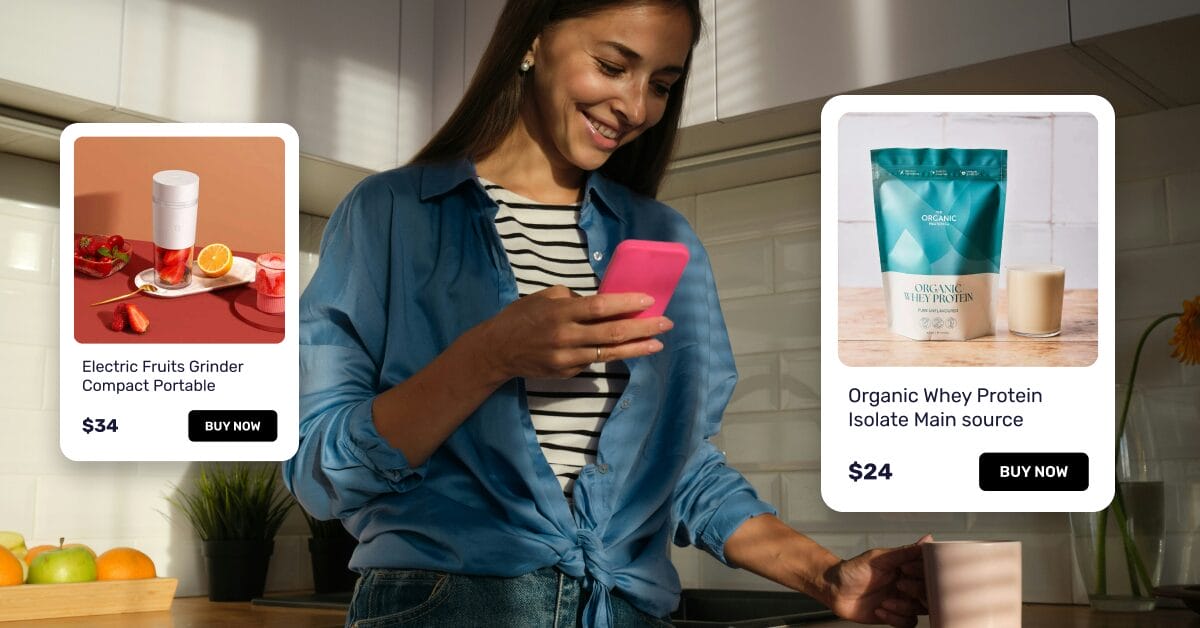
Working with “trending niches” in dropshipping doesn’t mean chasing whatever went viral last week. It means identifying product categories with rising demand, healthy margins, and staying power—niches where customer interest is accelerating, not peaking.
I’ll break down nine trending dropshipping niches for 2026, backed by market data and sourcing realities, so you’ll learn what makes each niche viable, which products to prioritize, and how to validate opportunities before committing to inventory or ad spend. I’ll also show how the best AutoDS features for finding winning products and automation are practical shortcuts for testing and scaling these niches faster.
Whether you’re launching your first store or expanding into new categories, the strategies here will help you build a business around demand that’s still growing.
The dropshipping market is projected to reach $343 billion in 2026, with the largest growth coming from sellers who identify rising niches early.
Health and wellness, pet products, and eco-friendly goods lead the list of trending niches due to strong demand signals and repeat purchase potential.
Validating a niche requires checking search volume trends, competition density, supplier availability, and realistic profit margins.
AutoDS product research and the TikTok Spy Tool help identify trending products before they saturate, giving you a head start on sourcing.
Start with one or two niches, test with automation to reduce manual work, and scale the winners.
9 Trending Niches for 2026
The dropshipping market is projected to grow from $290.7 billion in 2025 to $343 billion in 2026 according to GMI, and sellers who position themselves in the right niches will capture the largest share of that growth.
Not every trending product belongs in a trending niche. A product can spike and then disappear; a niche has broader demand drivers that can sustain sales over time.
The niches below were selected because they show a mix of growing consumer demand, viable margins, repeat purchase potential, and sourcing accessibility. Some are driven by long-term shifts like wellness and sustainability, while others are growing alongside newer behaviors around smart tech, hobby spending, and social commerce.
If I were evaluating niches today, I’d look for three things first: demand that’s still rising, products that solve real problems, and room to differentiate before saturation hits. These nine niches check those boxes, and each offers realistic opportunities for testing, validating, and scaling with the right products.
Health & Wellness Products
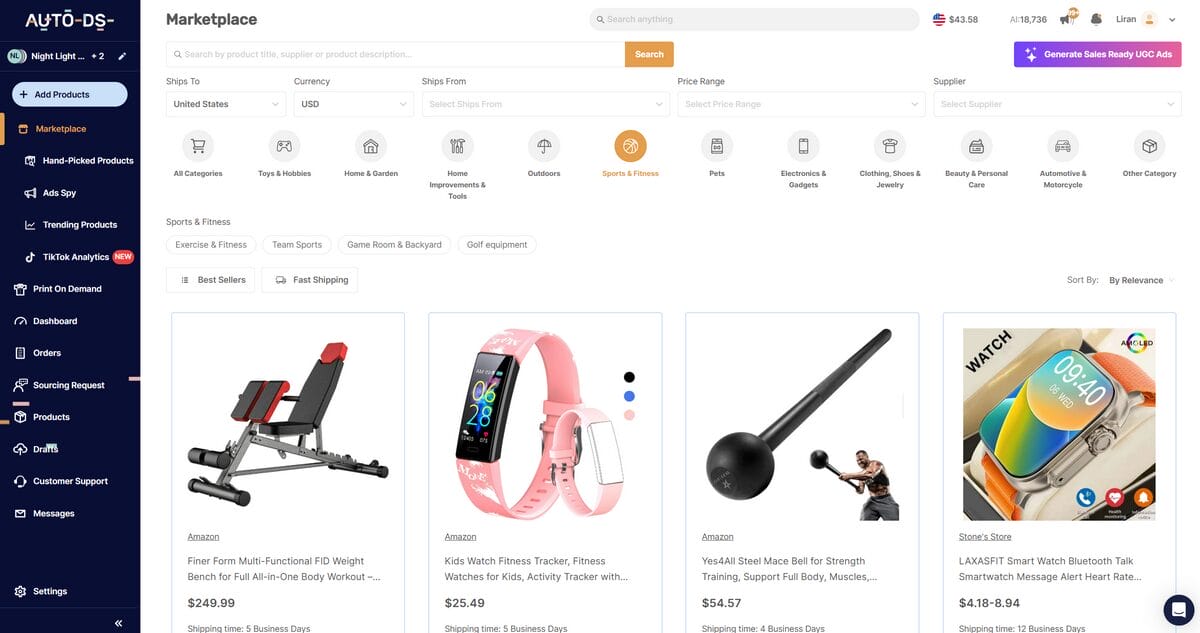
First on this list are health and wellness dropshipping products, one of the most durable dropshipping categories. Every year, more and more online consumers are prioritizing recovery, stress management, and physical maintenance, and they’re willing to spend consistently on items that support those goals.
Products like massage guns, posture correctors, and resistance bands continue to perform because they address clear everyday pain points, from muscle recovery to posture support. That problem-solution fit tends to convert well. They also create natural upsell paths: a posture corrector can lead to ergonomic cushions or lumbar supports, while resistance bands often sell as bundles or pair well with adjacent fitness accessories.
On the sourcing side, quality matters more than trendiness. Be cautious with products making exaggerated health or medical claims, since those can create compliance issues and refund risk. Prioritize suppliers with strong reviews, clear product documentation, and consistent fulfillment performance. Tools like AutoDS can help compare supplier reliability and validate product performance before you import.
💡 Pro Tip: In this niche, specificity often outsells broad branding. Solving one concrete problem usually converts better than trying to sell “wellness” as a concept.
Eco-Friendly & Sustainable Products
Sustainability is no longer a fringe angle. It’s shaping mainstream buying behavior, especially among younger consumers. According to Deloitte, 65% of Gen Z consumers say they’re willing to pay more for environmentally sustainable products, which helps explain why this niche continues gaining momentum across categories from home goods to personal care.
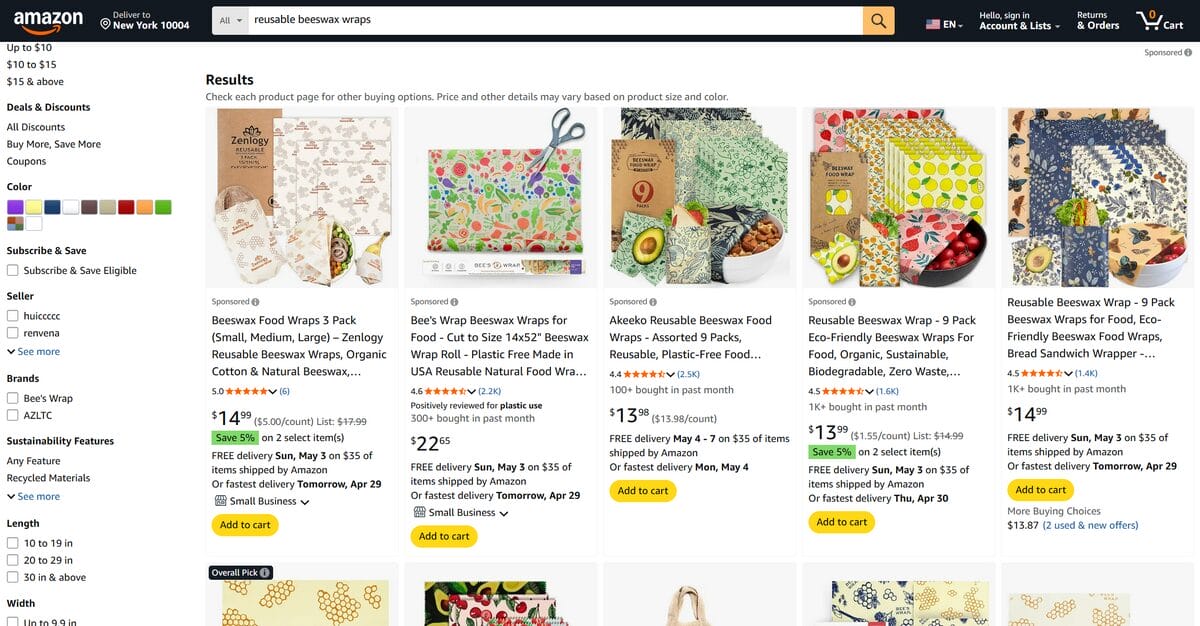
Products like reusable beeswax wraps, bamboo kitchen tools, and insulated stainless steel bottles perform well not just because they replace disposable alternatives, but because they combine practicality with values-based purchasing. That tends to create stronger brand affinity and often results in repeat buyers. Many of these products also lend themselves well to organic content and UGC, which is gold for social commerce.
The real opportunity in this niche is credibility. “Eco-friendly” is easy to claim and easy to abuse, so product selection matters. Focus on goods with specific material or sourcing advantages, such as recycled inputs, certified organic fabrics, or plastic-free packaging, rather than vague green positioning. Buyers in this category often research before purchasing, and unsupported claims can hurt trust fast.
Smart Pet Accessories
According to the American Pet Products Association, U.S. pet industry spending surpassed $150 billion recently, with smart and convenience-focused products gaining traction.
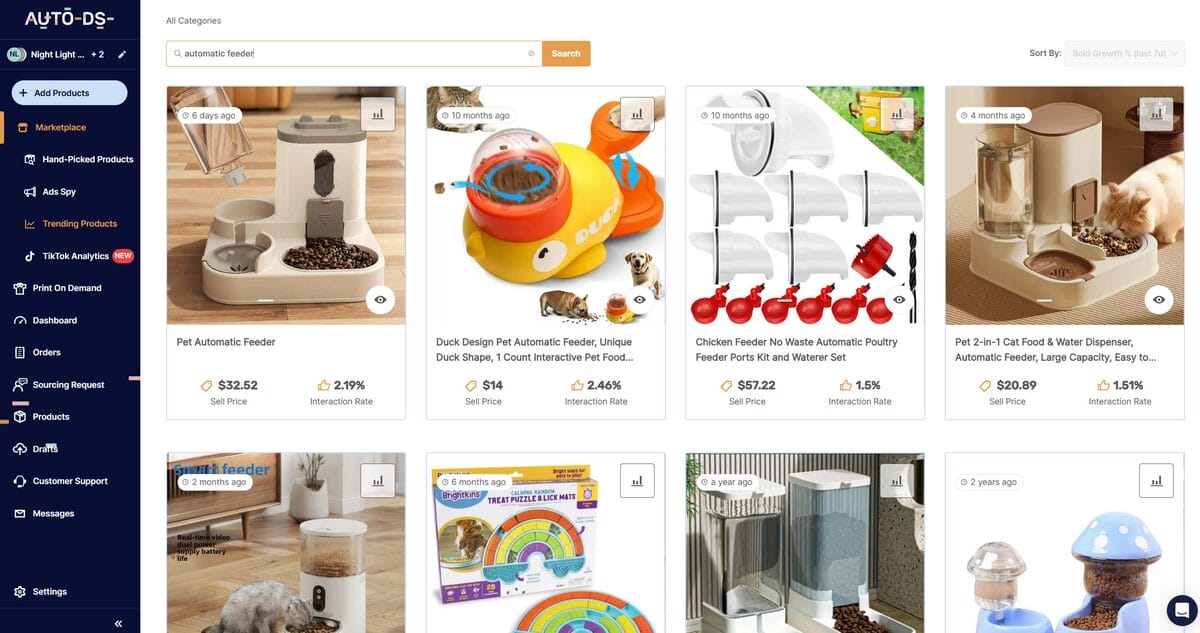
Automatic feeders, GPS collars, and interactive toys perform well because they solve clear problems: managing feeding routines, improving pet safety, or reducing boredom. They also tend to support higher-order values than basic pet supplies, making the niche attractive to dropshippers.
What makes this category interesting in 2026 is the overlap between pet care and smart tech. Younger buyers increasingly expect connected, problem-solving products, not just pet accessories. That creates room for differentiation beyond commodity items.
When sourcing, prioritize quality and support. Tech-enabled pet products can generate more returns or questions than simpler products, so clear instructions, reliable suppliers, and fast fulfillment matter. AutoDS can help vet suppliers and automate fulfillment, which becomes especially useful as you scale.
Home Office & Productivity Gear
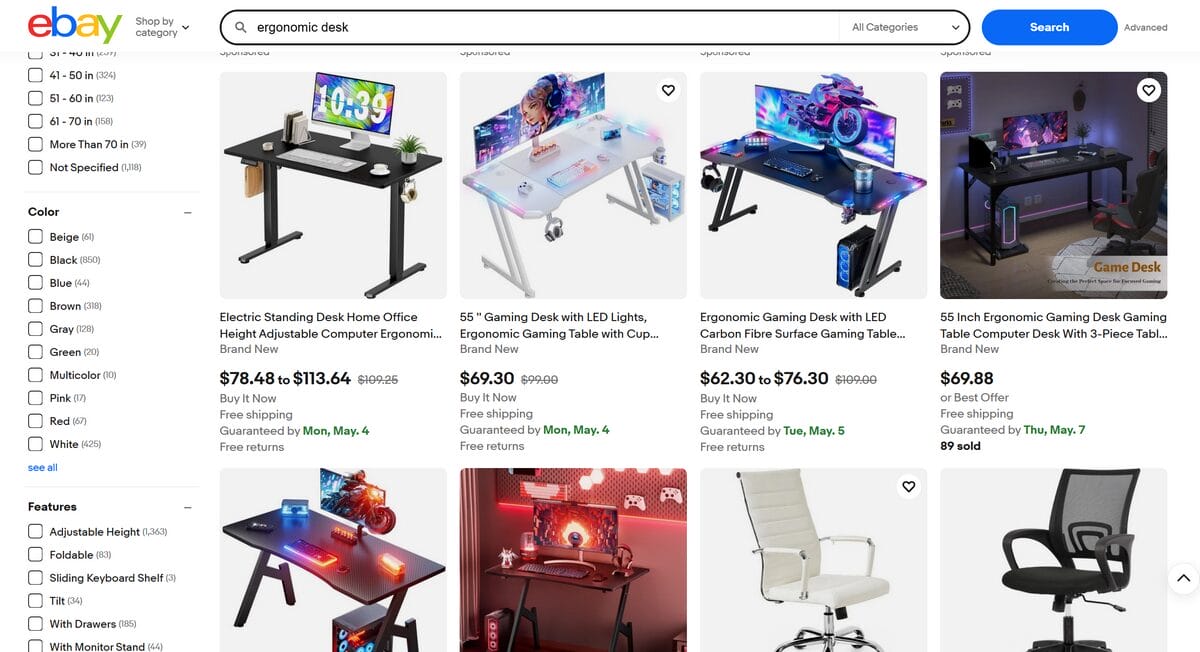
Remote and hybrid work helped turn home office products into an evergreen niche.
Ergonomic laptop stands, split keyboards, monitor risers, and adjustable desk lamps perform well because they improve comfort and productivity in everyday routines. That utility is what gives the niche staying power. Unlike novelty gadgets, these are often problem-solving purchases, which usually means stronger buying intent.
That intent shows up in search behavior too. Someone looking for an ergonomic keyboard for wrist pain or a laptop stand for posture is often much closer to purchasing than casually browsing. That makes this niche especially interesting from an SEO and paid traffic perspective.
On the sourcing side, quality matters a lot. Cheap materials can quickly turn into returns and bad reviews, particularly with ergonomic products where function is everything. I’d prioritize durable, well-reviewed products and test samples whenever possible before scaling.
💡 Pro Tip: Focus on products that reduce discomfort or optimize workspace; they usually outperform generic desk accessories.
Smart Home & IoT Devices
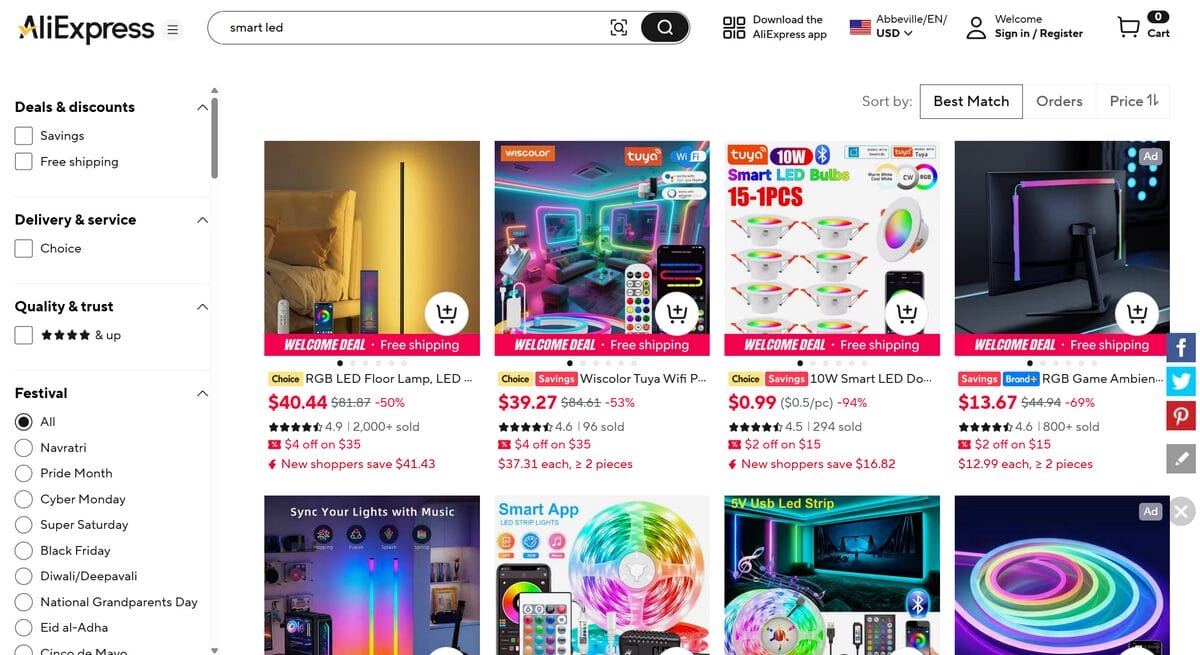
The smart home market is projected to reach $338 billion by 2030, according to Grand View Research, driven by consumers who want convenience, energy savings, and security. For dropshippers, they’re interesting because many entry-level products offer accessible price points while still leaving room for healthy margins.
Smart plugs, app-controlled LED light strips, motion sensors, and video doorbells tend to perform well because they offer an easy entry into smart living without a big investment. They also lend themselves to repeat purchases: customers often start with one device and come back to expand their setup.
One thing that matters a lot in this niche is compatibility. Products that work with ecosystems like Amazon Alexa, Google Home, or Apple HomeKit usually have broader appeal than single-platform devices, so verifying those claims before importing is essential.
I’d also pay close attention to simplicity. Devices that are easy to install and don’t require permanent setup often outperform more complex gadgets, especially for renters. That’s part of why this niche can work so well.
Car Accessories & Organization
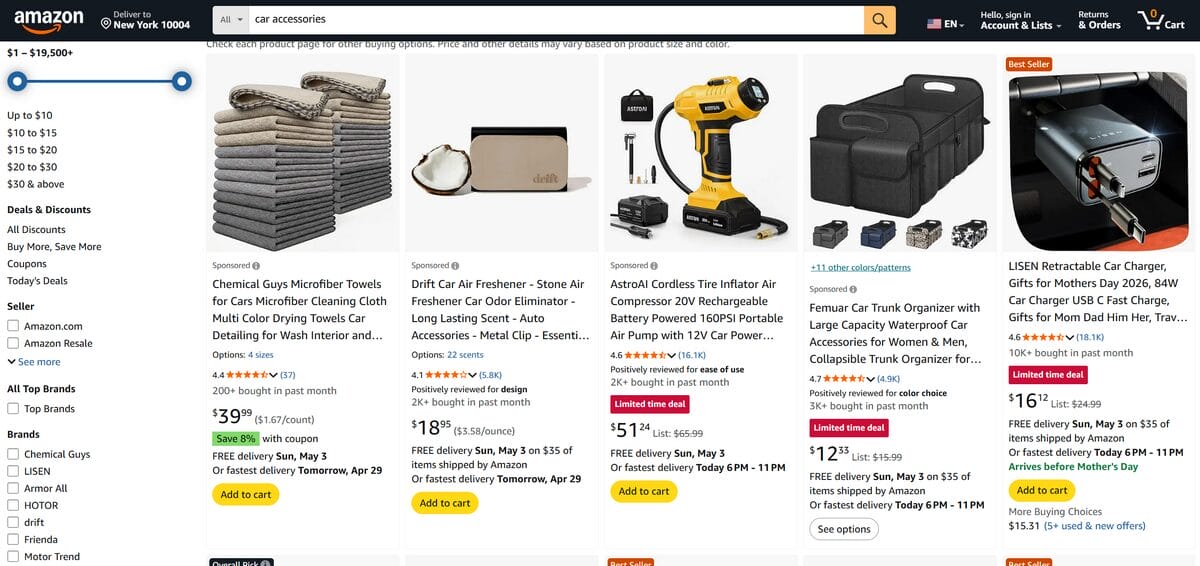
Car accessories remain a strong niche because they solve practical, everyday annoyances, and practical products tend to sell. For dropshippers, the sweet spot is accessories that are affordable, useful, and easy to ship.
Dash cams, wireless phone mounts and chargers, seat gap organizers, and trunk storage solutions tend to perform well because they improve convenience, safety, or organization. They’re less about impulse buys and more about “why didn’t I get this sooner?” products, which is often a good sign.
One big rule in this niche: prioritize universal-fit products. Items designed for most vehicles usually scale better and generate fewer returns than model-specific accessories. Clear compatibility in product listings matters a lot here.
There’s also strong bundling potential. A phone mount paired with a charging cable or a car organizer bundled with seat hooks can raise average order value without much added complexity. And because many of these products make easy gifts, seasonal demand can give the niche an extra lift.
Specialized Hobby Niches: Aquarium & Fishkeeping
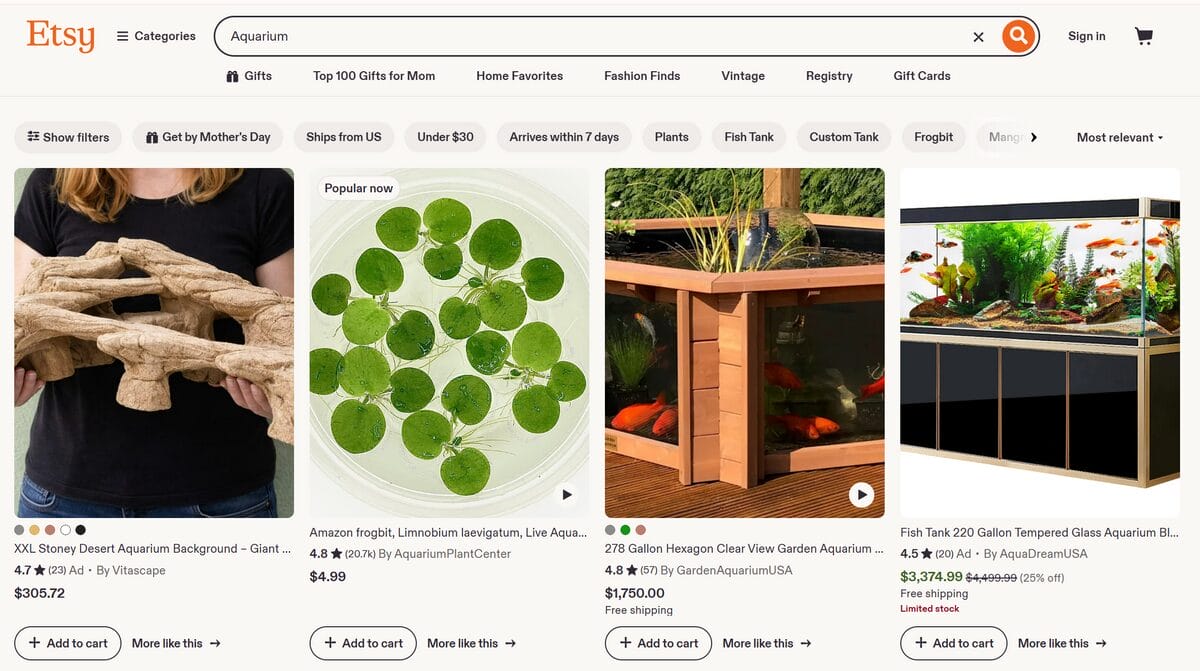
Passion niches can be gold in dropshipping because enthusiasts often buy repeatedly, research deeply, and spend more than casual shoppers. Aquarium and fishkeeping fit that pattern well, which is why it’s an underrated niche.
Products like LED aquarium lights, automatic feeders, aquascaping tools, and water testing kits perform well because they serve both beginners and dedicated hobbyists. What makes the niche especially interesting is the repeat purchase angle: maintenance supplies and upgrade accessories can turn one-time buyers into returning customers.
From a sourcing perspective, I’d avoid bulky or fragile products like tanks and focus on lightweight accessories with good margins and lower breakage risk. In hobby niches, product quality also matters a lot because enthusiasts notice the difference fast.
Another big advantage is community-driven demand. Fishkeepers share setups, reviews, and tutorials across YouTube, Reddit, and forums, which creates organic discovery around products people actually use.
💡 Pro Tip: In hobby niches, niche-down often beats broad catalogs. A focused angle like aquascaping, nano tanks, or beginner fishkeeping, can be easier to position than trying to sell “all pet products.”
DIY & Craft Supplies
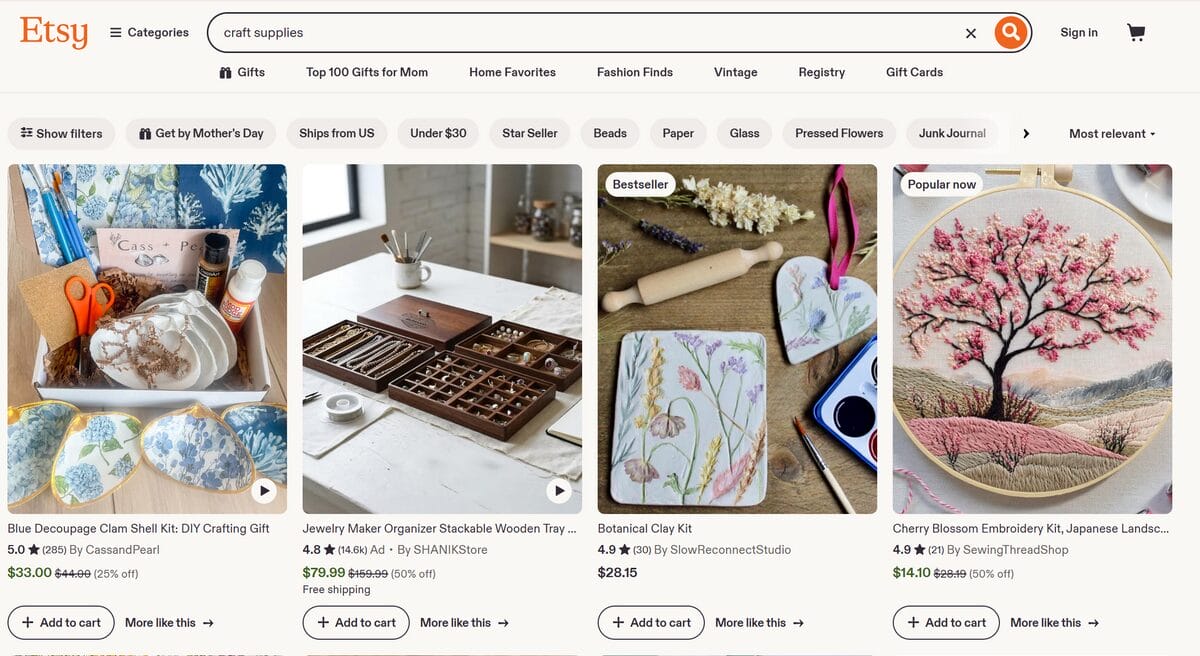
DIY and craft supplies have quietly become a strong social-commerce niche, partly because crafting is now content. Platforms like TikTok and Pinterest turned hobbies into viral formats: think resin pouring videos, tufting rugs, friendship bracelet kits, or the whole “oddly satisfying” craft side of the internet.
Products tend to perform especially well in kit form. Resin kits, embroidery starter bundles, candle-making sets, or polymer clay kits lower the barrier to entry by providing everything buyers need in a single purchase. That simplicity usually converts better than selling components separately.
What I like about this niche is that it often sells both aspiration and utility. People are buying a project, a hobby, sometimes even a personality trait. (“I saw this on BookTok and now I need a journaling kit” energy.)
There’s also strong gifting potential here, plus predictable seasonal spikes. But quality matters. Bad pigments, poor instructions, or incomplete kits can trigger refunds fast, so sourcing reliable kits is key.
Gaming Accessories
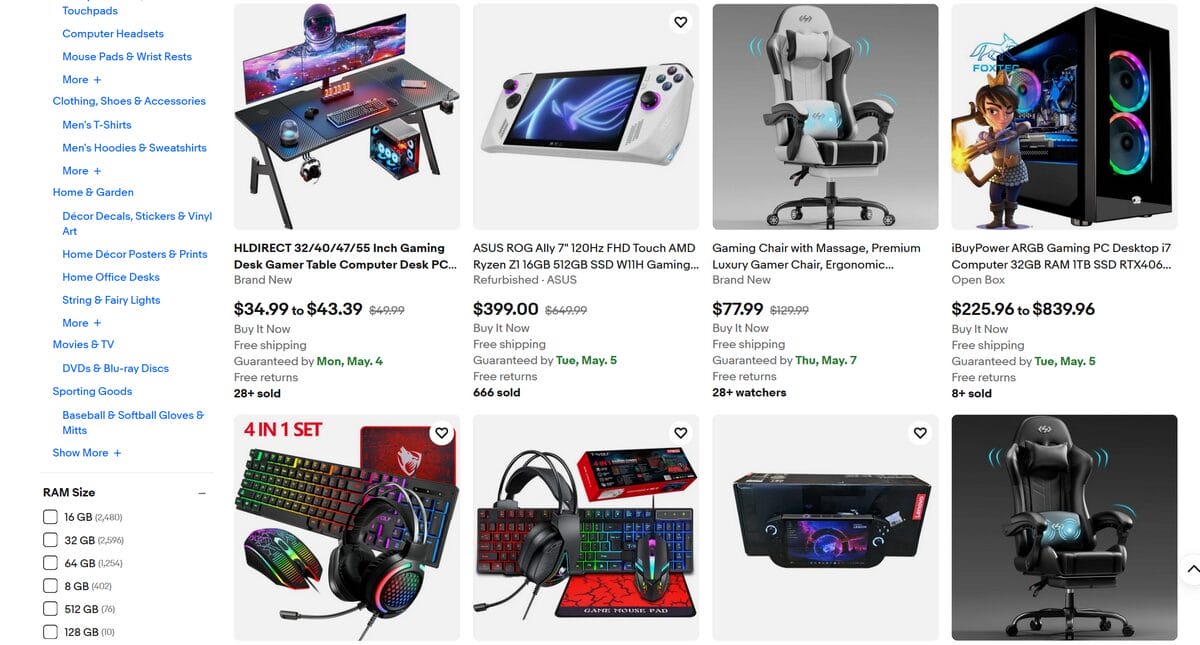
Gaming accessories are a strong niche because they sit between utility and identity. Buyers want products that improve performance and upgrade their setup. And the market is massive: according to Newzoo, the global gaming market generates over $180 billion annually, with accessories riding that demand.
RGB keyboards, gaming mice, desk mats, headset stands, and custom keycaps tend to perform well because they’re relatively affordable upgrades with strong perceived value. Bundling also works naturally here—a keyboard buyer may want a matching mouse pad or desk setup accessories.
What pushes this niche beyond basic electronics is culture. Set up aesthetics, creator influence, and “battle station” content on TikTok and YouTube to drive real demand. (The viral RGB gamer-desk rabbit hole? Basically, a product research engine.)
Just prioritize quality. Gamers research heavily, reviews matter, and low-quality knockoffs get exposed fast.
❓ How I Chose These Niches
Each one of these niches met four filters: rising demand, credible market signals, accessible supplier availability, and realistic margins after ad costs.
I also excluded niches that looked oversaturated, overly commoditized, or too dependent on short-lived hype. The goal wasn’t to list what’s merely popular, but to surface categories where newer sellers can still find room to compete, differentiate, and scale.
What Makes a Niche “Trending” in 2026
A trending niche isn’t just a category getting attention on social media. It’s a market where demand is rising, competition hasn’t fully caught up, and sellers still have room to build margin. That’s where opportunity tends to live.
In 2026, “trending” is less about chasing viral products and more about reading demand signals early. And that usually means looking at several indicators together, not relying on one metric.
I’d validate a niche against these four signals:
- ⭐ Rising Demand (Not Just Hype). Search growth still matters, but context matters more. A niche showing steady interest growth often has more potential than one driven by a short-term spike. Tools like Google Trends can help distinguish momentum from noise.
- ⭐ Social Commerce Traction. Some demand shows up on TikTok or Reddit before it appears in traditional keyword tools. Viral product content, creator adoption, and community chatter can reveal opportunities early. In many cases, social signals now surface trends before search data catches up.
- ⭐ Supplier Viability. A niche isn’t viable if sourcing falls apart. Multiple reliable suppliers, reasonable shipping times, and room for healthy margins matter just as much as demand.
- ⭐ Repeat Purchase Potential. This is underrated. Consumables, accessories, and upgrade-friendly products often outperform one-off purchases because they raise lifetime value. And that matters more than ever. According to Shopify data, customer acquisition costs have risen significantly in recent years, making retention more valuable than ever.
A simple rule I like: a strong niche usually has search demand, social proof, sourcing viability, and repeat-purchase logic. If one of those is missing, I’d look harder before entering.
How to Find & Source Products for Trending Niches
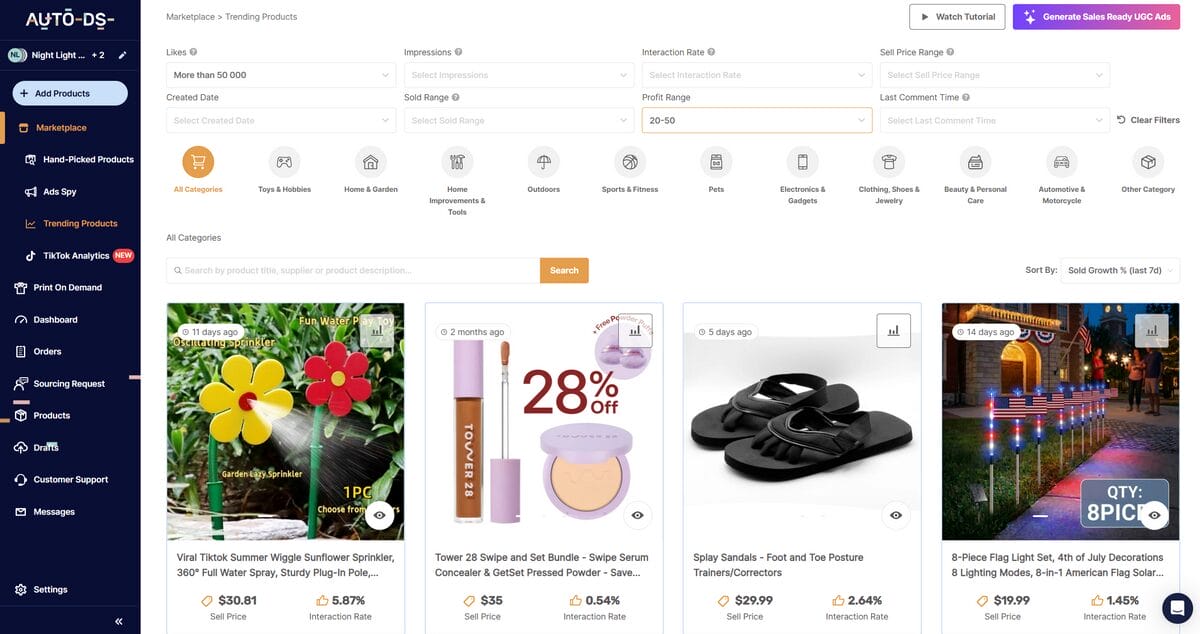
Finding a promising dropshipping niche is one thing. Finding products you can actually sell profitably is another. In practice, winning products usually sit at the intersection of demand, supplier reliability, and margin. That’s what you want to validate before importing anything.
Here’s a simple process I’d use:
1️⃣ Start With Demand-Proven Products
Begin with products already showing signs of traction: search growth, social commerce momentum, or strong marketplace demand. Use signals from Google Trends, marketplace best-seller pages, or product research tools to narrow ideas before sourcing.
Don’t just ask, Is this product trending? Ask:
- Is demand growing or peaking?
- Does it solve a clear problem?
- Is there room to differentiate?
2️⃣ Compare Multiple Suppliers
Never source from the first supplier you find. Compare at least two or three options for pricing, shipping times, reviews, and fulfillment consistency.
Check for:
- Fast shipping, ideally local warehouses in your target market
- Strong supplier ratings and order history
- Healthy margins after shipping and ad costs
- Clear return and refund policies
Tools like AutoDS can make supplier comparison much faster, especially when you’re evaluating the same product across multiple sources.
3️⃣ Order Samples Before You Commit
This step gets skipped too often. Order the product yourself.
Test:
- Product quality
- Packaging
- Delivery speed
- Instructions and user experience
If the sample disappoints you, it’ll probably disappoint customers too. The AutoDS Sample Orders feature lets you test products before selling—no store sync needed, just choose a product and ship it straight to you.
4️⃣ Prioritize Fast Shipping & Low-Friction Products
In competitive niches, shipping speed can be a conversion factor. Products with local fulfillment options or programs like Fulfilled by AutoDS can help reduce long delivery windows that often kill sales.
I’d also favor products with lower support complexity: fewer setup issues usually mean fewer headaches.
5️⃣ Validate Profitability Before Scaling
Before listing a product, run a basic margin check. Include:
- Product cost
- Shipping cost
- Platform fees
- Ad spend
- Expected return/refund risk
A product can trend and still be a bad business.
Operational Considerations

A niche can look profitable on paper and still fall apart operationally. Before scaling, make sure these fundamentals are in place:
- Set up your business properly. Before you start scaling, make sure your basics are covered: business structure, tax requirements, payment setup, and (if you sell in the U.S.) an EIN from the Internal Revenue Service. Boring? Yes. Important? Very.
- Choose a selling channel that fits the niche. Different niches often perform better on different platforms. Match the channel to how your products are discovered and bought:
- Shopify — strong for branded stores and long-term scaling
- eBay / Amazon — built-in traffic, stricter rules
- TikTok Shop — strong for visually demonstrable products
- Know your real margins. Don’t price off product cost alone. Calculate full landed cost, including: Product cost, shipping, platform fees, payment processing, ad spend, returns/refunds buffer. A product with “great markup” can still have weak profit.
- Start small and validate first. Don’t launch with 100 products. Start with 10–20 listings, test demand, see what converts, then expand based on data.
- Build systems before scaling. Before order volume grows, set up processes for:
- Price and stock monitoring
- Order fulfillment
- Customer support
- Supplier backups
Strategies for Scaling a Trending Niche
Finding a winning niche is the start. Scaling it is where the business is built. In practice, growth usually comes from improving a few leverage points at once: finding products earlier, protecting margins, lowering acquisition costs, and increasing customer value.
Use Product Research To Move Earlier
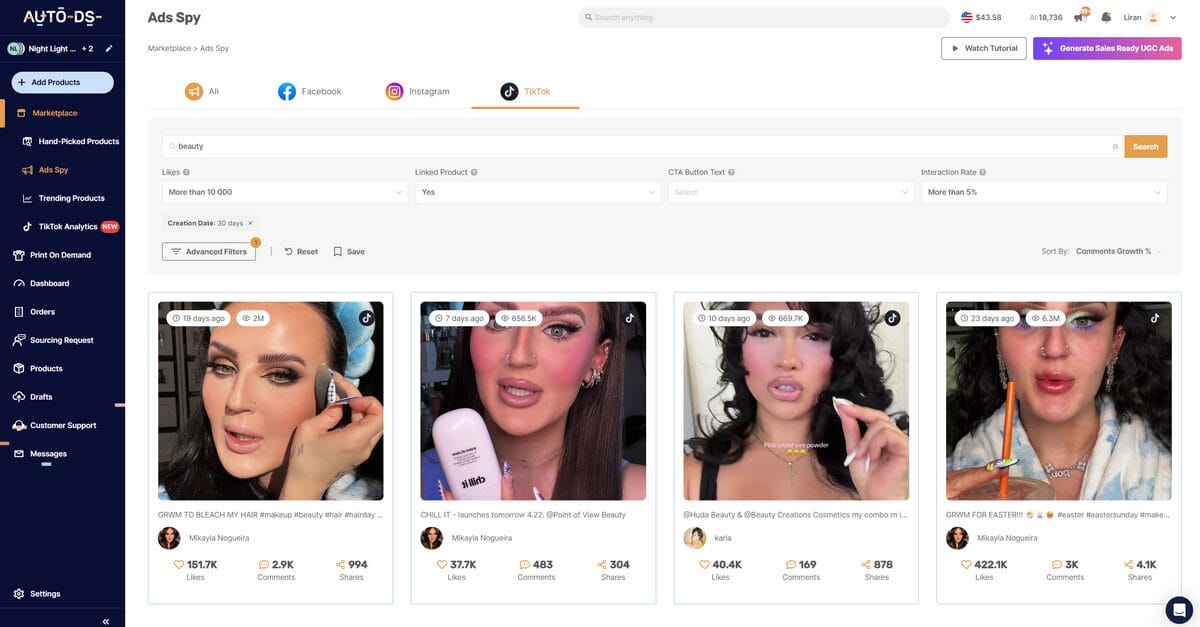
One advantage in trending niches is getting in before a product feels saturated. That often means watching signals earlier than competitors do—search trends, social commerce traction, marketplace momentum, and creator-driven demand.
This is where product research stops being a “beginner task” and becomes a scaling strategy. Tools like AutoDS Ads Spy Tool can help surface products gaining traction before competition pushes margins down.
Protect Margins With Pricing Automation
Scaling gets messy when supplier costs shift and pricing doesn’t keep up. That’s how margins quietly disappear.
As catalogs grow, manual price updates become unrealistic. Automation helps protect profitability by adjusting prices when supplier costs or stock conditions change. It’s not glamorous, but margin protection is a growth strategy.
Especially in trending niches, protecting profit can matter as much as increasing sales.
Use Social Commerce To Amplify Demand
Some niches scale especially well through short-form content. Pet products, gaming accessories, DIY kits—these often sell better when people can see them in action.
That’s why UGC and creator-style content work. On TikTok and Instagram Reels, content that feels native often outperforms polished ads.
Sometimes one product demo can outperform a month of traditional ad testing. (The internet has sold a shocking number of oddly satisfying gadgets this way.)
If a product can be shown, demonstrated, or reacted to, social commerce can become a major growth lever.
Capture High-Intent Traffic With Long-Tail SEO
Paid traffic helps you scale faster, but organic traffic compounds.
Instead of chasing broad competitive terms, target specific use-case searches. “Ergonomic keyboard” is crowded. “Ergonomic split keyboard for wrist pain” often attracts more qualified buyers.
That kind of traffic can convert well because intent is stronger.
For trending niches, SEO often works best when built around product problems, not generic product names.
Recover More Buyers With Retargeting
Most visitors don’t buy on the first visit. That’s normal.
Retargeting ads, browse abandonment flows, and email recovery can bring back people who were interested but not ready. And recovering warm traffic is usually cheaper than acquiring new traffic.
A lot of scaling is simply getting more value from the traffic you already paid for.
Increase AOV With Bundles And Upsells
Scaling doesn’t always require more customers. Sometimes it comes from increasing what each customer spends.
Bundling is one of the simplest ways to do that. A massage gun with recovery attachments. A gaming keyboard with a matching desk mat. A craft kit with add-ons.
When done naturally, upsells can raise average order value without raising acquisition costs.
Build Systems That Compound
The big mindset shift: scaling is rarely one tactic. It’s systems stacked together.
Earlier product discovery, stronger margins, higher AOV, better traffic recovery—those gains compound.
That’s usually how trending niches become sustainable businesses, instead of short-lived wins.
Challenges & Solutions
Every trending niche comes with obstacles. Anticipating them prevents surprises that derail momentum.
- Saturation: Popular niches often attract heavy competition, which can push up ad costs and compress margins. The best response usually isn’t competing on price, but finding a sharper angle through differentiation, bundles, or positioning.
- Supplier reliability: If your supplier runs into stock issues, delays, or quality problems, your business feels it fast. That’s why it’s smart to vet suppliers carefully and keep backup options for winning products.
- Shipping delays: Slow deliveries can hurt conversion rates and customer trust. Working with faster fulfillment options and setting realistic expectations can prevent many support headaches.
- Thin margins: A product may look profitable until shipping fees, ad costs, and returns eat into the numbers. Calculating real margins early helps avoid scaling products that don’t actually make money.
- Trend fade: Some products peak quickly and lose momentum. The solution is to treat product testing as ongoing, keep refreshing your catalog, and avoid depending on one “winner” for too long.
Sellers who solve these problems consistently outperform those who avoid them.
Frequently Asked Questions
Which dropshipping niche is trending right now?
Health and wellness remains one of the strongest trending niches because demand is driven by long-term behavior, not short-lived hype. Products tied to recovery, stress relief, fitness, and everyday wellbeing tend to perform well, especially when they solve specific problems and support repeat purchases.
What dropshipping niche has the highest demand?
Pet products consistently rank among the highest-demand niches because spending in this category tends to be resilient and emotional. Beyond basics, areas like smart pet accessories, enrichment products, and pet wellness continue showing strong growth.
How do I find a profitable niche for dropshipping?
To find a profitable niche, look for four things: growing demand, manageable competition, reliable suppliers, and healthy margins. I’d validate using search trends, social commerce signals, and supplier research—not product hype alone. Tools like AutoDS can help speed up product validation and sourcing.
What are the best dropshipping niches for beginners?
Beginner-friendly niches usually have practical products, broad appeal, and relatively low return risk. Home office products, car accessories, and some pet categories are often good starting points because they’re easier to source, position, and support.
How many niches should I start with?
Start with one niche, or two at most. Going too broad early makes testing harder and spreads your budget thin. It’s usually better to find traction in one niche first, then expand once you know what’s working.
Conclusion: How to Start Your Trendy Dropshipping Store
The best trending niches in 2026 have something in common: growing demand, viable margins, and room to differentiate. Whether you lean toward health and wellness, pet products, eco-friendly goods, or specialized niches like gaming and hobby products, the opportunity is less about chasing trends and more about choosing demand you can build around.
That’s also what makes dropshipping profitable for many sellers: not jumping on every viral product, but validating a niche, sourcing carefully, and scaling what works.
If I were starting from here, I’d keep it simple: choose one niche, test a few products, and let data (not hype) guide what you scale. You can try tools like AutoDS for just $1 and see how they help speed up research, sourcing, and automation, so growth doesn’t turn into manual chaos.
The market is growing. The opportunities are real. For more tips on how to leverage the momentum, I have a few recommendations for you: