


Launching a great dropshipping store isn’t about throwing a bunch of products onto a website and hoping for the best. It’s about building a store that feels legit, builds trust, and makes people want to buy. And to achieve that, it all comes down to following a clear structure.
In this guide, we’ll break down everything you need to know about how to build a dropshipping store from scratch. Plus, we’ll detail what makes a good dropshipping store and include examples of high-performing ones.
We’ll also share the real secret behind successful stores: automation. AutoDS automates every step of the workflow to make it easy to create, launch, and scale dropshipping stores, from product sourcing and importing to order fulfillment and tracking.
Building a dropshipping store is simple, but it requires getting a few fundamentals right, including niche, structure, product pages, and trust building.
The best dropshipping stores follow a clear pattern: strong branding, simple UX, and focused offers that guide customers to buy.
Most dropshipping stores fail due to avoidable mistakes like poor product selection, weak design, and a lack of automation.
Using automation tools like AutoDS simplifies operations, reduces manual work, and helps you scale your store more efficiently.
The Anatomy of a Perfect Dropshipping Store
What makes a good dropshipping store? It’s hard to mention just one thing. It’s actually more about how many moving parts come together.
In fact, the best stores follow a clear strategy. Everything is based on the same criteria: the niche is clear, the pages guide the user, the design builds trust, and the buying process feels effortless. When all these pieces align, your store has more chances to convert.
Here’s what that anatomy looks like.
A Clear Niche and Target Audience
A strong dropshipping store starts with clarity. Who is it for? If your store tries to sell everything to everyone, it usually ends up converting no one.
The best stores focus on a specific niche: fitness, pets, skincare, home decor, and so on. They speak directly to that defined audience.
Think about it: it’s not the same speaking to a fitness enthusiast as to beauty and skincare lovers. Everything changes, from the tone to branding, web design, images, and marketing strategies.
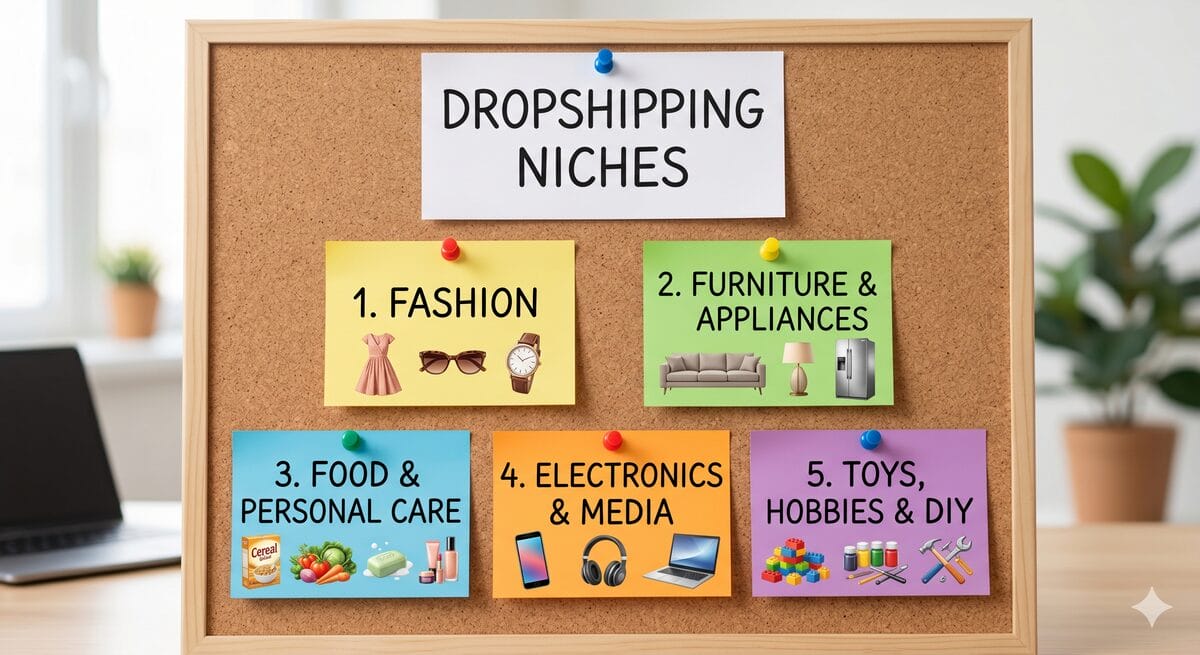
Don’t know where to start? No problem. To give you an idea, the best dropshipping niches according to GranView Research are:
- Fashion (this one leads across multiple sources)
- Furniture and appliances.
- Food and personal care.
- Electronics and media.
- Toys, hobbies, and DIY.
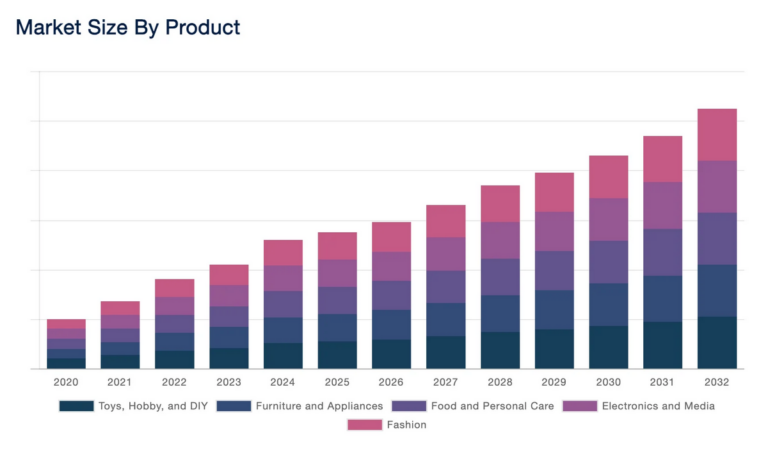
All in all, knowing your audience makes your messaging sharper, your branding stronger, and your product easier to sell.
High-Converting Homepage
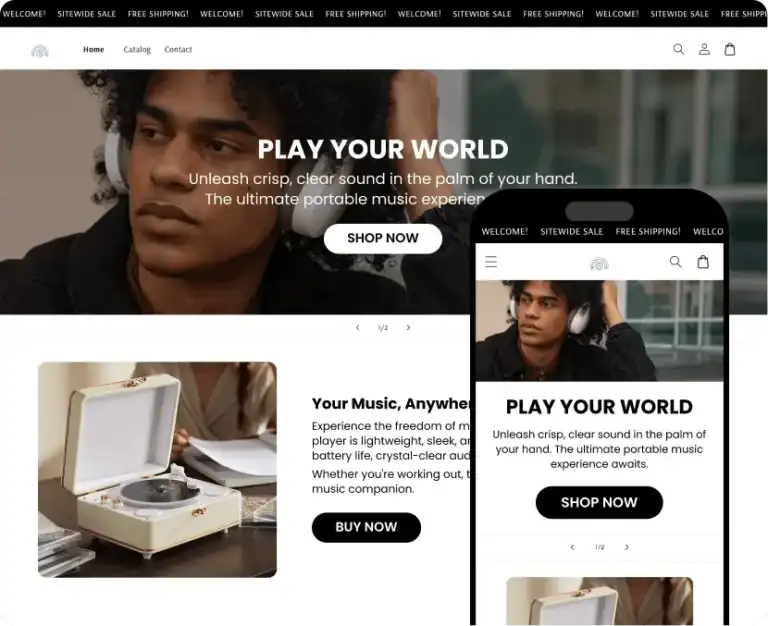
Dropshipping website design plays a huge role, especially on your homepage. This is your store’s first impression. And yes: people judge.
A high-converting homepage quickly answers three questions: what you sell, who it’s for, and why it’s worth buying. This includes using clear headlines, showcasing featured products, adding some social proof, and including simple CTAs (call to action). These might seem small, but they quickly give users an idea of your offer.
🆕 Beginner’s Tip: Want to avoid the hassle of creating a dropshipping store from scratch? You can use AutoDS’s AI Shopify Store Builder to generate a ready-to-launch store in minutes. It includes a clean design, a high-converting homepage, product pages, a free domain, and more.
Winning Product Pages
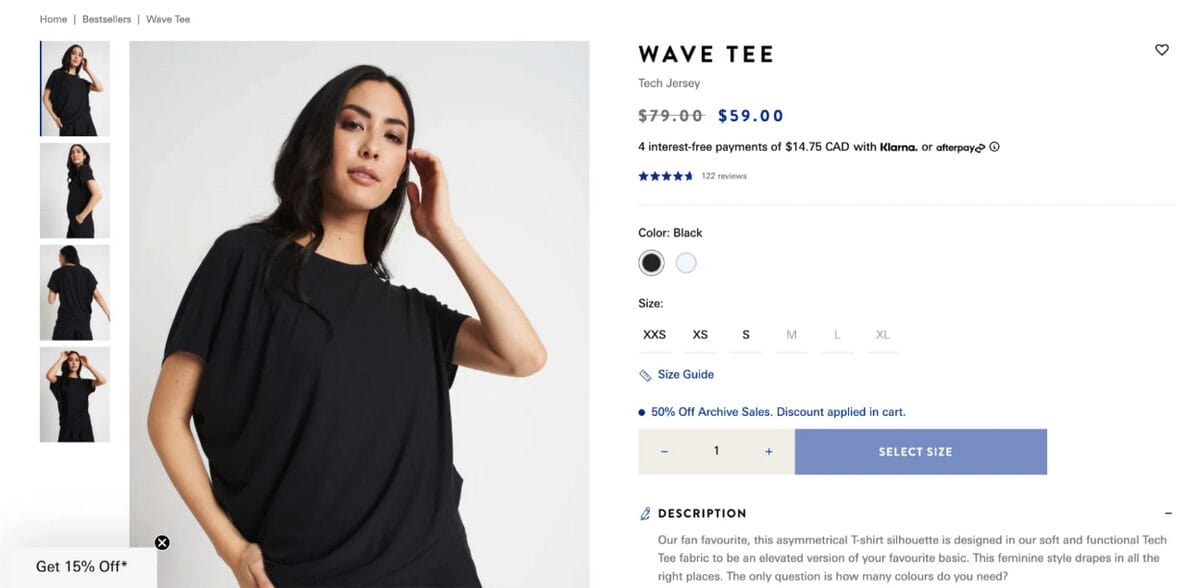
This is where the sale actually happens. A good product page doesn’t just show the item… It sells it. That means:
- Crafting clear, strong titles with keywords.
- Writing descriptions that highlight benefits (not just features).
- Using high-quality images and videos that show the product in action.
- Making pricing clear.
Clean and Professional Design
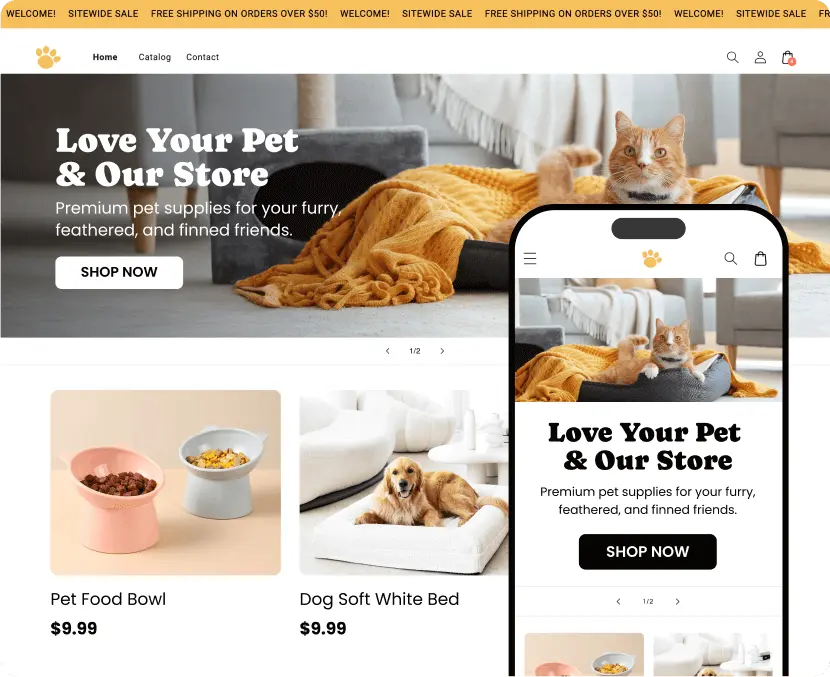
When it comes to design, don’t worry: you don’t need to become a top-notch UX designer.
It’s all about keeping it basic but professional. Your dropshipping store should feel polished and trustworthy. Think clean layouts, consistent colors, readable fonts, and no clutter.
If your site looks messy and outdated, people won’t trust you. Remember: your site is your storefront. It’s the first thing buyers see before buying from you, so it needs to represent you, your brand, and your niche.
Trust Signals and Credibility
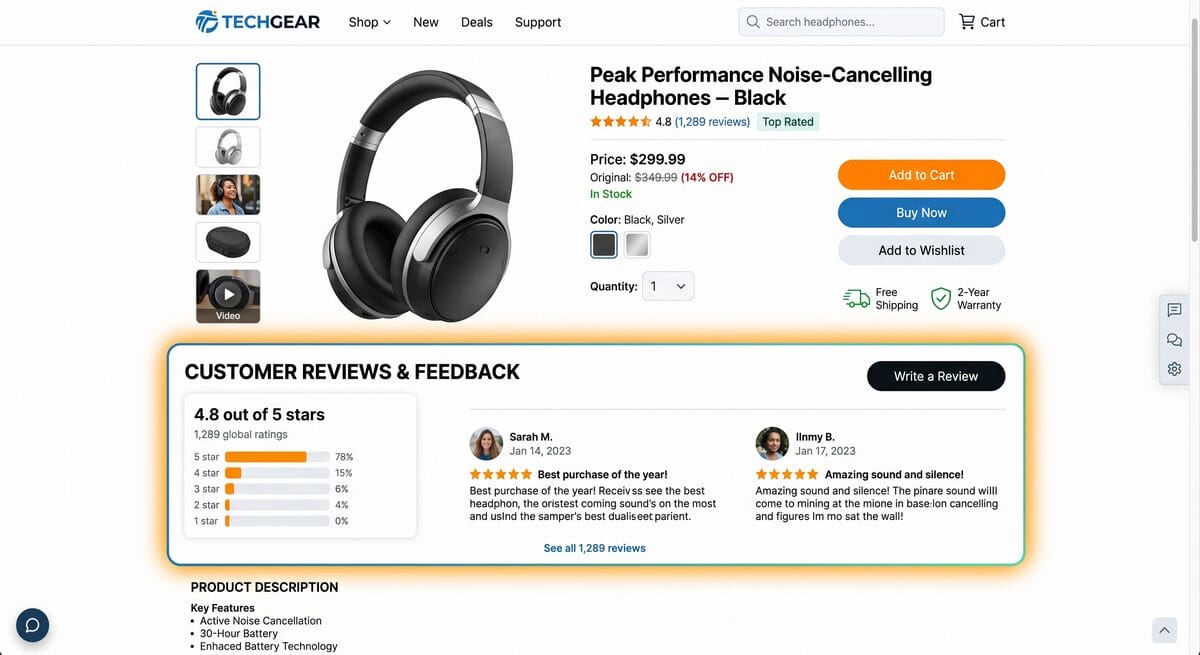
People are naturally skeptical when buying online, especially from a store they don’t know. That’s why trust signals matter so much. This includes:
- Reviews.
- Testimonials.
- Secure payment icons.
- Clear policies (refunds & returns, shipping policy, privacy).
- Professional logo and branding.
Specifically, reviews are so important that, according to Martech Zone, they are trusted 12 times more than a listing’s description. Moreover, bad reviews makes 86% of buyers hesitant to buy.
The same goes for return policies. According to Growth Devil, a clear, hassle-free return policy accounts for 35% of the top reasons someone decides to buy.
Simple Navigation and Store Structure
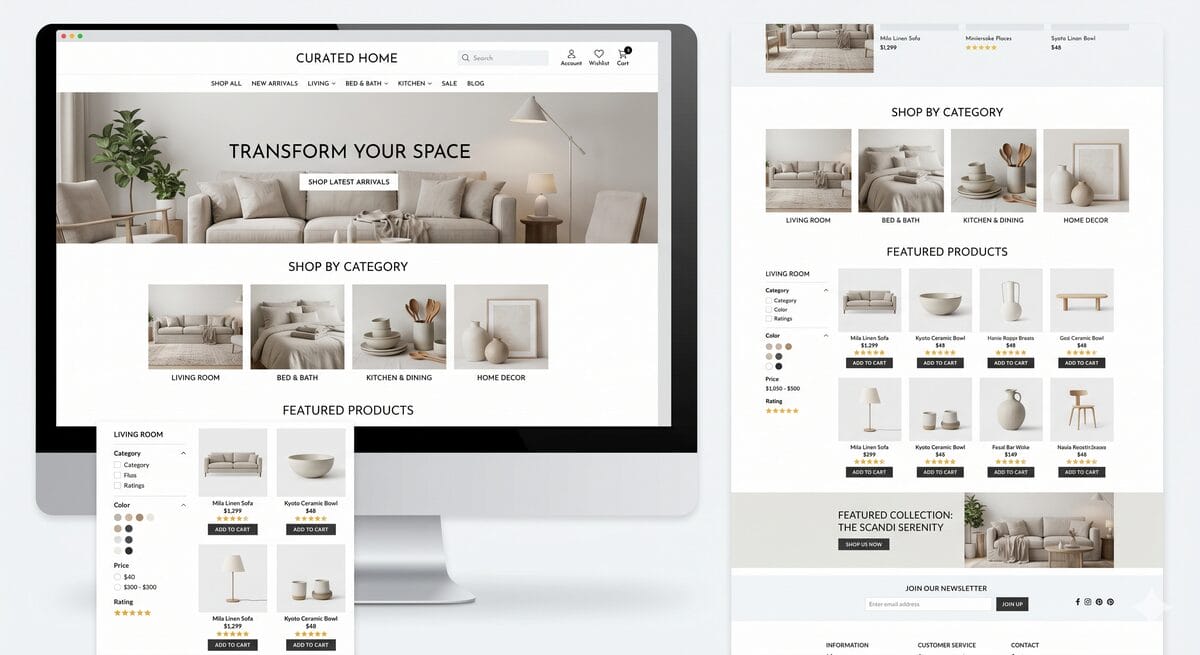
If customers can’t find what they’re looking for in a few clicks, they’re gone. A dropshipping store with a good, straightforward structure makes browsing easy. This includes clear menus, logical categories, and a smooth flow from homepage to product page to checkout.
No one wants to figure out how your store works. They just want to find whatever they’re looking for and buy fast.
Fast and Reliable Shipping Setup
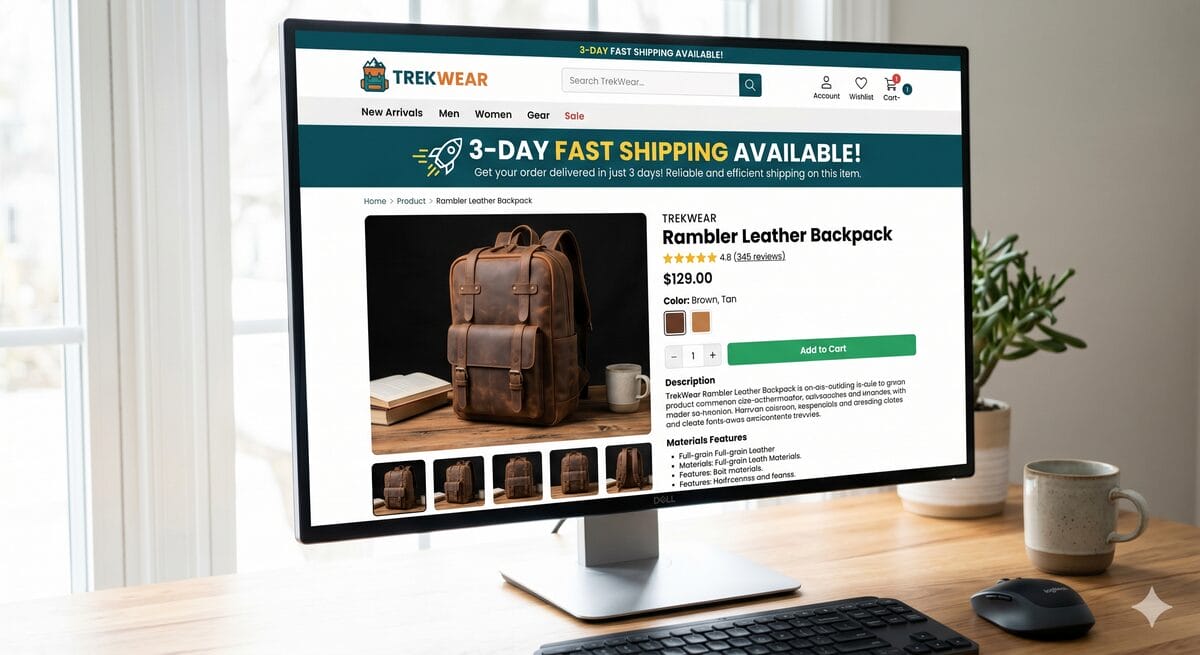
Buyers are more anxious than ever. This makes long shipping times one of the biggest conversion killers in dropshipping.
Let’s look at some numbers from recent studies. 62% of online shoppers expect 3-day shipping or less, according to Shopify, and 42% of buyers are even more demanding, expecting 2-day shipping, according to Ware2Go.
On top of that, according to the same Shopify study, 66% of shoppers expect free shipping on online orders.
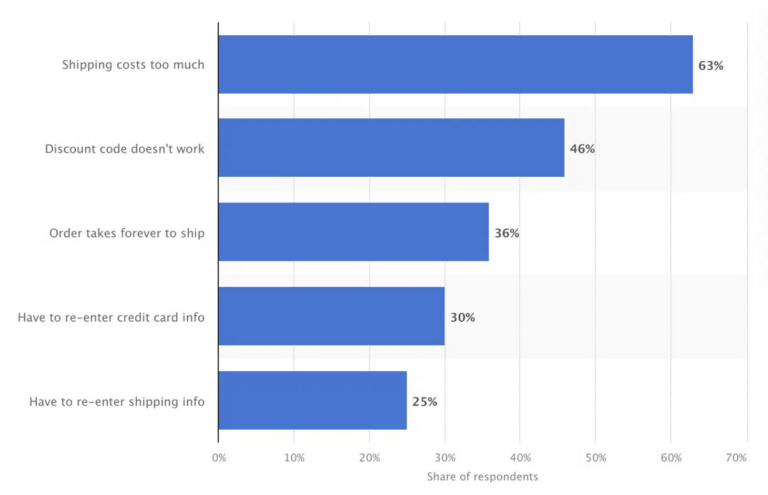
Shipping costs and timelines are so important that, according to Statista, the primary reason for shoppers to abandon a cart is expensive shipping, and the third reason is slow delivery.
So, how to achieve perfect shipping times? There are a few general tricks. First, work with reliable suppliers. Pick those with the best delivery timelines and double-check them by ordering a few samples. This will let you assess the overall delivery experience, from quality and packaging to shipping times.
📦 Supplier’s Tip: Always vet your suppliers closely. If you don’t know where to start, you can check out AutoDS’s 25+ supported suppliers, all pre-veted for transparency, quality, and shipping times.
Second, set clear expectations. Don’t promise what you can’t deliver. Transparency is key: customers are more patient when they know exactly what to expect.
Optimized Checkout Experience
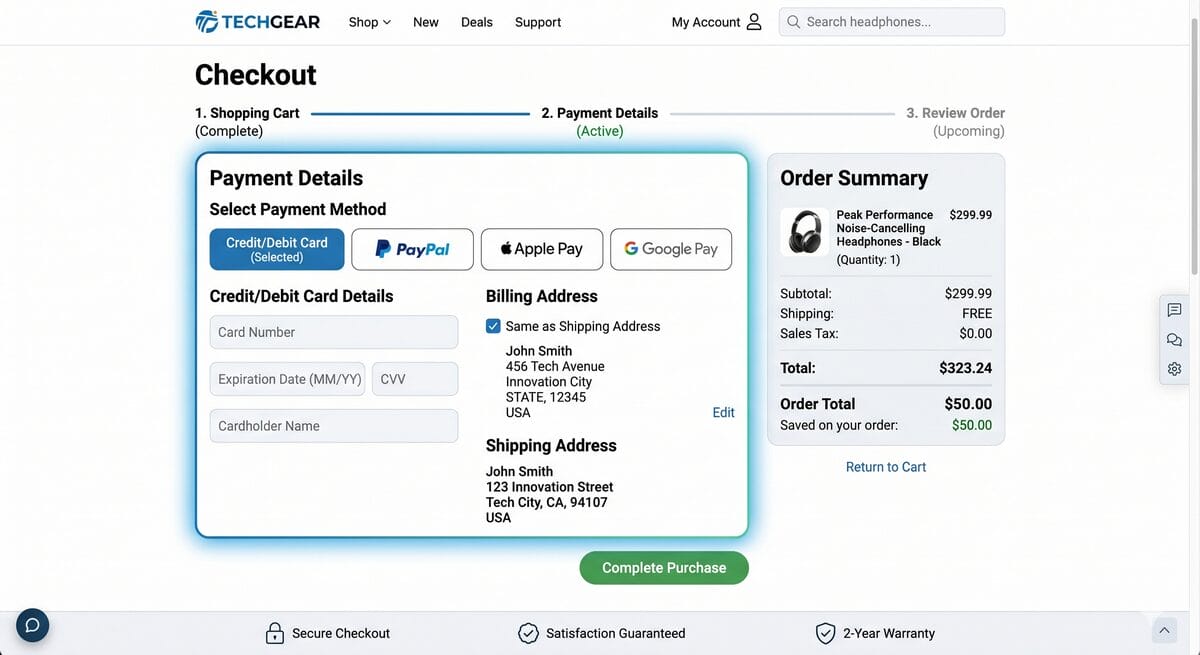
A brief recap: you’ve brought the buyer to your site (whether through organic or paid strategies), showed them your products, helped them pick one through carefully crafted product pages, and now they’re ready to buy.
You’ve done all the work to get the customer this far, congrats! The challenge? Not losing them at checkout.
A good checkout process is simple and fast. Avoid all kinds of potential frictions. This translates to:
- Fewer steps (avoid unnecessary popups, requests, or prompts)
- Multiple payment options
- No unnecessary surprises (like hidden fees that appear right in the last step).
All in all, make it easy to go from click to purchase and see how your orders quickly increase.
Product Research and Selection System
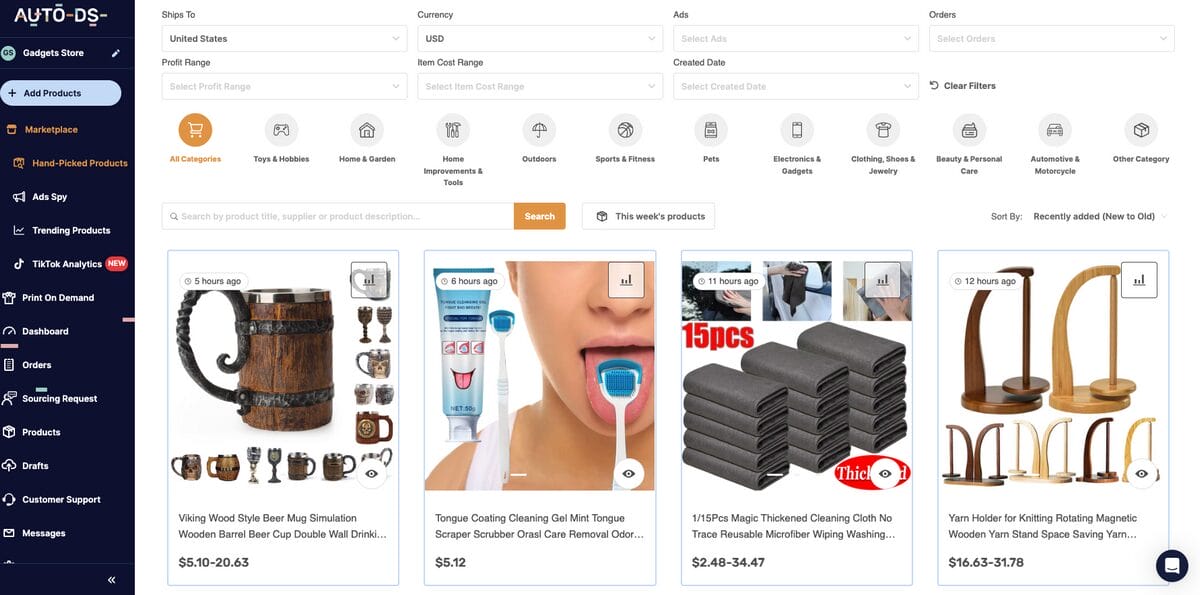
In dropshipping, your products are the heart of your strategy. They’re what you promote, what you sell, and what you fill your dropshipping store with. This makes it obvious: you can’t just rely on random picks.
Product research and sourcing need a strategy and a clear system. That means using data, trends, and testing to find winning products consistently.
And here’s a trick from top sellers: don’t chase every viral item. Instead, validate demand, analyze competition, and build a pipeline of products to test and scale.
The best products are not the ones with the strongest demand (those are probably starting to saturate), but the ones with rising demand that haven’t peaked yet.
Automation and Scalability Infrastructure
Finally, the backbone of a perfect dropshipping store: systems that let you grow fast (without the heavy lifting). Automation tools handle repetitive tasks like product imports, price updates, order fulfillment, and tracking. This not only saves time but also reduces errors.
Moreover, it makes scaling your store easier and faster. Why? Easy: Because it lets you go from one order to 100 without breaking your workflows. Could you imagine fulfilling 100 orders manually all of a sudden? Impossible. But automation makes it both possible and easy by working on autopilot.



Dropshipping Store Types (And Which One Is Best For You)
In the process of building your dropshipping store, you’ll find that there isn’t one single way to do it. There are different types of stores based on your goals, your offer, and your strategy:
- General store. This one sells products across multiple categories, from home and fitness to pets and babies. It’s great for testing lots of products quickly without committing to a single niche. The downside? Because the audience is so generic, it can be harder to build a strong brand. Moreover, it can be hard to drive trust if everything feels too random.
- Niche store. This type focuses on a specific category or audience. For example, fitness, gear, pet accessories, or skincare. This makes your branding more cohesive and your marketing more targeted. But, of course, you’ll need to choose your niche wisely and stick with it.
- One-product store. This is exactly what it sounds like: a store built around a single offer. It’s highly focused, usually with strong branding and a landing page designed to convert. One-product stores can perform extremely well if the product is a winner and if marketing campaigns drive demand. But if it doesn’t take off, you’ll need to pivot quickly.
So, which one is best? It depends. Here’s a brief quiz:
👉 Just starting out? A general store is great for testing.
👉 Got traction? Then, moving into a niche is usually the smartest way to scale.
👉 Found a product that consistently performs well? Time to double down on it with a one-product store.
Examples of Successful Dropshipping Stores
So, how to build a dropshipping store? It’s simpler than you might think.
If you look at successful dropshipping website examples, you’ll notice something interesting: they don’t feel like “dropshipping stores” at all. They feel like real brands. Instead of copying random trends, they follow a few best practices that make them stand out and convert.
Here’s what they tend to do right:
- Strong branding. Cool, converting stores don’t look generic. They have a clear identity with consistent colors, tone of voice, and visuals that match their niche. You can be playful, minimalist, or premium. But either way, everything has to feel like a part of the same thing. This way, shoppers instantly get what the brand is about.
- Simple UX (User experience). No clutter, no confusion, no guessing. The best stores are super easy to navigate. They have clear menus, fast-loading pages, and a smooth path from landing to checkout. You’re never wondering where to click next. You just know.
- Focused offers. Try not to overwhelm users. Dozens of random products can make them forget why they even landed on your site. Instead, successful stores highlight a few strong offers right from the beginning. They guide attention to best-sellers, bundles, or hero products. This results in less noise, more clarity, and higher conversions.
Next, we’ll zoom in on some successful dropshipping store examples.
Practical Examples
Let’s put it into a more practical, visual context. Here’s our imaginary dropshipping store called HomeHaven, a home decor shop with a minimalistic, elegant look and feel:
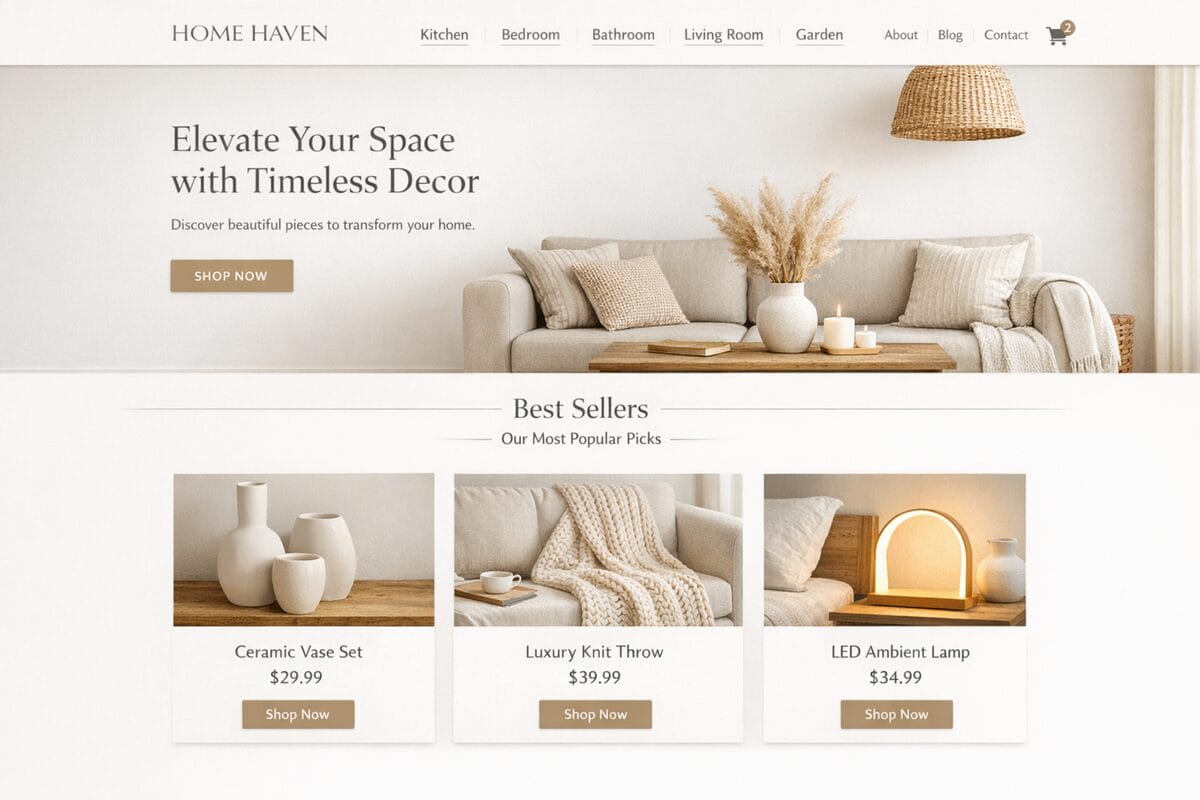
What makes this store a good example? Three simple things. First, branding makes sense. It focuses on Nordic-style home decor, so everything follows that same clean, minimalist aesthetic, from the color palette to the optimized product images. The neutral tones, soft textures, and simple font all work together.
Second, the user experience is simple. The menu is clear, and categories are easy to navigate. For example, everything is organized by room: kitchen, bedroom, bathroom, living room, and garden. Plus, the layout naturally guides you from the hero section to the best sellers. There’s no clutter, no confusion.
And third, the offers are focused. No dozens of products competing for the user’s attention. Just three best sellers right on the homepage. This directs attention exactly to the products that are most likely to convert.
Why Most Dropshipping Stores Fail
Building a dropshipping store is actually pretty straightforward. So why do so many people still struggle with it? Most of the time, it’s not some big, complicated issue. It’s just a few small (but important) things missing.
Think of this as a little cheat sheet with the most common mistakes people make, so you can dodge them before they even become a problem
- Poor product selection. This is the big one. The product has to solve a real daily struggle and have real demand. Otherwise, it will just sit there getting dust (aka no traffic). And no: no amount of marketing can save a weak product.
- Weak branding. Stores with no clear identity don’t stand out. Avoid copying and pasting generic templates with random products. Customers won’t trust it and will hesitate to buy.
- Bad UX. This simply scares buyers. You know: confusing layouts, pages that take forever to load, broken links, and confusing menus. If people can’t go around your store easily, they won’t stick around long enough to buy.
- No trust signals. No reviews, no policies, no clear contact info? Big red flag for most shoppers. Without trust signals, shoppers will hesitate at the last second and abandon their carts.
- Slow fulfillment. The fastest way to unhappy customers? Simple: Long shipping times and unreliable suppliers. Not sticking to your promises can lead to refunds, bad reviews, and chargebacks. So, even if you make sales, everything that comes afterward is just as important.
- Lack of automation. Trying to manage everything manually is not scalable. Also, not cool for your mental health. Manual workflows usually lead to more mistakes, slower processes, and impossible scaling.
At the end of the day, most failures come down to avoidable mistakes. Fix these six things, and you’re already ahead of the game.
How to Build a High-Converting Dropshipping Store
Alright, let’s get hands-on. Next, we’ll run a quick and straightforward step-by-step process on how to build a dropshipping store, from product research methods all the way to fulfillment, tracking, and automation.
Step 1: Sign Up for AutoDS
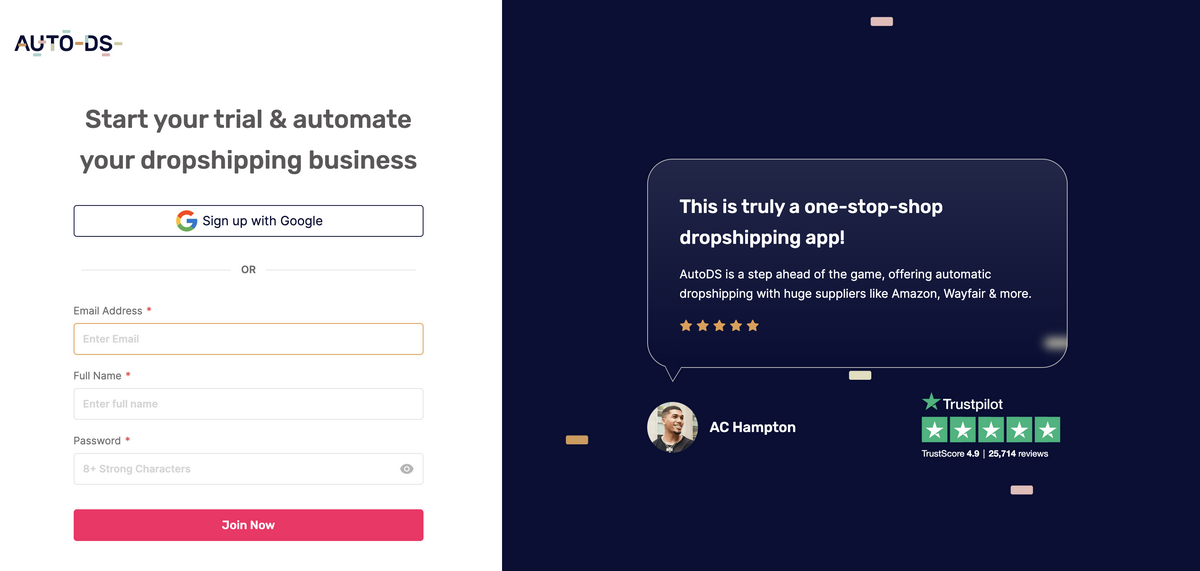
Let’s get this out of the way. Setting up AutoDS as the first step allows you to build your store with full automation right from the start. This includes product sourcing, importing, optimization, and more, avoiding manual tasks as much as possible. This makes the entire workflow easy and quick.
The registration process only takes two minutes. Just start the AutoDS $1 trial (yup, no long-term commitment needed at first), pick your plan, complete a few fields, and that’s it.
The trial lets you use all the features of the selected plan, including building your store with AI.
Step 2: Choose A Selling Channel
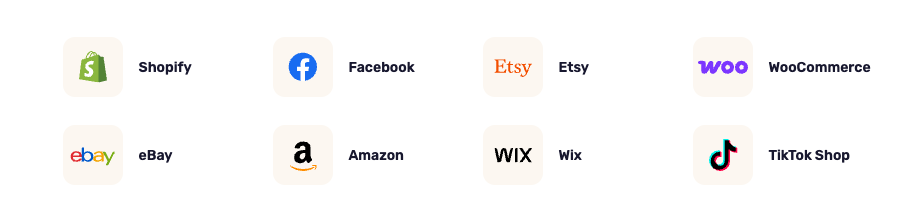
Next, decide where you want to sell. The best dropshipping platforms can be grouped into two main groups:
- Custom stores (Shopify, Wix, WooCommerce). Here, you build your own branded website. It gives you more control, better branding options, and higher long-term potential. The downside? You have to drive your own traffic.
- Marketplaces (Amazon, eBay, Facebook Marketplace, TikTok Shop, Etsy, etc). In this case, you sell on established marketplaces with built-in traffic. In return, you get less control over branding and an overall less authentic experience.
💡 Pro Tip: If you’re just getting started, it’s best to begin with one selling channel. Then, as you grow, you can expand to other marketplaces and platforms to diversify your audience. The best part? AutoDS supports them all, letting you manage multiple stores from one dashboard.
Once you choose, you’ll need to create your store or seller account on that platform. If you opt for marketplaces, you’ll have fewer customization options but probably more rules and policies.
Shopify and Wix, on the other hand, will probably take a little bit more time, as they require extra design and customization steps. Which one to choose, Amazon, eBay, or Shopify? That depends on where your target audience shops, how much control you want over branding, and how fast you want to launch. But… you can always use AutoDS’s AI Shopify Store Builder to get that part out of the way fast.
Step 3: Connect Your Selling Channel To AutoDS
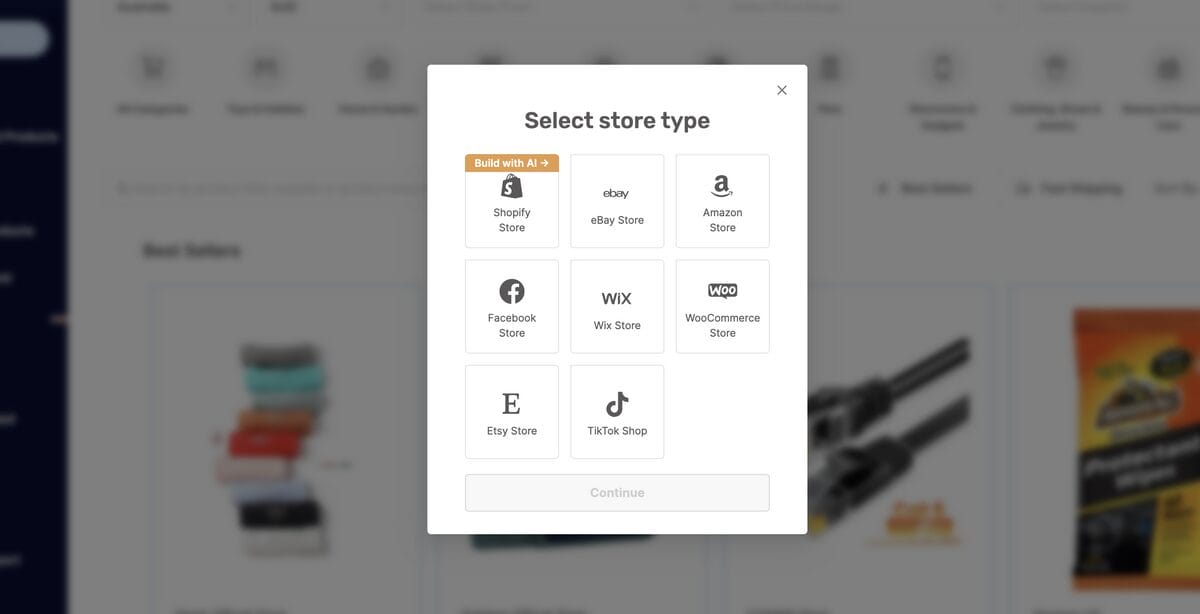
Now, it’s time to link your store or marketplace account to AutoDS. This is what allows the platform to sync everything (prices, inventory, orders, etc.), so you can manage your entire operation from one dashboard.
Don’t worry: there’s no integration or coding required. Because AutoDS directly integrates with most selling channels, it only takes a few clicks. Just head to “Add Store” on the top left corner, pick your selling channel, follow the instructions, grant access, and that’s it.
Step 4: Research Products
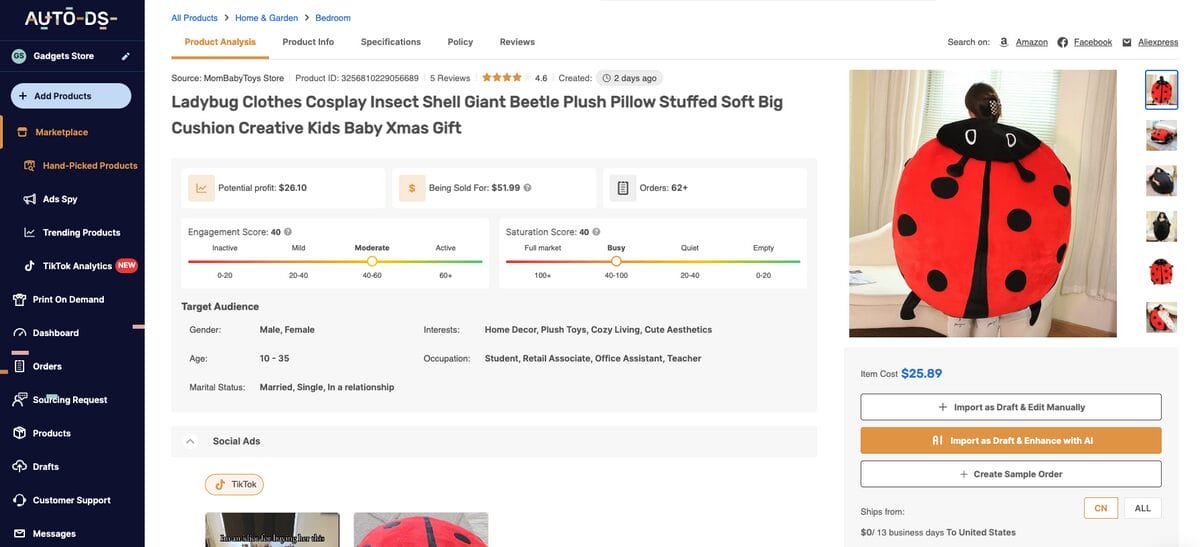
The fun begins! With your accounts created and connected, you’re now ready to move on to the actual dropshipping stuff.
Product research is where you find what to sell. And yes: it matters a lot! You’re looking for products with demand, good margins, and room to compete. Bonus points if they look good on camera, can show their potential within seconds, and are not yet saturated.
You can do this process manually. You can search Amazon or eBay’s best sellers, explore Google Trends, and check out competitors’ social media profiles. While this can give you good results, it can take forever and get messy.
Instead, you can use automation, such as AutoDS’s built-in research tools. You can find trending products based on real-time market demand, explore the Hand-picked selection, use the Ad spy tools for competitor research, and connect with private suppliers through the Marketplace.
Step 5: Import Products

Next? Adding your products to your store. Again, you can do it manually, but it can take forever to copy and paste every single detail.
Instead, AutoDS lets you import it directly to your store in just a few clicks. See? That’s why we’ve signed up in the very first step: to make everything else easier.
There’s no manual copying, no uploading images one by one. Everything comes in ready to go live, including titles, descriptions, and images.
You can import the products through the One-click importing from AutoDS’s Google Chrome Extension. You see something you like, click Import Draft, and that’s it. Or you can import multiple products from different suppliers at once using the bulk importer tool.
Step 6: Optimize Listings And Pricing
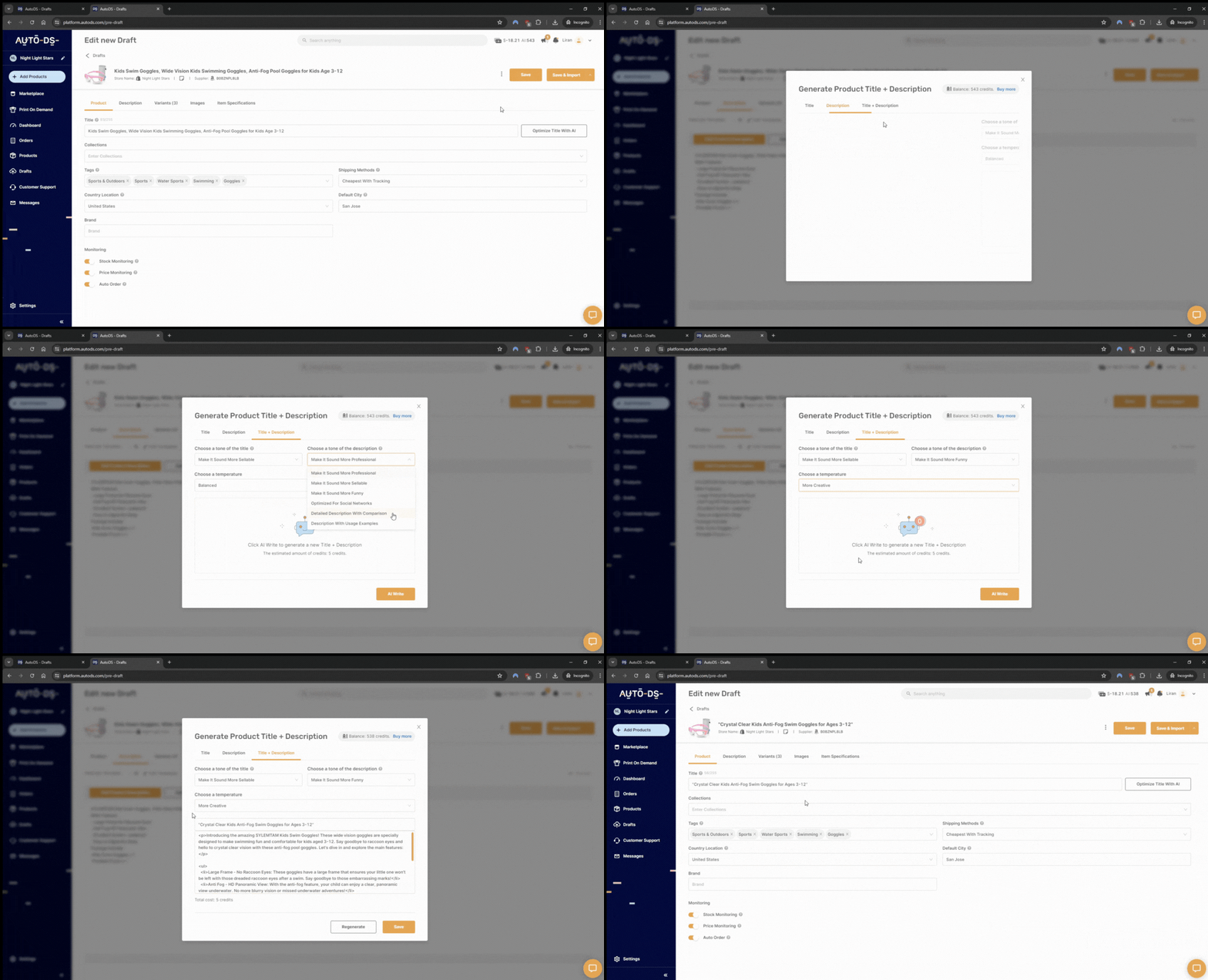
You’ve got your products in your Draft section. What next? Optimizing them to go live.
Here, you refine your product pages to make sure they attract traffic and convert. This includes improving titles and descriptions, replacing images if necessary, and making sure variations are correct. The whole point is to have clear and persuasive listings.
💡 Pro Tip: Don’t worry, you don’t have to stare at a blank page wondering how to make a kitchen gadget sound life-changing. You can use AutoDS’s AI Product Title and Description Generator to instantly create optimized, conversion-focused copy based on your brand’s own tone and voice.
At the same time, set up pricing rules so your margins stay consistent. This way, your store can automatically adjust prices based on supplier changes without you constantly checking.
Step 7: Enable Automation
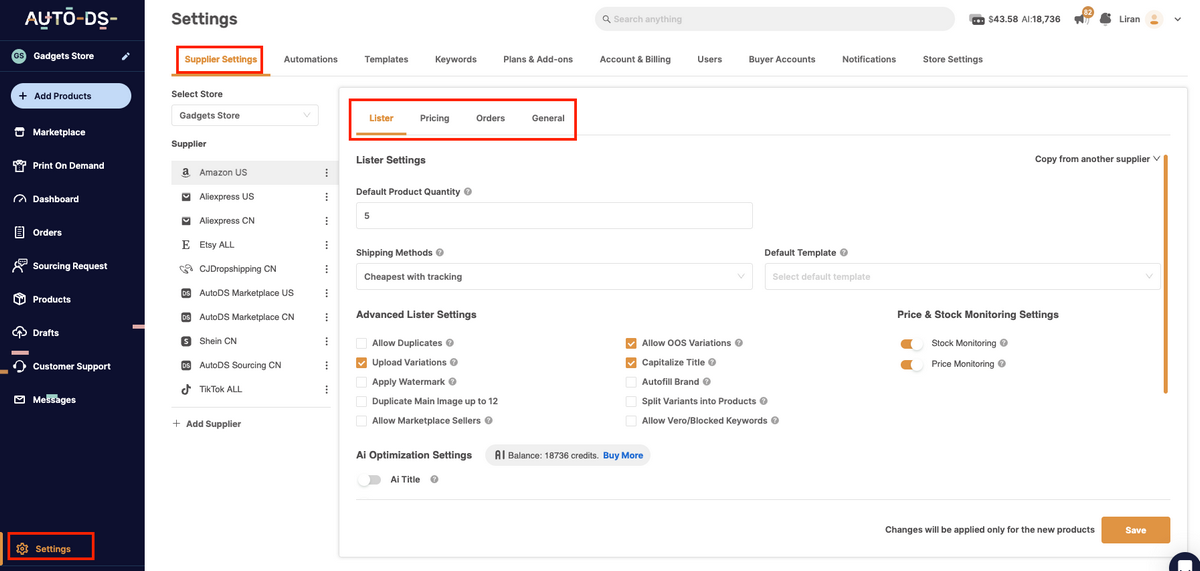
Automation takes your business and runs it on autopilot (literally). This includes everything from price and stock monitoring to order fulfillment and tracking updates.
To enable these features on AutoDS, just head to Settings > Supplier Settings. For each supplier, customize automation features as you prefer. Here, you’ll find price and stock monitoring, advanced lister settings, AI optimization, automatic messaging, and order automation.
Step 8: Double Check And Launch Your Store
Before launching, do a quick walkthrough. Check your homepage, product pages, checkout flow, policies, and automation rules. Make sure everything feels trustworthy and professional.
You can also order a few samples from your store to assess the overall experience, from exploring your site and testing checkout flows, all the way to delivery and packaging from your suppliers.
Once everything looks good, hit publish and move on to your marketing campaigns.
Step 9: Measure, Improve, And Scale
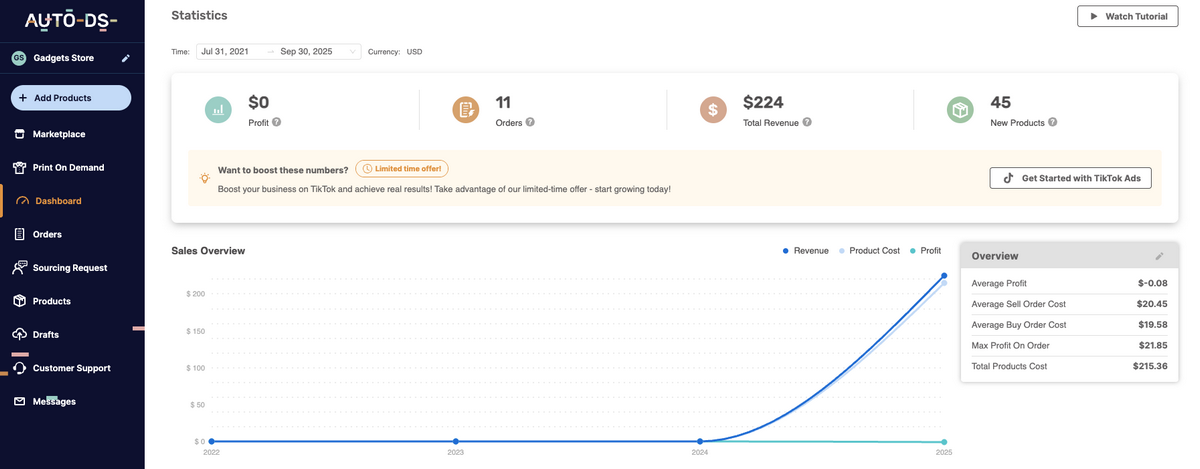
Finally, track your first results and optimize. Look at what’s selling, what’s not, and where people drop off. Double down on winning products, improve your listings, and keep testing.
You can use AutoDS’s Dashboard to check out your analytics, along with your selling channel’s data.
Remember: iterating never stops in dropshipping. It’s an ongoing process that includes letting go of items that no longer perform and testing new products to see which ones stick.
Once that workflow is fully working, you start scaling with more marketing campaigns, more selling channels, and more stores.
For instance, you can diversify your offer. On one hand, you can have a permanent niche dropshipping store for the entire year. On the other hand, you can create one-product stores for trending and seasonal items that are in demand right now.
How AutoDS Helps You Build Better Dropshipping Stores
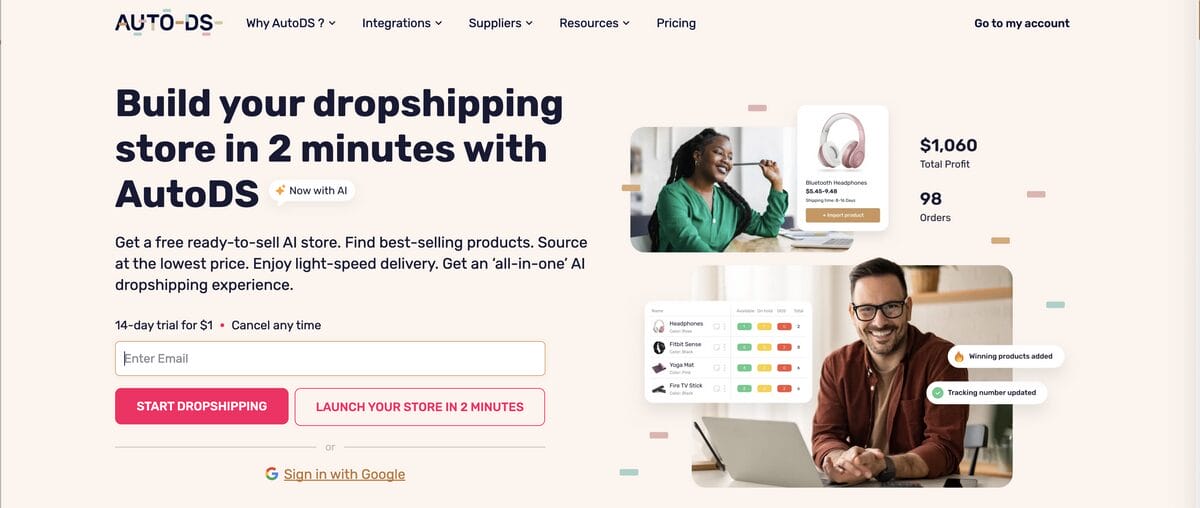
At this point, I’m sure you’ve got the main idea: building a great dropshipping store isn’t hard, but managing everything manually can be. That’s exactly where AutoDS comes in.
AutoDS is an all-in-one dropshipping platform that lets you manage your entire dropshipping operation in one single place. This way, you’re not juggling tools, tabs, and spreadsheets. Instead, you have this virtual headquarters where everything is centralized.
So, how does it help you build better dropshipping stores? Let’s see:
- AI Shopify Store Builder. We’ve already mentioned this one. AutoDS’s AI Store Builder creates a ready-to-sell ecommerce store structure, including a homepage, product pages, converting copy, pre-selected products, and even a free .store domain.
- Product research tools. AutoDS lets you access trending products, hand-picked items, TikTok insights, and ad spy data to find what’s selling (and not just what goes viral for one day).
- AI listing optimization. AutoDS provides tools to create optimized, conversion-focused listings instantly, all based on each brand’s tone and voice.
- Price and stock monitoring. AutoDS keeps dropshipping stores updated 24/7 by tracking supplier prices and stock levels and automatically updating your listings.
- Pricing automation. AutoDS lets you set rules to automatically adjust your prices and maintain consistent profit margins.
- Automated order fulfillment and tracking. AutoDS automatically places and manages orders and syncs tracking numbers, keeping your store running on autopilot and shortening delivery times.
You can try these features out through the AutoDS $1 trial. Basically, they allow you to spend less time on repetitive tasks, and your dropshipping store runs more smoothly. You basically get everything you need to build, launch, and scale your business fast and error-free.
Dropshipping Store Checklist
You’ve made it this far, congrats! By now, you’re probably ready to hit publish and go live with your dropshipping store. If so, here’s a full checklist to make sure everything is in place.
✅ Niche defined. Are your niche and target audience clear? Make sure your products, branding, and messaging all align with them.
✅ Homepage optimized. Does it clearly explain what you sell? Is it easy to tell who it’s for and why it matters? Double-check that it includes strong visuals, featured products, and a clear call to action.
✅ Product pages ready. For each product page, check that they are complete with optimized titles, benefit-driven descriptions, high-quality visuals, and trust boosters like reviews.
✅ Policies added. This is essential. Your dropshipping store must include pages like shipping, return, and privacy policy, as well as terms of service. These help build trust, set clear expectations, and comply with dropshipping platforms.
✅ Payments all set up. Test your checkout flow to make sure all payment methods work just fine. You can order a few samples to assess the overall checkout, post-checkout, and delivery experience.
✅ Shipping options set. Same as payments. As you revise your checkout flow, double-check delivery options, shipping rates, and timelines. Specifically, ensure they are clearly defined and communicated to customers.
✅ Automation connected. All automation rules enabled? Good. Check your flows, integrations, and connections to make sure product imports, orders, pricing, and tracking are running on autopilot.
✅ Store tested. Go through the full buying process yourself. This includes browsing your site, adding to cart, and checking out. Spot any improvements? Anything left that can be optimized? Does everything run smoothly? Then you can finally go live and start driving traffic!
Tips to Improve Your Dropshipping Store Conversion Rate
Once you’ve launched everything, it’s all about measuring, iterating, improving, and replicating. But here’s one thing you should keep in mind: traffic is not the same as conversions.
You might have lots of views on your marketing campaigns, and lots of traffic to your dropshipping store. But the stat that actually matters the most is conversion rate. It tells you how many people are actually buying from you. And that’s your main goal.
To constantly improve this number, there are a few tricks you can implement. For example:
- Better product pages. There’s always something you can improve. Keywords might get irrelevant over time, descriptions might need some tweaks, and photos might feel outdated. Remember to focus on benefits, add real-life images and videos, include reviews, and address common fears upfront.
- Faster loading speed. If your site takes too long to load, users will bounce. Compress images, avoid unnecessary apps, and keep your pages lightweight. Even a one-second delay can cost your sales.
- Stronger branding. Branding is an ongoing process. The more authentic and unique, the more trustworthy and professional it feels. Check that everything feels consistent, including colors, fonts, visuals, and tone of voice.
- Improved trust signals. There’s always something extra you can add to make your customers trust you even more. Think more reviews, testimonials, secure payment icons, and clearer policies. Each one of these things is an extra reason for customers to buy from you, so don’t overlook them and constantly update them.
- Clearer offers. If your conversion rate is still low, then the problem could be the way you present your offer. Niche down, target your audience more specifically, and highlight your best deals. The easier you make the decision-making process, the better. And that doesn’t just bring you short-term sales… It also makes them constantly come back because they remember you.
Start by applying one or more of these tricks. See what happens, test little upgrades, and try to find where the problem is to focus on that area of improvement.
Frequently Asked Questions
What is a dropshipping store?
A dropshipping store is an online store where you sell products without holding inventory. When a customer places an order, the product is shipped directly from the supplier to the customer. This way, you, the seller, don’t have to handle storage, packing, or shipping yourself.
What makes a successful dropshipping store?
A successful dropshipping store usually combines strong product selection, clear branding, a smooth user experience, and solid trust signals. Reliable suppliers and automation are essential as well to provide a good experience.
How do I build a dropshipping store?
You can build a dropshipping store by choosing a selling channel (like Shopify or eBay), choosing your niche and audience, selecting products, and setting everything up (like payments and shipping). Using an automation tool like AutoDS helps simplify the process by handling product imports, pricing, and order fulfillment.
How much does it cost to build a dropshipping store?
The cost of building a dropshipping store depends on the platform and tools you use. A basic setup can start with a low budget (around the cost of a Shopify plan, a domain, and a few apps). With tools like AutoDS, you can start with a $1 trial and scale your investment as your store grows.
Can beginners create a dropshipping store?
Yes, beginners can absolutely create a dropshipping store. Dropshipping is beginner-friendly because you don’t need upfront inventory or logistics experience. With the right tools and guidance, even first-time sellers can launch a store and start testing products quickly.
What platform is best for a dropshipping store?
The best platform for a dropshipping store depends on your goals. Shopify and Wix are great for building branded stores with full control, while marketplaces like Amazon or eBay give you instant access to traffic. Many beginners start with Shopify for flexibility and long-term growth.
How do dropshipping stores make money?
Dropshipping stores make money by selling products at a higher price than the supplier cost. The difference between the selling price and the product cost (minus fees and marketing expenses) is your profit. The key is finding products with good margins and consistent demand.
Start Your Dropshipping Journey with AutoDS
If you’ve made it this far, congrats: you’ve mastered the art of dropshipping stores. Now you know: it’s not about having the most products or the fanciest design. It’s about getting every piece of the puzzle right.
For instance, it’s not about how many products you offer, but about offering the right ones to the right audience. Same with your design: you don’t need cutting-edge interfaces. You just need a clear structure that loads fast and is easy to navigate.
And lastly, you don’t need to do everything yourself. Automation can handle the heavy lifting to go faster and reduce errors. That’s where AutoDS comes in.
From AI store creation to order fulfillment, AutoDS helps you build, launch, and scale your dropshipping store with full automation at every step. You can test it with the $1 trial and see how it fits.
In the meantime, here are a few other reads you might find helpful to continue improving your dropshipping store:
- The Anatomy Of A Perfect Dropshipping Store
- Store Types (And Which One Is Best For You)
- Examples Of Successful Dropshipping Stores
- Why Most Dropshipping Stores Fail
- How To Build A High-Converting Store
- How AutoDS Helps You Build Better Stores
- Dropshipping Store Checklist
- Tips To Improve Your Store Conversion Rate
- FAQ
- Conclusion